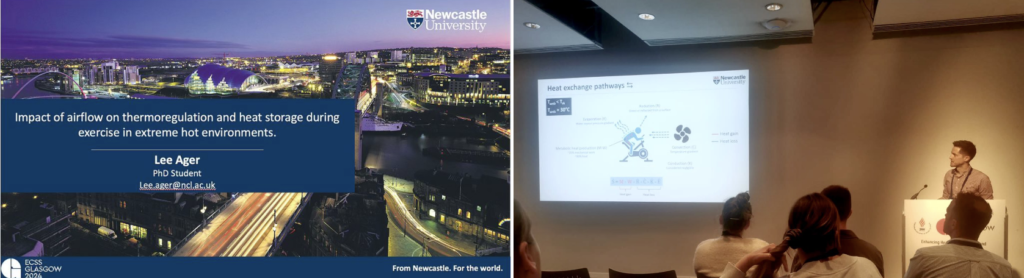
Lee presented is first PhD study exploring the effect of airflow in thermoregulation, up in Glasgow at ECSS. It was a great first conference to attend and lots of great science.
Blog focussing on research from the NCL extreme environments laboratory. Run by Dr Owen Jeffries
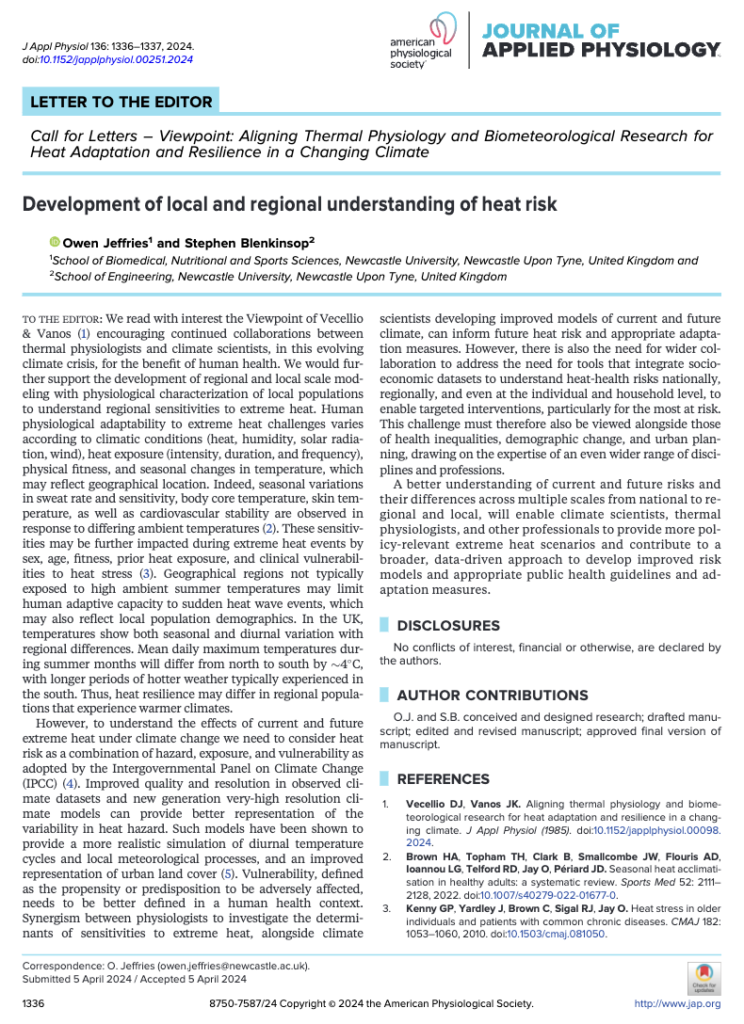
Recent publication sees Dr Owen Jeffries (thermal physiologist) collaborate with Dr Stephen Blenkinsop (climate scientist) from the School of Engineering to address a recent call in the Journal of Applied Physiology regarding better alignment between the disciplines to answer the wider questions facing us as a result of a changing climate.
In this viewpoint article we discuss the need for wider collaboration to understand heat-health risks nationally, regionally, and at the local level to provide more policy-relevant extreme heat scenarios for the benefit of public health.
This work is part of a small exploratory project funded by the Wellcome Trust Institutional Strategic Support Fund.
You can read our full article here: https://journals.physiology.org/doi/full/10.1152/japplphysiol.00251.2024
The full viewpoint correspondence, which makes for really interesting reading, can also be accessed here: https://journals.physiology.org/doi/abs/10.1152/japplphysiol.00098.2024
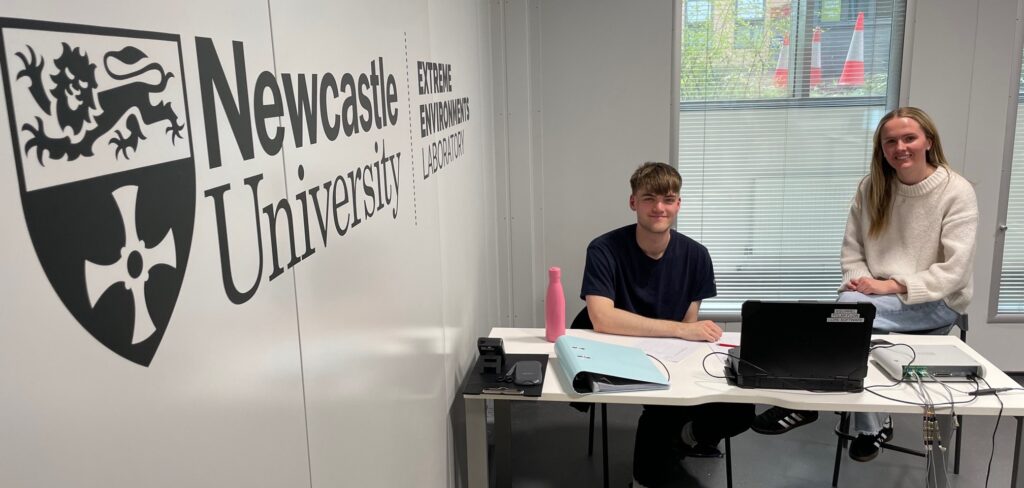
Issy Davis (BS.c student) and Oliver Milard (MS.c. student) completed a project in the lab this year with two aims. Firstly they explored the effect of temperature on steady state and intermittent exercise, quantifying thermoregulatory, physiological and metabolic responses. Secondly they used new wearable technology to explore reliability in reporting body core temperature when compared to gold-standard invasive thermometry.
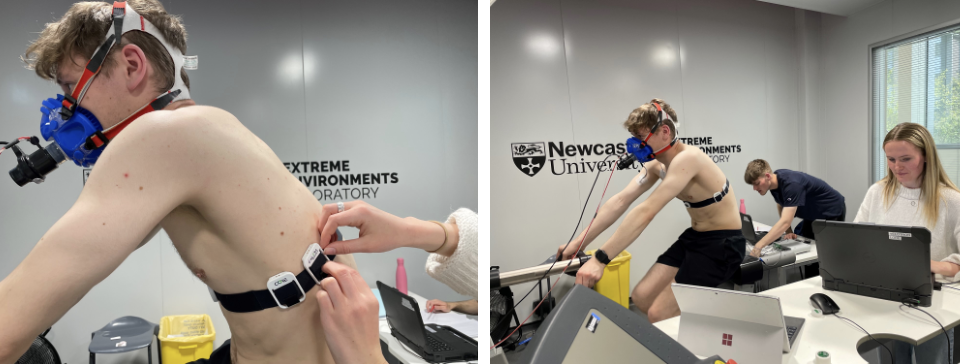
Oliver is pursuing his interests by looking for future PhD projects and we wish him good luck!
Written by Lee Ager (PhD student)
La Marmotte Granfondo Alpes (aka “the Marmotte”) is considered one of the most prestigious and challenging Granfondo events in Europe. Held annually in June in the French Alps, it is a bucket list event for many cyclists attracting close to 5000 riders from around the world. The route typically requires riders to traverse the legendary mountain passes of the Col de la Croix de Fer, Col du Télégraphe, Col du Galibier and Alpe d’Huez, which frequently feature in the Tour de France. A late route change meant the 2023 edition was set to be even longer and tougher than usual, with the addition of the Col du Mollard. This resulted in a 186km route packed with over 5500m of elevation gain and topping out at a maximum altitude of 2650m (Col du Galibier).
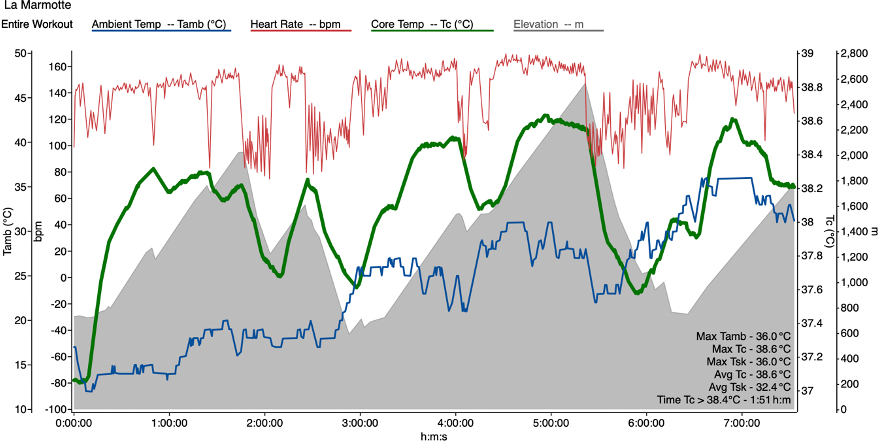
Click the link below to read more about La Marmotte and how I prepared for the event with a tailored heat preparation strategy
MSc student Sophie Evans completed her research project (2023) in our environmental lab exploring the effect of dehydration on cardiac function. Sophie was trained to take a number of specific measures using echocardiography by Prof Chris Eggett a clinical echocardiographer. Participants endured an exercise test in hot environmental conditions to achieve the target dehydration. We hope to further expand our insights from this project in the near future.
Good luck to Sophie who starts a PhD at Bath University this October!
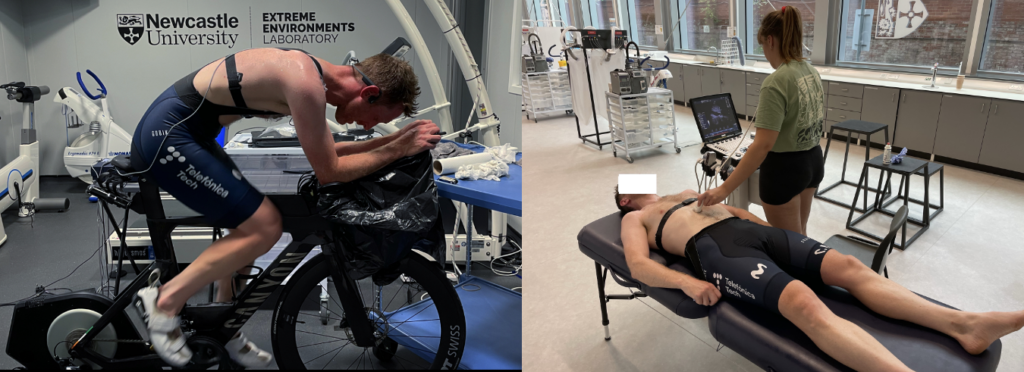
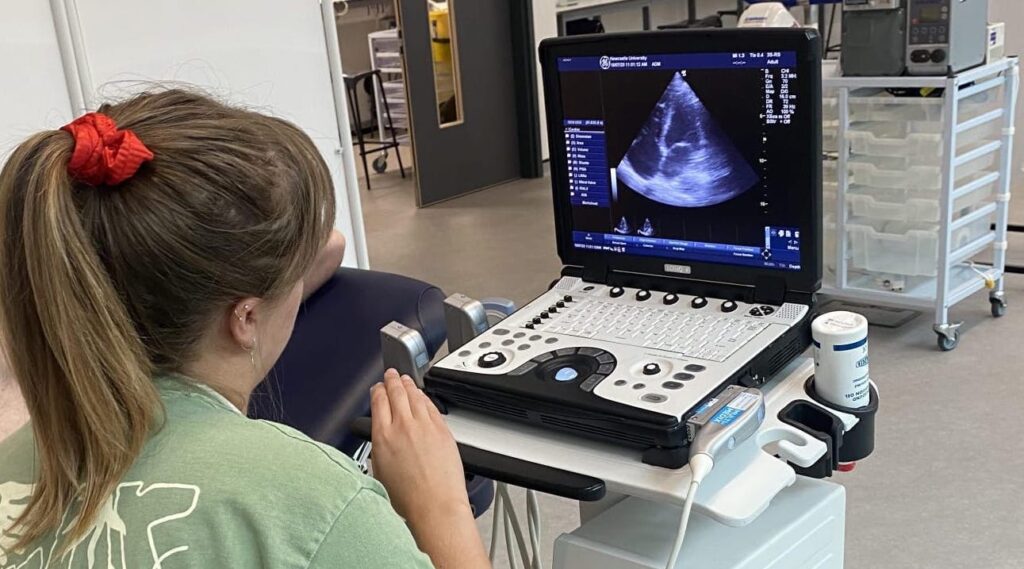
Our latest study published in the European Journal of Sport Science on 10th May 2023. Furthers our work using menthol in hot environments by using topical creams to explore the effect on exercise tolerance, thermal perception, pain, attentional focus and thermoregulation. The study Led by Jenny Peel, a PhD student in Dr Mark Waldron’s team in Swansea, found that menthol cream demonstrated benefits in thermal perception and played an analgesic function during exercise in the heat despite no change in performance.
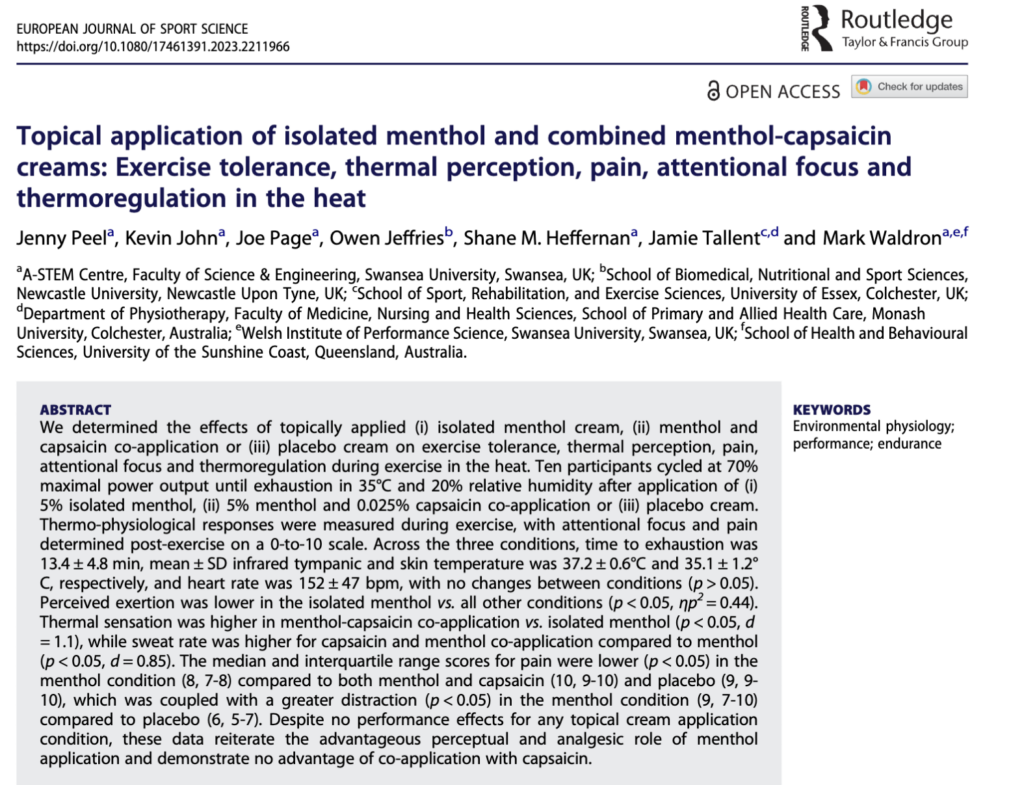
The article can be found here: 10.1080/17461391.2023.2211966
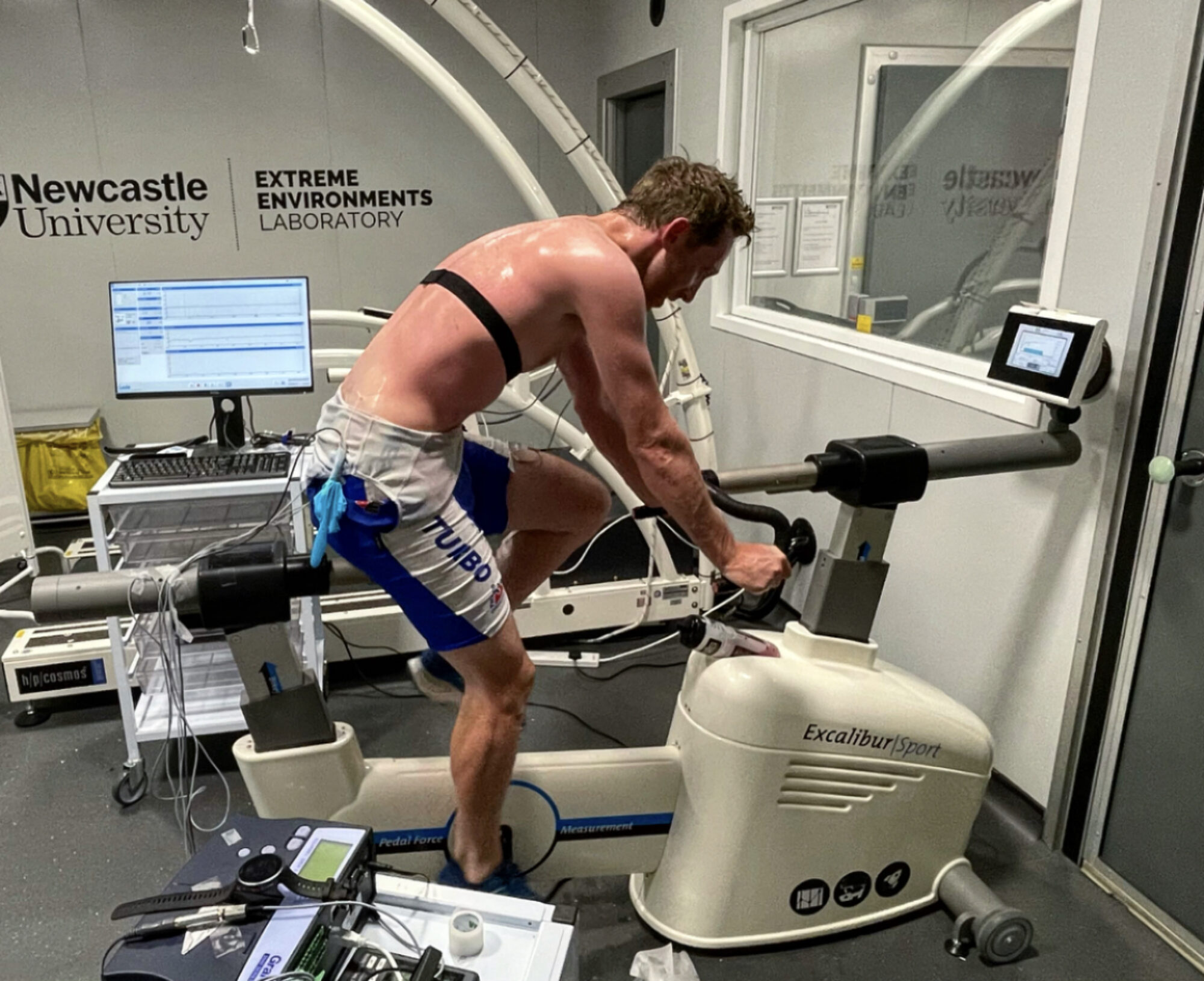
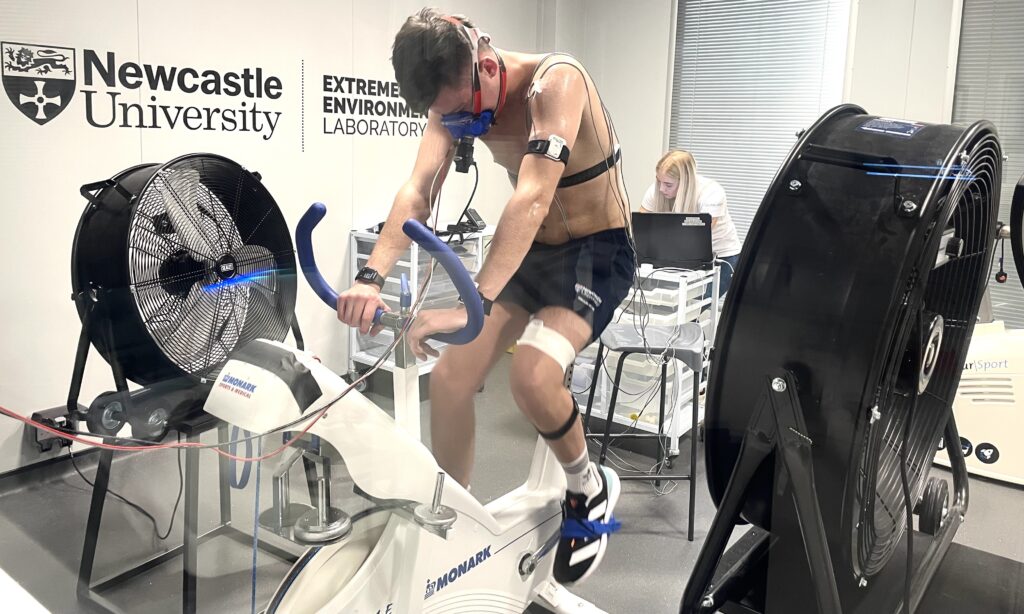
Our undergraduate students (2023) explored the effect of convective airflow on body temperature in a range of extreme environmental temperatures. They also trialed wearable technology in these extreme environments that reported core body temperature.
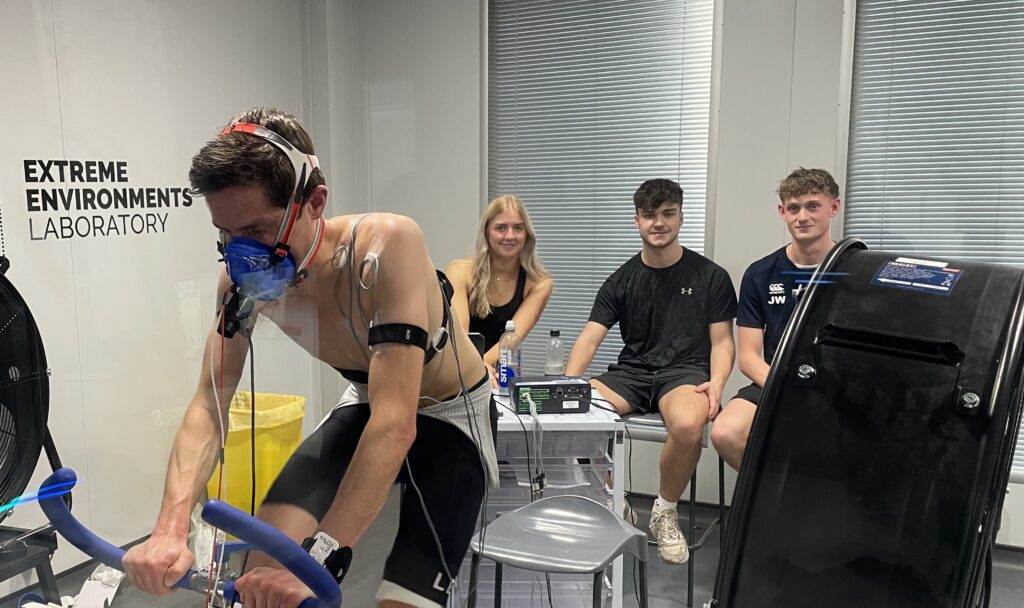
Harriet, James & Jack (pictured below L to R) spent several months in the environmental facilities testing a number of participants in extreme temperatures between 37 and 45 degrees C. The project generated some very interesting insight into how we tolerate extreme fluctuations in temperature.
In this new study published in the European Journal of Sport Sciences we brought together a large dataset (71 participants) using historical data to explore the factors that contribute to changes in thermoneutral VO2max following heat acclimation protocols.
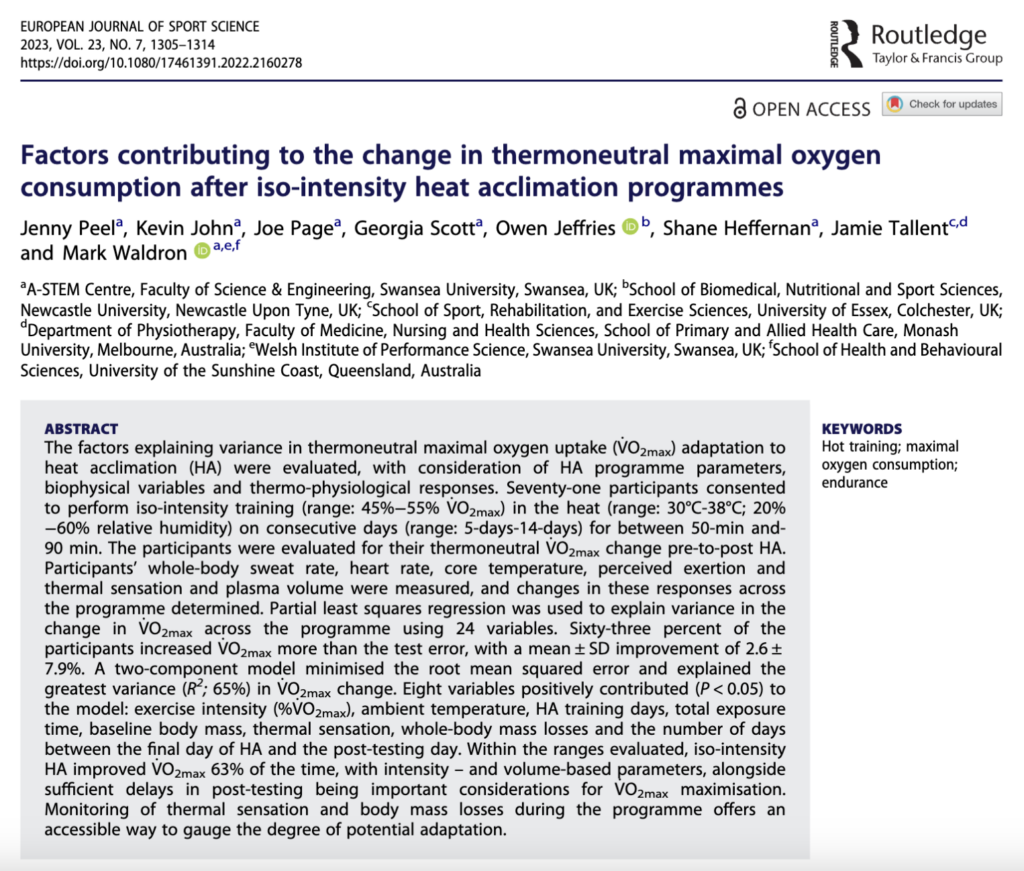
Eight variables were identified, however from a practical perspective reporting of thermal sensation and monitoring changes in body mass are easily accessible measures that can be used by practitioners.
The article can be found here: 10.1080/17461391.2022.2160278
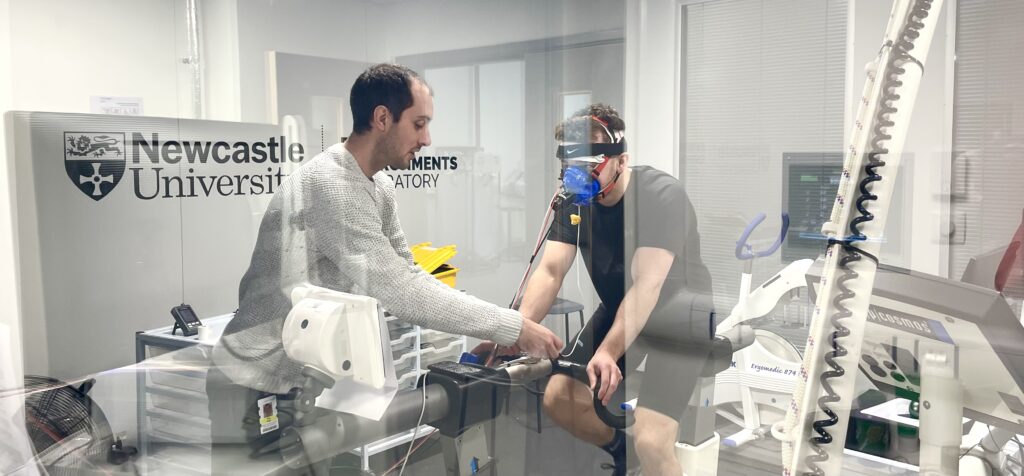
Ollie joined Newcastle University as a Graduate Teaching Assistant, starting a PhD in thermal physiology and diabetes at the beginning of 2022. He graduated from the University of Chichester with a BSc in Sport and Exercise Science in 2019. While in Chichester Ollie worked for the Occupational Performance Research Group alongside the Institute of Naval Medicine and British Armed Forces to assess physical employment standards, while also investigating the influence of extreme heat on gut function during exercise. Ollie then completed an MSc in Exercise Physiology from Loughborough University in 2021 and continued investigating extreme environments in his dissertation entitled ‘Induction and decay of LHTH/LHTL mediated adaptations and the optimisation of sea-level endurance performance in athletes: a systematic review and meta-analysis’.
With a childhood based around professional football, and simultaneously involving myself in multiple land and water sports, I have had many experiences of undertaking elite sport in challenging environments. Though no longer competing, my research in Exercise Physiology has led to trying to further improve athlete performance within challenging environments, whether heat or altitude.
Ollie’s PhD will focus on increasing our understanding of how thermal strain impacts the cardiovascular and metabolic responses in clinical patients with Type 1 and Type 2 Diabetes who typically present with increased vulnerability in hot climates. He will also explore mitigation strategies to alleviate the health risks posed by extreme heat.
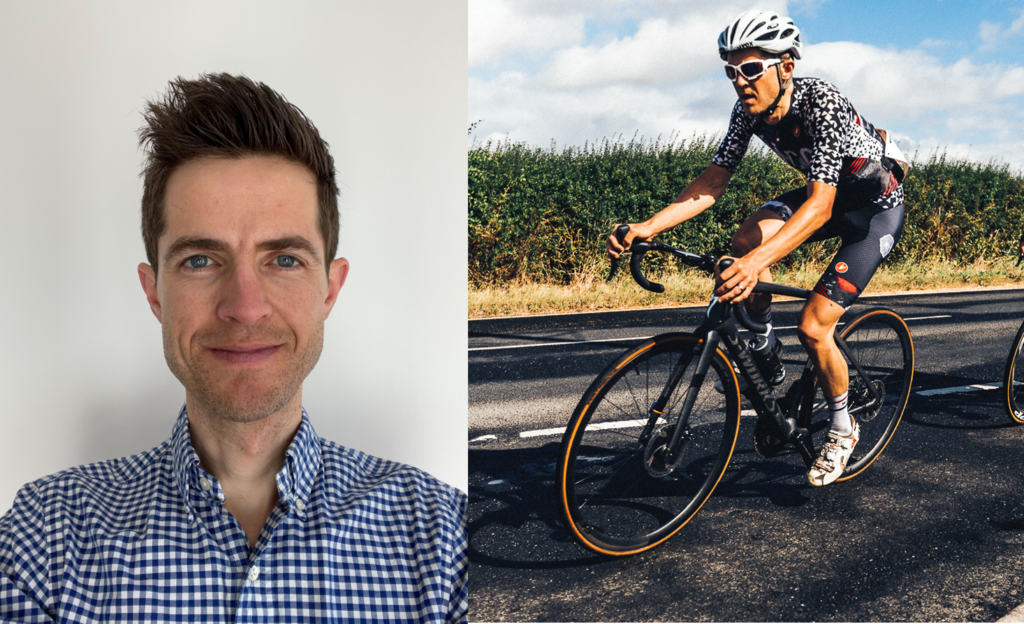
Lee joined Newcastle University as a Graduate Teaching Assistant starting a PhD in thermal physiology at the beginning of 2022. He is a previous engineering graduate from Newcastle University and initially started his professional career working as a Structural Engineer for ten years before his passion for Exercise Physiology brought him back to Newcastle University once again. Lee graduated in 2021 with a BSc in Sport & Exercise Science (SES). Lee’s PhD will focus on how thermal impulse acutely impacts physiological strain, adaptation and exercise tolerance to extreme heat stress. The aim is to provide evidence-based guidance for exercising as well as optimising how we prepare individuals for extreme hot and humid conditions.
As a keen cyclist, Lee’s interest in thermoregulation in the heat stemmed from having witnessed first-hand the impact severe environmental conditions can place on the human body while competing. Lee regularly takes part in cycling events with a typical season focusing on the National Hill Climb Championship. Lee also coaches a number of amateur cyclists, runners and triathletes and particularly enjoys applying the knowledge gained from his research to prepare his athletes for racing in challenging environmental conditions.