Author Archives: Annabel

Green Careers: Why You Should Choose a Career in Sustainability

Over the past few years, there has been an increased awareness for the state of the planet and the need to take action to avoid further environmental crisis. Sustainability is becoming central to the way we live and, as a consequence, the number of jobs in the industry has rapidly grown. This blog post will address why working in sustainability is a good idea, why the industry is not just for environmental science graduates and how Newcastle University Careers Service can help you break into the industry. 

Why a career in Sustainability? 

Having a career in sustainability can be an incredibly rewarding. It offers the opportunity to make a positive impact and help create solutions towards a better future. If you’re passionate about making a difference and contributing towards a better world, working in sustainability can offer you a sense of purpose and fulfilment which you may not find in other professions.  

Sustainability work is also a growing area with a wide range of career opportunities. From the government to the private sector, there is plenty of work within the industry. These roles can be varied from policy development to marketing to analytics roles, there is something for every skill set. 

It is exciting to be able to make changes to an organisation that will decrease its negative impacts on the world, and increase its positive impacts. In addition to the work that you put in in your organisation for sustainability, other sustainability professionals that you talk to and collaborate with are a really supportive bunch of people – I love that us in the sector all help each other out with our work because we go through the same challenges and there’s no reason not to share solutions and best practice – we all want each other to be the most sustainable we can be. 

KatY, sUSTAINABILITY oFFICER AT nEWCASTLE uNIVERSITY

But I didn’t do an Environmental Science degree? 

No problem! While environmental science is an important part of the industry, it is not the only discipline relevant to the field. Sustainability is highly interdisciplinary and professionals from many different industries can work within the field. For example, someone with a marketing background could be a sustainability communications officer or someone with a law background could work within environmental law.  

Prospects provides a great list of some environmental career profiles but this is not an extensive list and there are more opportunities than listed here. Newcastle University also have a page for sustainability careers and development which has a useful list of professional associations, funding opportunities, upcoming events and job sites to find jobs in sustainability. 

Although I am still at the early stages of my Sustainability Career, I love feeling as if I am making a positive impact each day. I am able to use my unique background in humanities subjects (Combined Honours in Geography and Spanish) to help bring a new perspective to current environmental issues and help create interdisciplinary solution.  It is really satisfying to see the positive difference I can make, and I am excited to continue to develop my skills as I move up in the field!  

How Newcastle Careers Service can help 

Newcastle University Careers Service can be a great place to find support and guidance about entering the Sustainability sector. They offer a range of resources including career information and guidance, CV and LinkedIn checks and preparation for interviews. You can book an appointment with the career’s service on MyCareer and speak to one of the University’s advisors. 

All current Newcastle Students and recent graduates of up to 3 years can make appointments with the service. 

You can also visit the career’s service dedicated environment page for further advice on gaining work experience and finding jobs in the sector. 

A Look Inside the SESC: How Newcastle University Students are Making a Difference

The Student Environment & Sustainability Committee (SESC) is a student-led group which looks to improve sustainability at the University. The group aims to gather feedback and understand student priorities regarding sustainability. The SESC is chaired by the Ethics and Environment Rep and is attended by Environment & Sustainability (E&S) Reps from many academic schools. Any student can sign up to be an E&S rep, just ask about the position at your school at the start of each academic year! 

The History 

The SESC was created in 2020 following student Emilie Coutin’s year as Ethics and Environment Officer. During her time in this role, Emilie set up numerous activities, including regular Ethics and Environment Discussion Groups and a Student-Staff Summit, where students were able to put their ideas to members of Executive Board. When Emilie left the post, she put plans in place to create a Student Environment and Sustainability Committee, to feed into the [Staff] Environment and Sustainability Committee. This became the SESC we have today. 

Watch our video to learn more about Student Action at Newcastle University!

Who is in the SESC? 

Attendance at SESC meetings is notexclusive to E&S reps; any interested students are welcome to attend and contribute. Just get in contact with your school’s E&S Rep, or NUSU’s Ethics and Environment Rep to ask to join a meeting.   Meeting outcomes  are  taken to the University’s Environment and Sustainability Committee (ESC). The [Staff] ESC   is mostly made up of colleagues but is also attended by one or more Students’ Union Sabbatical Officers, the Ethics and Environment Rep & a postgraduate officer. 

We have representatives on the SESC from schools across campus including: Architecture, GPS (Geography, Politics and Sociology), Psychology, Combined Honours, SNES (Natural and Environmental Sciences), Computing, English, Planning and Business. 

Read on to find out what being a SESC rep is like from the reps themselves. 

Why did you choose to become an Environment and Sustainability Rep? 

Being an Environmental and Sustainability Rep provides me with lots of opportunities to get involved in increasing climate issue awareness, campus development and other activities. I also get the great experience of working alongside the people who are striving for the better future and care about making our University environmentally friendly. – Vladislava 

While in year 11/6th form, I decided to become a member of the eco committee when I became more aware of our impact on the environment. After stage 1 at university, I wanted to become more involved in the university in some way, so I volunteered to be on the Student Staff Committee for my degree as a stage rep. There was an open position for the E&S rep, and I thought this would line up well with my role from the past. – Sham 

What does your role involve? 

A lot of teamwork and doing your own research. I usually go through some ‘hot topics’ related to the climate change, sustainability, local development etc. and try to brainstorm some ideas of how to apply it at our University. During the meeting we discuss all possible solutions to current issues and Reps can present their thoughts.  – Vladislava 

Away from the SESC meetings, I have worked with staff in my school towards reducing our impact on the environment as a degree specifically. This is ongoing and I can gather feedback from others on my degree/ in my school on things to bring up at SSC meetings, where I can either take it to SESC meetings to discuss or meet with staff to seek improvements. In the SESC meetings I provide feedback on any ongoing campaigns and play a role in helping organise any future events. I also gather information which is to be brought back to the SSC meetings to be distributed to students around the school/ degree. -Sham 

What would you say to somebody who is thinking about taking up this role next year? 

Our future begins here and now, and you can change it! Be brave, curious and use your potential as much as you can!  – Vladislava 

There doesn’t have to be a lot of work involved to make a difference and if it is something that you are passionate about then it won’t be any work at all. It feels great to be able to make an instant difference to what is happening around you when making changes within your sphere or around the university/ planning events. – Sham 

What are the Sustainable Development Goals and why are they important to Newcastle University?

The Sustainable Development Goals (SDGs) are a group of 17 interlinked targets created by the United Nations which aim to create a better and more sustainable global future. They address  challenges such as poverty, inequality and climate change. The goals recognise that in order to end poverty and other hardships, we must work towards improving health and education, reduce inequality and increase economic growth – all while working to preserve our natural landscape and combat climate change.   

Most of the SDGs have an end target of 2030, however some have no end date. 

The SDGs are: 

  1. No Poverty – End poverty in all its forms everywhere. 
  1. Zero Hunger – End hunger, achieve food security and improved nutrition and promote sustainable agriculture. 
  1. Good Health and Wellbeing – Ensure healthy lives and promote wellbeing for all. 
  1. Quality Education – Ensure inclusive and equitable quality education for all. 
  1. Gender Equality – Achieve gender equality and empower all girls and women. 
  1. Clean Water and Sanitation – Ensure availability and sustainable management of water for all. 
  1. Affordable and Clean Energy – Ensure access to affordable, reliable, sustainable energy for all. 
  1. Decent work and Economic Growth – Promote sustained, inclusive and sustainable economic growth, full and productive employment and decent work for all. 
  1. Industry, Innovation, and Infrastructure – Build resilient infrastructure, promote inclusive and sustainable industrialization and foster innovation. 
  1. Reduced Inequalities – Reduce inequality within and among countries. 
  1. Sustainable Cities and Communities – Make cities and settlements inclusive, safe, resilient and sustainable. 
  1. Responsible Consumption and Production – Ensure sustainable consumption and production patterns. 
  1. Climate Action – Take urgent action to combat climate change and its impacts. 
  1. Life Below Water – Conserve and sustainably use the oceans, seas and marine resources for sustainable development. 
  1. Life on Land – Protect, restore and promote sustainable use of terrestrial ecosystems, sustainably manage forests, combat desertification, and halt and reverse land degradation and halt biodiversity loss. 
  1. Peace, Justice and Strong Institutions – Promote peaceful and inclusive societies for sustainable development, provide access to justice for all and build effective, accountable and inclusive institutions at all levels. 
  1. Partnerships for the Goals – Strengthen the means of implementation and revitalize the Global Partnership for Sustainable Development 

Newcastle University 

Newcastle University is part of the University Global Coalition: a group of universities committed to supporting the UN with the Sustainable Development Goals. Each year, the group celebrates SDG Action and Awareness Week, raising awareness of the SDGs to colleagues and students and inspiring them to get involved. 

UNSDG Action and Awareness week (6-10th March 2023) was a great opportunity to present the work we do to try to embed our core value of Social and Environmental Justice into everything we do. The University is committed to tackling critical environmental issues while helping create a more just and fairer society. Visit Newcastle’s dedicated SDG page to see the work we are doing towards each of these goals. 

Newcastle University was recognised with a Times Higher Education Impact Ranking, which placed us first in the UK and eighth in the world in 2022. 

How can I be involved? 

  • Try to incorporate the SDGs into your research. You will often find that your work has links to multiple goals with little effort! 
  • Contact your school/faculty to see if any ongoing research is happening towards the SDGs.  
  •  Join the Sustainability Network if you are staff or a student. This is a great way to find out about more events relating to the SDGs. 
  • Continue reading our blog posts and implementing the advice within them! Our posts have plenty of useful information about the SDGs and ways you can help make positive change. 

Are you incorporating the SDGs into your research? Let us know in the comments below! 

What is the Energy Price Cap and what does it mean for you?

The terms ‘Energy Price Cap’ and ‘Energy Price Guarantee’ appear almost daily on the news and social media. They seem very important but, unfortunately, these phrases are not well explained, and many people don’t understand what they are and what this means for them. This blog will help clarify these terms, allowing you to better understand the current situation and manage your bills better. 

What is the Energy Price Cap (EPC)? 

The EPC was introduced by Ofgem (the Office of Gas and Electricity Markets) in January 2019. Its aim was to prevent households on variable tariffs being overcharged by limiting what you pay for each unit of gas and electricity. It also sets a maximum daily standing charge (the fare you pay to be connected to the grid). 

The EPC is largely calculated off wholesale prices (those that suppliers pay), network costs (building and maintaining the network) and supplier operating costs. It applies to households on standard and default tariffs which the majority of people are now on. If you are unsure what sort of tariff you are on, consult your energy provider. 

Myth: The Energy Price Cap is the maximum you can pay per year. 

Fact: There is no maximum charge for an energy bill, just a maximum daily standing charge & cost per energy unit. The price given by EPG and EPC is the average amount a household will spend per year. 

What is the Energy Price Guarantee (EPG)? 

As a result of very high energy prices, the EPG was created by the government in October 2022. This provides a discount on the EPC as the government is subsidising the cost of energy. For example, between 1st January and 31st March the energy price cap is £4,279/year however with EPG discount, this is reduced to £2,500/yr.  

The EPC changes every 3 months, and each time it changes, the government provides a discount to keep typical household bills lower. If the energy price cap falls below the EPG in the future, the EPC will be reinstated, and you’ll pay this instead. 

What does this mean for my household? 

As of January 2023, a household with a ‘normal’ amount of energy use would pay the EPG of £2,500/year. This is set to rise in April to £3,000 a year and will remain at this level until the end of March 2024. This is much lower than what the costs should have been for this winter but higher than previous years. 

The government has also given all households a £400 energy bills discount in October 2022. This should have been paid to you in 6 instalments taking £66 off your energy bills each month. If you use a bills package like UniHomes or Fused you should receive the discount from them as a reduction in your bills. If you pay your bills to your landlord, they are legally required to make sure you benefit from the rebate

There is also further aid for households on certain means, pensioners and those with disability benefits.  

What should I do if I’m struggling to pay my bills? 

If you are worried you may not be able to pay your energy bill, make sure to seek help. There are resources to help you and make sure you are not left cut off. These articles from The Money Saving Expert and Citizen’s Advice have some useful advice about the support available and how to access it. 

What if I still have questions? 

For further information about how the energy price cap affects you, see these pages from NUSU and The Money Saving Expert

Travelling Sustainably

One of the largest industries on the planet is the travel industry. Every year, millions of people travel across the globe for business, to see friends and family or just for a holiday getaway. Unfortunately, this industry is accompanied by problematic environmental impacts. In fact, according to the International Council on Clean transport (2019), aviation contributes 2.4% of all global carbon emissions. As we realise it is not possible to completely stop travelling, we have put together a few tips to help make your travels as environmentally friendly as possible. 

An airplane flying in the sky

Description automatically generated with medium confidence

  1. Fly Economy Class 

Flying business/first-class has a larger carbon footprint than flying economy class. This is because the business and first class seats are using much more space and are therefore accountable for a greater share of the aircraft’s fuel. Economy seats, especially on an airline with a high number of seats, are a lower impact option on the plane. 

  1. Travel slowly 

If you’re taking a short-haul or domestic trip, think about alternative methods of transport to flying. A train or coach can allow you to appreciate culture as you travel to your destination. If you’re looking for a sustainable way to reach a destination, check out this carbon saving emissions tool by Manchester University. 

  1. Try to avoid layovers 

Did you know that the highest amount of greenhouse gases of a plane journey, are released during take-off and landing? This means that if you make multiple stops on your trip the extra emissions can quickly add up. Connecting flights also mean you usually have to travel a greater distance, adding even more emissions onto the journey. 

  1. Find local adventures 

If it is not necessary for your trip to be abroad, why not explore your local area instead? There are often some great destinations within a few hours train or car ride away. Here are some great short trips you can travel to by train and by car from Newcastle. 

Local Adventures! Some pictures from our team of North-East treasures.  

Bamburgh Castle
Holy Island, Lindisfarne
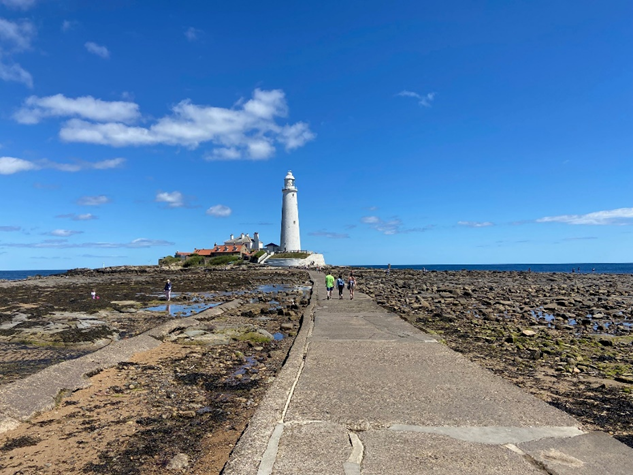
St Mary’s Lighthouse, Whitley Bay

What about carbon offsetting? 

Carbon offsetting involves individuals or companies investing in environmental projects in order to balance out their own carbon emissions. This could include activities such as forestry conservation (to encourage plants that remove carbon dioxide from the atmosphere) or the creation of renewable energy resources. Whilst these projects may appear very beneficial, carbon offsetting does not come problem free. 

Carbon offsets do not work for the core issue of reducing greenhouse gas emissions. They often allow a ‘business as usual’ approach, encouraging an idea that you can just offset whatever carbon you produce. Furthermore, not all of these projects are realised, and sometimes those that are, aren’t completed to their full potential. For example, you may pay to create a forest, however if that forest burns down in its infancy, the project’s full efficacy is not reached. 

For carbon offsetting to be an effective action, it must be coupled with reducing your overall emissions and not just as a substitute for reducing. 

Have we missed one of your favourite eco-friendly travel tips? Let us know in the comments below! 

The Newcastle Clean Air Zone: Your questions answered

A Clean Air Zone (CAZ) has now been introduced for parts of Newcastle in order to improve air quality and reduce greenhouse gas emissions. Confused about what this means for you? This blog post will hopefully answer your questions. 

What is the CAZ and when does it start? 

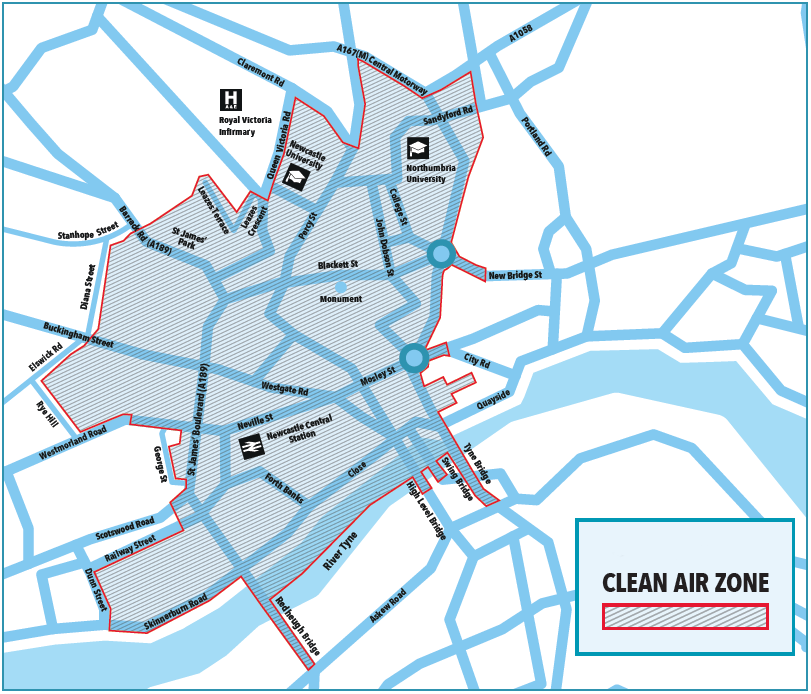
The CAZ is an area within Newcastle where measures have been put into place in order to improve air quality. The zone covers most of Newcastle city centre as well as the Tyne, Swing, High Level and Redheugh bridges. Only buses, coaches, taxis, vans and heavy goods vehicles that do not meet Clear Air Zone emissions standards are affected by the zone. Private cars are currently not affected. 

Map of the Clean Air Zone in Newcastle City Centre. View an interactive map on the Newcastle CAZ (Breathe) webpages. 

The CAZ is now in place, however no charges will apply to vehicles (taxis, buses, coaches and HGVs) until 30th January 2023. Charges for vans and light goods vehicles will be delayed until July 2023 due to national vehicle supply issues. 

Why do we need a CAZ? 

Clean air is essential to our wellbeing. Poor air quality is linked to serious health conditions including heart disease, cancers and breathing problems. This can be especially serious in older people, young children and those who spend a lot of time driving. As a consequence, the government made it a legal requirement for councils to take action to reduce harmful levels of nitrogen dioxide emissions from vehicles. A CAZ is a highly effective way of doing this. 

Newcastle isn’t alone in introducing a CAZ. Several other cities have implemented them including Bath, Birmingham, Bradford, Bristol, Portsmouth and soon Sheffield. 

A CAZ will also support important efforts to reduce carbon emissions from vehicles in the city. 

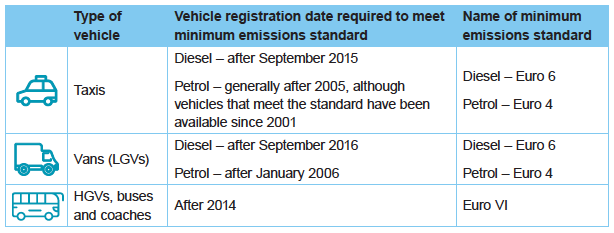
How do I know if my vehicle will be charged? 

You can check if your vehicle is affected by the CAZ by using the government’s online vehicle checker.  

Table showing a guide as to which vehicles meet the CAZ standards. Make sure to check your vehicle using the link above. 

If your vehicle does not meet CAZ standards, you can apply for funding to help replace/upgrade it so that it is complaint with the new rules. There is eligibility criteria and advice on applying for a grant online on the Newcastle CAZ (Breathe) webpages. 

Some vehicles are exempt from the new charges. These include emergency vehicles, agricultural vehicles, motor caravans and community transport vehicles. You can find a full list of national and local exemptions, and information on how to apply for an exemption, on the Newcastle CAZ (Breathe) webpages

How does the CAZ affect Newcastle University

Newcastle University has a fleet of commercial vehicles, for example, for the Estates and Facilities porter team, and some minibuses. 

The University will be ensuring that all our vehicles are in line with CAZ policy. 

What if I have further questions? 

If you have any further general questions about the CAZ, email the local council at caz.helpdesk@newcastle.gov.uk. 

Or for University-specific questions email the Estates helpdesk at ess-helpdesk@newcastle.ac.uk. 

Tips for a ‘Planet Healthy’ Plate

Veganuary 

It is unlikely that you have not heard of Veganuary yet – the vegan challenge for the month of January, created and run by a non-profit organisation here in the UK. You might not have known that it was such an official campaign, and that, if you wanted to, you can sign up to the challenge and join an online community of others doing it too. Whether you sign up officially or go at your own pace without committing to signing up, we want to provide support for decreasing your animal product consumption. 

Why vegan? 

There are two main reasons that people decide to become vegan or plant-based: animal ethics and/or environmental issues, and we will be shining a light on the environmental side. 

Globally, agriculture uses nearly 40% of land, 70% of freshwater and is responsible for up to 30% of global greenhouse gas emissions (Willett, 2019). Moreover, land conversion for food production is the largest driver of global biodiversity loss (ibid). Dairy and meat products have an especially high environmental impact in comparison to other food groups. This because the process of raising animals is overall much more carbon intensive than harvesting plants. Animal-based food production involves clearing forests for animal pasture, making millions of tons of animal feed and large amounts of waste generated from farm animals. It is therefore important that we re-examine what we eat and move towards an eco-friendlier diet.  

“Converting grass into (meat) is like converting coal to energy. It comes with an immense cost in emissions.” –Joseph Poore 

A recent report by the EAT-Lancet Commission (2019) describes a ‘planetary health plate’. This consists of mostly ‘vegetables and fruits, with the rest made up with whole grains, plant protein sources, unsaturated plant oils, and, occasionally, small amounts of meat or fish.’ Considering this, we have put together a few tips and tricks for how you can cut down on your animal product consumption in an easy, tasty way! 

Tips 

  1. Enjoy inadvertently plant-based foods 

Some of your favourite foods might be totally vegan, you have just not realised or known it! 

In almost every global cuisine, there are inadvertently vegan dishes which remain at the heart of every meal. From Indian favourites such as dhal or bhajis/pakoras to Arab plates like falafel and hummus, there is ‘vegan’ food everywhere! Even a simple tin of baked beans is plant-based! Tofu is great example of a naturally plant based signature ingredient. In South-East Asian meals, it has been used for many years to create delicious dishes. We highly recommend finding some of these great traditional recipes and giving them a go! 

  1. Discover new ingredients 

For many people, a lack of knowledge around produce makes a plant-based diet seem very limited. However, a bit of research can show that this is very much not the case. There are hundreds of delicious edible plants and fungi to choose from, some of which you may have never heard of. Why not try a recipe for a jackfruit curry or Sticky Shiitake Mushrooms? They really are delicious! 

  1. Reinvent what you know 

A great way to start incorporating more plant-based meals into your diet is to reinvent dishes you know and love. Try swapping some of the meat/dairy ingredients for plant-based alternatives. You might even find you like the vegan alternative better than the original! Check out these recipes for a plant-based chilli, pizza and macaroni cheese.   

Vegan pancakes! These delicious pancakes from a café in Newcastle are completely vegan!
  1. Try a non-dairy milk 

Plant-based milks have grown hugely in popularity in recent years due to their environmental credentials. From oat to soya to almond, there is plenty of choice when it comes to milk alternatives! Take your time to try a few different alternatives ‘til you find which one suits you. 

Key fact: for those living in the UK, oat milk comes out as the most sustainable plant milk option (by considering production and transport emissions). Read more about the different plant milks on the Ethical Consumer webpages

  1. Make small switches 

There are plenty of small switches you can make in your kitchen which can help you make a smooth transition to a more plant-based lifestyle. Trying using oil instead of butter when you cook or maple/golden syrup instead of honey. These changes shouldn’t alter the flavour of your dish too much and puts you well on your way to a more sustainable diet. 

Did we miss one of your favourite vegan tips? Let us know in the comments! 

Did you know? 

Animal products are used in food and beverage production in ways you might be shocked by. 

One example is alcohol. Some alcoholic drinks use animal products in their filtration processes, so are not classed as vegan or plant-based. Lots of wine, beer and cider is produced using gelatine, casein or isinglass (made of fish bladders!). Have a look at your favourite tipple to find out whether it’s vegan or not! 

References  

Willett, W. et al. (2019) “Food in the Anthropocene: The EAT–lancet commission on healthy diets from sustainable food systems,” The Lancet, 393(10170), pp. 447–492. Available at: https://doi.org/10.1016/s0140-6736(18)31788-4

Top 6 Sustainable Fashion Tips

In the past, clothes shopping used to be a special event. It was restricted to something we mostly did when we no longer fit in what we had, or the seasons changed. However, around 25 years ago, this trend changed. 

Fast fashion is a business model which involves copying and mass-producing catwalk/fashion trends. This usually happens very quickly as it aims to make products available while demand is still high. Unfortunately, this usually means that clothes are cheaply made and so are thrown away after a few wears.  Furthermore, the production of these clothes often has serious social and environmental consequences including the over abstraction and pollution of water sources and the exploitation of workers. 

We have put together a few simple tips to stay in style in a more eco-friendly way. 

  1. Be more informed. 

Before you buy something do some background research about the brand’s social and environmental values. This will help you to understand the story behind your purchase and make an informed decision about whether you would like to buy it or not. Sites such as Good on You or the Fashion Transparency Index make finding this information super simple and help you to avoid any greenwashing.  

  1. Change your attitude to shopping. 

Only take to the shops when there is something you need rather than as a way to pass time. This will stop you buying things you don’t need and creating unnecessary waste when they are discarded. Try taking up an alternative hobby such as crocheting or knitting. The results are much more satisfying and better for your wallet too! 

  1. Invest in a Capsule Wardrobe. 

The fast fashion industry is designed to make you feel ‘out of trend’ after a few short weeks. While previously many brands had 4 fashion ’seasons’, many now have 52 ‘micro-seasons’, bringing out new styles every week. This means that it can be difficult to stay up to date with current trends and clothes are quickly disregarded by consumers after a few short wears. We recommend instead investing in a capsule wardrobe. This involves buying some timeless pieces including coats, jackets and t-shirts which you can re-wear throughout the seasons. This will not only help the environment but save you money too! Check out this link for how to create your own capsule wardrobe. 

  1. Look after your Clothes. 

Looking after your clothes is one of the best ways to make sure your garments look great for as long as possible. Make sure you read the care label and only tumble dry if necessary. We also recommend trying to repair your broken items before buying new. Not only will this increase the life of your clothes but also gives you the opportunity to explore your creative side! 

  1. Buy Second-Hand 

Vintage or second-hand shopping has hugely increased in popularity in the last few years and you can certainly see why! Buying clothes second-hand keeps them in circulation for longer, thereby saving them from entering landfill. It can also help save you money and enables you to create your own unique style! Check out Depop and Vinted or some of the great charity and vintage shops we have in Newcastle for some great second-hand finds! 

An amazing charity shop find! This outfit was created by one of our students from clothes she bought from local charity shops.
  1. Rent your Outfit 

Got a big event coming up but don’t want to buy something you will only wear once? Why not rent an outfit! There are plenty of websites you can rent an outfit for an occasion and return it as soon as your event is over. 

Top Tip: Only order what you’ll wear! Some websites will not refund you if you don’t wear the item and will give you store credit instead. This is great if you want to hire clothes in the future s but works out expensive if it’s just a one off! 

Know any more sustainable fashion tips? Let us know your favourite in the comments below! 

COP27 – What Went Well and What Needs Work

COP27, Sharm El-Sheikh

Over the last couple of weeks, the world has been watching leaders talk about the future of our climate at COP27. The event, which has been happening annually since 1992, brings politicians, diplomats and non-governmental organisations from around the world to discuss the effects of climate change and actions we can take to combat it. These measures aim to keep the world below 1.5°C warming [from pre-industrial levels], a point at which, according to the International Panel on Climate Change (IPCC), ‘climate impacts will become increasingly harmful for people and the entire planet.’

Whilst there have been some positive advancements made at Sharm El-Sheikh, it is clear that we are not taking enough action to limit warming. We have identified three things that went well at the conference and three items which require more work.

What went well

A Loss and Damage Fund was established

The highlight of COP27 was the creation of the ‘loss and damage fund’. This monetary support will go to poorer nations who have suffered damage and economic loss as a result of climate change and the climate crisis that has unfolded. The formation of this fund is hugely significant as it overcomes decades of resistance from richer nations who are the primary contributors of greenhouse gas emissions. It is also the most significant gesture made in acknowledging inequalities surrounding the climate crisis.

Although the historic deal still has a way to go in terms of discussing its operation and which nations will contribute, the deal is a big step in the right direction.

Children and Young people had a voice for the first time

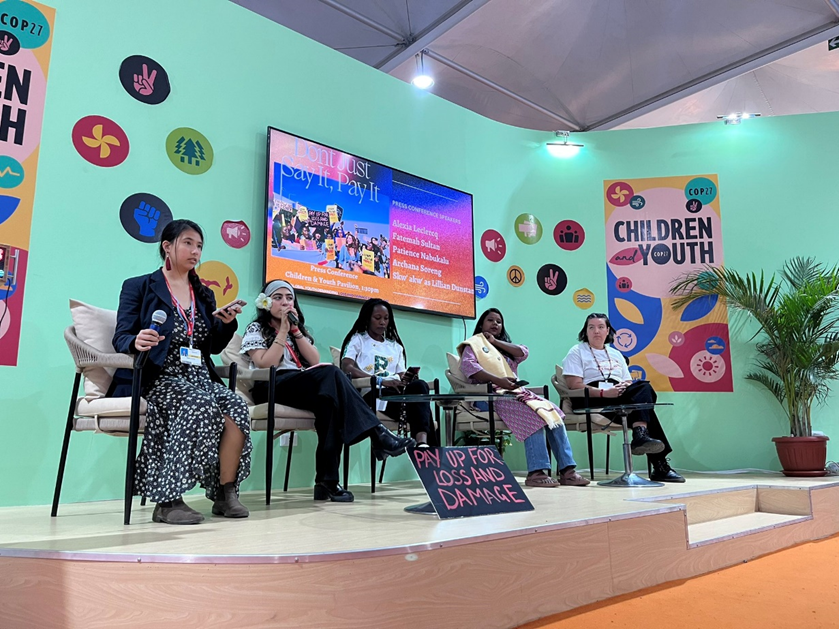
For the first time this year, children and young people were given an official space at the conference. The Children and Youth Pavilion gave young people a chance to hold discussions and policy briefings like never before. The inclusion of this platform is highly significant, especially as climate change is said to disproportionately affect children and young people.


Image of the COP27 Youth Pavillion

It got people talking

Large events like COP27 put the climate crisis at the forefront of diplomatic agenda and the global media. They bring both rich and poor nations together to discuss an issue which affects us all and requires a global response. The high-profile nature of these events means the climate crisis is given much more media time and encourages conversations which otherwise may not have been had.

What needs work

A lack of female representation

A BBC analysis of the event found that less than 34% of country negotiating staff were women and, in some teams, staff were over 90% men. This is very problematic, especially as research has found women to be disproportionately affected by the effects of climate change. Women are more likely to depend on the land for their income and food and these resources are being increasingly threatened. Moreover, they are usually responsible for securing water, and when resources run dry, they must walk greater distances to find them. This leaves them exposed to increased risks of gender-based violence.

Gender equality is crucial to future talks about climate change. It is only by acknowledging the struggles women face and listening to their inputs that effective change can be made. We therefore hope that future negotiations will have equal representation.


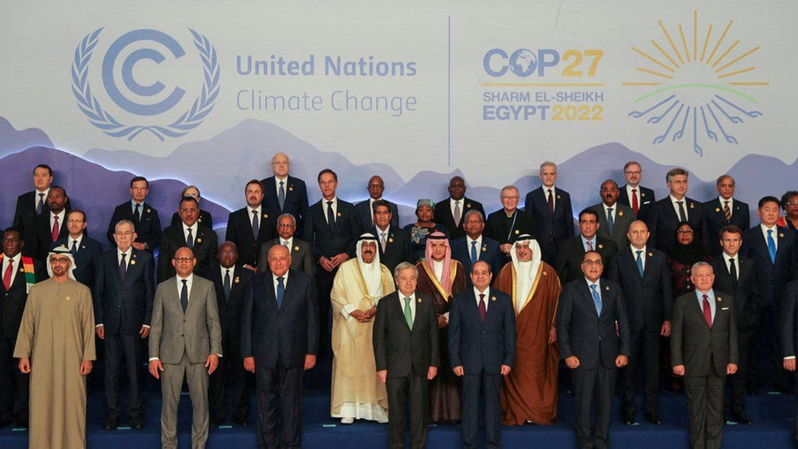
The lack of women at the event can clearly be seen by the COP27 ‘family photo’. Out of the 110 leaders present, just 7 of them were women.

There were too many fossil fuel lobbyists.

A new analysis found that there were over 600 fossil fuel lobbyists at COP27 this year. This was higher than the number in COP25 in Glasgow last year and more than the combined number of delegates from the 10 most climate-impacted countries. These people often push quick-fix solutions which allow companies to carry on as usual and make little to no change. Furthermore, they are known to delay policymaking processes and participate in greenwashing.

‘If you are going to discuss malaria, don’t invite the mosquitoes,’ – Philip Jakpor, Public Participation Africa

It is essential that we keep the interruption from these corporate lobbyists to the minimum and ensure the most vulnerable voices are instead elevated.  

There was no direct action taken against reducing fossil fuels.

Despite the advances made with the creation of the Loss and Damage Fund, many other areas suffered losses at COP27. Very limited action was taken to directly reduce emissions, and the final deal produced involved a significant step back in terms of language used around fossil fuels. The text now refers to ‘low emission and renewable energy’, an ambiguous new phrase which could invite fossil fuels to be part of a green future. This loophole would allow the development of further gas resources, as gas produces less carbon dioxide emissions than coal.

“I said in Glasgow that the pulse of 1.5C was weak. Unfortunately, it remains on life support.” – Alok Sharma, UK COP26 President

In order to ensure the target of keeping warming to 1.5°C is met, more drastic actions to phase out fossil fuels must be implemented. The UAE’s COP28 must better address this concern if we are to limit warming and protect people and the planet.

What did you think of COP27? Let us know in the comments below what you thought went well and what you think needs work for COP28.

5 Tips to have a Green Halloween

This spooky season, the scariest thing might not be a ghost or a ghoul! Every year, millions of Halloween costumes and party décor are bought only to be disposed of straight after the holiday. In fact, a 2019 report by the Fairyland Trust, found that 7 million costumes Halloween costumes are thrown away every year. That’s the equivalent of 83 million plastic bottles! To help combat this trend, we have put together some simple tips to have a more eco-friendly Halloween.

  1. Re-use, Repair and Recycle your Costume

Not sure what to wear this Halloween? Why not upcycle some of your old clothes! This are plenty of costumes you could create with very little effort and cost too.

If you can’t find any inspiration in your own wardrobe, why not organise a Halloween clothes swap? You can trade old outfits with members of your local community. This is a great way to not only get a ‘new outfit’ but meet new people.

Skip the queues! 30min+ waiting times reported at this Newcastle costume shop last year!

2. Get crafty with your Halloween Decorations

There are plenty of low-waste ways to decorate for Halloween. As well as reusing your spooky décor from last year, there are plenty of green craft ideas you can try! Decorate some old glass jars with some ghostly designs or use old cardboard to make tombstones.

If you want to buy some new decorations, check out your local second-hand shop. You can find some great treasures there which you can use year after year.

If you plan to use candles for decorating, make sure they are eco-friendly. The majority of candles are made from paraffin, a product made from unsustainable fossil fuels. Try using candles made from soy, coconut, rapeseed or beeswax instead.

3.  Use your pumpkins wisely

Pumpkins are an essential part of every Halloween- we buy 39.9 million every year! Nevertheless, a large proportion of these pumpkins are wasted and go uneaten. Make the most of your pumpkin by using the insides to make a delicious recipe. Our team particularly love these recipes for pumpkin dopiaza, banana bread and pumpkin cake.  

If your pumpkin is no longer usable after Halloween, make sure to put it in your compost bin.  Pumpkins left outside could be consumed by hedgehogs, making them ill thus, hindering their preparation for hibernation.

4.  Ditch the disposables for your party

If you plan on having a Halloween party this year, try to avoid using disposable plates and cups. These are often made of plastic which cannot be recycled and ends up in landfill. If you don’t own enough supplies, try borrowing from a friend or visiting your local second-hand shop.  

You can also set out clear recycling bins for glass and food waste. Not only will stop unnecessary waste going to landfill but will also help with your clean up afterwards!

5. Make your own Halloween Treats

If you plan to host a Halloween party, why not make your own treats? There are plenty of brilliant recipes for homemade Halloween snacks to choose from. From ghost cookies to pumpkin hummus you will be spoilt for choice!

If you do don’t want to hand out homemade treats to trick or treaters, buy packaged products from ethical brands. Look out for Fairtrade products or other independent certifications on packaging and check that the packaging is easily recyclable. If you have snacks left over that you won’t eat, share them on a food waste app such as Olio. This means another person can benefit from your amazing Halloween treats!

Have we missed one of your favourite Green Halloween tips? Let us know in the comments below!