Category Archives: All Blogs

What is solar energy?

There are many ways that energy is created across the world, and these are grouped into renewable and non-renewable energy sources. Non-renewable energy refers to natural sources that take thousands of years to form and produce harmful greenhouse gases when they are burned for energy. The most used non-renewable energy sources are coal, oil, and gas, also known as fossil fuels.

When fossil fuels are burned, they produce greenhouse gas emissions which trap in the world’s heat and raise the global temperature. The world is currently experiencing a climate crisis due to increased global temperature. There are numerous negative impacts that are being felt internationally due to the climate crisis, such as increased natural disasters and accelerated loss of species.

Renewable energy refers to various natural sources that replenish themselves rapidly, unlike non-renewable energy sources. Sources of renewable energy include solar, wind, wave, geothermal, tidal, and hydro-electric.

Within this post we will be outlining what solar energy is, how solar energy works, and we will explore solar energy’s presence on Newcastle University’s estate.

What is solar energy?

Solar energy is initially generated by the sun in a constant and renewable process of nuclear fusion. This energy is what lights and warms our planet during the day.

How is solar energy turned into usable power?

Solar energy can be harnessed using multiple methods, the most common method uses photovoltaic systems. Photovoltaics are used in solar cells and panels which form what is known as arrays when they are placed together in groups. Photovoltaics use semiconductors such as silicone to absorb sunlight and generate electricity in the form of a direct current. When the energy has been generated, it is then converted into an alternating current so that it can power objects within a building, which is completed by an inverter.

Why is Newcastle University investing in solar energy?

Newcastle University has invested in solar energy for a plethora of reasons. The installation of solar panels on our current infrastructure such as roof tops is relatively simple, whereas the installation of small-scale wind energy infrastructure is difficult on our campus due to the vast amount of space required. Solar energy is also scalable, the number of panels required depends on the amount of energy required by the University, as this ensures that we can generate this energy on campus instead of buying it. Solar energy is also incredibly efficient and has a medium cost level to high efficiency and production ratio, meaning it is a desirable form of energy to produce for Newcastle University’s needs.

Close up of a solar panel

Current use of solar energy on Newcastle University’s estate

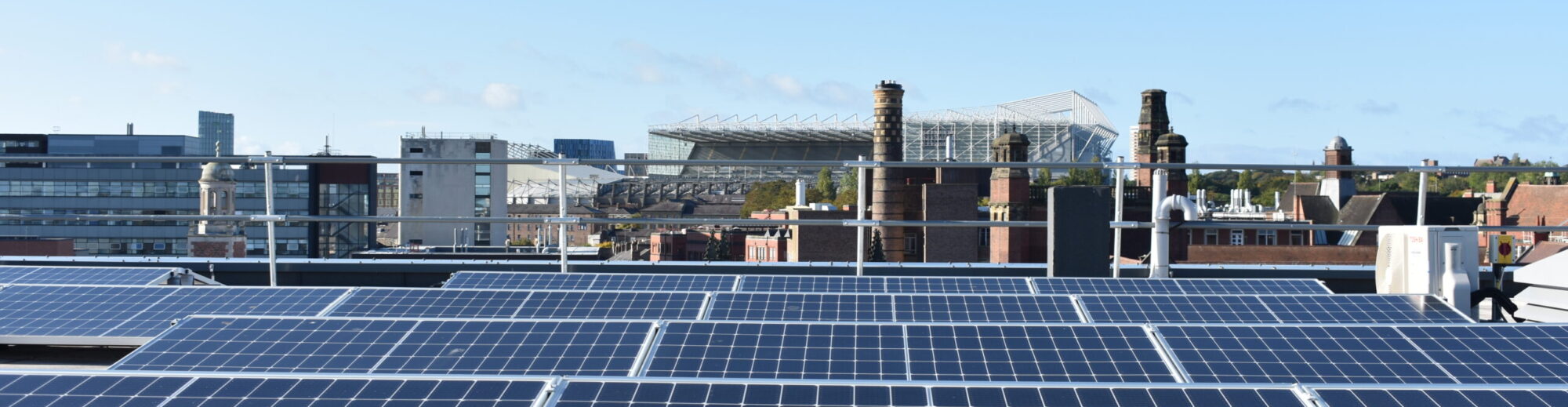
Newcastle University currently has 13 solar arrays in a variety of sizes. The energy created by these solar arrays contributes towards the energy usage of the University. Some of the arrays on campus are made up of a few panels on smaller buildings, but we also have a number of larger arrays on buildings like King’s Gate, Henry Daysh, and the Frederick Douglass Centre.

We use a software called Solar Edge to monitor the amount of electricity being created across the arrays. The system also recognises if one of the panels becomes damaged and informs us.

Thank you for reading this post, if you have any questions please email us at sustainable-campus@newcastle.ac.uk

Forms of commuting to get to Newcastle University

Commuting at Newcastle University

Commuting is a part of nearly everyone’s working or studying life at Newcastle University, which is why it is included within our Climate Action Plan. Staff and student commuting contributes to around 3% of the University’s scope 3 carbon emissions alongside other sources such as business travel and capital goods. For many years, travelling by car has been the preferred travel option due to convenience, however there are more sustainable methods of commuting that create less emissions such as forms of active travel. The University community can decrease their individual carbon footprints through acts such as adapting their commuting habits, this would also decrease the University’s.
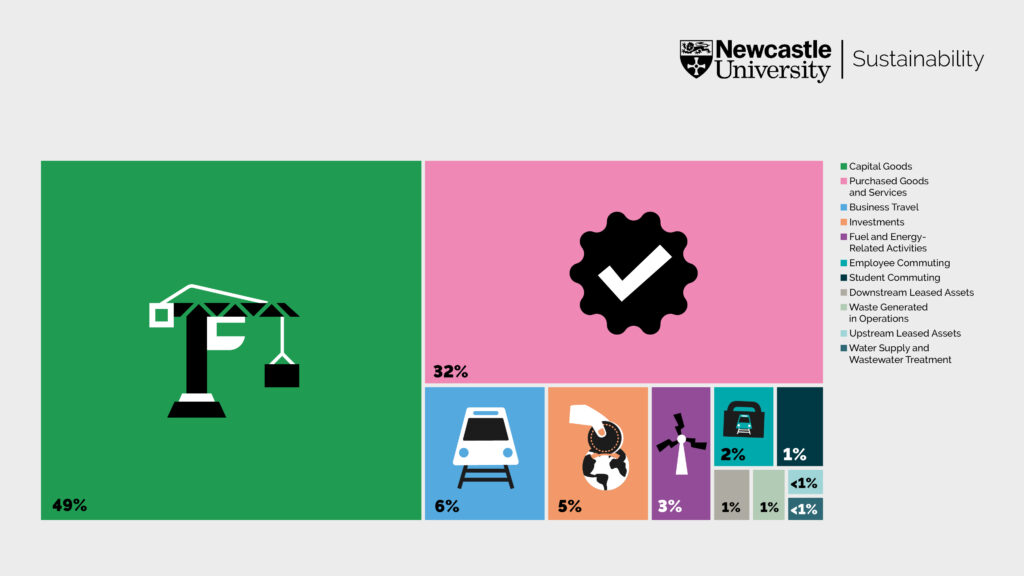
Newcastle University scope 3 emissions – headline activity % breakdown (tCO2e) p19 from our Climate Action Plan

There are multiple forms of sustainable travel that we can use to get onto Newcastle University’s campus and this post aims to communicate the various benefits of them. We will also outline the facilities and initiatives that are available to staff and students which could make the methods of travel easier for you.

Active forms of travel

Active travel refers to the extensive variety of travel methods that require using your own body to get from A to B. This includes forms of travel such as walking, wheeling, cycling, running, and using a scooter. There are multiple benefits of active travel which include:  

Benefits of active travel

  • Environmental: Utilising active travel contributes towards the reduction of air pollution, as many forms of motorised transport contribute to air pollution. If we collectively avoid the use of private motorised transport when we can, we are able to reduce air pollution globally. This also helps to reverse the biodiversity loss that stems from increased global temperature.
  • Mental wellbeing benefits: It has been noted by Sustrans that “an increase in physical activity has been proven to be associated with benefits to mental health”. Therefore, if your form of regular commuting includes physical activity, this could potentially help to improve your mental health.

Walking, wheeling, scooting and running to campus

Walking, wheeling, or running to campus are excellent methods of commuting as they all include the benefits listed. When travelling by these methods to campus, it is worth noting that there are facilities available on campus such as showers and changing facilities which are available for staff and students to use.
Locations of these facilities can be found in Newcastle University’s Travel Plan.

Cycling to campus

If the previous methods of active travel are not suitable for you, cycling is an alternative option. This can be an excellent option if you have a longer commute and the University has some initiatives and groups that may help you with the transition.

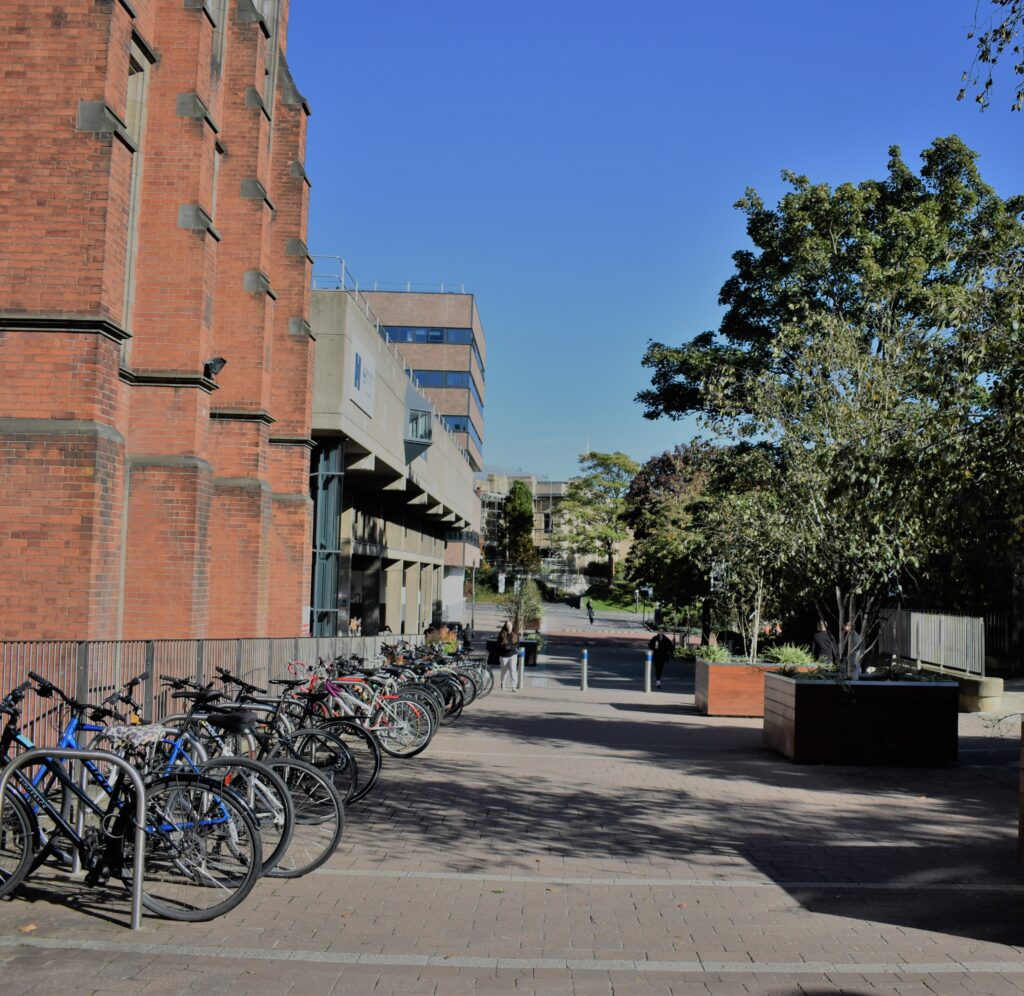
  • The University has multiple storage facilities available across campus where you can leave your bike for the day. By providing storage facilities and compounds we hope to remove the worry about where to keep your bike while you are at work or studying. Information regarding where the storage facilities are and how you can get access to secure compounds can be found here.
  • The University also has a Bicycle Users Group (BUG) that University staff and students can join on Microsoft Teams. The group communicates information to each other such as safety tips, useful commuting routes and other travel news that relates to all cycling matters.

To be added to the BUG Microsoft Teams group, please contact sustainable.campus@ncl.ac.uk with the subject “Join BUG”.

  • The University provides a cycle-to-work-scheme benefit that helps staff members spread the cost using salary sacrifice when they are looking to purchase a new bicycle. The scheme is provided and managed by People Services.
  • There are facilities, including showers, available on campus for those who use forms of active travel such as cycling to commute to the University.
Other forms of travel

There are plenty of other ways to travel to work when active transport alone is not feasible. These include:

  • Bus – Many bus routes are currently only £2 for a single and £4 for a day ticket. There are also other discounts available for frequent bus users.
  • Metro – A quick and easy way to get to the city centre. The Metro has many discounted travel schemes and information on these can be found here. Use the General Ticket Finder to find the best ticket for your journey.
  • Rail – For longer journeys, rail can be a great way to commute. There are lots of options available to save on your journey including numerous types of railcard and season/flexi tickets.

Events coming up:

Sustainability Week: We are hosting a Sustainability-themed week in March. It will include a variety of in-person and virtual events and will conclude with an in-person Sustainability Festival on Friday 10th March. Please join us to learn more about sustainability and climate action at Newcastle University.
Fake bills February: Are you a first-year student who is worried about paying energy bills next year after living in halls? We are collaborating with ResLife who work within Newcastle University’s Accommodation Service to break down the confusion surrounding energy bills. With the cost-of-living crisis being a prominent element in everyday life for many students, we are aiming to help you feel more confident in understanding what you will be paying for. 

If you are a student who lives in one of Newcastle University’s student villages, you can enter a competition that will provide you with a mock energy bill so you can work out some missing figures that are missing by using the equations and information provided. Enter the competition here.
What is the Energy Price Cap and what does it mean for you?

The terms ‘Energy Price Cap’ and ‘Energy Price Guarantee’ appear almost daily on the news and social media. They seem very important but, unfortunately, these phrases are not well explained, and many people don’t understand what they are and what this means for them. This blog will help clarify these terms, allowing you to better understand the current situation and manage your bills better. 

What is the Energy Price Cap (EPC)? 

The EPC was introduced by Ofgem (the Office of Gas and Electricity Markets) in January 2019. Its aim was to prevent households on variable tariffs being overcharged by limiting what you pay for each unit of gas and electricity. It also sets a maximum daily standing charge (the fare you pay to be connected to the grid). 

The EPC is largely calculated off wholesale prices (those that suppliers pay), network costs (building and maintaining the network) and supplier operating costs. It applies to households on standard and default tariffs which the majority of people are now on. If you are unsure what sort of tariff you are on, consult your energy provider. 

Myth: The Energy Price Cap is the maximum you can pay per year. 

Fact: There is no maximum charge for an energy bill, just a maximum daily standing charge & cost per energy unit. The price given by EPG and EPC is the average amount a household will spend per year. 

What is the Energy Price Guarantee (EPG)? 

As a result of very high energy prices, the EPG was created by the government in October 2022. This provides a discount on the EPC as the government is subsidising the cost of energy. For example, between 1st January and 31st March the energy price cap is £4,279/year however with EPG discount, this is reduced to £2,500/yr.  

The EPC changes every 3 months, and each time it changes, the government provides a discount to keep typical household bills lower. If the energy price cap falls below the EPG in the future, the EPC will be reinstated, and you’ll pay this instead. 

What does this mean for my household? 

As of January 2023, a household with a ‘normal’ amount of energy use would pay the EPG of £2,500/year. This is set to rise in April to £3,000 a year and will remain at this level until the end of March 2024. This is much lower than what the costs should have been for this winter but higher than previous years. 

The government has also given all households a £400 energy bills discount in October 2022. This should have been paid to you in 6 instalments taking £66 off your energy bills each month. If you use a bills package like UniHomes or Fused you should receive the discount from them as a reduction in your bills. If you pay your bills to your landlord, they are legally required to make sure you benefit from the rebate

There is also further aid for households on certain means, pensioners and those with disability benefits.  

What should I do if I’m struggling to pay my bills? 

If you are worried you may not be able to pay your energy bill, make sure to seek help. There are resources to help you and make sure you are not left cut off. These articles from The Money Saving Expert and Citizen’s Advice have some useful advice about the support available and how to access it. 

What if I still have questions? 

For further information about how the energy price cap affects you, see these pages from NUSU and The Money Saving Expert

An introduction to biodiversity

What is biodiversity? 

Biodiversity is a term you may hear a lot, but what does it actually mean? A simple way to define it is that it describes the variety of plant and animal life in a given area. The more biodiverse an area is, the more ecosystem services it provides. When trying to imagine the complexity and intricacy of biodiversity, next time you are outside in nature, think about all the living animals, plants, and micro-organisms around you and how they interact with each other and form an ecosystem. 

Thriving biodiversity supports life as we know it, however, when biodiversity is diminished, many ecosystems crumble which affects the availability of “food, clean water, medicine, and shelter” (WWF). When ecosystems are out of balance, the species within that ecosystem suffer due to lack of adequate food or a stable environment which enables species extinction to occur at a rapid rate. 

On a human level, conserving biodiversity is not just important to enable future generations to enjoy nature – it is essential to continue the survival of our species. 

What happens without thriving biodiversity? 

When ecosystems are under threat, change to the environment and species chain will be altered, sometimes to the point of no repair. To prevent this from occurring, we must do all we can to protect our ecosystems and repair any damage that we may cause. It is vital that we work together internationally to ensure the wide variety of ecosystems worldwide are protected from human impact. To read more about recent global action agreed at COP15, the UN Biodiversity Conference, read our round-up blog post

What do I need to know about the biodiversity crisis? 

Unfortunately, humans have damaged many ecosystems globally and without rapid reversal, some of these ecosystems will no longer function effectively. Biodiversity is under a major threat, and this is clear due to the very rapid level of species decline. WWF’s 2022 Living Planet Report found an “average 69% decline in global populations of mammals, fish, birds, reptiles and amphibians since 1970”. If this level of species decline continues, the world will face an extremely high number of animals becoming endangered and potentially extinct, which will induce irreversible damage to ecosystems.  

Like climate change, we can prevent these catastrophic events from occurring if we change our behaviours and work as an international community to reduce and reverse negative ecological impacts. 

What factors are contributing to the biodiversity crisis? 

  • Climate change 
  • Habitat loss or degradation such as land clearing, deforestation, and coral reef bleaching 
  • Wildlife poaching or hunting and overfishing 
  • The spread of invasive species  

Can the biodiversity crisis be reversed? 

The good news is that the biodiversity crisis is potentially reversible, however, according to the Living Planet Report (WWF, 2022), “we have a last chance to act. This goes beyond conservation. A nature-positive future needs transformative – game changing – shifts in how we produce, how we consume, how we govern, and what we finance”. While it is good news that we are still able to reverse some of the negative impacts of the biodiversity crisis, it has been outlined that this will require immediate and extensive international action. 

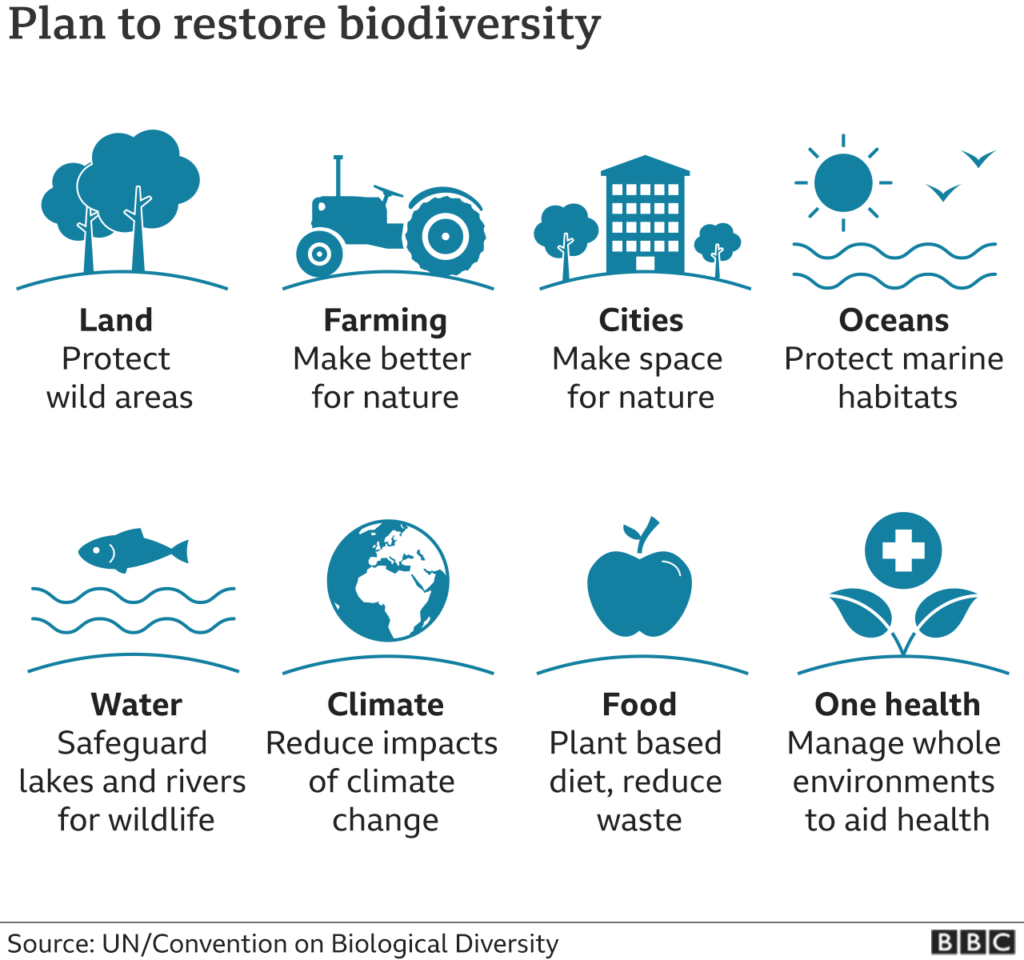
One step in the right direction is the recent introduction of the Kunming-Montreal Global biodiversity framework at the United Nations Convention on Biological Diversity in December 2022. This framework has set four global goals and 23 targets which are essential to restoring our ecosystems through implementing strategies, resource protection, monitoring and global review.  

Biodiversity at Newcastle University 

Newcastle University has an ambitious Climate Action Plan which outlines our targets and actions to reach net-zero carbon emissions by 2030. 

We acknowledge that the climate and ecological emergencies are deeply intertwined, and to work towards better addressing the ecological emergency, we became a founding member of the Nature Positive Universities Alliance in December 2022. The initiative was launched at COP15 and is a joint project created by the University of Oxford and the UN Environment Programme (UNEP) and requires universities to calculate a baseline of their effects on biodiversity, set targets to minimise their impacts, take action to address the identified impacts, and report annually and transparently on progress. 

We are in the early stages of our nature positive journey, so watch this space for updates! 

What the University has done for biodiversity on campus so far:  

  • We are a Silver Accredited Hedgehog Friendly Campus.
  • The Grounds Team planted >1200m2 of wildflower areas across campus in 2022, with plans to expand these areas in 2023. Keep an eye out for wildflower blooms across campus in the warmer months! 
  • We also have bat boxes and barns on campus.  

A bat barn for local Pipistrelle bats next to the University’s Park View Student Village.

    Thanks for reading and watch this space for next week’s blog post!

    Travelling Sustainably

    One of the largest industries on the planet is the travel industry. Every year, millions of people travel across the globe for business, to see friends and family or just for a holiday getaway. Unfortunately, this industry is accompanied by problematic environmental impacts. In fact, according to the International Council on Clean transport (2019), aviation contributes 2.4% of all global carbon emissions. As we realise it is not possible to completely stop travelling, we have put together a few tips to help make your travels as environmentally friendly as possible. 

    An airplane flying in the sky

Description automatically generated with medium confidence

    1. Fly Economy Class 

    Flying business/first-class has a larger carbon footprint than flying economy class. This is because the business and first class seats are using much more space and are therefore accountable for a greater share of the aircraft’s fuel. Economy seats, especially on an airline with a high number of seats, are a lower impact option on the plane. 

    1. Travel slowly 

    If you’re taking a short-haul or domestic trip, think about alternative methods of transport to flying. A train or coach can allow you to appreciate culture as you travel to your destination. If you’re looking for a sustainable way to reach a destination, check out this carbon saving emissions tool by Manchester University. 

    1. Try to avoid layovers 

    Did you know that the highest amount of greenhouse gases of a plane journey, are released during take-off and landing? This means that if you make multiple stops on your trip the extra emissions can quickly add up. Connecting flights also mean you usually have to travel a greater distance, adding even more emissions onto the journey. 

    1. Find local adventures 

    If it is not necessary for your trip to be abroad, why not explore your local area instead? There are often some great destinations within a few hours train or car ride away. Here are some great short trips you can travel to by train and by car from Newcastle. 

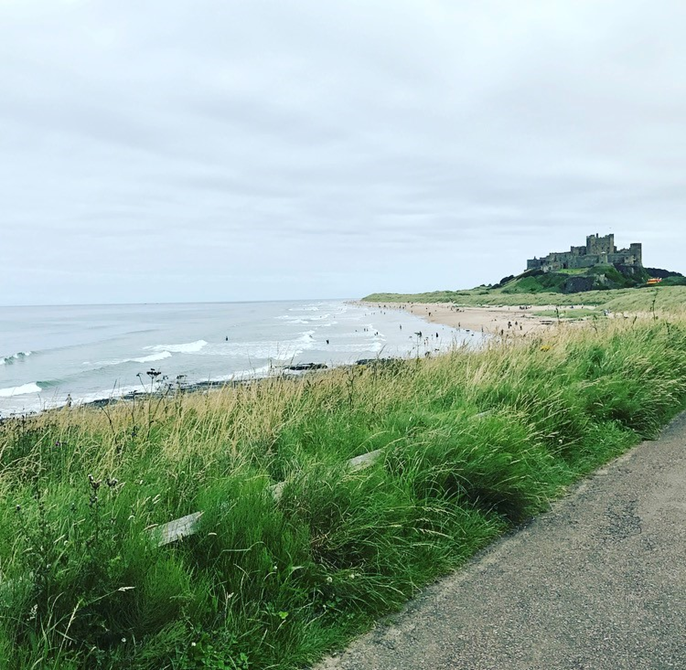
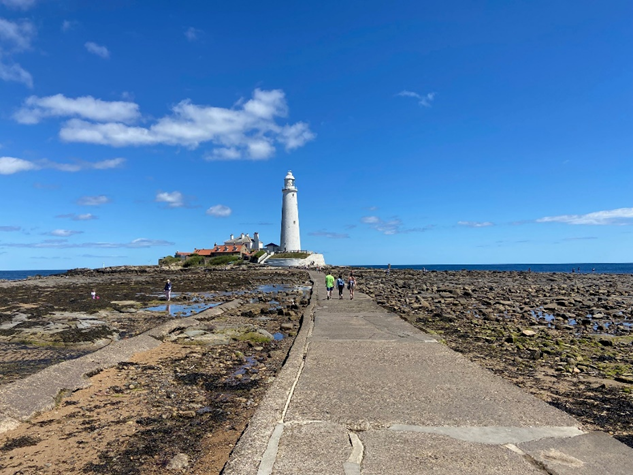
    Local Adventures! Some pictures from our team of North-East treasures.  

    Bamburgh Castle
    Holy Island, Lindisfarne
    St Mary’s Lighthouse, Whitley Bay

    What about carbon offsetting? 

    Carbon offsetting involves individuals or companies investing in environmental projects in order to balance out their own carbon emissions. This could include activities such as forestry conservation (to encourage plants that remove carbon dioxide from the atmosphere) or the creation of renewable energy resources. Whilst these projects may appear very beneficial, carbon offsetting does not come problem free. 

    Carbon offsets do not work for the core issue of reducing greenhouse gas emissions. They often allow a ‘business as usual’ approach, encouraging an idea that you can just offset whatever carbon you produce. Furthermore, not all of these projects are realised, and sometimes those that are, aren’t completed to their full potential. For example, you may pay to create a forest, however if that forest burns down in its infancy, the project’s full efficacy is not reached. 

    For carbon offsetting to be an effective action, it must be coupled with reducing your overall emissions and not just as a substitute for reducing. 

    Have we missed one of your favourite eco-friendly travel tips? Let us know in the comments below! 

    The Newcastle Clean Air Zone: Your questions answered

    A Clean Air Zone (CAZ) has now been introduced for parts of Newcastle in order to improve air quality and reduce greenhouse gas emissions. Confused about what this means for you? This blog post will hopefully answer your questions. 

    What is the CAZ and when does it start? 

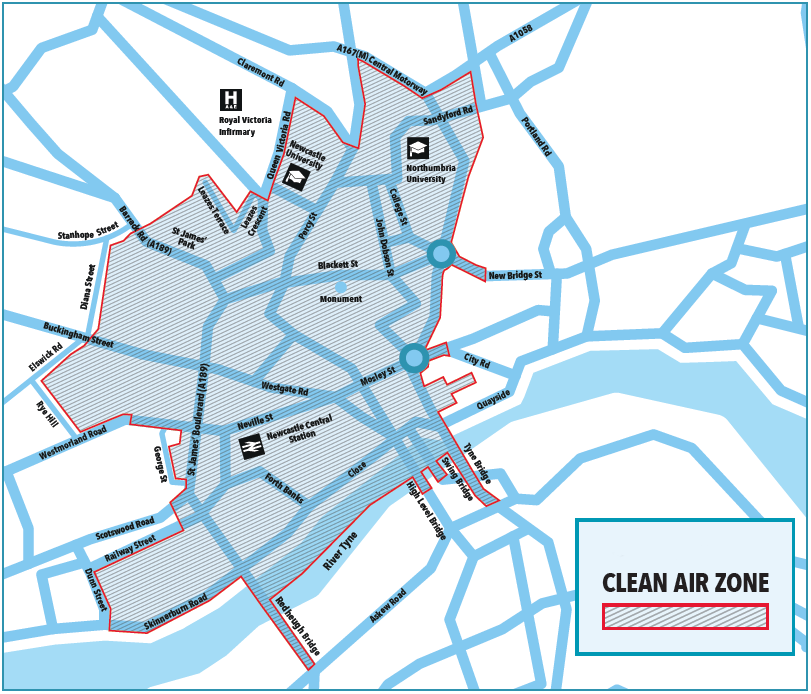
    The CAZ is an area within Newcastle where measures have been put into place in order to improve air quality. The zone covers most of Newcastle city centre as well as the Tyne, Swing, High Level and Redheugh bridges. Only buses, coaches, taxis, vans and heavy goods vehicles that do not meet Clear Air Zone emissions standards are affected by the zone. Private cars are currently not affected. 

    Map of the Clean Air Zone in Newcastle City Centre. View an interactive map on the Newcastle CAZ (Breathe) webpages. 

    The CAZ is now in place, however no charges will apply to vehicles (taxis, buses, coaches and HGVs) until 30th January 2023. Charges for vans and light goods vehicles will be delayed until July 2023 due to national vehicle supply issues. 

    Why do we need a CAZ? 

    Clean air is essential to our wellbeing. Poor air quality is linked to serious health conditions including heart disease, cancers and breathing problems. This can be especially serious in older people, young children and those who spend a lot of time driving. As a consequence, the government made it a legal requirement for councils to take action to reduce harmful levels of nitrogen dioxide emissions from vehicles. A CAZ is a highly effective way of doing this. 

    Newcastle isn’t alone in introducing a CAZ. Several other cities have implemented them including Bath, Birmingham, Bradford, Bristol, Portsmouth and soon Sheffield. 

    A CAZ will also support important efforts to reduce carbon emissions from vehicles in the city. 

    How do I know if my vehicle will be charged? 

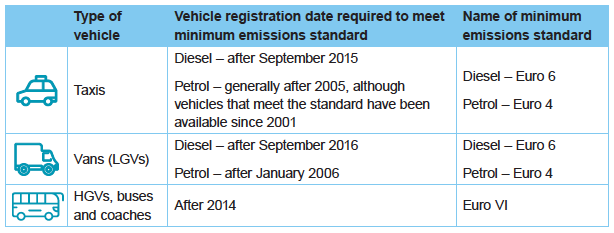
    You can check if your vehicle is affected by the CAZ by using the government’s online vehicle checker.  

    Table showing a guide as to which vehicles meet the CAZ standards. Make sure to check your vehicle using the link above. 

    If your vehicle does not meet CAZ standards, you can apply for funding to help replace/upgrade it so that it is complaint with the new rules. There is eligibility criteria and advice on applying for a grant online on the Newcastle CAZ (Breathe) webpages. 

    Some vehicles are exempt from the new charges. These include emergency vehicles, agricultural vehicles, motor caravans and community transport vehicles. You can find a full list of national and local exemptions, and information on how to apply for an exemption, on the Newcastle CAZ (Breathe) webpages

    How does the CAZ affect Newcastle University

    Newcastle University has a fleet of commercial vehicles, for example, for the Estates and Facilities porter team, and some minibuses. 

    The University will be ensuring that all our vehicles are in line with CAZ policy. 

    What if I have further questions? 

    If you have any further general questions about the CAZ, email the local council at caz.helpdesk@newcastle.gov.uk. 

    Or for University-specific questions email the Estates helpdesk at ess-helpdesk@newcastle.ac.uk. 

    Small sustainable swaps for your kitchen

    Whilst some of these products may have properties that are more sustainable than other products that we are likely to use, the most sustainable option is to use what you currently have if it is in a good condition or you have plenty of it. However, should you run out of some kitchen essentials then you should check out the post below for some eco-conscious swaps if you would like to try something new. 

    Washing up:  

    While some households have a dishwasher, some do not, therefore we need to address the various amounts of single-use plastic involved with mainstream washing up practices. Here are a few easy swaps to reduce the plastic in your kitchen sink:  

    • Do you need a new dish scrubber? You could swap to a bamboo and wooden brush for washing dishes instead of a plastic brush. When buying one of these brushes try and get one where you replace the scrubbing head only instead of the handle and the head as this will cut down on waste in addition to plastic. Products made from natural fibres will decompose naturally in a compost bin however plastic sits in landfill for many years. Some places that you can buy these from include: Nil Living, Peace of the Wild and eco-living. 
    • If you use disposable plastic sponges you could swap these out for an alternative such as a loofah dish sponge, these can be bought from Nil Living.  
    • An additional swap would be to use a reusable container with a pump for washing up liquid instead of buying single-use bottles. To fill the container up, either take it to a refill shop (like Nil Living in Grainger Market) or order a refill of washing up liquid from various retailers online (however when doing this try to make sure it comes in a 100% recyclable packet. Alternatively, you could try solid washing up soap bars instead such as the ones sold in Something Good.  

    Cleaning surfaces: 

    Often the products that we use to clean our work surfaces in the kitchen are in the form of disposable wipes or single-use plastic spray bottles. Here are a few swaps that could eliminate both products from your kitchen and keep it sparkling and clean. 

    • Switch to cleaning products that send out biodegradable refill sachets (or recyclable packaging) instead of single-use products. Some that we recommend are Method or Ocean Saver. This means that the bottle you use for your spray will be continuously reused instead of the single use sprays that are commonly bought. 
    • You can also try reusable dish and dusting cloths which can go in the wash instead of kitchen roll or non-reusable wipes.

    Washing clothes  

    Unfortunately, even everyday necessary activities contribute to marine plastic pollution, and this includes washing your clothes. Many clothes are made (in whole or in part) from plastics such as nylon and acrylic, which release fibres of microplastics when washed and end up in our drains, waterways and the sea.

    “Plastic particles washed off from synthetic clothes contribute up to 35% of the primary microplastic that is polluting our oceans”

    Planet care
    • The initial step when attempting to prevent microplastics from reaching the sea starts from before washing and stems from buying. When looking to invest in new garments (second hand or new) you could try to opt for natural fibre made products such as cotton, hemp or linen that will not release plastic. 
    • You could also invest in a microfiber filter for your washing machine which will help to catch most of the fibres that are released during washes such as the one made by PlanetCare. Alternatively, you could use a Guppy Bag to wash your garments in which also helps to capture most of the fibres. 
    • When washing your clothes, washing machines often automatically opt for the higher temperature settings even when they aren’t required, so before you put a wash on you could turn down the dial to 30 degrees to save energy and your clothes from excess heat.  
    • If you have a garden to hang your laundry to dry outside instead of using a tumble dryer (particularly in the summer) this will also help you to save money and energy within your household. If you don’t have a garden, hanging your clothes out to try indoors and using a small dehumidifier is still more energy efficient than using a tumble dryer. 

    Food 

    Studies have shown that food systems make up somewhere in the region of a third of global carbon emissions. By being conscious of what and how much we buy, we can help minimise the food waste coming out of our households and into landfill where it breaks down and produces even more greenhouse gases. We hope this helps to give you some inspiration for how you can operate your kitchen with sustainability as well as tasty food in mind. 

    • You can opt for loose fruit and vegetables, if possible, you can take a bag with you to the market (such as Grainger Market) to carry them in and this way you will only buy what you need and will not be buying single use plastic. 
    • Try to eat seasonally to the country that you are in as this will mean you are buying better quality produce and will not need to be flown in. If you have a garden, you could have a go at growing some easy produce such as carrots, potatoes and herbs. 
    • To avoid adding food waste scraps to landfill, you could keep a food waste caddy in your kitchen and build a compost heap in your garden and use the output to add nutrients to your soil. 
    • Do you like to batch cook? We do too as it helps to save energy! Put your leftovers in Tupperware instead of cling film as these can be reused unlike cling film and it will also prevent spillages in your bag. You can save your takeaway containers after washing them to put your lunches and snacks in.  
    • We have also got a food waste post filled with tips for those who would like to reduce their food waste which you can find here: 

    Events in January: 

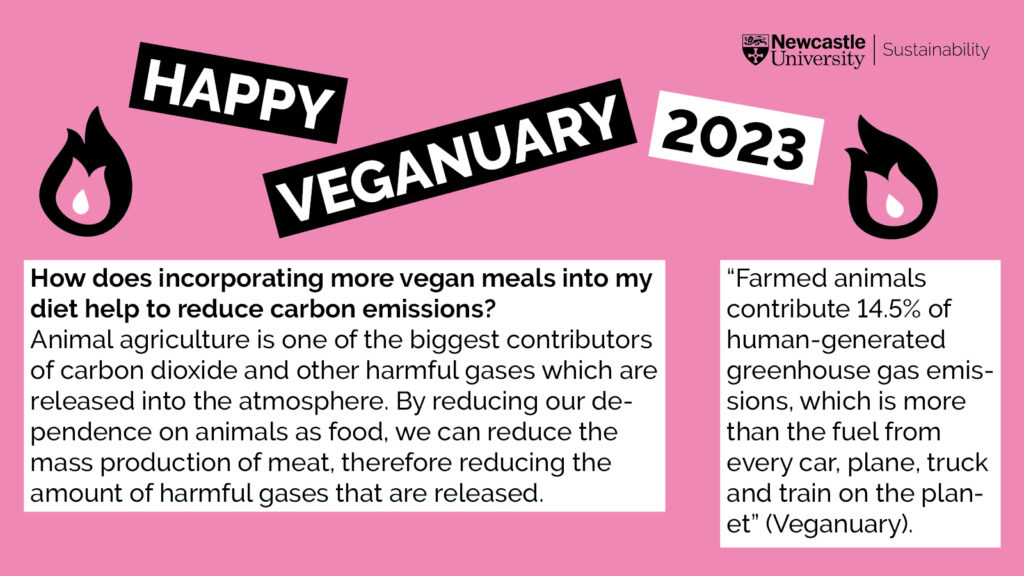
    Veganuary: If you haven’t tried a plant-based diet, Veganuary is a great opportunity to give it a go! Eating a more plant-based diet reduces the carbon footprint of our food.  

    It is no secret that as an international community we need to reduce the harmful emissions that are an output from mass agricultural farming so if you are curious about participating in this challenge have a look at the Veganuary website and check out our recent blog post, please get in touch if you have any questions about this blog post or Veganuary.  

    Tips for a ‘Planet Healthy’ Plate

    Veganuary 

    It is unlikely that you have not heard of Veganuary yet – the vegan challenge for the month of January, created and run by a non-profit organisation here in the UK. You might not have known that it was such an official campaign, and that, if you wanted to, you can sign up to the challenge and join an online community of others doing it too. Whether you sign up officially or go at your own pace without committing to signing up, we want to provide support for decreasing your animal product consumption. 

    Why vegan? 

    There are two main reasons that people decide to become vegan or plant-based: animal ethics and/or environmental issues, and we will be shining a light on the environmental side. 

    Globally, agriculture uses nearly 40% of land, 70% of freshwater and is responsible for up to 30% of global greenhouse gas emissions (Willett, 2019). Moreover, land conversion for food production is the largest driver of global biodiversity loss (ibid). Dairy and meat products have an especially high environmental impact in comparison to other food groups. This because the process of raising animals is overall much more carbon intensive than harvesting plants. Animal-based food production involves clearing forests for animal pasture, making millions of tons of animal feed and large amounts of waste generated from farm animals. It is therefore important that we re-examine what we eat and move towards an eco-friendlier diet.  

    “Converting grass into (meat) is like converting coal to energy. It comes with an immense cost in emissions.” –Joseph Poore 

    A recent report by the EAT-Lancet Commission (2019) describes a ‘planetary health plate’. This consists of mostly ‘vegetables and fruits, with the rest made up with whole grains, plant protein sources, unsaturated plant oils, and, occasionally, small amounts of meat or fish.’ Considering this, we have put together a few tips and tricks for how you can cut down on your animal product consumption in an easy, tasty way! 

    Tips 

    1. Enjoy inadvertently plant-based foods 

    Some of your favourite foods might be totally vegan, you have just not realised or known it! 

    In almost every global cuisine, there are inadvertently vegan dishes which remain at the heart of every meal. From Indian favourites such as dhal or bhajis/pakoras to Arab plates like falafel and hummus, there is ‘vegan’ food everywhere! Even a simple tin of baked beans is plant-based! Tofu is great example of a naturally plant based signature ingredient. In South-East Asian meals, it has been used for many years to create delicious dishes. We highly recommend finding some of these great traditional recipes and giving them a go! 

    1. Discover new ingredients 

    For many people, a lack of knowledge around produce makes a plant-based diet seem very limited. However, a bit of research can show that this is very much not the case. There are hundreds of delicious edible plants and fungi to choose from, some of which you may have never heard of. Why not try a recipe for a jackfruit curry or Sticky Shiitake Mushrooms? They really are delicious! 

    1. Reinvent what you know 

    A great way to start incorporating more plant-based meals into your diet is to reinvent dishes you know and love. Try swapping some of the meat/dairy ingredients for plant-based alternatives. You might even find you like the vegan alternative better than the original! Check out these recipes for a plant-based chilli, pizza and macaroni cheese.   

    Vegan pancakes! These delicious pancakes from a café in Newcastle are completely vegan!
    1. Try a non-dairy milk 

    Plant-based milks have grown hugely in popularity in recent years due to their environmental credentials. From oat to soya to almond, there is plenty of choice when it comes to milk alternatives! Take your time to try a few different alternatives ‘til you find which one suits you. 

    Key fact: for those living in the UK, oat milk comes out as the most sustainable plant milk option (by considering production and transport emissions). Read more about the different plant milks on the Ethical Consumer webpages

    1. Make small switches 

    There are plenty of small switches you can make in your kitchen which can help you make a smooth transition to a more plant-based lifestyle. Trying using oil instead of butter when you cook or maple/golden syrup instead of honey. These changes shouldn’t alter the flavour of your dish too much and puts you well on your way to a more sustainable diet. 

    Did we miss one of your favourite vegan tips? Let us know in the comments! 

    Did you know? 

    Animal products are used in food and beverage production in ways you might be shocked by. 

    One example is alcohol. Some alcoholic drinks use animal products in their filtration processes, so are not classed as vegan or plant-based. Lots of wine, beer and cider is produced using gelatine, casein or isinglass (made of fish bladders!). Have a look at your favourite tipple to find out whether it’s vegan or not! 

    References  

    Willett, W. et al. (2019) “Food in the Anthropocene: The EAT–lancet commission on healthy diets from sustainable food systems,” The Lancet, 393(10170), pp. 447–492. Available at: https://doi.org/10.1016/s0140-6736(18)31788-4

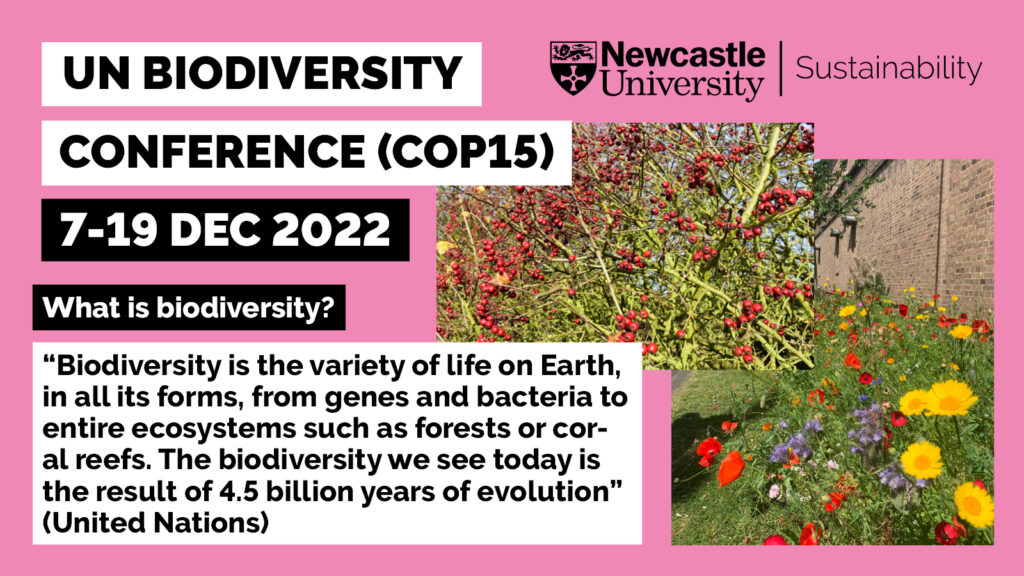
    United Nations Biodiversity Conference (COP15)

    The biodiversity conference occurs every two years and took place last month in Montreal, Canada. Within this summit an extremely important discussion surrounding a potential international biodiversity framework was the centre of goals and targets regarding biodiversity. The importance of thriving biodiversity and the significance of the biodiversity crisis has been summarised succinctly here: 

    “Nature is critical to meeting the Sustainable Development Goals and limiting global warming to 1.5 degrees. Adoption of a bold global biodiversity framework that addresses the key drivers of nature loss is needed to secure our own health and well-being alongside that of the planet”

    United Nations Environment Program

    Within this post, we will review some of the positive outcomes of the conference and outline what these mean for the biodiversity crisis.  

    Positive outcomes from the conference: 

    • Kunming-Montreal Global Biodiversity Framework 

    One of the biggest outcomes from the conference was the Kunming-Montreal Global Biodiversity Framework. This is an international commitment that has been adopted by 196 countries, the framework lists four long term biodiversity orientated goals for 2050 and 23 action orientated global targets that aim to be addressed by 2030.  

    The importance of the creation, implementation and adoption of this framework is very high as it provides goals, targets, resources, information, and connections for countries on a global scale. Frameworks provide tools and structures to enable change more rapidly, which is exactly what the world needs if we are going to be able to reverse the most extreme biodiversity loss that we are currently facing. As highlighted in the opening paragraph, biodiversity loss is an international problem that requires an international solution, and this framework is an important starting block for change.  

    • Nature Positive Universities Alliance 

    Oxford University and the United Nations Environment Program announced the launch of the Nature Positive Universities Alliance. The alliance is:  

    “A global network of universities that have made an official pledge to advance efforts to halt, prevent and reverse nature loss through addressing their own impacts and restoring ecosystems harmed by their activities”

    Oxford News

    The alliance aims to bring together universities across a global platform and encourage them to prioritise nature on university campuses.  At the time of writing, 522 universities from 11 countries have made a Nature Positive Pledge, and 118 Student Ambassadors have signed up to take action on their campuses. 

    Making a Nature Positive Pledge requires institutions to commit to four key stages: assessing a baseline, setting SMART targets, taking action, and annual, transparent reporting on progress. 

    We are thrilled to announce that Newcastle University was one of the founding signatories of the pledge announced in Montreal at the Biodiversity Conference. 

    For more information on the Nature Positive Universities Alliance, visit their webpage

    • Announced support for the Indigenous community: 

    Within talks regarding the Global Biodiversity Framework were prominent discussions regarding the need to provide support and positive recognition towards indigenous communities when discussing biodiversity. 

    Indigenous peoples and their communities have been highlighted as crucial defenders of biodiversity and should be protected alongside their land. This is highlighted by the Guardian as “Several scientific studies have shown that Indigenous peoples are the best stewards of nature, representing 5% of humanity but protecting 80% of Earth’s biodiversity”.  

    Talks regarding the need for support of Indigenous peoples and local communities proved to be successful as target 3 in the Global Biodiversity Framework specifically outlines rights, territories and contributions by Indigenous Peoples and local communities to deter from land grabbing, this has been celebrated by the International Indigenous Forum on Biodiversity (IIFB).  

    It is worth noting:  

    While these three positive outcomes from the biodiversity conference are a very positive step in the right direction for biodiversity protection, it is also worth recognising some elements that can be improved on within the framework and in future conferences.  

    • Lack of focus on oceans in the Global Biodiversity Framework 
    • There are no measurable elements to the Global Biodiversity Framework so how do we measure and track progress? 
    • Conservation of land must include restoration otherwise wildlife will not be getting the help it needs (BBC News).  

    Conclusions: 

    Multiple positive decisions, agreements and frameworks arose from the biodiversity conference in December This includes the creation of a Global Biodiversity Framework, Nature Positive Universities Alliance announcement and the outlined support for the indigenous community within a specific target in the Global Biodiversity Framework. While these are all very positive outcomes, there is a lot more work to be done to turn the tide on the biodiversity crisis. 

    Tips and tricks to introduce sustainability to your Christmas

    Christmas is a time when a large amount of consumption, and often over-consumption, takes place. 

    This post is an introduction to some ideas and tips that could help to reduce the negative impacts that holidays, such as Christmas, can create on the environment. 

    We would like to think that these ideas are creative and fun, that you can involve friends and family, and if you are a parent, why not turn these into activities that you can do with your kids together? 

    Gift ideas: 

    Are you struggling to choose gifts for people which aren’t generic gifts that you aren’t even sure they would like? Here are some alternative options that will provide memories or meaning to the people you are giving them too.  

    • Gift an experience such as:  ziplining, an art workshop, or drink tasting. 
    • Adopt an endangered animal for your friend or loved one that they can receive updates about. 
    • Shop locally with independent businesses for more original gifts such as personalised posters or bookmarks 
    • You could make your own presents by baking, sewing, painting, performing etc. 
    • Donate to a charity on their behalf, choose something they are passionate about   
    Why not make a gingerbread house as a gift?

    Christmas practices and traditions: 

    Here are some swaps we can make on Christmas Day, and in the run up, that will help to reduce waste. 

    • If you would like an advent calendar, why not invest in a reusable calendar that you add treats to, instead of buying a plastic one from the supermarket. 
    • By skipping the Christmas crackers at lunch, or making your own, with paper (or other recyclable materials) , and with useful eco-friendly gifts inside, we can cut down on plastic that has little use.  
    • Reuse the clothes in your wardrobe:  Try to avoid buying a new outfit for Christmas if you can. Instead have fun shopping your own, your family or friends’ wardrobes (with their permission, of course).  
    • If you would like a Christmas jumper, instead of buying a brand new one, you could knit one or check out some local charity shops. 

    “two out of five Christmas jumpers only being worn once over the festive period” 

    HuBBUB

    Decorations and present wrapping:  

    While decorations can last for many years, they can get broken, or you may be tempted to buy new ones. Here are some tips for decorations and wrapping that you can use this Christmas and in future years. 

    • Think about your Christmas tree lights: If you need to buy new ones, make sure to recycle your broken ones at a recycling facility. Also, when buying new ones, opt for LED as they use less energy.  
    • Why not send e-cards instead of paper cards. They can be personalised with family pictures for an extra special touch.  
    • Keep a bag of ribbons, gift bags and labels from other occasions that could be re-used for the next Christmas or birthdays in the future. 
    • Don’t throw away a plastic tree that you already own. They can be re-used for many years, and this will help to reduce plastic waste and save you some money. 
    • Use natural decorations such as pressed dried flowers and brown paper, instead of wrapping paper that cannot be recycled, to give presents a festive touch. 
    • We can also use fabric for wrapping by tying knots in fabrics such as vintage scarfs, which are re-used.  

    Food practices and food waste:  

    Food is a large contributor to waste, which is heightened around Christmas, however by adjusting our buying practices we can cut down on some of it. It is also worth noting that by adjusting what we consume we can reduce our carbon footprint. 

    • We can incorporate more plant-based and vegetarian meals into our holiday schedules. 
    • When buying ingredients for your Christmas meals, why not try shopping at markets for loose vegetables, nuts and dried fruits using a reusable bag, instead of pre-packaged vegetables from a supermarket? 
    • Try not to over buy, think about what you are able to consume based on who will be attending your meals and plan around this to reduce food waste. 
    • If you grow your own vegetables, use as many of these as possible for you Christmas meals instead of buying produce that may have been imported. 
    • Utilise your freezer: Freeze food that was leftover or due to go off, it makes great January lunches at work. 

    Recipes that use leftover Christmas food to reduce food waste: 

    Here are some recipes we found online that focus on reusing various ingredients that you may have left over from a Christmas meal, but can reuse in the days after Christmas.  

    Thank you very much for reading our blog this year, we hope you have a wonderful festive break and we look forward to writing more posts for you in the new year! 

    Best wishes, 

    The Sustainability Team