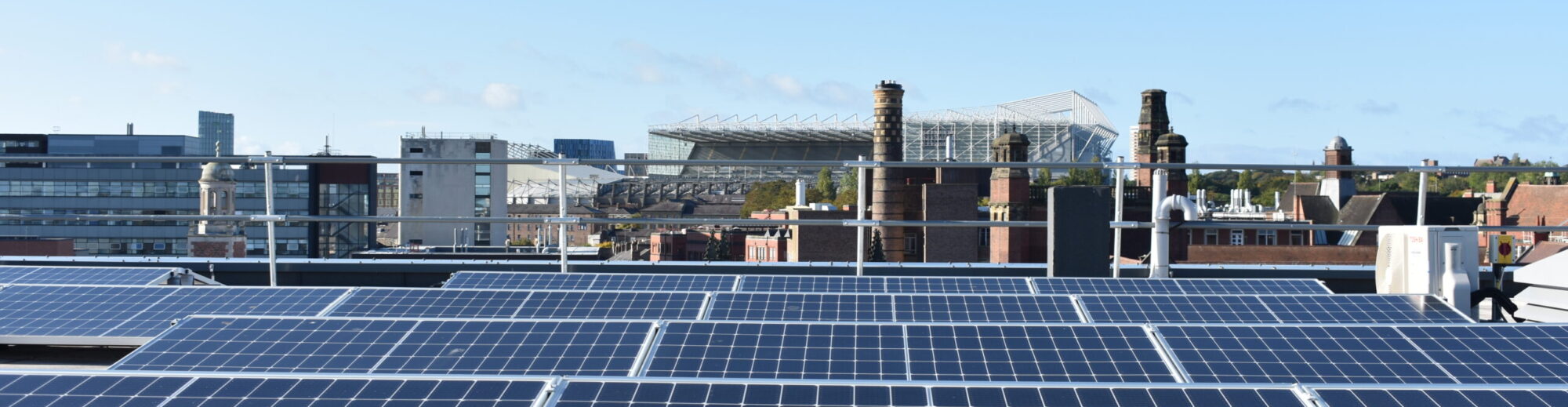
In January 2024, a new Combined Heat and Power unit (CHP) was installed in the Merz Court Energy Centre, a powerful and efficient plant room tucked away in the building’s basement. Recognising its impressive potential, the University saw an opportunity to divert excess energy to the Stephenson Building. Since then, the CHP has become an integral component in our Net Zero strategy…
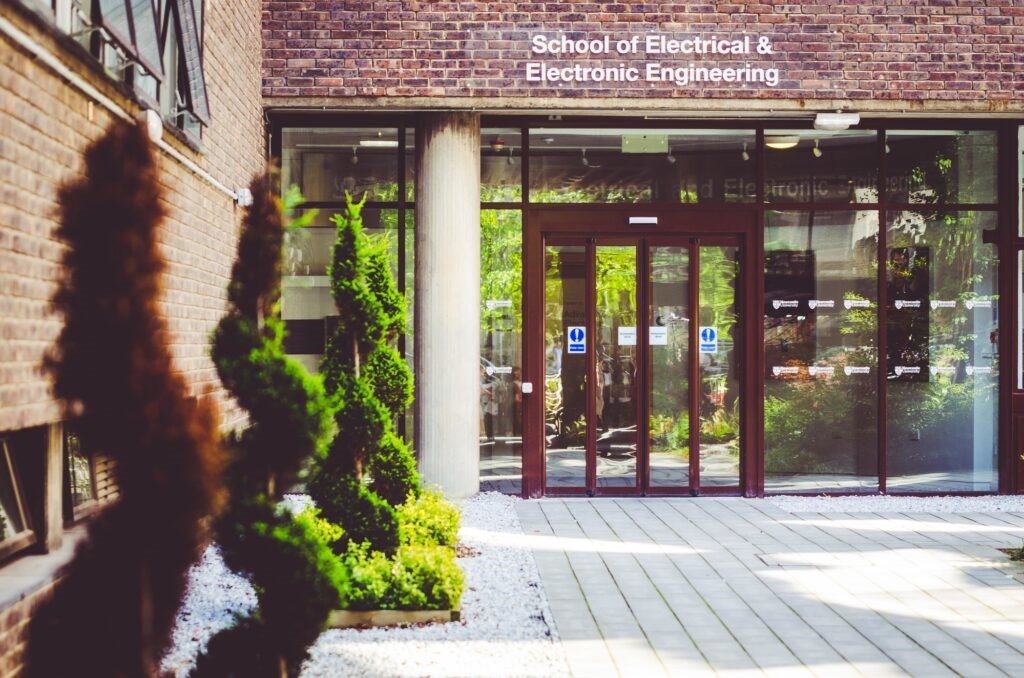
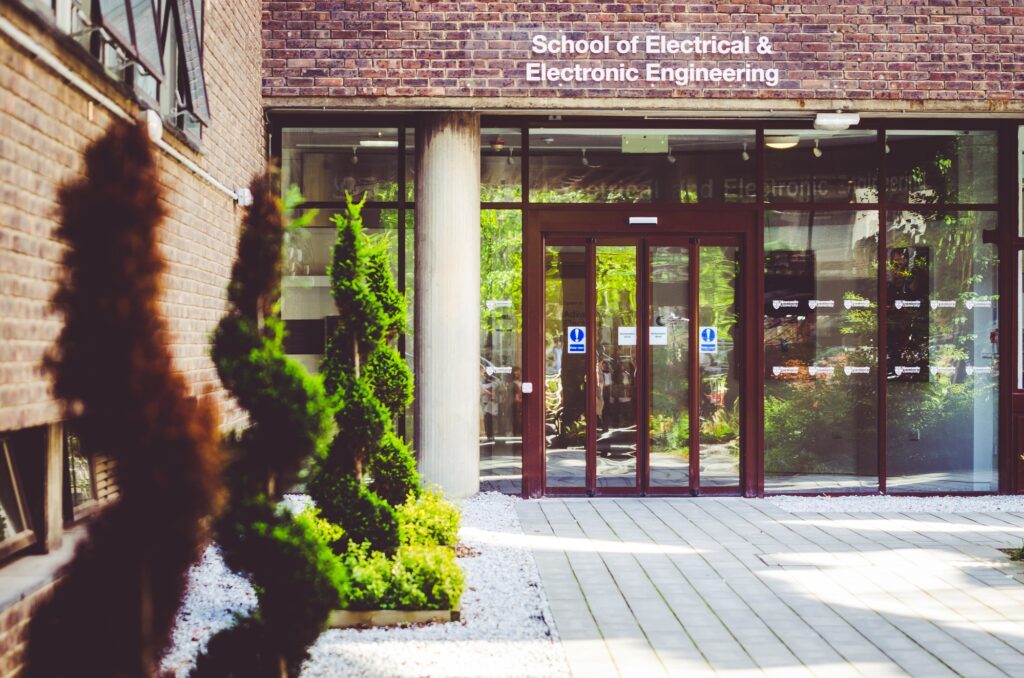
Image: Entrance of the Merz Court building, home to electrical and electronic engineering (and the CHP unit of course!)
CHP and the Stephenson Redevelopment
To ensure sustainability was considered at every step of the Stephenson renovation, a Low and Zero Carbon Assessment (LZC) was carried out in the early planning stages. The assessment looked at a variety of scenarios, comparing a business-as-usual approach to an alternative scenario using renewable energy generation. Eventually, it was decided that, in line with our Climate Action Plan, Stephenson would primarily receive its heating from the CHP district network.
CHP and Environmental Impact
In its simplest terms, the CHP plant is a large engine that burns biofuel. The engine is connected to a generator which makes electricity to enter the University electricity distribution network. The heat created by this process is recovered and fed into the district heating network.
Therefore, the CHP plant is more environmentally friendly than traditional systems in a few ways:
- Natural gas power stations which supply the national grid generally do not recover heat, whereas the CHP plant preserves and recirculates produced heat
- The biofuel is a certified renewable fuel resulting in significant reductions in our greenhouse gas emissions. The CHP generates and distributes electricity and heat to nearby buildings – reducing the transmission losses associated with a traditional ‘grid supplied’ distribution model.
Image: The CHP unit located in the Merz Court Energy Centre. Inside the container is essentially a large engine, running off biofuel.
The District Heating Network
Currently, the CHP is fully installed and undergoing final testing and commissioning. An array of underground pipes has connected the plant to the following buildings:
- Old Library Building
- Percy Building
- Henry Daysh Building
- Stephenson Building
- Cassie Building
In recent months, the network has also been connected to the King’s Road Boiler House, extending the CHP heating network to five more buildings:
- Armstrong Building
- Bedson Building
- Boiler House Event Space
- Hadrian Building
- King George VI Building
The CHP will become the lead heat source for these buildings, with natural gas boilers being used to ‘top-up’ the heat supplied by the CHP.
Current Projections
After tests have been completed, the CHP will generate 850 kW of electricity, which equates to approximately 10% of the University’s daytime load or around 25% of our overnight load. About 1000kW of heat is also produced – this heat is recovered and fed into the University’s district heating system.
The Future of CHP
As we enter the final commissioning stage, we expect CHP system to be fully operational in time for the next heating season.
Recently, we applied for funding from the Green Heat Network Fund to extend our heat network to Kensington and Park Terrace student residences and the Drummond Building, with a decision expected this summer. If successful, this funding will enable the integration of an additional renewable energy source (Air Source Heat Pumps) to our network, further reducing the carbon intensity of our heating systems.
The recently launched Estates Optimisation project will also play a vital role in supporting these developments through smarter use of space and infrastructure. This project also includes the development of the University’s Net Zero Strategy, shaping the business case for future heat network extensions and identifying specific ways to reduce energy use and deliver further increases in the generation of renewable energy across campus.