I was delighted to be invited by Manchester University Press to write an endorsement for J. T. Welsch’s critical study, The poetry of suicide: Learning to read a difficult death. Like my own writing in Relating Suicide, Welsch has entwined the personal and the critical registers in his book, moving across and between them throughout its chapters.
Welsch opens his study by reflecting on the ways in which the personal anecdote so often begins books about suicide. Typically, as in my own case, the story centres on an individual death, but Welsch’s family history of multiple suicides confounds the idea of suicide as an isolated tragedy and works against a singularity of meaning. For Welsch, accordingly, suicides never exist in isolation – chiming with my own emphasis on suicide’s inherent relationality – and their meaning is never fixed or final. On both of these counts, he suggests, suicide is resonant with poetry. A poem is always in conversation with other poems, and it demands interpretation even as it is resistant to it. Welsch also urges to engage with the poetry of suicide because, in a context in which our language for suicide has been flattened to the scientific and the impersonal, poetry can deepen and widen our vocabulary, and let in the emotional, the personal, the ethical, and the political.
Welsch’s first chapter elaborates on language and suicide. He turns to Hamlet’s soliloquy, which has often been cited as a cipher for the universality of suicide. Welsch reads it against the grain to argue for suicide’s multiplicity and messiness. Locating Hamlet’s speech in its historical context, Welsch pulls out the diversity of views on suicide that jostle within it, reflecting the complex positioning of suicide between religion and reason in Shakespeare’s time. He finds a similar confusion expressed in Shakespeare’s contemporaries, including Marlowe, Donne, and Montaigne. Ophelia’s death, too, becomes destabilised as a suicide in Welsch’s reading. He points out that a death only becomes a suicide through the act of naming, which means that suicide is always contingent on other people’s interpretations. Ophelia’s death is reported not seen, and Welsch traces the ways in which it is recounted by a range of characters from Gertrude to the gravediggers, each of whom inflect the act differently, according to their own vantage point. This uncertainty, or even unease, in relation to suicide becomes for Welsch, as it was for me, a generative starting point for thinking and writing.
The following two chapters link suicide and poetry through the acts of authorship and reading. The legal requirement for intention in relation to suicide means that the question of agency is inherent to a death being named as suicide. Welsch draws a parallel between suicidal agency and the problem of authorial intention in poetry, or the contested weight that should be given to the poet’s presumed intent when writing a poem. Reading the poetry of suicide doubles the question of intention, and the ‘Plath problem’ refers to the conundrum of how to read a poem in relation to an author’s suicide without either becoming bogged down in biographical speculation or letting the death dominate the life. Added to this, Welsch notes that the unequal recognition of agency in the contexts of gender, race, and colonialism has consequences for whether a death is considered to be suicide or accident. Erasing agency or authorship reinforces already existing inequalities, and Welsch tracks the erasure of Plath’s suicidal agency, first by Al Alvarez in The Savage God and later by Ted Hughes. Accepting agency, on the other hand, entails also accepting the limit of what we can know of another’s intentions, meaning that we are bound to the act of reading and re-reading.
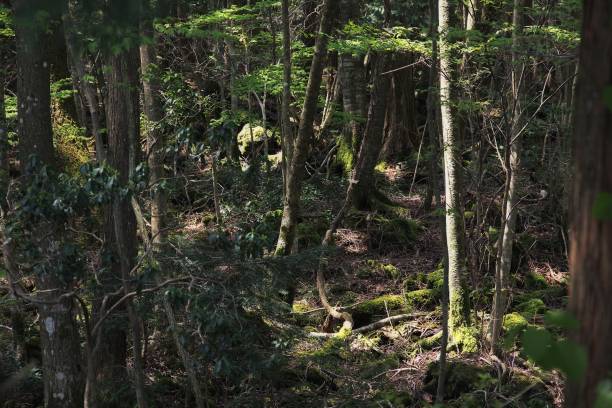
Welsch likens the reader of suicide to a person entering a forest – rather than following a single track, the person finds that the routes through the trees are various and the path taken will depend on past experience. Welsch’s imagery deliberately echoes Dante’s ‘pathless wood’ in the Inferno, a text that is often read as condemning suicides to the lowest circle of hell. Welsch indicates that, in fact, suicides appear in the different circles of hell and he also calls attention to Dante’s expressions of sympathy when confronted with the suffering of the suicide Pier delle Vigne in the lowest circle of hell. As in Shakespeare, different approaches to suicide rub against one another in The Inferno. Extrapolating out from Dante, Welsh suggests that poetry does not offer a map through the forest or tell us what to think about suicide. Rather, the poem creates a space for thinking through what path through the forest we will choose, or what kind of reader of suicide we will be.
The main body of the book addresses how our readings of suicide are determined by questions of age. In public discourse, if not in statistics of incidence, dominance is given to youth suicide, which is invariably read through the lens of influence – particularly that of social media. When suicide occurs across the different generations of a family, as in Welsch’s own case, the idea of inheritance comes to the fore, with a wealth of studies pointing to biological or genetic factors. If suicide occurs in later life, it is bound to questions of illness and mortality, the right to choose one’s own time and means of death. In each case, Welsch illuminates the ways in which poetry shows lives to be complex, varied, and diverse, and not reducible to a single cause of death. Poetry by poets who died young shifts the emphasis towards a range of cultural and political factors. Plath shows us that an identification with suicide can be passed on through the stories and myths we tell as much as through genes and biology. Poems by poets who died late in life encompass much more than encroaching illness and death. These chapters cumulatively demonstrate Welsch’s point that poetry enriches our vocabulary for speaking about suicide, and works against the singular explanation.
Welsch’s final chapter turns to the question of suicide as political. If suicide is typically seen to be a personal or private act, divorced from structural and political circumstances, Welsch underlines that it always affects and implicates others. His watery imagery of ripples echoes my own vocabulary in Relating Suicide for articulating suicide’s concentric and widening effects. Rather than reading the poetry of suicide in a narrowly political sense, however, Welsch returns to the question of reading, noting that suicide is always connected to broader contexts and readings. For Welsch, a political poetry of suicide can be read in a poet like Paul Celan – not (or not only) because his death was preceded by political persecution, but (also) because his late poetry anticipated his own death and surrendered its meaning to other people’s readings. In this gesture, Welsch observes, Celan recognises that his death will be read and re-read by others, and he positions the poem as a space for the reader to navigate what kind of reader of suicide she will be.
Poetry has been highlighted as a critical mode in relation to poetry, not least by Katrina Jaworski and Daniel Scott. Welsch’s study gives us an in depth analysis of what happens when poetry and suicide are put together and is full of illuminating and astute insights. Centrally, picking up on Jaworski and Scott’s idea of the ‘unfathomable’, Welsch contends that suicide, like poetry, cannot be fully deciphered or parsed even as it invites interpretation. I found particularly powerful Welsch’s closing reflections on living with suicide, which he framed as an endless process of re-reading. Most suicides, he writes, leave a mess behind them of belongings to be sifted through. As we do so, he suggests, the question that we bring to them should not be: What has this person left behind? Rather, we should reframe the question to ask: How will we read these traces?
The Poetry of Suicide will be published by Manchester University Press in April. Further details can be found here.
Further Reading
Katrina Jaworski and Daniel Scott, ‘Understanding the Unfathomable in Suicide: Poetry, Absence and the Corporeal Body’, in Critical Suicidology: Transforming Suicide Research for the 21st Century, ed. by Jennifer White et al. (University of British Columbia Press, 2015), pp. 209-228.
J. T. Welsch, The poetry of suicide: Learning to read a difficult death (Manchester: Manchester University Press, 2026).