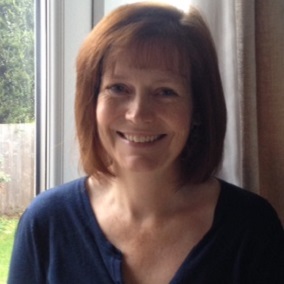
 As part of our blog series designed to celebrate flexible working week in the UK, and raise awareness about the benefits of flexible working, I spoke to Amanda Weston, who works at the Campus for Ageing and Vitality, about her experiences working part time.
What role do you work part time in?
I’m a Clinical Project Coordinator at 60% FTE. I provide admin support to clinical trials in the field of dementia. But I’m currently on redeployment, so I’m looking for another role.
Have your hours changed over time?
A little. I started working part time 8 years ago, and began on 50% FTE. Then, in my next role, I increased my hours slightly to 60% FTE, and stayed on those when I moved into my current role. However, the next role I’m looking at will likely be 80% FTE, which may not give me the same work-life balance as I’ve enjoyed in my previous roles.
What have you done recently in your part time role that you’re proud of?
I recently finished supporting a video for clinicians that raises awareness about dementia. I’ve also helped organise a big upcoming conference at the Centre for Life about a study I support.
What advantages or opportunities has working part time brought you?
Working part time has given me a much better work-life balance and a more rounded experience of life in general. As well as being able to care for my elderly parents, I’ve got really into yoga in my time off, and I’m actually going on a yoga retreat in Turkey next week, which I definitely wouldn’t have got the opportunity to do on full time hours!

What challenges did you face while working part time?
The main challenge for me has been that it’s very difficult to secure an open-ended job on part time hours, as many research part time roles are fixed term contracts attached to a specific grant or form of funding. This can be very difficult, but you just have to remain positive that the next role will come and be confident in your own abilities.
Where did you find support while working part time?
Generally, I see myself as fairly self-sufficient, but I have found my immediate work colleagues to be a really good support. The University Registrar, John Hogan, has also been particularly supportive of my development, as he has funded my study for an AUA Postgraduate Certificate.
What would you do differently if you had your time again?
If I had my time again I would make a more decisive choice to diversify within other areas of Higher Education, to make myself more flexible. I’ve worked in the same area for 8 years now, and believe that it’s not necessarily a good thing to become so specialised within a niche sector.
What do you think the University could do to help support part time workers like yourself?
Currently, when your being redeployed you’re only able to apply for jobs at the same grade as your current role, which can make career progression harder for staff on fixed term contracts, as we often only change jobs when our contract comes to an end. It would be nice if the University altered their policy so that perhaps, if you had been in the role for a certain number of years, you would able to apply for a higher grade job during redeployment.
I’ve also been talking to Candy Rowe, FMS’ Director of Diversity, about developing a database where part time workers could register and be paired with similar people across the University to apply for a full time role as a job share. I believe this would create a lot more opportunities for part time staff.
 We hope you enjoyed hearing from Amanda about some of the challenges and opportunities she’s had while working part-time.
We’ll be running this blog series for the next few weeks, so if you currently work part time at NU and would be interested in talking about flexible working, we want to hear from you! To take part, please get in contact with Georgia Spencer.
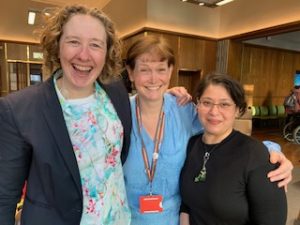
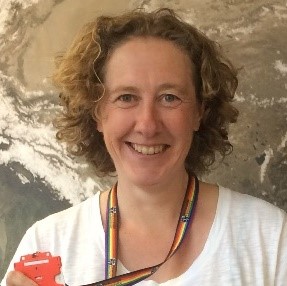 In the first of our Demystifying Leadership Series, which will look at what some of our senior leaders get up to and what they get out of their roles, we talk to Prof Candy Rowe, our Director of Equality, Diversity and Inclusion (EDI) for the Faculty. As she steps down from being Director and the Faculty looks for a replacement, we ask what being Director of EDI was like, what she got out of leading on EDI for the Faculty, and why she would recommend it as a leadership opportunity.
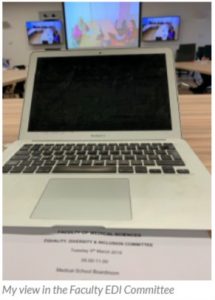 We also heard more about race equality from Vijaya Kotur (the University’s Race Equality Officer) and discussed how we could embed EDI more into some of the changes within the Faculty. I then had a catch-up with the fab Faculty EDI team, Ann Armstrong and Malasree Home, just to discuss challenges, clarify and prioritise workload and exchange ideas. I went straight into another meeting about a project being led in the Faculty by one of our Postgraduate team, Karolien Jordens, on experiences of international students here at Newcastle, and how we can improve the support we offer to our postgraduates. Following lunch, I met with colleagues from our Dental School who have won some funding for a project to diversify their student reps. This sounds like a great project, and I always enjoy chatting to people who have identified an EDI issue in their school or institute and are taking steps to address it. I always try to help if I can. In between all this, I’ve been progressing a host of other things – setting up a phone call with an EDI lead at another university to discuss Athena SWAN, helping finalise our International Women’s Day event on Friday, discussing the promotion of a new peer mentoring network for student parents, and tweeting the VC. And now it’s 3pm, and I’m writing this before I need to go and pick up my son at 4pm so he can get his homework done before he goes to a club!