Gabriel is an Open Research Champion for School of English Literature, Language and Linguistics. After attending an academic conference in Barcelona we provided some external funds to support a short extension to visit a colleague at Universitat Pompeu Fabra to discuss running an Open Access journal. Here’s what he learned…
In my visit to Barcelona, I integrated a conversation about Open Access and Open Research with Professor Louise McNally, Co-Editor-in-Chief of Semantics & Pragmatics, a leading Open Access journal for semantics and pragmatics research.
“Semantics and Pragmatics is a fully open access journal. All content is freely and immediately accessible to readers under a liberal CC-BY license. The journal is supported by the Linguistic Society of America, the Massachusetts Institute of Technology, and the University of Texas. Authors do not pay publication charges (APCs) nor submission charges. Authors retain full copyright and all rights of reuse.”
I wanted to hold a meeting with her as a fellow linguist to discuss their approach to open access, since in a couple of months I will become Co-Editor-in-Chief of Glossa: a journal of general linguistics, the leading journal in linguistics and a pioneering Open Access journal in the field. I wanted to benefit from her experience and expertise in this area. As a result of our conversation, I got some pieces of advice as to what areas are key when leading an Open Access journal.
The main component is sustainability in several respects (financial, production, administrative). In Louise’s opinion, it is fundamental to think ahead especially to editorial/management transitions, such as the ones I am currently involved in. In this regard, one has to make sure that there is time to familiarize new editors with how things have been done, so that any major policy decisions that are made can be discussed with them.
Further, it is very important to be proactive in that one should take advantage of whatever venues one has to explain to libraries, funding agencies, among others. Importantly, efforts should be made to get the home institutions of the editorial team to support the journal. In this sense, this is a joint effort to ensure that the journal survives in the medium to long term.
More generally, what this means is that the work that is done needs to be visible. Thus, it is key to further promote and support open access publishing models such as Diamond Open Access and Subscribe to Open.
Overall, these efforts constitute a very specific set of efforts to promote Open Research as related to Open Access journals, which, ultimately, shape the future of linguistics as a field where knowledge and ideas have the opportunity to flow freely—not being tied to paywalls. I will certainly integrate all these pieces of advice in my new role!
Are you looking for advice and information on open access or managing publications? Come to one of our monthly drop-in sessions and meet members of the Library Research Services team, who will be happy to answer questions on:
Copyright and licencing issues relating to your publications
Uploading your publications to our repository and REF
Whether you’re a seasoned researcher, student or simply keen to explore the possibilities within open access, this session offers a welcoming space to ask questions, gain insights and delve deeper into the realm of open access.
These are informal sessions, however, registration is required for you to receive the online teams link.
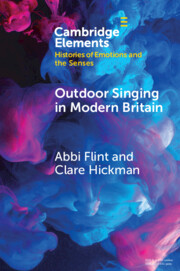
The work brings together historical sources and contemporary experiences to explore the interplay between singing, sociality, body, and meaning in the English landscape over the past century. It explores the connections between air and song and between singing and movement, through the context of the early twentieth century open-air recreation movement. This is supplemented by recent literature on singing and wellbeing, and the experiences of a contemporary walking choir captured via interviews in the field. The authors argue that outdoor singing has been part of co-constructed soundscapes of the modern English leisure landscape, and ask what this meant for those who participated in collective open-air singing and rambling. They explore how open-air singing connected with conceptions of the countryside, with a sense of fellow-feeling, and how this might have both reified and challenged normative ways of being in landscapes.
This is the fifth book published at Newcastle University as a result of the UKRI open access policy for long-form publications, with open access costs covered by UKRI funding.
Of the experience, Clare Hickman (co-author) had the following comment:
[T]he process was very straightforward and quick, and it is good to know that non-traditional monographs are included in the UKRI policy.
For further details of the previous books published through this funding scheme, follow the links to the published works and related blog posts:
The UKRI open access policy aims to ensure that findings from research funded by the public through UKRI can be freely accessed, used and built upon. The policy applies to peer-reviewed research articles and long-form outputs, namely book chapters, monographs and edited collections.
If you have any questions or concerns about the policy, and how this might affect any current or future publications, please contact openaccess@ncl.ac.uk.
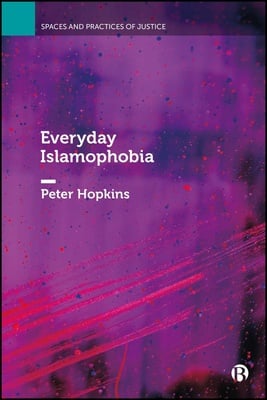
Everyday experiences of anti-Muslim racism include accounts of Islamophobia in public spaces, in the school playground, on social media and on public transport. This book explores the complex ways in which Islamophobia pervades the daily lives of Muslims and those perceived to be Muslim, drawing upon work by the author and leading researchers.
Everyday Islamophobia tends to be regarded as low level or trivial. This book considers the influence of organisations, agencies, and individuals on those who find themselves negotiating its significant harms in education, the community and online. It concludes by exploring strategies to challenge and resist Islamophobia.
This is the fourth book published at Newcastle University as a result of the UKRI open access policy for long-form publications, with open access costs covered by UKRI funding. The previous books published are:
The UKRI open access policy aims to ensure that findings from research funded by the public through UKRI can be freely accessed, used and built upon. The policy applies to peer-reviewed research articles and long-form outputs, namely book chapters, monographs and edited collections.
If you have any questions or concerns about the policy, and how this might affect any current or future publications, please contact openaccess@ncl.ac.uk.
Are you looking for advice and information on open access or managing publications? Come to one of our monthly drop-in sessions and meet members of the Library Research Services team, who will be happy to answer questions on:
Copyright and licencing issues relating to your publications
Uploading your publications to our repository and REF
Whether you’re a seasoned researcher, student or simply keen to explore the possibilities within open access, this session offers a welcoming space to ask questions, gain insights and delve deeper into the realm of open access.
These are informal sessions, however, registration is required for you to receive the online teams link.
Sustainable Food Consumption in China investigates the current and potential roles of food consumption to address sustainability challenges in China.
Focusing on the megacity of Guangzhou, it looks at sustainability and food from the perspectives of government, commercial, and third sector actors, and through the lived experiences of consumers. It charts the rapidly transforming landscapes of retail across urban China and the ways they are shaping and are shaped by everyday food consumption practices. Using a multi-method research approach of quantitative and ethnographic data, it provides readers with a rich and comprehensive understanding of the relationships and tensions between contemporary practices of food consumption and pressing sustainability challenges. It unpacks the complex foodscape in contemporary Chinese cities, from traditional wet markets to online deliveries, from supermarkets to farmers markets and alternative food providers, to understand the values and practices promoting and hindering sustainability in food consumption.
The book is intended for academics from advanced undergraduate level through to Masters, postgraduates and scholars across key social science disciplines including Geography, Sociology, Anthropology, and Business, and internationally given the global interest in the focus on China.
This is the third book published at Newcastle as a result of the UKRI open access policy for long-form publications, with open access costs covered by UKRI funding. You can read the other books:
The UKRI open access policy aims to ensure that findings from research funded by the public through UKRI can be freely accessed, used and built upon. The policy was updated at the beginning of 2024 from previously focusing on peer-reviewed research articles to now include long-form outputs, namely book chapters, monographs and edited collections.
If you have any questions or concerns about the policy, and how this might affect any current or future publications, please contact openaccess@ncl.ac.uk.
The book, expected on 18 June 2025, will be published open access as a result of the UKRI open access policy for long-form publications, with open access costs covered by UKRI funding.
If you have any questions or concerns about the policy, and how this might affect any current or future publications, please contact openaccess@ncl.ac.uk.
Jisc has embarked on a series of negotiations with the five largest academic publishers: Elsevier, Springer Nature, Taylor & Francis, Wiley and Sage. The existing Transformative Agreements (TAs) with these publishers all come to end on 31st December 2025. Jisc will negotiate with all five at the same time and with the same set of requirements that were developed after extensive consultation with the HE Sector. Jisc anticipates “that this approach will allow the sector to return greater value from the £112 million currently spent on these agreements, reducing costs and ensuring fairer, more sustainable terms.”
In addition, Jisc aims to “align expenditure with the sector’s broader strategic goals, supporting research, teaching and student outcomes. This will help shift away from unsustainable models based upon per article charges including Article Processing Charges (APCs), paving the way for more equitable, open access publishing practices.”
Negotiation aims
Reduce costs to alleviate financial pressure on institutions
Move away from volume-driven models to focus on fair, sustainable approaches that increase participation in research and close the access and participation gap between the NHS, government, industry, and institutions
Help the sector support the Government’s priorities and achieve greater economic and societal benefits, support teaching, learning and drive research collaborations
Timeline
January 2025: Publishers informed of approach
March – June 2025: Negotiations in progress
July – August 2025: Consultations
September – October 2025: Consult and agree sector walkaway strategies
November – December 2025: Launch and orders placed or proceed with walkaway strategies
The overriding aim for the negotiations is to achieve a total reduction in spend compared to 2025 across the Big 5 publishers of between 5% and 15%. To give an idea of the potential savings involved for Newcastle University, our current spend with the Big 5 publishers is c£2.5M. A 5% saving would represent £128k, 10% £257k, and 15% £385k. At a time when we can expect no additional resources to invest in collection building to support new or expanding programmes, any funds released for reinvestment through securing better deals would be welcome.
The Library is already analysing the value for money of the existing deals, and assessing the potential impact of “walking away” from any of the agreements, which includes taking into account the internal administrative costs of managing selective access to individual journals.
The Library will provide updates on the progress of the negotiations to the University via the Library Research Services web pages, and deliver briefing sessions where appropriate. If you would like more information please contact openaccess@ncl.ac.uk.