Category Archives: All Blogs

Green Impact: Grassroots sustainability at your university

Green Impact is a UNESCO award-winning programme tailored towards promoting socially and environmentally sustainable practices across a wide range of organisations, including public sector bodies such as our university. The programme, run by SOS-UK, works with colleagues (organised into teams) to foster sustainable action in line with the UN’s Sustainable Development Goals (SDGs) and we in the Sustainability Team have been working hard to launch a bespoke version for Newcastle University! So, if you want to get involved with the University’s crucial net zero by 2030 target and help reduce energy use, water use, waste and more, read on!

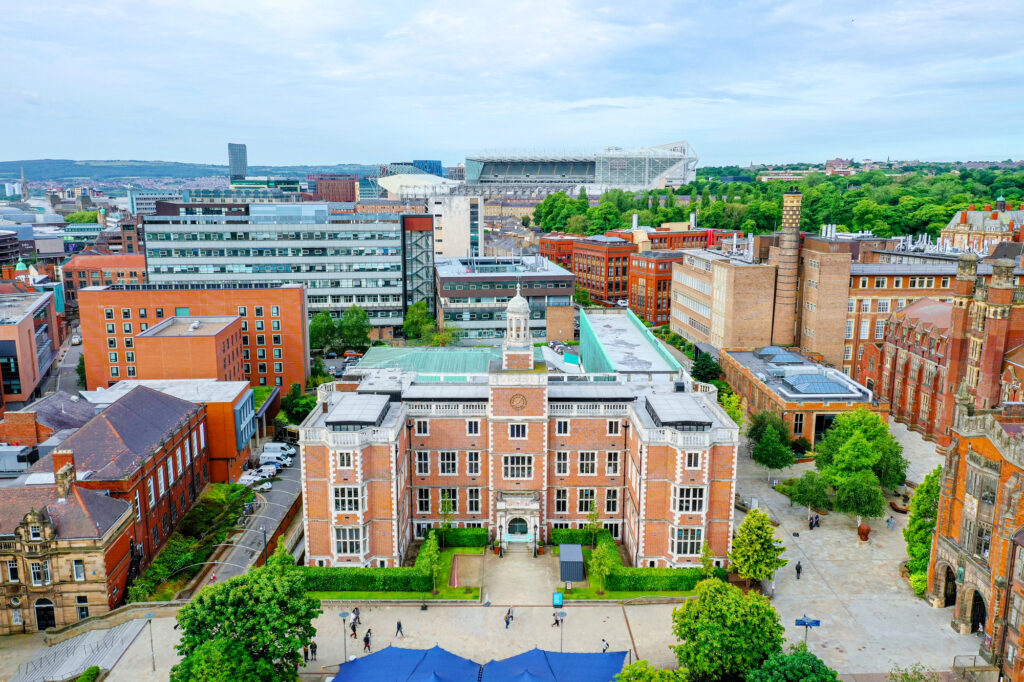
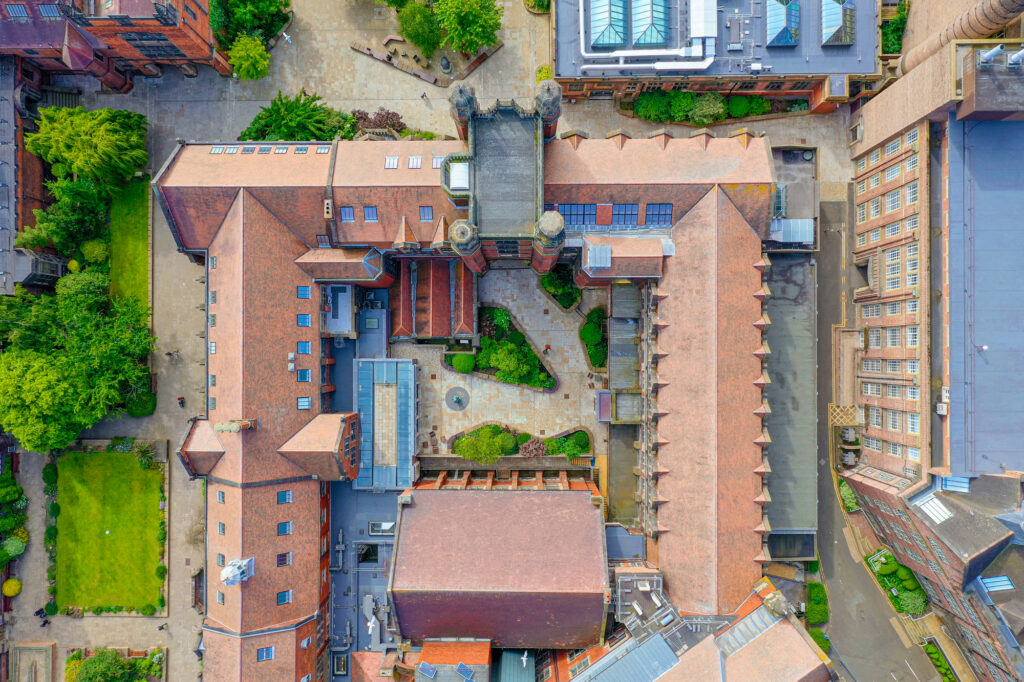
Image: An aerial shot of King’s Quad. Credit: Elemental Photography

How does it work?

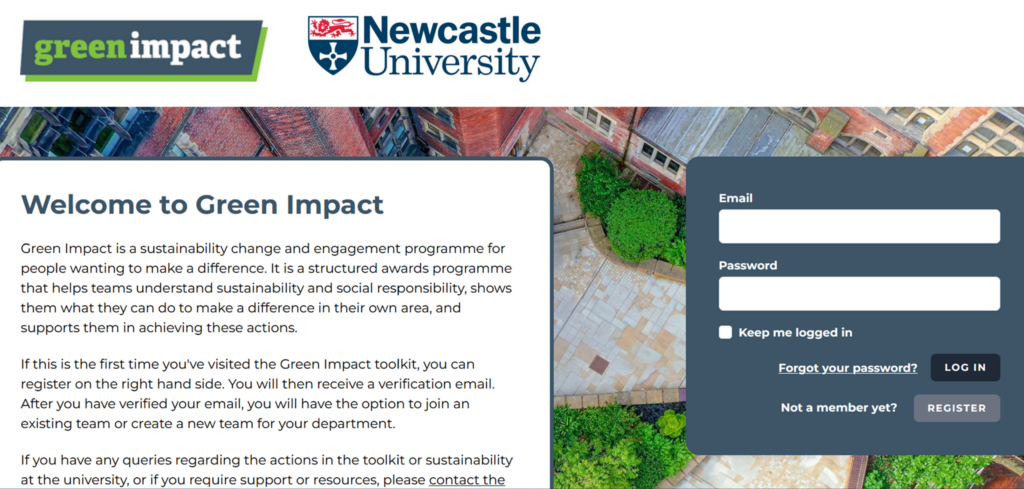
Green Impact is designed to be easy to set up and get stuck into and SOS-UK have even launched a new online toolkit for the programme to let you intuitively track your progress, compare your teams scores (only if you want!), and see your next targets.

There are 5 steps to Green Impact’s timeline of sustainable action:

  1. Sign up to Green Impact online.
  2. Chat to your colleagues about Green Impact teams in your work area and either join one that’s already been created or create your own (feel free to give the team a fun name!).
  3. Work through your assigned actions. Each action grants a certain number of points which then stack up towards the Bronze, Silver, and Gold action awards (50, 100, and 150 points respectively)!
  4. Our friendly student auditors will come round to check your progress in mid-May.
  5. An awards ceremony will be held in June, featuring engraved slates (recycled!) for teams that made it to Bronze, Silver, or Gold, and certificates for everyone who took part!

Why should you join?

  • Create meaningful sustainable change in your workplace: the work you and your team do will help to limit energy and water use, boost environmentally responsible planning of workplace projects, improve reuse and reduce waste, save budgets, and more! In other words, your efforts will actively contribute to sustainable development and Net Zero progress at Newcastle University. Additionally, you’ll find you can apply some Green Impact actions to your personal life too if you want to help save on bills and further reduce your environmental impact.
  • Improve your knowledge and skills on pressing environmental issues: Green Impact offers workshops and skills development opportunities to provide insights and understanding on sustainability and social and environmental justice!
  • Meet like-minded colleagues and boost your teamworking skills: the programme is highly collaborative and social with the joint effort required to complete actions and plenty of chances to network with environmentally conscious colleagues from across the University.
  • Collect your awards! Your sustainability work will be recognised at the Celebrating Success: Environment Awards in June!

Key dates

There’s a range of exciting events and dates coming up! Plus, keep an ear out for the further activities and sessions we’ll organise throughout via our Sustainability Network newsletter.

  • Green Impact session at Experience Week (come along for updates, news, and further information!): 11th March, 10-11am.
  • Deadline for actions (complete as much as possible before this!): 17th May
  • Celebrating Success: Environment Awards: June.
  • Join: right now! Or whenever you feel like it – the signup process is easy, just follow this link.
Image: Screenshot of the Green Impact online toolkit login page. Credit: author.

2023: A year in sustainability

2023 was a busy year for us in the Sustainability Team! We launched projects, ran events, helped the University to score highly in prestigious league tables, and welcomed new team members to continue and expand our work.

Delivering a sustainable Newcastle University is complex and multi-faceted work and requires a great deal of coordination and involvement between teams, colleagues, and students across the University. These efforts have led to sustainability improvements throughout our organisation, making our campus and community better for people and planet in a range of ways – read on for an overview of everything we’ve achieved together!

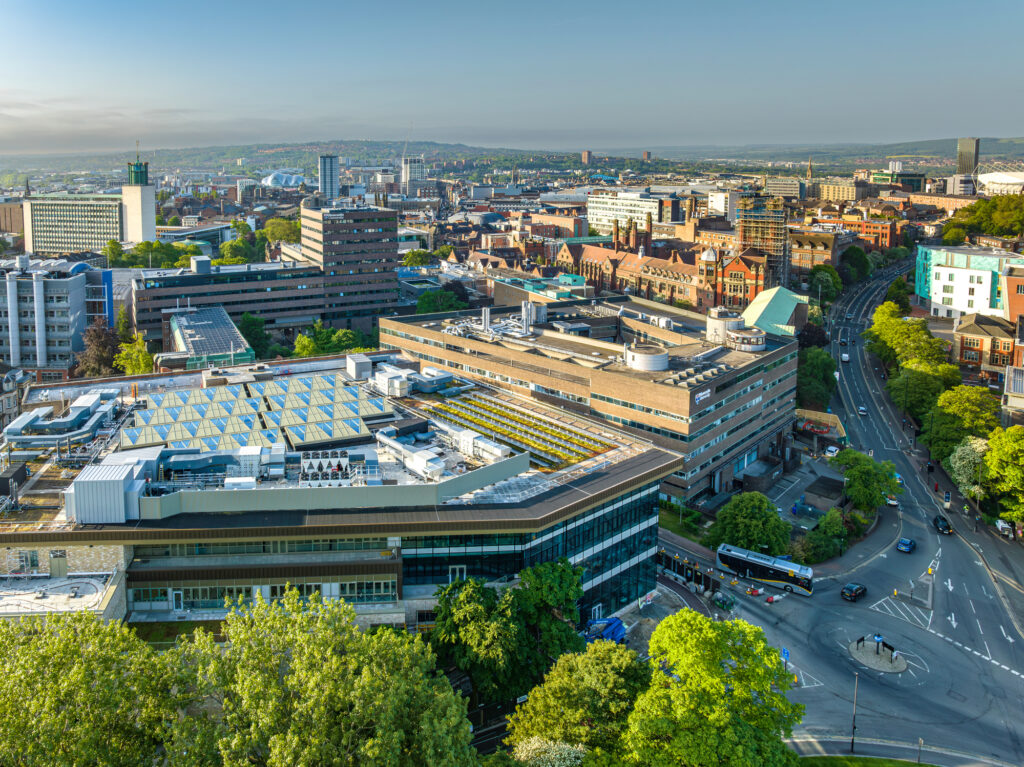
Image: An aerial shot of campus, featuring the Stephenson and Merz buildings in the foreground. Credit: Elemental Photography

Awards and accreditations

The UN’s Sustainable Development Goals (SDGs) are a key priority for our university and so we were honoured to have contributed to the achievement of some exceptional scores in the Times Higher Education Impact Rankings. In the rankings, which are judged against the SDGs, Newcastle University placed top 25 in the world and 4th in the UK – a submission which takes a huge effort from our team and colleagues across the University!

That’s not all, however. We also kept our ISO 14001 and ISO 50001 accreditations for our Environmental Management System and Energy Management System, respectively. These technical accreditations reflect the care we put into our high-quality processes for managing the environmental impact of the University’s operations and we’ve now held both accreditations for almost a decade running.

Finally, 10 more labs gained Laboratory Efficiency Assessment Framework (LEAF) accreditation last year (including 5 at gold level!), doubling the size of our community of environmentally certified labs! If you work in a lab and are interested in joining LEAF, check out the information on our website.

Projects

We began several big projects with our colleagues last year, starting with the next phase of the University’s campus-wide solar photovoltaics (PV) project. This two-year programme will install solar PV panels on 32 academic buildings and accommodation sites, adding to our already expansive renewables network and reducing expected CO2e emissions by over 380 tonnes a year.

Additionally, we also began the installation of a biofuel combined heat and power (CHP) plant in Merz Court’s Energy Centre. This system uses greener biofuel to generate electricity while also harnessing waste heat to warm up our buildings – greatly reducing carbon emissions as compared to gas systems. These improvements will have a substantial impact as the Energy Centre provides district heating to a whole swathe of the campus, including the: Henry Daysh, Cassie, Stephenson, King Edward VII, Percy, and Old Library Buildings, plus, of course, Merz Court itself!

Image: An aerial shot of the Armstrong Building with the Old Quad, King’s Quad, and Student Forum visible. Credit: Elemental Photography

Engagement and events

Last year was a busy one for sustainability engagement too! Firstly, in January we launched our Sustainability Network to keep colleagues and students up to date on all things sustainability at our university. This community has now grown to 256 members and you can join them here. Additionally, speaking of mailing lists, our ongoing Furniture Reuse project hit 700 members!

Secondly, we’ve been working on this Sustainability blog throughout the year. We posted 30 blogs in all, offering updates, tips, and information on everything from wind power at the University to sustainable hacks around the house.

Finally, 2023 saw a whole range of events with environmentalism at their core, including:

  • Sustainability Week – five days of sessions covering green infrastructure, climate anxiety and more,
  • A Veganuary Bake sale to raise funds for biodiversity charities,
  • Spudfest – a festival offering free food and dedicated to highlighting innovative agricultural research,
  • Leave Newcastle Happy – our joint campaign with the City Council and Northumbria University to ensure that waste from the student move-out in summer is dealt with responsibly,
  • The Dr Bike project, launched last summer to support active commuting to campus. In eleven sessions the project has managed to rehome 50 second-hand bikes and helped over 200 people with advice, resources, and repairs!

The team

We’ve seen some exciting changes to the team this last year. Firstly, Melissa Stephenson, previously a Sustainability Officer, became the University’s new Waste Manager – a vital role in the University that she’s quickly got the hang of! Additionally, our team has grown to a total of ten sustainability professionals with the appointment of:

  • An Assistant Sustainability Officer – Charlotte Robson,
  • A Sustainability Communications Placement – Evan Bromage,
  • And two Sustainability Officers – Phoebe Sowerby and Jordan Heeley!

Thank you so much to everyone who got involved with sustainability last year, we couldn’t have done it without you! 2024 will bring fresh challenges and opportunities as we draw ever closer to our 2030 Net Zero target, so stay informed with this blog, the Sustainability Network, and our website and let’s make this year just as good as the last!

Engaging with impactful change at your University in 2024

Student action is important! 

2023 was once again a year of extreme weather conditions and events around the world, underscoring the importance of sustainability in major institutions such as our university. As the majority portion of our university community, students are a vital part of achieving crucial environmental targets such as net zero by 2030. So, if you’re looking for an impactful way to create positive change in your community, read on for some ideas on how you can get involved with sustainability and environmental justice at Newcastle University. 

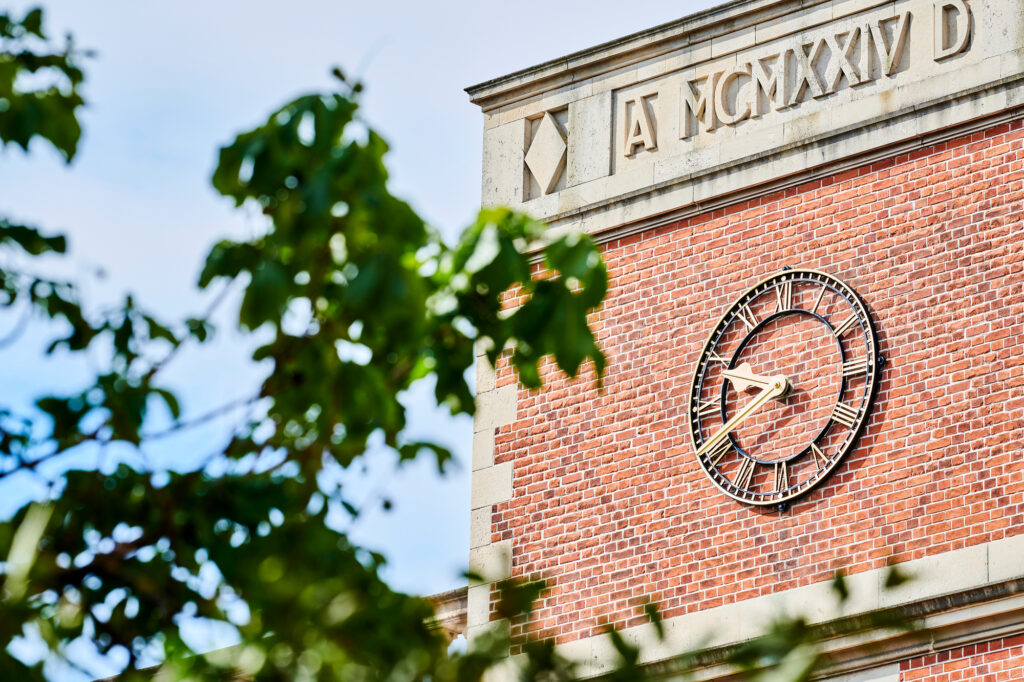
Image: the clocktower of the Students’ Union Building. Credit: John Donoghue.

1. Join the Student Environment and Sustainability Committee  

The Student Environment and Sustainability Committee (SESC) is a student-led and student-focused committee looking at sustainability at Newcastle University. The committee is chaired by the Ethics and Environment Representative who, this year, is Ayoub Ouakkaha! 

The SESC gives feedback to the Environment and Sustainability Committee (ESC), of which most members are colleagues, but it also has Students’ Union Sabbatical Officers and the Ethics and Environment Rep (Ayoub) as members. 

SESC membership is made up of Environment and Sustainability Reps from academic schools. If you are not currently an Environment and Sustainability Rep for your school, but would like to get involved with the SESC, send Ayoub an email!

2. Stay informed with the Sustainability Network! 

Join our Sustainability Network to receive information to expand your knowledge across various themes relating to sustainability, be updated on climate action progress at the University, and be provided with upcoming sustainability event notifications.  

As our Climate Action Plan progresses, the Sustainability Network will connect you to our work, progress reports, and new targets by directing them straight into your email inbox. You will also be notified on actions contributing to our goal of being net-zero on scopes one and two carbon emissions by 2030!

3. Explore our EAUC membership  

Newcastle University is a member of the Environmental Association for Universities and Colleges (EAUC), an organisation that supports sustainability within the UK tertiary education sector and offers benefits for members that include: 

  • Access to a sustainability resource exchange, 
  • Opportunities to learn from blog posts, news articles and publications, 
  • Information about UK sustainability training and events, 
  • Job listings, 
  • Conferencing opportunities. 

All Newcastle University colleagues and students can register for free EAUC membership

4. Write for our blog 

Are you passionate about a particular area of sustainability?  

You can share your knowledge with colleagues and students at the University by writing a post for our blog! Sustainability looks at all areas relating to sustainability and environmental justice, from lifestyle tips and tricks through to discussions on green careers and how solar energy is used at Newcastle University! 

If you are interested in writing a blog post for Sustainability, please send an email to sustainable-campus@ncl.ac.uk and outline what you would like to write about.  

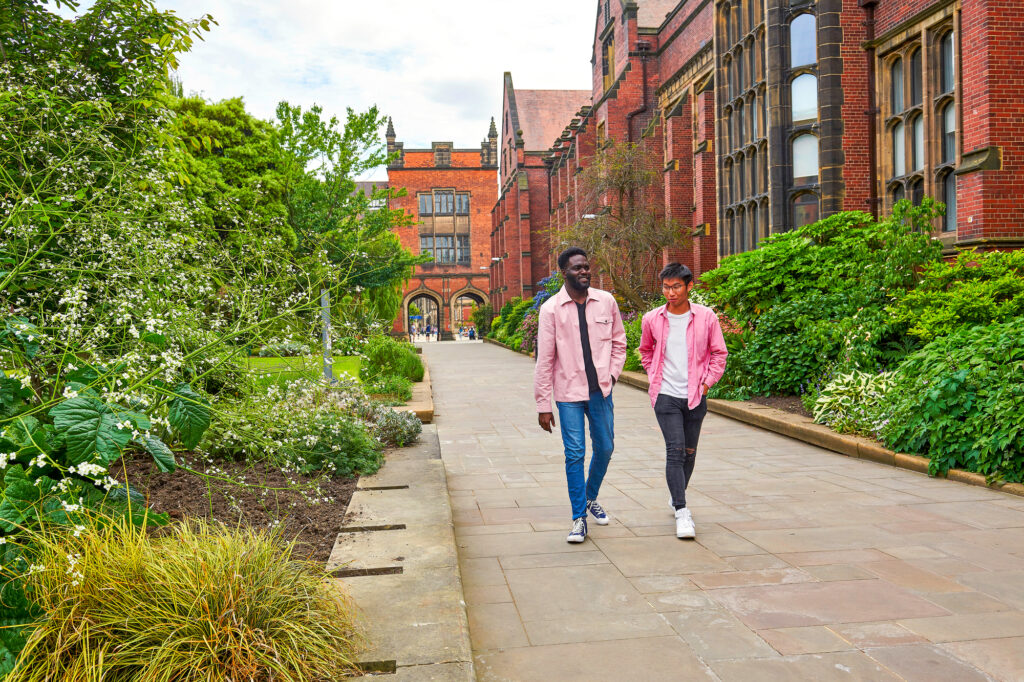
Image: Students walk through the Old Quad. Credit: Dan Bolam.

5. Volunteer!

Grow Volunteer

Grow Volunteer is Newcastle University Students’ Union’s on campus urban growing project. As part of the team, you’ll help to grow and source local produce including a range of vegetables, herbs, flowers, and trees right here on campus! Meetings take place regularly and are flexible to attend.  

If you would like to learn more about this opportunity or register your interest, you can do so on Grow Volunteer’s sign up form

A Second Life 

A Second Life is a creative up-cycling project provided by Go Volunteer which aims to use old materials or products and give them a new lease of life. This is a great volunteering opportunity for individuals who are keen to get creative and explore reuse and recycling! 

If you would like to learn more about this opportunity or register your interest, you can do so on A Second Life’s sign up form

To learn about additional Go Volunteering opportunities that are themed around the environment and conservation, such as caring for green spaces, read more on the Student Union website. 

Become a volunteer auditor

Every year there is an opportunity to become a volunteer student auditor for the Fairtrade University and College award on behalf of Students Organising for Sustainability. 

Volunteer auditors work in a team to review the University’s efforts to embed Fairtrade and wider ethical consumption.  

Full training for this role is provided and a role description is available if you are interested.

6. Use active or public transport

Travelling to university can be a major source of emissions, but luckily there are lots of options to ensure that both your commute and any longer distance travel are sustainable. 

Firstly, for regular commuting onto campus, active travel, such as cycling and walking, is a healthy option both for you and the planet.  

  • Most student accommodation as well as major student housing areas such as Jesmond and Heaton are within walking distance of the university and resources for route planning can be found on our website.  
  • Cycling is also a good option, with cycle parking available across campus and a variety of helpful services provided throughout Newcastle. Additionally, you can join our Bicycle Users Group to get involved with an active and helpful community of cyclists and receive all the latest updates on events such as our free Dr Bike repair sessions!  

Active travel isn’t accessible for all, however, and isn’t practical for long-distance trips, so a good replacement option here is public transport. Nexus and Traveline provide information on public transport in the North East and trains are a brilliant sustainable option for travel throughout the UK and into Europe! 

Sustainable Medicine: keeping our planet and ourselves healthy

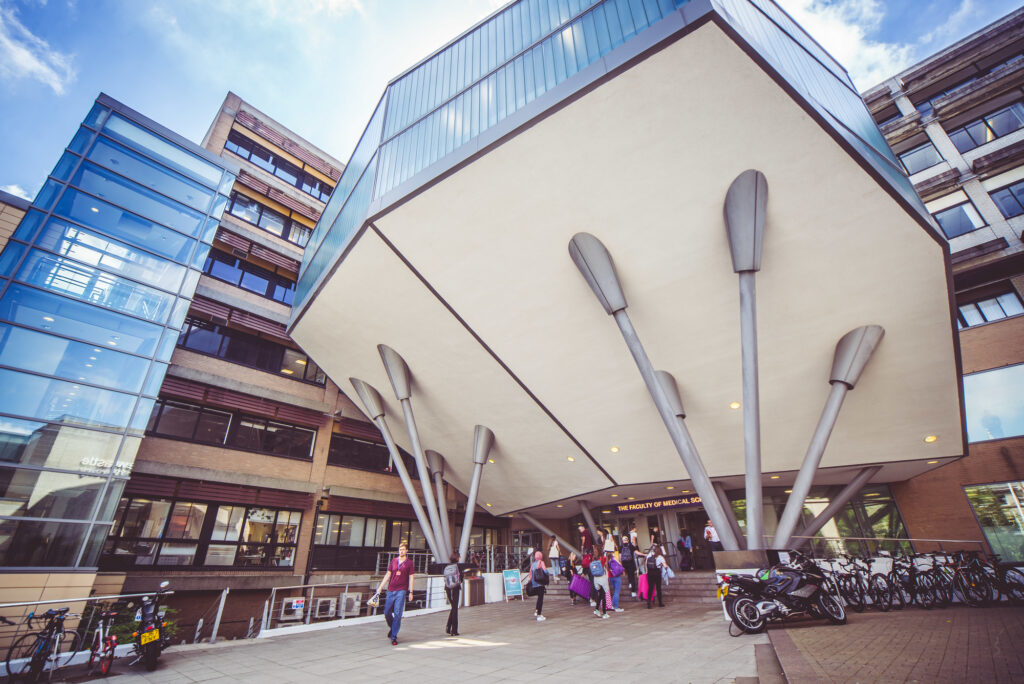
As seen in the UN’s Sustainable Development Goals, sustainability is a major concern across all aspects of society due both to the far-reaching challenges of climate change and the impacts that modern life has on environment. Having said this, our attention can sometimes focus on certain aspects of society (such as the fossil fuel industry) more than others and one area where sustainability can be missed at times is healthcare (Sherman et al. 2020). So, to gain a better idea of the challenges and opportunities sustainability can bring to this critical service, I’ve spoken to a range of current students, societies, and academics involved with medicine at Newcastle University.

Image: The main entrance to the University’s Faculty of Medical Sciences. Credit: Chris Bishop.

Why is sustainability important in medicine?

As Nuala Murray from the University’s Sustainable Medics Society points out, sustainability and medicine are very relevant to one another for a variety of reasons. Initially, the changing climate is creating a range of novel and dangerous challenges for healthcare practitioners globally, from spreading zones of regional diseases to dealing with the fallout of worsening extreme weather events (Abbasi et al., 2023). On the other hand, the provision of healthcare itself is a resource intensive process, with the NHS making up around 4% of the UK’s total emissions profile alone (NHS, 2020). This makes healthcare a centre of both adaptation and mitigation in the fight against climate change, underlining the importance of sustainability in healthcare provision. Positively, examples are appearing of key bodies in the sector recognising this reality. For instance, Newcastle NHS Trust were the first NHS trust to issue a Climate Emergency statement (in collaboration with Newcastle University), our NU Med Malaysian Campus has invested in a permanent Eco Lounge, and our own Medical School has a dedicated Sustainable Medicine Lead.

Challenges and opportunities

The medical training, practice, and research provided by our University is vital, but it needs a variety of specific resources to function properly and this can make improving medical sustainability a challenge. I spoke to Oak Taylor, one of our medical students, to get a better idea of how this looks in practice. She pointed out, for instance, that many items, including protective equipment and syringes, are single use by necessity to ensure quality standards and avoid spreading infection. Additionally, she noted that many of the anaesthetic gases that are critical for operations are also very polluting. Despite these challenges, however, there are still lots of opportunities to improve sustainability in medicine. So, while ambulances can’t be electric due to the need to refuel quickly, medicine delivery vans can be electrified, and while front-line protective equipment will need changing regularly, equipment used during training can often be reused. Additionally, many of these steps come with other, additional benefits, such as improvements to air quality from using electric vehicles or boosting patient satisfaction by greening hospital grounds.

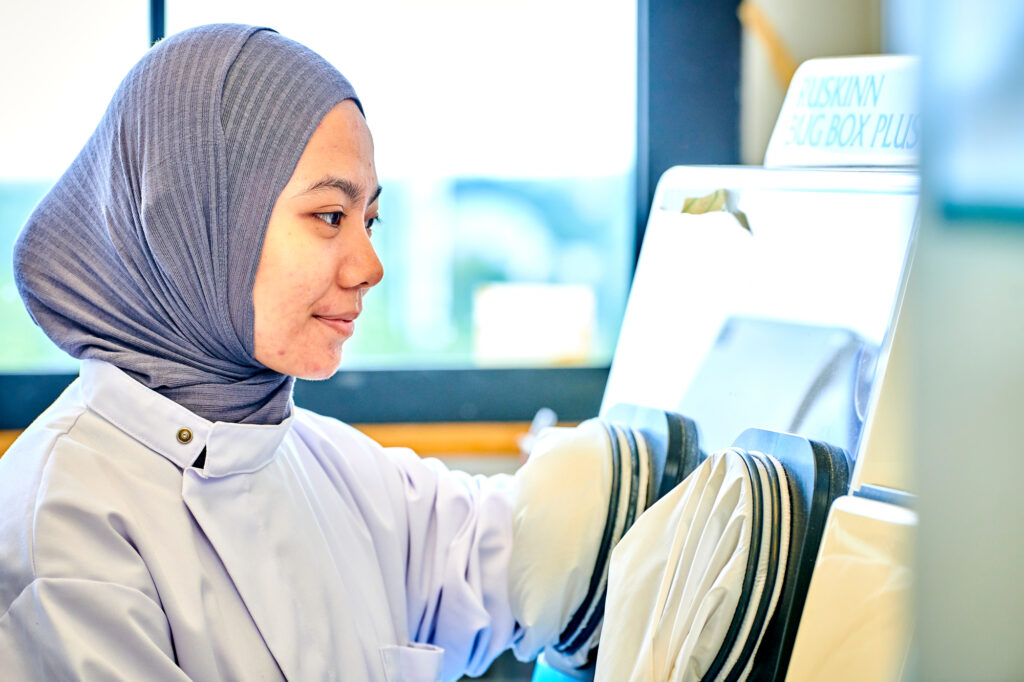
Here at Newcastle University’s medical, dental, and research facilities, a variety of projects are being carried out to implement more environmentally sound practice. For instance, our previously mentioned Sustainable Medicine Lead, Hugh Alberti, has been working throughout the School of Medicine to introduce sustainable healthcare teaching to the curriculum. This has led to a range of impressive initiatives, including all final year students completing sustainable quality improvement projects as part of their final GP placements – that’s 370 tailored sustainability projects being written for GP surgeries throughout Newcastle every year! Meanwhile, our Sustainable Medics Society run regular conferences on sustainable medicine and are currently working on a project to make lab sessions for clinical skills modules more sustainable by reducing plastic waste. Finally, lots of medical labs, including core labs used by a variety of different teams, have received Laboratory Efficiency Assessment Framework (LEAF) accreditation – with several operating at ‘Gold’, the highest level of the standard currently available!

Image: a student operating medical equipment. Credit: John Donoghue.

What next?

This range of initiatives is having a tangible effect by both directly improving environmental outcomes and ensuring that sustainability is established as an important consideration in the minds of current and future medical practitioners. Our medical students, teachers, and researchers aren’t done yet, though! Ambitions for the future include further improving the University’s already impressive Planetary Health Report score, and further reducing the use of single use items in medical teaching.

Many thanks again to Nuala, Hugh, Oak, and everyone else who generously contributed their time for this piece. If you want even more information on sustainability in healthcare, have a look at the references and resources below. Additionally, if you’re looking for steps you can take yourself, get started by having a look at our recent Sustainability Newsletter for advice on how to sustainably dispose of medications!

References and further reading

Abbasi, K., Ali, P., Barbour, V., Benfield, T., Bibbins-Domingo, K., Hancocks, S., Horton, R., Laybourn-Langton, L., Mash, R., and Sahni, P., et al. (2023) ‘Time to treat the climate and nature crisis as on indivisible global health emergency’, British Medical Journal. 383. p. 2355.

Andrews, E., Pearson, D., Kelly, C., Stroud, L., and Rivas Perez, M. (2013) ‘Carbon footprint of patient journeys through primary care’, British Journal of General Practice. September.

Gillam, S., and Barna, S. (2011) ‘Sustainable general practice: another challenge for trainers’, Education for Primary Care. 22 (1). 7-10.

NHS England and NHS Improvement (2020) Delivering a ‘Net Zero’ National Health Service – July 2022 Update. Skipton House, London.

Pencheon, D., and Wight, J. (2020) ‘Making healthcare and health systems net zero’, British Medical Journal. 368.

Sherman, J. D., Thiel, C., MacNeill, A., Eckelman, M. J., Dubrow, R., Hopf, H., Lagasse, R., Bialowitz, J., Costello, A., Forbes, M., et al. (2020) ‘The Green Print: Advancement of Environmental Sustainability in Healthcare’, Resources, Conservation and Recycling. Volume 161.

Catching the Tailwinds: Wind power and the green energy transition at Newcastle University

What is Wind Power?

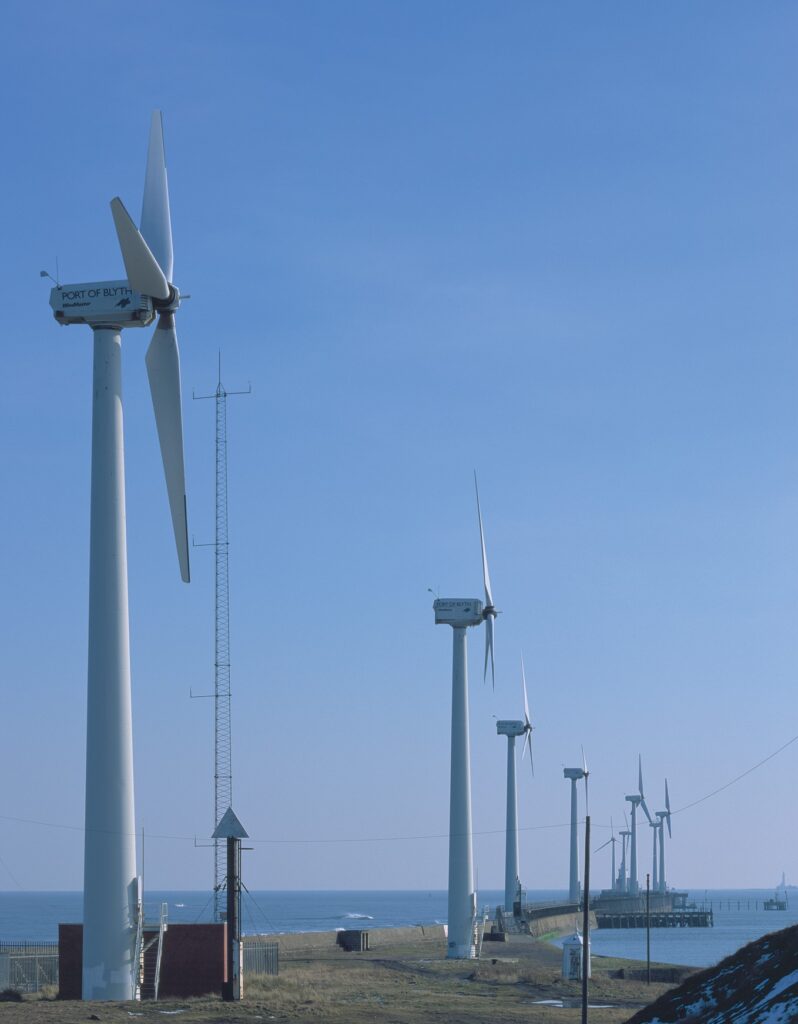
Wind power is a renewable source of energy that harnesses the kinetic force of natural air flows. To do this, turbine blades are angled so that the passing winds push against them and transfer their energy into rotational movement. This movement then drives a generator that transforms the kinetic energy into electrical power. Similar processes, minus the last step, have been utilised for millennia for purposes including milling grain, pumping water, and, in their simplest form, navigating oceans. Since the 1970s, however, the technology’s potential to generate electricity at scale has led to a gradual modern resurgence of wind power as a useful tool in the global transition towards cleaner and greener energy (Chiras, 2010). To understand how Newcastle University is responding and contributing to this transition, I’ve drawn on the expertise of Professor of Offshore Engineering, Zhiqiang Hu, to explore some of the exciting projects in progress across our organisation.

Image: Turbines at the Port of Blyth. Credit: Graeme Peacock.

The University’s wind research and collaborations

Our University has a range of talented researchers working across a variety of wind power technologies and among of the most promising of these is offshore wind generation. Placing wind turbines offshore (sometimes a long way out at sea!) allows them to be far larger than their land-based siblings which boosts generation capacity while avoiding taking up precious space on land. As a result, the offshore wind industry is developing quickly as an important way to meet the global demand for decarbonisation. This is creating a wealth of challenges and opportunities for those working in the sector and Newcastle University has a strong position within this dynamic landscape thanks to two key factors.

Firstly, the University has attracted attention from a variety of leading energy and engineering companies thanks to both our wealth of specialist knowledge and the forward-looking approach to sustainability that we take throughout our institution. Our researchers are working on a variety of cutting-edge themes, specialising particularly in the strength and integrity of wind turbines, their operation and maintenance, and developing ways to store their excess generation as hydrogen! Meanwhile, to help power this research, the University has entered a long-term deal to acquire wind power from Statkraft – a major European wind power supplier.

Secondly, the North-East is also a busy place for offshore wind power industrially, due both to the region’s existing maritime infrastructure and the vast wind farm being developed at nearby Dogger Bank in the North Sea. This wind farm, projected to be the largest in the world, has created a strong local offshore wind power supply chain, further attracting investment and collaboration with leading companies eager to work with local centres of expertise such as our University. These factors have led to a variety of exciting projects collaborating with industry including:

  • Professor Hu’s work to collaborate with colleagues and companies, including ORE Catapult, Hywind Scotland, and Equinor, to develop technologies (including using AI (Chen et al., 2021)) that will help maintain floating wind turbines at sea.
  • The University’s Hydrodynamics Laboratories in the Armstrong Building have been working with Balmoral to develop their HexDefence technology to avoid scouring issues at the base of offshore turbines (read more about scouring here (Zhang et al., 2023)).
  • Newcastle University’s Marine Zero PhD Centre has been supporting TechnipFMC on a project to develop dynamic cable monitoring technology to ensure that power gets back to land safely from the turbines out at sea.
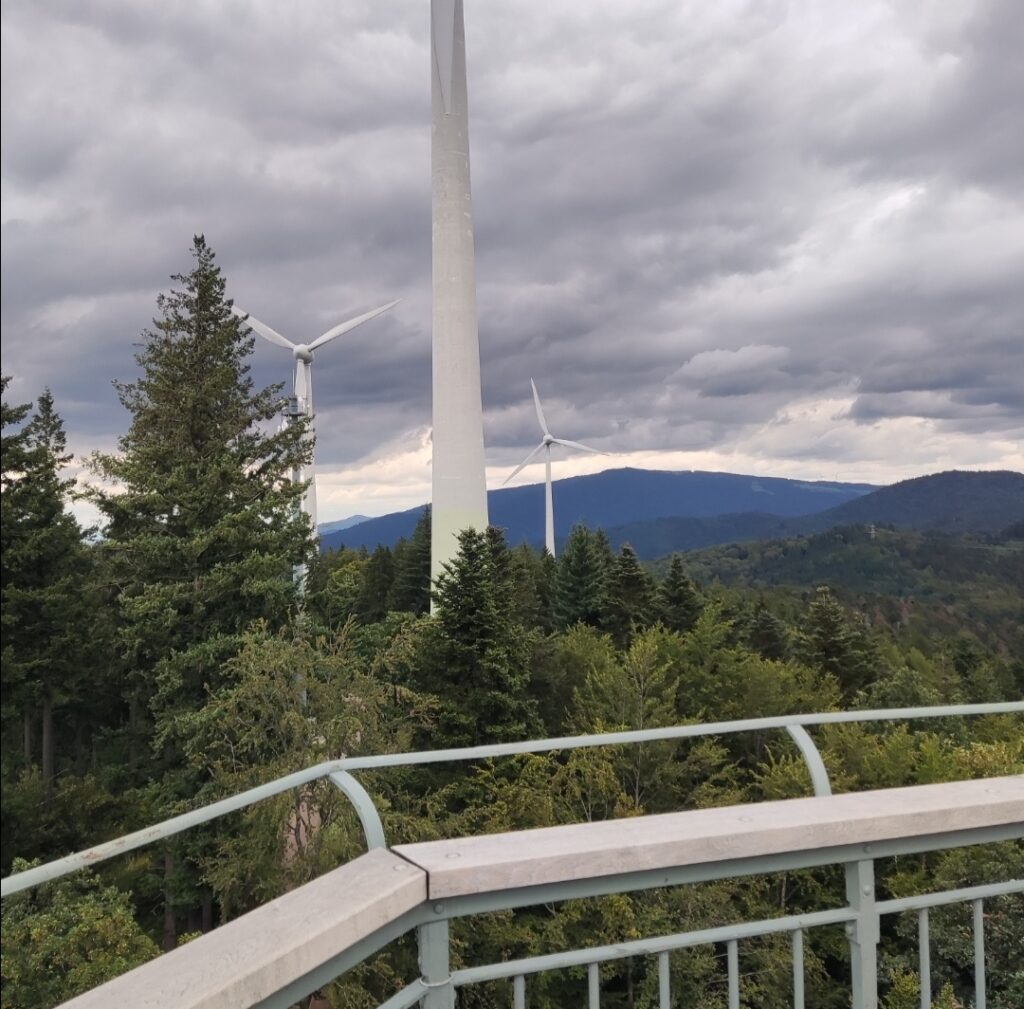
Image: Turbines in the Black Forest above Freiburg. Credit: author.

Impact beyond the University

The varied partnerships and research projects underway at our University are creating opportunities and positive change within our organisation, but the work that’s being done here is having impacts far beyond the streets of our campus. Here, the University’s work contributes to positively impacting the emissions profile of the entire North East, proving the possibilities of decarbonising UK higher education, and providing vital knowledge that will contribute to the global green energy transition!

Enormous thanks to Professor Hu for the expert insight he provided for this article, you can see more of his work here. Finally, to stay fully up to date on sustainability news across our University, keep checking our regular blogs and contact us at the Sustainability Team to be added to our monthly newsletter!

References

Chen, P., Jia, C., Ng, C., and Hu, Z. (2021) ‘Application of SADA method on full-scale measurement data for dynamic responses prediction of Hywind floating wind turbines’, Ocean Engineering. Volume 239.

Chiras, D. (2010) Wind power basics: a green energy guide. New York: New Society Publishers.

Zhang, F., Chen, X., Yan, J., and Gao, X. (2023) ‘Countermeasures for local scour around offshore wind turbine monopile foundations: A review’, Applied Ocean Research. Volume 141.

Bees on Campus

Bees provide a range of important services that help maintain the health and vibrancy of our natural environment in both rural and urban settings. In our beautiful city-centre campus, for instance, urban bees assist our Grounds Team in caring for greenery from the wildflower meadows in Claremont Court to the tulip beds outside King’s Gate. To learn more about these fascinating creatures and their role in creating our sustainable campus, I had a chat with the lovely people at Newcastle University’s Bee Society.

Image: Members of the University community walk through the greenery of the Old Quad. Credit: Chris Bishop
How many beehives does the Society have and how long has the University had bees?

“At present there are 2 beehives, although the number fluctuates between 2-4 depending on how the years go – our hives are called Mary and Delilah! We’ve had bees since the mid-2010s.” 

I see! Do you know if there are any other urban beehives in or around the University?  

“While I haven’t interacted with them, I’m aware that other university staff have beehives for the sake of research. Newcastle is also home to a chapter of the BBKA (British Beekeeping Association) so it’s safe to assume that there are a few beekeepers knocking around locally.” 

So, what sort of thing does the society do to care for the bees?  

“The nature of beekeeping changes depending on the season – understanding the calendar and how to respond to it is vital to successful care. In the summer we check on the hives once a week (weather permitting), as the time between April-July is prime for swarms. In early spring and the autumn, we check on them far less frequently, once a fortnight or so. In the winter we don’t go in the hives at all. 

How long our checks take is also dependent on the time of year. In the summer it often runs up into the 2-hour mark! We use an acronym to remember what needs to be looked for: D.E.F.R.A, which stands for Disease, Eggs, Food, Room, and Anything Else. The presence of food and eggs are often my main concern, and after a certain point the observations become second nature. 

We always wear suits and gloves for the sake of our members. Stings do occur from time to time, but to a significant extent the victims are members of committee who have to engage with the bees when they are at their most defensive. While this is scary at first it is something you get used to over time; I have been known to scold the hives when they’re acting up!” 

And do the honey and wax get used for anything?  

“When there is surplus honey, we collect it. Last year we involved our members in the processing of the comb and this went down very well, but it isn’t a priority for us. Excess wax has been used by a few of the University’s fine art undergraduates in the production of candles.” 

That’s super interesting! How can people get involved?  

“The primary way that people can get involved is to join the society! While the hives are now being left alone for the winter, we have talks running throughout the colder months and are always happy to share our knowledge and experience.” 

Image: a bed of tulips on campus. Credit: John Donoghue
How do the bees help with local biodiversity?  

“Bees are vital to the healthy functioning of plant life and our bees can often be seen collecting pollen and nectar from the flowers on campus. They roam quite widely – up to a distance of around 5 miles – but with so many options on show in our green spaces I imagine that they don’t have to go far for food. Most of the time they’ll travel less than a mile – pollinating a variety of species in and around campus.” 

What sort of role can urban bee keeping play in a sustainable future?  

“Urban beekeeping has a place alongside the protection of other bee species, but I believe that the awareness it brings is one of the most valuable things it has to offer. The honeybee is not in any danger at the moment, but our native bee populations of bumblebees and solitary bees are in serious decline, and no one pollinator can fill the role of all these individual species. By encouraging informed beekeeping practices and the support of wildflowers/bee-friendly spaces, urban beekeepers can provide both the efficient pollination efforts of their bees and the knowledge and care that we desperately need to protect our pollinators on a wider scale.” 

So, there you have it! A huge thank you to our wonderful Bee Society, please go check out the amazing work that they do and next time you’re enjoying our beautiful urban green spaces – spare a thought for the hardworking creatures who keep them looking lush! 

Planning sustainably at Newcastle University

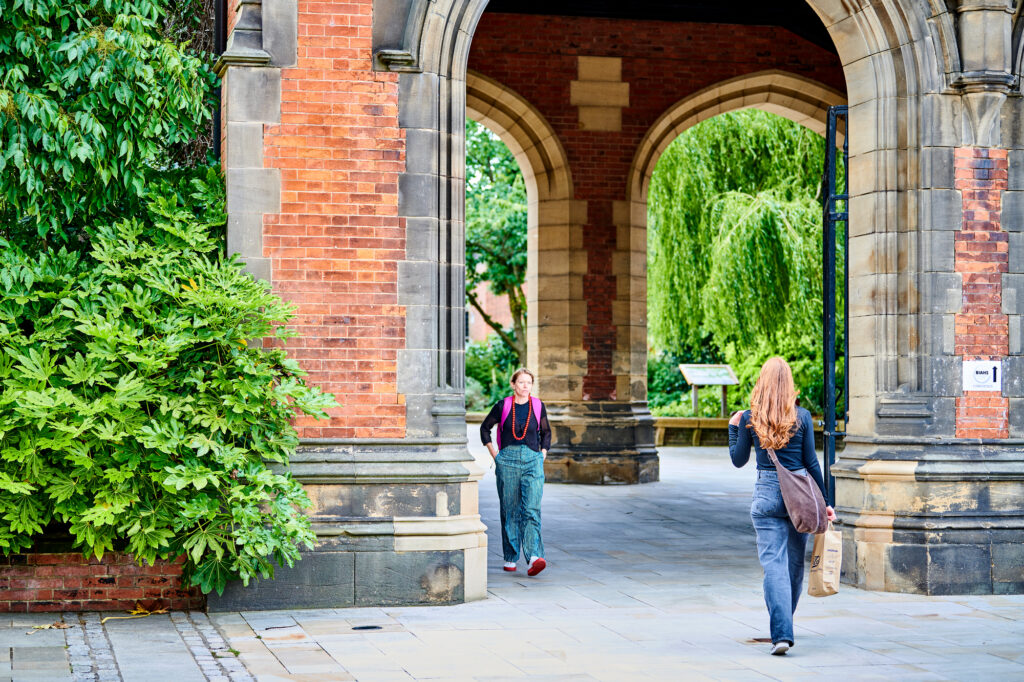
Image: Members of the University community walk through the greenery-framed arches of King’s Gate. Credit: John Donoghue.

The University’s lovely Planning Team are responsible for designing and delivering our campus’s impressive variety of beautiful and cutting-edge spaces, both indoor and outdoor. This work has a major role to play in the environmental commitments of our institution and so we decided to have a chat with our friends in Planning to see how they’re incorporating sustainability into their practice. Here’s what we learnt.  

How Planning works

One of the main functions of the Planning Team is to receive and solve Space and Project Requests (SPRs) which are sent to them by colleagues all across the University. These requests might involve the creation of a new teaching space for a growing department, for instance, or perhaps the conversion of a room to provide specialist resources. For each request, the Planning Team devises solutions to provide for the requester’s varied needs and maximise the potential of the spaces involved. As part of this process, our planners pay close attention to the sustainability of each project throughout its conception and delivery in a number of impactful ways. 

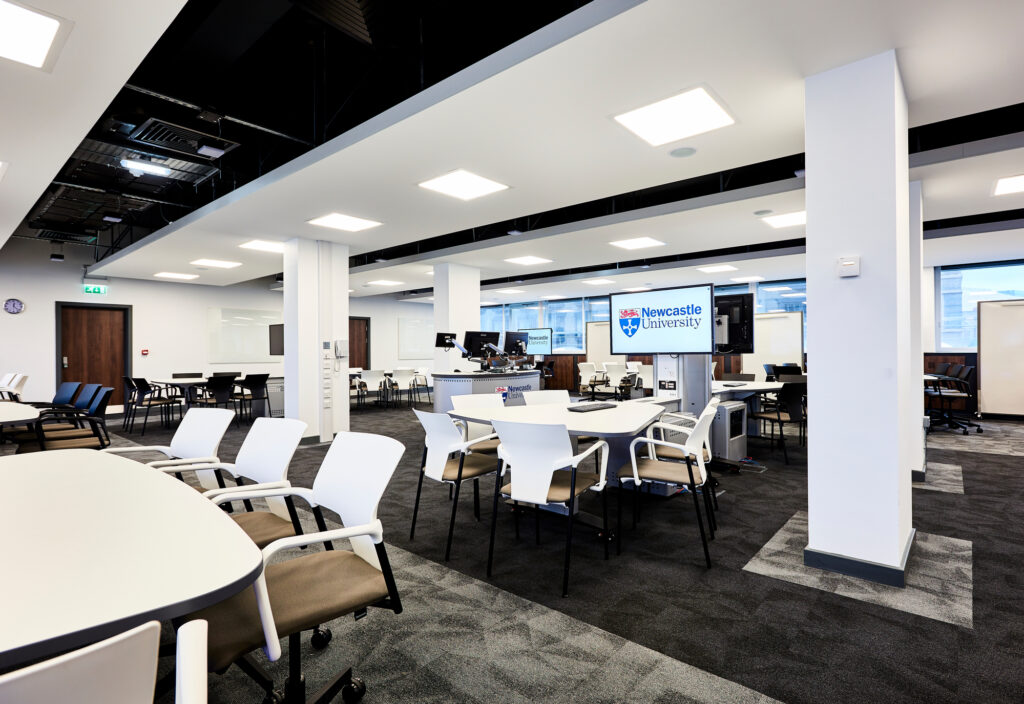
Image: the newly renovated Herschel Learning Lab in the Herschel Building. Credit: John Donoghue.

Sustainable practice

Importantly, following the Carbon Literacy Training that some members of the team undertook, the Planning Team have developed a “carbon conscious methodology” for their work which incorporates a range of sustainable approaches and complements the environmental guidance written into the University’s procurement framework. These methods range from limiting hard landscaping and protecting green areas where possible, to considering how spaces can be designed in a versatile manner to accommodate several uses at different times. Additionally, when delivering on SPRs, the team considers sustainability from the very outset by conducting their own research to ensure the necessity of each request. This evaluation is then followed by a consideration of how existing spaces and features can be reused to lengthen their life – similar to repairing clothes instead of buying new! 

Where items are no longer needed or replaced, however, the team puts the responsibility for dealing with the unwanted furnishings on the requester, to ensure that simply throwing items away is never the easiest option. Thanks to this, these items are then either reused somewhere else in the University (via our furniture reuse list, for example!) or are disposed of responsibly by contractors such as the wonderful people at RightGreen. As if this wasn’t enough already, the team are also full of ideas for how their planning can become even more sustainable in future! 

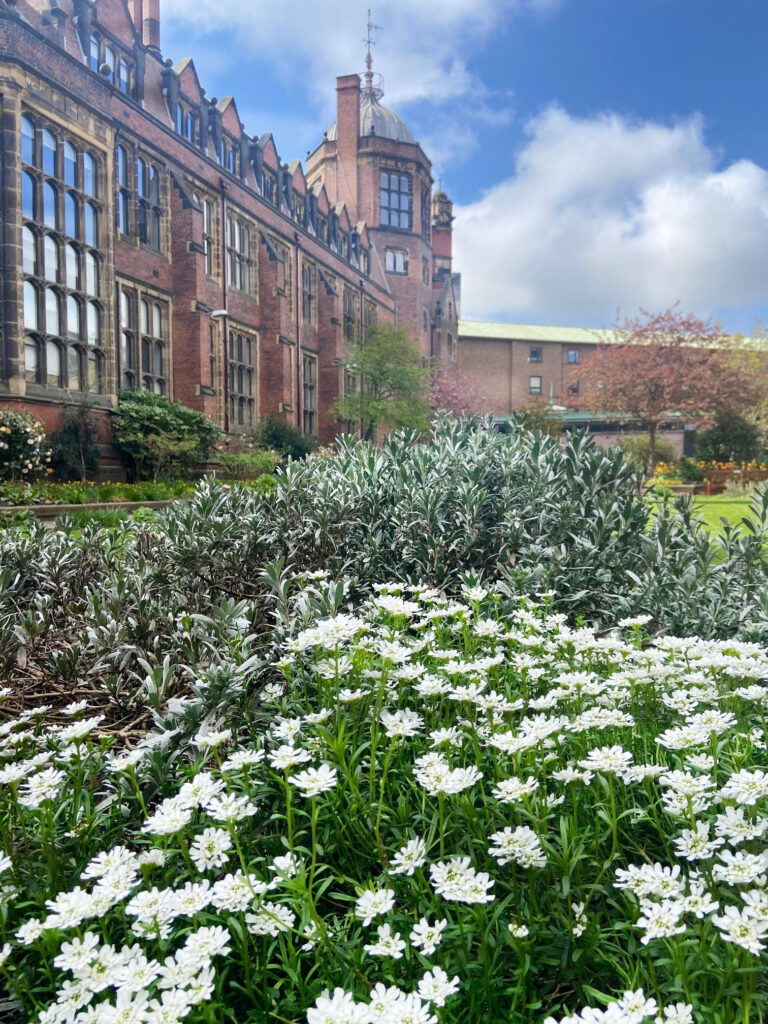
Image: Flowers and greenery in the Old Quad. Credit: Charlotte Robson.

Sustainable futures

Core to these aspirations is a holistic view of the planning process. This involves taking moments to pause and consider the sustainability of each aspect of a project, for instance, and considering the full lifecycle of each space including how it can be reused and/or returned to nature at the end of its lifespan. One of their ideas for putting this into practice is adapting University College London’s Laboratory Efficiency Assessment Framework (LEAF), which Newcastle University uses, to allow those submitting SPRs for a variety of spaces to gain accreditation for environmentally friendly reuse and refurbishment. These ideas build on the amazing suite of sustainable policies our planning team already utilises to offer an exciting vision of what the future of Planning could look like at Newcastle University. 

So, next time you’re on our brilliant campus, whether you’re enjoying our labs, lecture theatres, historic buildings, or green spaces, take a moment to appreciate the hard work our amazing planners do to bring these high-quality spaces to us in as sustainable a manner as possible. Finally, if you want to learn more, please do check out the information on their blog also! 

PGRs explore how sustainability relates to research and professional development

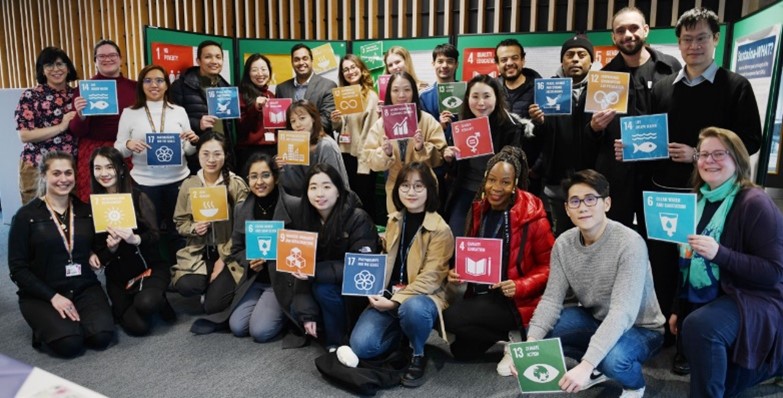
SustainaWHAT?! is a multi-disciplinary, cross-faculty and now cross-institutional collaborative project which encourages PGRs to explore the relationship between the United Nations Sustainable Development Goals and their research, with a focus on their professional and personal development.

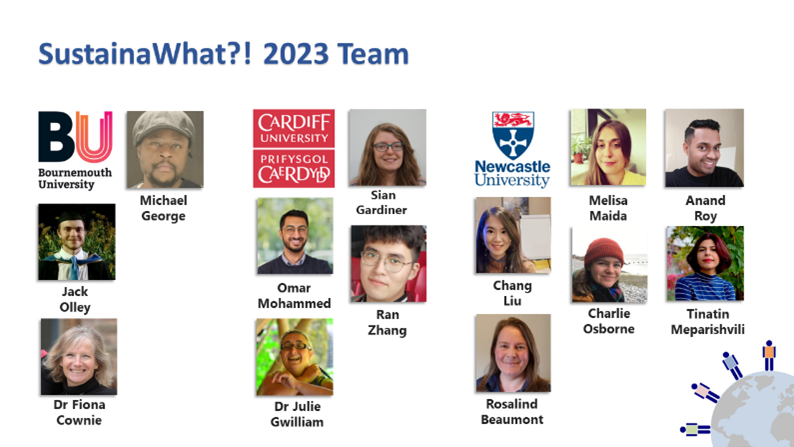
Building on the success of the 2021 event, in Spring 2023, PGRs from three institutions (Newcastle, Bournemouth and Cardiff) worked with academic leads to create SustainaWHAT?! 2023 – a series of four events which aimed to:

  • provide an opportunity to bring a sustainability lens (via the UNSDGs) to their prospective research with a view to informing the rationale and potential impact of their current and future research;
  • develop a range of competencies applicable to their contexts;
  • develop a network of PGRs (+PGTs and ECRs) interested in sustainability within and across the three institutions.

‘The Gathering’ (March) was an introductory workshop which saw over 60 students (predominantly PGRs, with some ECR, PGT and UG students) exploring the UNSDGs in relation to their own lives and research through a range of activities.

At Newcastle, this event gave 26 postgraduate students from HaSS, FMS, and SAgE faculties a vital opportunity to collaborate across schools and research interests. This hybrid, part in-person, part over zoom, event between Newcastle University, Bournemouth University, and Cardiff University provided a space for whole university thinking on how research can be related to the UNSDGs.

A powerful keynote speech was given by sustainable development expert and Insights North East Fellow Jecel Censoro, and discussion panel members Dr Elisa Lopez-Capel (SAgE), Dr Jenny Davidson (HaSS/ School X) and Mx Jan Deckers (FMS) answered attendee questions on sustainability.

This opportunity to work across schools was deem important by attendees, with one Newcastle PGR stating after the event, ‘The climate crisis requires interdisciplinary solutions and collaboration’. Of the 52 survey responses (from all three institutions), 95% of students reported that they are rarely or never given the opportunity to work across disciplines on sustainability projects, so we believe this Sustaina-WHAT?! work fills a vital niche.

SustainaWHAT?!’s work draws on UNESCO’s Learning Competencies for Education for Sustainable Development, including overarching ways of thinking (e.g. critical thinking), of practicing (e.g. collaboration), and of being (e.g. reflection), when planning events. As demonstrated by attendee responses below, our work continues to be successful in developing attendee ESD competencies which prepare and support student work not only in their research projects but also their ongoing professional development.

Critical Thinking: Through the individual and group activities during the March event the percentage of students who stated they were able to link the SDGs to their research increased from 43% before the event to 76% after the event.

Collaboration: Cooperation between students with disparate research interests during a group activity led attendees to make clearer links between each other’s work through the SDGs, with students commenting that ‘SDGs are interconnected’ and ‘I became more aware of SDGs in my domain of research’.

Reflection: After being invited to review their existing awareness of sustainability during the March event, 84% of students leaving the event reported they intended to explore sustainability as part of their future career, and 82% stating that they planned to adopt sustainable actions in their daily lives.

What did the students across the three institutions learn? When asked what their biggest take away from the March event was, the students commented:

  • ‘More exposure on SDGs and their relation to communities, societies, and countries.’ (Bournemouth)
  • ‘Connection and motivation.’ (Cardiff)
  • ‘Develop potential connections between sustainable development and my research.’ (Newcastle)

In ‘The Challenge’ (April), three multi-disciplinary and cross-institutional PGR teams worked closely online and under time constraints over two events to explore and respond to country-based briefs, drawing on the UNSDGs. ​Each team (supported by a PGR facilitator) produced a proposal which was judged by a panel of academics from 3 institutions and an external NGO. In addition to prizes being awarded for 1st-3rd place, teams received individualised feedback on their proposal strengths ​and developmental suggestions. First prize was awarded for a proposal on “Improving Sustainability Through UK Manufacturing Law”, which was developed and presented by Callum Thompson (PGR in Engineering, Cardiff) and Tushar Somkumar (PGR in Law, Newcastle). Their work illustrated the value of creating opportunities for students to come together from different disciplines and institutions to work effectively to respond to global challenges.

Finally, there was an online event, ‘The Celebration’ (May) to announce ‘The Challenge’ winners, and to celebrate the achievements of all involved – the project team and student attendees. 

The initial findings from the project’s evaluation work were also shared. Understanding the student attendee experience of the project and the impact on people’s learning and views on sustainability have been a core element of the work undertaken by a dedicated evaluation team. We’ve not only been interested in attendee experiences, but the team have been keen to observe and explore the cross-disciplinary and institutional project team (some self-reflection was required too) in terms of what working practices are needed for successful collaborative working across disciplines and institutions. The team are now working on finalising an evaluation report to share across our institution.

Moving forward – get involved! Colleagues from Bournemouth, Newcastle and Cardiff are scoping out a student-led sector-wide sustainability network which brings together Early Career Researchers (ECRs) and Postgraduate Research Students (PGRs) who are working on bringing sustainability into their research. The network seeks to connect its members across institutions and facilitate cross-disciplinary interactions and collaborations. To find out more/ get involved contact: rosalind.beaumont@newcastle.ac.uk.

Co-authored by Charlie Osborne (PGR, SNES) and Rosalind Beaumont (Senior Lecturer, School X)

Sustainability tips and tricks for individuals on the move

Sustainability at Newcastle University  

At Newcastle University, we work on large-scale projects to decrease our carbon dioxide emissions and other negative effects of our activities. As well as this, we encourage sustainable behaviour from our community, and we want to support you with this action. 

Sustainability can be particularly tricky when you’re on the go, so we have pulled together some tips that may help embed some useful habits into a daily routine. 

If we have missed any tried and tested tips, write them down in the comments to share with others! 

Sustainability when you’re on the move 

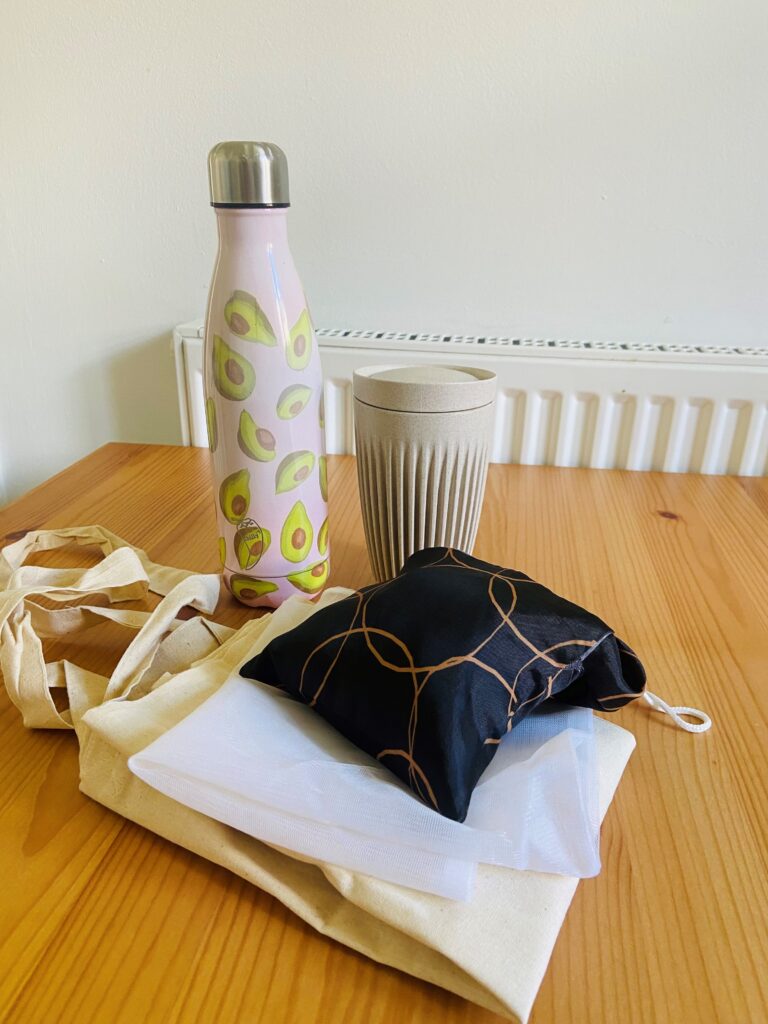
  • Use your reusable water bottle and coffee cup. 
  • Use your existing reusable shopping bags – we all have them – it’s not sustainable to buy new ones each time you go shopping. 
  • Bring lunch with you to campus, and if you’ve not had time to prepare lunch, choose a takeaway lunch with less or no plastic packaging. 
  • Recycle waste correctly by following our guidance posters which are located above the bins in our buildings on campus. 
  • Walk, wheel, cycle or take the bus or metro to and from campus – you will be decreasing your carbon footprint and the University’s. 
  • Textbooks: buy online versions, second-hand copies, or borrow them from the library where possible. 
  • Shop second-hand for clothes, accessories, electronics, furniture, books… the list goes on! If you’re after physical charity shops, there are loads in the city centre and Jesmond.  
  • Dress for your comfort level in the autumn and winter: you might feel the cold more than others so please do wear appropriate clothing and extra layers. 
  • Talk about sustainability! Ask what it means to others, chat through sustainability action, and you might inspire them to do more. 

If you would like to read some additional sustainable lifestyle tips, check out our lifestyle section on the blog to learn how to introduce sustainability into your kitchen and bathroom.

Sustainability Network 

Want to stay up to date with climate action and sustainability at Newcastle University? 
The Sustainability Network will communicate information about climate action progress at Newcastle University, empower the community with knowledge on key sustainability themes, and advertise upcoming events. 

Join the Sustainability Network!

Sustainability Highlights 22/23

With the next academic year due to begin, it’s time to take a moment to reflect on the University’s sustainability activity. From buzzing eco-friendly events and collaborations to receiving exciting awards, this year has been packed with sustainable achievements. 

We held some great events… 

Climate Action at Newcastle University 

On the 10th of November 2022, we invited colleagues and students to join us at a conference-style, collaborative event on climate action. This was a great event where delegates were able to discuss future climate action plans and hear more about more about sustainable initiatives in the higher education sector. 

Spudfest 

In December 2022 the School of Natural and Environmental Sciences held Spudfest in collaboration with the Sustainability Team, Keenan Recycling Ltd, EAT@Newcastle and Newcastle Food Bank. This event showcased some of the exciting research on our farms and helped to avoid food waste. It was a spud-tacular event! 

Sustainability Week 

Sustainability Week was a weeklong event in March 2023. We held a variety of activities throughout the week aimed to engage and inspire the University community. Activities included a tour of the National Green Infrastructure Facility, a climate anxiety workshop and a full day festival! 

Environment Awards 

At the end of June, we celebrated the Environment Awards. This was a lovely afternoon where we celebrated the achievements of the University community. From acknowledging the work of LEAF members to celebrating our Grounds Team, there was plenty to celebrate! 

We received some exciting awards… 

In December we received the news that we retained our ‘First Class’ sustainability ranking by the People and Planet University League for the 10th year in a row. 

We were ranked 4th in the UK and joint 24th in the world for sustainable development in the Times Higher Education Impact Rankings. 

In June, we were externally audited on our Environmental Management System (EMS) and Energy Management System (EnMS). We were recertified to ISO 14001 and ISO 50001 respectively. You can learn more about what this means in our EMS and EnMS blog post. 

We brought our campus to life… 

Our grounds team planted over 1500 m2 of wildflower beds across campus. These really came into bloom in the hot summer weather and have made our campus look great!  

A group of volunteers and the Sustainability Team carried out hedgehog surveys on campus. Newcastle University holds a Silver Award from Hedgehog Friendly Campus. 

In December 2022, we became a founding member of the Nature Positive Universities Alliance. This initiative was launched at COP15 and requires universities to calculate a baseline of their effects on biodiversity and set targets to minimise their impacts. 

.Image 

And some more great Sustainability activity… 

In January we started the Sustainability Network, a place for communicating sustainability news with the University community. The network currently has over 200 members and is still growing! Sign up to the network here

In October we restarted this blog! This page has become a wealth of information about sustainability in the University and around Newcastle. We currently have over 20 blog posts up on a variety of topics ranging from travel to food. Make sure to watch this space for more posts. 

We would like to say a big thank you to everybody who engaged with our activities this year. Our work wouldn’t be possible without your support. Stay tuned for some more great work in 23/24!