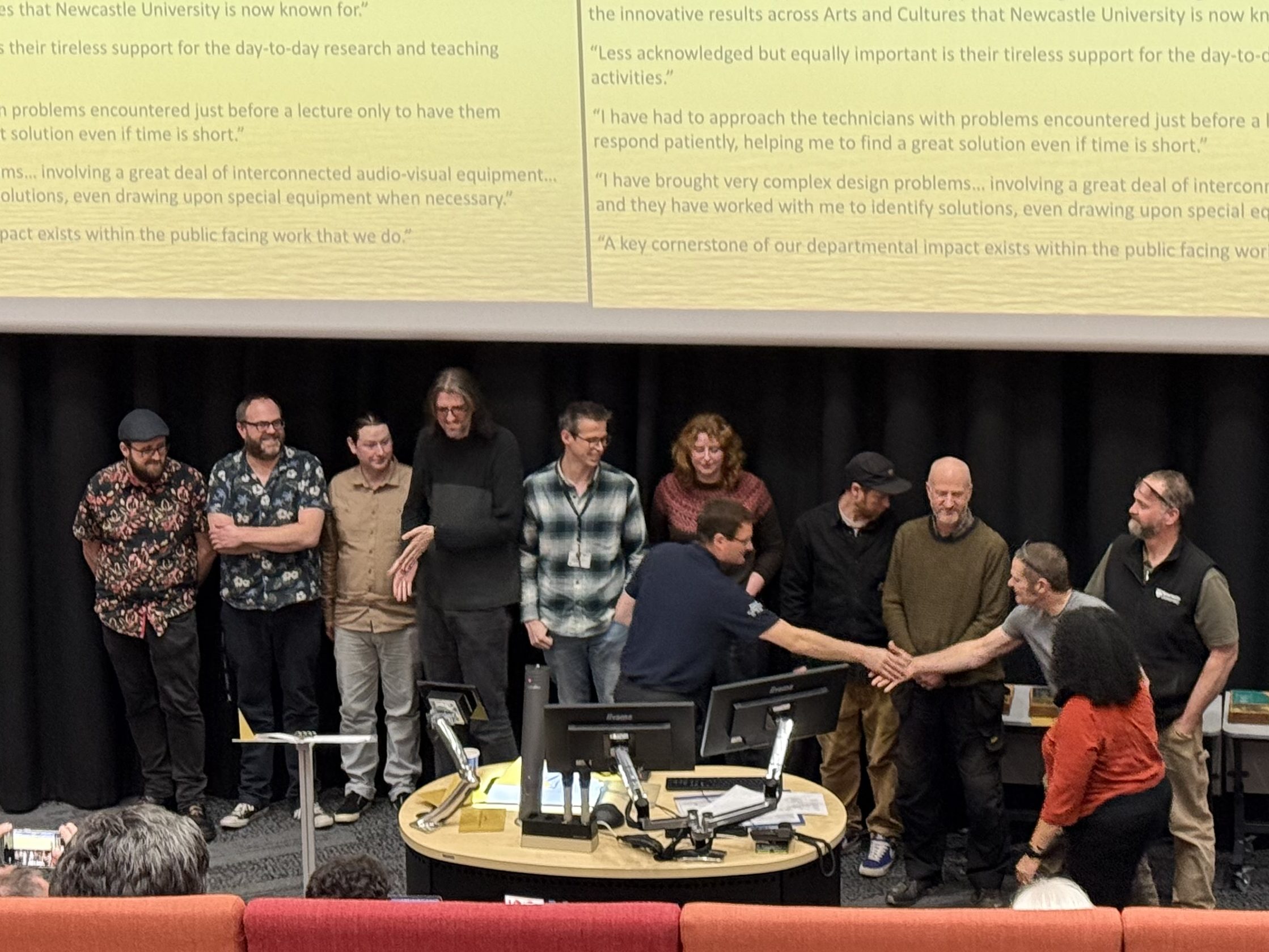
The School of Arts and Cultures Technical Team took home the gong for Technical Team Achievement at the inaugural NU Technical Awards on Wednesday 17th December 2025. This award recognises the amazing work the occurs throughout the team.
Congratulations to the whole team, who not only secured this prize, but were shortlisted across numerous other categories.
See below for some pictures of a very handsome team receiving their award!
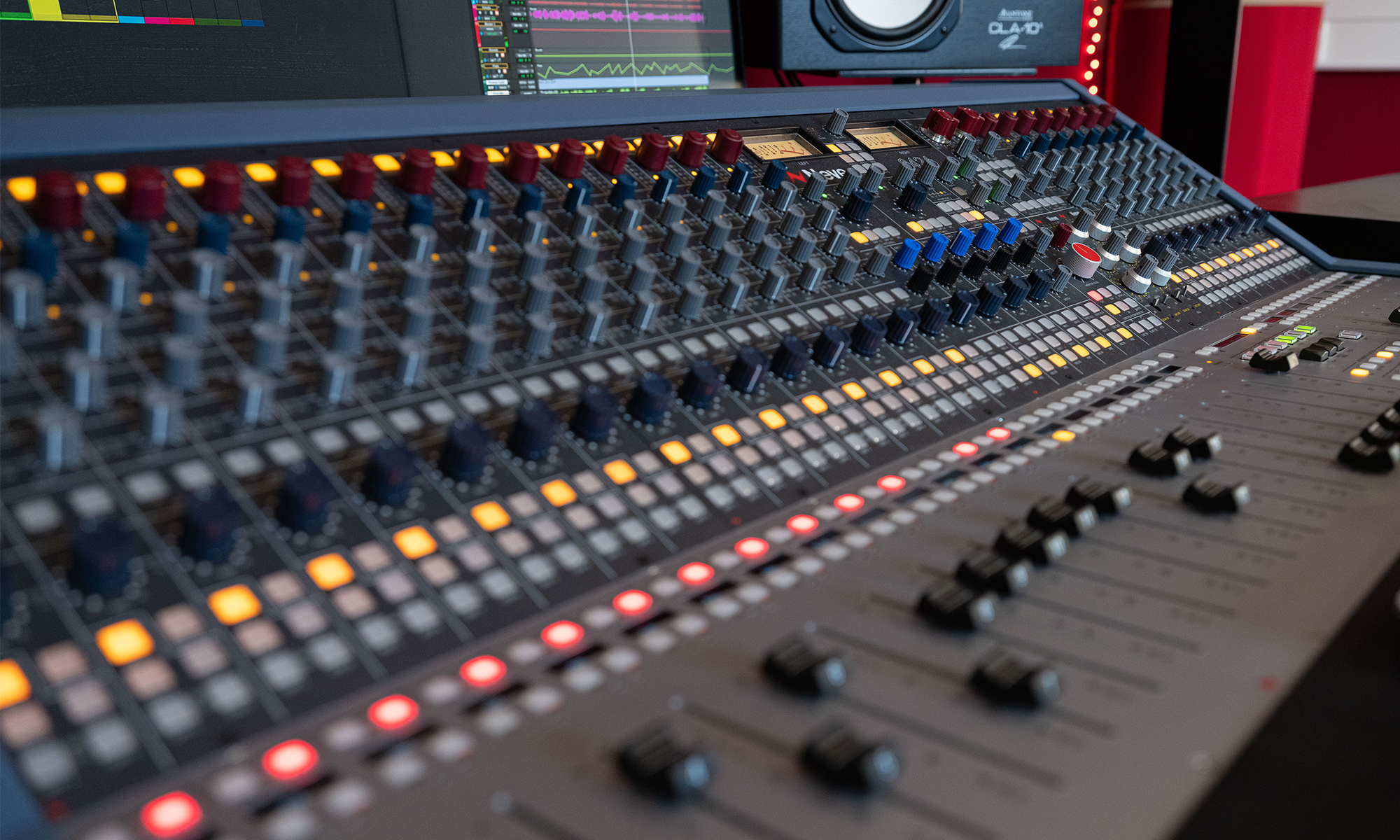
The Music Department at Newcastle University has become the first Russell Group University in the country to become an SSL Certified Training Partner, showing its commitment to professional training and accreditation for students at all levels.
Solid State Logic, manufacturers of a variety of audio products, including mixers, interfaces and plugins have created a training platform in conjunction with industry professionals to deliver students the skills they’ll need to create professional, commercial music. Our computing spaces and studios have been refreshed with new SSL software, available for our students and staff to use in their productions. Students at Newcastle University also unlock significant student discounts on SSL products, in addition to their usual educational discount.
The Music Department will partnet with SSL for the next three years as a training partner. Details on how to access the SSL training platform can be found on the Music department Canvas pages.
The Flexible Workspaces within the Music Studios are simple to use, as long as you turn the equipment on in the right order:
Ensure that the power plug switches along the wall are turned on, and that the monitor speakers either side of the monitor are turned off. This ensures that the pops and crackles that may damage the speakers when everything else is turned on don’t occur.
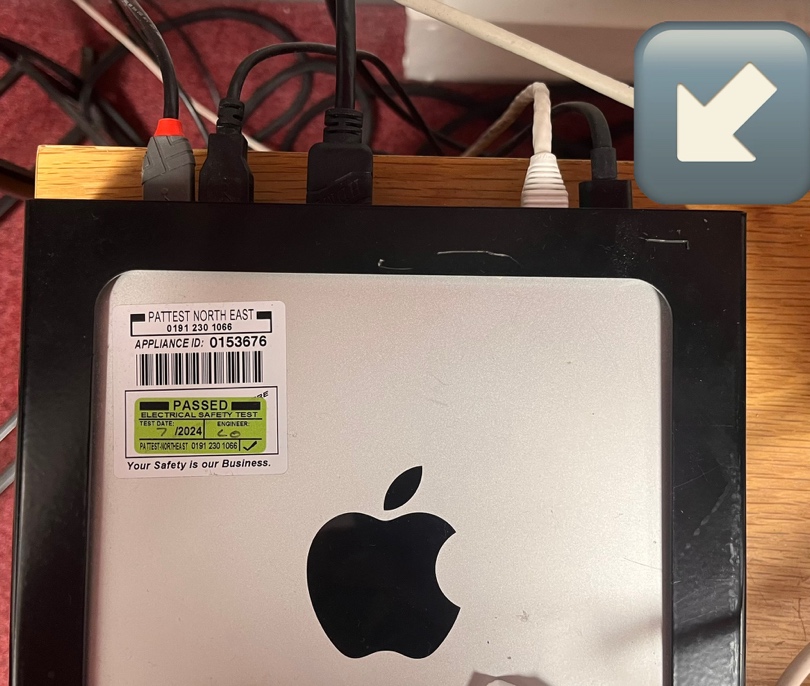
The power switch for the Mac Mini is located at the rear of the unit, in the far right corner. You may turn this on now, followed by the power button for the monitor.
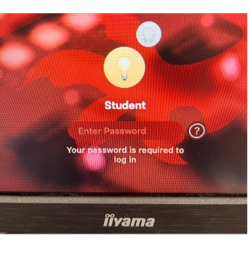
The password to log into the student account is ‘student’, and can give you access to the software available on the system, such as Pro Tools, Sibelius, and others.
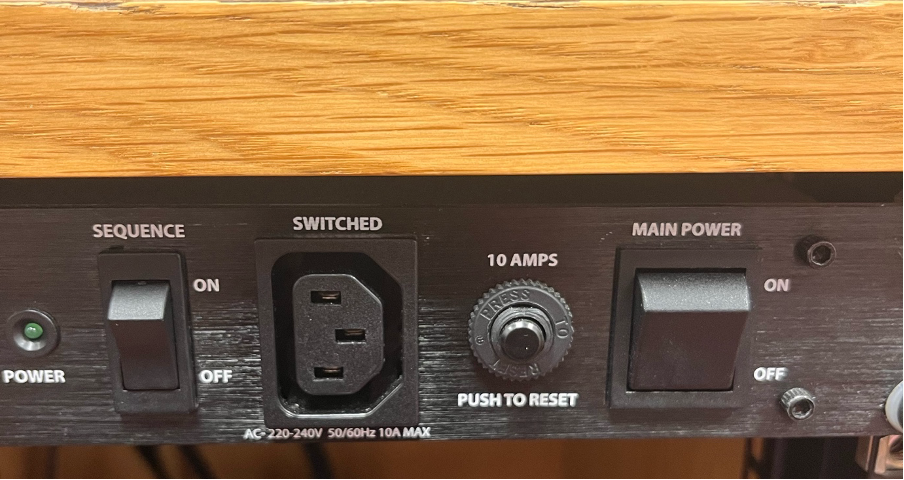
The speakers can now be turned on. In some rooms, you will need to turn on the power conditioner first (MAIN POWER first, then SEQUENCE second). If there is no power conditioner in your room, you may turn the speakers on directly.
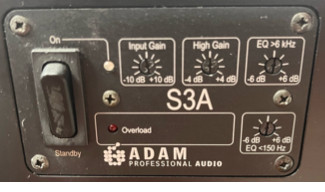
Large ADAM speakers: Power switch on the front panel, top centre.
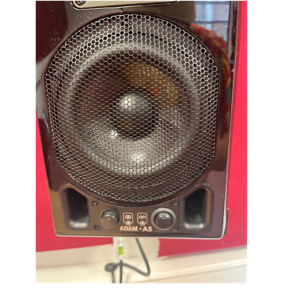
Small ADAM speakers:Power switch on the front, bottom right.
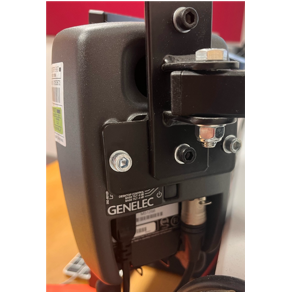
Small Genelec speakers: Power button on the rear of the speaker, next to the GENELEC logo.
It is crucially important, when you have finished your work for the day, that you power everything off in reverse order. In particular, turn off the speakers in the room before anything else, again to avoid damage.
The Mackie CR-XBT speakers are installed in practice rooms and studios around the music department. These versatile speakers allow students to play music with ease, be it for rehearsing with backing tracks or just for background music while working.
To use the CR-XBT speakers, make sure that the power cable is plugged into a power outlet and turn on the power switch, which is located behind one of the speakers. Next, you can pair your device to the speakers either via Bluetooth or mini-jack port. To pair via Bluetooth, turn on your device’s Bluetooth, press and hold the running man logo on the front of the speakers until it flashes green, indicating it’s in pairing mode. Then, scan for new Bluetooth devices on your device and select “CR4-XBT” to connect. If you prefer to use the mini-jack port, simply plug in your device and use the volume knob on the front of the speakers to control the volume.
These speakers are designed for ease of use, with their front-facing volume knob and power switch. With their capability to connect via Bluetooth and mini jack, students have the freedom to choose the connection method that best suits their needs. The CR-X BT speakers are a reliable and high-quality choice for students looking for a versatile and easy-to-use speaker system.
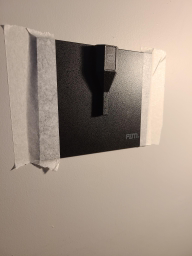
The Crown PZM-30D is a pressure zone microphone that stands out from the crowd with its innovative design and versatile capabilities. Unlike traditional condenser microphones, pressure zone microphones such as the PZM-30D record sound from both the source and the sound that is reflected off a reflective plate, resulting in recordings that are free from phase interference and sound clear and vivid. To achieve the best results, the microphone must be placed on a hard, non-absorbent surface such as a table, floor, or even the underside of a grand piano lid.
The PZM-30D is equipped with a switchable dual frequency response, R and F, providing users with the flexibility to choose between a flatter frequency response for a natural sound (F) or a brighter, snappier attack (R) for a more vibrant recording. With this feature, the PZM-30D is ideal for capturing a wide range of musical performances, including percussion.
The Crown PZM-30D is a unique microphone, its innovative design and versatile capabilities make it a great addition to any recording setup and provide a unique opportunity to experiment with new recording techniques.
Put the microphone onto a flat surface, (sometimes this involves using tape to ensure the microphone’s stability). Then, plug the XLR into the connection at the bottom of the microphone and the other end into the patch bay. Switch on the 48V Phantom power on the preamp or mixer and select the correct input in Pro Tools (the number of the input on the patch bay) or on your mixer and set the gain.
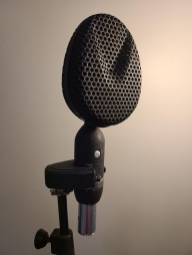
The Coles 4038 is a microphone that has a long and illustrious history in the world of broadcasting. Originally designed by the British Broadcasting Company (BBC) in the 1950s, it has been a mainstay in the industry ever since. Despite its history in broadcasting, the 4038 has found a home in many studios thanks to its unique capabilities.
What sets the 4038 apart is its extremely flat frequency response. This response provides an accurate and natural reflection of sound, making it an ideal choice for recording spoken word. The microphone is also highly sensitive, able to capture even the most delicate signals with clarity and precision.
In a studio setting, the 4038 is a versatile microphone that can be used for a variety of recording tasks. Its response to an instrument’s natural sound makes it ideal for use as an overhead microphone for drum recordings, and its clarity and warmth make it a great choice for guitar recordings as well.
The Coles 4038 is a microphone that provides a sense of warmth to all of the instruments it records while still delivering exceptional clarity. With its flat frequency response, it is versatile enough to be used in a variety of studio recording applications.
To use the 4038, remove the microphone from the case and protective velvet bag, along with the small allen key, microphone stand adaptor and 2 allen keys (these can sometimes be found stuck to the microphone due to its strong internal magnet). Align the holes on the bottom of the microphone’s stalk with the stand adaptor, insert the screws and tighten until secure. Next, insert the silver XLR adaptor into the bottom of the microphone (this can be released later using the metal band just above the base of the stalk. You can then attach the microphone to a sturdy and stable (the microphone is heavy!) microphone stand by holding the micropohone still and screwing the boom arm of the microphone stand into the microphone adaptor you secured earlier.
Then, ensuring phantom power is turned off, plug the XLR into the connection at the bottom of the microphone and the other end into the patch bay. Select the correct input in Pro Tools (the number of the input on the patch bay) or on your mixer and set the gain.
WARNING: This microphone is susceptible to damage if Phantom Power is used. Always ensure Phantom Power is turned off before plugging this microphone in.
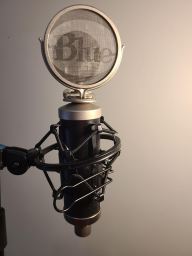
The Blue Baby Bottle is a microphone that provides a classic warmth and presence to a wide range of instruments. It is known for its versatility and ability to capture a rich and clear recording, whether you’re recording electric and acoustic guitars, drums, brass, or vocals.
One of the standout features of the Baby Bottle is its -20dB pad and built-in 100hz high pass filter. This allows it to accommodate different performance styles while still delivering a clear recording free of distortion. It’s especially useful when recording in a studio setting, where its very present midrange and smooth top end can produce a warm and classic sound that complements its vintage appearance.
The Baby Bottle is designed to accommodate a wide range of instruments and performance styles, making it a versatile choice for studio recording. Whether you’re recording a guitar, drums, brass, or vocals, this microphone provides a warm and clear recording with a classic presence. With its built-in 100hz high pass filter and -20dB pad, the Baby Bottle can handle different performance styles without distorting the sound. Overall, if you’re looking for a microphone that can deliver a rich, classic sound, the Blue Baby Bottle is a great option.
To use the Baby Bottle, start by attaching the microphone cradle to a stable microphone stand before putting the microphone securely into the clip. Then, plug the XLR into the connection at the bottom of the microphone and the other end into the patch bay. Switch on the 48V Phantom power on the preamp or mixer and select the correct input in Pro Tools (the number of the input on the patch bay) or on your mixer and set the gain.
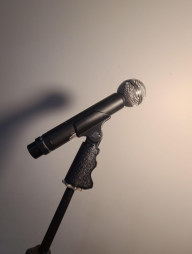
The Beyerdynamic M160 is a versatile and capable microphone that excels in a wide range of applications. With its warm, natural sound and ability to handle a range of instruments, the M160 is a go-to choice for many professionals. Whether you’re recording violins, cellos, pianos, saxophones, guitar amplifiers, or even drums, the M160 delivers clear, focused recordings every time.
One of the standout features of the M160 is its hypercardioid polar pattern, which is a departure from the typical figure-eight pattern of most ribbon microphones. This gives the M160 superior resistance to ambient noise, making it an excellent choice for recording in noisy environments. Its noise suppression of 25dB at 110 degrees further adds to its ability to reject unwanted noise, ensuring that you get a clean recording every time.
In terms of its build and design, the M160 is unassuming but packs a punch. Its lightweight construction makes it easy to use and position, while its reliable performance and clear recordings make it a trusted choice for many professionals. If you’re in the market for a versatile and dependable microphone, the Beyerdynamic M160 is an excellent choice that is sure to deliver the results you need.
To use the M160, start by attaching the microphone clip to a stable microphone stand before putting the microphone securely into the clip. Then, ensuring phantom power is turned off, plug the XLR into the connection at the bottom of the microphone and the other end into the patch bay. Select the correct input in Pro Tools (the number of the input on the patch bay) or on your mixer and set the gain.
WARNING: This microphone is susceptible to damage if Phantom Power is used. Always ensure Phantom Power is turned off before plugging this microphone in.
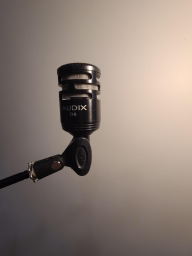
The Audix D6 is a highly versatile microphone that is well-suited to a wide range of applications, both in live performance settings and in the studio. Its compact, lightweight design and exceptional performance make it a popular
The Audix D6 is a versatile microphone that is suitable for a variety of applications, from live performances to studio recordings. It has become a popular choice among technicians due to its ability to accurately capture the essential low frequencies of bass-heavy instruments such as kick drums and bass guitars.
When it comes to recording low frequencies, the D6 is engineered to deliver accurate and clear results. The microphone’s directional pickup pattern also helps to isolate the sound source and minimize unwanted background noise, making it ideal for recording in noisy environments.
The Audix D6 is a reliable choice for anyone looking for a high-quality microphone that is easy to use and can deliver clear and accurate results in a variety of recording scenarios. Whether you’re a beginner or a seasoned recording professional, this microphone is sure to meet your needs and provide you with the results you’re looking for.
To use the Audix D6, start by attaching the microphone clip to a stable microphone stand before putting the microphone securely into the clip. Then, plug the XLR into the connection at the bottom of the microphone and the other end into the patch bay. Select the correct input in Pro Tools (the number of the input on the patch bay) or on your mixer and set the gain.