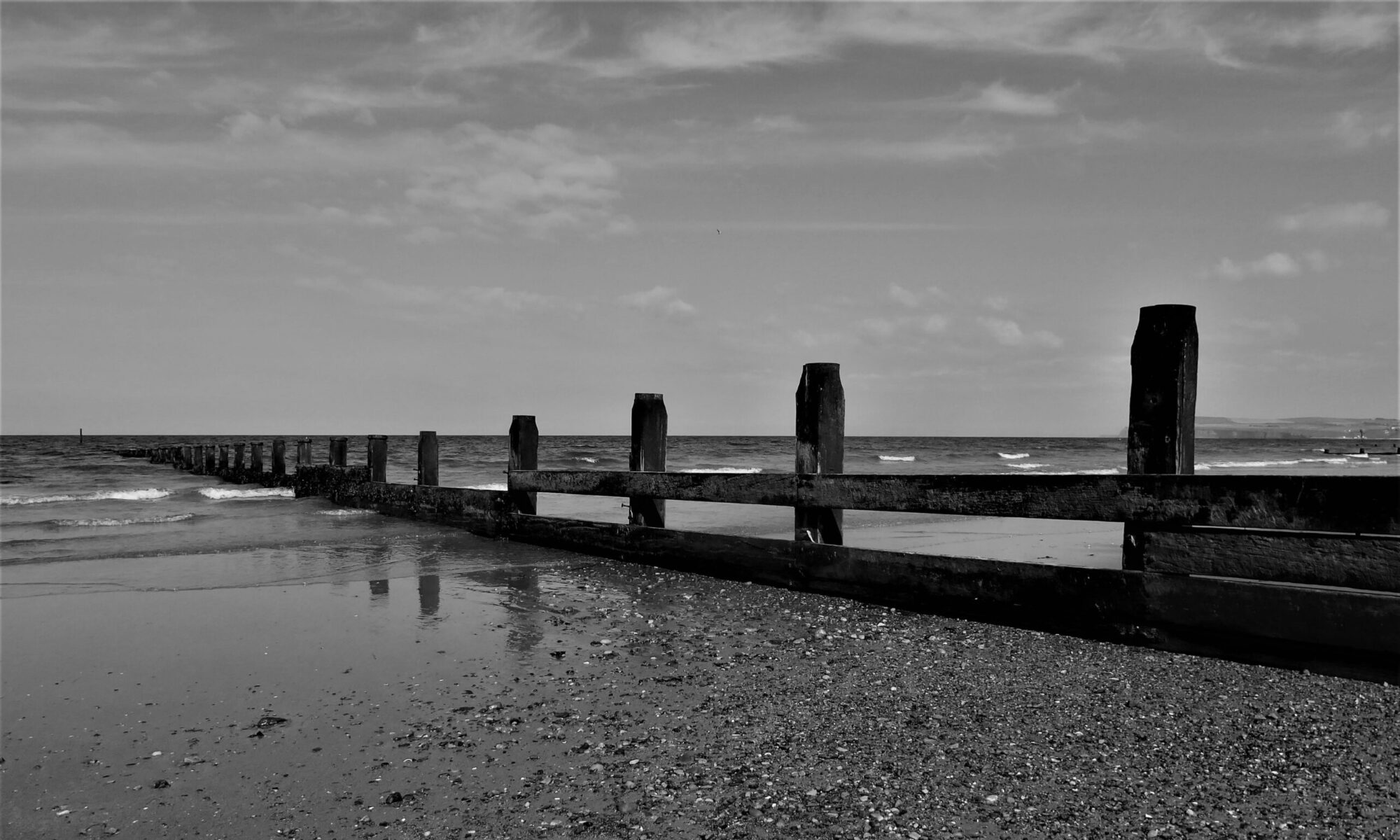
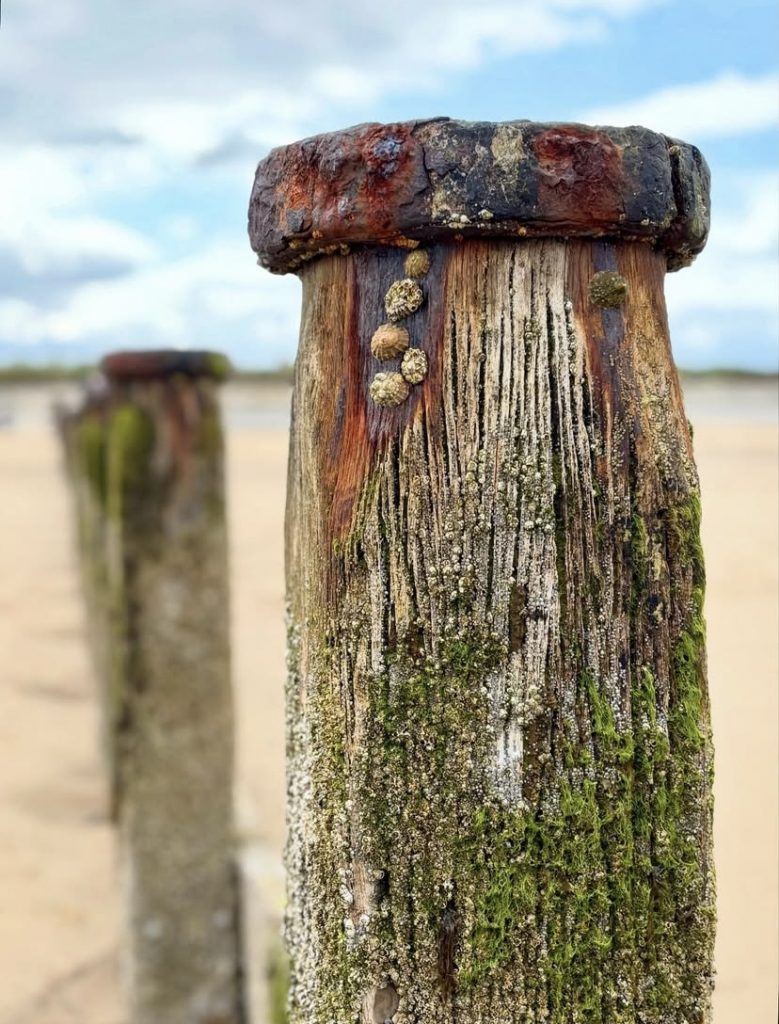
At the weekend I visited The Stray near Redcar, the beach where my sister died. Even on a day when the Redcar Kite Festival was taking place at neighbouring Coatham Beach, this section of sand was quiet, with only a few dogwalkers and runners passing by. The tide was a long way out, further than on many previous visits, so I had a chance to see fully the wooden groynes that stretch along the sands here, and which had been uncovered by the sea.
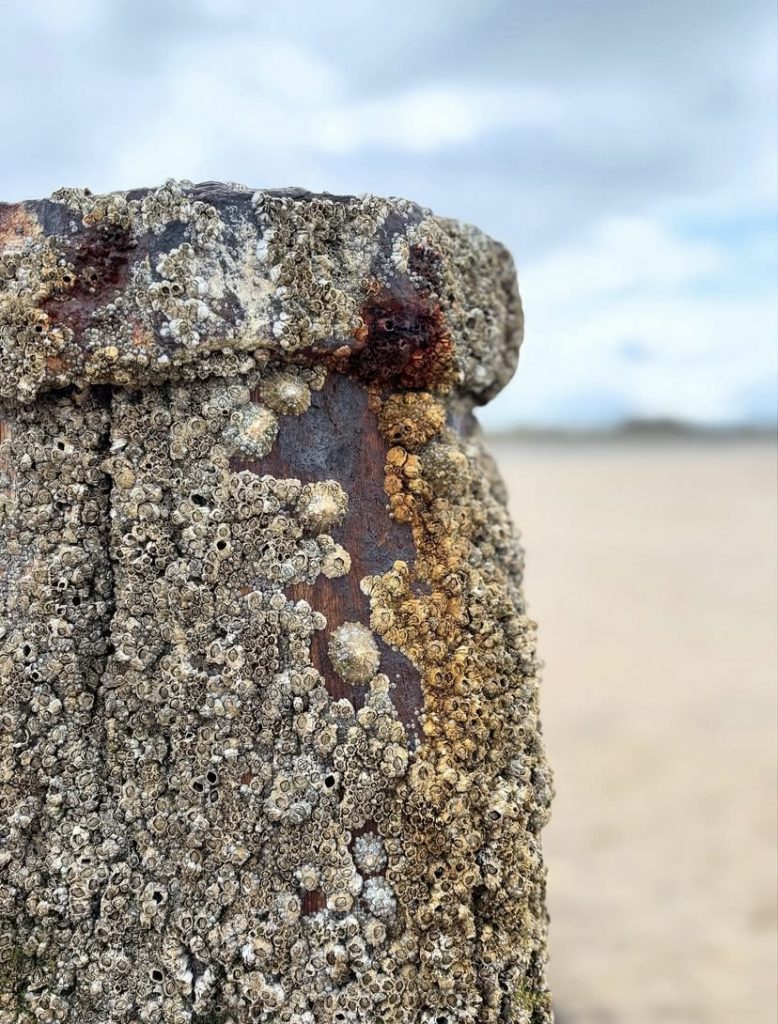
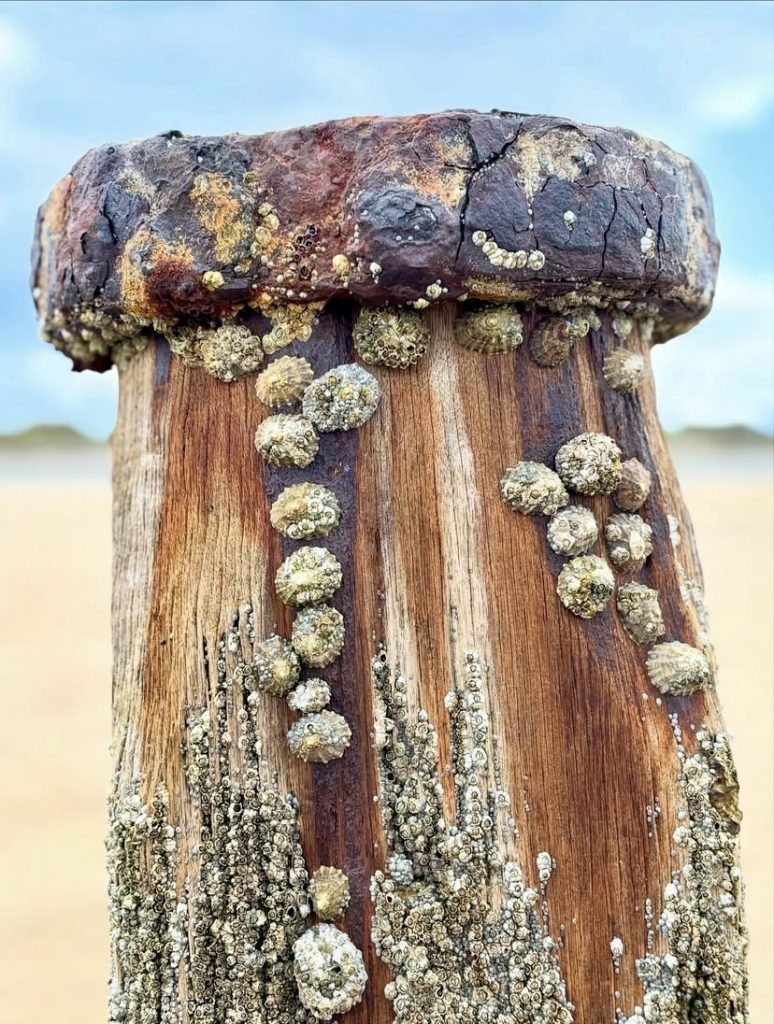
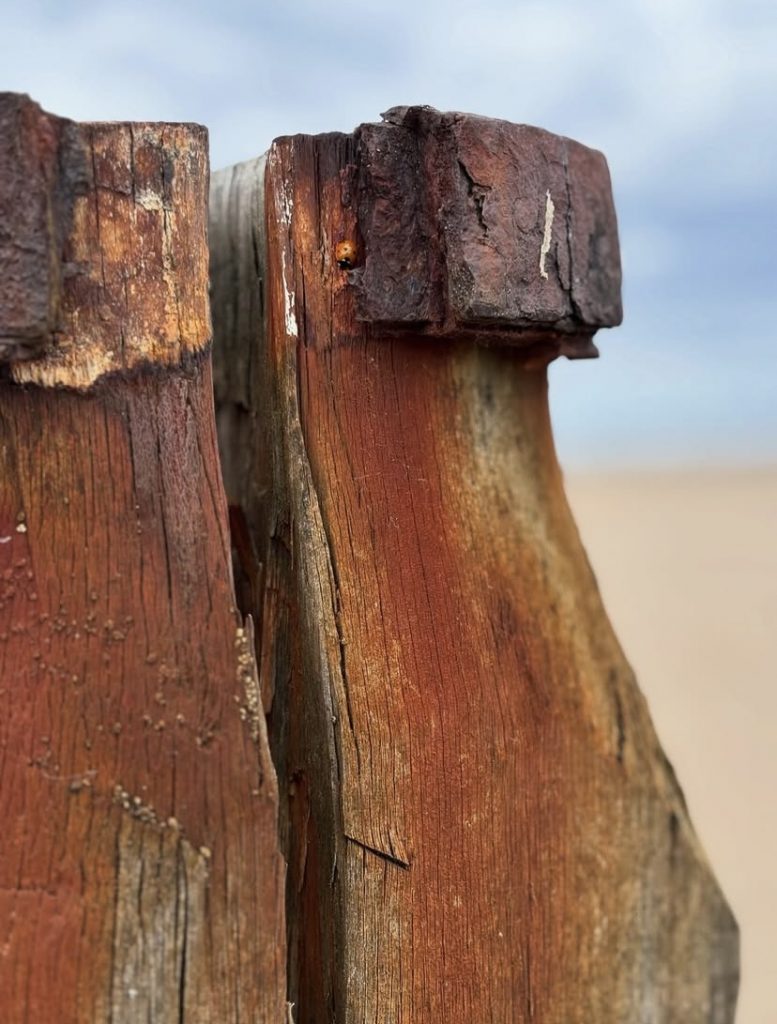
The iron red staining of the wood, combined with the barnacles attached to the groynes, reminded me of Antony Gormley’s Another Place on Crosby Sands, near Liverpool. There, too, the perpetual advance and retreat of the tide over the rows of sculpted men means that the figures are increasingly covered by barnacles from the sea and affected by corrosion from the elements.
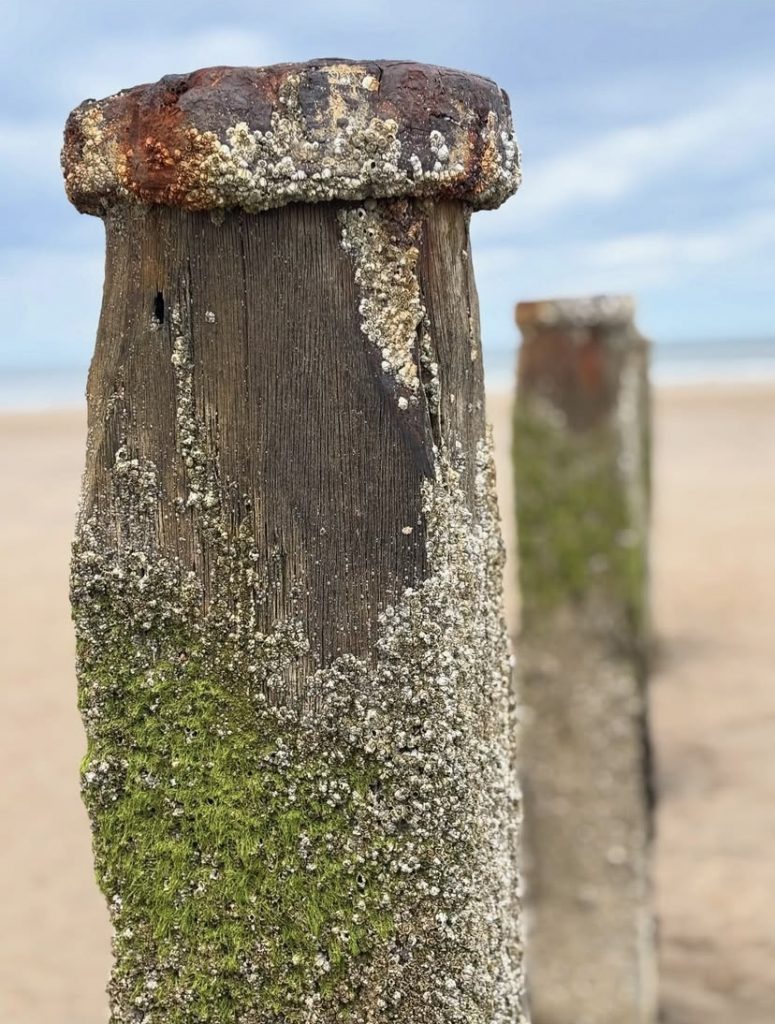
I have written in Relating Suicide about my close association between The Stray and Another Place and the ways in which Antony Gormley’s installation has helped me to navigate my own grief. This, in turn, provided the basis for the ‘Sounding the Angel’ project, as I wanted to understand more fully how Gormley’s Angel of the North sculpture was helping others to deal with loss through the tributes to loved ones that they were leaving there. As at Crosby, so my experience of visiting The Stray differs according to the tide, and I spent some time wandering among the groynes, examining closely the different ways in which they had weathered, as well as the various life forms that had found shelter there.
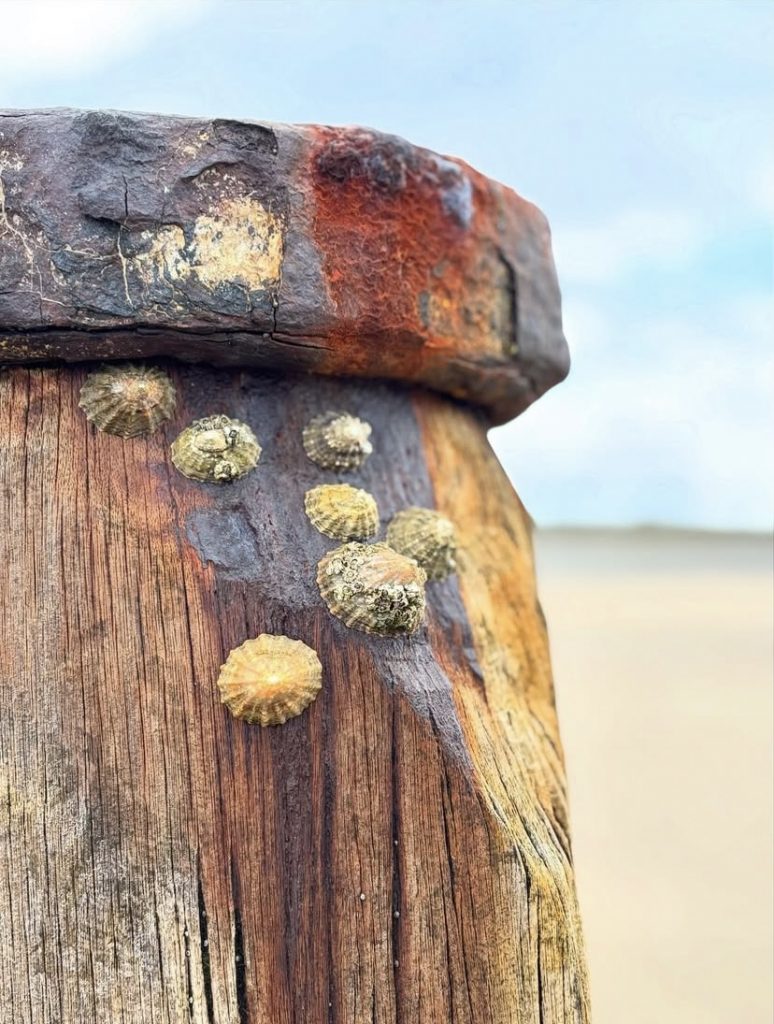
I have noted in a previous post David’s observation that the memorial tributes at The Angel of the North have both arisen from and around the sculpture, and become a vibrant and integral part of its meaning, in a way that is reminiscent of the barnacles that now encrust the sculpted men at Crosby. The shifting nature of tidal patterns, living creatures, and the memorial tributes animates the static structures of groynes and sculptures, and thereby renders them into lively and dynamic organisms.