Dolphin

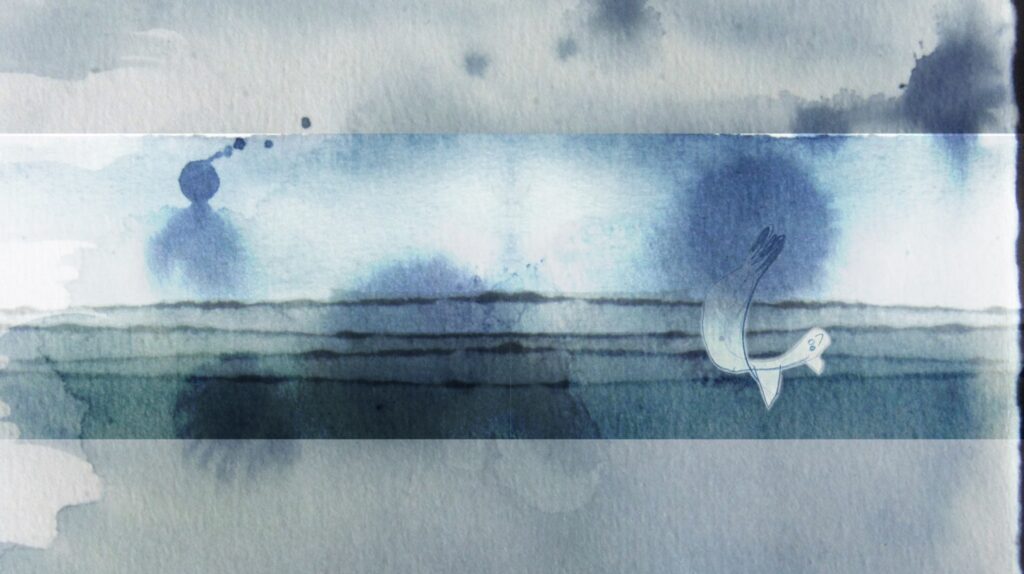
child's drawing of dolphin in sea
Film still, Where We Will Go (2023) by Kate Sweeney

We conceived of Losing a Twin at Birth as a project that worked with parents to capture their experience of this complex form of grief. Yet the activity of gathering the materials for the inks enabled other family members to be involved.

In my last blog post, I described how the grandparents of one family participated in the project by gathering rose petals from their garden and sending them through the post, so that they could be used to make the inks. In another family, the grandparents took part in the memory walk, which became an occasion to remember and talk about the lost twin. Both families included their children in the memory walks, and they helped to choose which materials were collected.

The sketchbooks Kate provided were used by the parents to record images and thoughts relating to the project. Each of the parents also gave a sketchbook to their children. As the project progressed, we received drawings from them, giving us a glimpse into the sibling perspective on this form of grief. On the memory walk, one co-twin sketched the surrounding hills using ‘ink’ from bilberries collected on the way, and Kate used this drawing for the title image of the film. Another co-twin declared at the end of the memory walk that she had seen a dolphin in the sea, and she drew this in her sketchbook. Kate animated the drawing to end the film.

For the parents, it was important to talk to their children about their lost siblings so that they remained a constant presence in the family. The memory walks extended the ways in which they were already creating memories with their children. One of the parents observed, ‘The memories are so few, and the focus is around the funeral. The project is giving us the prompts to create new memories.’

At the beginning of the project, the parents expressed a wish to help other parents by making the film. During the course of the project, they came to see the film as a document that they could also share with their children, either now or when they are older and want to know more about their siblings who have died. One parent described the film as a way of ‘safeguarding for the future’.

While the parents remained the central focus of the project, it became clear that their grief could not be separated from the effects of the loss on other family members. The parents chose to involve their children and their own parents in the project activities, and the film likewise sought to capture the contribution of different generations to its making.    
Rose

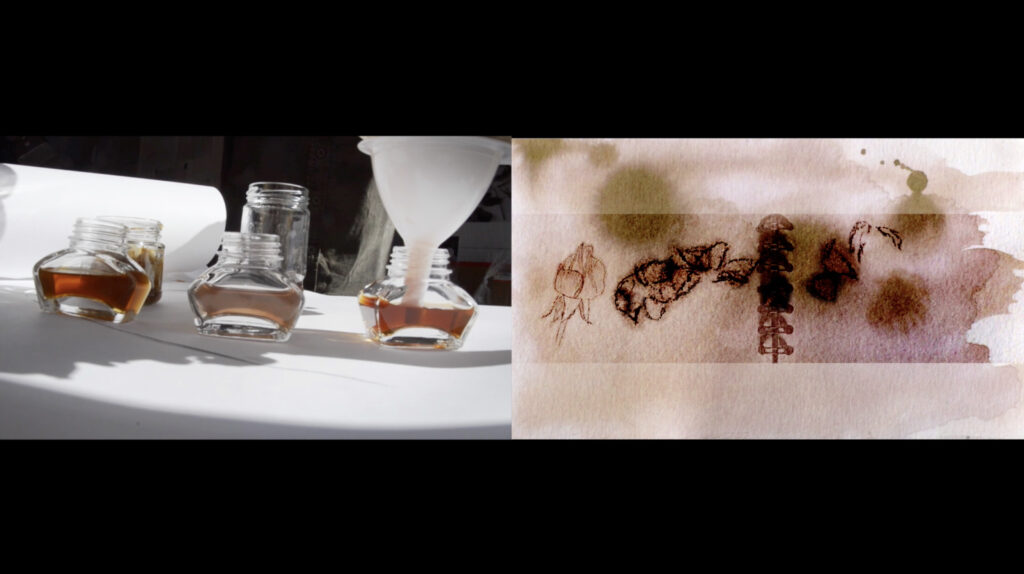
making inks and drawings with inks
Film still, Where We Will Go (2023) by Kate Sweeney

For one family who participated in the Losing a Twin at Birth project, roses had taken on a particular significance. They explained, ‘When a new baby is born in our family, we find a rose with a similar name and plant it for them. We give a lot of roses, to everyone.’  

These parents wanted to collect rose petals for their inks. Our conversations often returned to the progress of the roses in their garden: ‘Our roses are slow this year, but the garden is full of buttercups.’

In the second session, Kate gathered the materials from the memory walks. The parents brought a sealed zip lock envelope filled with rose petals. These had been collected by the twins’ grandparents, from the rose bushes in their garden. They had carefully rinsed and sorted the petals before posting them to the parents. The parents noted how hard it can be for an older generation to talk about the loss of a baby, observing, ‘My parents were pleased they could do something to contribute.’

When we opened the envelope and spread the petals on the table in front of us, their fragrance filled the air. Kate photographed the parents’ hands, holding the delicate petals cupped in their palms.

In the following session, Kate gave three bottles of rose inks to the parents. She had sorted the petals by colour and the inks ranged in shade, each one paler and more muted than the petals from which it had been made. The parents commented, ‘I like how they have changed, that they are so faint.’ We had already talked about ‘silent inks’, in which the material infuses the water without colouring it. These inks were not silent; they felt like a quiet presence in the room.

At the next session, the parents brought in their sketchbook. On one of the pages, there was a pencil drawing of a rose on the left-hand side and a heart on the right. Petals from the rose were blowing across to the heart. One of the parents explained, ‘I like the idea of somebody smelling the roses and the fragrance going up their noses and into their hearts.’ Kate animated the drawing for the film, assembling the petals from the rose into the shape of a heart.

For this family, roses were used to celebrate births and had also become an important way of remembering the lost twin. They formed a link across the generations and the act of collecting the petals enabled the grandparents to participate in the project. The concentrated fragrance of the petals in the inks evoked a parental wish that those who had not had a chance to know their daughter might still take her into their hearts.                 

Sketchbook

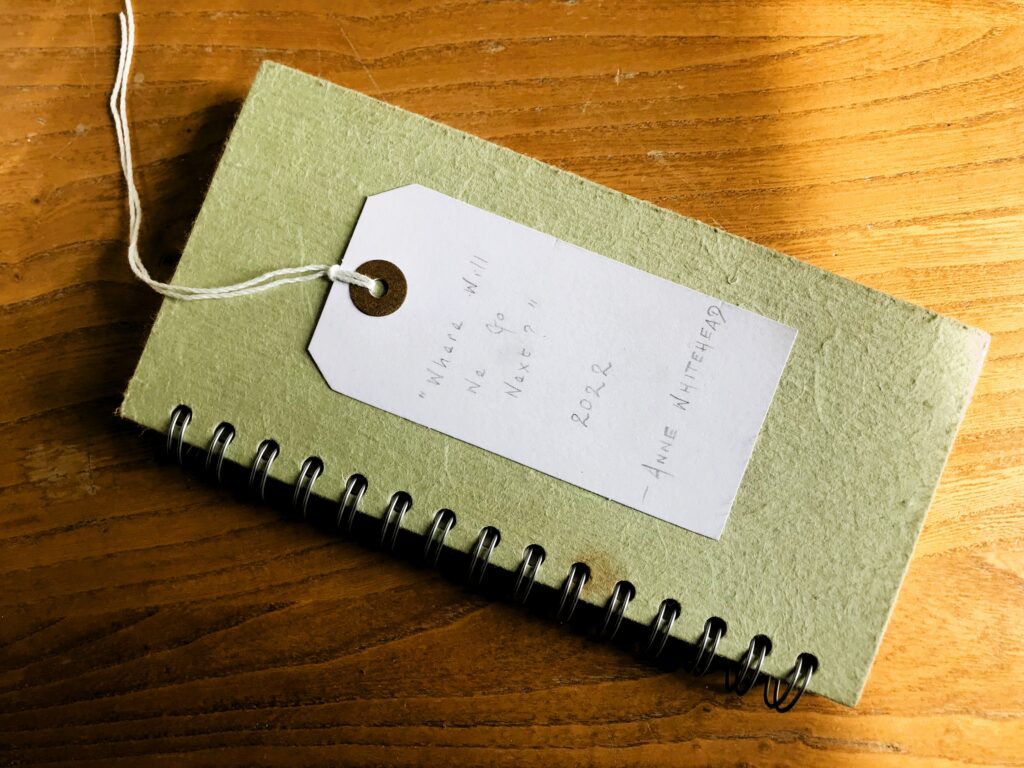
Sketchbook on a desk
Photograph credit: Anne Whitehead

In the first session of the Losing a Twin at Birth project, artist Kate Sweeney handed out sketchbooks to the parents, so that they could use the inks made in the sessions to draw images. I was also offered a sketchbook and I used it to record my thoughts on the sessions with the parents. I found that this way of notetaking enabled me to reflect on the language we had been working with, as well as on the process of ink making itself.  

In our introductory sessions with the parents, we shared conversation over a cup of tea. As a way of demonstrating that inks can be made from the most everyday materials, Kate used the teabags to create an ‘ink’ that was brought into the second session and used to experiment with different kinds of mark making. We thought together about how the ink itself constituted an archive of the first session, preserving the tea that each person had chosen, and distilling an essence of our conversation.

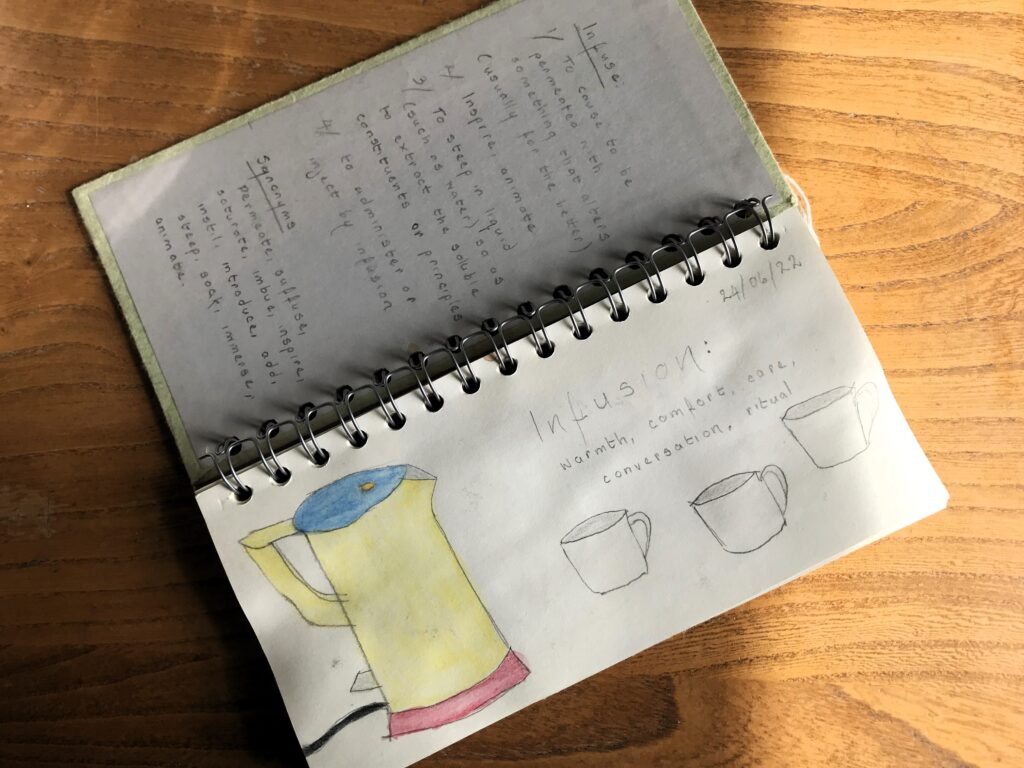
sketchbook page with notes and pictures
Image credit: Anne Whitehead

In my sketchbook entry following the first session, I reflected on the language of infusion to represent both the ink-making process and the methodology of the project. Looking up infusion, I found the following definitions listed.

(1) to steep in liquid (such as water) so as to extract the soluble constituents or principles. This was resonant both with the immersion of the teabag in water to make the tea that we drank together in the session, and Kate’s further steeping of the used teabags to make the inks. The ritual of making the tea framed our conversation, acting as a model for how making the inks from the materials collected by the parents would facilitate our conversations about their experiences of loss.  

(2) to cause to be permeated with something that alters, usually for the better. This sense of infusion develops the first meaning to suggest that the act of steeping can also be transformative, producing a change. This represented our shared hope that by making the inks and the film, we would be able to make a positive change.

(3) to inspire or animate. Kate’s film-making process involves the animation of drawings, and this meaning of infusion seemed to anticipate the ways in which she would imbue the parents’ ink drawings with something new, infusing them with a different life and energy.

In the second sessions with the parents, Kate gave them the inks she had made from the teabags. The liquid had darkened to a peaty colour, due to the effect of the materials used to preserve it. Kate explained that this was known in dye making as the ‘saddening’ process. As we explored the materials that the parents had brought in from their memory walks, we talked in greater depth about their experiences of grief, and the sessions felt that they too were infused with a deeper sorrow than our first conversations. My sketchbook page following these sessions reflects on the meanings of ‘to sadden’: (1) ‘to deepen colours by the addition of additives’; (2) ‘to cause to feel sorrow; to become sad’.

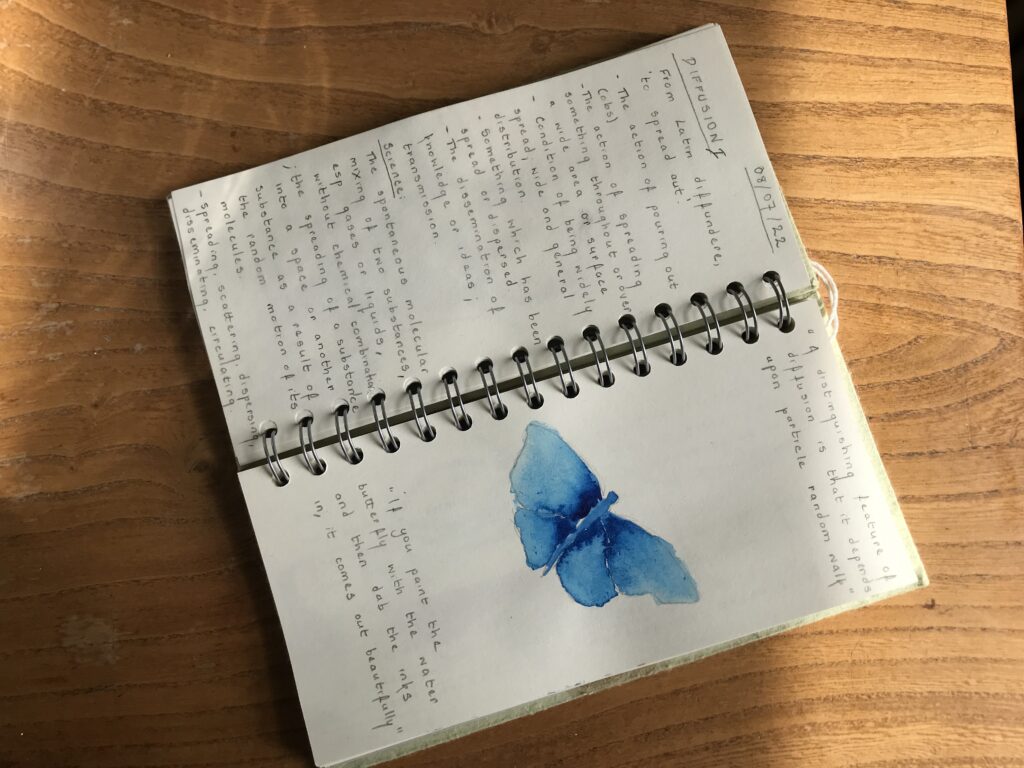
In the third session of the project, Kate gave the parents the inks she had made from the materials collected on their memory walks. We then used the inks to draw and write with. Kate drew a butterfly with water and dabbed in the inks, which diffused across the paper to suggest the shape of wings. Our conversations focused on the parents’ hopes for the film. They wanted the film to give comfort to other parents who had experienced the same loss by showing that, although the grief does not go away, it is possible to live beside it as a family.

Sketchbook page with notes and images
Image credit: Anne Whitehead

My sketchbook notes following this session reflect on the meanings of diffusion. In science, diffusion refers to the spreading of one substance into another as a result of the random motion of molecules. This was what we had witnessed together, as the ink dispersed through the water on Kate’s drawing to form butterfly wings. By extension, diffusion also refers to the dissemination of knowledge, and this picked up the parents’ desire to circulate their experience to others through the film. As we watched the ink pull through the water, it felt to me that there was something there too of the lost twin’s delicate trace in the lives of the remaining family.

My sketchbook enabled me to think with, rather than about, the creative process that Kate was using to make the inks and film. My notes documented the ways in which aspects of the creative process infused our conversations, meaning that the language of ink making became expressive of the phases of the project itself.