Tag Archives: Waste

Sustainability Team Beach Clean 2025!

This week the Sustainability Team headed to Tynemouth Longsands Beach and Cullercoats for a beach litter pick in support of the Great British Beach Clean 2025.

Every September, thousands of people across the UK head to the coast to take part in this nationwide event, organised by the Marine Conservation Society (MCS). Last year volunteers across the UK removed over 764,000 litter items from our beaches, weighing more than 16,800kg. This year’s Great British Beach Clean is running from Friday 19th to Sunday 28th September, and we were proud to play our part in helping protect our local coastline.
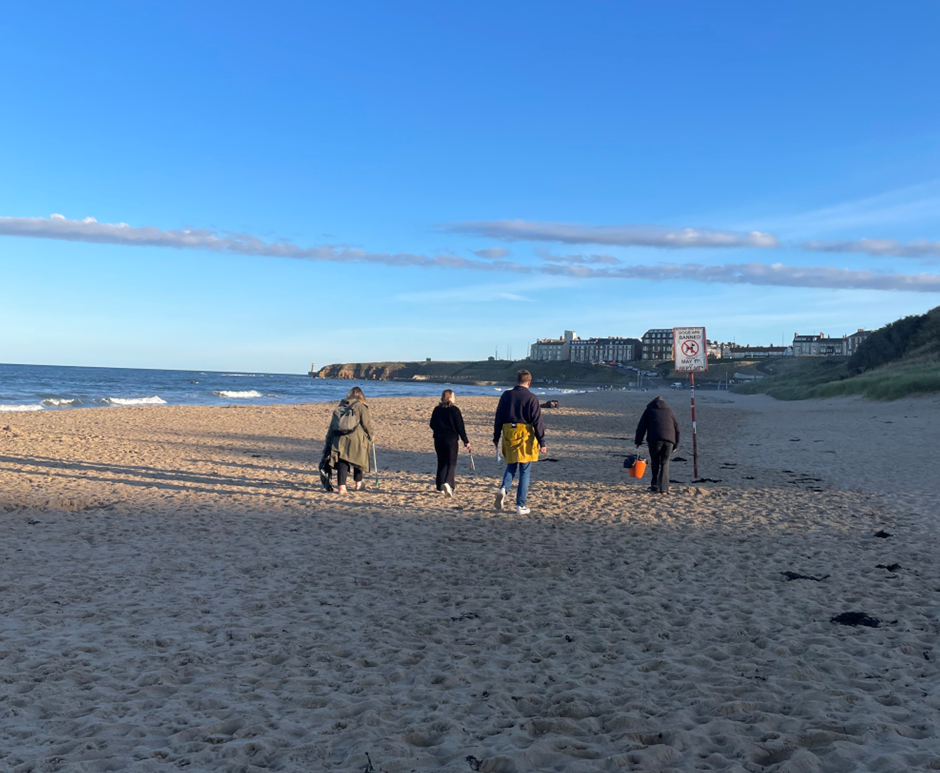
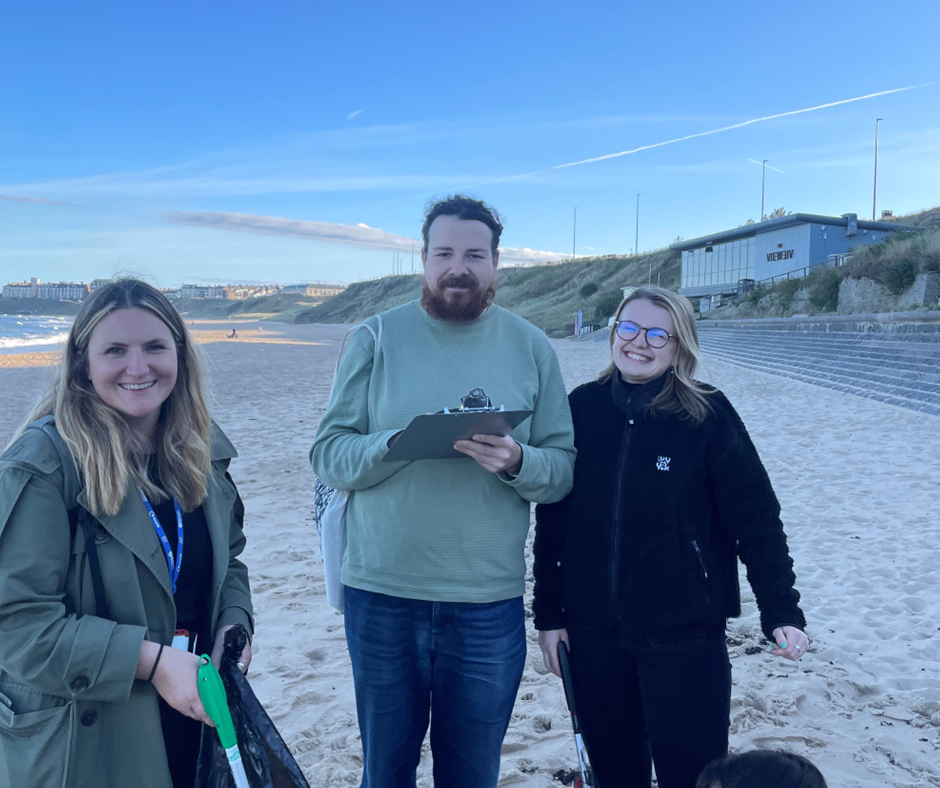
Armed with litter pickers, gloves, and clipboards, we spent the afternoon collecting waste along the shoreline, aiming to improve the environment for people and wildlife.

We used the MCS litter survey forms to record the types and amounts of waste we found. These forms are an essential part of the Beach Clean, allowing the MCS to track pollution trends and build evidence to campaign for cleaner seas and stronger environmental policies.

Some of the most commonly found items included:

  • Small pieces of plastic
  • Bottle tops and lids
  • Cigarette butts
  • Fishing line and small netting fragments

The data we collected will now feed directly into the MCS’s national database, helping researchers and policymakers better understand the scale and sources of beach litter.

A huge thank you to everyone who took part! And we are happy to report there wasn’t an awful lot of litter at the beach, thanks to the local community who regularly litter pick.
Want to get involved?
The Great British Beach Clean is running until Sunday 28th September, and there are events happening all over the UK. Visit the Marine Conservation Society website to find out how you can take part and help protect our beaches.

Let’s keep our coastline clean!
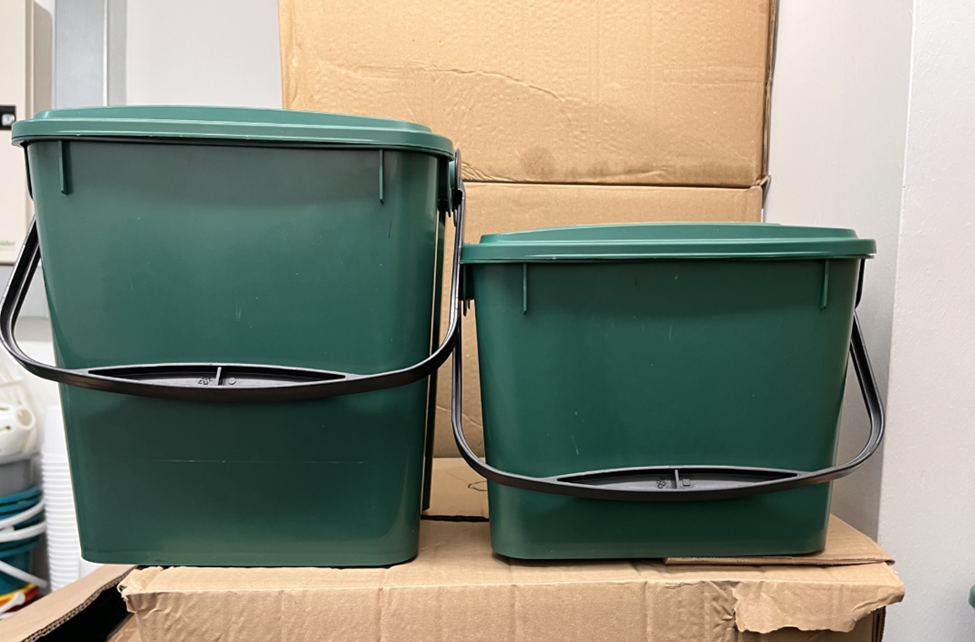
Food Waste Bins Are Coming to Your Kitchen!

Food waste is a major driver of climate change, contributing to 8% of the UK’s total greenhouse gas emissions. Starting this January, Newcastle University will be introducing food waste bins in every university-owned accommodation kitchen. Look out for a small green caddy in your kitchen, along with a roll of bin bags to get you started. Here’s everything you need to know…

Image: The new food waste caddies. The left bin has a capacity of 7.5 litres, while the right bin holds 5 litres.

What Can Go in the Food Waste Caddy?

You can put almost any type of food waste into the bin, whether it’s cooked or raw. Here are some examples:

  • Grains, pulses, and vegetables
  • Meats, pastries, and eggs
  • Bones and small teabags

What Should Stay Out?

There are a few items that should never go in the caddy:

  • Packaging of any kind (even if it’s food-stained or says its biodegradable)
  • Tinfoil or glass
  • Liquids (these can make a mess!)

Using the Bin Liners

We’ll provide you with bin liners for your food caddy, which are removed during processing. If you run out of liners, please ask at your reception for a refill.

Taking Out Your Food Waste

When your caddy is full, follow these steps:

  1. Tie the bag tightly to prevent spills.
  2. Head to your accommodation’s rubbish site.
  3. Look for the red wheelie bin marked “FOOD WASTE” near the recycling stations and place your bag inside

Where Does Your Food Waste Go?

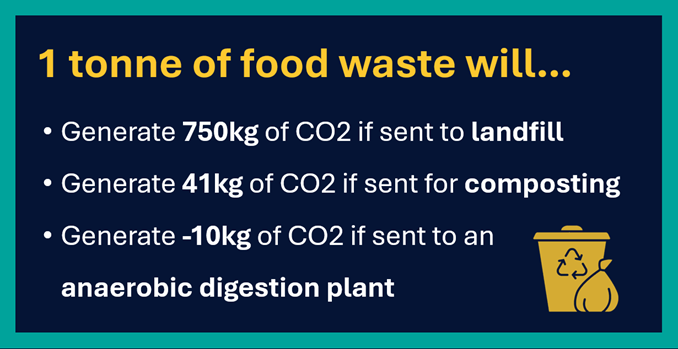
Once collected, your food waste is transported by our waste contractor, Biffa, to GAP Organics in Gateshead. There, it’s transformed through an anaerobic digestion (AD) process into fertiliser and green energy, contributing to a more sustainable planet.

Image: The different CO2 impacts of food waste disposal via landfill, composting and anaerobic digestion. Source: Biffa.

This is the life cycle of your food waste! Keep an eye out for your new green caddies and remember to follow the guidelines. Let’s work together to reduce waste and make a positive environmental impact.

If you have any questions about the caddies, or waste, check out our Waste A-Z or contact us at sustainable-campus@newcastle.ac.uk.

Happy New Year!