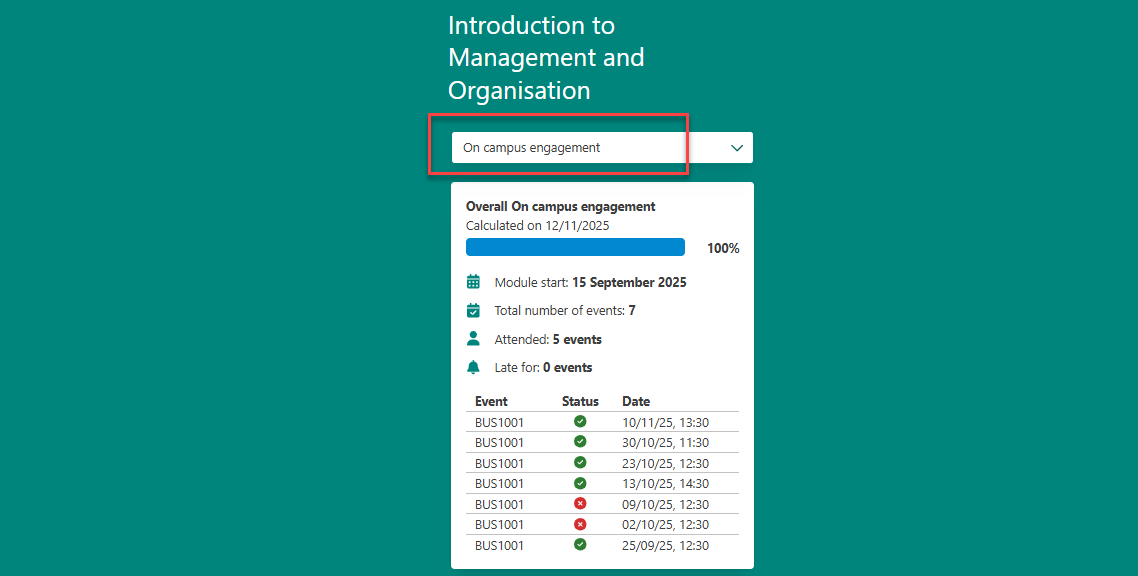
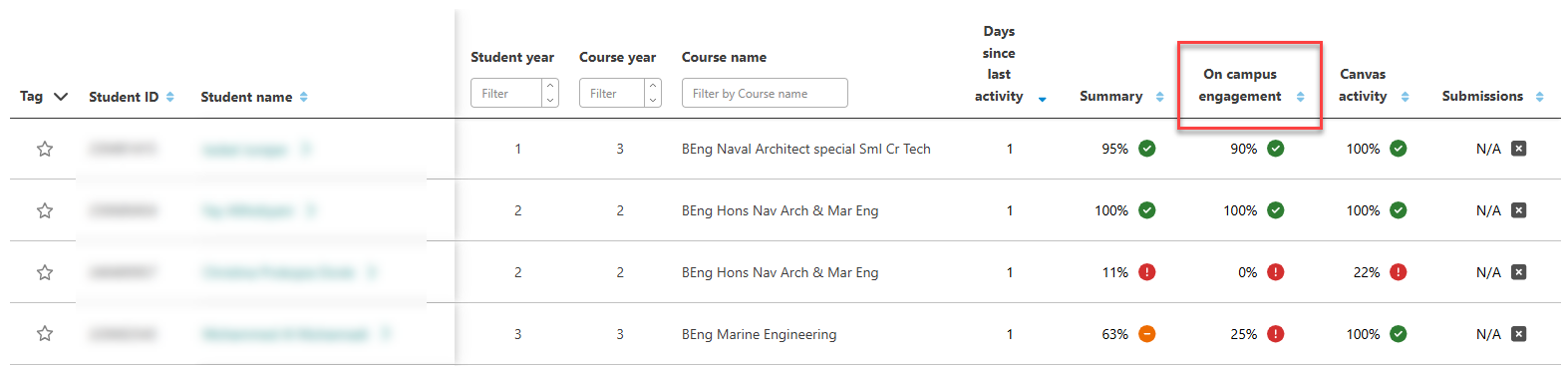
We’d like to share an important update about how student engagement data is presented in NULA. The metric previously labelled ‘Attendance’ has now been renamed to ‘On campus engagement’.
This change is now live in the system.
Why we’ve made this change
The ‘Attendance’ metric in NULA shows a student’s engagement across all in-person, timetabled sessions available to them in their active modules — including both monitored and non-monitored activities.
Because this metric reflects more than just formal attendance, we felt that ‘On campus engagement’ better captures the full picture of a student’s participation in scheduled learning opportunities.
What this means for staff and students
Students will notice only a label change — from ‘Attendance’ to ‘On campus engagement’. There are no changes to the underlying data or calculations.
We’ve updated this terminology consistently across:
We’ve also expanded our messaging to students to make it clear that the on campus engagement metric is not a formal attendance record and will not impact academic records.
What this looks like
In the student interface:
In the staff interface:
Supporting student understanding
We will be communicating this update through our student channels, but if students come to you with questions, please feel free to use or adapt the message below:
Your ‘on campus engagement’ in NULA shows the opportunities available to you to take part in all timetabled events in your active modules. This gives you a clearer picture of your overall engagement and can help you notice any gaps so you can make informed choices about how you learn.
Please note that ‘on campus engagement’ data in NULA is not your formal attendance record and will not impact your academic record.
The system is designed to give you real-time insights that support your learning and any conversations with your personal tutor or support teams. It is not used in a punitive way.
If something does not look as expected, it may be due to data processing delays or how activities have been recorded.
For more information, please visit the NULA pages on the Academic Skills Kit website.
By Em Beattie, Stage 2, Geography, Politics and Sociology student
This summer I worked as an intern for the learning analytics team. The learning analytics team has been developing a new system for Newcastle University students to allow them to review and have access to their own learning analytics data. Learning analytics refers to the measurement, collection, analysis, and reporting of data, for the purpose of understanding and improving students’ learning. Student’s data is collected from a variety of sources to enable students to view their attendance, engagement and module summaries. The aim of this new roll out is to empower and positively impact students’ academic achievement and progress for smarter insights and stronger outcomes.
My key role was to contribute to the methodology and development of student communication channels, organise pop ups, analyse and manipulate data, contribute to design and evaluation of material and present findings. I really wanted this experience to develop my career skills, and I am passionate about academic growth and attainment.
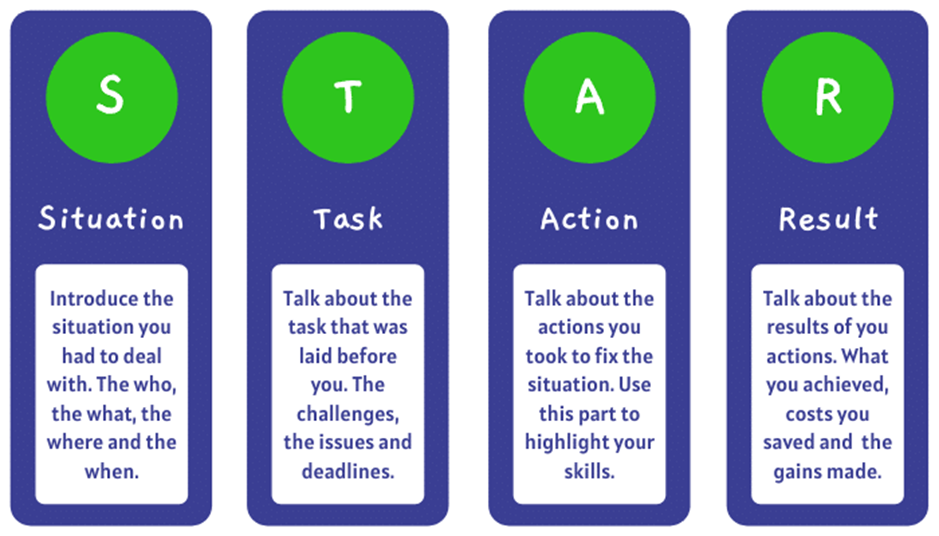
I found the internship on MyCareer, which is a Newcastle University platform which provides internships and work experience students can apply for. After finding the learning analytics internship and reading through the description I thought it would be a valuable and interesting opportunity. The applying process was very simple I attached my CV and answered three questions on how I would manage the hours required to work, what skills I brought to the internship and why I am the right person for the experience. When writing these answers, I used the STAR technique to provide efficient details of skills I brought to the table. After submitting my application, I was fortunately emailed a few weeks later asking if I was available for an interview. I was very nervous for the interview as I had never had an in-person interview before. However, to prepare I read over the description of the role, writing down on a notepad what skills I could bring to each of the tasks I would be completing and ideas I had. I also looked at the advice Newcastle university gave about internships on their website. https://www.ncl.ac.uk/careers/making-applications/interviews-assessments/interviews/. After I completed my first ever in person interview which although was nerve wracking provided me with real world experience which will be super helpful later in life, I waited to hear for the result.
Before starting the internship, I was slightly nervous, but I worked with an incredible team which were very supportive all the way. The learning analytics internship has given me an incredible experience, teaching me valuable skills and lessons that have allowed me to develop both professionally and personally.
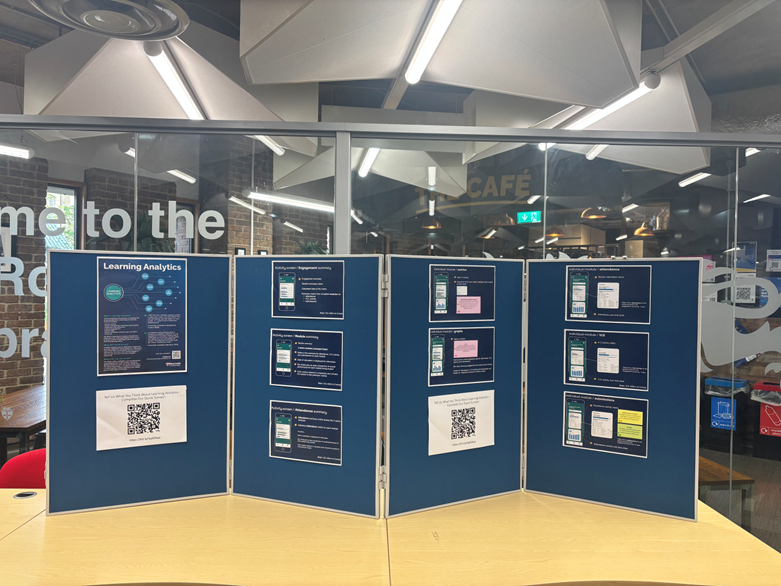
Working with the learning analytics team has been so much fun. Through hosting pop-ups and interviewing students, I learned how to gather meaningful feedback, listen actively, and represent student voices in a constructive way. This experience also helped me understand the importance of real student insights and how they can inform and improve educational strategies. Although the pop up was quieter than expected as some students had left to go home for summer, we still gathered a range of responses online and in person.
After the pop up and students filling in online forms, I analysed data which taught me valuable skills of critical thinking and paying close attention to detail to observe patterns and trends of student’s responses. This experience confirmed my interest in qualitative and quantitative research, and I am now more confident in analysing data.
I thoroughly enjoyed providing a student perspective and spin to the marketing research. Another one of my tasks for the internship was to develop communication channels for students. There were multiple channels that were highlighted from the pop-up including emails, canvas, social media and in person discussion. For social media channels I utilised Canva, which was a fun experience to design a social media post about the new learning analytics system. Additionally, I also helped design the structure of the student facing webpages, using PowerPoint to design an example and writing descriptions around explaining why videos and images should be used. As someone who lacks creative skills, I found it really fun to try and design social media posts and webpages for learning analytics and felt it definitely developed my creativity.
The best part of the internship was knowing that what I was working on would help current students in their academic growth allowing students to set targets and review their engagement of their work.
An example of a type of day from the internship includes a meeting which would either be held in the Kingsgate building or remotely on teams depending on the team’s availability. During this meeting we discussed what we had all been working on, gave each other feedback and ideas and planned our tasks for next week. A lot of the work I did complete was online such as analysing data, creating ideas for communication channels and researching and comparing other universities learning analytics system.
The experience massively helped my confidence, interviewing students and presenting my research pushed me out of my comfort zone but helped me become much more comfortable in putting myself out there.
One challenge I faced was managing all the weekly tasks. Some weeks were busier than others, but on those busy weeks I used my notebook to schedule when I was completing each task, how long the tasks would take, when meetings where and if I had any questions during those tasks to keep track of everything.
One tip I would give to students doing an internship is to write down the skills that they have learnt during the experience with a description. I have done this, and it was helpful as I completed my student internship pathway reflection and will be useful for future interviews and applications as I can explain clearly what skills I developed from this experience.
Looking into the future…
Moving into third year is scary but knowing I am bringing valuable skills that I have learnt from this experience makes me feel more confident and ready. I am looking forward to use study goal to improve my academic progress and create targets to better myself.
With the launch of the Newcastle University Learning Analytics (NULA) system we will be posting regular blog updates to inform our users of the latest developments within the system.
Finding students
We have updated how the lists of students are displayed; you can now find your personal tutees when selecting students you are “directly” linked to. To find any other students you can use the “by modules” or “by courses” options. A full guide on how to find students is available on the learning and teaching website here.
Tagging
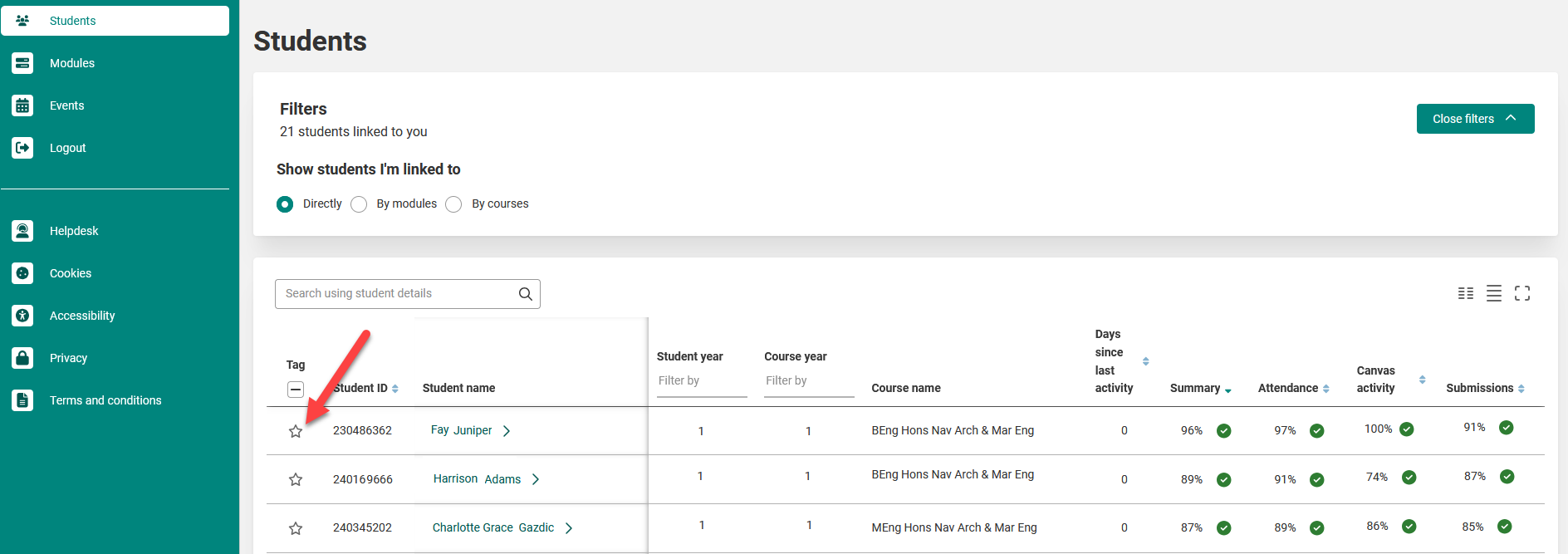
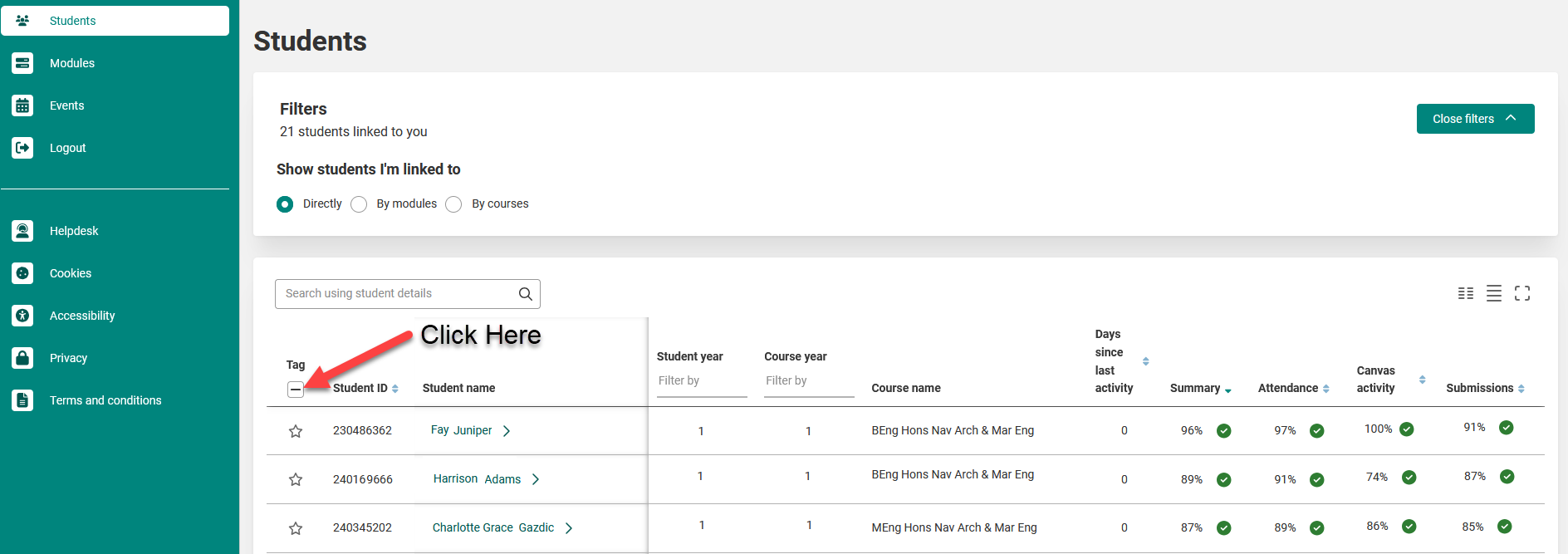
The ability to tag a stuent using the star icon next to the students name is now available.
You can then filter a list of students to only show tagged/untagged/all students as shown below.
Student overview
When you view a student’s profile the first item you will be presented with is the student overview, which shows a quick snapshot of the students most recent engagement and lists some basic information such as the students contact details and personal tutor.