Category Archives: All Blogs

3 Ways to Upcycle and Update your Wardrobe this November 

This month, it is Nothing New November. Nothing New November is a campaign founded by Keep Britain Tidy to combat the issue of impulse buying, especially during Black Friday. The challenge encourages people to buy nothing new for a month, excluding essentials like food and medication. So, sign-up to the challenge, give it a go, and reduce your carbon footprint! 

Fast fashion is arguably the most common impulse buy. Fashion production is detrimental to the environment, being responsible for 10% of total global carbon emissions (Business Insider, 2019.) We live in a world where trends last for less than a month, forcing us to constantly change our wardrobe. In this blog, I will be sharing 3 different ways you can update your existing wardrobe using household items and thereby reducing your impact on the earth! 

Attach a patch 

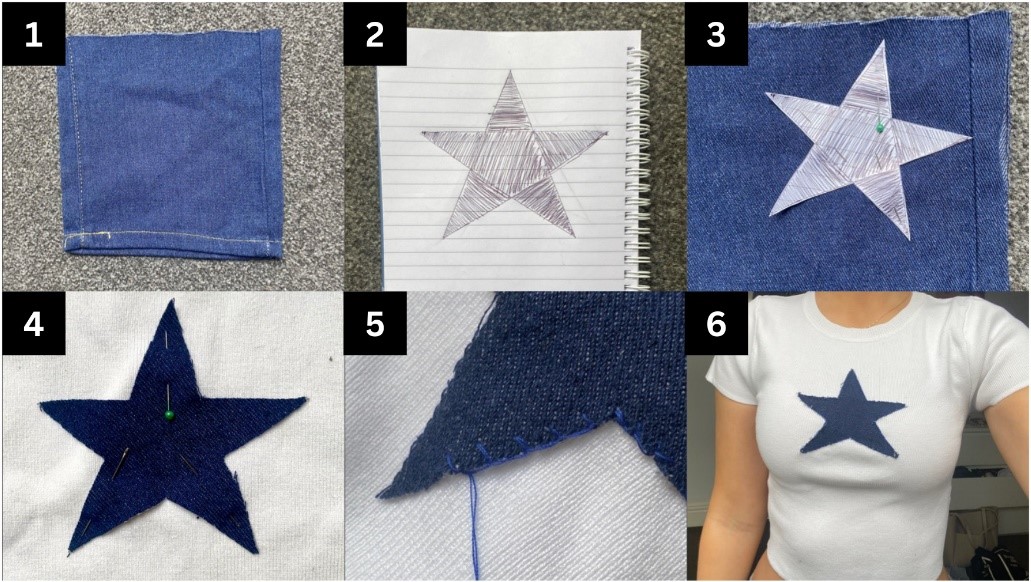
Patches are the perfect way to fix a hole in your favourite jeans or to decorate a plain top you haven’t worn in a while. A current trend I’ve been seeing a lot recently is star patches on clothes. Instead of buying into this microtrend, I will try to DIY my own version… 

  1. Firstly, find a piece of scrap fabric in your house- this could be from an old bag, tablecloth, or jeans.  
  1. I’m going to trace my patch design onto a piece of paper and cut it out.  
  1. Place the patch template onto your fabric, pin it in place and cut around it.  
  1. Pin the patch into place over the hole you want to fix or the area you want to embellish. 
  1. Finally, using a simple running stitch or more advanced blanket stitch, secure your patch into place. 

Quick and eco-friendly! 

Fun with fur 

With winter on the rise, faux fur is becoming a staple in people’s wardrobes. Instead of buying new, you can upcycle an old coat with scrap fur. If you can’t find any fur at home, I recommend looking for any offcuts or old pillows in charity shops- remember it’s Nothing New November, so buying second hand is encouraged! 

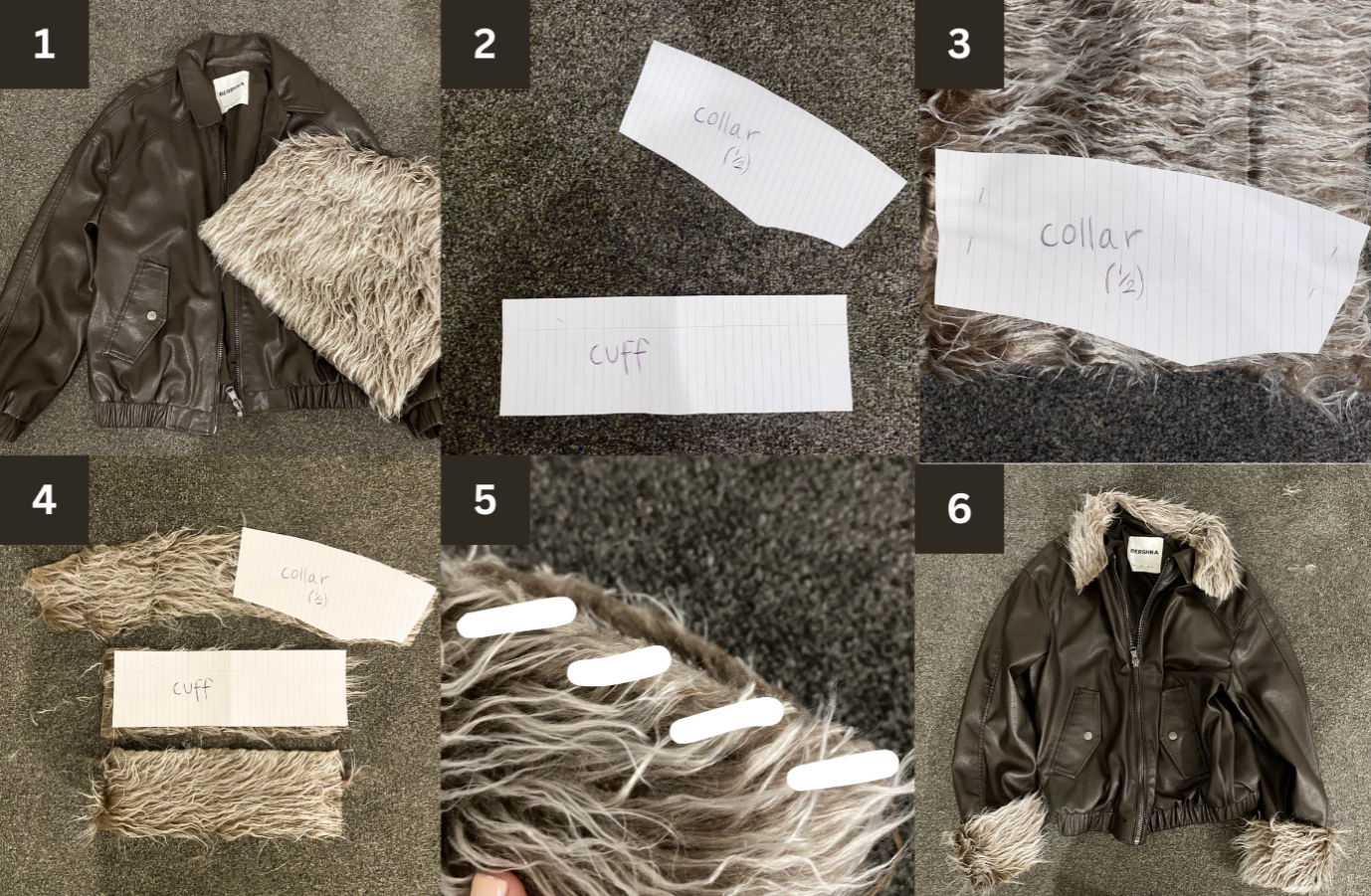
  1. I’m choosing to embellish my old leather jacket. Try find an item you haven’t won in a while or an item you find plain. Next, decide what aspects you are going to add fur onto, e.g. the collar, the pockets, the cuffs, etc… 
  1. You’re then going to trace a rough outline of these components onto a scrap piece of paper – it’s always better to overestimate outlines.  
  1. Cut the templates out and pin them to your fur. 
  1. Just like the patch, cut around the paper outlines into your fur and pin the fur sections to their corresponding sections on your jacket. 
  1. To keep the fur in place, use a whip stitch, or running stitch, securing the fur to the edges of your collar or cuff. Fur is a very forgiving fabric, so don’t worry too much about being neat! 

This tip is both trendy and cozy! 

Embroider and embellish 

Embroidery is a quick and easy way to add a motif or design to any plain pieces of clothing. To add an extra touch, you could include leftover beads or buttons to your design.  

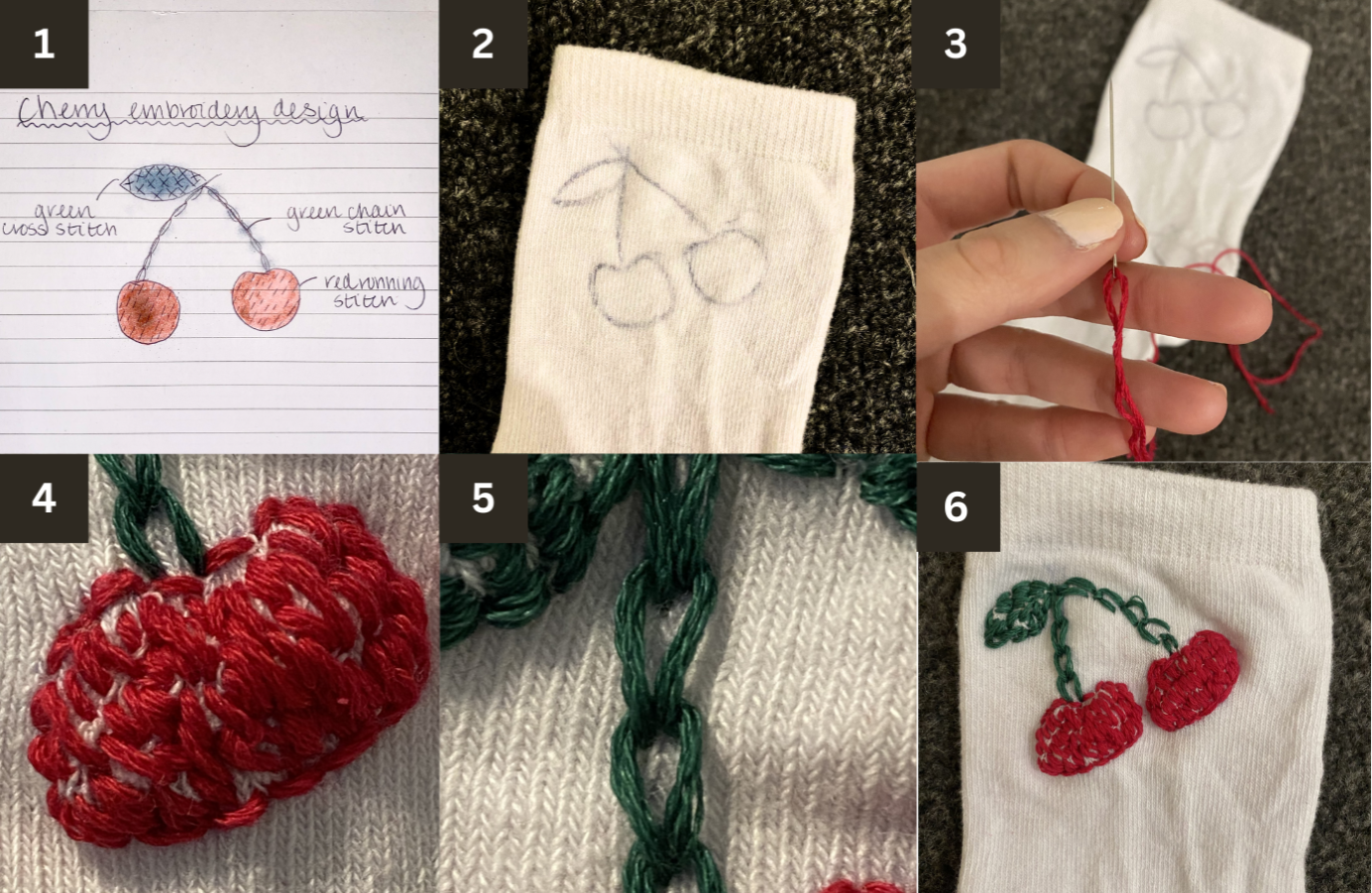
  1. It’s always helpful to sketch your design first, choosing what colours and what type of stitch your design will use. I’ve seen this cherry design all over my Pinterest feed! 
  1. Next, do a rough outline of your design onto the clothing fabric. This outline will be covered by stitching later, so don’t worry about leaving marks. 
  1. For this DIY, find your thickest thread, or double your thread up before putting into the needle.  
  1. Use small stitches to fill up your design.  
  1. If you want to challenge yourself, experiment with French knots, chain stitches or cross stitches to decorate your design. 

What a cute look! 

The best thing about these three projects, is that they can easily be reversed. If you decide you’re no longer keen on a star patch, simply unpick the stitches and change it out. The same goes for the fur or the embroidery. By constantly customising the pieces in your wardrobe, you can keep up with trends, save your money, and reduce your environmental impact.

For more tips on eco-friendly fashion, see our sustainable fashion tips blog here. To find out more about what we do at Sustainable Campus, click here

Thanks for reading! 

References: 

McFall-Johnsen, M. (2019) The fashion industry emits more carbon than international flights and maritime shipping combined. here are the biggest ways it impacts the planet., Business Insider. Available at: https://www.businessinsider.com/fast-fashion-environmental-impact-pollution-emissions-waste-water-2019-10 (Accessed: 07 November 2024).  

Reuse, Refill, Recycle

Could you buy nothing new for just one month?

Nothing New November is a UK wide challenge that calls the public to fight overconsumption and impulse purchases by buying nothing new for one month (excluding essentials like food etc). The aim is to waste less, make the most of the stuff we already own, and cut our carbon footprint (Keep Britain Tidy, 2024).  

As part of Nothing New November, we have been thinking of ways to shop for essentials in a more planet friendly way! So, this month I have been exploring the independent, sustainable shops in and around Newcastle. I hope this blog will encourage others to pay these amazing little shops a visit, and we can all try to be a bit more mindful about the things we buy, and the waste we create.

How to use a re-fill shop?

Using a re-fill shop can seem a bit daunting if you haven’t done it before, so I’ve put together some tips to help first time shoppers:

  1. Collect some empty containers, glass jars work well. Often the re-fill shops have some you can buy too so don’t worry if you don’t have any.
  2. Take a list of items you’d like to buy with rough measurements of how much you need, and head to the re-fill shop with your clean, empty containers.
  3. When you arrive, speak to the staff! They are always so helpful and explain the process to you. But normally they weigh your empty jars before you fill them up.
  4. Then just fill up your jars with whatever you please and the containers will be weighed again, and price totalled up at the till like any other shop.
  5. Enjoy all your plastic free goodies!

Re-fill shops around Newcastle

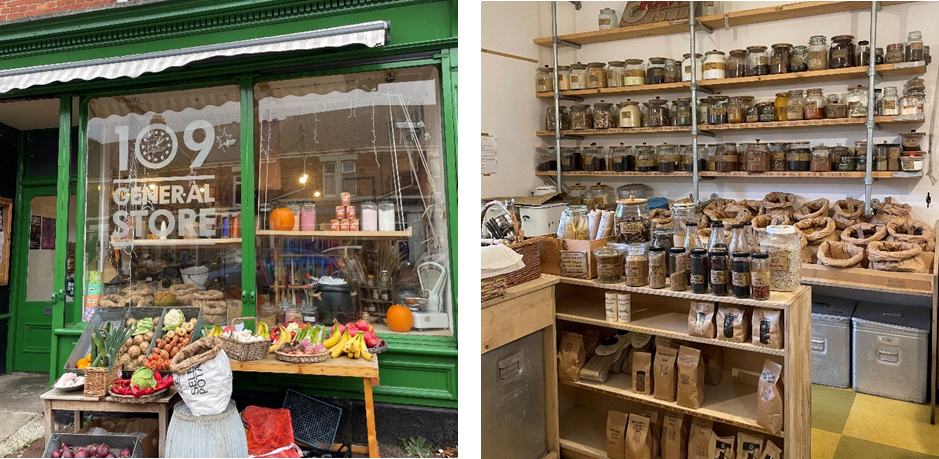
  1. 109 General Store, Heaton
Image: 109 General Store

109 General Store is a family run low-waste general store located on Heaton Park Road. They have a variety of green cleaning products, sweet treats, fruit, veg, local eggs and fresh bread from Northern Rye. The in-store staff are friendly and are happy to help customers, or you can order food online for click and collect. I often do my weekly shop here then pop next door to their sister shop Heaton Perk for a coffee, Newcastle’s only coffee shop exclusively using glass bottled dairy milk.

2. Ernie, Stepney Road, Ouseburn

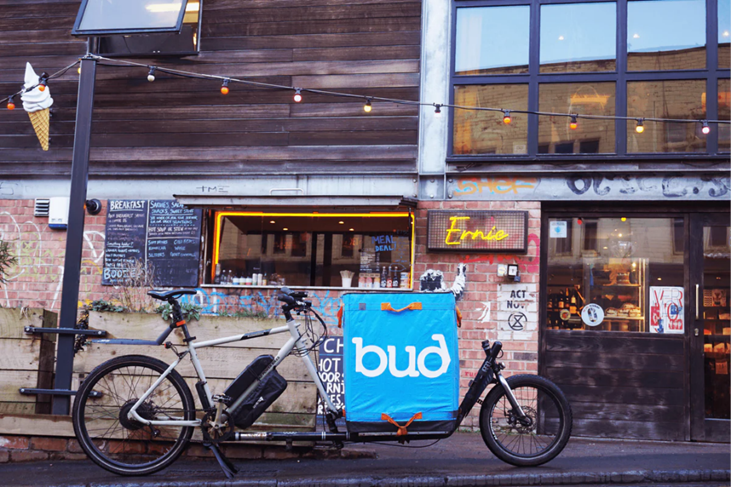
Ernie is a small deli shop located in Ouseburn which sells organic veg, household refills, and unique local cooking items and gifts from sustainable and small businesses. You can order locally sourced fresh produce to your door using Ernie’s fresh delivery service, delivered on Fridays by bicycle!

‘Real people, real food, less is more, buy less, buy better – making a difference is always within reach.’

(Ernie Ouseburn, 2024)
Image: Ernie, taken from Ernie.com

3. Buy the Kilo, Tynemouth

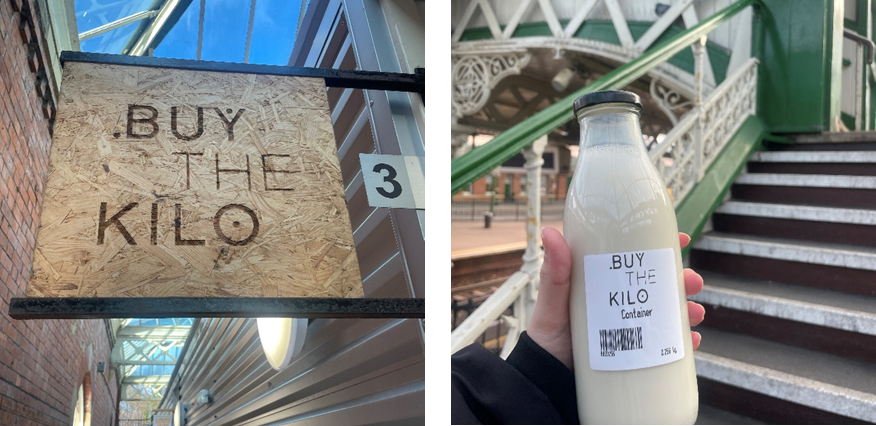
Buy the kilo is another family-run refill shop located on platform one of Tynemouth metro station. After a walk on the beach, I stopped off to check out this shop and pick up some oat milk. The shop is hidden down a little alley of independent businesses in shipping containers, which if you’re not looking for you probably would never notice! It was my first time visiting the shop, and the ladies working in the shop were more than happy to help and walked me through exactly how to work the weighing system. The shop also exhibits artists’ work that highlights issues about the environment, making it a must visit if you’re in Tynemouth!

Image: Buy the Kilo

Thank you for reading this blog, I hope you enjoyed it! A big thank you to the owners of these shops for all their efforts in reducing waste. Let us know in the comments if you visit any!

The 2024 Christmas Switch Off at Newcastle University

What is the Christmas Switch Off?

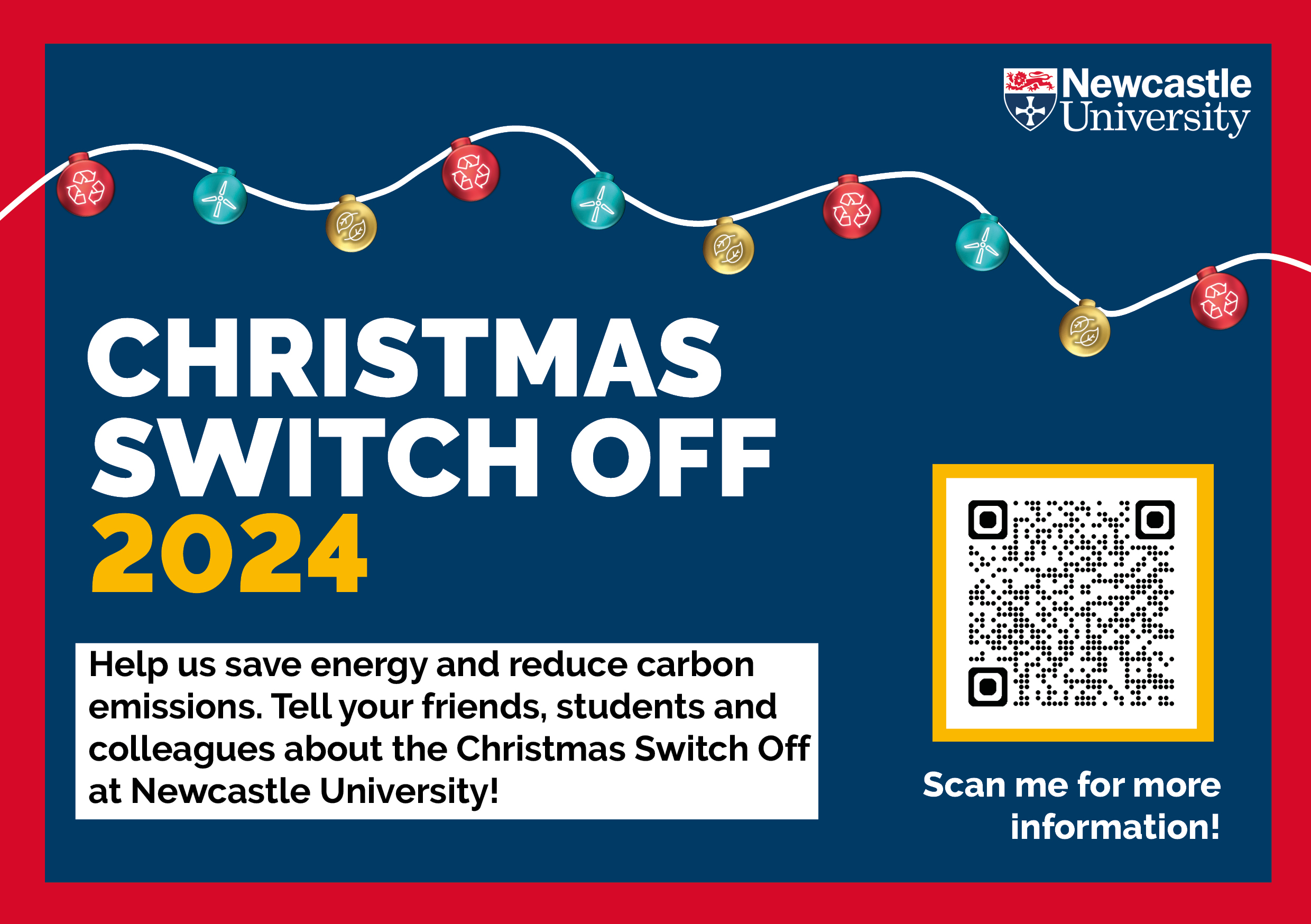
The Christmas Switch Off is a University-wide campaign where we encourage staff and students to turn off any electrical items that can be switched off instead of leaving them on standby over the Christmas break.

Why is the Christmas Switch Off important?  

By turning off everything that can be turned off, we will reduce our energy consumption across the campus. The Christmas Switch Off campaign has been run for a number of years to minimise energy wastage and contribute to our carbon reduction targets.

We also hope that promoting of the Christmas Switch Off will promote positive behaviour change more widely and remind colleagues and students to minimise their energy wastage by remembering to switch off what they can every day.

Who participates in the Switch Off?

We would like everyone at the university to participate if they are able to, that includes staff and students across labs, offices, and accommodation. The advice on what to turn off will vary for each location – guidance on what should be switched off is in this blog post. 

When switching off your work area, it can be helpful to organise a switch off team that can check each area after most people have left for the term to ensure everything that can be switched off, has been.

Here are some examples of items that could be switched in various area across campus:

  • Staff working in offices: Lighting, computers, monitors, printers and photocopiers, kettles and fridges (after they have been emptied and cleaned). Also, it is important to make sure that all windows have been properly closed. 
  • Labs and medical buildings: All the above can be applied in addition to drying cupboards, fume cupboards and fridges/freezers that will not be in use over the break (please do not turn off equipment that is in use).

Many students leave their accommodation over the Christmas break, meaning their accommodation will be empty over the holidays. If you are going away over the winter break, there are a few things that you could do before you leave:

  • Clean out and defrost your fridges and freezers the day before you leave by turning them off at the wall and popping a towel underneath to soak up the melted ice.
  • Turn off your kettles and toasters at the wall.
  • If there is a wall switch for your oven this is also a good thing to turn off easily, as well as lights and plug sockets.

For more switch off information, visit the Sustainable Campus website: https://bit.ly/3OP5yLN

If you have any questions or ideas about the Christmas Switch Off, please email the Sustainability Team at sustainable-campus@ncl.ac.uk

Thank you for reading!

Green Impact Launch and LEAF update!

At Newcastle University, we recognise that the climate crisis must be addressed communally, and we cannot meet the sustainability targets set out in our Climate Action Plan without the efforts of all our colleagues and students.

Green Impact and LEAF are two amazing programmes available for our colleagues at the university, with the opportunity for participants to win bronze, silver, and gold awards for sustainability. Earlier this month, the Environment Awards recognised and celebrated the achievements of our colleagues and students over the past year, with 11 teams receiving Green Impact awards and 10 teams receiving LEAF awards. A massive congratulations to those teams!

So, read on to find out how you can get involved in the next programme of Green Impact or LEAF, and play your part in increasing environmental sustainability on campus!

Green Impact

Green Impact is a United Nations award-winning programme which promotes environmentally and socially sustainable behaviour across organisations. At Newcastle University, colleagues can sign up to Green Impact and create teams within their work area, with actions assigned to complete in the online toolkit. The toolkit is aligned with the UN Sustainability Goals, with themes such as energy, water, waste, travel, biodiversity, communication, and wellbeing.

This is a great opportunity to improve your knowledge on environmental issues and contribute to meaningful sustainable change in your workplace, whilst collecting some awards to display!

How to get involved:

  1. Sign up to Green Impact online from the 11th of November.
  2. Chat to your colleagues in your work area about Green Impact teams and either join one that’s already been created or create a new team.
  3. Email sustainable-campus@newcastle.ac.uk to join the Green Impact Teams channel, and chat to other teams!
  4. Work through your assigned actions. Each action grants a certain number of points which then add up to the bronze, silver, and gold awards.
  5. Our friendly student auditors will come round to check your progress later in the year.
  6. The Environmental Awards will be held in June, with engraved recycled slates for teams that made it to Bronze, Silver, or Gold.

LEAF

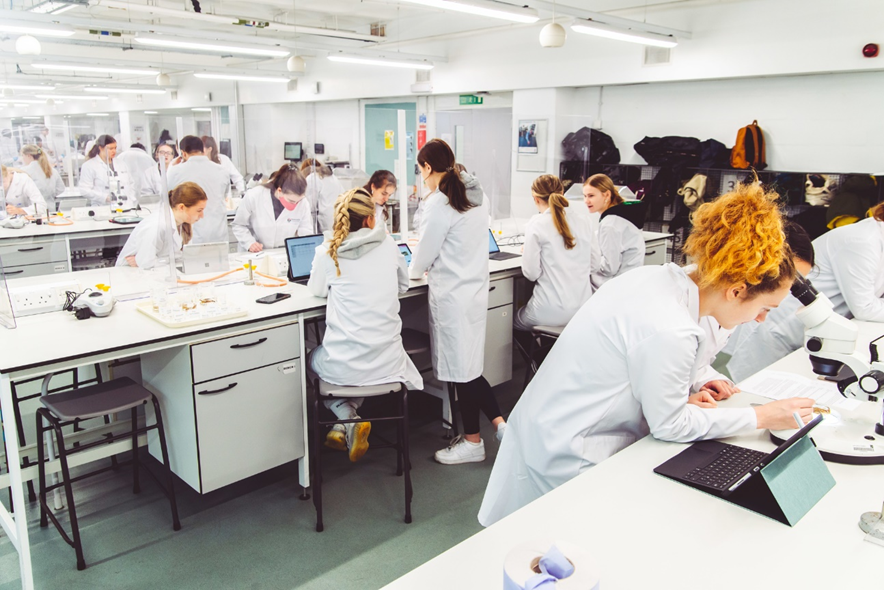
Our laboratories are essential in enabling the groundbreaking research conducted at Newcastle University, and scientific research is vital in mitigating the climate crisis. However, traditional laboratory practices can come with unintended environmental impact (Freese et al, 2024).

LEAF, or the Laboratory Efficiency Assessment Framework, is an online platform for laboratory users designed by UCL to improve the sustainability and efficiency of laboratories. Similar to Green Impact, lab teams work through sustainability actions to reduce waste, water, and energy along with improving the efficiency of other resources. There is an upcoming refresh of the LEAF actions and criteria, so sign up now to be a part of this updated programme.

Image: Diversity of Life Lab Session (Biology & Zoology). Photo Credit: Chris Bishop.

How to get involved?

  1. Sign up on the LEAF login portal
  2. Register with your institutional email, then login and either join an existing lab, or request a new lab (if your lab is not already listed).
  3. After your account is verified, work with your team through the bronze, silver, and gold criteria. Members of the Sustainability Team will assess your progress along the way, and certificates will be awarded at the Environmental Awards!
  4. Every year, progress to a higher certificate, or re-audit to keep your accreditation.

Key dates:

  • Relaunch of Green Impact on Monday the 11th of November
  • Criteria Update of LEAF on Monday the 11th of November.
  • Green Impact Launch Webinar on Thursday the 14th of November, Sign up here.
  • LEAF teams channels launch on Friday the 1st of November.
  • Celebrating Success Environmental Awards: June (date to be announced later).

Thank you for reading, and we look forward to welcoming some new teams to Green Impact and LEAF this year!

References

Freese, T., Elzinga, N., Heinemann, M., Lerch, M.M. and Feringa, B.L., 2024. The relevance of sustainable laboratory practices. Rsc Sustainability2(5), pp.1300-1336.

COP 29: Apply to be a Virtual Delegate! 

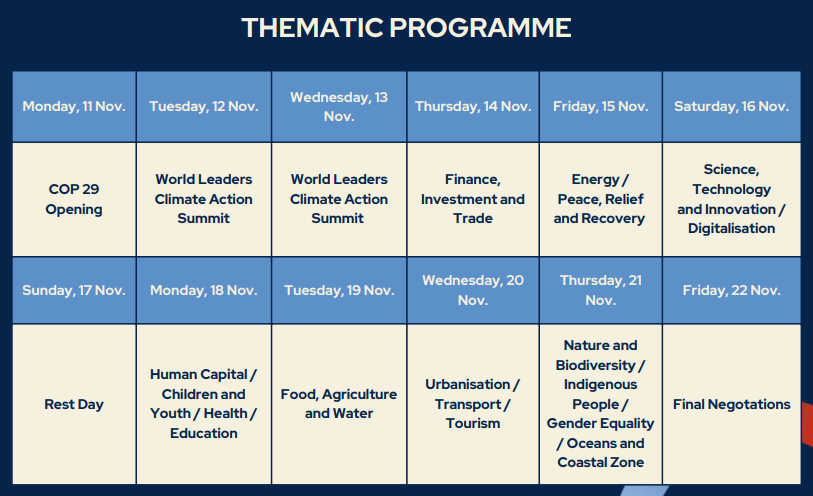
The 2024 United Nations Climate Change Conference, also known as the 29th Conference of the Parties, or COP 29, is set to take place in Baku, Azerbaijan from the 11th – 22nd of November. Conference discussions are expected to centre on themes of climate finance, carbon markets and new Nationally Determined Contributions (NDC’s) – the national targets to support climate change commitments that countries must submit in 2025.   

This year, we have the opportunity for 10 University representatives to attend the conference virtually. Keep on reading to find out more about being a virtual delegate, and how you can apply! 

Image: The venue for this year’s conference- Baku Olympic Stadium in Azerbaijan. Credit: AZTV. 

What is an observer?  

Newcastle University gained “observer organisation” status with the UNFCCC in 2021 and a delegation of academics, professional services colleagues and student representatives were able to attend COP 26 in Glasgow as a result. Observer organisations can select representatives to attend the annual COP’s both in-person and virtually. This year, for COP 29, all observer organisations have been allocated 10 virtual delegate places – though in-person quotas have been limited. 

Observers are chosen from a variety of groups, all expressing unique perspectives on climate change. They fall into one of three groups: United Nations organisations, intergovernmental organisations (IGOs) and non-governmental organisations (NGOs). 

NGOs can include: 

  • Youth groups 
  • Trade unions 
  • Farmers 
  • Indigenous communities 
  • Environmental charities 
  • Research organisations including universities. 
  • Gender-equality initiatives 

Virtual delegates can access many meetings and events being held at the COP 29 conference, though often this is limited to being able to observe proceedings via a one-way live stream.  As well as the main negotiations between Parties to the Convention, COP conferences host hundreds of related side-events, exhibits and meetings every year. Observer organisations can apply to host side-events at the conference and many of this year’s events should be available to view by virtual delegates.  Some events may even interact with the online community, allowing you to network with peers and have your say! 

More information about observer organisations is available here on the UNFCCC website, and a list of this year’s formal side-events is available here. The list will most likely be updated as the conference nears, so keep checking for new events! 

Image: This year’s timetable of themes. Keep this safe when deciding which talks to attend! Credit: UNFCCC. 

How can I apply? 

This year, we are encouraging both students and colleagues to apply to be a virtual delegate. We will select delegates on a first come, first serve basis. We will also try to ensure a balance of undergraduate students, postgraduate taught students, postgraduate research students, academic colleagues, and colleagues from professional services.  

To apply, simply fill out the form below telling us your availability and why you would like to attend.  Please note, it is not expected that virtual delegates will commit the whole of their time to the COP – we would encourage our virtual delegates to attend as many events as their commitments will allow.  

By filling out the form, you will also consent to helping the Sustainability Team with a follow-up blog or knowledge-sharing activity, describing your experience at COP 29. You will also agree to abide by the UNFCCC Code of Conduct found here

COP 29 Virtual Delegate Application: https://forms.office.com/e/N0ZgHLwmgY 

Good luck! 

Nature Positive Student Ambassador Programme

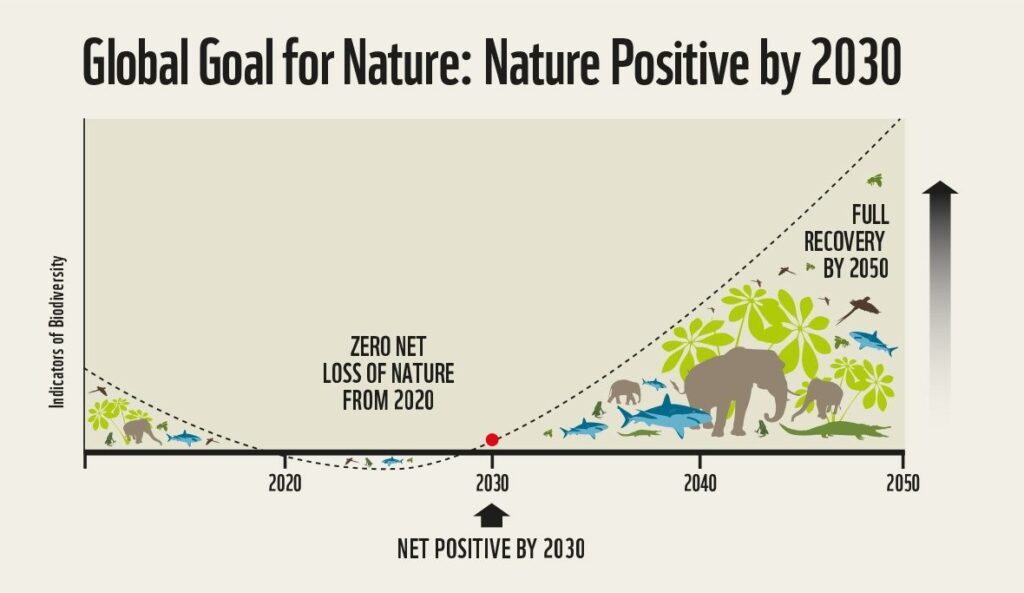
Nature Positive is a term that refers to the reversing of nature loss and encourages ecosystem recovery. The Nature Positive Universities network is comprised of over 500 higher educational institutions worldwide who have all committed to protecting biodiversity by signing the Nature Positive Pledge. The network was jointly founded by the University of Oxford and the UN Environment Programme in December 2022. If you’re interested in finding out more about Nature Positive and how as a student you can get involved, keep reading! 

Image: The aim of the Nature Positive Universities group; reversing the biodiversity loss curve. Credit: Nature Positive Universities. 

What is the student ambassador programme? 

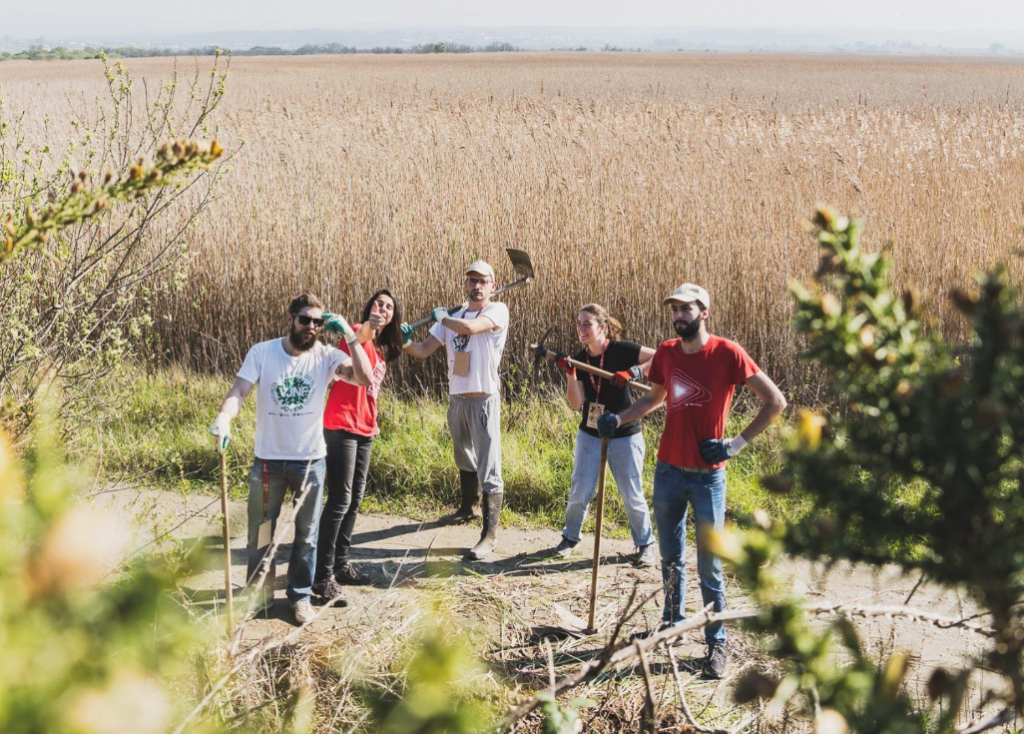
If you are a student and interested in the Nature Positive ethos, check out the Student Ambassador Programme. Every year, Nature Positive Universities welcome students to apply for this program, giving them the opportunity to play a part in #GenerationRestoration while collaborating with students from other universities on a global scale.  

The programme is an exciting blend of practical and collaborative activities, with no two days being the same! 

Some benefits you will gain upon joining the programme: 

  • Experience volunteering with mentors at University of Oxford 
  • A chance to make a difference on our campus 
  • Networking with a global community of environmental activists 
  • Resources and training to help you organise events and activities 
  • A certificate documenting your role 
  • A chance to exercise your personal skills such as social media, communications, design, organising events, translation and biological identification and survey techniques 

Image: Nature Positive student ambassadors volunteering in a field. Credit: Nature Positive Universities. 

How can I apply? 

Applying for the programme only takes 10 minutes and could seriously boost your CV, if you are interested in working within the environmental or urban planning sector.   

Sign-ups for the 2024/2025 Nature Positive Student Ambassador Programme are currently open and the deadline to apply is the 10th November 2024.  

Link to apply: https://www.naturepositiveuniversities.net/become-an-ambassador/

To find out more on what the sustainable campus team are doing to fulfil the Nature Positive Pledge, check out our blog post on Biodiversity Net Gain, or visit the Biodiversity page on our website! 

Sustainable Drainage Systems: The Future of Flood and Water Management

Sustainable Drainage Systems (SuDS) are key to building sustainable cities and countering the influence of urbanisation. These eco-friendly solutions maintain habitats, support natural cycles, and protect human communities. Since 2023, it is now a legal requirement for all new major developments to include SuDS in their planning.

Newcastle University has great research infrastructure in this area, including the UKCRIC National Green Infrastructure Facility (“the living laboratory”) and the Newcastle Urban Observatory. This blog will explore how SuDS work and their importance, using a current student’s project as a steering guide. Enjoy!

What are SuDS and why are they important?

The main purpose of SuDS is to mimic the natural processes that urbanisation has impeded, i.e. the infiltration of water into the ground. Smaller projects use methods like installing green roofs or rain gardens while large-scale projects use basins and swales (flood ditches).

Check out this helpful video for an in-depth explanation of SuDS, linking their function to the University’s Green Infrastructure Facility:

So, what are the actual benefits of SuDS over traditional drain systems? SuDS are known to:

  • Decrease risk from flooding
  • Reduce flood damage costs
  • Improve water quality
  • Act as a carbon store
  • Support biodiverse habitats and animals

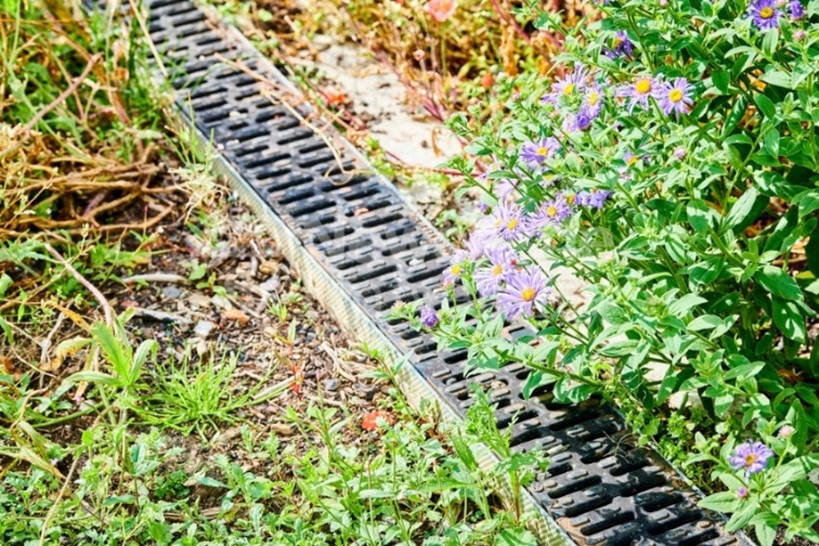
Image: Snapshot of a hidden drainage grate among greenery and purple flowers. Demonstrates the contrast between manmade installations and natural stores. Credit: John Donoghue.

“Domestic SuDS Planter: Design, Construction and Evaluation”

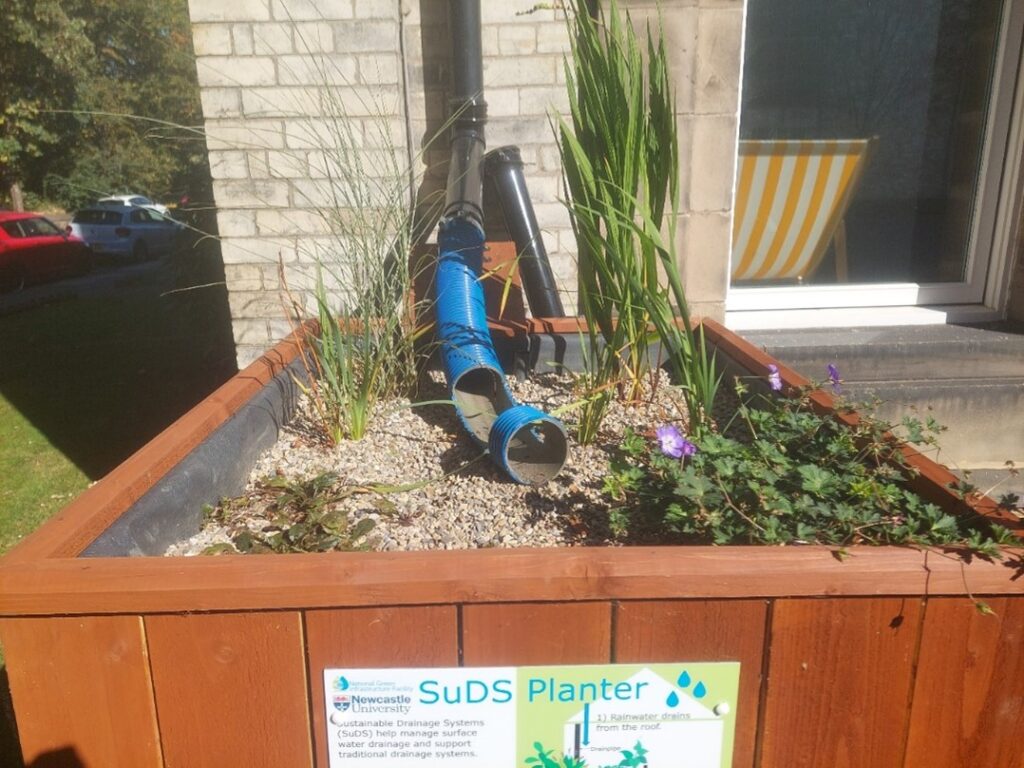
During her study, Madeleine Tate found herself drawn to water and flood management, which inspired her MEng dissertation project. Madeleine chose to install and test a sustainable planter box at Kensington Terrace accommodation. The research aim was to combat the issue of increased storm water affecting the residential sector. Kensington Terrace proved to be a perfect location:

“Everyday I go into university I walk past and check on it. It’s quite easy to collect data from.”

Image: Close up photograph of the SuDS planter, showing the pipe diversion, the overlaying gravel, and the blooming plants. Credit: Madeleine Tate.

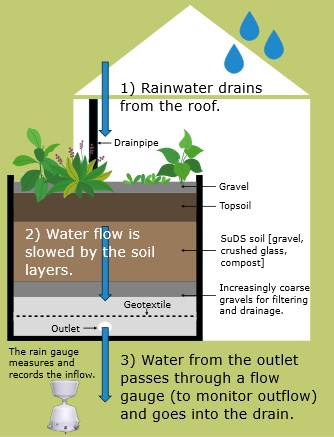
Madeleine’s planter collects rainwater from the roof and interrupts its flow by slowing it down. The water flow is filtered a variety of soil layers within the planter (see image below for a layer breakdown). After the water has moved through the layers, it passes through a geotextile, finally exiting the planter via an outlet. This outlet deposits water back into the drain system. Thus, the mechanism slows down the journey from roof to drain, giving the traditional system more time to cope. Crucially, this reduces flood and Combined Sewer Overflow risk.

Interestingly, the planter itself was made from a reused intermediate bulk container, which was cut down and repainted. How innovative!

Image: Diagram showing how the planter in Kensington Terrace works. Shows soil layers and step-by-step route of rainwater through the system. Credit: Madeleine Tate.

Project Success

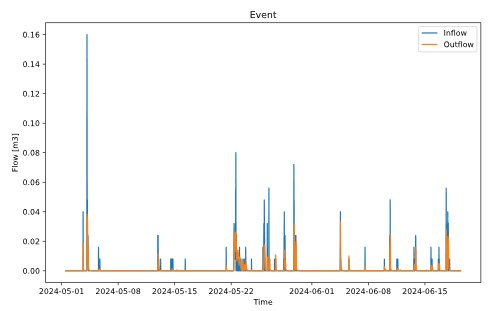
Madeleine’s planter is still in the process of collecting data but has so far proven to be a success! Here we can see a graph comparing inflow levels to outflow levels for rainfall events in May and June 2024. The orange outflow dataset is consistently lower than the blue inflow dataset, by up to 75%. This mirrors the slow pace of the flow travelling through the soil layers.

Image: A graph tracking water inflow and outflow in the planter for events from May 1st – June 19th. Credit: Madeleine Tate.

The Future of Planters and SuDS

Due to its success, the planter installation will remain at Kensington Terrace and will continue to produce meaningful data. Madeleine is now in the process of starting her PhD, looking at how these planters can be scaled up. She is collaborating with Newcastle City Council to project datasets, visualising a city where these planters are installed in all houses and drainpipes. In what Madeleine deems the “snowballing effect,” this initial planter innovation will open the door for more similar schemes:

“The future should bring more research; more use and more awareness”

As the threat of climate change becomes more imminent, SuDS and modelling wide-scale integration will prove to be an important tool for risk prevention. If no action is taken, water systems are bound to collapse due to heavier rainfall.

I would like to thank Madeleine Tate for her extensive help and her informative graphics. She ensured that my first post on the sustainability blog was both inspiring and educational! For more information about the UKCRIC National Green Infrastructure Facility, click here. If you are interested in learning what Sustainable Campus are doing for water management, click here.

Thank you for reading!

Keep Cosy, Cut the Costs, and take Climate Action this Chilly Season

Only 1.8% of UK homes meet the top energy efficiency ratings, making them some of some of the biggest energy-wasters in Europe. As the colder months approach and the East wind begins to bite, keeping your flat, house, or halls warm can become increasingly challenging. This guidance outlines some ways that you can tackle rising energy costs whilst also taking climate action!

Home Energy Advice North East (HEANE)

A new local authority led service HEANE is here to help you cut costs and stay cosy. Even if your energy bills are included in your rent, their advice can help you avoid exceeding any cap set by your landlord. Whether you’re living in Newcastle City centre or further afield, there’s a range of free support available to help you boost energy efficiency, save money, improve living conditions, and  reduce your carbon footprint.

HEANE is working in partnership with charities and organisations like Groundwork and Community Action Northumberland to offer help in Newcastle, North Tyneside, South Tyneside, Gateshead, Durham, Sunderland, and Northumberland, prioritising those who’re struggling to pay bills or keep warm.

How can HEANE help?

  • Provide immediately implementable energy saving habits. These insignificant changes can add up over the university year! If you’re not convinced, check out their website for energy (and money) saving habit ideas paired with concrete stats showing the potential difference it could make to your pocket!
  • A knowledge bank of useful info (e.g. how to understand your energy bill, how to tackle condensation and damp, and how to stay in control of your heating). University is often the first time many of us deal with the responsibility of bills and home maintenance. For most of us it’s a venture into the unknown, so reliable and expert tips on how to navigate this new realm is seriously valuable.
  • Impartial in-person advice. Sometimes it’s easier to show than tell. And when it comes to a house or flat you’ve only recently moved into for the academic year a second pair of eyes and opinion can be really useful to create a next steps plan.
  • Personalised recommendations (no obligation home assessments to make it a more energy efficient space). Not all advice is equal! Getting advice appropriate for your living situation and budget helps put you on the road to action more than generic pointers.
  • Help applying for energy improvement funding and finding local certified installers (available to your landlord if you rent). Not owning your home doesn’t mean you have no control! Making your landlord aware of the advice, resources, and recommendations given by HEANE could result in some real change making.
  • Ongoing support at every step – Have you received some advice or information, and you are not sure what to do next? Don’t let your questions go unanswered! Whether it’s the 1st or 100th query, make use of the experts available.

Energy and water reduction guidance for your home

You might think you’ve heard all the energy-saving tips before. For example, not leaving devices on standby, avoiding overfilling the kettle, turning off lights and using a low temperature setting on the washing machine could already be part of your routine – great job! These actions alone can save you £67 a year. But did you know saving water can also reduce your energy costs? And advice to take control of your heating can be especially useful when renting, as lowering your thermostat by just 1°C can save £80 a year.

In short, make use of this resource! Keep cosy, cut the cost, and take climate action. What could be a better start to the chilly season?

Sustainability Communications Placement: interviewing Evan

Evan has been our Sustainability Communications Placement this last year and he’s now leaving to continue his studies in London. Plenty has happened over the year and he’s been a part of lots of the work we’ve been doing, so we wanted to ask him about his experiences in the role and whether he’d have any advice for our future placements!

I can’t believe it’s been a year already! How has it been for you?

Amazing, yeah! Looking back, it’s hard to believe how much I’ve learnt and grown over the past year. The team are so welcoming, friendly, and generous and I’ve had the chance to experience so many different aspects of sustainability work with their guidance. In this way it’s been a brilliant introduction to both the sustainability sector, and the world of work in general, and I’m hugely grateful to everyone in the team for that.

Your job touches on several different aspects of the team’s work. Have there been any areas that you’ve focused on more and which aspects have you enjoyed the most?

The team works on a really wide variety of interesting topics and being able to explore and get involved in these has been one of the things I’ve liked the most about this role. I’d say that points of focus change depending on what’s happening at any given time, though. So, over Winter there’s more to do around the University’s heating and ventilation systems and software, early Spring often brings engagement activities like Sustainability Week, and late Spring/Summer is audit season. Each of these periods brings its own opportunities, challenges, and a new type of working – from conducting site visits and writing up observations to making promotional materials and chatting with students and colleagues.

I’d say one of my favourite things, however, is the sustainability blog that’s been running throughout the year. Being able to focus in on the sustainability considerations of different areas, from agriculture to medicine, and learning about projects including solar PV and innovative heating/power technologies has been really fun and interesting. Writing about these varied topics in an easily digestible way is also a good challenge that helps you to engage with the content further and I’ve really enjoyed the chance to do that this year.

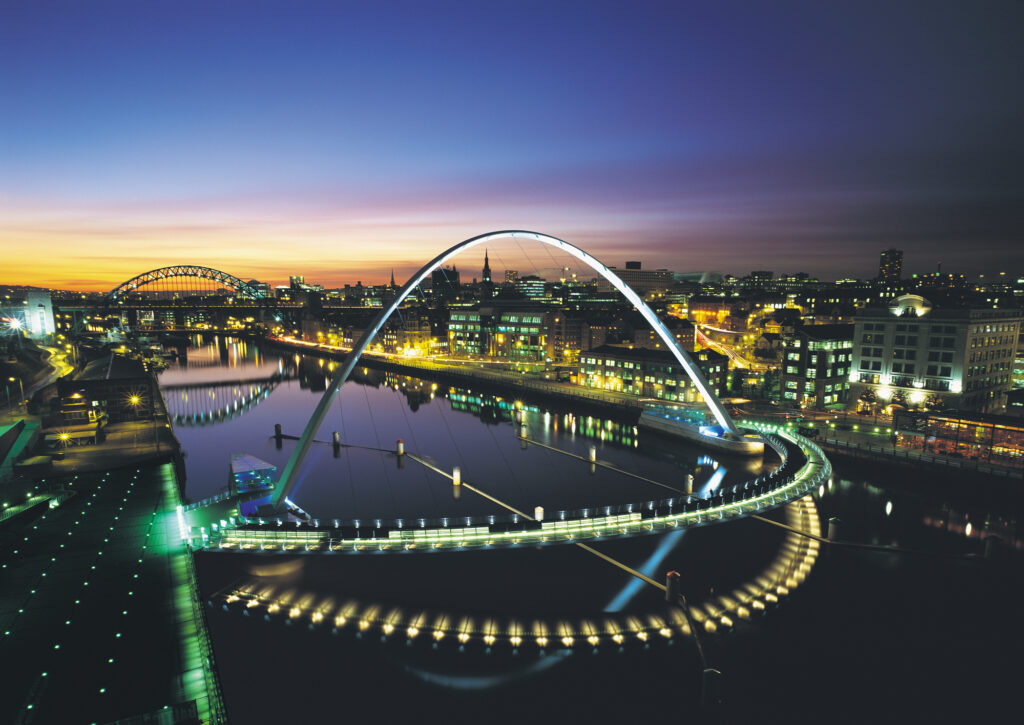
Image: The Millenium and Tyne Bridges at night, their lights reflected in the river below. Credit: Graeme Peacock.

Have you been able to pick up/ hone any new skills this year? And do you feel like this role has introduced you to the sustainability sector?

Absolutely! Getting stuck into a range of different tasks is a great way to learn and I’ve been able to gain and practice lots of skills that I’d never come across before. A good example of this is the website project I’ve been working on alongside colleagues for much of the year. Here, I’ve improved my written communication skills, gained insights into navigability and accessibility, and I’ve been trained in how to use several different website management system. All of this is supported by the team’s strong desire to invest in its members, and I’ve had the opportunity to complete fully certified ISO140001 auditing training and Carbon Literacy training. This is all in addition to the organisation, communication, and technical skills I’ve picked up while completing regular responsibilities such as helping organise events and utilising the building management system.

I also feel like I’ve been given a really good introduction to the sustainability sector in general. I’ve had the chance to get involved in team meetings and discuss the University’s approach to a variety of environmental issues and sustainability projects, to chat with colleagues in different roles across campus, and even to attend regular sessions of the EAUC to hear about the actions and plans of other higher education institutions. This is really interesting and insightful because you get to understand and consider both solutions, including renewable energy, colleague action programmes, and district heating, but also more challenging areas, including the execution of offsetting and managing travel emissions.

Have you been able to link your work to wider goals and contexts, including those of the University, the UN Sustainable Development Goals, and the climate crisis more broadly?

Definitely, and in many cases these three separate sets of goals often align very closely. In terms of working towards the University’s goals, my auditing responsibilities were an important part of the University’s wider energy and environmental sustainability management systems and it felt significant being able to play my part in maintaining that for such a large organisation. The UN SDGs and broader climate issues are worked in throughout the various themes that the team works on and I feel as though I linked to these mostly strongly in my communications work. Here, answering questions and sharing ideas around everything from renewable energy to biodiversity, and active travel to water, allowed me to expand upon many important issues and solutions and I’m very grateful to have been able to do that.

How have you found working for the University, and in Estates and Facilities especially?

It’s been really nice. The office is full of kind and welcoming people, and you never have to look far for a helping hand. I’ve gotten to know everyone in the Sustainability Team really well, of course, and these friendships fostered a real sense of community within the team, but I’ve also met lots of colleagues working in a variety of other fields within Estates and Facilities. Chatting to these lovely people has added new perspectives to my work and given me further insights into the way that the University works.

Additionally, on a wider scale, working for such a large organisation on a beautiful campus and towards the University’s important missions has been really exciting and interesting. Chatting to colleagues from across the University at events, seeing various workspaces during audits, and simply wandering between the buildings throughout the year reminds you of just how much important research and teaching is going on here, and that’s amazing to be part of.

Do you have any advice for someone applying for or starting a placement with the Sustainability Team?

For those applying: Definitely go for it – it’s given me such a great start and I cannot thank the team enough for all they have done for me.

For those lucky enough to be starting a placement: Initially, well done! The first few weeks of any new job are stressful as there’s just so much to take in, but the team are absolutely lovely and your main task is to just get comfy with how everything works. Regarding this, my big piece of advice is to not be afraid to annoy people in the team! Ask lots of questions, however small, and don’t place too much pressure on yourself to learn super fast or find everything out on your own. Your colleagues want to help you, and you’ll soon settle in enough to begin helping them too!

I’d like to say a huge final thank you to the Sustainability team and for all they’ve done for me over the last year – it’s been a real privilege to be part of the team and I’m going to miss you guys!

Sustainable innovations: designing the homes of the future in the _OME

Completed in June 2021, the _OME is the flagship research and showcasing facility of the Hub for Biotechnology in the Built Environment (HBBE), an innovative research partnership set up between Newcastle and Northumbria Universities. With funding from Research England, the HBBE combines expertise in biosciences, design, architecture, and engineering to advance cutting edge research on biotechnology. As part of this, the team, now made up of nearly seventy researchers and support staff (HBBE, 2022), are constantly testing ways to improve the health and sustainability of our homes by researching everything from controlling the spread of pathogens to innovating on sustainable technologies. This diverse and hugely beneficial work is centred on the state of the art _OME facility, so how exactly are these exciting projects designing the living spaces of the future?

Image: a front elevation showing the interior spaces of the _OME and their uses, including the experimental apartment, biotechnology laboratory, and testing/showcasing spaces for new technologies. Credit: Armand Agraviador.

Located on Devonshire walk, next to the Great North Museum: Hancock and the Devonshire and Drummond buildings, the _OME houses an in-house experimental apartment, accompanying laboratory, and display space for innovative materials and technologies. The HBBE’s research is organised into four key themes and utilises concepts including the genome, biomes, and home, hence the name: _OME. The four research themes being undertaken in the facility touch on a variety of repurposed, improved, and novel technologies and practices to lower carbon footprints and keep us healthy by design. So what do they all involve?

Theme 1: Building Metabolism

The first theme focusses on building-wide methods to achieve a higher degree of sustainable self-sufficiency by creating an artificial ‘metabolism’ in the structure and systems of the house itself. Practical examples of how this metabolism works include generating renewable electricity on site via solar panels on the building’s roof and utilising greywater to lower water use by, for example, reusing water from sinks or the shower to flush the toilet. Additionally, other technologies being woven into this metabolism include rainwater harvesting from the roof gutters and developing waste handling systems within homes that can deal with waste on site and even generate heat and other useful resources from it! When combined, these technologies could work to maintain a living space with a fraction of the energy and water requirements of a standard home, helping to save on both carbon and bills!

Theme 2: Living Construction

The construction sector is a major emitter of carbon globally and commonly used materials including steel and concrete require an awful lot of energy to produce (Wang and Ramakrishnan, 2021), leading to homes with high embodied emissions. Thankfully, lower carbon materials, including cross-laminated timber, are becoming more commonly used (Ahmed et al., 2024), but researchers at the HBBE are looking to advance construction even further by developing intelligent materials. The focus of this research sits squarely on bio-materials, including biominerals, biopolymers, and hygromorphs, which promise not only to lower embodied emission further, but also to offer other advantages. One exciting potential feature of these biomaterials would be to respond to certain stimuli and regrow their structures when damaged – creating self-repairing buildings! These innovations would further add to the construction sector’s arsenal of sustainable building techniques, giving architects more tools to create buildings that are good for both people and planet.

Image: a view of the side and main façade of the _OME laboratory, exhibition space, and experimental apartment. The apartment is located in the central upper floor section, behind the large opening for natural light. Credit: Professor Ben Bridgens.

Theme 3: Microbial Environments

The third theme touches on the _OME’s creation mid-way through the Covid 19 pandemic. Here, research teams are designing homes to better support healthy microbiomes and passively reduce the spread of illnesses, including pandemics. Proposed technologies for achieving this include smart ventilation, antimicrobial materials, and advanced microbiome monitoring systems to better understand what’s going on in the home. Not only will these innovations improve people’s health, but they could also reduce the environmental costs of dealing with illnesses and epidemics (see our sustainable medicine blog here) by creating environments that are far better at handling these issues by design.

Theme 4: Responsible Interactions

As seen previously, the HBBE is working on a variety of innovative technologies, but implementation of these isn’t always smooth sailing. To help ease biotechnologies’ transition from research to widespread use, therefore, researchers are investigating a variety of potential potholes, from accessibility concerns to unintended environmental effects. Additionally, ensuring these new technologies can seamlessly integrate with existing practices and standards, and making sure that people are culturally on board to accept innovations such as biomaterials, remains an important challenge. The _OME is major part of the solution here, as novel technologies can be tested out in the living laboratory and new materials can be shown off to unsure potential adopters, helping to tackle challenges before they become significant issues.

Thank you to the amazing HBBE team for their innovative work and their dedication to improving the sustainability of our built environment. Upon its completion in 2021, the _OME joined a series of Living Labs associated with Newcastle University across campus and elsewhere. These facilities look to continually generate high quality research and data as part of their site’s design (often while being used for a variety of other useful purposes) and you can learn more about them here. Additionally, further information on the HBBE’s activities, including its publications and additional research groups, can be found here. If you’d like to find out more about sustainability at Newcastle University, you can explore our website and other pieces in this blog, and sign up to our newsletter here.

References

Ahmed, S., Dharmapalan, V., and Jin, Z. (2024) ‘A Subject Review on the Use of Mass Timber in the US Construction Industry’, Construction Research Congress 2024: Sustainability, Resilience, Infrastructure Systems, and Materials Design in Construction. pp. 287-295.

Dixon, T., Connaughton, J., Green, S., (eds) (2018) Sustainable Futures in the Built Environment to 2050: A Foresight Approach to Construction and Development. Hoboken: Wiley-Blackwell.

Hub for Biotechnology in the Built Environment (HBBE) (2022) Annual Report 2022. URL: http://bbe.ac.uk/wp-content/uploads/2022/06/HBBE_2022_Annual-Report.pdf (accessed 29.08.24).

Wang, X., and Ramakrishnan, S. (2021) Environmental Sustainability in Building Design and Construction. Cham: Springer International Publishing.