Tag Archives: Sustainable Campus

Celebrating World Water Day 2025: Saving Every Drop

World Water Day is a United Nations Observance held on the 22nd of March every year, aiming to raise awareness on the importance of freshwater. Water is a crucial resource that is central to natural ecosystems, agriculture, sanitation, industry, heating, transport, and, of course, keeping us hydrated!

Less than 1% of the world’s water is available for human use, sourced from rivers, lakes, groundwater and even rainwater (Murcott, 2022). A recent study warns that the UK is increasingly vulnerable to water insecurity in the future, due to its limited renewable water sources, high consumption and leakage rates, and its insufficient funding for water management (Loveday, 2024). While water scarcity may seem like a distant concern, it’s crucial to understand how we can reduce our usage and take action now.

To mark World Water Day 2025, this blog will explore how we in the Sustainability Team ensure that the University’s water system is efficient, safe, and abides by all environmental regulations, plus we’ll add in some tips of how you can save water at home too!

Image: Drone shot of the Tyne River, with the Gateshead Millennium Bridge and Tyne Bridge in the background. Source: Elemental Photography.

The University’s water

The University’s water is managed in accordance with our Environmental Management System and we have Operational Control Procedures in place that control significant environmental aspects such as water reduction and trade effluence. These are audited internally and externally annually. To further support our water management, we work  with building users, technicians, and our external monitoring partners Demeter to ensure that water is being used responsibly and any leaks are identified and repaired efficiently. Some examples of recent leaks that were rapidly detected and promptly repaired include a broken fitting on a main pipe at our Bowsden Court student accommodation, a burst pipe in the Henry Daysh basement and a flood inside Herschel Building over the Christmas shutdown period.

In addition to this work to quickly remedy faults in the system, we’re being proactive in saving water across our facilities in a number of ways, including:

  1. Installing Automatic Meter Reading (AMR) software across the University. This system is capable of logging water consumption data every 15 minutes, allowing us to assess and monitor the University’s water usage data accurately.  
  2. Developing a water strategy. Our strategy will help us to holistically review our water monitoring and management processes.
  3. Identifying any issues with fixtures and fittings in our buildings. We ask staff and students to report problems such as broken taps and toilets when they find them so they can be fixed quickly. We also use the AMR data to help us with this as the frequent data logging enables us to identify trends and any anomalies where problems may be occurring. 
  4. Installing push taps to reduce water consumption.
  5. Including water systems in our Sustainable Construction Framework. New systems designed for capital projects have specific sustainability requirements to meet, including specification around water systems.
  6. Monitoring our water consumption daily with specialist support. Our partners Demeter send us information every day about building water consumption to help us stop leaks and identify areas where usage is higher than it should be.

Image: Sustainable Development Goal 6: Clean Water and Sanitation. Source: UN SDGs.

How can I save water at home?

There are plenty of easy ways you can save water around the house and these actions will help lower your water bill as a bonus!

  • Use a shower timer to help reduce water use in the shower – timers are typically set to four minutes.
  • Only use a dishwasher on a full load and avoid pre-rinse settings.
  • Fill the kettle with only as much water as you need, saving energy as well as water.
  • Use any leftover cooking water on houseplants.
  • When purchasing a new toilet, look for a dual flush option.
  • Fit tap aerators onto your taps and look into aerated shower heads to easily reduce water consumption.

Is there anything I can do on campus?

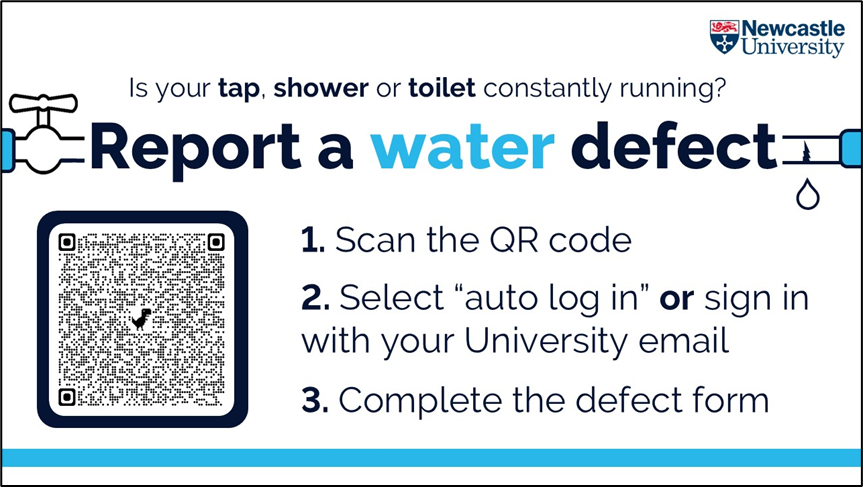
You can report any water defect, whether it’s a dripping tap, overfilling toilet, leaking pipe or water which is too hot. Simply fill out this Planon form and select the “auto log-in” option or sign in with your University details. The form should be filled-in with as much detail as possible.

Always make sure taps, hoses, and cooling systems are turned off after use. Additionally, if you manage or work in labs you can reduce water use by:

  • Using recirculating cooling systems to save energy and water and reducing the water supply to water-cooled equipment to the minimum required.
  • Avoiding using water vacuum pumps where possible as they use large quantities of water.
  • Specifying what levels of water purity are necessary for various applications and not using distilled water when it is not necessary.
  • Only running washers when they are full and ensuring the lab has correctly sized equipment for its common usage to prevent inefficient washing of oversized items.
  • Joining the Laboratory Efficiency Assessment Framework (LEAF)!

Thank you so much for reading this blog. If you want to explore more information on water at our university, take a look at our dedicated webpage, or email us at sustainable-campus@ncl.ac.uk

Reference list:

Loveday, K. (2024) UK faces a high level of water security challenge, BSI Reports, The UK Water Report. Available at: https://www.thewaterreport.co.uk/single-post/uk-faces-a-high-level-of-water-security-challenge-bsi-reports (Accessed: 12 March 2025).

Murcott, S. (2022) Freshwater and climate change, MIT Climate Portal. Available at: https://climate.mit.edu/explainers/freshwater-and-climate-change (Accessed: 12 March 2025).

Sustainability Communications Placement: Interviewing Charlotte and Cristina

Cristina and Charlotte have been our Sustainability Communications Placements this year and have just hit the six-month mark of their time with us. Over the past few months, they’ve contributed to various projects and learned a great deal along the way. We sat down with them to reflect on their experiences in the role so far, to hear about the skills they’ve developed, and to find out what they’ve enjoyed most about working with the team.

So, tell me a bit about your journey that led you to apply to this role?

Charlotte Epton (CE): I came to Newcastle University to study Environmental Science and then stayed to finish my masters in Clean Technology. Whilst my degree was sustainability focused, I didn’t have much work experience outside the lab and wanted to get some more practical experience in the sector. I also loved Newcastle as a city and my time at university, so this placement seemed like the perfect opportunity for me to learn more about sustainability in a large organisation.

Cristina Latuff (CL): Ihad just finished my first two years of undergraduate Geography at Loughborough University and was in search of a placement that combined my passion for sustainability, with my long-standing hobby of media production. This job is just that! I previously worked in content creation and social media management, so I have some experience in designing eye-catching graphics and creating student-facing videos.

Since joining the team, has there been any aspects have you enjoyed the most?

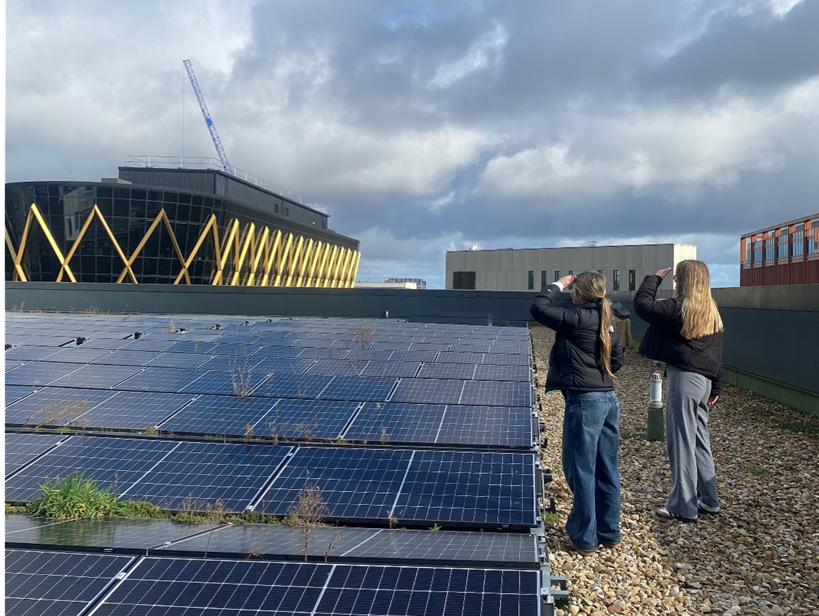
CE: I really enjoy how much variety the role has, we have worked on projects relating to energy, water, waste, and biodiversity, so no two days are the same! I also have particularly enjoyed developing promotional materials for the teams’ events and initiatives, from posters, to videos, and web editing. This is not something I had much experience in before, so it has been a challenge to get a bit more creative. I have also really enjoyed learning about the renewable energy projects on campus and going up on the roofs to see the solar panels was a highlight.

CL: One of my favourite aspects of the job so far has been learning about the energy management side of the University. It has been fascinating to get an overview of how the building management system works, seeing how each building has its own complex network of heating and ventilation units. I also loved the opportunity to plan and produce the Estates and Facilities contractor induction video and the promotional videos we made for Internal Communications – the perfect excuse to use Adobe Premiere Pro and jump in front of a camera!

Have you been able to hone any new skills this year? And do you feel like this role has introduced you to the sustainability sector?

CE: Absolutely! I feel like I have learnt a lot since joining the team. We have received specialist training in a variety of skills, one example being web page editing which we have used to re-design the University’s Travel pages, making them more accessible and engaging. We have also received training in energy management and BMS, skills we utilise to complete the monthly recharges and room heating extensions. Additionally, I believe working in the team has improved my overall confidence and my ability to collaborate with others, which has been useful in advertising content across the university.

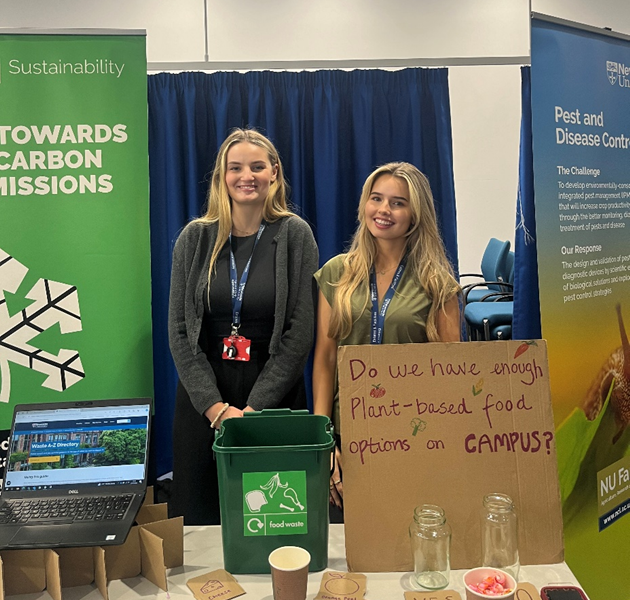
CL: One of the main skills Charlotte and I have homed in on is networking with the University community. We are constantly interacting with students at career fairs, like Planet Connect, getting an insight on their interesting research projects and opinions on sustainability topics. We’ve also worked with an array of colleague teams including Capital, Staff Wellbeing, Internal Communications, Central Social Media, ResLife, Catering and the Student Union. It’s great to see so many colleagues are keen on promoting our work, and collaborating, e.g. the Staff Wellbeing Team giving us our own Sustainability spotlight on the monthly newsletter.

How have you found working for the University, and in Estates and Facilities especially?

CE: Everyone in the office is so friendly, and the open plan office means we can chat and get to know colleagues across Estates and Facilities. The sustainability team are very welcoming and It’s great to work with like-minded people who are passionate about sustainability.

CL: Working in Estates has been a great environment, especially for my first office job ever. The rotating seating plan has been a great way to chat to different people and learn some Geordie slang. Everyone is so friendly and is quick to give me restaurant recommendations, and weekend plan ideas. Estates were also very supportive of our bake sale to raise money for the National Hedgehog Preservation Society. Many people brought delicious bakes and helped us raise over £200 for the cause!

What are you looking forward to doing in the role in the upcoming few months?

CE: I’m excited about the opportunity to shadow different colleagues during the auditing season in April. It will be a great chance to learn more about the internal audit process and develop new skills. I’m also looking forward to creating content around green spaces on campus and across Newcastle, especially with the weather getting nicer and the sun starting to come out more!

CL: I’m really looking forward to the month of May, with events like National Hedgehog Awareness Week and World Bee Day. Seeing campus flourish with wildflowers and wildlife will be great for promoting biodiversity initiatives. We’re planning on making some exciting nature video content so watch this space!

What do you hope the future holds for you both?

CE: I would love to stay in the sustainability and environmental sector, as I’ve really enjoyed working with people who are just as passionate as me. In my spare time, I’m working with some academics within the University on publishing my thesis research on carbon capture, so hopefully that project will be finished this year!

CL: Well, I have to go finish University first of course! I’m currently planning my dissertation for final year, looking at redesigning sportswear to fit a circular economy model. I’ve always been interested in garment construction, having been sewing since the age of four. Although it may sound niche, I would love to pursue a career in sustainable textile manufacturing and am looking at the possibility of doing a Masters in London around this.

Thank you to everyone in the Sustainability Team who have made these last six months so enjoyable and educational for us both! We’re excited for what’s still to come and can’t wait to continue working with the team as we help drive sustainability initiatives forward. Thanks for following along, and we look forward to sharing more with you soon! If you have any questions about the work we do, email us at sustainable-campus@ncl.ac.uk.

Thanks for reading!
Simpler Recycling: What It Means for You and the Future of Waste Management

Simpler Recycling is a new policy introduced in 2023 by the Department for Environment, Food and Rural Affairs (DEFRA). It aims to “make bin day easier” by standardising and reducing the number of recycling containers used across the UK. With new legislation coming into effect on 31st March 2025, here is your guide to understanding what it means for you… 

What is Simpler Recycling?

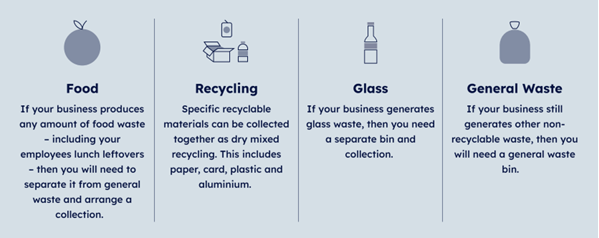
Under the new requirement, households and workplaces across England will only use four containers for waste: 

  • General waste (non-recyclable materials) 
  • Food waste (collected separately or mixed with garden waste where appropriate) 
  • All other dry recyclable materials (including plastic, metal, and paper) 
  • Glass 

This move is designed to simplify waste collection and increase recycling efficiency. 

Source: Biffa, 2024. 

Who is affected?

The policy will apply to businesses, households, and relevant non-domestic premises (such as universities). Councils and waste collectors will still have flexibility to adjust to local needs. 

Additionally, Simpler Recycling will eliminate the “’postcode lottery” of recycling collection in England, where different councils have historically collected different materials. This change is expected to boost recycling rates, which have flatlined at around 44% – 45% since 2015 (Gov UK, 2024). 

What are the benefits?

  • Saves valuable resources from going to waste and supports the circular economy. 
  • Increases recycling rates, helping England move beyond its recycling plateau. 
  • Simplifies waste collection, making recycling easier for households and businesses. 
  • Standardises recycling practices across the nation, making people recycle correctly no matter where they are in England. 

Simpler Recycling Timeline 

  • 31st March 2025: Businesses with >10 employees and non-domestic premises (such as Newcastle University) in England must arrange for the collection of core recyclable waste streams (glass, metal, plastic, paper, card, and food waste, except for garden waste). 
  • 31st March 2026: Local authorities must collect core recyclable waste streams from all households in England, including weekly food waste collections for most homes. 
  • 31st March 2027: Micro-businesses (fewer than 10 full-time employees) must arrange for the recycling of core waste streams. 
  • 31st March 2027: Introduction of kerbside plastic film collections for households, businesses, and non-domestic premises. 

Source: GOV UK, 2024.

Simpler Recycling is a significant step toward a more efficient and consistent waste management system across England. We hope that the initiative will reduce waste, conserve resources and support a more sustainable future!  

If you would like more information on the Simpler Recycling legislation, click here. If you want to know what Newcastle University is doing to manage waste, check out our Waste and Recycling page. Finally, if you do not have access to the main four waste streams on campus, reach out to us at sustainable-campus@newcastle.ac.uk 

Reference list: 

Disposing of Disposable Vapes: Environmental Impact and Responsible Solutions

A disposable vape is a pre-filled, electronic cigarette designed for one-time use. They have become a convenient alternative to cigarettes in recent years due to their affordability and availability. It is now predicted that over 360 million disposable vapes are thrown away in the UK every year, but only 17% of users recycle them in the correct recycling bins (Material Focus, 2023). This blog will explore the environmental dangers posed by these devices, while providing guidance on how to correctly dispose of them. 

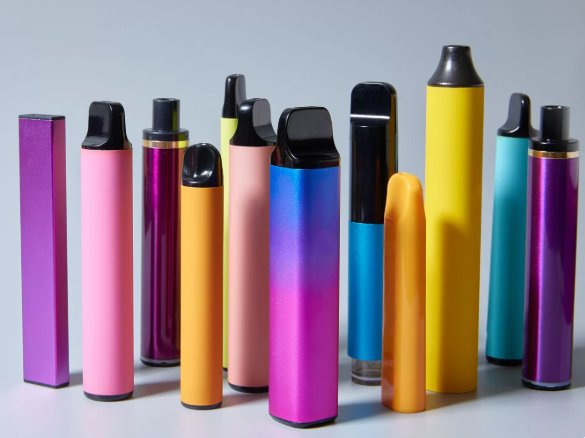
Image: Disposable vapes are often encased in colourful plastics, contributing to their detrimental impact on the environment (Source: Waste Managed, 2024). 

Why are disposable vapes an environmental problem? 

From the 1st of June 2025, the sale of disposable vapes will be banned in the UK to protect children’s health as they have become increasingly popular among young people. But why are these devices so bad for the environment? Let’s explore the key reasons…  

  1. They’re made of plastic 

Disposable vapes contribute significantly to the growing problem of plastic waste. Vapes left on the street are likely to break down into microplastics that flow into drains and pollute water systems (Truth Initiative, 2021). They’re also very difficult to recycle as they are made of many different parts including batteries and circuit boards, as well as plastic – components that must be separated. Moreover, plastic takes hundreds of years to breakdown, meaning that your vape will most likely outlive you! 

  1. They contain harmful chemicals 

Vapes are made of plastic casing, lithium batteries, copper wire and other components. Separating these materials during the recycling process is both labour-intensive and expensive. Additionally, the toxic compounds in vapes, are also prone to leach into soil and water systems, contaminating animal habitats.   

Both lithium and copper are finite resources. They are necessary for infrastructure, electric vehicle batteries and charging stations (Sky News, 2024). Using these elements in vape production wastes valuable materials that are essential for advancing green technologies. 

  1. They can cause battery-related fires 

When vapes are crushed, their lithium can overheat and ignite fires. The London Fire Brigade has responded to more than 200 fires caused by lithium batteries in the last two years (BBC News, 2024). If disposable vapes are disposed of in the general waste bin, they are more prone to being crushed and compressed, and therefore more likely to cause fires on waste vehicles and in waste facilities, potentially endangering waste workers and causing unnecessary damage. 

How to dispose of vapes responsibly? 

Up to 80% of a disposable vape can be recycled, and there are two main ways you can dispose of your vapes responsibly: organising a collection, or taking your vape to an electronics recycling station. 

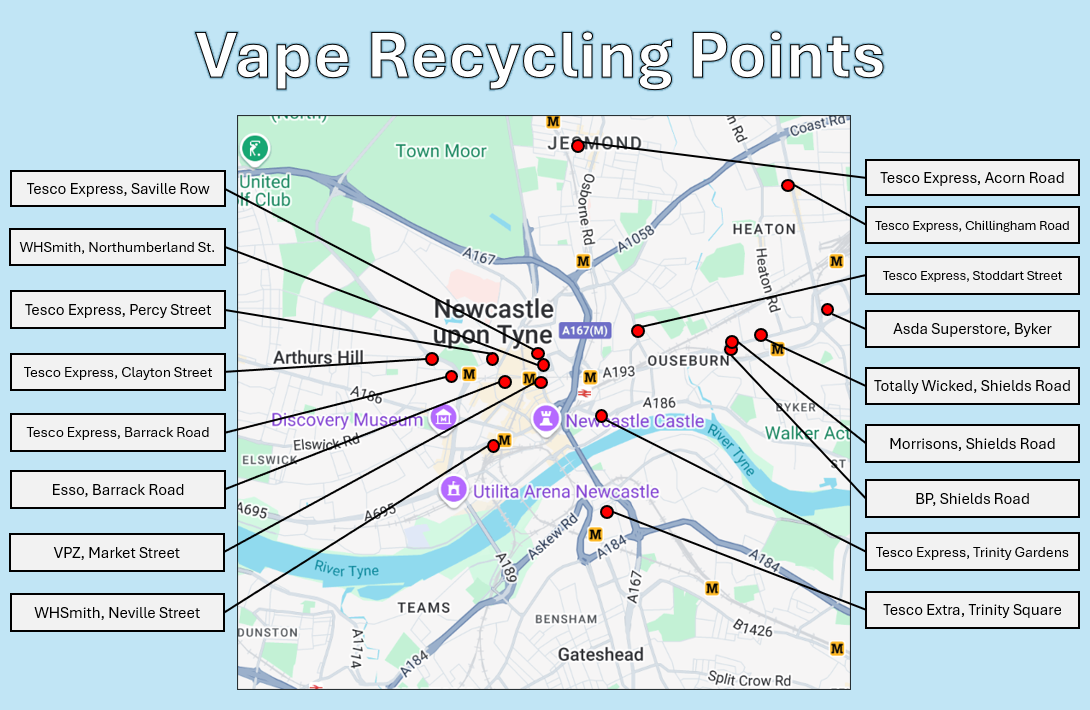
See below for some key recycling points in Newcastle. As shown, most Tesco Express stores have electronic recycling points. Many points are also near the University campus, making it extra convenient for disposal! 

Image: Some key locations around Newcastle that contain bins for electronic devices, e.g. vapes.  

A second option for disposal is arranging a Waste Electrical & Electronic Equipment (WEEE) collection to your house. These are free for all Newcastle City Council residents who have their own front door access on the ground floor. Simply book a day online, and leave your vape(s) on your doorstep inside a plastic bag the night before. Your items will be collected and disposed of safely. 

Final thoughts

In conclusion, while purchasing a disposable vape may seem convenient, its disposal is far from simple. As their banning date becomes imminent, it is essential to ensure that any remaining devices are disposed of responsibly. An item that may only last you a week, could be harming the planet for decades!  

For more information on recycling items on campus, check out our Waste A-Z. If you would like to search for your nearest electronic recycling point, use the handy Recycle Your Electricals search engine. To book a WEEE collection, visit the Newcastle City Council booking page. 

Reference List:

BBC News. (2024). The environmental impact of disposable vapes. https://www.bbc.co.uk/news/articles/cy943vpr7vgo 

Material Focus. (2023.). Disposable single-use vapes thrown away have quadrupled to 5 million per week. https://www.materialfocus.org.uk/press-releases/disposable-single-use-vapes-thrown-away-have-quadrupled-to-5-million-per-week/#:~:text=Material%20Focus%20has%20found%20that%20UK%20adults%20report,could%20instead%20be%20powering%20nearly%205%2C000%20electric%20vehicles  

Sky News. (2023). Why are disposable vapes bad for the environment? https://news.sky.com/story/why-are-disposable-vapes-bad-for-the-environment-13059299 

Truth Initiative. (2021). The toxic plastic problem: E-cigarette waste and the environment. https://truthinitiative.org/research-resources/harmful-effects-tobacco/toxic-plastic-problem-e-cigarette-waste-and-environment 

Waste Managed. (2024). How to dispose of vapes: Are they recyclable? https://www.wastemanaged.co.uk/our-news/recycling/how-to-dispose-of-vapes-are-they-recyclable/ 

Food Waste Bins Are Coming to Your Kitchen!

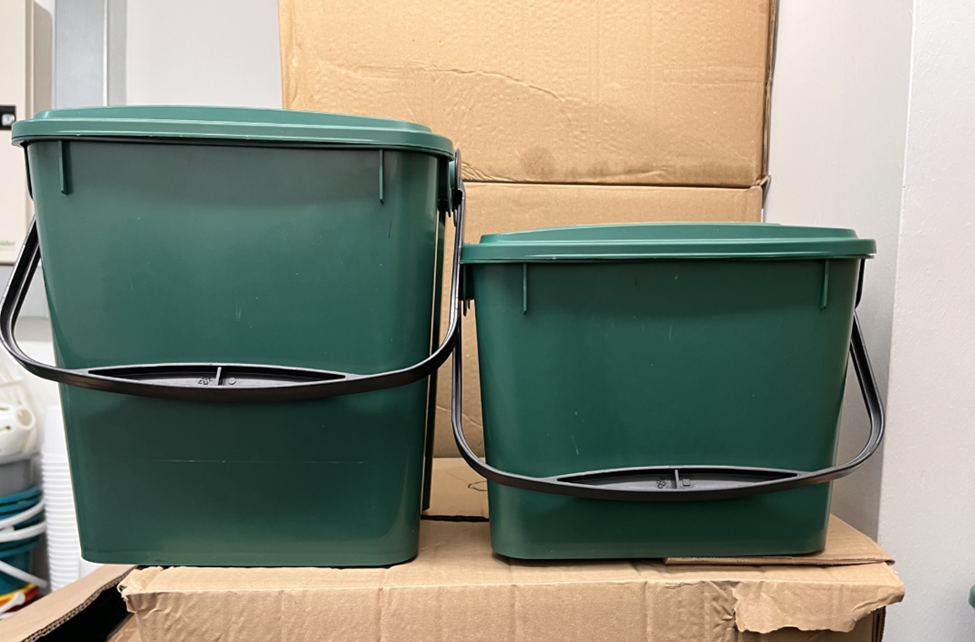
Food waste is a major driver of climate change, contributing to 8% of the UK’s total greenhouse gas emissions. Starting this January, Newcastle University will be introducing food waste bins in every university-owned accommodation kitchen. Look out for a small green caddy in your kitchen, along with a roll of bin bags to get you started. Here’s everything you need to know…

Image: The new food waste caddies. The left bin has a capacity of 7.5 litres, while the right bin holds 5 litres.

What Can Go in the Food Waste Caddy?

You can put almost any type of food waste into the bin, whether it’s cooked or raw. Here are some examples:

  • Grains, pulses, and vegetables
  • Meats, pastries, and eggs
  • Bones and small teabags

What Should Stay Out?

There are a few items that should never go in the caddy:

  • Packaging of any kind (even if it’s food-stained or says its biodegradable)
  • Tinfoil or glass
  • Liquids (these can make a mess!)

Using the Bin Liners

We’ll provide you with bin liners for your food caddy, which are removed during processing. If you run out of liners, please ask at your reception for a refill.

Taking Out Your Food Waste

When your caddy is full, follow these steps:

  1. Tie the bag tightly to prevent spills.
  2. Head to your accommodation’s rubbish site.
  3. Look for the red wheelie bin marked “FOOD WASTE” near the recycling stations and place your bag inside

Where Does Your Food Waste Go?

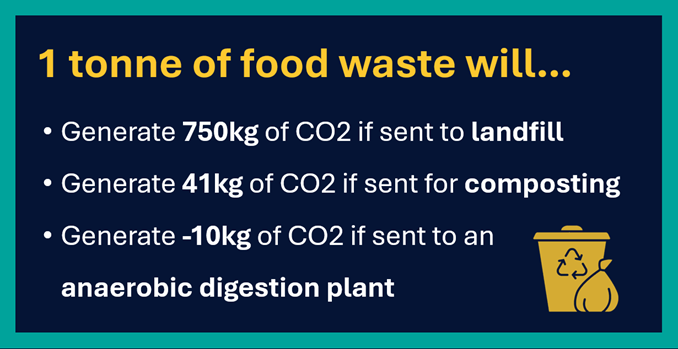
Once collected, your food waste is transported by our waste contractor, Biffa, to GAP Organics in Gateshead. There, it’s transformed through an anaerobic digestion (AD) process into fertiliser and green energy, contributing to a more sustainable planet.

Image: The different CO2 impacts of food waste disposal via landfill, composting and anaerobic digestion. Source: Biffa.

This is the life cycle of your food waste! Keep an eye out for your new green caddies and remember to follow the guidelines. Let’s work together to reduce waste and make a positive environmental impact.

If you have any questions about the caddies, or waste, check out our Waste A-Z or contact us at sustainable-campus@newcastle.ac.uk.

Happy New Year!

Reuse, Refill, Recycle

Could you buy nothing new for just one month?

Nothing New November is a UK wide challenge that calls the public to fight overconsumption and impulse purchases by buying nothing new for one month (excluding essentials like food etc). The aim is to waste less, make the most of the stuff we already own, and cut our carbon footprint (Keep Britain Tidy, 2024).  

As part of Nothing New November, we have been thinking of ways to shop for essentials in a more planet friendly way! So, this month I have been exploring the independent, sustainable shops in and around Newcastle. I hope this blog will encourage others to pay these amazing little shops a visit, and we can all try to be a bit more mindful about the things we buy, and the waste we create.

How to use a re-fill shop?

Using a re-fill shop can seem a bit daunting if you haven’t done it before, so I’ve put together some tips to help first time shoppers:

  1. Collect some empty containers, glass jars work well. Often the re-fill shops have some you can buy too so don’t worry if you don’t have any.
  2. Take a list of items you’d like to buy with rough measurements of how much you need, and head to the re-fill shop with your clean, empty containers.
  3. When you arrive, speak to the staff! They are always so helpful and explain the process to you. But normally they weigh your empty jars before you fill them up.
  4. Then just fill up your jars with whatever you please and the containers will be weighed again, and price totalled up at the till like any other shop.
  5. Enjoy all your plastic free goodies!

Re-fill shops around Newcastle

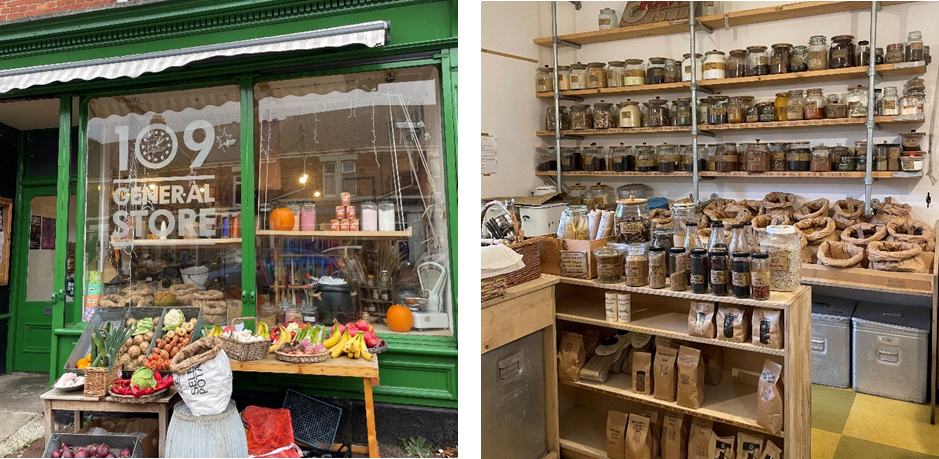
  1. 109 General Store, Heaton
Image: 109 General Store

109 General Store is a family run low-waste general store located on Heaton Park Road. They have a variety of green cleaning products, sweet treats, fruit, veg, local eggs and fresh bread from Northern Rye. The in-store staff are friendly and are happy to help customers, or you can order food online for click and collect. I often do my weekly shop here then pop next door to their sister shop Heaton Perk for a coffee, Newcastle’s only coffee shop exclusively using glass bottled dairy milk.

2. Ernie, Stepney Road, Ouseburn

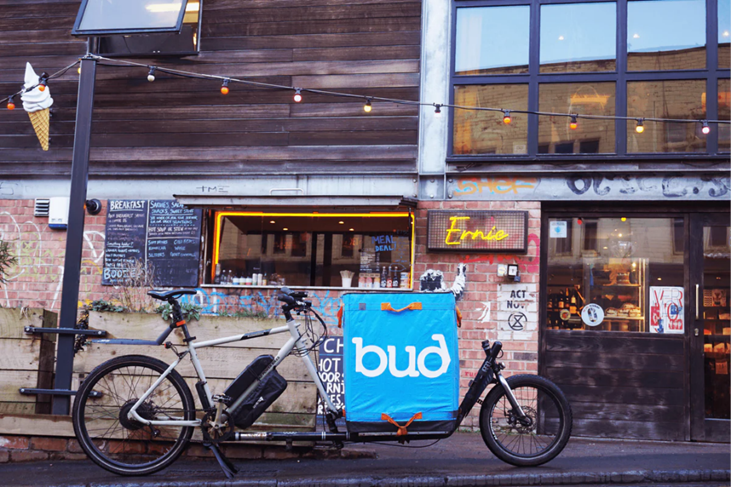
Ernie is a small deli shop located in Ouseburn which sells organic veg, household refills, and unique local cooking items and gifts from sustainable and small businesses. You can order locally sourced fresh produce to your door using Ernie’s fresh delivery service, delivered on Fridays by bicycle!

‘Real people, real food, less is more, buy less, buy better – making a difference is always within reach.’

(Ernie Ouseburn, 2024)
Image: Ernie, taken from Ernie.com

3. Buy the Kilo, Tynemouth

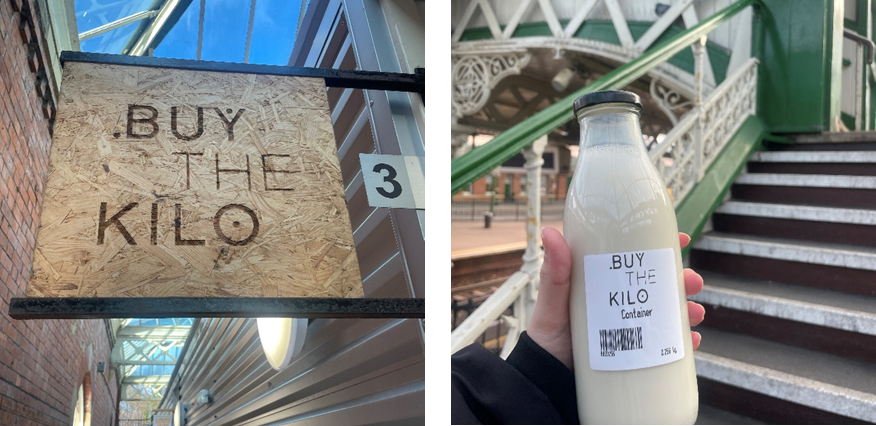
Buy the kilo is another family-run refill shop located on platform one of Tynemouth metro station. After a walk on the beach, I stopped off to check out this shop and pick up some oat milk. The shop is hidden down a little alley of independent businesses in shipping containers, which if you’re not looking for you probably would never notice! It was my first time visiting the shop, and the ladies working in the shop were more than happy to help and walked me through exactly how to work the weighing system. The shop also exhibits artists’ work that highlights issues about the environment, making it a must visit if you’re in Tynemouth!

Image: Buy the Kilo

Thank you for reading this blog, I hope you enjoyed it! A big thank you to the owners of these shops for all their efforts in reducing waste. Let us know in the comments if you visit any!

The 2024 Christmas Switch Off at Newcastle University

What is the Christmas Switch Off?

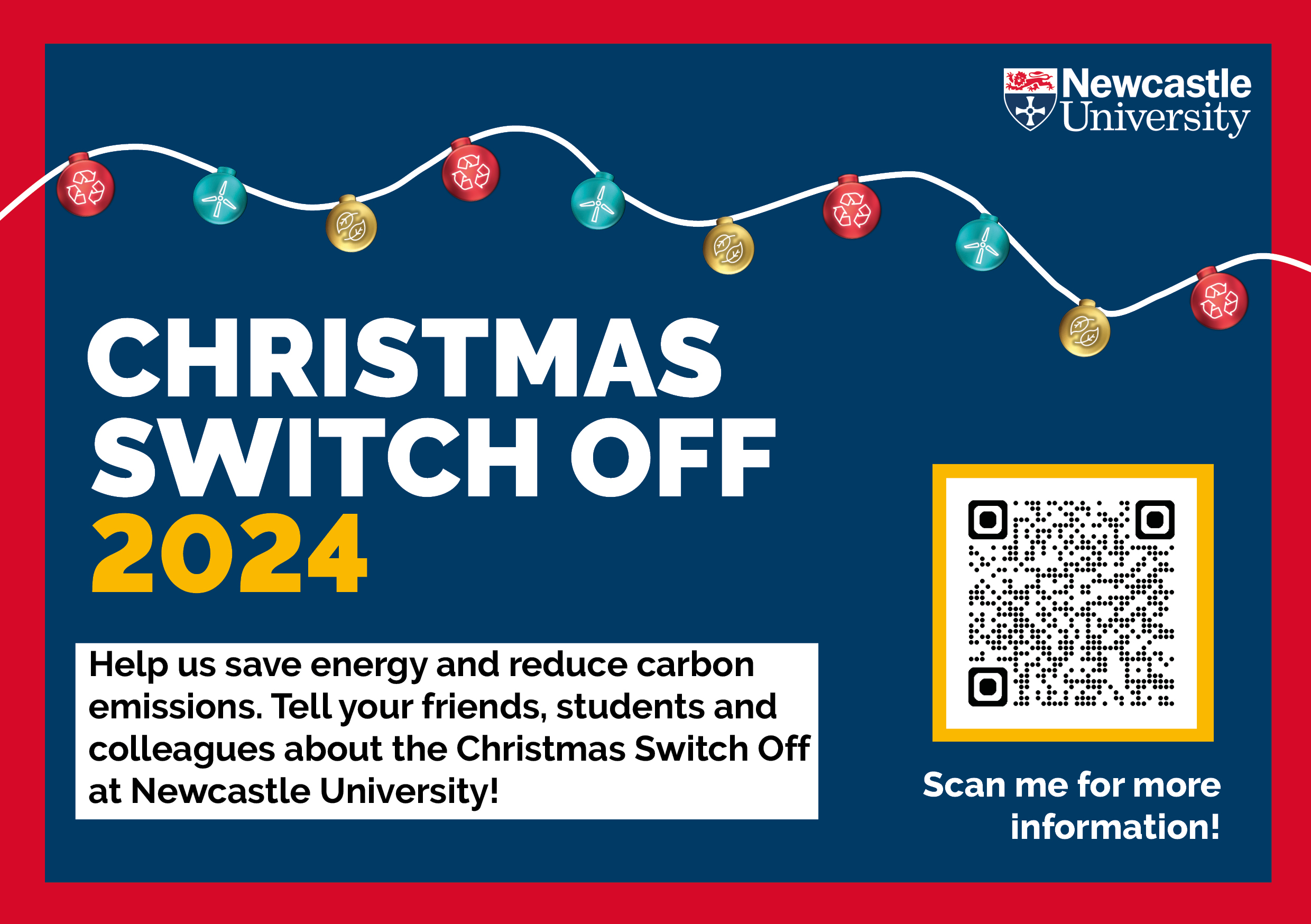
The Christmas Switch Off is a University-wide campaign where we encourage staff and students to turn off any electrical items that can be switched off instead of leaving them on standby over the Christmas break.

Why is the Christmas Switch Off important?  

By turning off everything that can be turned off, we will reduce our energy consumption across the campus. The Christmas Switch Off campaign has been run for a number of years to minimise energy wastage and contribute to our carbon reduction targets.

We also hope that promoting of the Christmas Switch Off will promote positive behaviour change more widely and remind colleagues and students to minimise their energy wastage by remembering to switch off what they can every day.

Who participates in the Switch Off?

We would like everyone at the university to participate if they are able to, that includes staff and students across labs, offices, and accommodation. The advice on what to turn off will vary for each location – guidance on what should be switched off is in this blog post. 

When switching off your work area, it can be helpful to organise a switch off team that can check each area after most people have left for the term to ensure everything that can be switched off, has been.

Here are some examples of items that could be switched in various area across campus:

  • Staff working in offices: Lighting, computers, monitors, printers and photocopiers, kettles and fridges (after they have been emptied and cleaned). Also, it is important to make sure that all windows have been properly closed. 
  • Labs and medical buildings: All the above can be applied in addition to drying cupboards, fume cupboards and fridges/freezers that will not be in use over the break (please do not turn off equipment that is in use).

Many students leave their accommodation over the Christmas break, meaning their accommodation will be empty over the holidays. If you are going away over the winter break, there are a few things that you could do before you leave:

  • Clean out and defrost your fridges and freezers the day before you leave by turning them off at the wall and popping a towel underneath to soak up the melted ice.
  • Turn off your kettles and toasters at the wall.
  • If there is a wall switch for your oven this is also a good thing to turn off easily, as well as lights and plug sockets.

For more switch off information, visit the Sustainable Campus website: https://bit.ly/3OP5yLN

If you have any questions or ideas about the Christmas Switch Off, please email the Sustainability Team at sustainable-campus@ncl.ac.uk

Thank you for reading!
Nature Positive Student Ambassador Programme

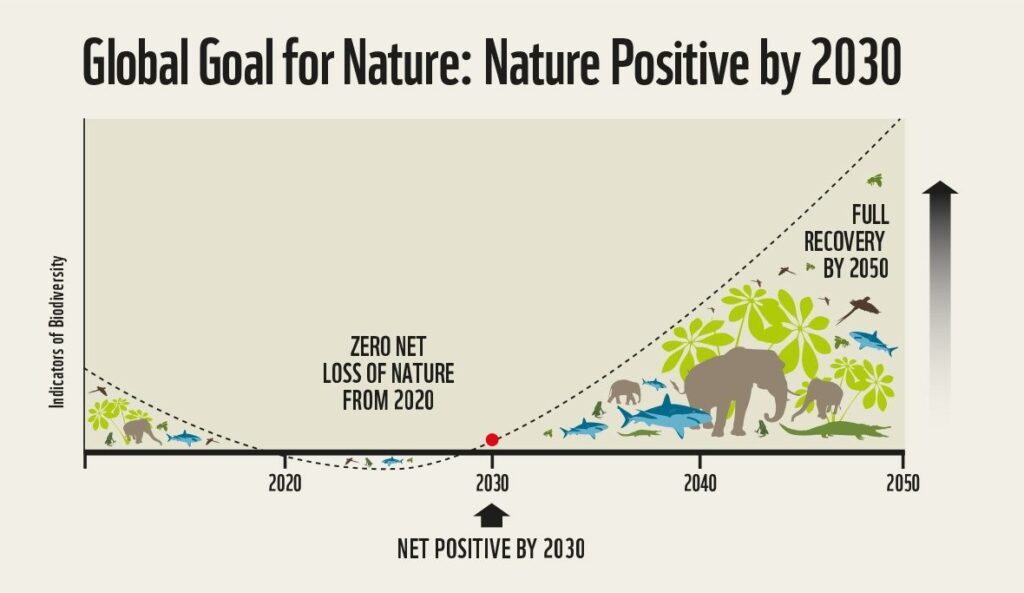
Nature Positive is a term that refers to the reversing of nature loss and encourages ecosystem recovery. The Nature Positive Universities network is comprised of over 500 higher educational institutions worldwide who have all committed to protecting biodiversity by signing the Nature Positive Pledge. The network was jointly founded by the University of Oxford and the UN Environment Programme in December 2022. If you’re interested in finding out more about Nature Positive and how as a student you can get involved, keep reading! 

Image: The aim of the Nature Positive Universities group; reversing the biodiversity loss curve. Credit: Nature Positive Universities. 

What is the student ambassador programme? 

If you are a student and interested in the Nature Positive ethos, check out the Student Ambassador Programme. Every year, Nature Positive Universities welcome students to apply for this program, giving them the opportunity to play a part in #GenerationRestoration while collaborating with students from other universities on a global scale.  

The programme is an exciting blend of practical and collaborative activities, with no two days being the same! 

Some benefits you will gain upon joining the programme: 

  • Experience volunteering with mentors at University of Oxford 
  • A chance to make a difference on our campus 
  • Networking with a global community of environmental activists 
  • Resources and training to help you organise events and activities 
  • A certificate documenting your role 
  • A chance to exercise your personal skills such as social media, communications, design, organising events, translation and biological identification and survey techniques 

Image: Nature Positive student ambassadors volunteering in a field. Credit: Nature Positive Universities. 

How can I apply? 

Applying for the programme only takes 10 minutes and could seriously boost your CV, if you are interested in working within the environmental or urban planning sector.   

Sign-ups for the 2024/2025 Nature Positive Student Ambassador Programme are currently open and the deadline to apply is the 10th November 2024.  

Link to apply: https://www.naturepositiveuniversities.net/become-an-ambassador/

To find out more on what the sustainable campus team are doing to fulfil the Nature Positive Pledge, check out our blog post on Biodiversity Net Gain, or visit the Biodiversity page on our website! 

Sustainable Drainage Systems: The Future of Flood and Water Management

Sustainable Drainage Systems (SuDS) are key to building sustainable cities and countering the influence of urbanisation. These eco-friendly solutions maintain habitats, support natural cycles, and protect human communities. Since 2023, it is now a legal requirement for all new major developments to include SuDS in their planning.

Newcastle University has great research infrastructure in this area, including the UKCRIC National Green Infrastructure Facility (“the living laboratory”) and the Newcastle Urban Observatory. This blog will explore how SuDS work and their importance, using a current student’s project as a steering guide. Enjoy!

What are SuDS and why are they important?

The main purpose of SuDS is to mimic the natural processes that urbanisation has impeded, i.e. the infiltration of water into the ground. Smaller projects use methods like installing green roofs or rain gardens while large-scale projects use basins and swales (flood ditches).

Check out this helpful video for an in-depth explanation of SuDS, linking their function to the University’s Green Infrastructure Facility:

So, what are the actual benefits of SuDS over traditional drain systems? SuDS are known to:

  • Decrease risk from flooding
  • Reduce flood damage costs
  • Improve water quality
  • Act as a carbon store
  • Support biodiverse habitats and animals

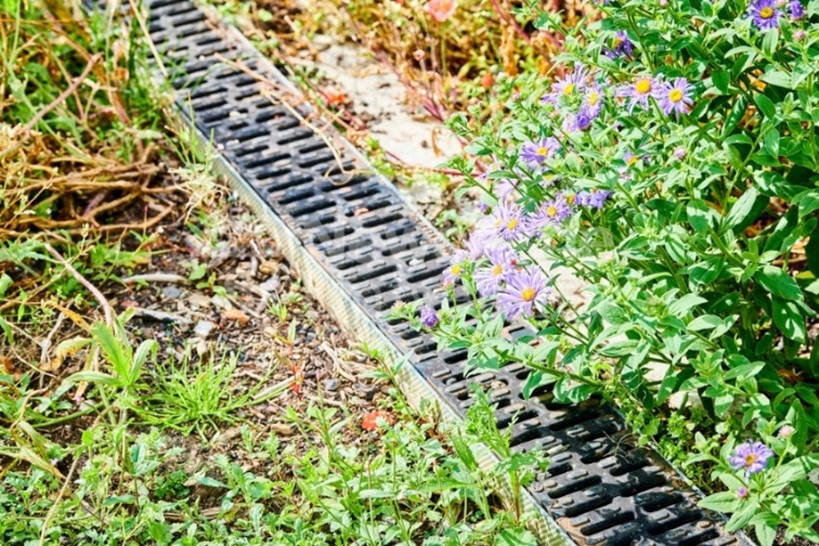
Image: Snapshot of a hidden drainage grate among greenery and purple flowers. Demonstrates the contrast between manmade installations and natural stores. Credit: John Donoghue.

“Domestic SuDS Planter: Design, Construction and Evaluation”

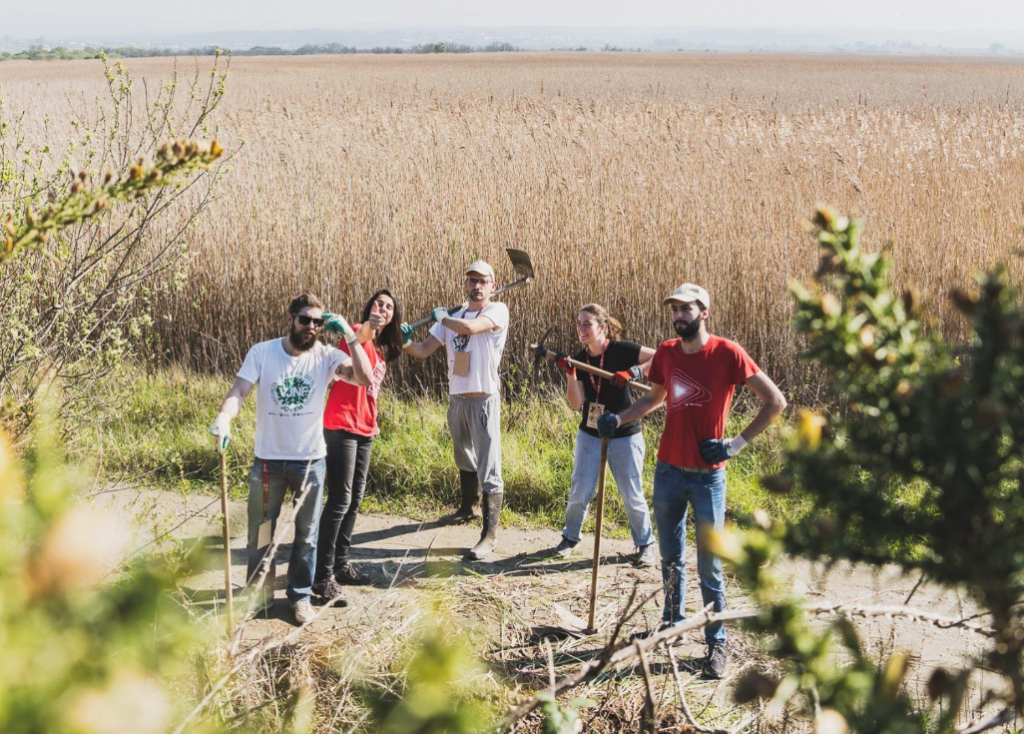
During her study, Madeleine Tate found herself drawn to water and flood management, which inspired her MEng dissertation project. Madeleine chose to install and test a sustainable planter box at Kensington Terrace accommodation. The research aim was to combat the issue of increased storm water affecting the residential sector. Kensington Terrace proved to be a perfect location:

“Everyday I go into university I walk past and check on it. It’s quite easy to collect data from.”

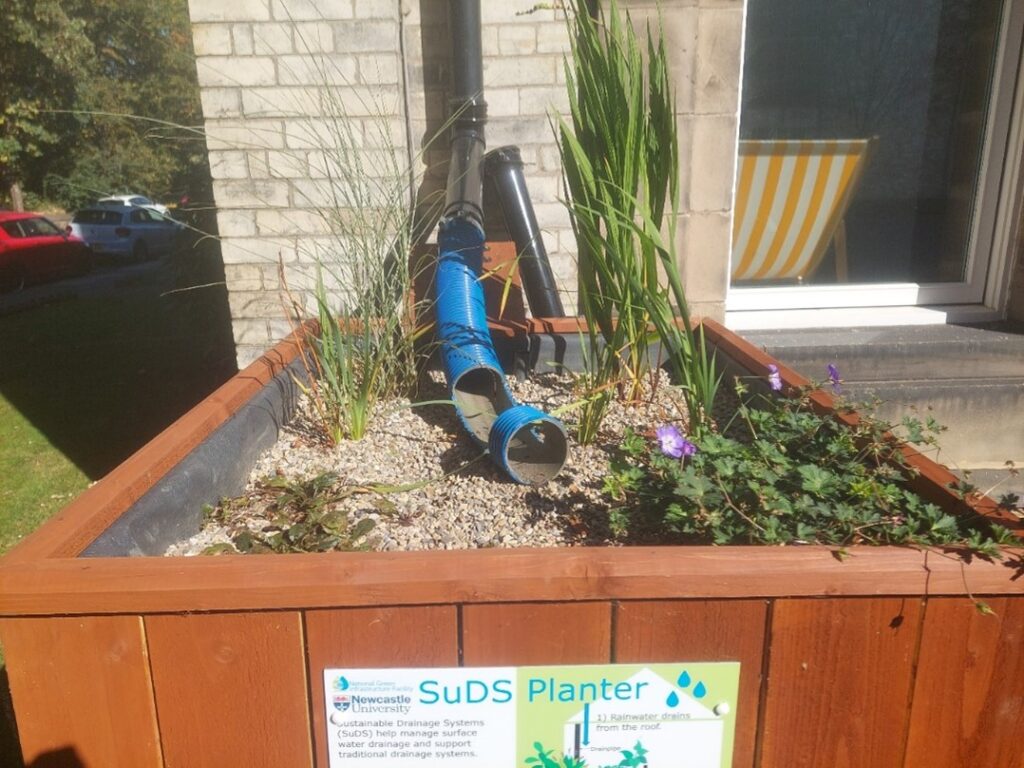
Image: Close up photograph of the SuDS planter, showing the pipe diversion, the overlaying gravel, and the blooming plants. Credit: Madeleine Tate.

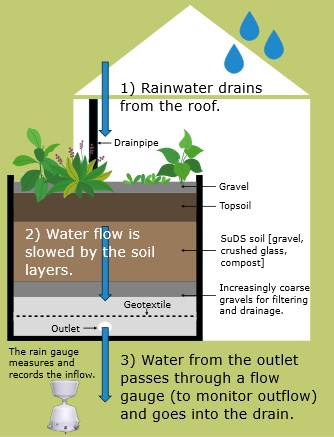
Madeleine’s planter collects rainwater from the roof and interrupts its flow by slowing it down. The water flow is filtered a variety of soil layers within the planter (see image below for a layer breakdown). After the water has moved through the layers, it passes through a geotextile, finally exiting the planter via an outlet. This outlet deposits water back into the drain system. Thus, the mechanism slows down the journey from roof to drain, giving the traditional system more time to cope. Crucially, this reduces flood and Combined Sewer Overflow risk.

Interestingly, the planter itself was made from a reused intermediate bulk container, which was cut down and repainted. How innovative!

Image: Diagram showing how the planter in Kensington Terrace works. Shows soil layers and step-by-step route of rainwater through the system. Credit: Madeleine Tate.

Project Success

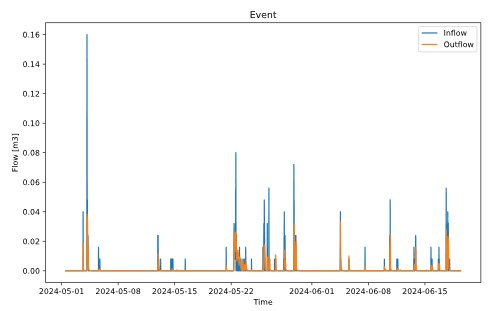
Madeleine’s planter is still in the process of collecting data but has so far proven to be a success! Here we can see a graph comparing inflow levels to outflow levels for rainfall events in May and June 2024. The orange outflow dataset is consistently lower than the blue inflow dataset, by up to 75%. This mirrors the slow pace of the flow travelling through the soil layers.

Image: A graph tracking water inflow and outflow in the planter for events from May 1st – June 19th. Credit: Madeleine Tate.

The Future of Planters and SuDS

Due to its success, the planter installation will remain at Kensington Terrace and will continue to produce meaningful data. Madeleine is now in the process of starting her PhD, looking at how these planters can be scaled up. She is collaborating with Newcastle City Council to project datasets, visualising a city where these planters are installed in all houses and drainpipes. In what Madeleine deems the “snowballing effect,” this initial planter innovation will open the door for more similar schemes:

“The future should bring more research; more use and more awareness”

As the threat of climate change becomes more imminent, SuDS and modelling wide-scale integration will prove to be an important tool for risk prevention. If no action is taken, water systems are bound to collapse due to heavier rainfall.

I would like to thank Madeleine Tate for her extensive help and her informative graphics. She ensured that my first post on the sustainability blog was both inspiring and educational! For more information about the UKCRIC National Green Infrastructure Facility, click here. If you are interested in learning what Sustainable Campus are doing for water management, click here.

Thank you for reading!
Bees on Campus

Bees provide a range of important services that help maintain the health and vibrancy of our natural environment in both rural and urban settings. In our beautiful city-centre campus, for instance, urban bees assist our Grounds Team in caring for greenery from the wildflower meadows in Claremont Court to the tulip beds outside King’s Gate. To learn more about these fascinating creatures and their role in creating our sustainable campus, I had a chat with the lovely people at Newcastle University’s Bee Society.

Image: Members of the University community walk through the greenery of the Old Quad. Credit: Chris Bishop
How many beehives does the Society have and how long has the University had bees?

“At present there are 2 beehives, although the number fluctuates between 2-4 depending on how the years go – our hives are called Mary and Delilah! We’ve had bees since the mid-2010s.” 

I see! Do you know if there are any other urban beehives in or around the University?  

“While I haven’t interacted with them, I’m aware that other university staff have beehives for the sake of research. Newcastle is also home to a chapter of the BBKA (British Beekeeping Association) so it’s safe to assume that there are a few beekeepers knocking around locally.” 

So, what sort of thing does the society do to care for the bees?  

“The nature of beekeeping changes depending on the season – understanding the calendar and how to respond to it is vital to successful care. In the summer we check on the hives once a week (weather permitting), as the time between April-July is prime for swarms. In early spring and the autumn, we check on them far less frequently, once a fortnight or so. In the winter we don’t go in the hives at all. 

How long our checks take is also dependent on the time of year. In the summer it often runs up into the 2-hour mark! We use an acronym to remember what needs to be looked for: D.E.F.R.A, which stands for Disease, Eggs, Food, Room, and Anything Else. The presence of food and eggs are often my main concern, and after a certain point the observations become second nature. 

We always wear suits and gloves for the sake of our members. Stings do occur from time to time, but to a significant extent the victims are members of committee who have to engage with the bees when they are at their most defensive. While this is scary at first it is something you get used to over time; I have been known to scold the hives when they’re acting up!” 

And do the honey and wax get used for anything?  

“When there is surplus honey, we collect it. Last year we involved our members in the processing of the comb and this went down very well, but it isn’t a priority for us. Excess wax has been used by a few of the University’s fine art undergraduates in the production of candles.” 

That’s super interesting! How can people get involved?  

“The primary way that people can get involved is to join the society! While the hives are now being left alone for the winter, we have talks running throughout the colder months and are always happy to share our knowledge and experience.” 

Image: a bed of tulips on campus. Credit: John Donoghue
How do the bees help with local biodiversity?  

“Bees are vital to the healthy functioning of plant life and our bees can often be seen collecting pollen and nectar from the flowers on campus. They roam quite widely – up to a distance of around 5 miles – but with so many options on show in our green spaces I imagine that they don’t have to go far for food. Most of the time they’ll travel less than a mile – pollinating a variety of species in and around campus.” 

What sort of role can urban bee keeping play in a sustainable future?  

“Urban beekeeping has a place alongside the protection of other bee species, but I believe that the awareness it brings is one of the most valuable things it has to offer. The honeybee is not in any danger at the moment, but our native bee populations of bumblebees and solitary bees are in serious decline, and no one pollinator can fill the role of all these individual species. By encouraging informed beekeeping practices and the support of wildflowers/bee-friendly spaces, urban beekeepers can provide both the efficient pollination efforts of their bees and the knowledge and care that we desperately need to protect our pollinators on a wider scale.” 

So, there you have it! A huge thank you to our wonderful Bee Society, please go check out the amazing work that they do and next time you’re enjoying our beautiful urban green spaces – spare a thought for the hardworking creatures who keep them looking lush!