Category Archives: All Blogs

Your Guide to iNaturalist: Celebrating the Launch of Our Newcastle University Project

As of June 2025, Newcastle University has officially defined the City Campus geoboundary on iNaturalist. This means that any wildlife observations recorded within this area will automatically be grouped under the Newcastle University City Campus project. It’s an important step in helping us better understand the biodiversity across our campus.  

Here’s a quick guide to what iNaturalist is, how to get involved, and why these observations matter. 

What is iNaturalist? 

iNaturalist is a platform used to record and share sightings of wildlife, from foxes and birds to flowers and fungi. Whether you’re an experienced naturalist or just someone who noticed an interesting insect in your garden, the app makes it easy to upload a photo, identify what you saw, and contribute to a growing global biodiversity database.  

At Newcastle University, we’re encouraging colleagues, students and visitors to use the iNaturalist Classic app (or the website) to help us document the organisms on our campus. Over time, this data will give us a better sense of which species are thriving and which may need protection.  
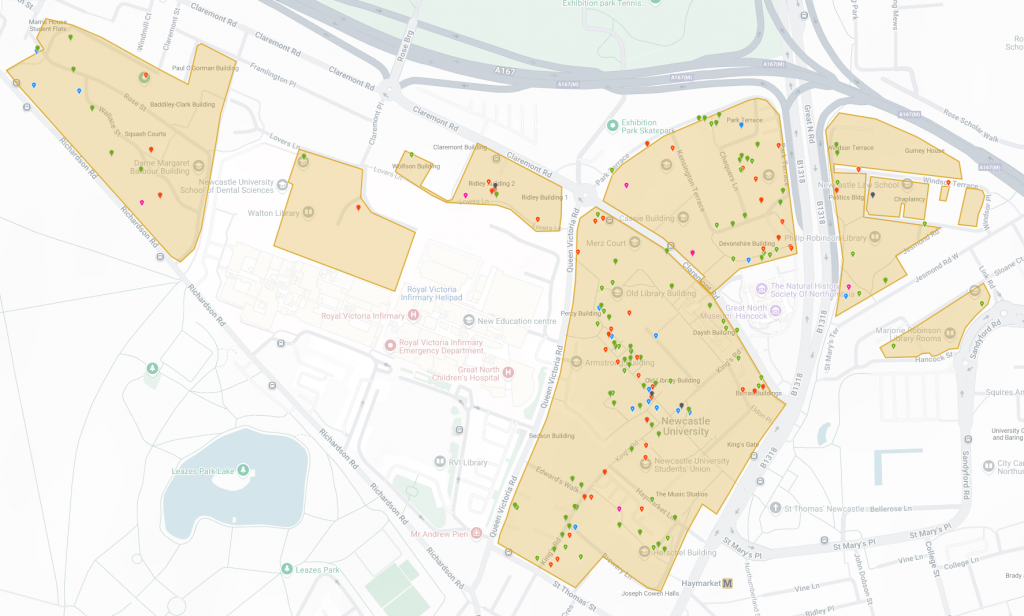
Image: A map of campus observations so far. Blue pins are bird, red pins are insects, green pins are plants, and pink pins are fungi (Source: iNaturalist 2025).

Making an observation  

An observation records an encounter with an organism in a particular time and location. Observations can be uploaded via the mobile app or the webpage. 

Making an Observation with the App  Making an Observation with the Website 
1. Open the iNaturalist Classic app and tap “Observe.” 
2. Add one or more photos or sounds as evidence. 
3. Choose what you saw – either from suggested species or by searching. If you are unsure, you can keep the label as simple as “plant” or “insect.” 
4. The date and location should be added automatically. If not, check your device’s location and privacy settings. 
5. Does the plant look like it was planted by a human? If yes, mark the finding as ‘captive/cultivated’ 
6. Tap “Save”, then “Upload” to share your observation.  
7. Once uploaded, others in the iNaturalist community can help refine the identification. 
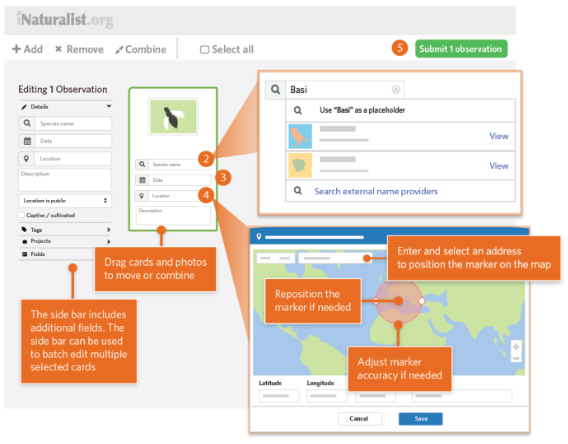
1. Log in at iNaturalist and click the green “Upload” button in the header. 
2. Drag in one or more photos or use the “Add” button to manually create observation cards. 
3. Choose what you saw from suggestions or by searching. If unsure, leave it blank or use a broad category. 
4. Use the calendar to record when the observation was made. 
5. Enter a location and adjust the map marker and accuracy circle as needed. 
6. Does the plant look like it was planted by a human? If yes, mark the finding as ‘captive/cultivated’ 
7. Once all details are added, click “Submit.”  

iNaturalist have shared a slideshow that contains helpful tips about how to make a good observation. The key principles are: 

  1. Take clear, close-up photos 
  1. Focus on wild organisms 
  1. Document the location 
  1. Add an identification 

Image: How to upload an observation on the iNaturalist website (Source: iNaturalist, 2025).

Why are observations important? 

iNaturalist helps individuals who may not otherwise have the knowledge to identify the biodiversity found around them, it also generates data for scientists and conservationists to help them protect nature.  

Newcastle University is currently establishing its biodiversity baseline, we will monitor and measure the data submitted on iNaturalist within our project, as this data set will contribute toward our understanding of biodiversity that is present on our campus. You can find out more about our biodiversity related work on the Sustainable Campus website.  

Here are some of our favourite observations of species that were found and submitted on campus over the past few weeks! 
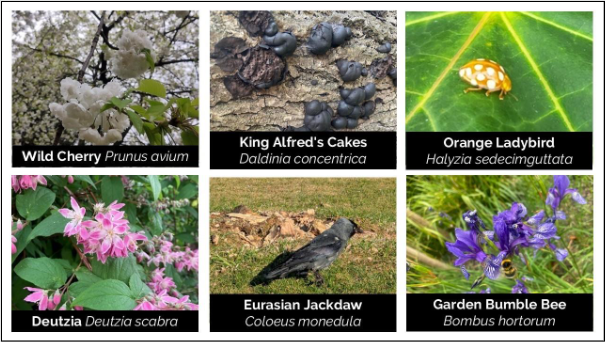
Photo credits (from top left to bottom right): rosalind24947, cer28, js94ne, psychso, nonsensical and cer28. 

If you would like to find out more about other biodiversity initiatives on campus, check out our webpage. For any queries about iNaturalist or sustainability in general, please email us at sustainable-campus@newcasle.ac.uk

Thank you for reading! 

What are compliance obligations and why do they matter?

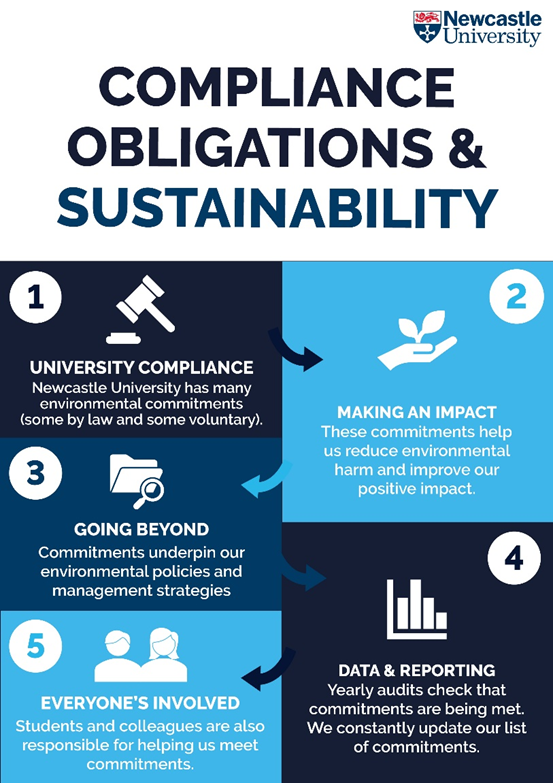
Each year, Newcastle University undergoes an external audit to ensure that our Environmental Management System (EMS) and Energy Management System (EnMS) meet the requirements of the ISO 14001 and ISO 50001 standards. These audits are rooted in our list of compliance obligations (COs). In this blog, we will explore what compliance obligations are, some examples, and how they affect the wider University community. 

What are compliance obligations? 

Compliance obligations are described by ISO as: 

“Legal requirements that an organization has to comply with and any other requirements that an organization has to or chooses to comply with” 

The University has a register of environmental and energy commitments it must adhere to, like those required by the law and others which are voluntary. We work with Barbour EHS, a consultancy that provides compliance and information services, to help us keep our obligations register up-to-date, especially when new legislation comes into place. 

During the external audit, auditors review the list of compliance obligations and assess how these requirements are being met. Failure to comply with these obligations could result in the University losing its ISO accreditation. 

What are some examples of compliance obligations? 

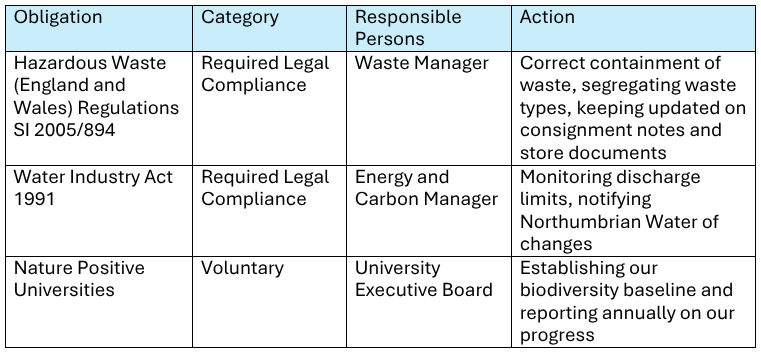
The concept may sound rather abstract, so here are some examples of obligations on our register. 

As you can see, many of the obligations link back to our key themes, looking at carbon, water, waste and biodiversity. This highlights how compliance obligations serve not just as checkboxes, but as practical drivers of environmental action across departments. 

Nature Positive Universities is just one of many voluntary obligations we’ve committed to, alongside our Net Zero targets, membership to the EAUC, participation in the People & Planet University League, the Race to Zero campaign, the SDG Accord, and the Concordat for the Environmental Sustainability of Research and Innovation Practice. 

How do we integrate compliance obligations into our work? 

Compliance obligations guide how we plan, implement, and monitor environmental and energy practices across campus. The process usually begins with changes in legislation or voluntary initiatives, which are then translated into internal actions. These updates are reviewed during both internal and external audits, helping us track progress and identify areas for improvement. 

For example, when the Simpler Recycling legislation came into play in March 2025, we responded by reviewing how waste was being managed in all areas of campus, especially student accommodation. This led to collaboration with our waste contractor, Biffa, to introduce food waste bins and expand glass recycling across key locations. These operational changes directly support compliance obligations related to waste segregation and management. Auditors can assess these during their visits and may even offer feedback in the form of an OFI (Opportunity for Improvement), which helps us refine our systems further. 

How are students and colleagues involved? 

From the table above, you can see that COs extend the scope of the Sustainability Team’s work – we work closely with colleagues across the University to meet them. Everybody at the University plays a role in meeting environmental responsibilities. From Estates designing efficient building systems and maintaining green spaces, to individuals recycling correctly and using energy efficiently in their workspaces, everyone plays a key role in our EMS and EnMS. 

COs are all over, even when you may not notice. For instance, most University buildings have an environmental noticeboard near their entrances, displaying Display Energy Certificates, required under the Energy Performance of Buildings Regulations. 

Students are also a key part of this process. Under the Waste Duty of Care Code of Practice, waste producers (including students in accommodations) are responsible for sorting their waste correctly. Additionally, by completing travel surveys, both students and colleagues are contributing to voluntary efforts aligned with the Road Traffic Reduction Act 1997 and the Transport Act 2000. 

From waste and water to biodiversity and transport, compliance obligations influence many day-to-day decisions at the University. They help ensure we’re not only meeting legislation but actively working toward a more sustainable campus.  

If you’d like to find out more about our environmental and energy management systems, read our blog, or check out our webpage. For any sustainability queries, please email us at sustainable-campus@newcastle.ac.uk 

Plastic Free July 2025!

Plastic pollution poses a worldwide challenge, with 400 million tons of plastic produced each year, and this number is predicted to triple by 2060 (UNEP, 2025). It is estimated that UK households throw away a staggering 1.7 billion pieces of plastic packaging a week (Big Plastic Count, 2024).

Plastic is a highly durable material; therefore, it rarely completely disappears once out in the environment, it will instead take many years to break down into smaller pieces or microplastic. Plastic pollution is causing harm to marine life, the climate and humans across the world.

Plastic Free July is a challenge created by the Plastic Free Foundation that aims to help people begin or continue their journey to reduce their use of single use plastic. The beginning of the journey to reduce single use plastic as an individual or family can be daunting, so here are some tips on where you can begin:

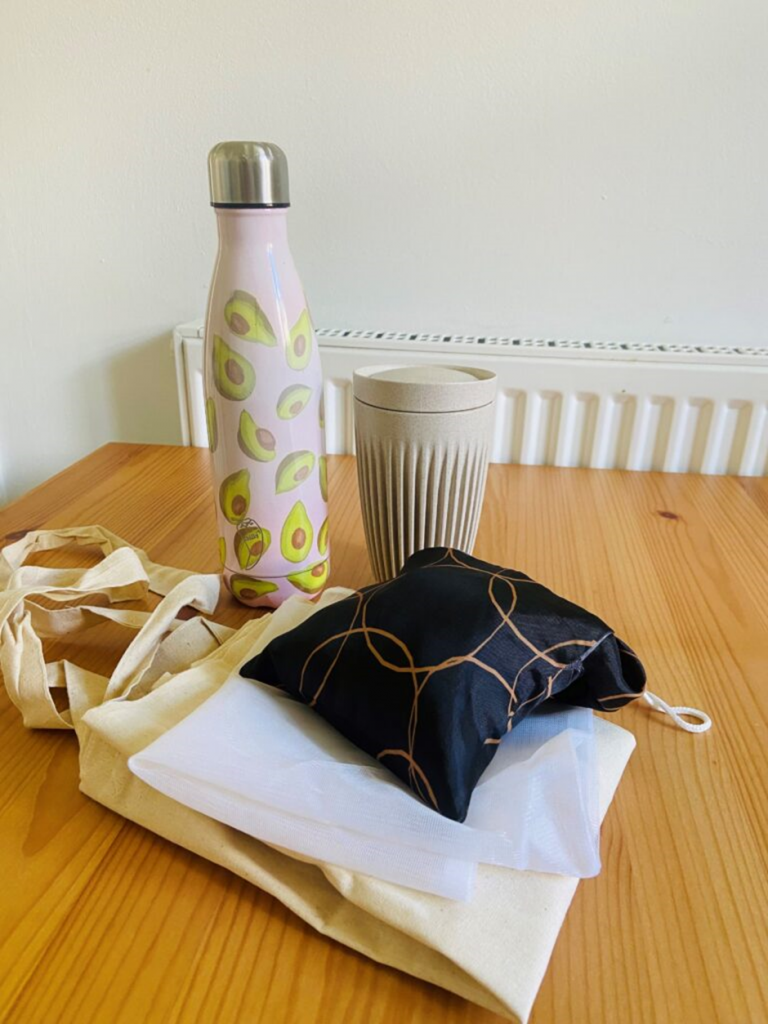
Tips on how to reduce single use plastic in your everyday life:  

  • Travel cup: By carrying a travel cup with you every day, you can remove the need for single use coffee cups when you buy coffee out and about. Some coffee cups are now designed to be collapsible, so they take up less room in your bag. 
  • Water bottle: Instead of buying water in a single use plastic bottle, you can carry a reusable water bottle with you and fill it up from a tap when you are on the go, at school or at work. 
  • A great way to reduce plastic packaging is by buying dry food products such as rice, pasta, and spices from refill shops, check out some local refill shops in our blog.
  • Invest in a re-useable cutlery set to carry for your meals on the go, some even come with a reusable straw, you could even just bring your home cutlery in your bag if you don’t want to buy a travel set! 
  • Reuse what you already own as much as you can, for example do you have plastic takeaway containers that can be used as a lunch box instead of buying a new plastic lunchbox? 
  • Do some research into what food products that you consume may contain traces of plastic, such as tea bags and chewing gum and look for alternatives such as loose tea.  

Resources to help you with your journey to plastic free: 

PINZ researchers are balancing big picture perspective and specialist research: and it’s essential to the future of net zero leadership  

PINZ (Process Industries Net Zero) is home to an innovative cohort of researchers, paving the way for Net Zero within manufacturing industries. With a project focus on an industry problem in energy, feedstocks, or data, this research community is the first of its kind, collaborating across the Universities of York and Newcastle and working alongside their respective industry partners to drive the seismic shifts in practice required to achieve Net Zero.  

I had the privilege of picking the brains of the inaugural cohort. To learn about the origins of their climate-concerned research focus, their highlights so far, and what they deem as the critical skills for future Net Zero leadership.  

When and why did you first become interested in pursuing research centred on Net Zero and sustainability? 

The origins of interest for these researchers were multi-faceted and diverse. However, some key themes bubbled to the surface of the group’s responses.  

Nearly everyone cited a form of environmental educational as the key that unlocked their curiosity. For some it was a university master’s module, for others a previous research project from work or school. For both the space and time to meditate on the poly-problems of climate change proved to be the tipping point that led them to search for solutions.  

“I realised I wanted to be more than just part of a project—I wanted to dig deeper, ask bigger questions, and help find long-term solutions. Pursuing a PhD feels like the natural next step.” – Abdul Samad 

The other sentiment that really struck a chord with me was their realism concerning the urgency and planetary impact of their research. One researcher candidly shared about their personal lived experience of climate change.  

“I was residing in Chennai, India and the city faced a severe drought that led to water rationing during an unusually intense summer. This experience got me thinking about the alarming consequences of climate change and the need for reduced emissions causing harm to the environment.” – Zuhair Ali 

Many quoted the desire to see tangible change in the face of intertwined environmental crises as the baseline motivator for their dynamism. An energy that doesn’t confine itself to the theoretical confines of academia.  

“I’ve become increasingly focused on sustainability and making more eco-conscious choices in my daily life” – Louise Amor-Seabrooke 

What’s been the highlight so far?  

Not even one year into the PhD programme, the group had no shortage of engaging experiences and pinpoint moments to share.  

Praises were sung of how the wider PINZ team had made the switch to a research-mindset, although a learning-curve, all the easier. A few specified the intensive training that kickstarted the programme as formative to their practice. These workshops laid the foundations of clear communication, out-of-the-box thinking and ethical responsibility for each project.  

“The highlight has been learning how to shift my mindset from thinking like a student to thinking like a researcher” – Vaishnavi Jambhokar

An additional stand out was the culture of collaboration. This culture spans universities, researchers, disciplines, industries, business partners, and the cohort itself! Knowledge sharing across networks seems to make up the bedrock of these projects, proving to be invaluable in their problem solving.  

What’s going to be the most critical skill for future Net Zero Leaders?  

One of the purposes of the PINZ PhD programme is to grow the net zero architects and leaders of tomorrow. Given this group have begun their journey, I wanted to hear their perspectives. What skills do they believe will be integral to the future champions of net zero?  

A clear agreement across the cohort was the need for “Systems Thinking”. Researchers were quick to recognise solution finding in an interconnected world requires a deep understanding of the relationships at play. This work isn’t about answering one question in isolation, but instead about understanding a much more intricate tapestry of interrelated issues.  

“It requires a fundamental change in how we work” – Ben Chapman  

This inevitably demands an intentional focus on interdisciplinary and collaborative working. Clear communication was deemed essential. Not only to fellow researchers, but across industries, communities, governments and more.  

“Achieving net zero requires… effectively communicating solutions to diverse audiences” – Abubakar Kuburi  

Potentially most challenging on the essential skills list was the ability to imagine and actualise a world we don’t yet have. Building these new imaginaries requires minds so invested and excited by what the world could look like they are unconstrained by the limits of tradition and status quo.  

“It could be detrimental to only stand by the ideas you are familiar with and not adapt to the needs of the project” – Beatrice Williams  

Lastly, the group emphasised net zero leaders must be in it for the long haul. Recreating our existing systems isn’t for the fainthearted or isolated. Future leaders instead must prioritise being rooted in encouraging community.  

“Collaboration is at the heart of the transition to Net Zero. No single person can solve this challenge alone—it requires cooperation and collective action” – Abdul Samad 

Clean Air Day 2025

Thursday 19th June 2025 marks Clean Air Day, the UK’s largest campaign dedicated to tackling air pollution. Coordinated by Global Action Plan, this day brings communities, schools, workplaces and decision-makers together to raise national awareness and advocate for clean, healthy air. 

Why Air Pollution Matters 

Air pollution is now recognised by both the UK Government and the World Health Organisation (WHO) as the “biggest environmental threat to public health in the UK.”  Air pollution is linked to heart and lung diseases, low birth weight, stunted lung development in children, and even potential mental health impacts. 

It’s estimated that air pollution contributes to up to 43,000 premature deaths every year in the UK alone. That’s why campaigns like Clean Air Day are so important – they shine a spotlight on the issue and push for solutions. 

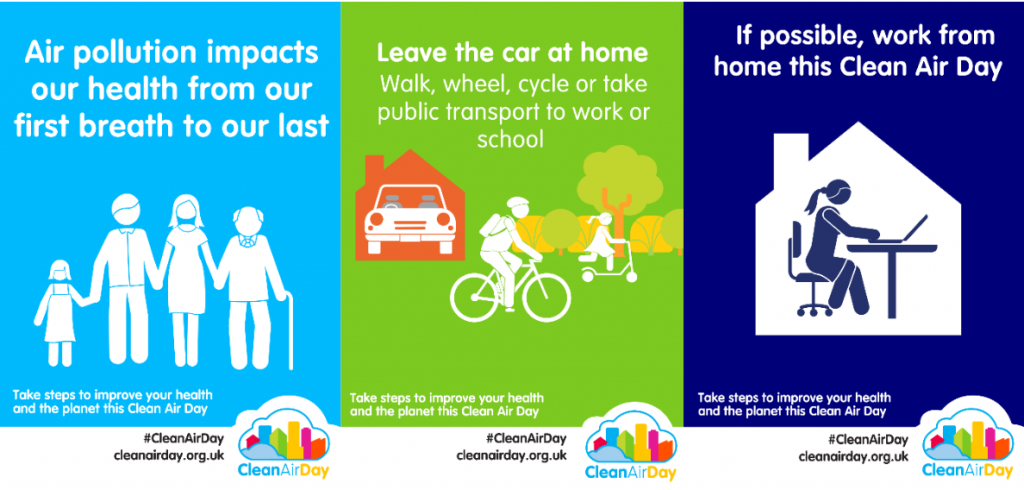
Image: Clean Air Day posters promoting actions like working from home and active travel alternatives. (Source: Global Action Plan, 2025).

The Pollution Problem 

Transport is the single largest contributor of greenhouse gas emissions in the UK, with cars and vans being the primary sources. As we continue to rely heavily on petrol and diesel vehicles, we release harmful pollutants such as: 

  • Nitrogen Dioxide (NO₂) – a gas produced from fuel combustion in engines 
  • Particulate Matter (PM) – tiny airborne particles, often released from tyres and brakes, that can penetrate deep into our lungs 

In densely populated urban areas, diesel vehicles alone can be responsible for up to 70% of air pollution (Living Streets, 2025). Reducing this dependence on polluting transport is critical for the health of our cities and our people. 

Air Quality in the North East 

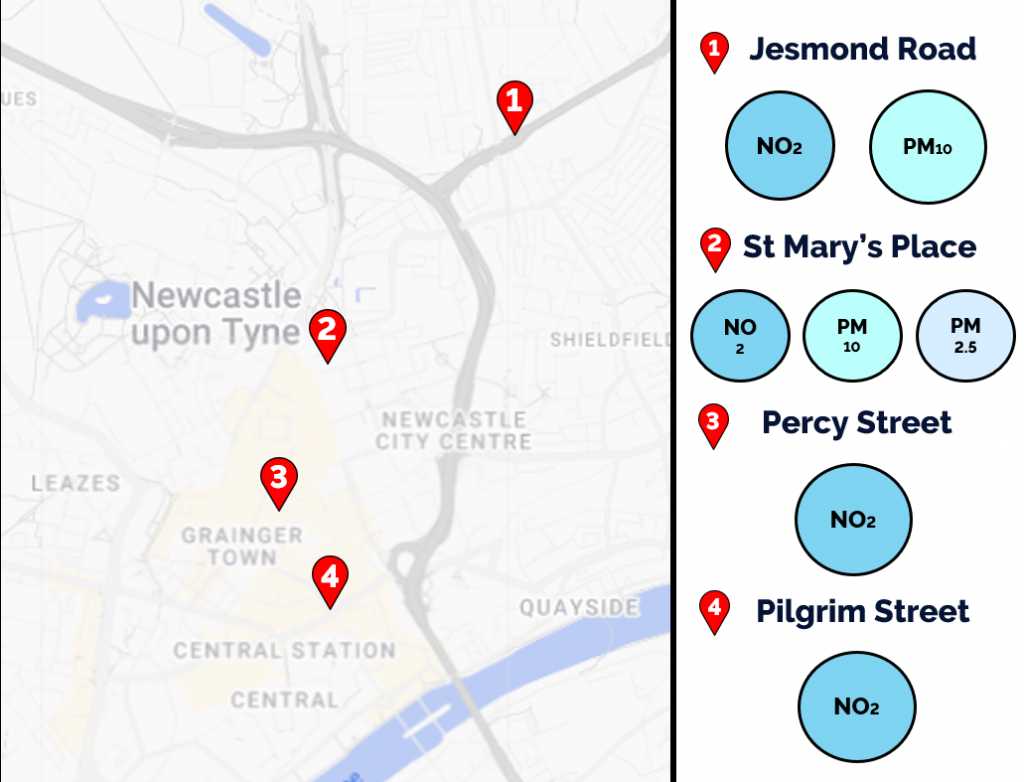
In Newcastle, air pollution is monitored closely under the Environment Act 1995, with nine major pollutants assessed annually. The biggest concern locally remains Nitrogen Dioxide (NO₂), from road traffic. To monitor air quality and ensure compliance with national air quality standards, the city has established several automatic monitoring stations in four areas: Jesmond Road, St. Mary’s Place, Percy Street and Pilgrim Street.  

Image: Air quality monitoring sites in Newcastle showing where NO₂, PM₁₀, and PM₂.₅ are measured. 

These monitoring stations provide valuable data to help Newcastle City Council take action where pollution levels risk exceeding safe limits, protecting residents and the environment alike. 

What You Can Do 

Everyone has a part to play in cleaning up the air we breathe. Here are a few impactful steps you can take: 

  • Write to your MP: Let them know you support investment in clean air and green transport. 
  • Use public transport: Buses and trains produce fewer emissions per person than cars. 
  • Walk or cycle when you can: It’s better for your health and the planet. 
  • Avoid idling your engine: Even a few minutes of idling contributes to unnecessary pollution. 
  • Talk about it: Share the campaign with friends, family and colleagues. 

Final Thoughts 

Clean Air Day is a great opportunity to celebrate the positive steps we can take toward cleaner, healthier air. Whether it’s changing how we travel or supporting local action, every effort helps build a healthier future for everyone. 

\To find out more about the actions Newcastle University is taking to reduce carbon emissions and improve energy efficiency, check out our dedicated Carbon and Energy pages.

If you have any questions or want to get involved, please don’t hesitate to contact the Sustainable Campus team at sustainable-campus@newcastle.ac.uk

Climate Ambassadors Northeast Hub 

Are you passionate about the environment and climate change? Sign up to become a climate ambassador! 

Funded by a £2 million investment from the Department for Education, the Climate Ambassador programme is delivered in partnership with the University of Reading, EAUC (the Alliance for Sustainability Leadership in Education), and supported by STEM Learning.  

The programme exists to support nurseries, schools, colleges, and universities in England to develop and implement Climate Action Plans (CAPs) – enabling all education settings to have a CAP in place by the end of 2025. 

What is a Climate Ambassador? 

A Climate Ambassador is a volunteer from any background who is passionate about taking action against climate change and making a positive difference in their local schools, communities, and to the planet! You don’t need to be a climate expert to be an ambassador – training and ongoing support are provided. Ambassadors help raise awareness, inspire others, and lead by example, promoting sustainability and environmental responsibility. 

As a Climate Ambassador you will have flexibility as to what support you give and how much time you contribute but this includes the opportunity to: 

  • Promote climate action and sustainability across education through collaboration, leadership, and engagement. 
  • Co-develop and implement effective Climate Action Plans (CAPs) with schools and local communities. 
  • Lead eco-initiatives and educational campaigns that inspire participation and long-term behaviour change. 
  • Share insights, experiences and best practices within the network. 

The Northeast Hub 

To support the programme, regional hubs in each of England’s education regions have been set up so that volunteer ambassadors can be matched with education settings in their area. The Northeast Hub is hosted by Newcastle University and led by  Dr Stephen Blenkinsop  and  Professor Hayley Fowler

“The Northeast Climate Ambassadors Hub hosted by Newcastle University is excited to be able to draw on the expertise and passion people across our region have for addressing the challenges of climate change. Volunteer ambassadors as well as nurseries, schools and colleges interested in getting support can find out more about all the help the scheme provides from the regional hub at climateambassadors.ne@newcastle.ac.uk.” 

Dr Stephen Blenkinsop 

Sign up now

If you are interested in getting involved with the Climate Ambassadors scheme, you can find out more here or sign up here! Volunteers will be provided with free training and support, and be matched to a local nursery, school or college that needs help creating a climate action plan.  

How Newcastle University’s CHP Plant is Driving Campus Decarbonisation 

In January 2024, a new Combined Heat and Power unit (CHP) was installed in the Merz Court Energy Centre, a powerful and efficient plant room tucked away in the building’s basement. Recognising its impressive potential, the University saw an opportunity to divert excess energy to the Stephenson Building. Since then, the CHP has become an integral component in our Net Zero strategy…

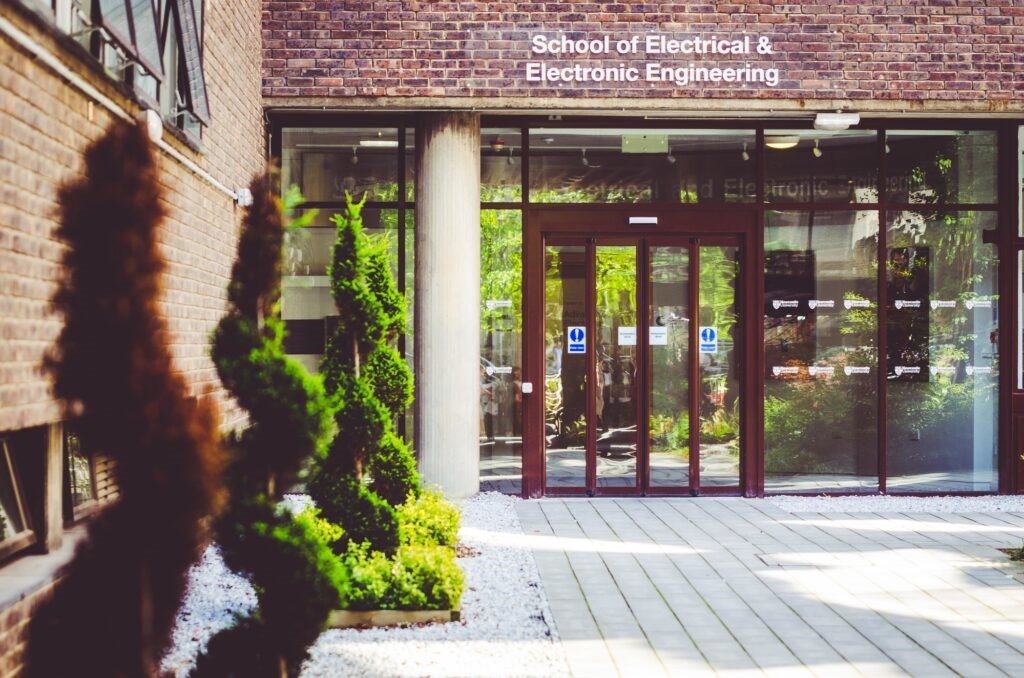
Image: Entrance of the Merz Court building, home to electrical and electronic engineering (and the CHP unit of course!)

CHP and the Stephenson Redevelopment 

To ensure sustainability was considered at every step of the Stephenson renovation, a Low and Zero Carbon Assessment (LZC) was carried out in the early planning stages. The assessment looked at a variety of scenarios, comparing a business-as-usual approach to an alternative scenario using renewable energy generation. Eventually, it was decided that, in line with our Climate Action Plan, Stephenson would primarily receive its heating from the CHP district network.  

CHP and Environmental Impact 

In its simplest terms, the CHP plant is a large engine that burns biofuel. The engine is connected to a generator which makes electricity to enter the University electricity distribution network. The heat created by this process is recovered and fed into the district heating network. 

Therefore, the CHP plant is more environmentally friendly than traditional systems in a few ways: 

  1. Natural gas power stations which supply the national grid generally do not recover heat, whereas the CHP plant preserves and recirculates produced heat 
  1. The biofuel is a certified renewable fuel resulting in significant reductions in our greenhouse gas emissions. The CHP generates and distributes electricity and heat to nearby buildings – reducing the transmission losses associated with a traditional ‘grid supplied’ distribution model.  

Image: The CHP unit located in the Merz Court Energy Centre. Inside the container is essentially a large engine, running off biofuel.

The District Heating Network 

Currently, the CHP is fully installed and undergoing final testing and commissioning. An array of underground pipes has connected the plant to the following buildings: 

  • Old Library Building 
  • Percy Building 
  • Henry Daysh Building 
  • Stephenson Building 
  • Cassie Building 

In recent months, the network has also been connected to the King’s Road Boiler House, extending the CHP heating network to five more buildings: 

  • Armstrong Building 
  • Bedson Building 
  • Boiler House Event Space 
  • Hadrian Building 
  • King George VI Building 

The CHP will become the lead heat source for these buildings, with natural gas boilers being used to ‘top-up’ the heat supplied by the CHP.  

Current Projections 

After tests have been completed, the CHP will generate 850 kW of electricity, which equates to approximately 10% of the University’s daytime load or around 25% of our overnight load. About 1000kW of heat is also produced – this heat is recovered and fed into the University’s district heating system. 

The Future of CHP 

As we enter the final commissioning stage, we expect CHP system to be fully operational in time for the next heating season.  

Recently, we applied for funding from the Green Heat Network Fund to extend our heat network to Kensington and Park Terrace student residences and the Drummond Building, with a decision expected this summer. If successful, this funding will enable the integration of an additional renewable energy source (Air Source Heat Pumps) to our network, further reducing the carbon intensity of our heating systems.  

The recently launched Estates Optimisation project will also play a vital role in supporting these developments through smarter use of space and infrastructure. This project also includes the development of the University’s Net Zero Strategy, shaping the business case for future heat network extensions and identifying specific ways to reduce energy use and deliver further increases in the generation of renewable energy across campus. 

Celebrating Bike Week 2025!

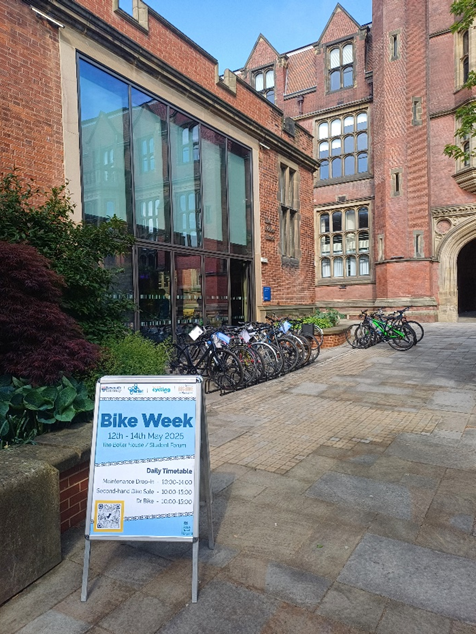
From Monday 12th May to Wednesday 14th May, Bike Week took place in the Boiler House. The event was hosted by the Sustainability Team in collaboration with WATBike and Cycling UK. Each day, colleagues and students could be seen queuing up outside the venue, bikes in hand, ready for servicing. Read on to find out more about Bike Week, its outreach, and what our campus cyclists said…

Image: The Bike Week set-up on day one, taken a few minutes before the crowds arrived.

Event Lineup

Across the duration of the event, WATBike offered three services each day:

  • Dr Bike – Free bike check-ups
  • Second-hand Bike Sale – Affordable pre-loved bikes
  • Maintenance Advice – Handy tips from cycling experts

Thanks to generous funding from Cycling UK, all services were completely free of charge!

A Successful Outcome

We’re delighted to report that Bike Week was a huge success. A total of 58 bikes were serviced by Dr Bike, 17 pre-loved bikes found new homes, and many students and colleagues left with practical tips for keeping their bikes in top shape.

Here is what one Bike Week attendee had to say:

“This was really useful, thank you to all for hosting and organising the event. The advice and help I received on Wednesday was brilliant.”

Bike Week was also a hit on social media earning a spot on the @NewcastleUni Instagram story and amassing 12,000 views!

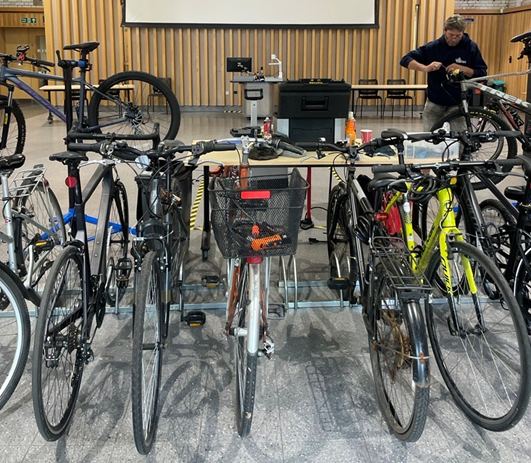
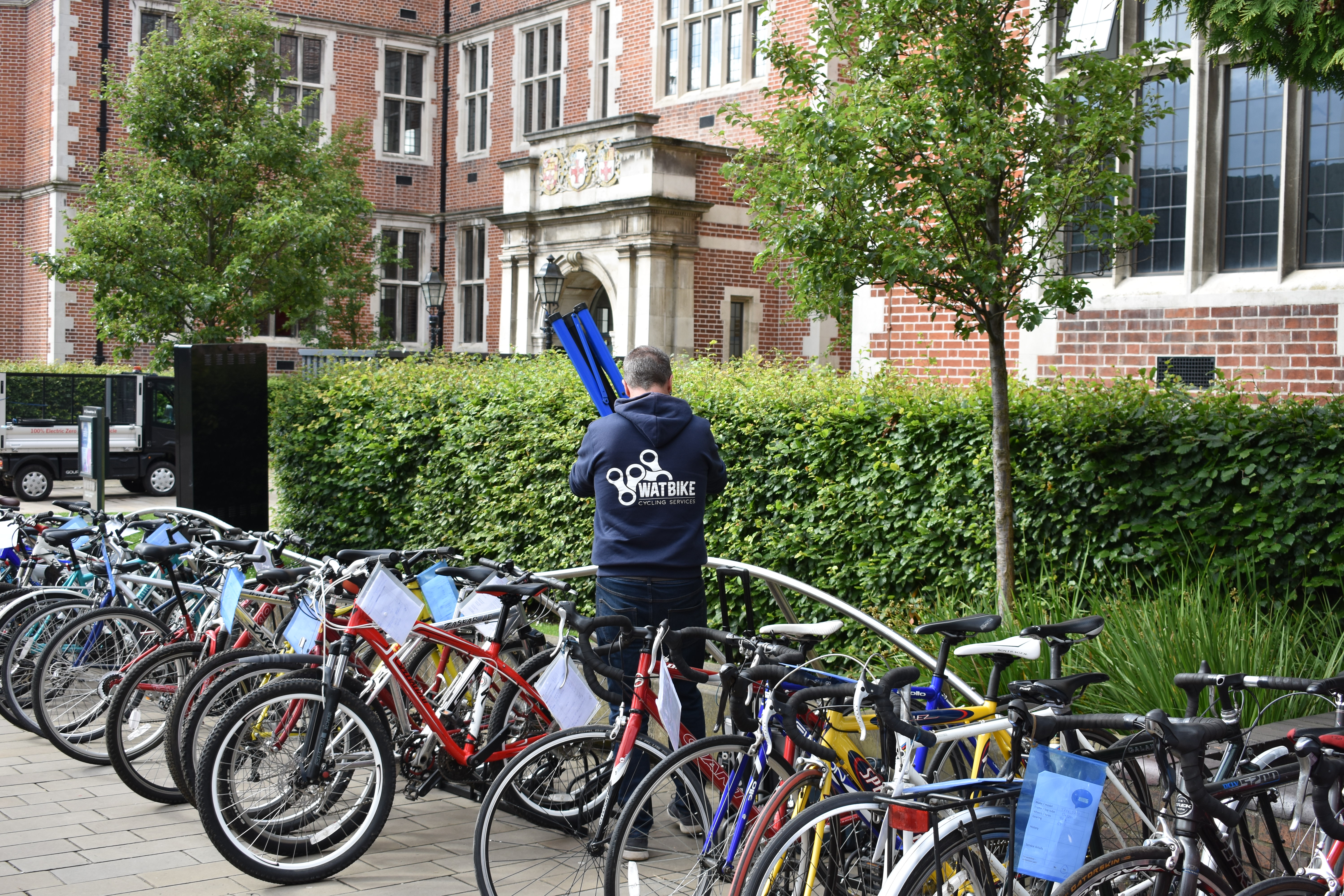
Image: A collection of bikes waiting to be repaired by the helpful WATBike team.

University Cycling Services

Did you know that Dr Bike takes place every fortnight? Our next session is taking place at Devonshire Walk on Tuesday 27th May. If you want to add upcoming Dr Bikes to your diary, please refer to the Dr Bike 2025 events page.

Alternatively, if you want weekly reminders of upcoming events, you can join our Bicycle Users Group on Teams. To join, just email us at sustainable-campus@newcastle.ac.uk with the subject title “Join BUG.”

If you’re searching for more tips on storage, cleaning and repairing your bike, read our Bike Maintenance Blog

Thank you to everyone who got involved and helped make Bike Week such a success. More cycling events are coming soon – watch this space for updates!

Leave Newcastle Happy: Your Guide to Moving Out Sustainably

As the academic year draws to a close, the time has come to face the moving-out process. From quirky costumes to forgotten kitchen gadgets, it can feel like you’ve accumulated twice as much as you brought. But don’t worry – we’ve got you covered with simple, sustainable solutions for clearing out your space. 

Thanks to our Move-Out Map, it’s easier than ever to find donation and recycling points near you for clothing, houseware, books, and more. 

  1. Clothing 

If your clothes are in good condition, consider donating them to a local charity shop. Some popular areas for charity shopping include: 

  • Clayton Street, Central Newcastle 
  • Gosforth High Street 
  • Shield’s Road, Byker 
  • Chillingham Road, Heaton 
  • Whitley Bay High Street 

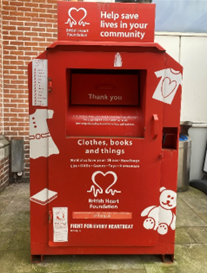
For clothing that is no longer wearable, use one of the many clothing donation banks located throughout Newcastle. There is a donation bank outside the Students’ Union building. Location What3Words: ///grit.herbs.saving 

  1. Houseware (ResLife ReHome) 

Newcastle University’s ResLife ReHome initiative allows students to donate clean, good-quality items for reuse. These items are collected, sorted, and re-distributed to new students at the start of the next academic year to help reduce waste and promote a culture of sharing. 

Key dates:

  • Donation collection: 28 April – 15 June 2025 
  • Sorting and movement: 28 April – 18 June 2025 
  • Distribution to new students: 8 – 14 September 2025 
  • Passport to Independent Living event (if stock remains): 16 September 2025 

Items accepted include: 

  • Kitchenware (pots, pans, trays, cutlery, crockery) 
  • Stationery and unused kitchen supplies 
  • Clothes airers, washing baskets, coat hangers 
  • Decorative items (in line with accommodation policy) 
  • UK-appropriate coats, wellies 
  • Cleaning products, unused toiletries 
  • Non-perishable food 
  • Educational or cookbooks 
  • Small electricals in good condition 

Visit the to Move-Out Map to find your nearest ResLife ReHome donation point. 

  1. Books 

Better World Books has a donation box located in the entrance foyer of the Marjorie Robinson Library Rooms. Books donated here support literacy and education initiatives around the world. Accepted items include: 

  • Fiction and nonfiction 
  • Rare books and children’s books 
  • Textbooks 
  • Foreign language books with an ISBN 

Items not accepted:

  • Encyclopaedias (e.g. Britannica) 
  • Procedural law books, indexes, or directories 
  • Journals and periodicals 
  • Books in non-Latin scripts 
  • Unsellable or damaged books 
  • More than 20 copies of the same title 

For bulk donations, please email: sustainable-campus@newcastle.ac.uk 

Community Bookshelf – Students’ Union 
Located on Level 2 in the Student Cluster of the Students’ Union, this is a free, informal book swap open to all students. 
More information: nusu.co.uk/news/article/community-bookshelf 

  1. Non-recyclables (Leave Newcastle Happy) 

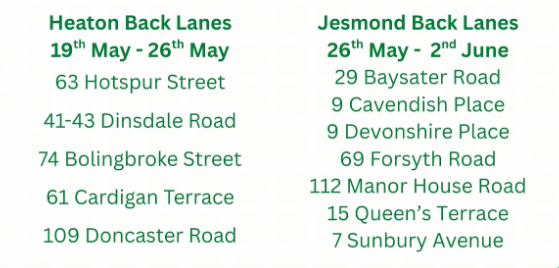
Unfortunately, not all items can be safely recycled or donated. Because of this, Newcastle University has partnered with Northumbria University and Newcastle City Council to launch the annual “Leave Newcastle Happy” campaign. We are putting out Biffa skips in the back lanes of Heaton and Jesmond for students to dispose of their non-recyclable items. Here is the list of locations and dates: 

Please avoid putting the following items in the skip:

  • Waste Electronic Electrical Equipment  
  • Fridges/Freezers   
  • Mattresses Tyres   
  • Paint Cans/Tins   
  • TV’s/Monitors   
  • Asbestos   
  • Clinical/Medical Waste   
  • Oils 
  • Liquids   
  • Solvents   
  • Batteries   
  • Plasterboard   
  • Hazardous/Toxic Materials   
  • Gas Cylinders 

Moving out doesn’t have to mean throwing everything away. By donating, rehoming, and recycling where possible, you’re helping reduce landfill waste, support others, and contribute to a more sustainable Newcastle. 

If you have any questions, please email us on sustainable-campus@newcastle.ac.uk 

Bike Maintenance: Handy tips to keep your wheels on the road 

We’ve all been there – the sun’s shining, you’ve got your cycling clothes on, water bottle filled, ready to hit the road…only to discover an issue with your bike. Whether it’s a flat tyre, faulty brakes, or grinding gears, we’ve teamed up with our friends at WATBike to share some simple maintenance tips that’ll keep your bike in a roadworthy condition. 

1. Bike storage 

Where you store your bike matters. Storing your bike in a safe place is not only important for security reasons, but it can also help keep your bike in good condition. Leaving a bike outside for extended periods (such as in a garden/backyard over winter) will expose your bike to the elements which, over time, will cause the parts to corrode and eventually lead to failure of the gears, brakes etc. 

Tips for smart storage:

2. Tyres

Your tyres are a critical component of your bike’s performance and safety. Maintaining the correct tyre pressure and regularly checking their condition is vital!

Tyre care tips:

  • Check tyre pressure regularly, ensuring the PSI is at the required level (these can be found on the tyre wall).  Ensuring the correct pressure helps to prevent punctures. 
  • Keep a small hand pump with you to ensure you can always pump your tyres. Or you can use the University cycle repair stand near Hatton Gallery (location shown in our map). This stand is equipped with allen keys, screwdrivers, spanners, adjustable fit bike pump and a tyre iron.
  • Inspect your tyres for cracks or holes – replace tyres if they’re showing serious wear.

3. Bike Cleaning

Regular bike cleaning will prevent rust and corrosion, helping your bike parts last longer and be more effective.

Cleaning checklist:

  • Use a hose (light pressure!) to rinse off loose dirt.
  • Scrub with bike-friendly brushes, especially around the chain and cassette (gears). It is also important to keep the braking surface of your wheels clean and dry.   
  • Check out this 5-minute bike wash tutorial on YouTube, or if a deeper clean is needed, this 30-minute bike wash tutorial.

4. Chain Care

One of the easiest and most effective maintenance tasks: lubricating your chain. It ensures a smoother ride with less clunking when changing gears and extends your bike chains lifespan. There are two main types of chain lubricant; wet and dry, and it depends on the type of riding you do and the time of year as to which lubricant you should use.  

Choosing the right chain lube:

Dry lube: Best for people who mainly ride on roads. It’s thinner and won’t pick up as much dust in the summer.

Wet lube: Designed for wet, muddy conditions. It is thicker than dry lube, which helps it repel water and keep your chain lubricated. 

If you’re not sure which to use, ask at a local bike shop, or at our regular Dr Bike sessions.

5. Loose parts 

If something on your bike feels loose (especially pedals) – don’t ride it! Bring it to a Dr Bike session or bike repair shop straight away. A quick tweak when a problem first arises can save big mechanical issues in the future if you leave it unresolved.

Maintenance at Dr Bike

If you require more help with bike maintenance, our regular Dr Bike sessions on campus are a great place to start. Whether it’s a quick fix or a maintenance question, expert advice is always on hand.  WATBike are here every two weeks throughout the year and are happy to help.

We’re also excited to announce Bike Week, taking place at The Boiler House from Monday 12th to Wednesday 14th May, in partnership with WATBike and supported by Cycling UK.

During Bike Week, Bike technicians will be available on campus from 10:00-14:00 each day to provide more detailed support on how to maintain your bike, with guidance and advice from the team at WATBike. There will also be a sale of lovingly refurbished bikes across a range of styles and sizes across the event. Buying second hand is not only great for your wallet, but also for the planet!

Useful Links: