
Getting ready to go to University

It’s coming to the end of August and there is only one thing you can think about – leaving home and going to University! Here are some tips on what you should take, how to cope with homesickness and more…

What should I pack?

Deciding what to pack for University can be a huge challenge. There are so many items you use everyday that you don’t even think about! We’ve written a short list of things to get you started:

  • Duvet and pillows
  • Sheets for bedding
  • Device chargers
  • Toiletries
  • Laptop for study
  • Cooking utensils (yes, you may have to cook)
  • Laundry basket
  • Clothes hangers
  • Clothes horse (great way to save money on drying!)
  • Important documents
  • Medicines

This is not an extensive list by far and is only meant to provide you with ideas of the basics which you will need.

How can I cope with homesickness?

The first thing to say when discussing homesickness is that you are not alone in this. Most people who go to University will experience homesickness at some point, so discussing this with friends is key! Additionally, bringing items to University that remind you of home (such as photos of friends and family) can really help. Just remember there are a lot of support networks at University whether it is friends or staff members, so please utilise this. Finally, your family are only a phone call away if you need them. Keep yourself busy and distracted with friends and activities and you will start to feel at home in no time!

Where should I visit in my first week?

In your first week we would definitely recommend looking around the University and familiarising yourself with campus. There is nothing more stressful than getting lost and being late to your first lecture! (trust me, I know).

There are also so many beautiful areas of Newcastle to explore. Check out the restaurants and bars on Grey Street, marvel at the view of the Monument and take in the breeze at the Quayside! There is also gorgeous beaches only 25 minutes on the Metro from the town centre (I would recommend Tynemouth – that is my favourite!)

Tynemouth: Great British Break | Travel | The Sunday Times
Tynemouth: Great British Break (thetimes.co.uk)

Finally…

Most of all – don’t put too much pressure on yourself. Moving to University can be exhausting so if you need a night to yourself to relax then do it! Everything will still be there for you the next day. Good luck and have the best time!


Newcastle’s Must-Try Food Spots!

By: Elayna Hugh-Jones

Graphics: Elysia Marrs

This blog post is the hardest I’ve ever had to write…narrowing down my favourite Newcastle food spots to just 7 is a task and a half. However, I have managed to just about do it, with a sprinkling of extra tips of course. I know most of us are living on a student budget so eating out isn’t always a regular occurrence BUT isn’t good food just the solution to everything?! I personally think so. Since living in Newcastle, my friend and I have collated an Honours list of our favourite restaurants and food spots, rated by food, atmosphere, and value for money. I’m sharing our top 7 with you!

Continue reading “Newcastle’s Must-Try Food Spots!”

Language Barrier- English as Second/Third Languange?

By: Caroline Elaine

There are approximately 6500 languages in the world, each with its own distinct characteristics that distinguish it apart from the others. Most international students at Newcastle University come from all over the world, from Asia, Europe, and so on. They grew up speaking a language other than English and only began learning English in school. Some people will become really fluent at it, while others will not. Therefore, the language barrier is one of the reasons why studying in a foreign country can be difficult.

Continue reading “Language Barrier- English as Second/Third Languange?”

A day in the life with Amelia Guest

Interviewed and edited by Elayna Hugh-Jones

What do you study here at Newcastle University?

So I’m in my 2nd year of Biomedical science, and I’m doing a placement year in September so it’ll be a 4 year degree for me. Then I’m thinking about further study, such as a Master’s or post-grad medicine.

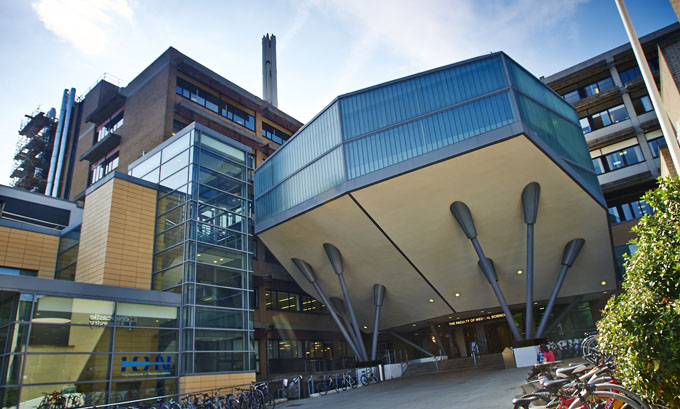
Newcastle University Medical School

What does a typical day look like for you?

So I’m an early bird, I get up around 6:30 and I take some time to wake up and have breakfast. Then if we have any 9am or 10am lectures I like to go to the Uni gym beforehand to start my day on a good note, which means I leave my house in Jesmond at about 7:30. We typically have 2 or 3 lectures a day and I’ll head to the Walton Library in between if we have any breaks. But if we have no lectures, Wednesdays are usually our days off, I still head to the library and set myself up for a day there. I’ll usually take my packed lunch and stay for the majority of the day and then head home for dinner. I and my housemates tend to all eat together which is a nice part of the day to look forward to.

Continue reading “A day in the life with Amelia Guest”

Top tips for applying to placements!

By Amelia Guest, BSc Biomedical Sciences

Hi! My name is Amelia, and I am a third-year Biomedical Sciences student. I am currently on a year of placement at AstraZeneca, and I wanted to share some top tips for anyone who is applying for their placement year!

LinkedIn for networking

LinkedIn is a great tool to use for networking. This platform allows you to contact current placement students and ask for their experience and assistance, as well as connecting with potential placement providers! In fact, I got my first interview through LinkedIn.

Prioritise

Put all of your focus on a few providers which you are really interested in – it will be more beneficial than applying to loads of providers halfheartedly. When interviews start, they take a lot of time so if you are not too interested in a certain provider it will probably be best to utilise this time elsewhere.

Gather information

Make sure you research the website or social media platforms of the placement provider so you can be really specific in your application and interview. It may even be worth using LinkedIn to contact someone internal to get some extra information! During the interviews they often ask about company values, so it will really help your case if you can discuss these.

Rejections

It is easier said than done, but try not to let rejections put you down! Each interview is a learning curve and you can learn new things that you can do better next time. The more people you talk with and interview with – the more networking! All of the students that I am currently working with at AstraZeneca received rejections from other companies, so it just goes to show that perseverance can go a long way!

Careers Service

Use the Careers Service to help with your application – the Careers Service are there to help you with CV advice and practice interviews, so utilise them! It may be the difference between getting your dream job or not.

Good luck! Try your best and have a great placement year.

Medical Nutrition Event – Reflections of a Student Dietitian

Hi, my name is Laura and I have just completed my second year of the new 4-year Integrated Master of Dietetics programme at Newcastle University. Last semester we were lucky enough to have a selection of medical nutrition companies visit us at university to showcase the range of products they can supply for various dietary requirements.

Continue reading “Medical Nutrition Event – Reflections of a Student Dietitian”

How is Stage 2 Different from Stage 1?

By Caroline Elaine

Hello everyone, my name is Caroline, I am a BSc. Biomedical Sciences student. I have finally begun stage 2 of my course after spending a year in Newcastle adjusting to a new life, making new friends, and doing other bits and pieces. The seminars, lab practicals, and lectures have been ongoing for more than two months now.

So I figured it’d be a good time to evaluate the differences between stage 1 and stage 2. 

Continue reading “How is Stage 2 Different from Stage 1?”

5 Easy Recipes

By: Marcelle Reis Rosmaninho

Starting uni comes with a whole lot of changes. For most of us, an unexpected change we must adapt to is learning how to cook for ourselves. Cooking is a daunting experience, especially for someone who has never cooked before. After seeing my flatmates in the first year constantly eating frozen Tesco pizza, I thought it would be a good idea to share my 5 easy recipes that can be taken to uni on a busy day!

Continue reading “5 Easy Recipes”

My IDS Adventure!

By: Ben Gardner

What I thought of the summer placement.

My time at ImmunoDiagnosticSystems (IDS) was extremely valuable and interesting, it was great to see what we learn about at uni being used in real-life.

I learnt many skills in the lab including immunoassays, antibody purification, and accurate working. I have also developed my ability to document labwork, process data, and think critically. It was interesting to see the many different departments IDS has and how they interact. IDS is an excellent company for aspiring bio-scientists with special thanks to Michael Gardner, the rest of the Process Development department, and the Quality Control department. They all really helped me on my placement, and I had a great experience chatting with them in the labs and the office. I would highly recommend other students to take up a placement at IDS and I can guarantee they will have a wonderful time!

Continue reading “My IDS Adventure!”