Advance HE Membership Update: October 2018

The latest edition of the Advance HE update includes:

  • Information about Small Development Project grants and how to apply
  • The latest publication on guiding principles for teaching promotions
  • Thought pieces on employability, networking and leadership development
  • PRES Survey results
  • Information on Advance HE’s look at addressing subject challenges and how you can get involved
  • An Athena SWAN update
  • And dates for your diary

Newcastle University staff can view the newsletter here (log in needed).

Please get in touch with LTDS@ncl.ac.uk with any questions.

Approaches and Tools for Internationalisation at Home

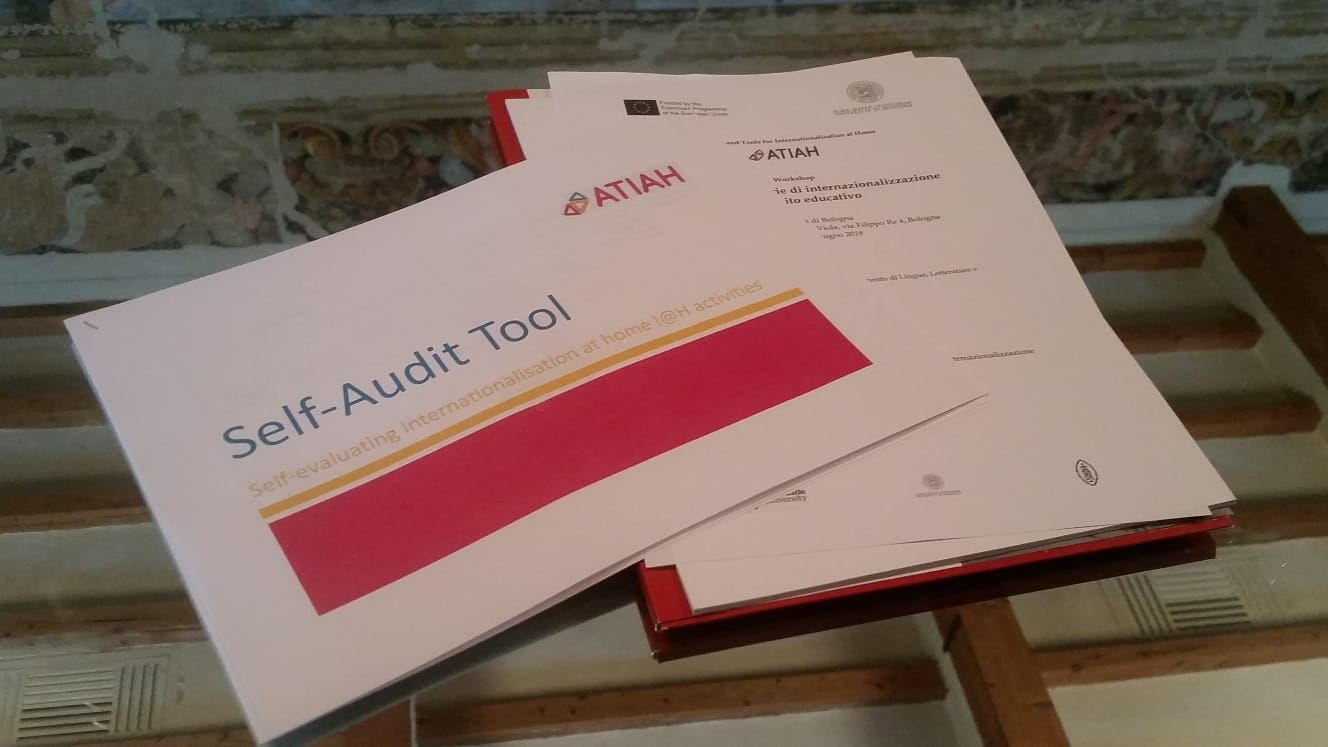
Image of Self Audit Tool document

By Sue Robson, Emerita Professor, School of Education, Communication and Language Sciences

Internationalization has become a key strategic priority in higher education (HE), posing both critical challenges and development opportunities for universities. While many HE institutions have an internationalisation strategy, approaches to internationalisation vary enormously. The number of international students and staff on roll, and the number of ‘mobile’ students and staff engaged in international research and teaching collaborations are highly regarded and prestigious indicators of quality and prestige in higher education institutions (Wihlborg and Robson, 2017).

Increasingly, however, universities are seeking to develop more inclusive approaches that enable all students and staff -and particularly the non-mobile majority – to experience the underlying social, academic and intercultural learning benefits of an ‘internationalised university experience‘ (Robson, Almeida and Schartner, 2018). One of the developing areas of interest for research and practice into the internationalization of higher education is the concept of Internationalization at Home (Almeida et al., 2018). This was the focus for the Approaches and Tools for Internationalisation at Home (ATIAH) Erasmus+ Strategic Partnerships Project. Internationalisation at Home is one of the Key Priority Areas of the European Commission’s Communication “European HE in the World”: ‘Promoting internationalisation at home and digital learning’ (COM/2013/499).

Continue reading “Approaches and Tools for Internationalisation at Home”

Assessment and Feedback

Helen Webster

By Helen Webster, Head of the Writing Development Centre

“The structure doesn’t flow”

“You need to engage more critically with the literature”

“More detail and greater depth of discussion needed”

“Hard to follow – make sure your points are clearly expressed”

It’s frustrating both to give and receive feedback repeatedly on the same issues and not see any improvement. Feedback is highlighted in the NSS and NUSU campaigns so we know that students see it as a priority. We also know that academic staff don’t always feel that students are engaging with their feedback or even recognise it as such. Continue reading “Assessment and Feedback”

British Conference of Undergraduate Research (BCUR): Student Blog Post

By  BA Hons Philosophy student

Applying for the British Conference of Undergraduate Research was on of the best things I have done in my university life. The process was surprisingly simple, despite what I first thought.

I heard of the scholarship from a lecture, I wrote my abstract and many members of staff were willing to help me edit it for the application. The abstract was accepted by the scholarship and they provided me with a lot of support to refine it before my BCUR application. All of the help of the Scholarship committee and my lectures set me up for the application well, and because of their support I was invited to the conference. Continue reading “British Conference of Undergraduate Research (BCUR): Student Blog Post”

Research-led teaching in Psychology

Patrick Rosenkranz

By Patrick Rosenkranz, Degree Programme Director, Psychology

Teaching in the School of Psychology is guided by empirical research in a number of ways: first and foremost, the design of the programme is research-led ( Healey and Jenkins, 2009):  the syllabus of the modules incorporates both the foundations of the field as well as up-to date developments that include current research problems and practices. Continue reading “Research-led teaching in Psychology”

International Student Barometer 2018

Monday 22 October sees the launch of the 2018 International Student Barometer (ISB), in which Newcastle University is undertaken for the fourteenth year.

The ISB gives European Union and international students the opportunity to give their opinions on their experiences at Newcastle, from arrival at the University, through to teaching, accommodation and employability

We will survey all full-time and part-time EU and international undergraduate, taught and research postgraduate students, as well as study abroad and exchange students, based here in Newcastle and at Newcastle University London. We are unable to survey non-UK based and distance learning students as part of the ISB.

What is the ISB?

Continue reading “International Student Barometer 2018”

Advance HE: Teaching and Learning Conference

The theme of the 2019 Advance HE  Teaching and Learning Conference  is Innovation for Teaching Excellence and papers that cover the following themes are welcomed:

  • Interdisciplinary or multi-disciplinary innovation in teaching and learning practice
  • Innovation in inclusive curricula
  • Innovation in blended and immersive teaching and learning practice
  • Innovative practice that aids transition and retention
  • Innovation practice to support employability
  • Innovative practice to enhance assessment and feedback

Call for papers now open

The deadline for submissions is 7 January 2019.

Event details

Conference theme:

2-4 July 2019

Day One: Arts and Humanities, Health and Social Care

Day Two: Thematic/interdisciplinary

Day Three: STEM, Social Sciences

Find out more on the Advance HE website

Technology Enhanced Learning Drop-ins

Academic and professional services colleagues: Have you got a question about a particular learning technology? Do you want to find out if technology can enhance an existing teaching and learning activity? Do you have a great idea and want to know if technology can help you deliver it?

There is no need to book, just turn up and our learning enhancement and technology advisers will be on hand to help you. No question is too small!

Come along on:
Wednesday 5 December
12:00-14:00
Courtyard entrance, Old Library Building

No need to book, just turn up on the day.

If you can’t make this one, don’t worry,  there will be more over the next few months at locations across campus. Further details will be published here.

If your questions relates to School (or Faculty) specific software we may not be able to help, but we hope we can signpost you to the correct support.

Any questions? Get in touch ltds@ncl.ac.uk

Could you help review undergraduate research abstracts?

Delegation of staff and students at the BCUR

Reviewers are sought to help select students with the best undergraduate research to represent Newcastle University at British Conference of Undergraduate Research (BCUR) events.

Successful students will represent Newcastle University with a poster or oral presentation at the main BCUR conference in the Easter vacation, or with a poster at Posters in Parliament in February / March.

What you need to know:

  • You will need to have time the w/c 26th November to review approximately five to ten 300 word abstracts.
  • Staff from all disciplines are welcome, as specific subject knowledge is not required to review the abstracts. BCUR’s events are generalist, so contributions are expected to convey findings and their importance to a non-specialist audience.
  • Rating criteria will be provided.
  • The reviewing panel will not convene physically; it will be done electronically.

Find out more or volunteer by getting in touch here.

This opportunity to submit an abstract to the conference will be promoted to students soon. If you have any questions, or know of any students with some impressive undergraduate research, feel free to contact Stephen Overy or Damien Hall here .