Hi! My name is Amelia, and I am a third-year Biomedical Sciences student. I am currently on a year of placement at AstraZeneca, and I wanted to share some top tips for anyone who is applying for their placement year!
LinkedIn for networking
LinkedIn is a great tool to use for networking. This platform allows you to contact current placement students and ask for their experience and assistance, as well as connecting with potential placement providers! In fact, I got my first interview through LinkedIn.
Prioritise
Put all of your focus on a few providers which you are really interested in – it will be more beneficial than applying to loads of providers halfheartedly. When interviews start, they take a lot of time so if you are not too interested in a certain provider it will probably be best to utilise this time elsewhere.
Gather information
Make sure you research the website or social media platforms of the placement provider so you can be really specific in your application and interview. It may even be worth using LinkedIn to contact someone internal to get some extra information! During the interviews they often ask about company values, so it will really help your case if you can discuss these.
Rejections
It is easier said than done, but try not to let rejections put you down! Each interview is a learning curve and you can learn new things that you can do better next time. The more people you talk with and interview with – the more networking! All of the students that I am currently working with at AstraZeneca received rejections from other companies, so it just goes to show that perseverance can go a long way!
Careers Service
Use the Careers Service to help with your application – the Careers Service are there to help you with CV advice and practice interviews, so utilise them! It may be the difference between getting your dream job or not.
Good luck! Try your best and have a great placement year.
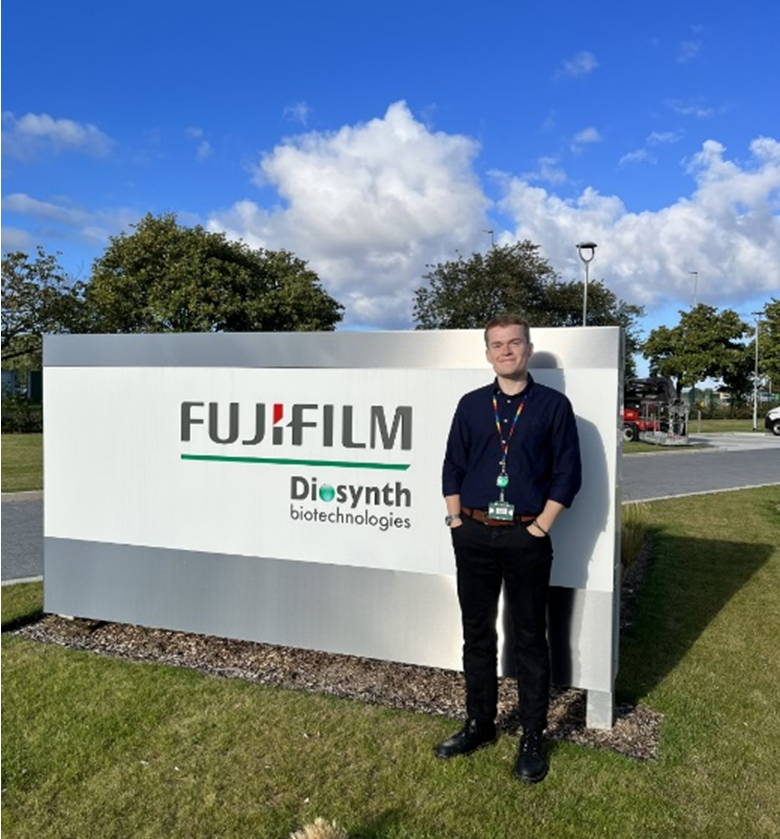
FUJIFILM Diosynth Biotechnologies (FDB for short) is a global contract development and manufacturing organisation (CDMO) in the biopharmaceutical industry providing process development and manufacturing of biologics, cell and gene therapies and viral vaccines. This basically means that FDB are able to manufacture a broad range of therapeutic proteins for customers using mammalian, bacterial, viral and insect expression systems and can develop these expression systems to suit the needs of these target compounds.
I spent my placement year within the Process Development (PD) division, specifically the Mammalian Cell Culture (MCC) PD department. One of the tasks in my department was to carry out optimized fed-batch processes using bioreactors to grow cell lines, the cells then produce the target therapeutic protein which can then be purified and analysed by other departments within PD for customers.
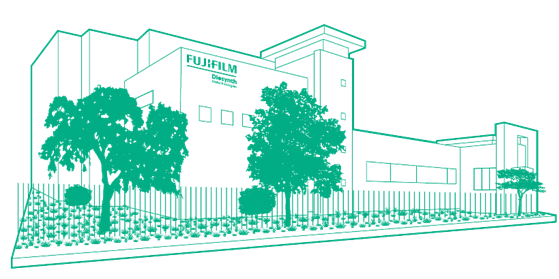
FUJIFILM Diosynth Biotechnologies Billingham Site: Art used from FDB Marketing
Why did I want to do a placement?
When starting my degree I hadn’t thought about the possibility of doing a placement year. Then COVID hit and my degree was heavily impacted which meant I missed out on a lot of lab sessions and became disappointed with the lack of hands-on experience I was getting. I read the BNS placement blogs and was really impressed with what other students had got up to in previous years and how they were able to get some industry experience before graduating so I applied for three placements that appealed to me and managed to secure the second one which was FUJIFILM Diosynth Biotechnologies!
A Day in the life
I’ve found every day to be different so there wasn’t much of a typical day. However, we had a team meeting daily to discuss everyone’s tasks for the day which gave me the opportunity to offer my help and get involved in work.
A typical bioreactor used at FDB: Art used from FDB marketing
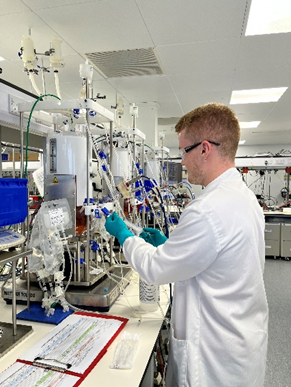
Sampling an XDR10 Bioreactor for daily analysis
If there was a bioreactor process ongoing, then my days would be much more regimented. The morning would begin with sampling several bioreactors growing Chinese Hamster Ovary (CHO) cells and measuring the metabolites, gases, osmolality and cell counts using high-tech analytical equipment. Sampling shows us how the culture is doing and if we need to alter any of the parameters to improve the process, any abnormal data would indicate possible contaminations which are serious during customer projects. These bioreactors would need feeding later in the day with supplements such as feeds, glutamine and glucose to maintain the cultures and ensure the best product titres.
Adapting to a new routine
I thought I would be able to adapt quickly to working on placement, but it was harder than I anticipated. The 9 to 5 is a big change when you are used to the flexible timetable of university and it can be hard to stay engaged at work if you are tired so making sure you get enough sleep is important. However, one huge benefit was that my weekends were totally free and I could do whatever I liked free of Uni work. I had a lot of training to ensure I was confident and competent in carrying out my tasks which can take some time to get used to and can be a lot of information to take in but it meant that I was comfortable undertaking tasks independently.
It’s not all lab work!
I found time outside of the lab to be just as fulfilling as time in the lab. I had not really thought before about the business side of science but it was interesting to see the relationships between employees and customers when I attended meetings for certain projects and how being able to present information and communicate effectively and professionally with customers is just as essential in an industry role as is being skilled in the lab.
One of my last days on site.
I got to take on responsibilities outside of the lab that were essential to the running of my department, the biggest helping to implement a new electronic laboratory notebook system in which I inputted equipment as well as essential reagents used for media and feed preparations. I also got to train my colleagues how to use this system and software for their feed preps as I was the one of the first to use it. This allowed me to develop important skills outside of the lab which I can now demonstrate to future employers.
Would I recommend a placement?
Yes, I would absolutely recommend a placement for a lot of reasons, some of the main ones being:
You get more lab experience if you’re on a lab-based placement
You gain a lot of new skills you can demonstrate in the future and develop ones you already have
You can earn a good wage
You get to experience the science industry and see if it’s for you
Make friends/network with people in the industry find out what they did and if they enjoy what they do
In some cases, if you impress the company they will offer you a job if you come back after you have graduated
My time at ImmunoDiagnosticSystems (IDS) was extremely valuable and interesting, it was great to see what we learn about at uni being used in real-life.
I learnt many skills in the lab including immunoassays, antibody purification, and accurate working. I have also developed my ability to document labwork, process data, and think critically. It was interesting to see the many different departments IDS has and how they interact. IDS is an excellent company for aspiring bio-scientists with special thanks to Michael Gardner, the rest of the Process Development department, and the Quality Control department. They all really helped me on my placement, and I had a great experience chatting with them in the labs and the office. I would highly recommend other students to take up a placement at IDS and I can guarantee they will have a wonderful time!
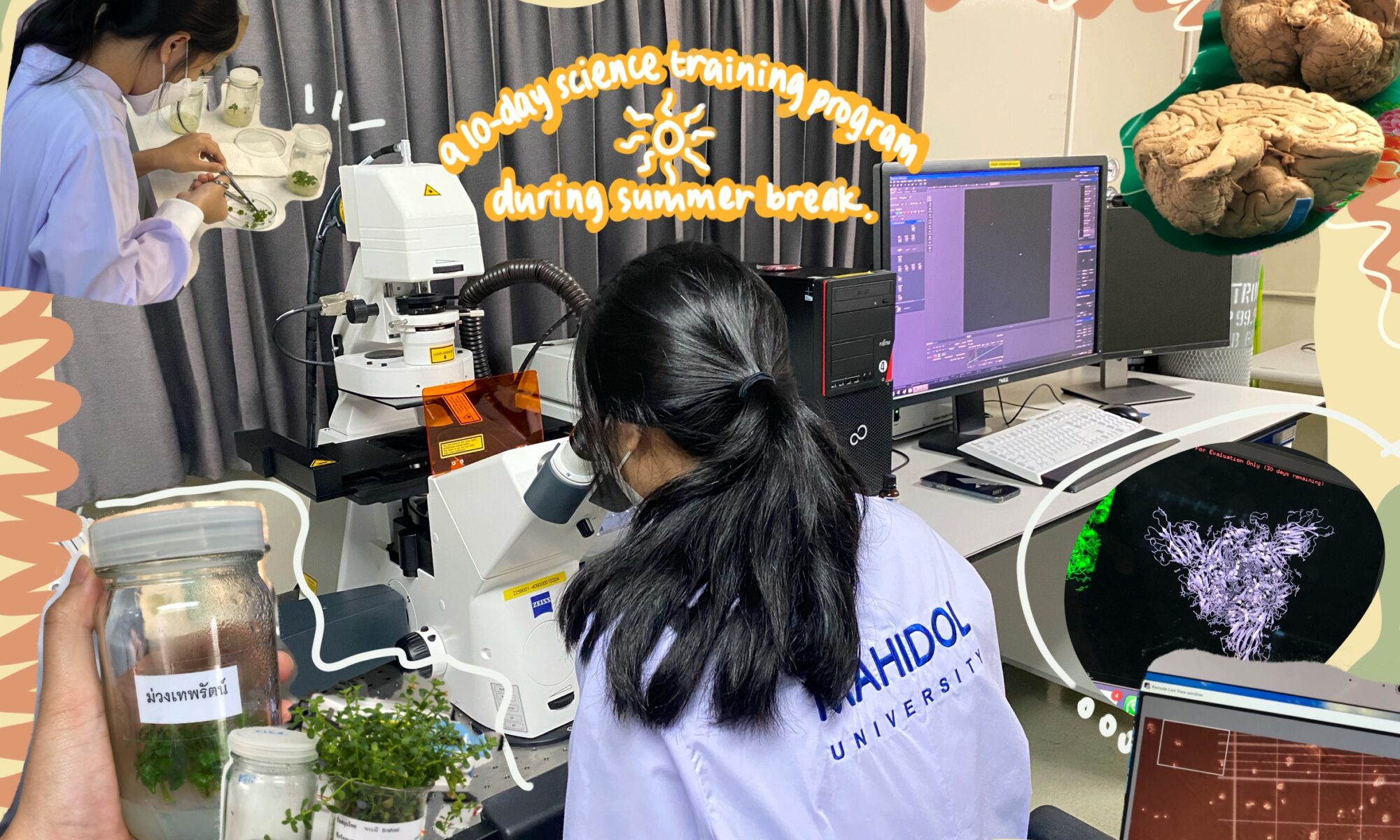
Hi! I am Cita, from Indonesia, and a stage 2 student of Biomedical Sciences, and here I would like to share my experience joining a 10-day science training program in Thailand during the summer break!
Over the summer I joined a science training program ran by Mahidol University in Thailand. I was introduced to this program by my friend, and I decided to join it as I thought this would be a great opportunity for me to develop the lab skills that I have gained throughout the first year and gain new scientific knowledge, meet new people, and build connections, as well as improve my CV.
Pharmaceuticals are all around us; we probably all have taken a drug, received a vaccine, or known someone who has. These small molecules can not only improve the quality of life but also save lives. All these drugs require drug developmental processes.
LabCorp Drug Development, formerly Covance, is a Contract Research Organization (CRO). It delivers a range of experimental packages for nonclinical, preclinical, and clinical services to many pharmaceutical and biotechnology companies.
I was located at Harrogate North Yorkshire, a site which specialises in preclinical pharmaceutical development. At this site, I was a Dose Analyst- an employee who investigated formulations for preclinical studies. I analysed formulations via High-Performance Liquid Chromatography (HPLC).
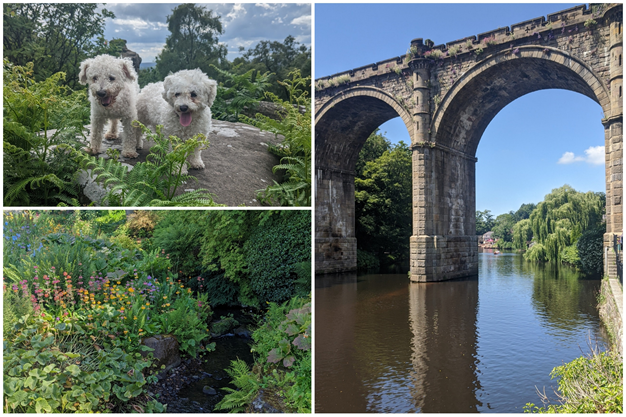
Whilst on placement I lived in Harrogate, it’s very pretty. I managed to explore surrounding areas such as Knaresborough and Brimham rocks. My dogs would often visit, they loved it <3. Photos taken by myself
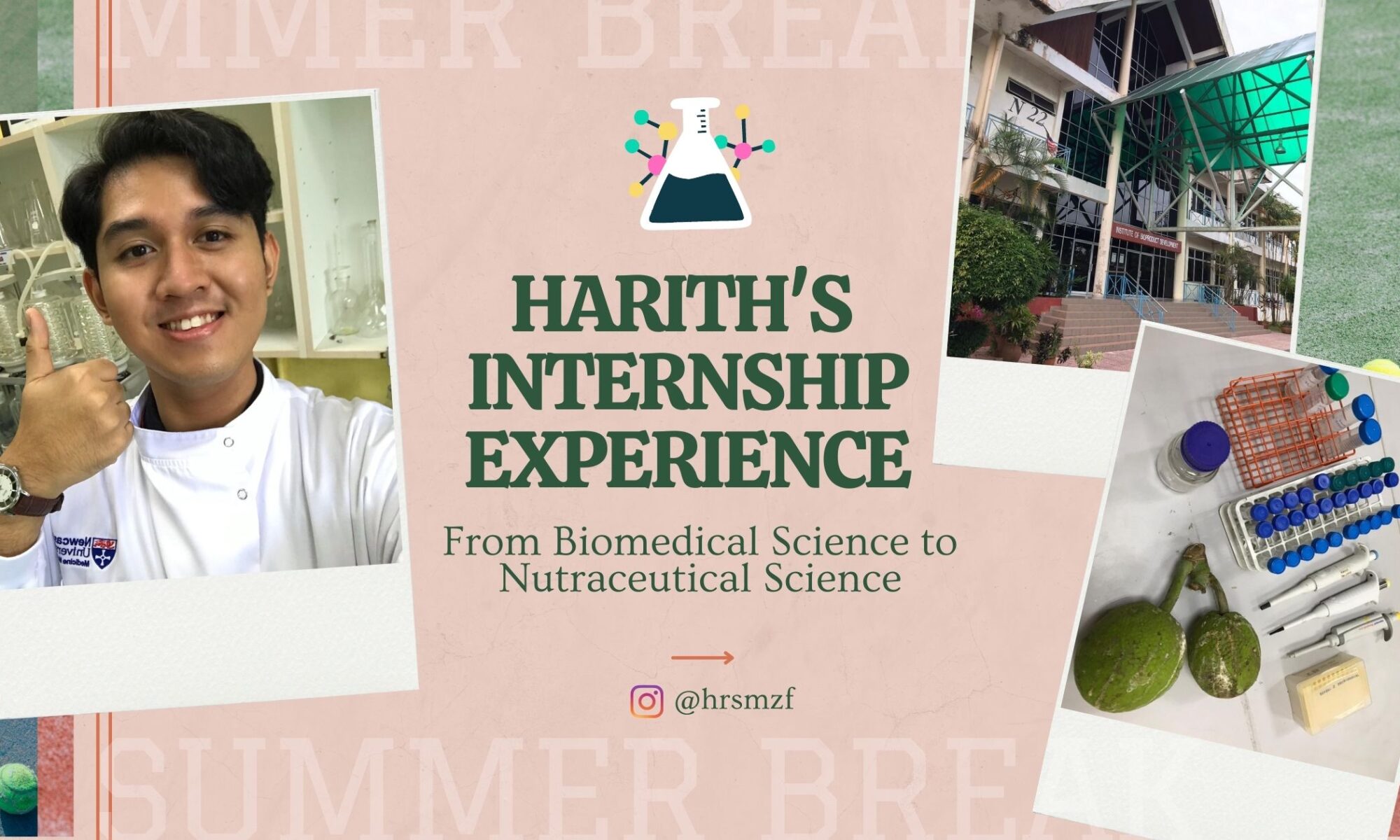
Hi semua! Saya Harith, pelajar tahun satu jurusan Ijazah Sarjana Muda Sains Bioperubatan (Kepujian) dari Malaysia! Dalam blog ini, saya akan berkongsi pengalaman menjalani latihan industri selama 2 bulan semasa cuti musim panas di Institut Pembangunan Bioproduk (IBD), Universiti Teknologi Malaysia (UTM), Johor, Malaysia.
Hi everyone! I’m Harith and I’m a first-year BSc (Hons) Biomedical Sciences student from Malaysia! In this blog post, I will share my 2-month internship experience during my summer break at the Institute of Bioproduct Development (IBD), Universiti Teknologi Malaysia (UTM), Johor, Malaysia.
By: Josie Copus BSc Biochemistry with Professional Placement Year
What’s the worst that could happen?
A placement in regulatory affairs? What even is ‘reg’ affairs?!
If, during stage 2 of Uni, someone told me that I was going to spend a full year working on regulatory submissions for one of the world’s leading biopharmaceutical companies, I’d have laughed. More than that- I’d have panicked! Why? Because other than it being critical in delivering drugs to patients, I didn’t have the slightest comprehension or appreciation of what regulatory affairs involved.
Procter & Gamble is one of the largest personal care companies in the world. If I gave you 10 seconds to find a P&G product, I guarantee there would be at least 5 in the kitchen cupboard. They are responsible for delivering Ariel, Fairy, Bold, Gillette, and so many more brands.
Naturally, working for such a large business means having access to a lot of confidential information, which can be very daunting at first. What if I get it wrong? What if I release millions of pounds worth of information to our top competitor?
I have been leading the Partners programme in the School of Biomedical Sciences (as it was then) since 2014 – and have enjoyed every moment.
In “normal times” it’s a great opportunity for students to come onto campus and experience university life in a “snapshot”. It’s my ideal that the experience will minimise fear of the unknown, seeing that Newcastle University’s School of Biomedical, Nutritional and Sport Sciences is a place where students can feel at home, see themselves thriving and anticipate a great 3 or 4 years ahead.
Obviously, last year and this year things have changed, and we’ve had to move the provision totally online, but hopefully there is still a chance to see what university life will be like, meet future colleagues in studies and members of staff, and get to know each other.