Skip to primary content
Skip to secondary content

HaSS Research Impact

Research Impact from the Faculty of Humanities and Social Sciences (HaSS), Newcastle University

HaSS Research Impact

Main menu

  • Home
  • About Us

Category Archives: ESRC Impact Acceleration Account

Post navigation

← Older posts
Newer posts →

Scotswood Natural Community Garden: a sensory exploration for the co-production of a new facility

Posted on 29 June, 2017 by Eve
Reply

Here Daniel Mallo, Abigail Schoneboom and Armelle Tardiveau tell us about the ongoing work on their recent  ESRC IAA funded project based in Scotswood Natural Community Garden. 

Scotswood Natural Community Garden (SNCG), an independent charity, is located in Newcastle upon Tyne in a neighbourhood ranked in the highest 10% for income, health, employment, education and training deprivation in the UK. SNCG is the only natural green space in the area and one of very few organisations in the North East offering nature-based interventions for disadvantaged people. Established in 1995 and designed by the local community, the 2.5-acre garden includes wildflower meadows, forests, woodland, ponds and fruit and vegetable gardens. Last year over 5000 people participated in the garden’s activities or visited the garden.

This ESRC IAA funded project aims to engage garden users and stakeholders (volunteers, youth groups, staff, trustees, school staff and local people) in a participatory design and research process that explores the value of SCNG to its key users, working towards a shared vision for the future of the garden, developing a vision for a new facility that will expand the SCNG’s highly valued programme. The project team comprises architects Armelle Tardiveau and Daniel Mallo, sociologist/ethnographer Abigail Schoneboom, and research assistant Sophie Baldwin.

During May and June this year, SCNG’s volunteers, youth group members, staff and trustees have been busy exploring the meanings and value that attach to this wonderful community garden, nestled in one of Newcastle Upon Tyne’s most deprived neighbourhoods. With the goal of envisioning a new structure that will better serve users of this popular community resource, participants have explored the garden through sensory research and model-making, creating a richly textured portrait and a set of creative ideas that will inform the future development of the space.

In phase one, we worked with an inviting map created by research assistant Sophie, which highlights the garden’s spatial richness created by a diverse biodiversity and enchanting layout. Having marked our favourite spots on the map, we captured through pinhole camera photographs these special places in the garden.  Pinhole photography requires a very simple camera but taking a single photo can take up to half an hour of exposure! For us, this was a wonderful way to immerse ourselves in the garden and spend quality time smelling, listening to, touching and noting down on a map our feelings about these treasured locations. Alongside the photos and notes, we collected objects (such as dandelion leaves, pieces of string from the den-building area, and a blue-green fragment of a bird’s egg) and made sketches and rubbings. Together, these create a rich interpretation of what the garden means to its users. Using the tool shed as a darkroom, we ended each workshop by developing the photos and watching the images reveal themselves.
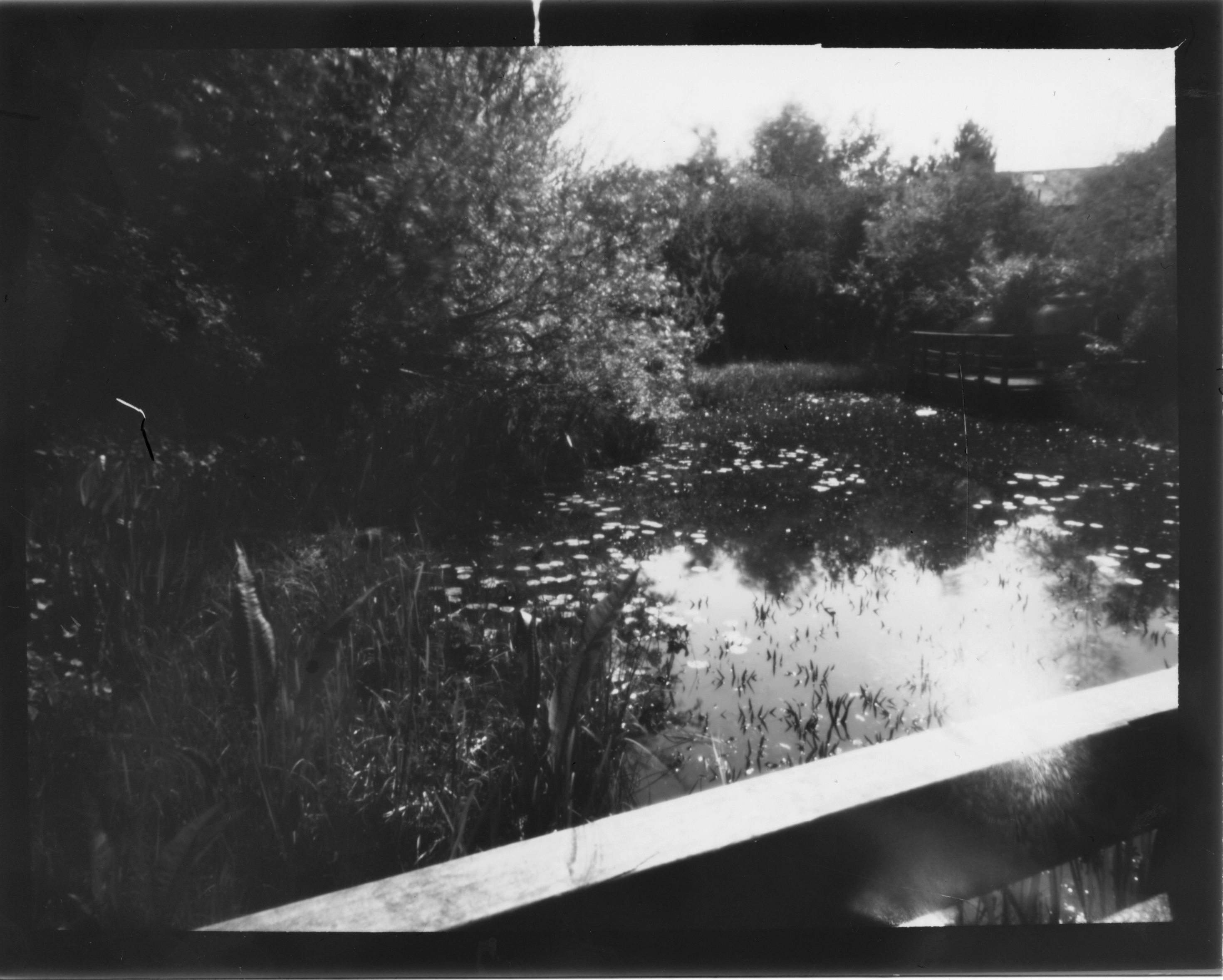
The silvery, poetic photos created in these first workshops capture something magical about the garden, encouraging us to dream and imagine possibilities. This photograph was taken by a garden volunteer.

In phase two, we built models and framed aspects of the garden, thinking about ways to envisage a new facility with some of the values and sensory qualities we had highlighted in phase one. Working with scaled wooden blocks and a range of materials from felt to scouring pads to evoke atmosphere, we created models that explored possibilities such as opening the indoors into the outdoors or using the vertical space to create a viewing platform. During the modeling activity, we also worked in pairs to ‘frame’ and photograph aspects of the garden that might inform views from the new structure. We imagined being indoor and looking onto the reflective qualities of water or witnessing edibles growing and changing.  We had a lot of fun (and a few challenges) carrying the heavy wood and hessian frame through the winding, narrow paths of the garden.
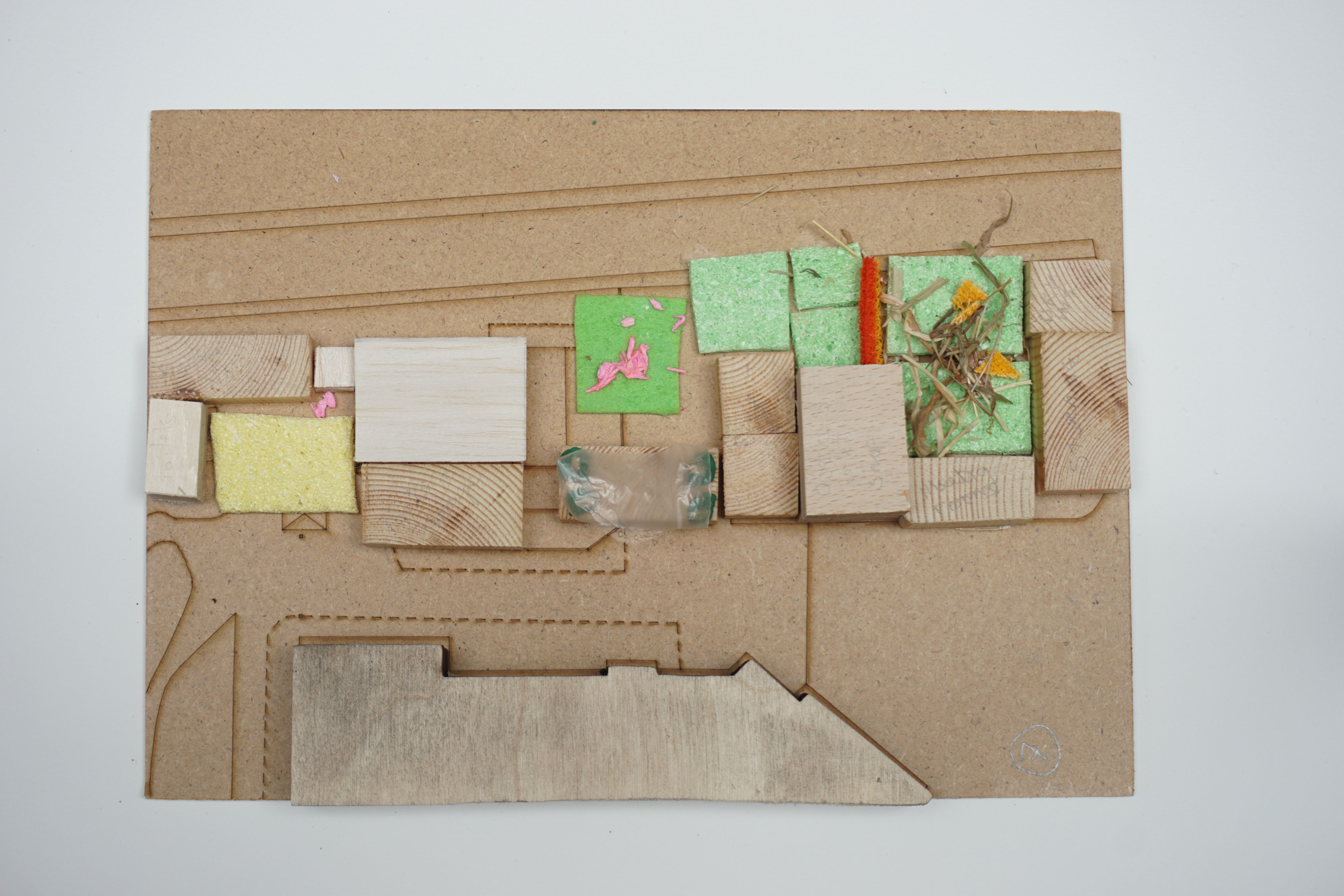
A tactile model shows the different textures of the garden

The garden is home to many great stories and memories, and much healing – the hum of the traffic on the nearby road, overlaid by birdsong and the rustling of the wind in the trees, is a welcome reminder of just how precious this place is. Themes that have emerged from our work together so far include the importance of building or growing something yourself, feeling protected and secure but out in the fresh air, and being connected to other people and the rhythms of nature. Also space overlaps and conflicts between the many groups of users enjoying the facility became apparent with its related ad-hoc but inventive approach to storage catering for all.
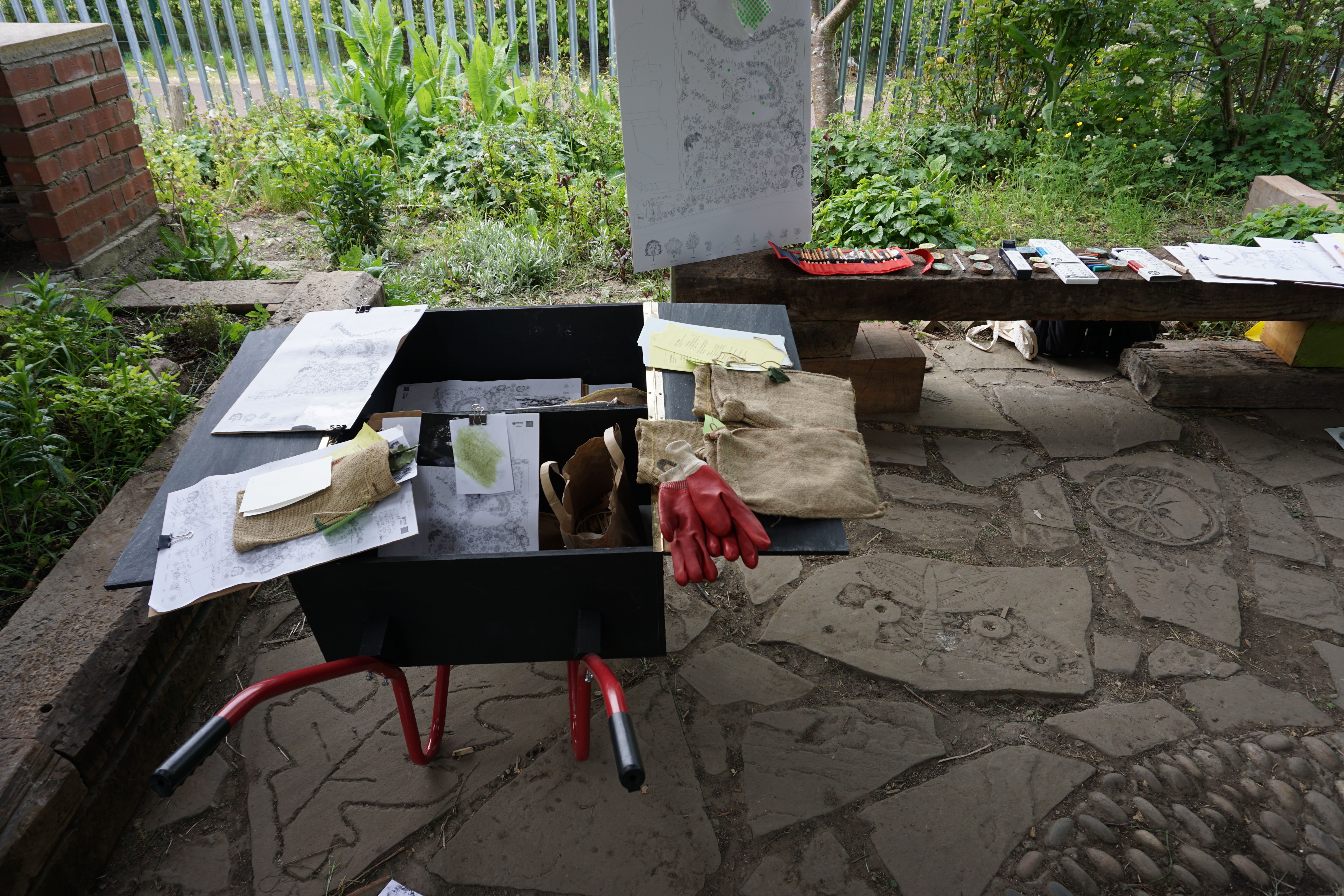
Our customised wheelbarrow holding the materials for the workshop

We have already displayed some of or initial findings and photos at SNCG. Our next step, over the coming weeks, is to materialise and enact some of the ideas with the input of the volunteers. These might be in the form of furniture or spatial adaptations that we will invite visitors to inhabit. This temporary and playful engagement, we hope, will move us further towards a design proposal for a new facility that grows out of the vibrant imaginations and experience of those who use it most and know it best.

Posted in ESRC Impact Acceleration Account | Tagged ESRC IAA, gardens, photography, Scotswood, sensory | Leave a reply

Enacting change by Reclaiming the Lanes

Posted on 31 March, 2017 by Eve
Reply

How can different organisations and communities work together to enact long-lasting change and shape their local environment for the better? Dr David Webb tells us more about his latest project enabled through a secondment funded by the ESRC IAA.

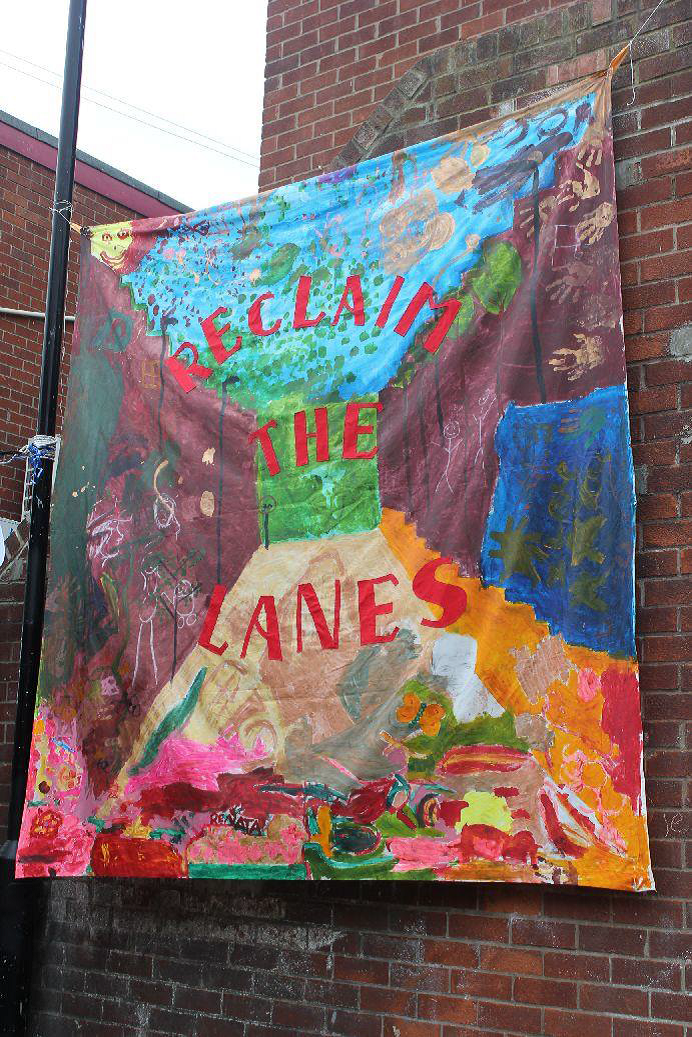
In October 2014, I bumped into another Wingrove resident, Laura Harrington, during an alley makeover workshop day hosted at Middlesbrough Environment City. The workshop showcased efforts by communities to turn back lanes and alleys into useable outdoor spaces for growing and socialising rather than left over spaces used for little other than waste management. Funding from the WEA Greening Wingrove project led to eight sessions during 2015/16 in which local residents volunteered, with assistance from the CHAT Trust, to take youth activities outdoors and broaden them beyond the trust’s usual 13 – 21 year old client group.

reclaime-lanes-4

Wingove Lane captured by Newcastle University PhD student (and local resident) Goran Erfani

Following the conclusion of events in summer 2015 ESRC IAA funding paid for my four month, part-time secondment to the CHAT trust. I wanted to explore the potential of the work which had already taken place, both for achieving sustainable physical change to the lane’s environment and for informing the design of wider innovations in service delivery. The aim was, in part, to contribute to Newcastle City Council’s 2020 group agenda of finding cost savings while maintaining services and to promote Newcastle nationally as an innovator of progressive and democratic responses to the cuts.

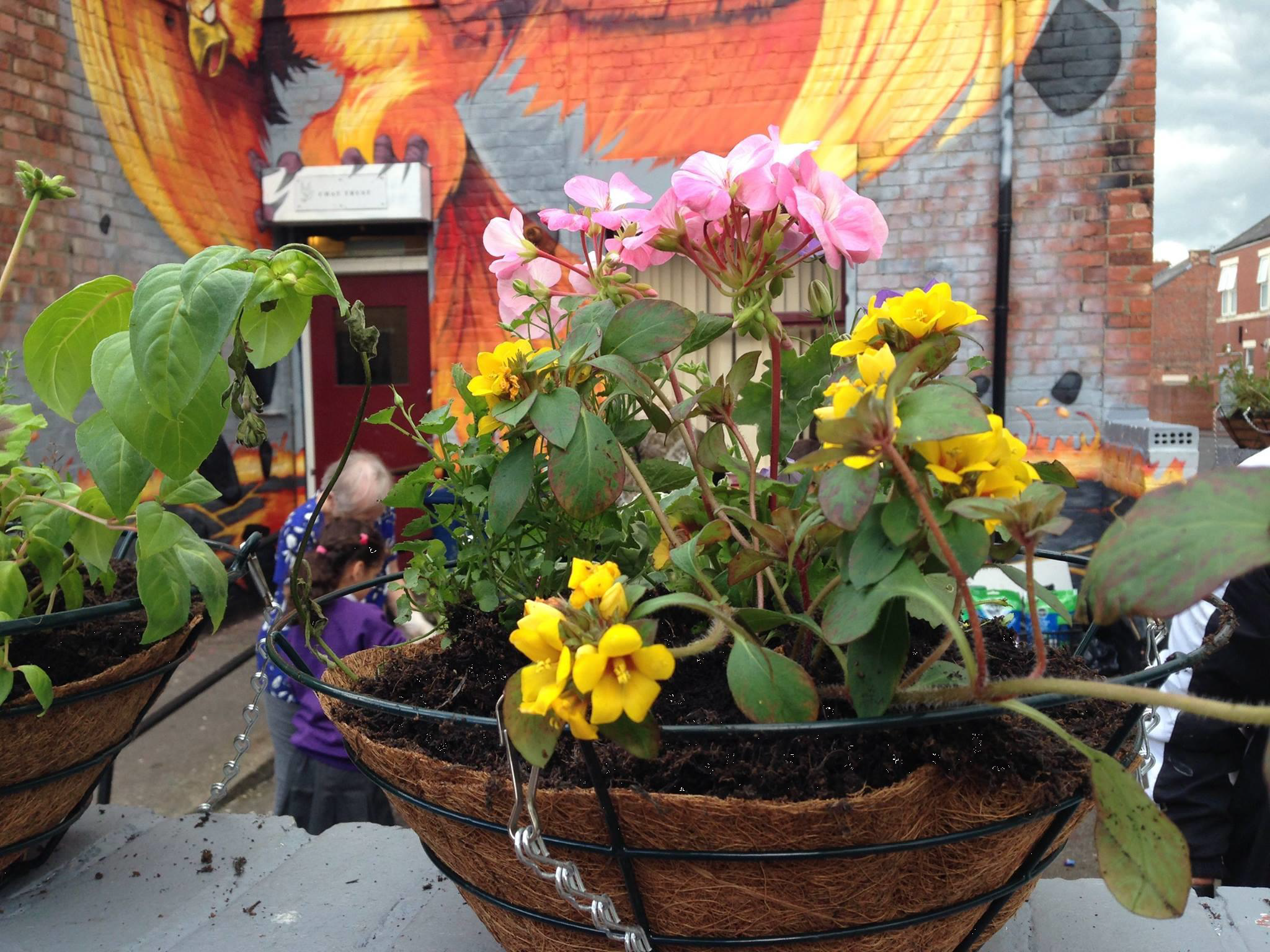
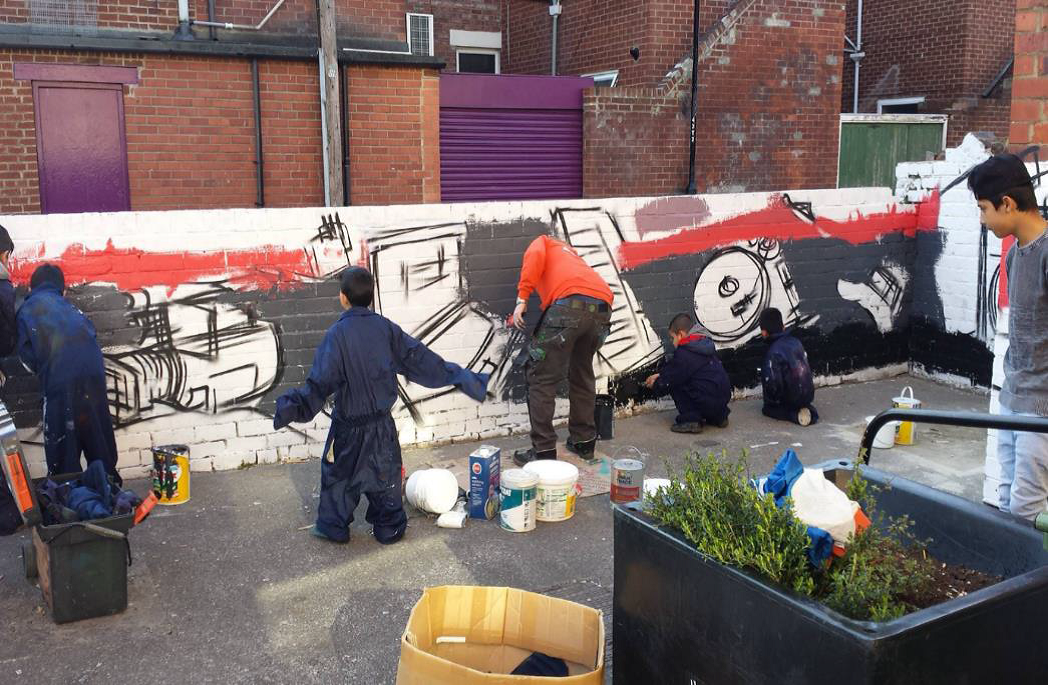
The project began by focusing on young people engaged with CHAT, many of whom had been involved in providing music at the Reclaim the Lanes events. A result of this was an increased focus on the Slovakian community as these made up the majority of the local users of CHAT activities. There were pro-active efforts to build links with the adult residents on the street too, for example through door knocking and chance conversations. Home Housing offered free paint and materials and a private landlord provided a pressure sprayer to prepare the CHAT trust wall for repainting. Young people involved with CHAT took part in repainting the wall and some expressed an interest in graffiti, which led to the co-design and co-painting of a mural on the wall and on the side of the CHAT trust building.

reclaim_lanes3

A positive consequence of these experiments was the effect of engaging with teenage young people on younger children and on parents. Primary school aged children were particularly enthusiastic about engaging in things they felt were benefiting the community, while parents were keen to observe and support their sons and daughters. As a result of this engagement some valuable information is now being collected about how people are used to dealing with waste, their misunderstandings of the expectations of systems in Newcastle and their views about how to improve these.

At a chance meeting back in February, one resident’s response to hearing about the project to reclaim the back lane in Wingrove was “yee’ve got neigh chance” but the progress made since then shows that direct environmental change may be slow, but it is possible and the momentum is growing.

A hallmark of the Reclaim the Lanes approach used in Wingrove is the engagement of people in the direct delivery of environmental change. This is significantly different from, for example, seeking to educate people about how to use waste collection services that have been designed by others and goes well beyond traditional consultation.

reclaim-lanes_2

The project raises questions about how these various approaches might be applied in other areas of Newcastle and beyond and there is growing interest in how these active community-led interventions can be implemented. In January 2017 a workshop was held at Newcastle University with the different partners involved in the project to discuss these issues. The session was very well subscribed and around 85 people from local authorities, charities, community interest companies, Newcastle and Northumbria Universities, consultancies and arts organisations came to hear more and be inspired by the ongoing work at Wingrove.

relaim-lanes_1

There are of course practical limits to the kind of interventions which can be delivered directly through community action but it is possible to channel community interest towards the redesign of services or the design of more permanent changes to the local environment. The Reclaim the Lanes work found that, where people could see participation leading to tangible differences, this encouraged further participation. We found that some of the biggest difficulties to achieving change arose from being unable to influence or adapt the systems used in the area. However, the reverse may also be true: if people begin to feel that they are genuinely able to have some influence this could be a powerful motivating factor capable of building community capacity.

Find more information and resources about project here.

Posted in ESRC Impact Acceleration Account | Leave a reply

NOT Acting Our Age: Older Women Challenging Stereotypes and Celebrating Life

Posted on 13 March, 2017 by Eve
Reply

How can existing stereotypes relating to age and gender be positively challenged? Here Professor Karen Ross explains how her latest ESRC IAA funded project engaged the whole community in challenging traditional representations of women in the media. 

I have been researching the relationship between gender and media for more than 20 years and as I was presenting the findings from my latest study last year I thought, hang on, we know all this, we have known all this for years, about the marginalisation and invisibilising (yes, I have just made that up but it absolutely fits my point) of women from the mediated public sphere, why not do something about it?!  So the idea for a community engagement project where older women would be visible and vocal was born.

The ESRC IAA funded project has had three aspects, digital storytelling, photography and public event. I began by designing a short statement of my ambitions for the project and asking for participants among local women who identified with being ‘older’. I sent the statement to a variety of community projects, networks of older people, organisations working with and for older people and it was further cascaded via a variety of different friendship groups, personal contacts and word of mouth. In the end, 16 women took part in the first phase (digital story-telling) and I ran three workshops in November and December 2016, facilitated by the brilliant Alex Henry and her team at Curiosity Creative.  The resulting digital stories can be found here.

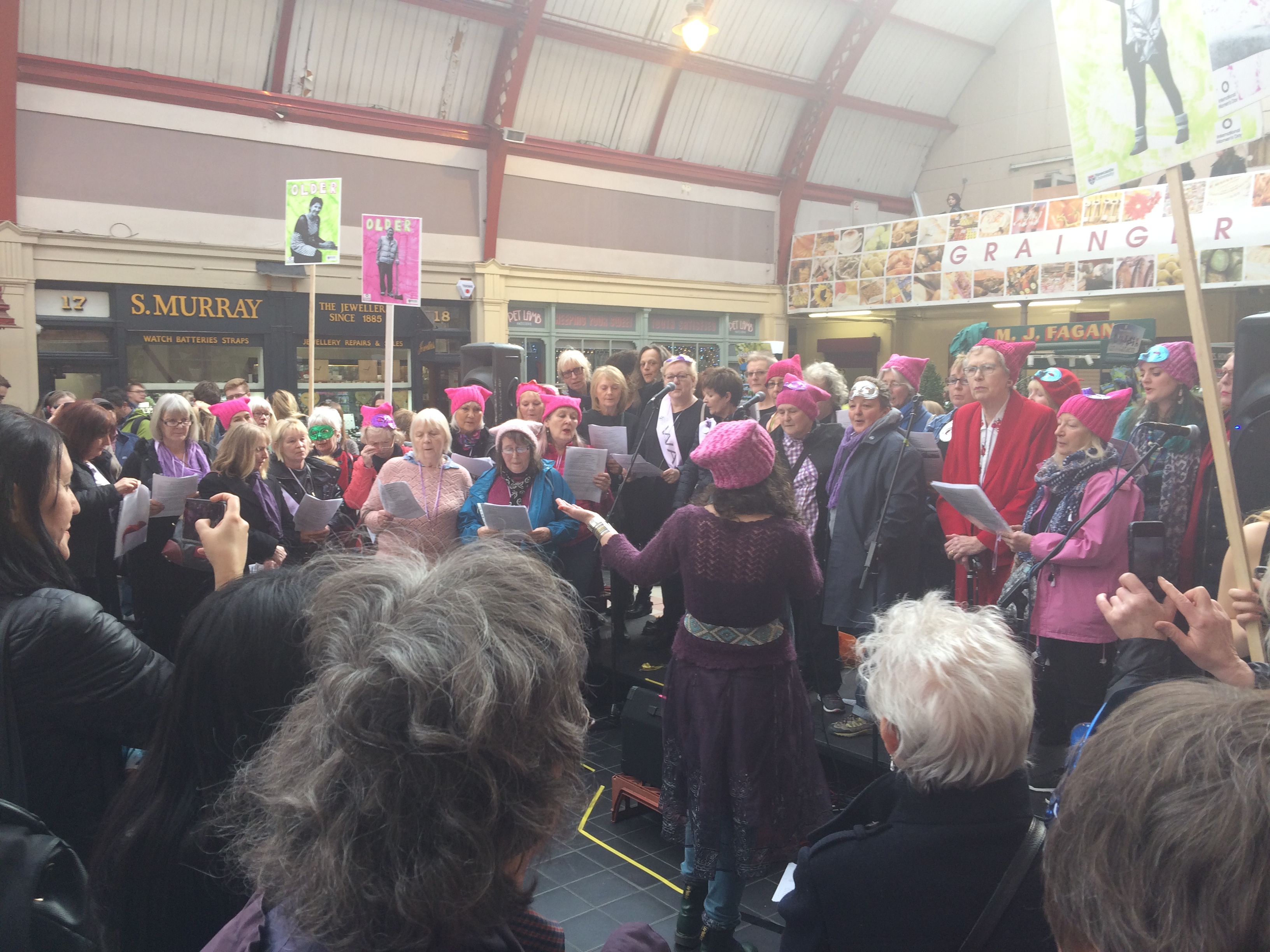
Fifteen of those women then agreed to take part in the second part of the project which was to be photographed at a place which either had a special meaning for them or else somehow ‘represented’ who they are. The last phase of the project was a public engagement activity which started life as a catwalk show but eventually became a Flashmob/pop-up choir, such is the way of consultation. This was a spectacularly successful event which took place on International Women’s Day, with groups of students from Newcastle University, Heaton Manor School, Gosforth Academy and Gateshead College covering the event from all angles, interviewing participants and shoppers and doing a brilliant job on social media. See here for a glimpse of what we got up to. At a conservative estimate, around 70 local women took part in the event and I have received some heartfelt thanks from participants for whom the event was the first time they said they felt part of something important.

img_2721

For someone who likes to be in control, working with members of the public is a highly rewarding but very challenging enterprise because they can be unruly, unpredictable and unreliable as well as brilliant, bold and brave. But the plus point of actually doing something meaningful in the  lives of people other than one’s own academic peers and the few random PhD students who together comprise the handful of folks who will ever read our scholarly exegesis, entirely overshadows the small irritations of poor time-keeping and loss of attention.

Community Choir performance as Grainger Market

Community Choir performance at Grainger Market, Newcastle

The photographic exhibition is up on the first floor of the City Library, from 9-22 March, so do go along and catch it if you can. The photos on display, taken by Donna-Lisa Healy, show the strength, resilience and humour of women and are accompanied by their digital stories which can be heard as the visitor walks around the exhibition. They were also displayed on the big screen at the top of Northumberland Street on International Women’s Day and the women who saw themselves in giant form were both bemused and tickled pink: I hope you are too.

Posted in ESRC Impact Acceleration Account | Tagged Aging, photography, singing, Stereotypes, Women | Leave a reply

Starting a new conversation about your research

Posted on 16 February, 2017 by Eve
Reply

Last month Steven Vass of The Conversation visited HaSS in association with the Press Office as part of the ESRC IAA capacity building programme. The session was split into two sections: the first was an introduction to The Conversation for those that might not have been aware of its aims and objectives.The second was more general advice when thinking about writing for a variety of audiences, not just for the site but for other specialist and general publications too.There were many surprising facts and figures presented about The Conversation:

  • The site has over 100 editors worldwide
  • 70 UK Universities (including Newcastle) are part of this network
  • It has 4 million unique visitors a month and a total reach of 35 million

Interestingly over 90% of that larger reach figure is via republication and the mainstream media often pick up on articles written for the site.This can sometimes mean a global audience for articles through unexpected channels.

Although many might think their research is too specialised for lay audiences, Steven encouraged attendees to consider their work in a broader way and perhaps link it with news stories and other events. It was a good reminder that there is always interest in a host of different subjects and there can sometimes be unexpected angles into different areas. The Conversation editors work alongside writers to produce short articles (normally never longer than 1000 words) however final publishing control is given to the writer.

Steve Vass                             Audience test

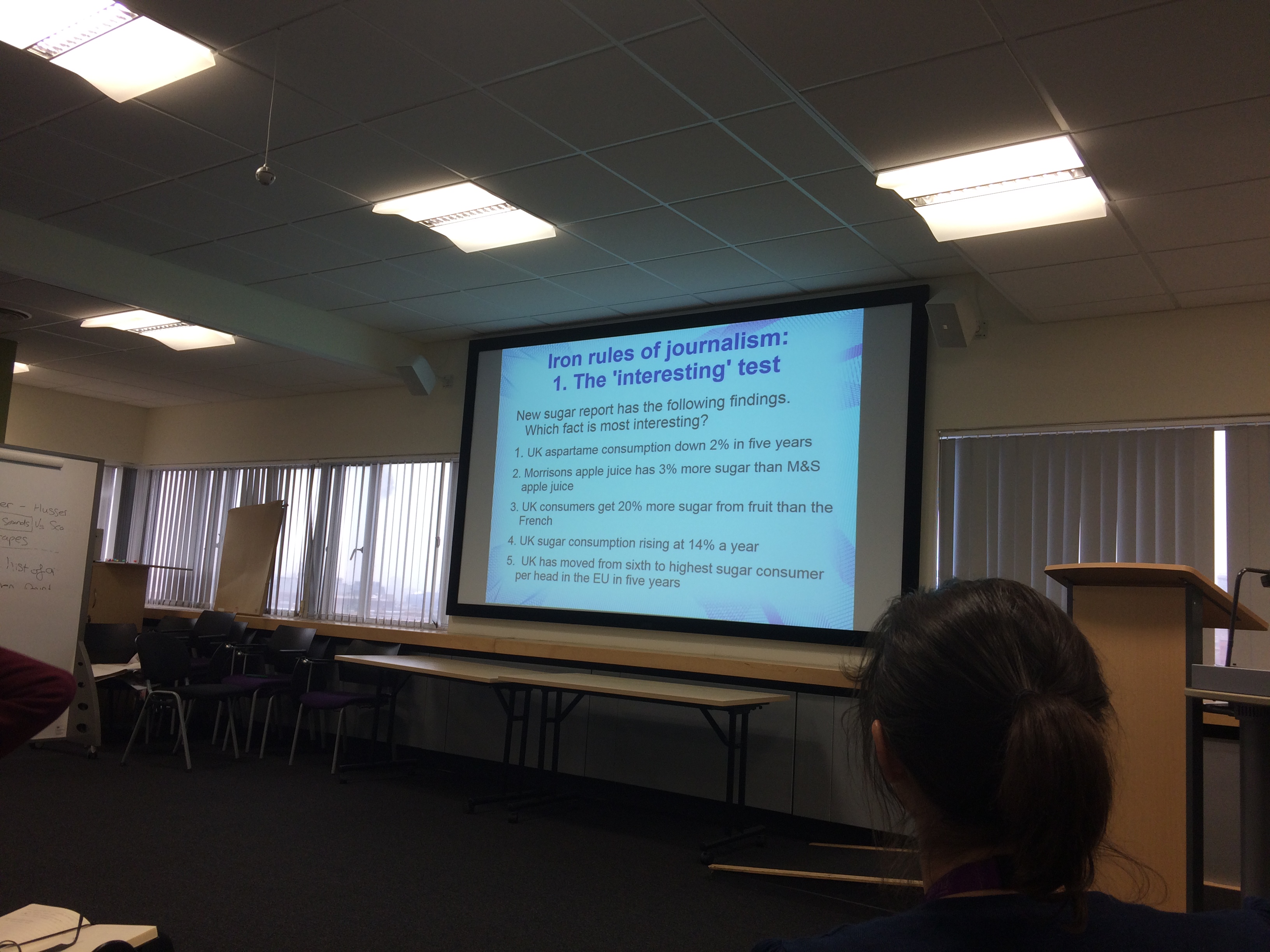
The second part of the session gave some more general ideas to think about when writing for a lay audience. One exercise presented attendees with 10 statements which were all different ways of saying ‘the cat sat on the mat’. It prompted a thought-provoking discussion in the room about what makes interesting writing and what essential facts readers must know about the subject area given a tight word limit.

Another important takeaway from the session was that keeping the audience in mind is vital but the style of writing is very much dependent on the outlet you are aiming for. This means you don’t necessarily have to avoid specific technical language or spare the details of certain projects, so long as it is relevant and understandable for the target audience.

One question to ask before writing is what the hook in your piece might be: this is also known to editors as the ‘why now’ test. In most cases (although there are exceptions) there needs to be something relevant for readers to relate to. This doesn’t necessarily have to be a news item but something recent in the public eye helps to generate interest. Steven admitted that finding the hooks can be a challenge however it is a skill that comes with time and gets easier the more you write for different audiences. The University Press Office can also offer help with developing these ideas.

Whether it is for The Conversation, a news article or other more specialist publications in your subject area there is huge value in communicating about your research to different audiences and it can have impact in all kinds of ways. People are interested in what you know, they just need to read about it!

To find out more information about The Conversation and to find a local editor to pitch an idea to, click here.

Posted in ESRC Impact Acceleration Account | Tagged capacity building, lay audiences, The Conversation, writing skills | Leave a reply

Exploring vital partnerships

Posted on 10 January, 2017 by Eve
1

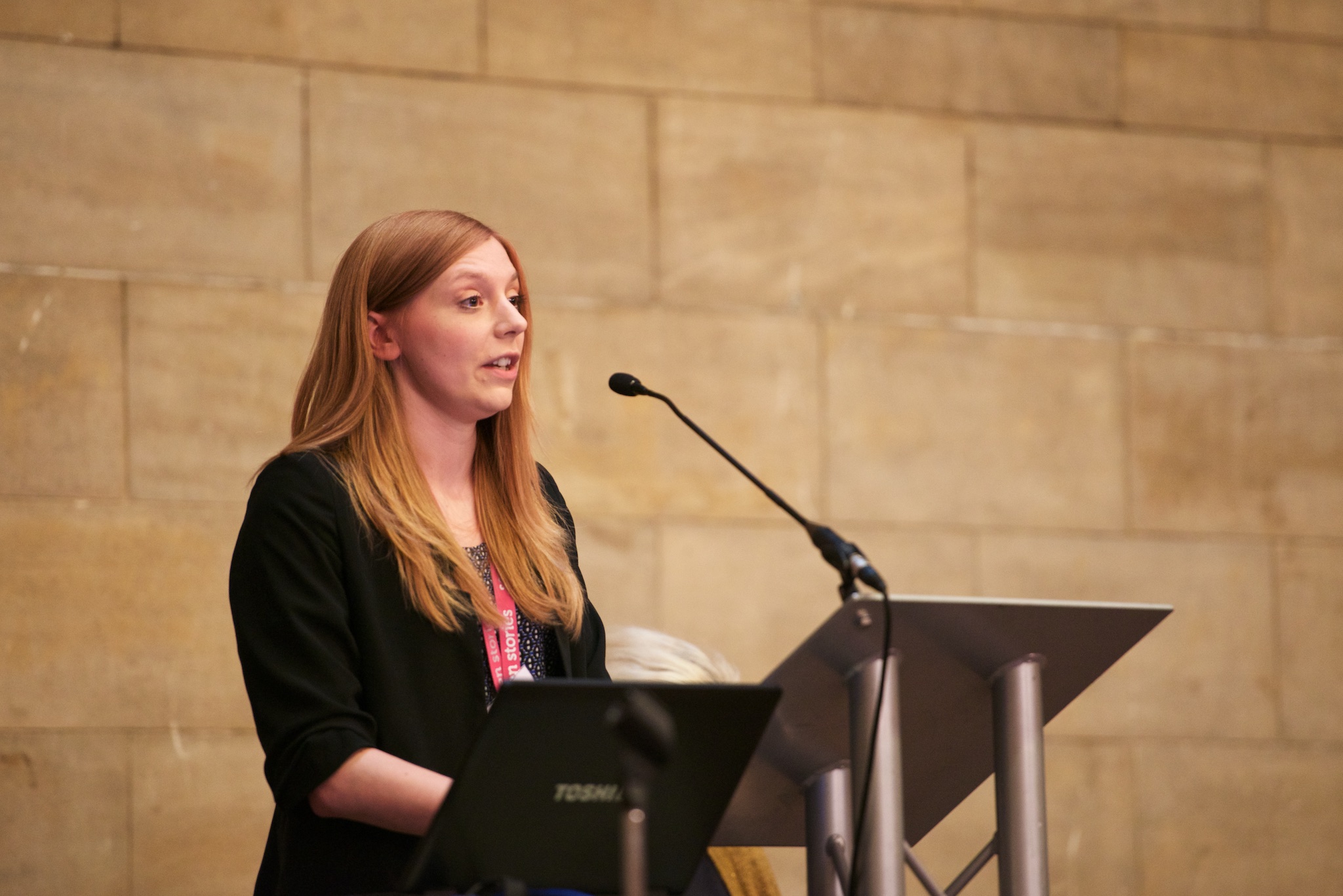
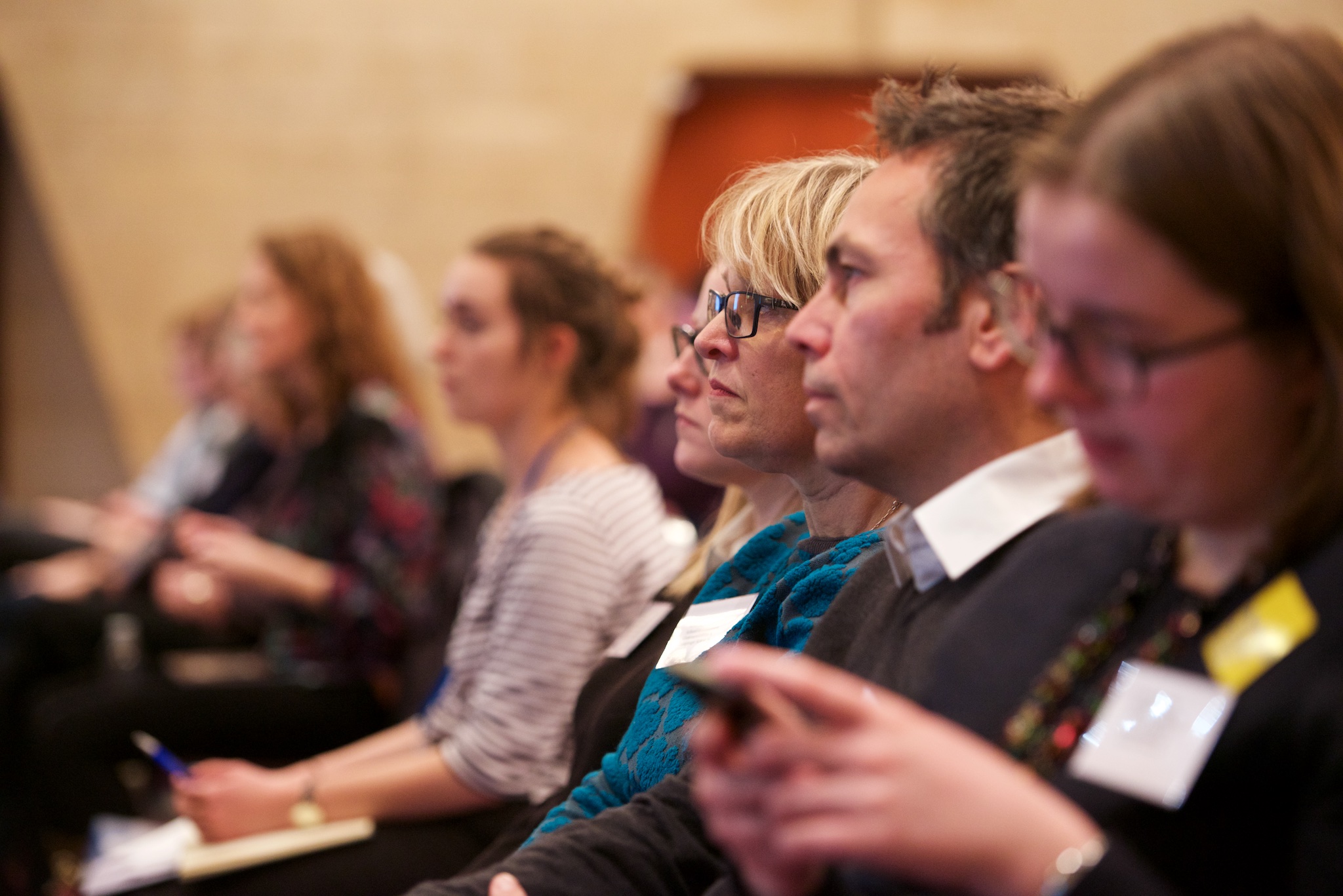
On the 30th November 2016 we ran an afternoon of presentations, networking and discussion surrounding the theme of Working Together: Bringing About Change at Newcastle Civic Centre. The event showcased some of the partnerships that our social science, arts and humanities researchers have with a wide range of organisations and communities in the region, and beyond. Over the next few months on the blog we will be sharing some of the presentations from that day. Following on from Daniel Mallo’s piece last week, Rachel Smith tells us more about her speedy presentation…

In 2016, I presented this Pecha Kucha about the Vital North Partnership between Newcastle University and Seven Stories: The National Centre for Children’s Books at two events; the Arts and Humanities Research Council’s Common Ground event in June, and Newcastle University’s Working Together: Bringing About Change event in November.

dsc_2591dsc_2627

Both events explored collaborations and engagement in the humanities. Pecha Kuchas are short, visual presentations. As you talk, you show 20 images, each for 20 seconds. Your slides change automatically. And they’re more than a little tricky to deliver…

The Vital North Partnership (+ 19 other ways Newcastle University and Seven Stories are collaborating) is exactly what the title suggests: a presentation about 20 current Partnership projects. And what are those projects? Well, watch the video and find out!

Rachel Smith manages the Vital North Partnership between Newcastle University and Seven Stories: the National Centre for Children’s Books, funded by Arts Council England from 2015 – 2018, This post originally featured on the Vital North Partnership blog.

The event was supported by the Economic and Social Research Council (ESRC), Newcastle Institute for Social Renewal, Newcastle University Institute for Creative Arts Practice, and Newcastle University Humanities Research Institute.

With thanks to Jeff Wilson from the School of English Literature, Language and Linguistics, who produced this video. The photographs from the event are courtesy of Zander Photography.

Posted in ESRC Impact Acceleration Account, Uncategorized | Tagged collaboration, ESRC IAA, Pecha Kucha, Seven Stories | 1 Reply

Post navigation

← Older posts
Newer posts →

Recent Posts

  • Community heritage in the Derwent Valley: remembering the past, imagining the future
  • Celebrating Social Science
  • Picturing Gertrude Bell
  • Bridging the gap in knowledge to action: focussing on local impact to enable community-led cohousing in the North East
  • Developing social entrepreneurship in emerging economies

Recent Comments

  • cat towers on ‘Learning how to learn’ – finding out about the Community Curriculum approach
  • swimwear sale on Exploring vital partnerships
  • Blog from Dr Paul Cowie on his collaboration with Cap-a-Pie | Performing Research Network on Using Theatre to Engage Communities in Planning
  • Higher spending on elections generally increases levels of integrity : Democratic Audit UK on Does the Cost of Elections Matter For Election Quality?

Archives

  • February 2020
  • October 2019
  • September 2019
  • August 2019
  • May 2019
  • April 2019
  • October 2018
  • September 2018
  • August 2018
  • May 2018
  • April 2018
  • February 2018
  • December 2017
  • November 2017
  • October 2017
  • August 2017
  • July 2017
  • June 2017
  • April 2017
  • March 2017
  • February 2017
  • January 2017
  • May 2016
  • January 2016
  • October 2015
  • November 2014
  • September 2014
  • July 2014
  • June 2014

Tags

  • adult learning
  • Aging
  • archives
  • art
  • being human festival
  • blogging
  • caribbean
  • children
  • citizenship
  • collaboration
  • collaborations
  • comics
  • communities
  • community curriculum
  • culture
  • disability
  • elections
  • engagement
  • equality
  • ESRC
  • ESRC IAA
  • evaluation
  • gardens
  • history
  • IAA
  • Impact
  • interdisciplinary
  • KITE
  • knowledge
  • Newcastle University
  • North-East
  • Northern Bridge
  • oceans. food
  • photography
  • schools
  • Scotswood
  • seas
  • sensory
  • singing
  • Stereotypes
  • TWAM
  • VCSE
  • Women
  • writing
  • young people

Meta

  • Log in
  • Entries feed
  • Comments feed
  • WordPress.org
Tweets by HaSSResNCL

Newcastle University, NE1 7RU, United Kingdom

Telephone: (0191) 208 6000
From outside the UK dial +44 191 208 6000.