Skip to primary content
Skip to secondary content

HaSS Research Impact

Research Impact from the Faculty of Humanities and Social Sciences (HaSS), Newcastle University

HaSS Research Impact

Main menu

  • Home
  • About Us

Category Archives: ESRC Impact Acceleration Account

Post navigation

Newer posts →

Making changes through participation

Posted on 4 January, 2017 by Eve
Reply

How do you get communities more involved in their local environment? What changes can be made that can really make a difference to surroundings with a limited budget? Daniel Mallo, a researcher in the School of Architecture, Planning and Landscape tells us about a project that helped the locals of Fenham Hall Drive in Newcastle realise a different vision for their local space.

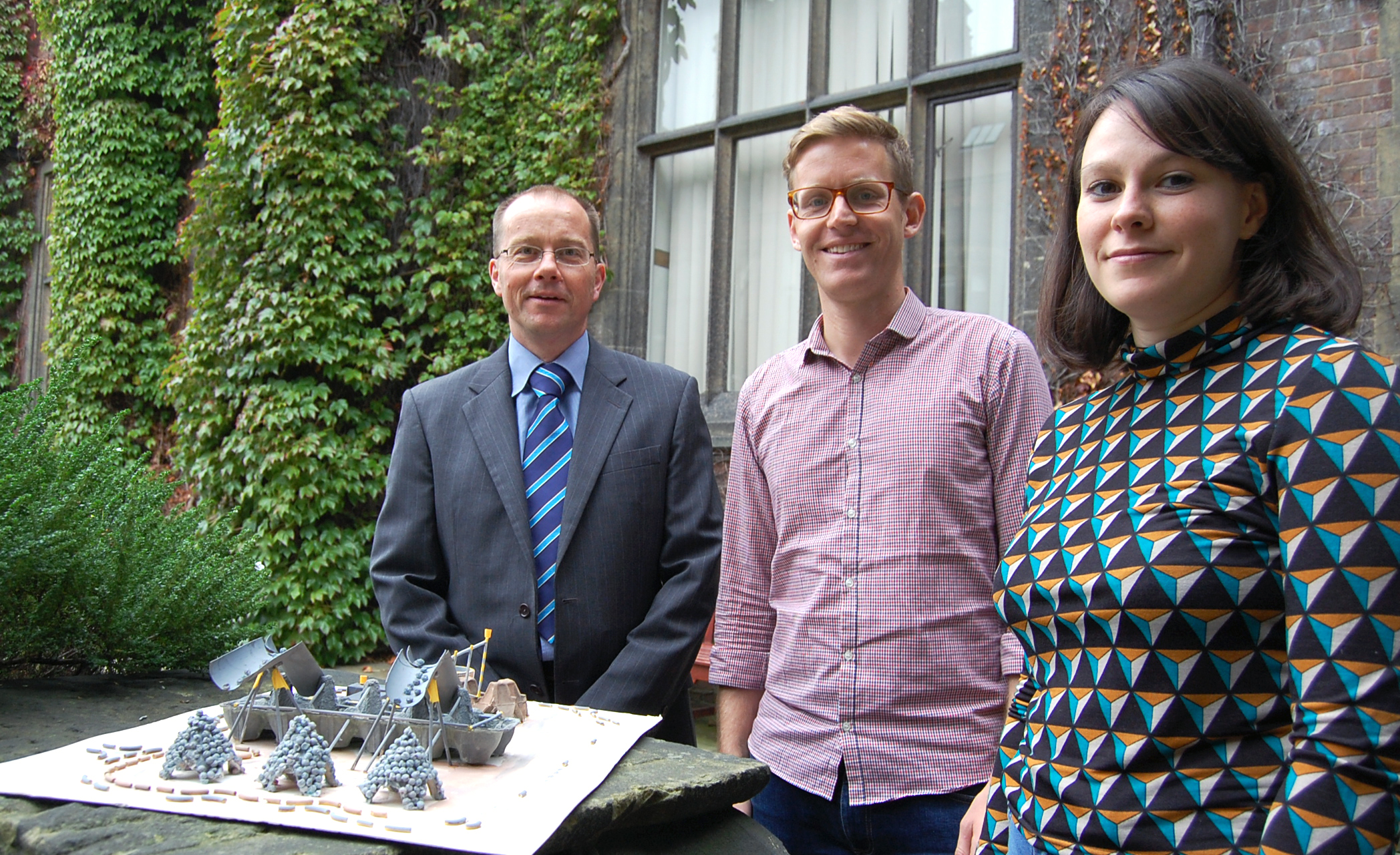
The Pocket Park idea came about almost by accident. Fenham ward, in the West End of Newcastle, had received some funding for the Sustrans DIY Streets Project to involve local people in improving their area, making streets less car focused and more generally ‘help them redesign their neighbourhoods putting people back at their heart.’ Through an ESRC IAA grant we supported Sustrans’ work by strengthening community aspirations and sparked inspiration into the potential of their local environment.

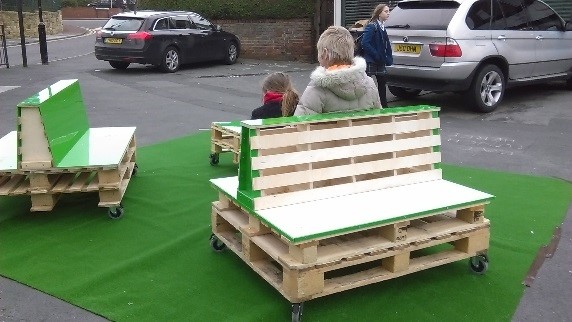
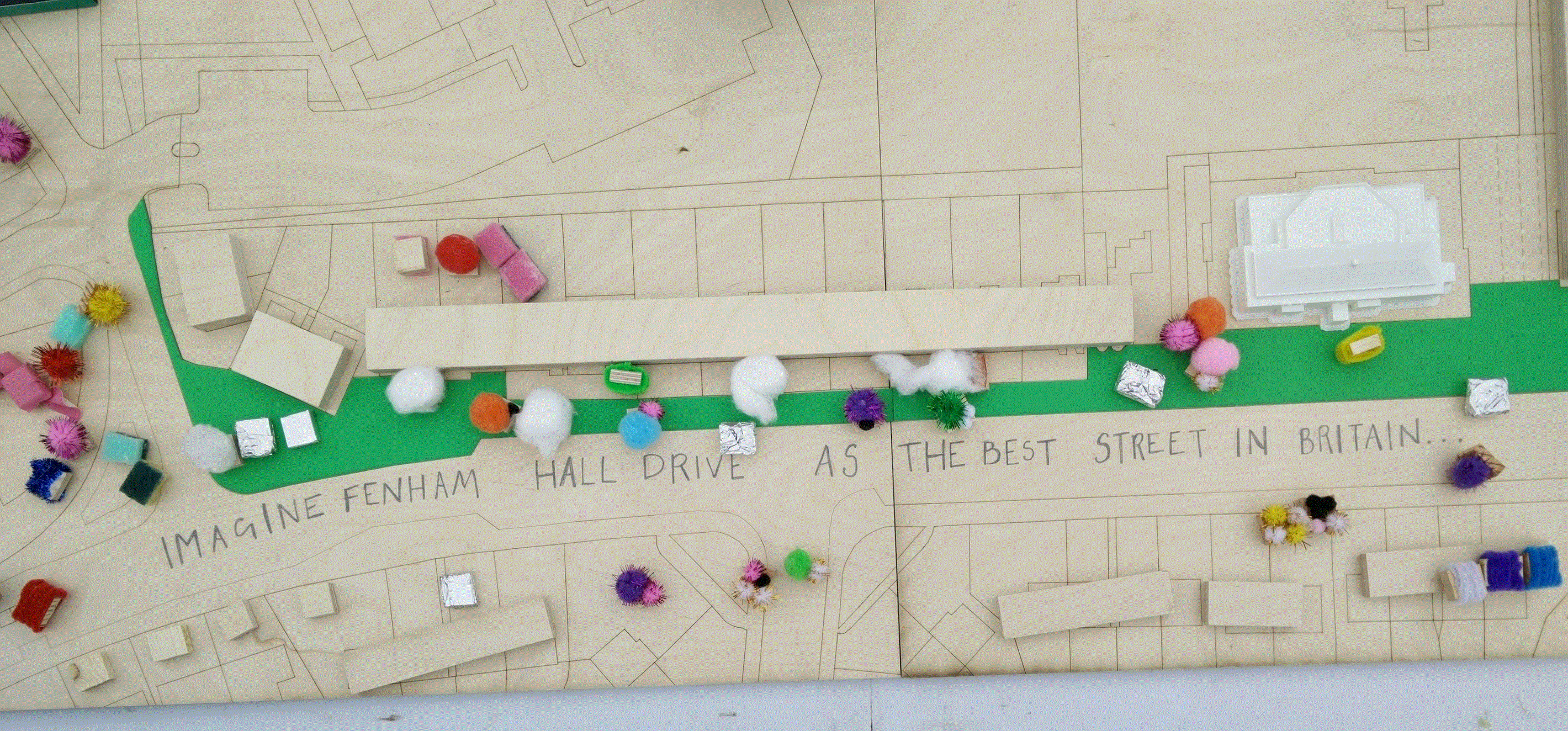
To begin with we used various methods to find out how residents felt about their local area. We built a basic scale model encouraging locals to interact with it, helping them imagine what could be possible. Temporary wooden seats were also placed along the street where cars normally parked so residents could see the impact of making these changes in a more physical way.

dm_2_pp

dm_1_pp

Later we conducted a focus group using large photographs of the street that could be sketched over, to foster further discussion amongst participants. During these different stages local people identified a need for a place where they could sit and watch the world go by. Many residents also commented that the library, swimming pool and doctors’ surgery on Fenham Hall Drive formed a community hub but that there was nowhere to wait for their children. Taking these ideas into consideration the project concluded with a pop-up public/play space between the library and pool for four days, which gave members of the public, residents and other stakeholders the opportunity to experience the potential impact of a public space in the area. This temporary space showed, more than a model or image could ever do, the way in which people could change their environment for the better.

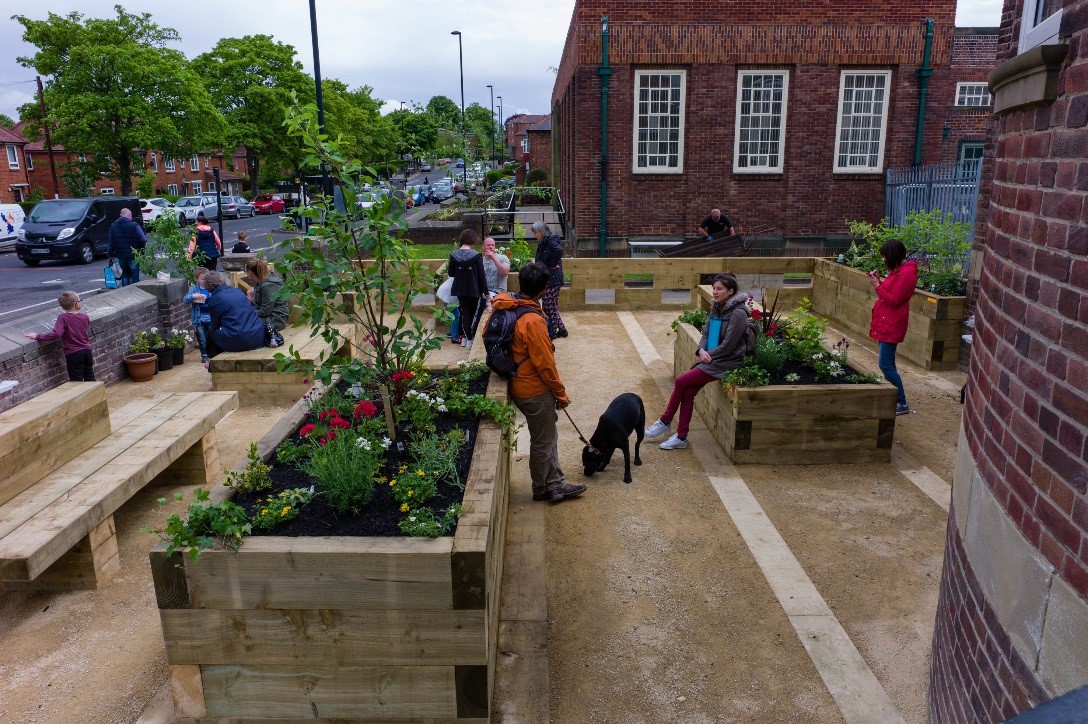
All of these experiences strengthened the desire for the community and all the various partners involved – members of the City Council, local residents, Fenham Association of Residents, Fenham Library, Fenham Swimming Pool, Sustrans, Your Homes Newcastle, Newcastle University and Fenham New Model Allotments – to seek funding for what they now call a hub for Fenham Hall Drive. A group of local people, in partnership with Fenham Association of Residents, were successful in being awarded £15,000 from the Department of Communities and Local Government to build a Pocket Park, which opened on Saturday 21 May 2016.

After the park had been created, participants in the project formed the Friends of Fenham Pocket Park, a community group that helps promote the use of the space by local residents and visitors of all ages, alongside a chance for people to volunteer, learn new skills and help support the Pocket Park’s maintenance and future development.

Cllr Marion Talbot, a City Council ward member for Fenham who was involved in the project from the beginning, was interviewed about the Pocket Park when it was opened this year. She said that “it has been refreshing the way residents, community groups and organisations have all joined together to make this project happen; and unite with a common goal of providing something extra special for the area and forging invaluable working relationships that could prosper in years to come.”

dm_3_pp

From a research point of view the process of collaboration between various groups throughout this project was thought-provoking. It put the different participatory design approaches we use to the test and at the same time helped local people plan a useful space that is beneficial to the whole community. The project only ran for 18 months however it has had a lasting impression on Fenham and its residents: that is the best kind of impact any research can have.

To find out more about the ESRC IAA grants, please click here.

Posted in ESRC Impact Acceleration Account | Tagged communities, ESRC, Fenham, inclusion, parks, Sustrans | Leave a reply

Algorithms – a Personal Journey into the Unknown

Posted on 6 May, 2016 by Angie
Reply

by Ian McDonald

Dr Ian McDonald, based in the School of Arts and Cultures, is Acting Director of the Research Centre for Film at Newcastle University. 

Ian recently received an ESRC Impact Acceleration Account award for “Algorithms: From Screen to Social Impact in India” from Newcastle University. Here he talks about the incredible journey of the documentary that began ten years ago!

Initially, it was simple curiosity that got me interested in Blind Chess. In 2006, I was in India completing my first documentary ‘Inside the Kalari’ when I came across a small newspaper report about blind children playing chess. I cut out the report (for it was an actual newspaper!) and asked a few people if they knew about blind people playing chess. Nobody did. So, as someone with a keen interest in alternative cultures of sport (at that time I was also researching for a documentary on a gay football team in the UK), I started to explore the possibility of a film about young blind chess players in India.

In 2008, my producer and creative collaborator Geetha J (who recently joined the University as a Lecturer in Film Practice) and I began our research that included making a short film on four blind kids called ‘Out of Our Hands’. Then we met Charudatta Jadhav from the All India Chess Federation for the Blind, who is an inspirational pioneer of blind chess not just in India but internationally. Charudatta, himself totally blind, invited us to a national tournament in Mumbai in January 2009. We were amazed to come across hundreds of blind and visually impaired players competing against each other in the tournament. Algorithms began at this point. We found our three main players – Sai Krishna 12 from Chennai, Darpan 15 from Baroda and Anant 16 from Bhubaneshwar – the three most promising juniors in India. And there was ‘Charu-sir’. What we didn’t know then was that this would be the start of a three-year shoot that would take us to numerous cities across India and to three countries in Europe!
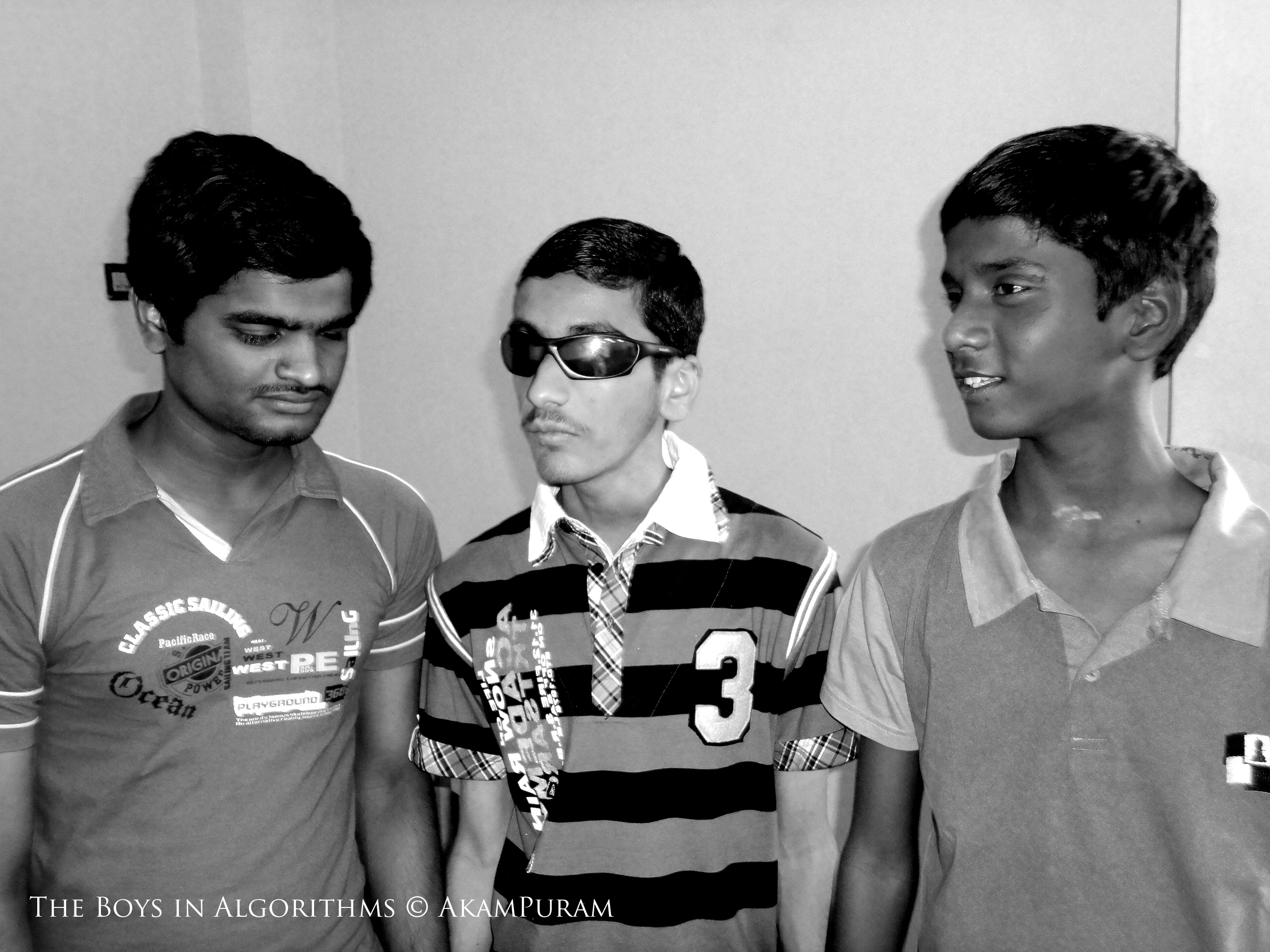
1 TheBoysThe Chess Players: from left to right: Anant, Darpan and Sai Krishna

The more I got into the shoot, the more my attitude to blindness changed. I began to recognise that blindness is not a barrier to leading a full life and that blindness is better understood as a different way of being in the world, in which sound and touch come to the fore. It is almost as if eyesight has allowed us, the sighted, to lose touch with each other and our surroundings. I began to rethink the notion of sight, question the limitations of eyesight and understand the importance of foresight. There is a neat paradox here, the blind were actually teaching me, a sighted person, what it really means to see! These were lessons that the blind players learnt from chess. This was Charudatta’s mantra – to be good at chess and to succeed in life, you need vision, not sight. You require foresight, not eyesight. It struck us that this was a lesson for the sighted as well as the blind.
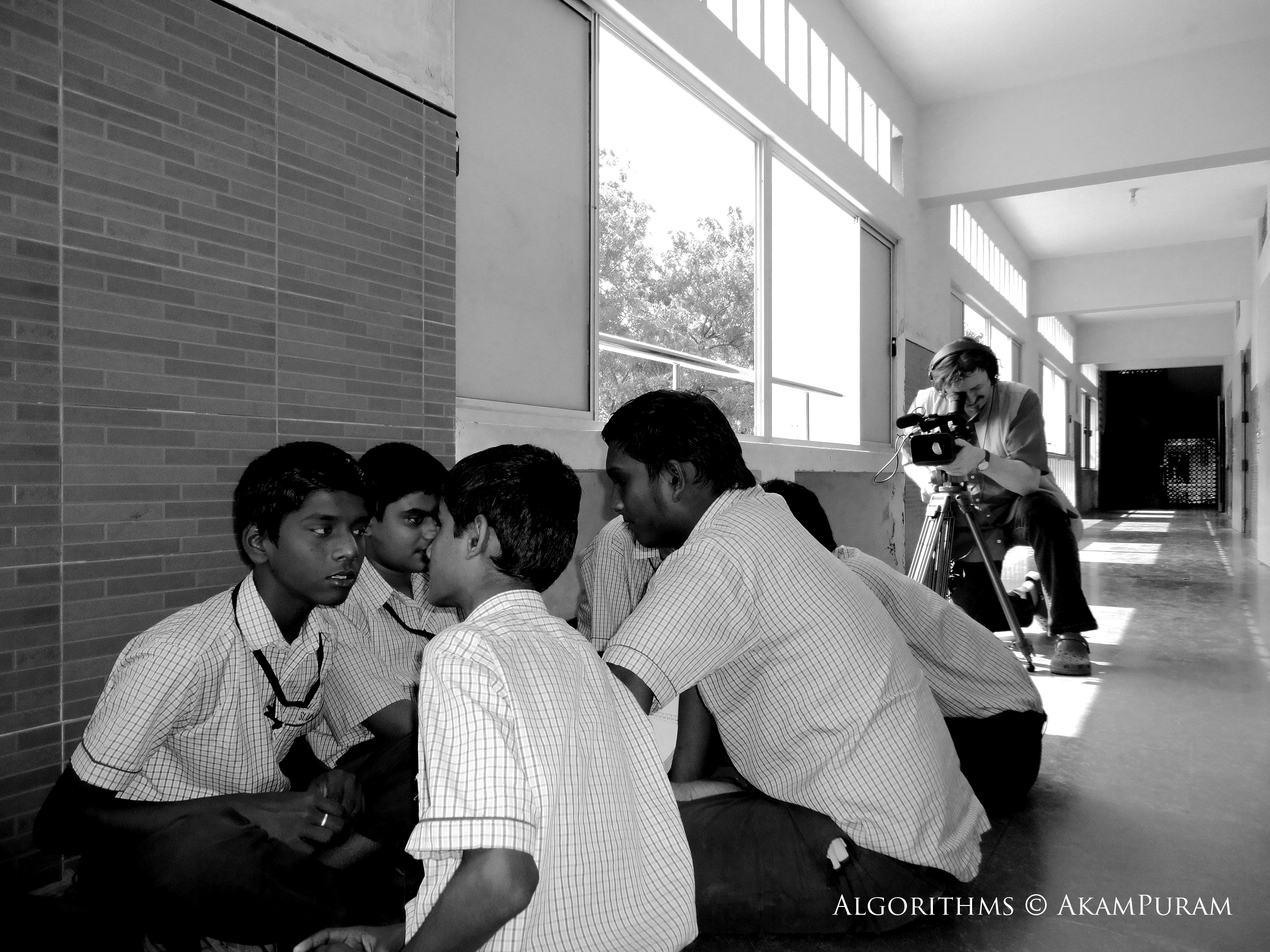
2 AlgoShootingStillShooting still. Ian filming Sai Krishna at his School for the Blind & Visually Impaired.

I also began to appreciate the popular Indian verse: ‘sukha dukhe same kritva’ – that joy and sorrow, profit and loss, winning and losing are but the same; they torment us but we must treat them as same and engage in life. Finding hope in hopelessness and possibility in impossibility, the Blind Chess community moves forward, reminding us of the forgotten significance of touch and of the materiality of our social existence in an era dominated by the visual and the virtual. I also learnt that once you understand that “four moves in, we are all blind”; you can find your steps forward – through insight, foresight and vision. Making Algorithms has certainly changed my outlook on life!
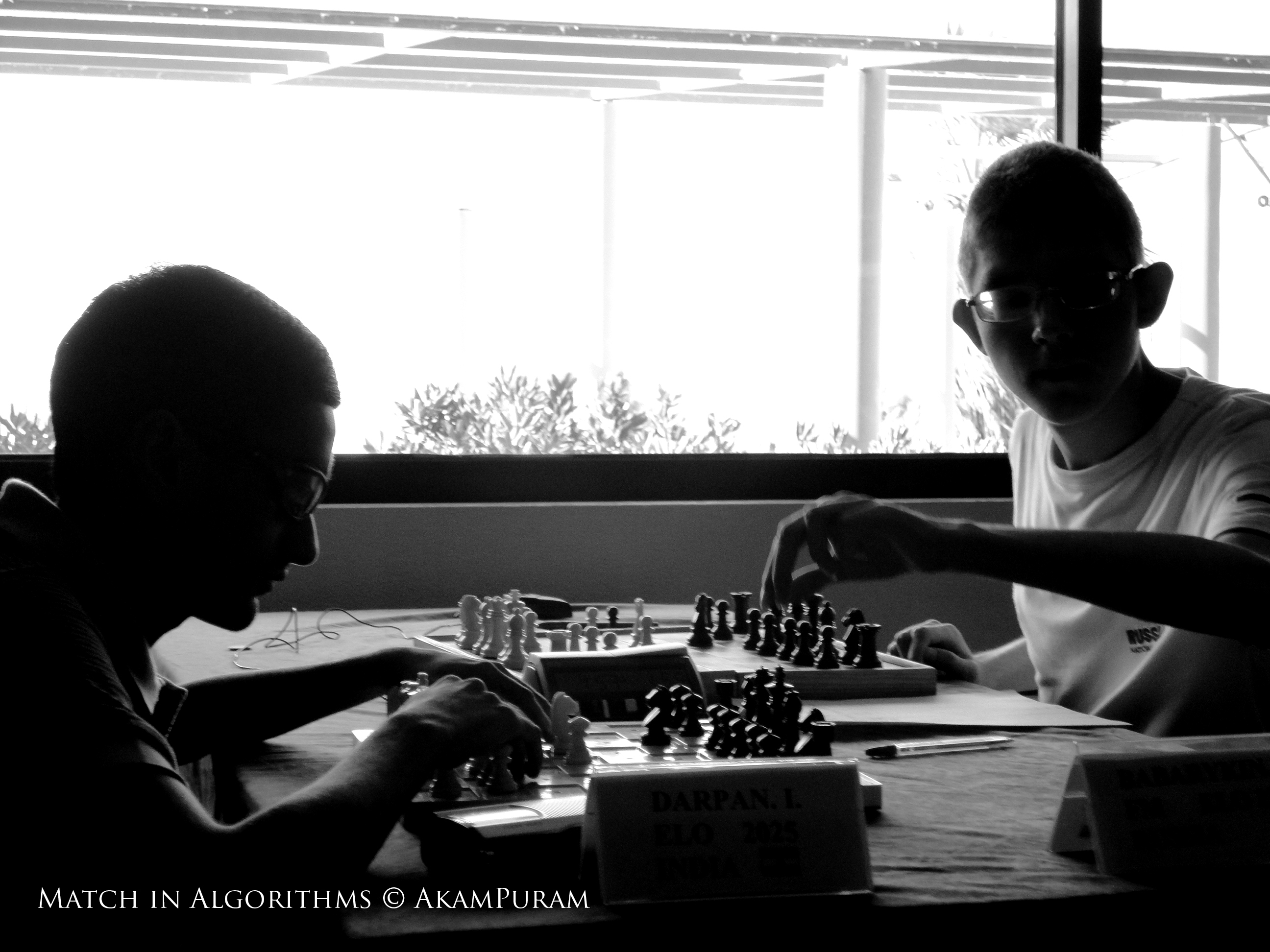
3 TheMatchStill from Algorithms. Darpan (foreground) playing against a partially sighted player from Russia during the Junior World Blind Chess Championship in Greece

Algorithms had its very first public screening at the prestigious International Film Festival of India (IFFI) in Goa in November 2012. I remember how anxious Geetha and I felt in the run up to that first public screening. Our anxiety was not helped by well-meaning caution from the festival organisers who told us we would probably not get a big audience, after all it is a documentary, and most Indians prefer fiction and from renowned filmmakers! Indeed, less than ten minutes into the film, we could see some people leave. Geetha and I glanced at each other nervously fearing the trickle would turn into a flood.
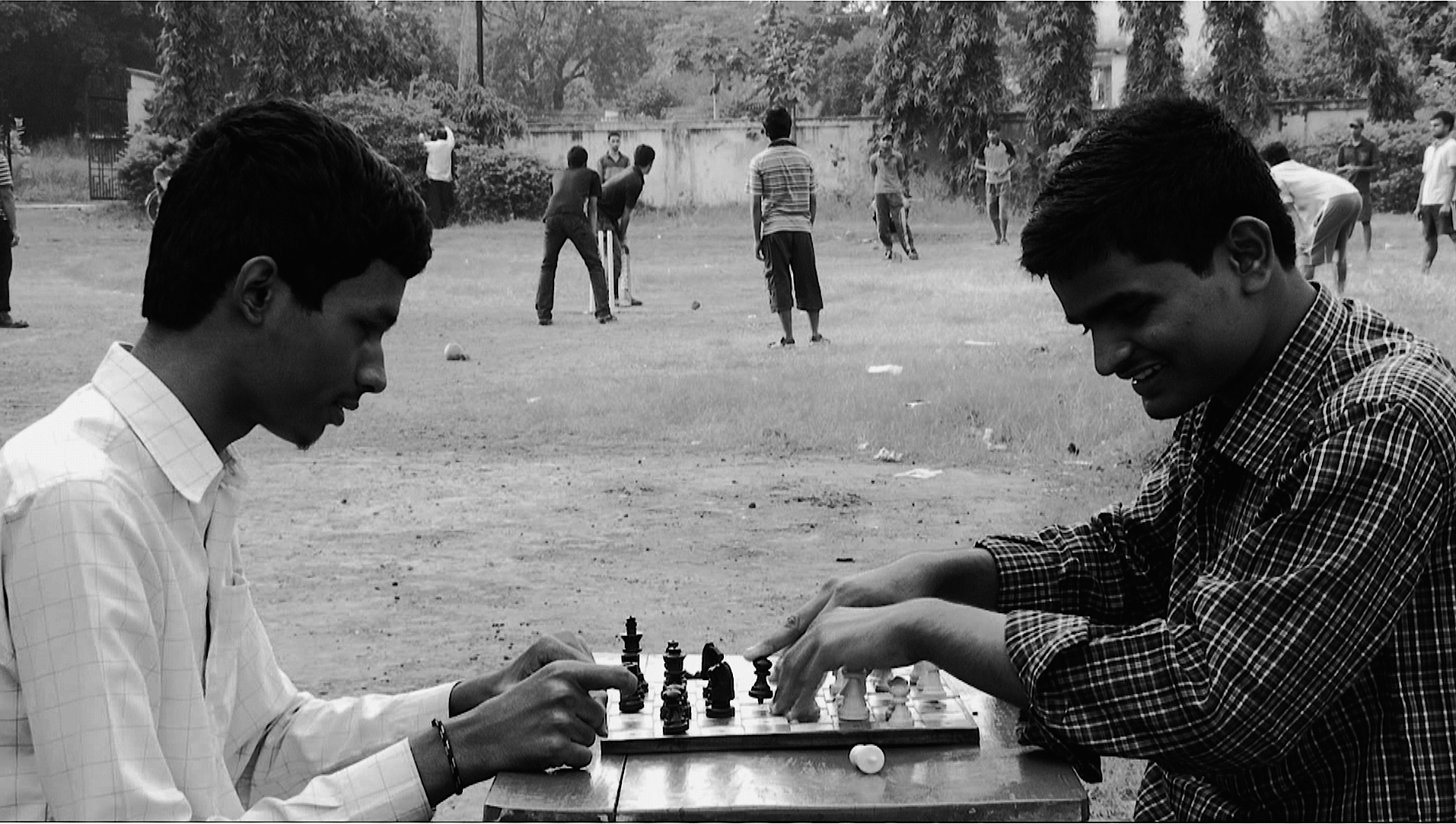
4 Chess&CricketStill from Algorithms: Anant (right) playing a friendly match with his blind friend

But, something strange happened. The trickled dried up. People stayed. Pin drop silence descended during the emotionally heavy scenes. Some people even started chuckling and laughing at the lighthearted moments. And a warm round of applause broke out at the end of the film. I also remember the lively Q&A afterwards that went on for 45 minutes as hand after hand shot up to ask question after question: ‘how did you get the idea for the film?’, ‘why did you make it black and white?’, ‘why did you call the film Algorithms?’. Finally the organisers pleaded with us to leave to make way for the next (fiction) film!
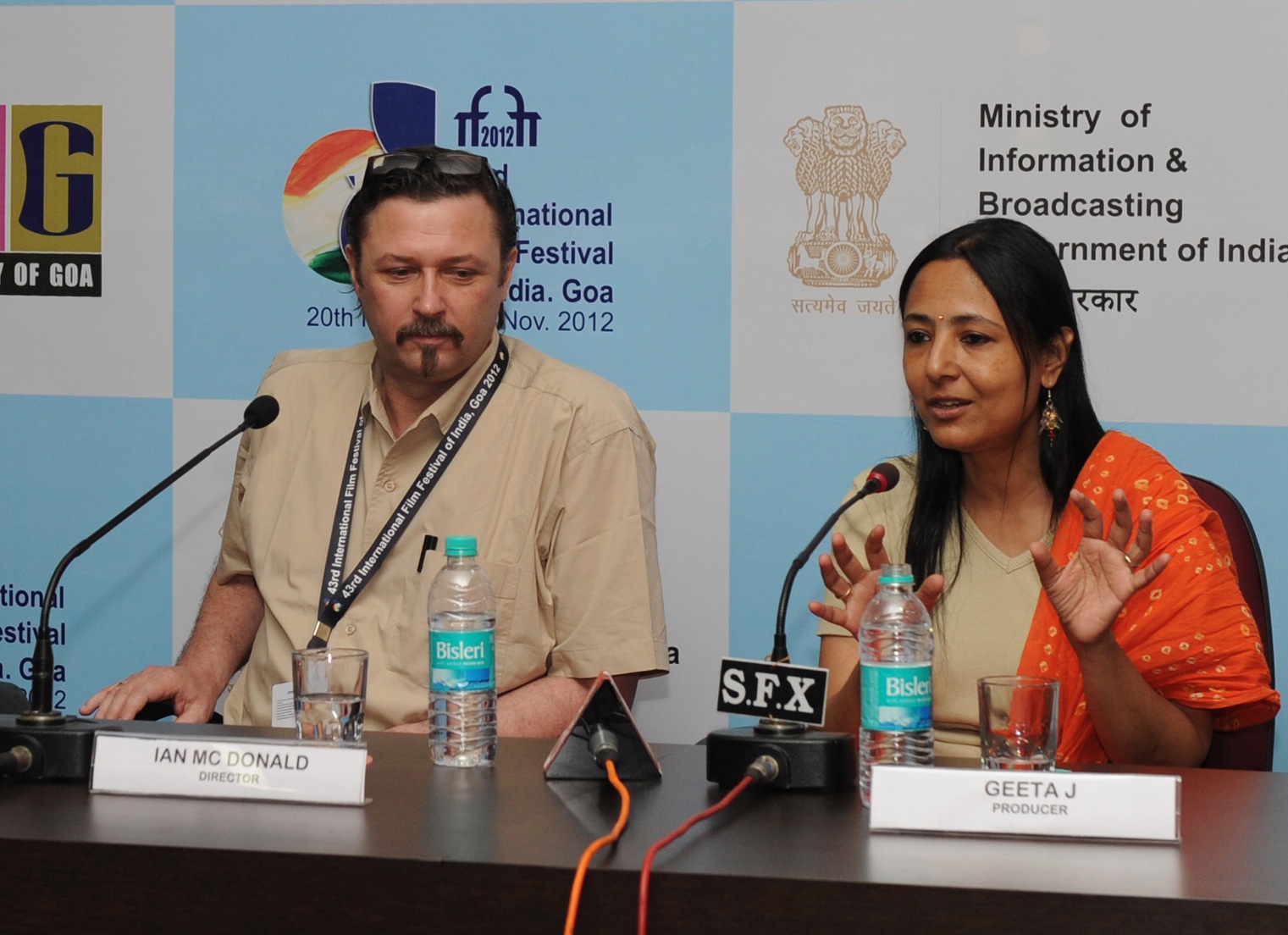
IFFI-1285Ian & Geetha at a Press Conference at IFFI

There was a real buzz around the film and reviews of the film were positive. But our hopes that other festivals would pick the film up were dashed. Not a clear story line, too many characters, too long, no explanations, etc seemed like excuses as festival after festival passed on Algorithms. Our hope that a distributer would sign the film and take it to festivals too went unfulfilled. ‘100 mins, black and white, subtitled, and on blind chess, the conversation stops here,’ retorted one distributer. It was a really difficult time. It was not until June 2013, some seven months after the world premiere at IFFI, that Algorithms got its international premiere at the Sydney Film Festival.

We knew that having a good, even a very good film, is not enough for a top festival to select a film. But what we didn’t realize was how much more difficult it is when it is a truly independent film. If a film is not funded or supported from within the film industry, then it’s an uphill battle to be taken seriously by distributers and noticed by festivals. It was a huge relief and felt like a real breakthrough when we were told that Algorithms was selected for Sydney (the Director of the Sydney Film Festival had seen the film at Film Bazaar during IFFI). Geetha and I went to Sydney, of course. It is a super film festival with a great audience turn out. Indeed, Algorithms had a great response. And the reviews were not bad either!

6 Geetha@SydneyFFAlgorithms producer Geetha J walking the red carpet at the Sydney Film Festival

I went straight from Sydney to Edinburgh for the UK premiere at the Royal Anthropological Institute’s International Festival of Ethnographic Films, where Algorithms won the its first award –the Audience Award!  A part of me wanted to send the certificate to all those ‘experts’ who claimed that audiences would not appreciate such a film! Then in July we attended the Durban International Film Festival in South Africa where Algorithms received a special mention in the Best International Documentary category! This was followed in October by our first main award – Best Film – at the highly competitive and prestigious Film South Asia festival held every two years in Kathmandu. I treasure jury chairperson Sadanand Menon’s words: “‪Once in a while, a film comes along that can surprise with the elegance it evokes through simplicity” and the citation that remarked on “the grace and near balletic finesse of the camera-work that, throughout, hardly seemed intrusive and the seamless editing that gave the film a poetic quality”. Slowly our confidence began to rise again. Many high profile filmmakers like Nick Broomfield in the UK and Shyam Benegal in India also expressed their appreciation for the film.

With more festivals selections came more awards: Best Film on Immaterial Culture at the Jean Rouch International Film Festival in Paris in Nov 2013; Best Editing at the Mumbai International Film Festival in Feb 2014; Best Story at the Sports Film Festival in Moscow in March 2014; Best Foreign Documentary at the Los Angeles Femme Film Festival in October 2014 and Best Documentary Feature at the first International Film Festival for Persons with Disabilities in Delhi in December 2015. It was also nominated for a Griersons and for Best Documentary at the UK National Film Awards. And I received a Certificate for Excellence in Cinematography from the Indian Documentary Producers Association! After a slow start, Algorithms was eventually screened at over 50 international film festivals and picked up more than 10 awards.
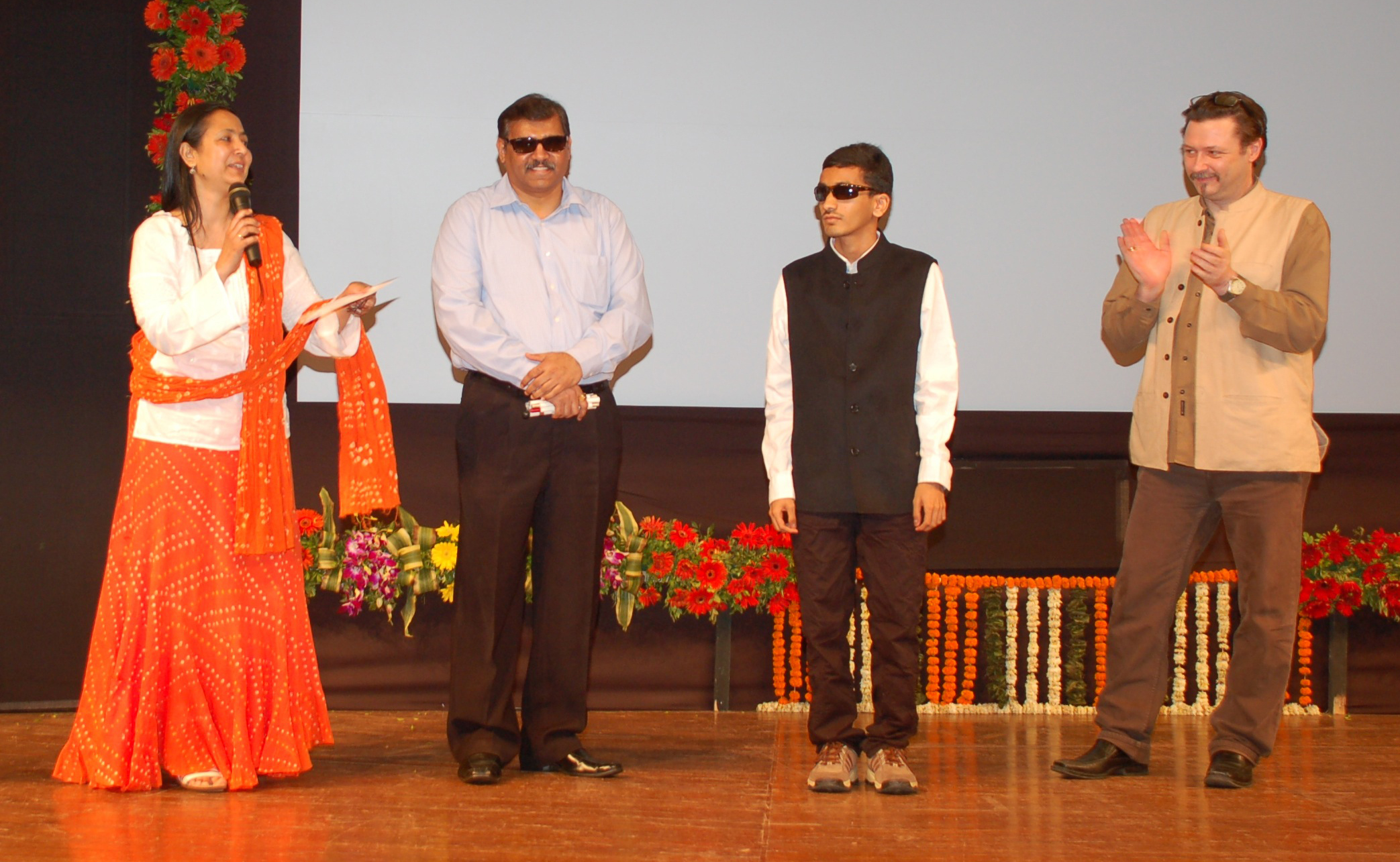
7 Algoteam@MIFFGeetha introducing Charudatta Jadhav and Darpan to the audience at the Mumbai International Film Festival in February 2014

But it must be said here that it was pure word of mouth that got us going to these festivals, getting awards and getting some great reviews too. It was the audience themselves who were taking our film forward. This took us to some very sensitive people in some key organisations, which led to a theatrical release of Algorithms in the USA and UK. We secured the support of Tata Consultancy Services (TCS) in India, the World Chess Federation (FIDE) and Newcastle University, and soon the fanciful became feasible. In October 2014, Geetha and I landed up in the surreal surroundings of Los Angeles. We had our preview Oscar screening supported by grand maestro A R Rahman and inaugurated by Grand Master Susan Polgar at the Directors Guild of America on Sunset Boulevard, Hollywood! After the two weeklong Oscar qualifying theatrical release in Los Angeles and New York, Algorithms made the long list. Of course, not the short-list. But through all this more and more new audiences were discovering the hidden but thriving community of blind chess players in India. And the film continued to garner some fantastic (and our first negative, it must be said) reviews.

Algorithms was released in the UK in November 2014. It screened to small though appreciative audiences in 7 cities, though I was thrilled that there was a full house for the screening at The Tyneside Cinema in December. And we were delighted by some excellent reviews of the film, including a 4 star review in the Guardian and a review in Sight & Sound that I find moving, “Algorithms is really the world of Apu, and in this sense, director Ian McDonald has made a film about chess that is more Ray than Ray’s film about chess.”

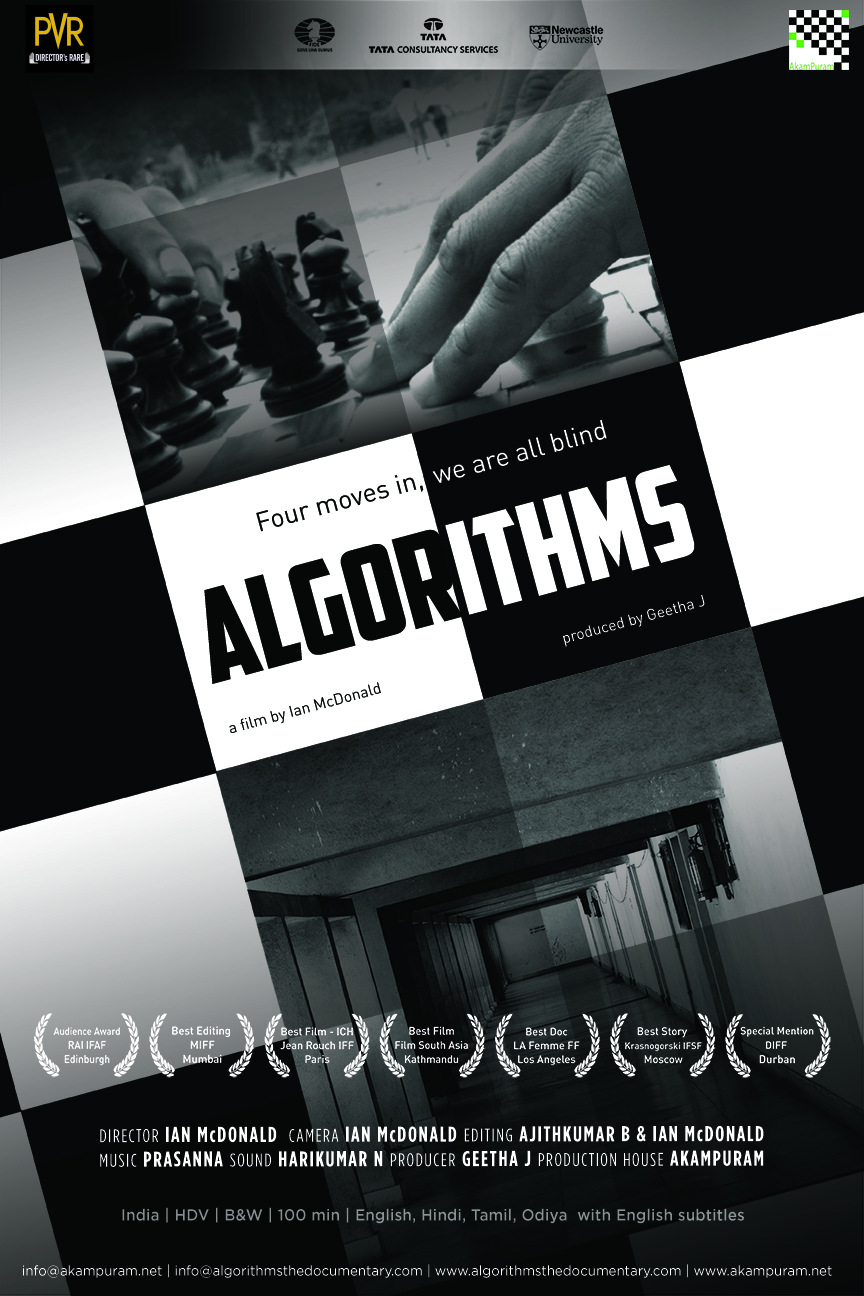
Word continued to spread. Screenings of the film spilled out from festivals and theatres to cultural institutions, third sector organisations and even at international events. One highlight was a screening at the FIDE World Chess Championship between Magnus Carlsen and Viswanathan Anand in Chennai. Such screenings helped the film develop a varied audience following. Then finally, Algorithms released in India! It was the 10th documentary release of PVR, an Indian cinema chain that backed documentaries. Supported by an award from the HASS Faculty Impact Fund, Geetha and I travelled to India for the countrywide theatrical release in Delhi, Pune, Mumbai, Chennai, Bangalore, Hyderabad and Kochi in August 2015. A new fast-paced trailer and a stunning new poster were released too.
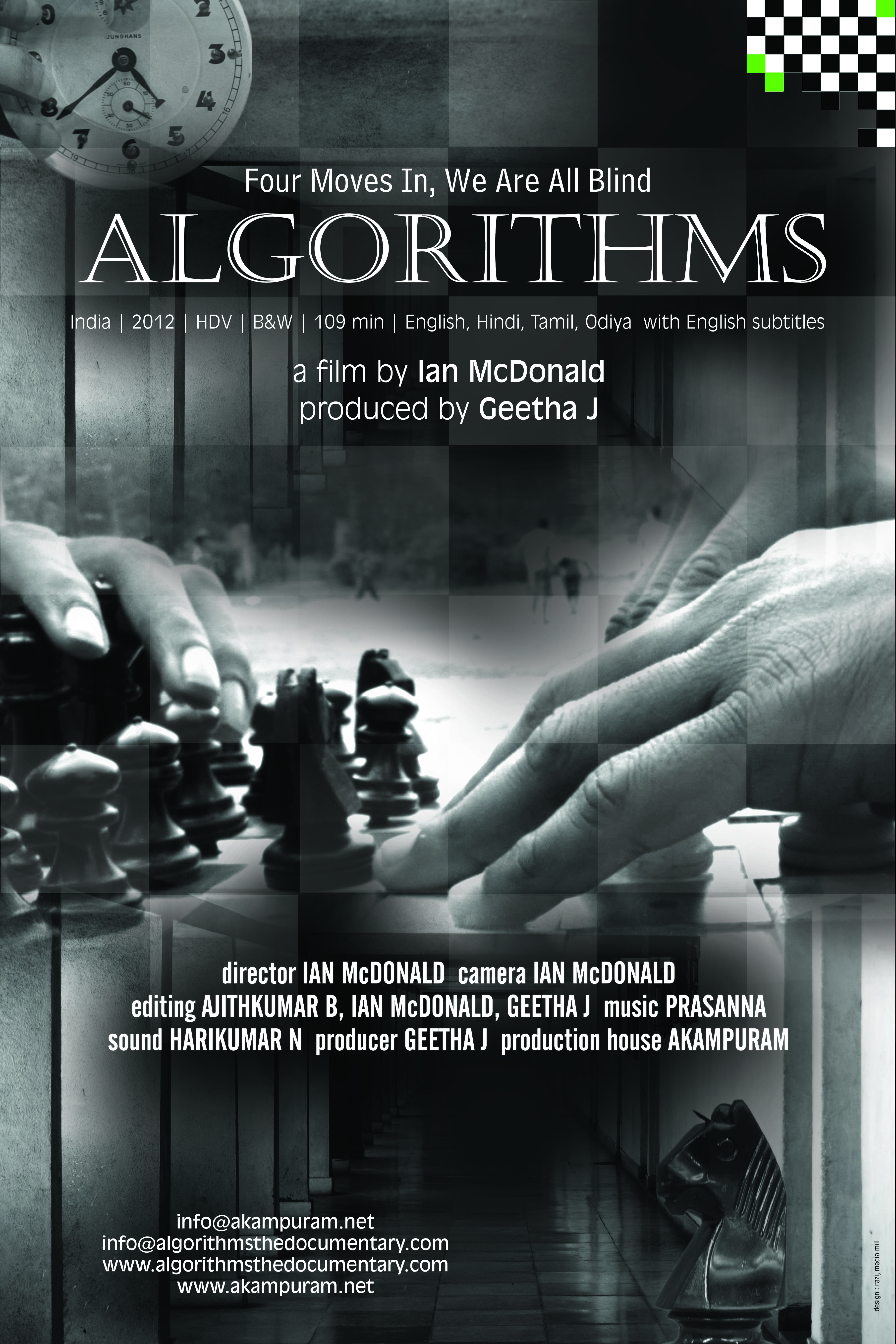
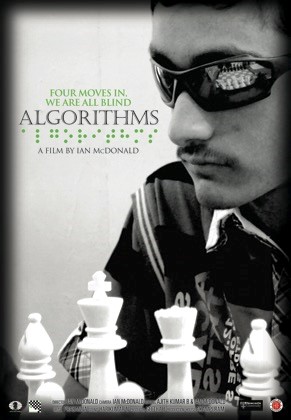
8 Festival Poster9 Algorithms_poster USA10 Algorithm Poster IndiaFilm posters: from left to right – for Film Festival – for USA theatrical release – for India theatrical release.

The preview to the release was unique as it was screened to a blind and visually impaired audience with an audio description. The icon of Indian chess, Grandmaster and five times World Champion Viswanathan Anand inaugurated the screening with a blind blitz match with Charudatta.
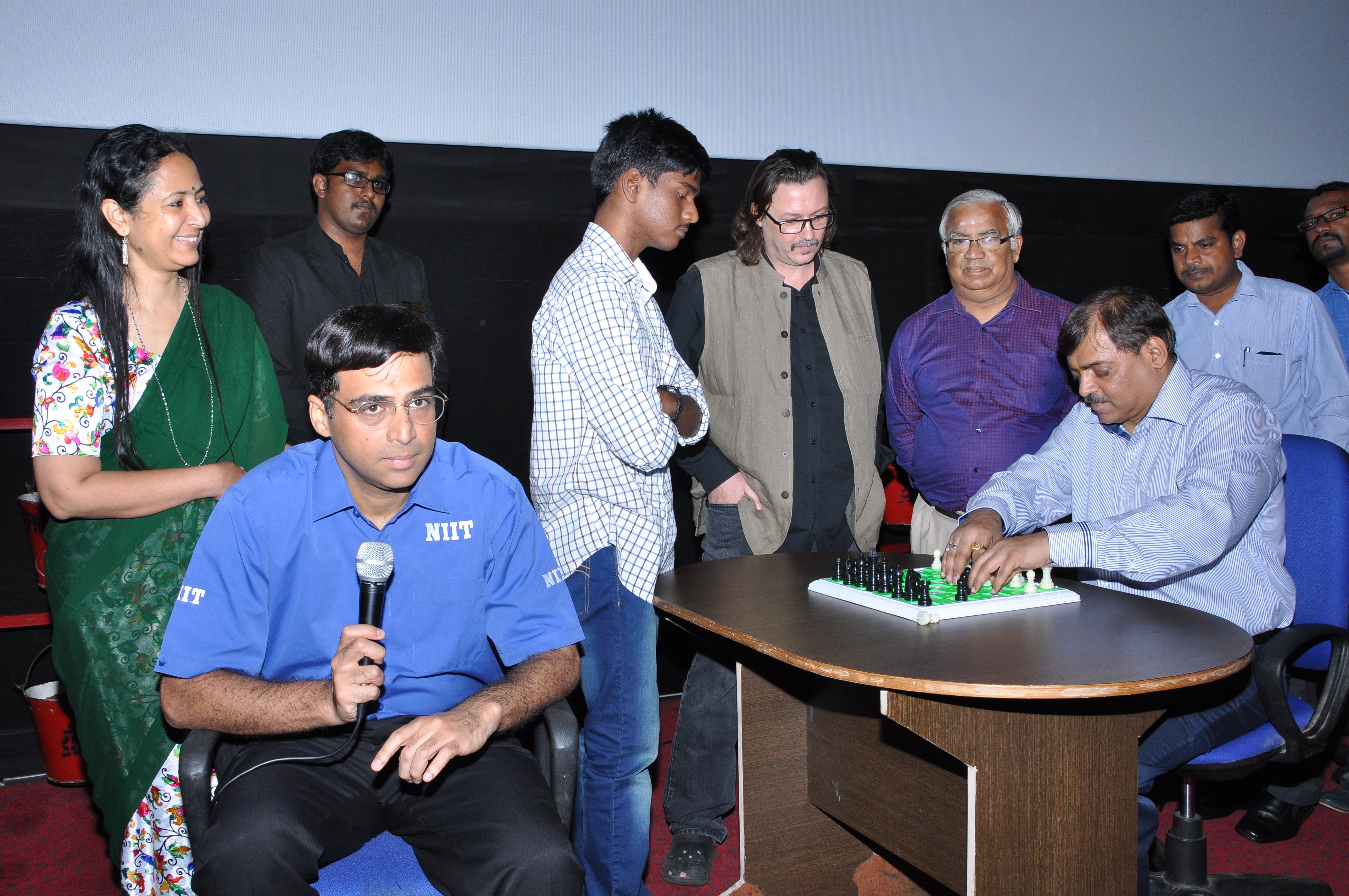
11 AnandInauguratesChess Grandmaster Vishy Anand takes on Charudatta Jadhav and a blind blitz match to launch the theatrical preview of Algorithms in India

This unique cinematic event caught the attention of the Indian media and provided a great launch pad for the general release. Geetha and I were forever travelling for post screening Q&As and doing interviews for the media. It was an exhausting and exhilarating experience. But it was worth it. By the end of the weeklong release, over 50 feature article/reviews of the film had appeared in the national press and millions of people are now aware of the incredible young blind chess players in their country.

Now, as 2016 begins, the last leg of the journey of Algorithms begins in the land from where it all started. We are now working on securing support for a mass DVD release of Algorithms in India. We are adding Tamil and Hindi to the English as audio-described options. This will ensure that the film will be accessible to approximately 70% of the Indian population. And we are hoping that a sponsor will come on board to bulk purchase the DVD so that it can be given away free to blind schools and blind chess players, as well as distributed to all sighted schools, colleges and Universities.

That would be a fitting and impactful end to a journey into the unknown that began 10 years ago, when I chanced up on that small newspaper report about blind children playing chess.
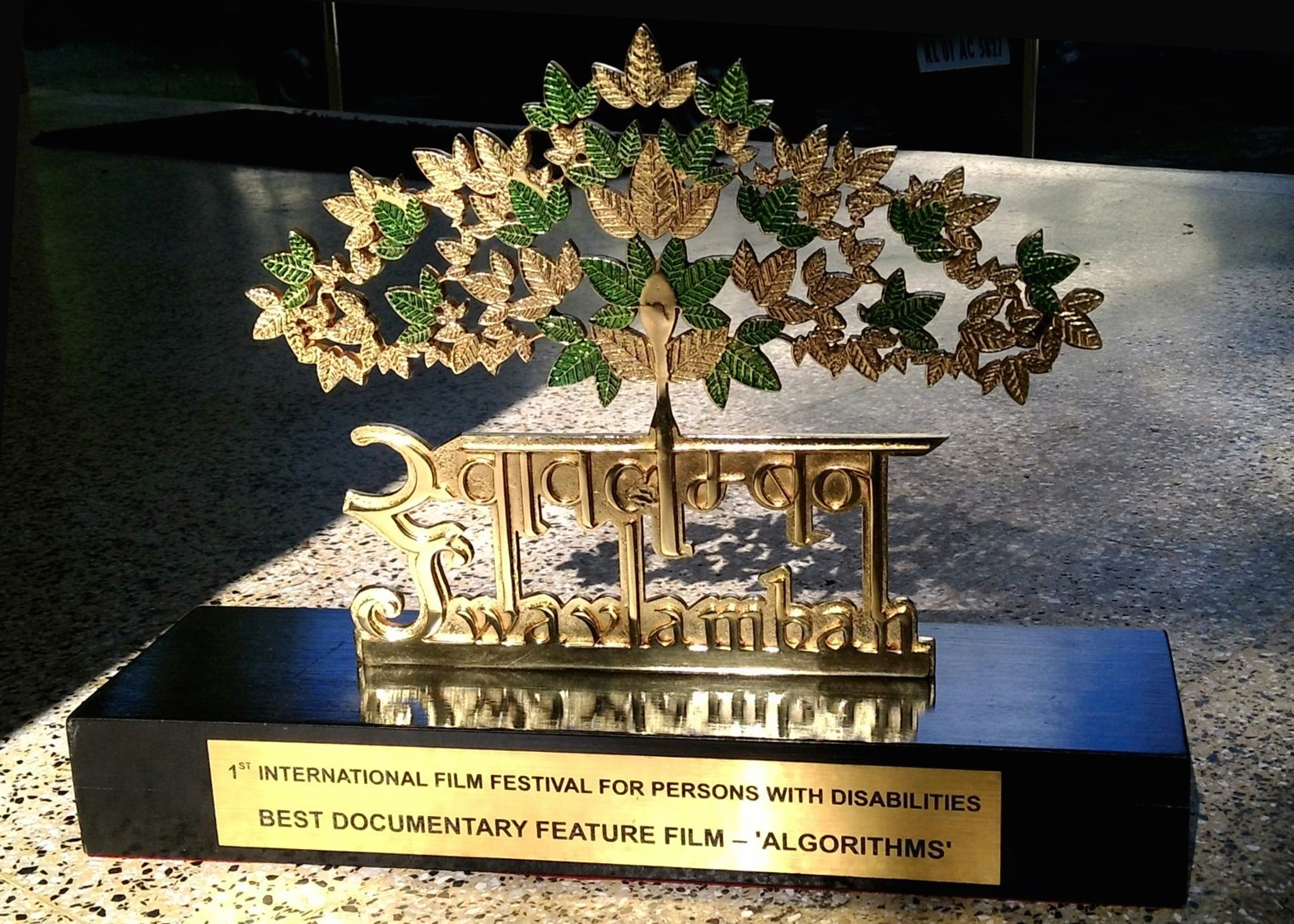
12 AwardBest Documentary Feature Film award from the inaugural International Film Festival for Persons with Disabilities in Delhi, December 2015

For more details about the film.

Ian can be contacted at: ian.mcdonald@ncl.ac.uk. Follow Ian on Twitter

Posted in ESRC Impact Acceleration Account | Tagged film | Leave a reply

SOLE meets Self-Advocacy at the Workers Educational Association

Posted on 22 January, 2016 by Angie
Reply

Anne Preston & Diane Holmes
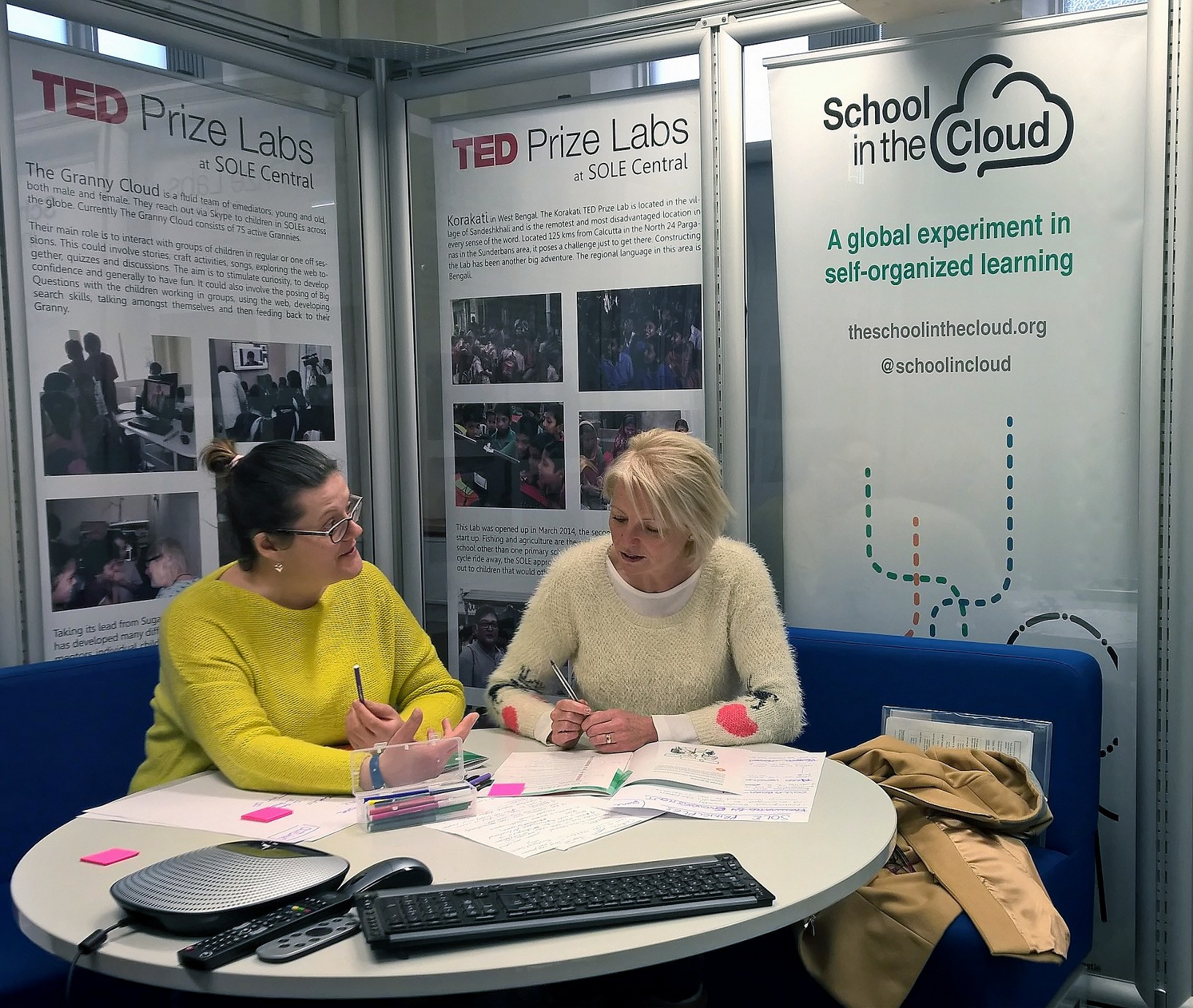
Anne Preston (left) and Diane Holmes (right) drafting out the Self-Advocacy
SOLE Toolkit in SOLE Central base

By Anne Preston and Diane Holmes

Dr Anne Preston is a Research Fellow in SOLE Central, Newcastle University. Diane Holmes is Adult Literacy specialist teacher at the Workers Education Association North East.

Could teaching ever be obsolete? Can we learn by looking at a Google page? These are just some of the big questions proposed over the years by Newcastle University Professor, Sugata Mitra, who led the well-known ‘hole in the wall’ experiments and more recently, introduced the notion of a Self-Organized Learning Environment (SOLE).

A SOLE is a space where ‘educators encourage students to work as a community to answer their own vibrant questions using The Internet’, an idea which is now achieving global impact. But how are SOLEs made material in local contexts? Is the idea of using The Internet just an example of a ‘charismatic technology’, lacking all- important notions of pedagogy and theory which typically surround what is deemed to lead to ‘deep learning’?

Supported by an ESRC Impact Acceleration Account Knowledge Exchange Secondment award, we have been probing the SOLE of adult learning over the last few months in a collaborative project between SOLE Central and the Workers Educational Association (WEA) North East. Made up of one part Adult Literacy specialist and one part SOLE Central Research Fellow, our work has involved using the SOLE approach with a group of students who have learning difficulties and disabilities. The students are all working towards gaining a qualification in Functional English (ranging in ability from Entry level 1 up to Level 1).

So how did we end up here?

Diane was very keen to use SOLE within the sessions, as she thought this would be an excellent way to inspire ‘deeper’ learning for the students as they studied for their English test. In addition to this, she felt a sense of self advocacy would develop amongst the group. This concept is important to her students, as this type of learner group often have greater difficulty in getting their views heard (or listened to). The students embraced the concept of SOLE really well. They relished the fact that they could do research in groups on the internet and feed back to the class and tutor about what they had discovered. Working in this way naturally developed their reading, writing, speaking and listening skills too – almost by stealth! The group loved the idea of answering the ‘Big Question’ and finding out what different information they could share. A crucial part of the success was also the fact that Diane, as the tutor, had to relinquish control. This really encouraged self-efficacy, as the group became the ‘experts’ and explained to her what they had discovered in their research groups. They became more curious and driven to discover new knowledge, and in short the sessions became a more invigorated learning environment. As individuals, the students were keen to have their own views heard and became more able to present their findings to class. Presenting the research formed part of their Speaking and Listening discussion test. In all, Diane has become more connected to her students and they, in turn, have become more confident and rounded learners.

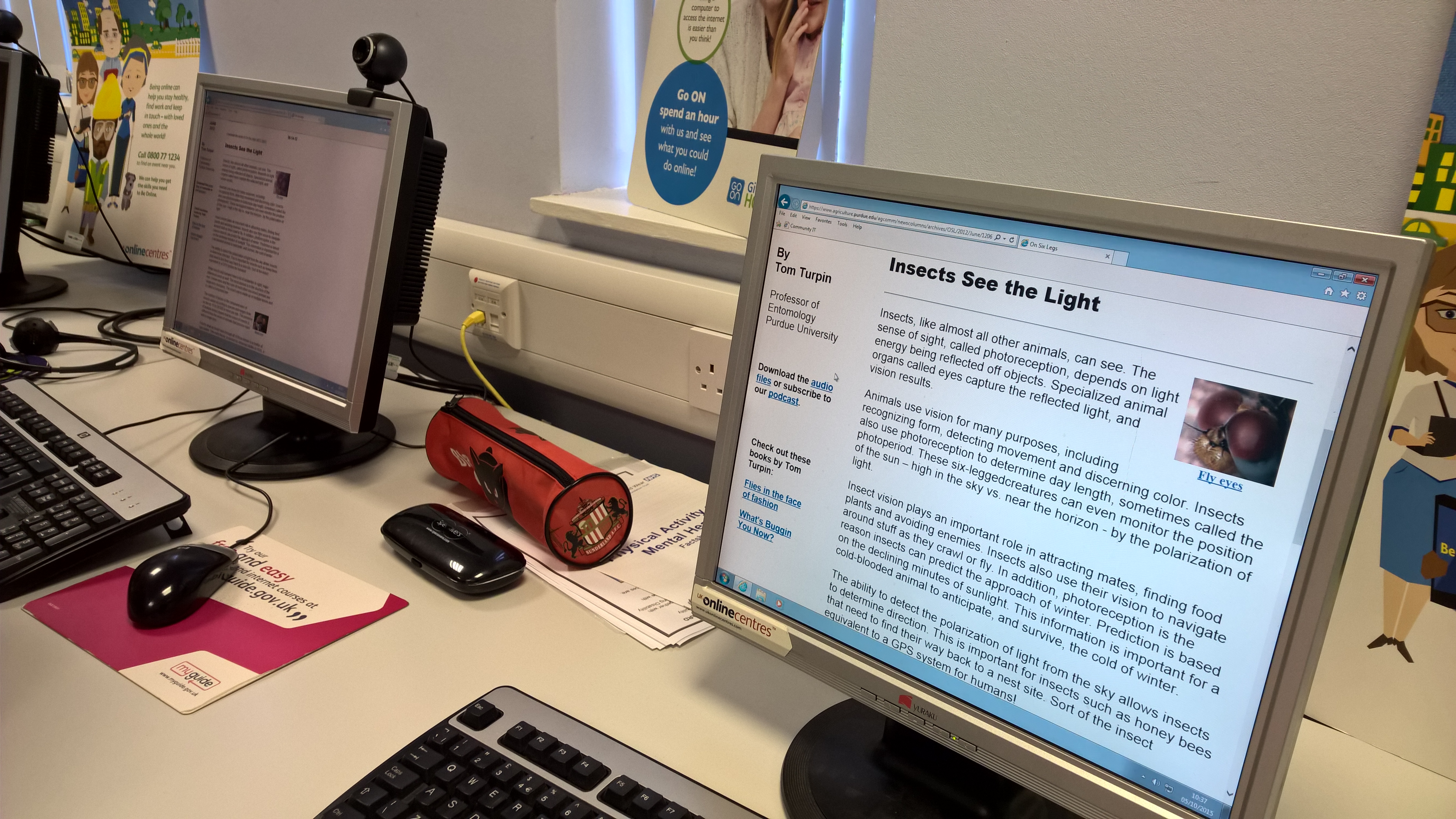
Students working
Students combine skills to search and curate information as part of their
research to the Big Question: Do insects see in colour?

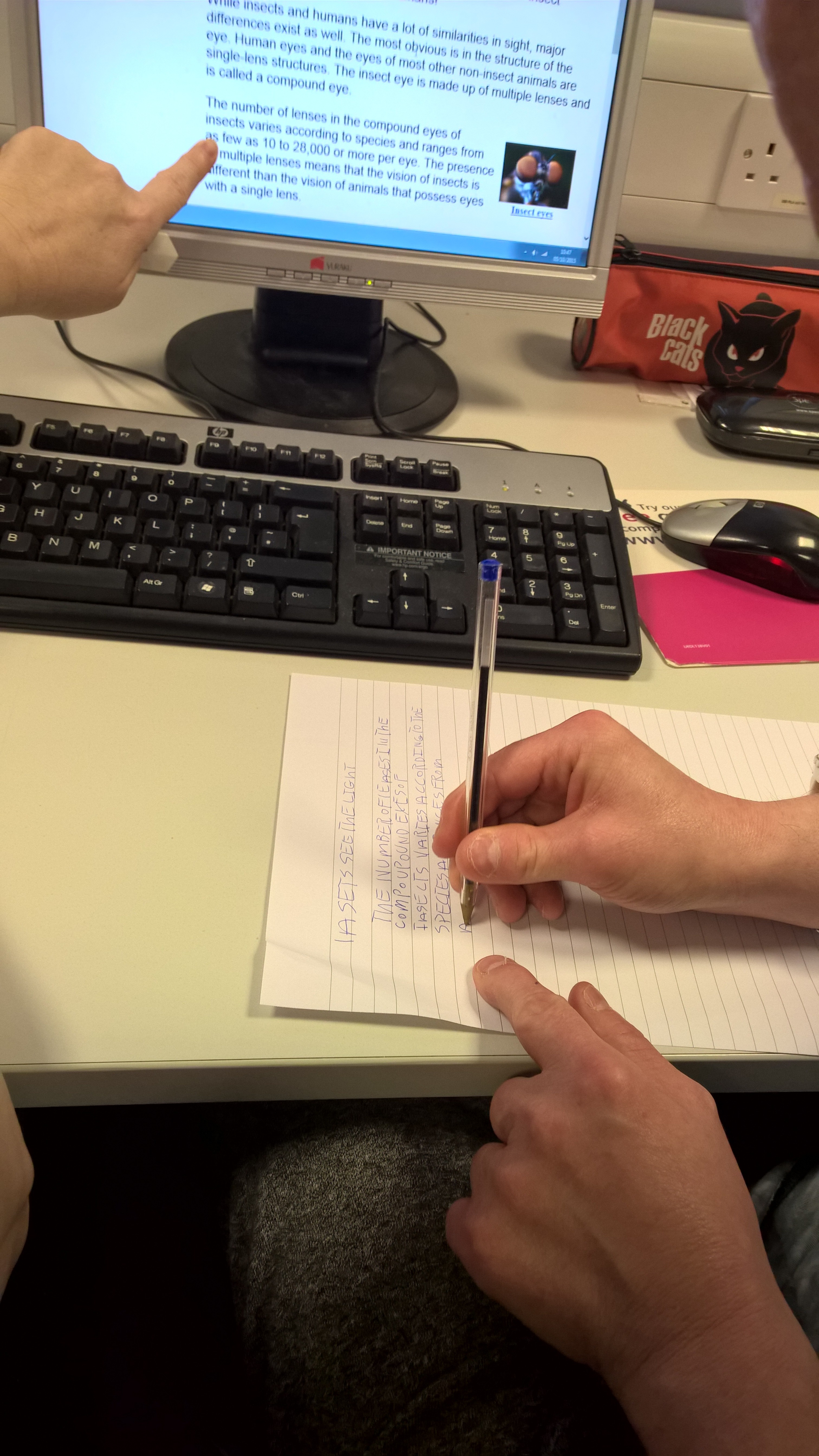
Students working
Students use digital literacy skills to zoom in on relevant information

So could a computer replace a teacher? We don’t think so. SOLE is not unique in its focus on developing the physical and conceptual space for learning with the inclusion of technology but as our work has shown, such environments can lead to a change in thinking about the organization of learning by teachers and students. The facilitation of SOLE involves a change in the role of teacher from transmitter to facilitator of knowledge and importantly in this context, can empower students with the skills to self-advocate: they have realised that they can have views, they have the right to be heard, and can identify ways to get their voice heard.

We are currently remixing the original SOLE Toolkit to enable other practitioners to explore similar issues in their practice with students who have learning difficulties and disabilities, this will be available soon.

Additional information:

Founded in 1903, the Workers’ Educational Association (WEA) is a charity and the UK’s largest voluntary sector provider of adult education. In 2013/14 we delivered  9,700 part-time courses for over 70,000 students in England and Scotland with classes in almost every local authority area and our work in England was assessed in 2014 as ‘Good’ by Ofsted. The WEA offers a wide ranging curriculum and we do all that we can to make your learning experience a positive one in our friendly and supportive learning environments. A better world – equal, democratic and just: through adult education the WEA challenges and inspires individuals, communities and society.

SOLE Central is a global hub for research into self-organised learning environments (SOLEs), bringing together researchers, practitioners, policy makers and entrepreneurs. Professor Sugata Mitra’s work has already transformed lives in some of the most disadvantaged communities in the world and our aim is to build on these strong foundations. Work in this interdisciplinary research centre is led by Newcastle University’s School of Education, Communication and Language Sciences and Open Lab and involves academics from across the University.

SOLE Central logo  WEA North East logo  ESRC logo

Posted in ESRC Impact Acceleration Account | Tagged adult learning, Anne Preston, Diane Holmes, disability, ESRC, ESRC IAA, Self-Organized Learning Environment, SOLE Central, Workers' Educational Association | Leave a reply

Using Theatre to Engage Communities in Planning

Posted on 20 October, 2015 by Angie
1

(Left to right: Dr Paul Cowie, and Brad McCormick (Artist Director) and Katy Vanden (Producer) of Cap-a-Pie)
Left to right: Dr Paul Cowie, and Brad McCormick (Artist Director) and Katy Vanden (Producer) of Cap-a-Pie

By Dr Paul Cowie

Dr Paul Cowie is a Research Assistant in the School of Architecture, Planning and Landscape. Paul’s research focuses on community planning and community representation in the planning process. Cap-a-Pie bring together professional theatre makers and communities to co-create theatre and foster learning and thinking through a democratic creative process.

How can you get 30 people to spend three hours on a Monday night discussing community involvement in planning? The answer may be through theatre.

It is well accepted by both academics and practitioners that there is a limit to how much consultation a community can take. The dreaded ‘consultation fatigue’ is now a common feature of both research fieldwork and planning engagement efforts. Dr Paul Cowie and theatre company, Cap-a-Pie, have produced a new piece of theatre, The Town Meeting, which has shown that taking an alternative approach can re-engage communities in research in a way that traditional forms of engagement do not. The Town Meeting has generated a rich resource of research material as well as engaging a network of co-researchers who have signed up to be involved in the project in the future.

The play was performed in 6 communities in the spring of 2015, and toured again this month visiting Leeds and Sheffield. The venues ranged from traditional and community based theatres to community centres and village halls. Over 160 people have now been to see the play, including HRH Princess Eugenie of York who enjoyed an excerpt of the play when she recently visited the University. The play will also tour again in April 2016, visiting Keswick, Doncaster and Washington.

The project has recently won the Sir Peter Hall Award for Wider Engagement in the RTPI Awards for Research Excellence.

The story of how the play was developed is available below or via Cap-a-Pie’s Town Hall podcast.

How the play was produced
The Town Meeting
The Town Meeting

In late autumn 2014 Katy Vanden, a producer from Cap-a-Pie theatre, sent a speculative email round Newcastle University. It outlined the opening scene in a play they were developing. Cap-a-Pie had worked previously with academics, but mainly to use theatre as a tool to disseminate research results. This time the aim was to link up with a researcher and test whether theatre could be used as a tool in the co-production of research.

The opening scene sees an unknown man arrive late to a meeting, a little flustered and not entirely prepared for the meeting he was about to have. Having previously worked as a local authority solicitor advising the planning (now development control) committee this scenario chimed with my personal experience. At the time the email arrived I was just finishing a research project investigating the relatively new phenomena of neighbourhood planning and neighbourhood forums. As I thought about the scene from the play the more I wondered if this could be a way of researching this topic in a novel way. I bit the bullet and replied to Katy’s email suggesting neighbourhood involvement in planning as the subject matter for the meeting.

Happily Katy and Brad McCormick, the artistic director of the company, agreed planning could be a suitable subject matter to develop the play around. My particular research interest is the way in which community groups interact with the planning process and how groups represent themselves in planning matters.

We now needed a narrative for the play. At this time an article appeared in the Guardian about the town of Kiruna in Sweden which is about to be relocated 3 km from its present location to make way for an opencast iron-ore mine. Working with director Gwilym Lawrence we decided to create a fictitious town, Little Rikjord, in which to set the play to allow a sense of drama and hopefully to allow the audience to have the freedom to debate issues in abstract. In the play, permission is being sought to move Little Rikjord and begin mining directly under the town. The audience are asked to put themselves in the place of the residents of the town and consider how they would react to the planning dilemma: move the town and keep the mine; or keep the town and close the mine. Brad plays the role of Benjamin Reynolds a junior planning officer and I play his boss sitting at the back keeping an eye on him.

There are two acts in the play, the first starts with the opening scene as outlined in that initial email. In this act the audience have a free choice as to the future of the town. Once the audience have completed several activities (including drawing a map of the fictional town and populating it with their favourite places and buildings), they are asked to discuss solutions to the dilemma facing their town and appoint two representatives. However, at the point they make their decisions Benjamin receives a phone call from the Minister. The decision has already been taken; in the interest of economic growth, mining must continue and the town must be moved. As an olive branch the government are offering to relocate one building from the current town. In the second act, the audience are asked to form a Community Heritage Board of four members to decide which building will be moved.

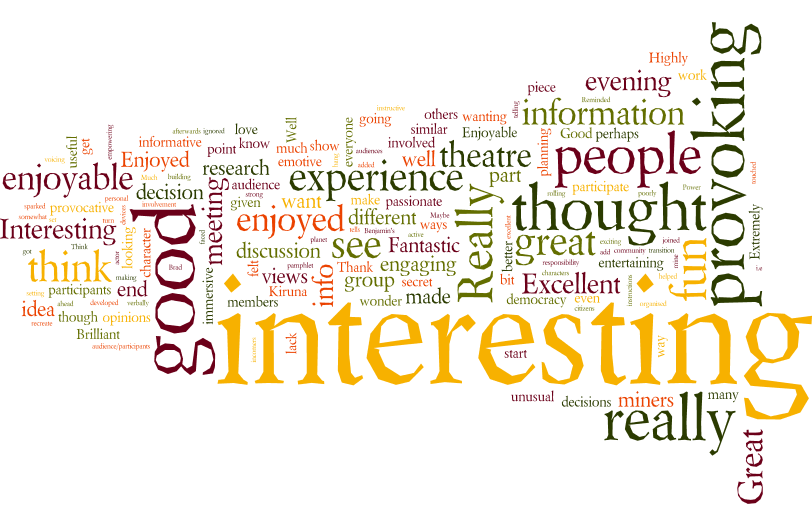
The audience reaction to the play was incredible. Prior to the Minister’s decision the audience were nearly always split about 50/50 in terms of staying or going and appointed two representatives to convey both sides of the argument. Once the Ministers decision is communicated the balance switches 90/10 against her choice. In all but one case the audience refused to have anything to do with the Community Heritage Board, even when it is hinted that by protesting through this structure the minister may change her mind. They also got very, very angry with much rage vented at Benjamin.

Audience Feedback
Audience feedback

The passion of the audiences highlighted to us the power theatre has both to move people and to immerse an audience in an alternate reality. It also proved to us that people are passionate about place and having a meaningful say in the future of their community. In the after show discussions the most animated audience members often apologised for their behaviour but maintained their passionate frustration with the planning system which had often triggered their response.

Working on the Town Meeting has been a fantastic experience. Using theatre as a research method has involved a steep learning curve. It’s not often your research gets reviewed by a theatre critic! However the end result has been worth it.

Town Meeting was supported using public funding by the National Lottery through Arts Council England. It was also funded by Newcastle Institute for Social Renewal, Newcastle Institute for Creative Arts Practice, and Newcastle University’s ESRC Impact Acceleration Account.

Posted in ESRC Impact Acceleration Account, Uncategorized | Tagged Cap-a-Pie, co-production, communities, ESRC IAA, Localism, Paul Cowie, planning, theatre | 1 Reply

Post navigation

Newer posts →

Recent Posts

  • Community heritage in the Derwent Valley: remembering the past, imagining the future
  • Celebrating Social Science
  • Picturing Gertrude Bell
  • Bridging the gap in knowledge to action: focussing on local impact to enable community-led cohousing in the North East
  • Developing social entrepreneurship in emerging economies

Recent Comments

  • cat towers on ‘Learning how to learn’ – finding out about the Community Curriculum approach
  • swimwear sale on Exploring vital partnerships
  • Blog from Dr Paul Cowie on his collaboration with Cap-a-Pie | Performing Research Network on Using Theatre to Engage Communities in Planning
  • Higher spending on elections generally increases levels of integrity : Democratic Audit UK on Does the Cost of Elections Matter For Election Quality?

Archives

  • February 2020
  • October 2019
  • September 2019
  • August 2019
  • May 2019
  • April 2019
  • October 2018
  • September 2018
  • August 2018
  • May 2018
  • April 2018
  • February 2018
  • December 2017
  • November 2017
  • October 2017
  • August 2017
  • July 2017
  • June 2017
  • April 2017
  • March 2017
  • February 2017
  • January 2017
  • May 2016
  • January 2016
  • October 2015
  • November 2014
  • September 2014
  • July 2014
  • June 2014

Tags

  • adult learning
  • Aging
  • archives
  • art
  • being human festival
  • blogging
  • caribbean
  • children
  • citizenship
  • collaboration
  • collaborations
  • comics
  • communities
  • community curriculum
  • culture
  • disability
  • elections
  • engagement
  • equality
  • ESRC
  • ESRC IAA
  • evaluation
  • gardens
  • history
  • IAA
  • Impact
  • interdisciplinary
  • KITE
  • knowledge
  • Newcastle University
  • North-East
  • Northern Bridge
  • oceans. food
  • photography
  • schools
  • Scotswood
  • seas
  • sensory
  • singing
  • Stereotypes
  • TWAM
  • VCSE
  • Women
  • writing
  • young people

Meta

  • Log in
  • Entries feed
  • Comments feed
  • WordPress.org
Tweets by HaSSResNCL

Newcastle University, NE1 7RU, United Kingdom

Telephone: (0191) 208 6000
From outside the UK dial +44 191 208 6000.