
EDI Blog Series – Part 2: Sara Walker

About the Author:

Professor Sara Walker is the Director of The Centre for Energy, in the School of Engineering. Her research focusses on renewable energy and energy efficiency in buildings, energy policy, energy resilience, and whole energy systems.

Sara is Director of the EPSRC National Centre for Energy Systems Integration, Deputy Director of the EPSRC Supergen Energy Networks Hub, and Deputy Research Director of the Active Building Centre.

My journey to professorship – struggles and triumphs

In November of 2021 I was promoted to Professor of Energy at Newcastle University. This has felt like such a career landmark for me.

I was brought up by my parents in Cramlington, a town to the north of Newcastle. When I was young my father was made redundant and the family moved into council housing. I never considered myself as poor, but I do remember we grew potatoes in the garden to save on food shopping and me and my younger sister would wear hand-me-down clothes. My older sister left school at 16 and got a job working in hospitality, and as my parents’ financial situation improved they were able to purchase their council house, but we were by no means affluent! At 15 I got a Saturday job at Whitley Bay ice rink in the cafeteria, and I started to earn my own money which was very empowering.

When I went to university at Leicester I noticed that my financial situation wasn’t the same as others around me. I had a grant from the council to cover most of my living costs and my parents also contributed to top my grant up. I got a part time job working at the bar in the students union, and also worked part time in a local pub. During summer vacations I always worked, normally bar work.

I remember waiting to use the public telephone one weekend to chat to my parents whilst at university, and watching the person on the phone in front of me crying crocodile tears to her dad. She needed money to buy a ball gown since it wasn’t fair for her to be expected to wear her existing ball gown that she’d already worn.

That’s when it really struck me that some of my fellow students were really well off! I didn’t join expensive societies like skiing and horse riding, I didn’t go to lots of balls and social events. For my graduation ball I hired my dress.

When I finished my undergraduate course in physics I was offered a PhD by my personal tutor at the university. I didn’t really know what a PhD was, I had been first in my family to go to university, and I turned it down. Instead, I did a teacher training course and got a job as teacher. After teaching for a short while I decided to go back to university to do a masters course in environmental science, because I had got really interested in energy issues through voluntary work. This led onto a research job, and an opportunity to complete a PhD part time whilst working as a researcher. I think this is the only way I could have completed a PhD since I didn’t have the financial resources to support myself on a student bursary. The part time PhD took five years whilst I worked as researcher and during that time I had my son Toby.

My early experience of academia was still affected by my background somewhat. I had to think carefully about attending academic conferences, because I didn’t know how long it would take for my expenses to be paid back. One time an expensive overseas trip wasn’t paid in time before I had to pay the credit card bill, and I could only pay the minimum and incurred interest, something I couldn’t claim back from my employer. Conference dinners were a minefield, I didn’t have lots of spare cash to spend on cocktail dresses. Even work suits were often bought from the catalogue and paid for monthly when I first started out. Later in my career, financially and socially I found myself excluded from social events and the associated networking opportunities of corporate boxes at football, or golf at exclusive members courses.

Academic statistics do not portray the full picture

HESA statistics are available, to tell us something of the makeup of our UK professoriate. In 2019/20 there were 22,810 professors, of which 6,345 are “female”, 16,415 “male” and 50 “other” gender. Of the 21,055 professors with known ethnicity, 2,285 are BME. 735 professors are known to have a disability. Looking just at engineering, this discipline areas has the lowest proportion of female academics (see figure below). There are no statistics for socio-economic group, and no statistics for intersectionality (i.e. we don’t know how many BME are female, or how many BME have a disability, for example). There are also statistics for grant applications and success from EPSRC, by gender. Data for other protected characteristics are lacking.
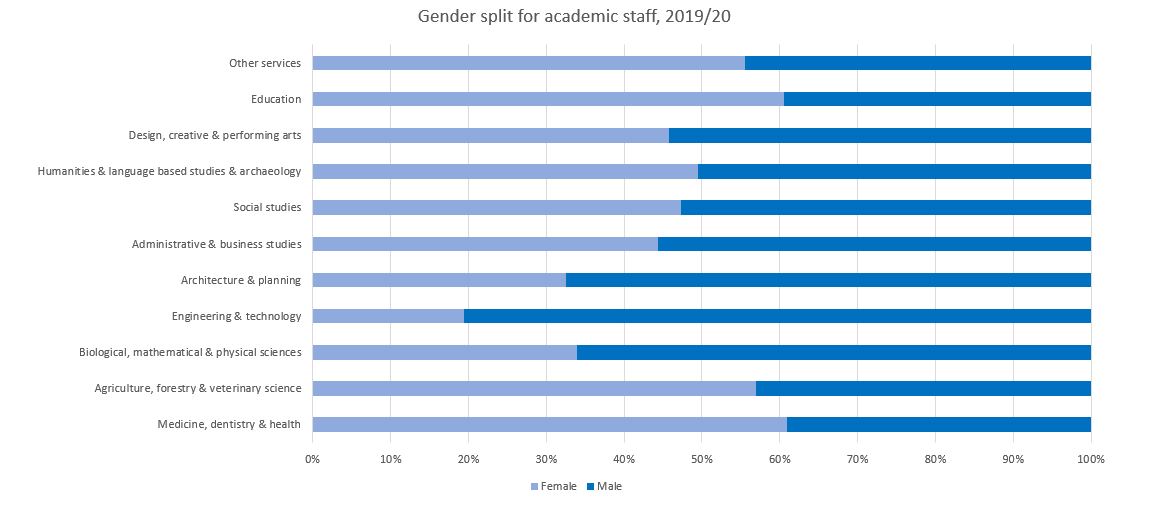
Source: Departmental demographics of academic staff
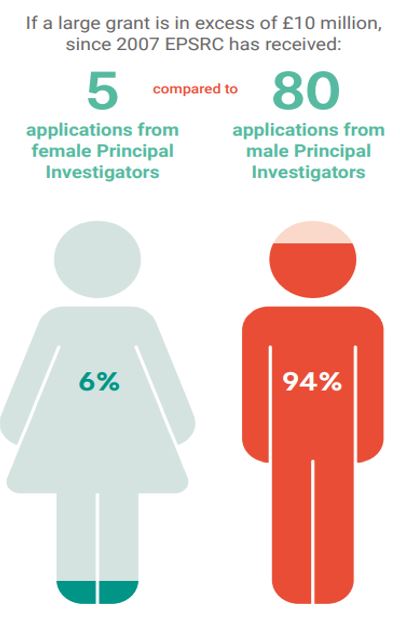
Source: EPSRC Understanding our Portfolio

I am acutely aware of the lack of role models in academia from lower socio-economic backgrounds. But there are also a lack of role models who are LGBTQ+, minority ethnic, disabled, non-white, from different faiths, or any combination of these. In seeking out these role models, we expect people to be open about their protected characteristics, regardless of the discrimination this may attract.

Moving forward…

Raising up colleagues, giving equality of opportunity, and being more aware of the potential barriers to engagement, are approaches we are taking at Newcastle University’s Centre for Energy. For example, we are working hard to encourage involvement from all job families in the Centre for Energy – research as an activity spans so many jobs including project managers, technicians, finance, research students, research staff and academic staff, for example. We want the Centre itself to address issues of fairness and equity in energy research, and so we have a theme on Justice, Governance and Ethics. We are tackling global issues of energy transition, issues which need a range of perspectives across gender, race, (dis)ability, sexual orientation and religion in order to come up with solutions that work for the majority, and not the select few.

I have a strong northern accent, and am proud of my roots and to be back in the north east working at a Russell Group university. But I am still that kid from the council estate. And I am proud of that too.
EDI Blog Series – Part 1: Challenging gender norms in engineering

In the first of a series about equality, diversity and inclusivity from our energy and engineering colleagues, Dr. Nabila Rufa’I shares her experience of growing up in northern Nigeria and how that has led to a career in energy research.

About the Author:

I joined Newcastle University earlier this year, after completing my PhD at the University of Leeds. I am a research associate for the National Centre for Energy Systems Integration and have also joined the Centre for Energy.

My research interests are:

  • Techno-Economic and Environmental Impact Analysis of Low Carbon Technologies
  • Power Quality Enhancement
  • Advanced Control of Renewable Energy Systems

Passion for Power

I was born and raised in Kano State in the north of Nigeria. 


Owing to a lack of supply and up-to-date infrastructure, we would often go three or four days without power. There was even a period when power was divided and scheduled across several towns and villages. 

This meant our allocation of power could be in the middle of the night. We had to choose between sleeping or completing power-dependent tasks when we could. 

Infrastructure in Nigeria is in poor condition, and becoming worse. It’s already more than 50 years old, and population growth is a huge problem. The old infrastructure just can’t keep up with demand.

One of the first things my daughter said to me when we moved to the UK at four years old was: “Mummy, how come the lights never go off?” 

This was the main reason I became fascinated with electricity and power. How can I make a difference and fix challenges like those in northern Nigeria?

Being a Nigerian woman in Engineering

It’s common for a woman in Nigeria to be a full-time housewife. 

Some may also have a small business or part-time job alongside their domestic work. For example, making pastries or tailoring. But it’s uncommon for women to follow an academic career, let alone one in such a male-dominated field.

Personally, I didn’t think of choosing an engineering academic career as out of the ordinary. 

I was very fortunate that education was always an important part of my life. Both of my parents had a passion for education, and completed PhD’s. My grandad was the first to attend University from our village. So their collective achievements had a huge influence on my life and aspirations.

 When I started my undergraduate electrical engineering studies in Nigeria, I was the only female in a class of 70. I would occasionally receive comments such as “why are you doing this?” and “how are you in this profession?” 

I knew it bothered me. But I never knew how to respond. So I stayed quiet. 

But now I like to speak to those who question my choices. I explain that everyone has their own interests, hobbies, and career goals, There’s nothing wrong with that. Thank goodness we are making progress as a society.

Gender should not be an issue in any profession. If you have the passion, drive, and interest, why not do it? Anybody who wants to do it, can. Working as an academic in the UK, I am fortunate to be surrounded by people who are more aware, who understand gender and other EDI issues. Most of my negative encounters have been in Nigeria.

Integrating into the UK

I came to the UK to study Electrical Engineering and Renewable Energy Systems at the University of Leeds in 2012. At first, I found the UK overwhelming and intimidating. I think most people feel this way when moving to university, or away from home for the first time. 

For me, it was more difficult adjusting to educational life rather than making friends or understanding British culture. For example, I had to learn software such as MatLab at a very fast pace, whilst other students already had experience with the software. Fortunately there were lots of international students, and we helped each other. The university also offered lots of support to help with learning, engaging and adjusting to UK life in general. 

I was also fortunate enough to have my husband and brother. They moved to Leeds from Nigeria too, and after three months found our feet.

My advice

I encourage people who are being unfairly challenged to be resilient. In life, you will always find people who oppose you, or have different perspectives. But that doesn’t mean you should not enjoy what you are doing.

It’s important for your personal growth to be aware of other’s challenges, opinions, and cultures. That is education. You are part of a wider community that you need to understand. And this is something I am teaching my children.

Find out more

Energy efficiency in smart grid communications – Dr Zoya Pourmirza

Data reduction algorithm for correlated data in the smart grid – an open access paper for the IET Smart Grid Journal

About the Lead Author

dsc01229

Dr Zoya Pourmirza, is a research associate at Newcastle University within the School of Electrical and Electronic Engineering. She was awarded her PhD in Information and Communication Technology (ICT) Architecture for Smart Grids from University of Manchester in 2015. Her research expertise includes Smart Grids ICT networks, cyber-security, communication energy efficiency, and data compression.

Zoya carries out a wide range of research for CESI in the area of cyber-security on energy and transport systems.

Contact:- Zoya.Pourmirza@newcastle.ac.uk

About the Co-authors

Dr Sara Walker, School of Engineering, Newcastle University, Newcastle upon Tyne, UK

John Brooke, Freelance Consultant, Manchester, UK

About the Paper

LINK TO THE PAPER

Smart grids are intelligent electrical networks that incorporate information and communication technology (ICT) to provide data services for the grid. In this work, we investigated an ICT architecture at the level of the electrical network where monitoring and control have not previously been deployed. Energy constraints are one of the major limitations of the ICT in the Smart Grid, especially where wireless networking is proposed. The main contribution of this paper is that we proposed a data reduction algorithm suitable for Smart Grid applications which significantly improves the energy efficiency of the communication network by minimizing the communication energy cost while maintaining the integrity and quality of data.

One approach to providing energy efficiency in the communication system is to use a data reduction algorithm to reduce the volume of data prior to transmission. Our survey of data compression algorithms showed that there is no single method that is superior for all forms of data streams. Therefore, we designed and developed a practical data reduction algorithm called DRACO (Data Reduction Algorithm for COrrelated data), on the basis of readings from monitoring devices that are typical of electricity network data patterns. In applications where the metering devices collect data with a high acquisition rate and transmit them to a control unit, a great degree of data correlation occurs. Taking this fact into consideration, we developed a data reduction algorithm that discards the redundant parts between each two consecutive measured values and transmits the changing parts only: these parts are a small portion of the binary representation. This algorithm can improve the energy efficiency of the communication network by transmitting a smaller volume of data while keeping data integrity.
DRACO is envisaged to be implemented on resource-constrained sensors, therefore simplicity in the design of the algorithm is a key issue. It also provides a low level of security for communication between devices since we are transmitting a modified or cipher data instead of raw data.

Validation

In this paper we examined the efficiency of DRACO on both simulated data and real data collected from the substation level of the Grid, which were produced at a very high sampling rate. We demonstrated DRACO can achieve compression ratios of 70%–99% depending on the data characteristics. Figure below shows compression efficiency over 70% for simulated data.

Figure 1 Effect of DRACO on simulated data

Experimentation

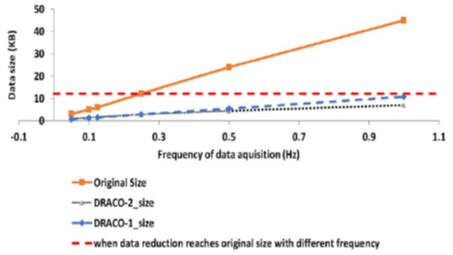
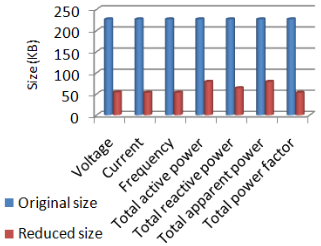
In this paper, we conducted several evaluations and comparisons. For example, we designed an experiment to assess the effect of various sampling rates on the efficiency of DRACO. We examined the data being logged with different frequencies. Figure 2 below shows that, as the frequency of the data acquisition rate increases, the original size of the data will increase. However, as we start to sample more frequently, the correlation between every two consecutive values is higher and DRACO performs best on data with stronger correlations. So, the difference between the original data size and the DRACO reduced data size also grows. Thus, with a higher sampling rate, we could transmit more data about the network, and with the use of the DRACOs we could send this data more efficiently in terms of data volume.

Figure 2 Data acquisition rate evaluation

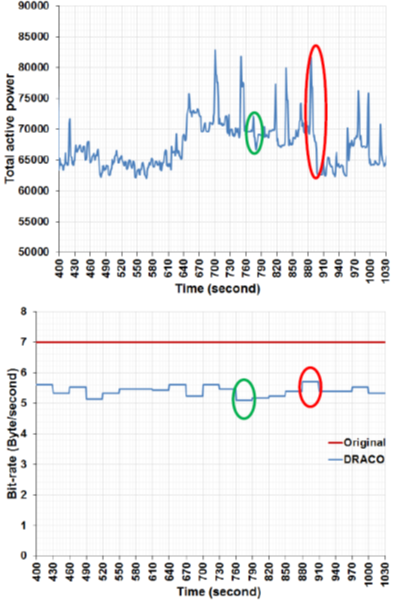
The team also designed another experiment to examine the effect of DRACO on the bit rate. This experiment was carried out to determine the link between significant events in the actual data profile and the maximum/minimum bit rate. As shown in the figure below, the correlation between the two graphs indicates the dependency of the data transfer rate on the rate of change of the quantity being measured (e.g. total active power).

Finally, to assess the efficiency of the DRACO we compared its performance with other data reduction algorithms and showed it performs reasonably good in these comparisons.

Figure 3 Total active power (kW) (top figure) and the corresponding bit rate (bottom figure)

Conclusion

In this work, we focused on proving the communication energy awareness and concluded that DRACO is suitable for smart grid applications since it optimizes the network resource consumption and reduces the communication energy cost while maintaining the integrity and quality of data. In near future, the growth in the number of monitoring devices in the smart grid will lead to an explosion in data volume, which will cause storage and network congestion problems. DRACO could also be an initial point for addressing these problems.

The full paper is available to view online.

LINK TO THE PAPER

Techno-Economic-Environmental Analysis of A Smart Multi Energy Grid Utilising Geothermal Energy Storage For Meeting Heat Demand

Researchers based at Newcastle University from the EPSRC National Centre for Energy Systems Integration (CESI) and the Supergen Energy Networks Hub (SEN), Dr Seyed Hamid Reza Hosseini and Dr Adib Allahham, along with the Coal Authority, Dr Charlotte Adams, will soon publish their journal paper in IET Smart Grid.

About the author: Dr Adib Allahham

Dr Adib Allahham

Dr Adib Allahham is a Research Associate within the Power Systems Research Team, School of Engineering, Newcastle University and currently works on several projects including the EPSRC National Centre for Energy Systems Integration (CESI) and the Supergen Energy Networks Hub (SEN). Adib received his PhD from the University of Joseph Fourier in the field of control engineering. His research involves projects around the electricity distribution and off-grid power sector and multi-vector energy systems. These projects are addressing the need to cost-efficiently decarbonise the energy sector over the next thirty years by facilitating innovative network integration of new generation, and the integration of different energy vectors (electricity, gas, and heat). Computer simulation, laboratory investigation and demonstration projects are used together to produce new knowledge that delivers this requirement. He has published more than 25 technical papers in leading journals and conferences.

Contact details:
adib.allahham@ncl.ac.uk
@adiballahham
Profile details

About the paper

The UK Government has committed to a ‘Net Zero’ carbon economy by 2050 [1]. One major source of carbon emission is associated with heat demand from the domestic, commercial and industrial sectors.

Providing for heat demand accounts for around one third of UK carbon emissions [2]. In order to decarbonise the provision of heat, it is essential to increase the penetration of Low Carbon Energy Sources [1] in Smart Multi Energy Grids (SMEGs), i.e. integrated gas, electricity, and district heating and cooling networks [3,4]. This, consequently, has impact on the operation of SMEGs from the Techno-Economic-Environment (TEE) point of view [5,28].

Recent work on the geothermal potential of the UK’s flooded abandoned mining infrastructure has revealed a subsurface resource in place of 2.2 million GWh [11]. The impact of integrating this vast supply and storage potential on the operation and planning of SMEGs needs to be evaluated in terms of TEE aspects.

The paper identifies research gaps, including neglecting the electricity requirements of the components of the geothermal system that is required to boost the hot water quality and presents an evaluation framework for the Techno-Economic-Environmental (TEE) performance of Integrated Multi-Vector Energy Networks (IMVENs) including geothermal energy. Geothermal Energy Storage (GES), offers huge potential for both energy storage and supply and can play a critical role in decarbonising heat load of Smart Multi Energy Grids.

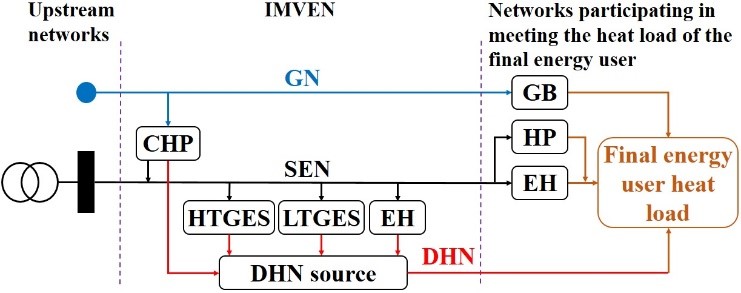
Schematic of SEH, GN & DHN
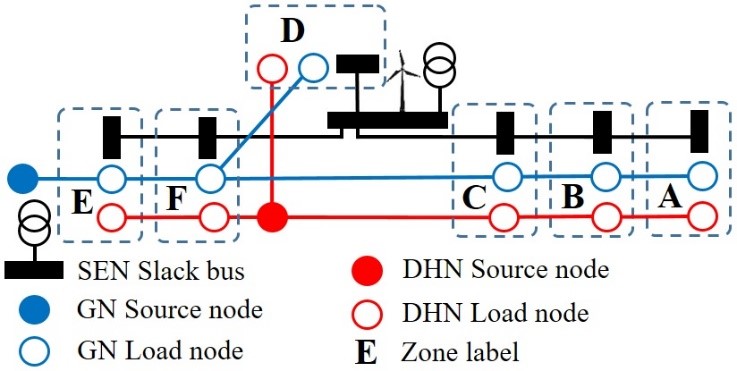
Fig.1 Schematic of the considered Smart Electricity Network (SEN), Gas Network (GN) and District Heating Network (DHN)

The two most common types of GES, i.e. High Temperature GES (HTGES) and Low Temperature GES (LTGES), were modelled and integrated within the framework which evaluates the impact of different low carbon energy sources including HTGES, LTGES, wind and PV on the amount of energy imported from upstream, operational costs and emissions of IMVENs to meet the heat load of a region.

Data from a real-world case study was used to compare the TEE performance of the considered IMVEN configurations for meeting the heat load. Data included wind and PV generation, as well as the heat and electricity load for a representative winter week of a small rural village in Scotland.

Fig. 2 The schematic of all the possible configurations of IMVEN considered in this paper

The results reveal that the most efficient, cost effective and least carbon intensive configurations for meeting the heat load of the case study are the configurations benefitting from HTGES, from a high penetration of heat pumps and from LTGES, respectively.


References

  1. [1] ‘Net Zero – The UK´s contribution to stopping global warming’, https://www.theccc.org.uk/wp-content/uploads/2019/05/Net-Zero-The-UKs-contribution-to-stopping-global-warming.pdf, accessed 20 December 2019
  2. [2] ‘Clean Growth – Transforming Heating: Overview of Current Evidence, https://assets.publishing.service.gov.uk/government/uploads/system/uploads/attachment_data/file/766109/decarbonising-heating.pdf, accessed 20 December 2019
  3. [3] Ceseña E.A.M., Mancarella P.: ‘Energy Systems Integration in Smart Districts: Robust Optimisation of Multi-Energy Flows in Integrated Electricity, Heat and Gas Networks’, IEEE Transactions on Smart Grid, 2019, 10, (1), pp. 1122-1131
  4. [4] Lund, H., Andersen, A.N., Østergaard, P.A., et al.: ‘From electricity smart grids to smart energy systems – A market operation based approach and understanding’, Energy, 42, (1), pp. 96-102
  5. [5] Hosseini, S.H.R., Allahham, A., Taylor, P.: ‘Techno-economic-environmental analysis of integrated operation of gas and electricity networks’. Proc. IEEE Int. Symposium on Circuits and Systems (ISCAS), Florence, Italy, May 2018, pp. 1–5
  6. [28] Hosseini, S.H.R., Allahham, A., Walker, S.L., et al.: ‘Optimal planning and operation of multi-vector energy networks: A systematic review’, Renewable and Sustainable Energy Reviews, 2020, 133, 110216
  7. [11] Adams, C., Monaghan, A., Gluyas, J.: ‘Mining for heat’, Geoscientist, 2019, 29, (4), pp. 10-15

Energising our lives – a WES 100 Violets Challenge project – the continuing story

Engineering is key to find answers to the challenges we face today! From the climate emergency to the medical and humanitarian response to the global pandemic, collaborating engineers are playing a significant role in developing solutions.

Newcastle University researchers, Dr. Jannetta Steyn and Laura Brown have worked together on a WES 100 Violets Public Engagement Challenge project, to illustrate the solutions and ideas engineers are applying to the global need for clean and affordable energy and integrating technology to improve the quality of our every life.

About WES

The Women’s Engineering Society (WES) is a charity and a professional network of women engineers, scientists and technologists offering inspiration, support and professional development. Working in partnership, it supports and inspires women to achieve as engineers, scientists and as leaders; they encourage the education of engineering; and support companies with gender diversity and inclusion.

About WES 100 Violets Challenge

The Women’s Engineering Society’s (WES) 100 Violets Challenge competition was part of their centenary celebrations in 2020. The aim was to design and build an engaging museum exhibit that celebrates and showcases engineering/research and shares it with the public. The challenge is supported by the Ingenious Grant program from the Royal Academy of Engineering.

Building the exhibit

Please see our first blog post to find out more background about the project idea. https://blogs.ncl.ac.uk/cesi/2021/01/29/wes-100violets-part1/

More Technical Details about the project can be found in a series of blogs developed by Jannetta at her personal blog site: – brainwaves.jannetta.com

The aim of the exhibit was to showcase electrical, software, computing, mechanical, building, transport and energy engineering. So no pressure then.

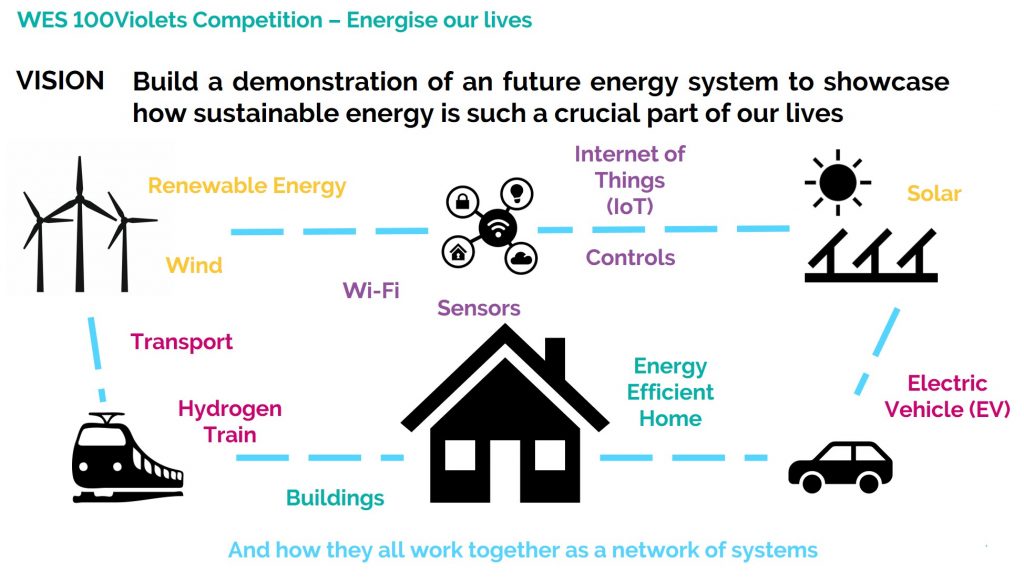
The Energy System Integration Vision

About the Project Team: Dr Jannetta Steyn

Jannetta is a Research Software Engineer at the Digital Institute, Newcastle University. As an experienced researcher and software engineer she has a background in data analysis, provenance and middleware programming. Jannetta does a large amount of outreach work, primarily in STEM, running a range of coding clubs and electronics clubs.

Contact:- Jannetta.Steyn@newcastle.ac.uk

http://brainwaves.jannetta.com/

About the Project Team: Laura Brown

Laura is the Centre Manager, EPSRC National Centre for Energy Systems Integration and Energy Research Programme Manager, Newcastle University. Her research tackles the challenges of integration of state-of-the-art thinking and technology into legacy and future energy systems. Laura sits on the Tees and Tyne Regional Cluster Committee of the Women’s Engineering Society and is the group leader of the SDG7 subgroup of the WES Climate Emergency Group.

Contact:- laura.brown11@newcastle.ac.uk

Our first outing

By way of practice for the WES 100Violets Exhibition planned for April 2020, we were lucky enough to be offered a chance to “trial” the exhibit at the opening event of the Gateshead Library Makerspace. We were delighted that the training we have been given by WES had come in very useful, particularly the risk assessment guidance. This meant we had planned carefully the storage requirements, labeling and cable routes for the equipment for our exhibit.

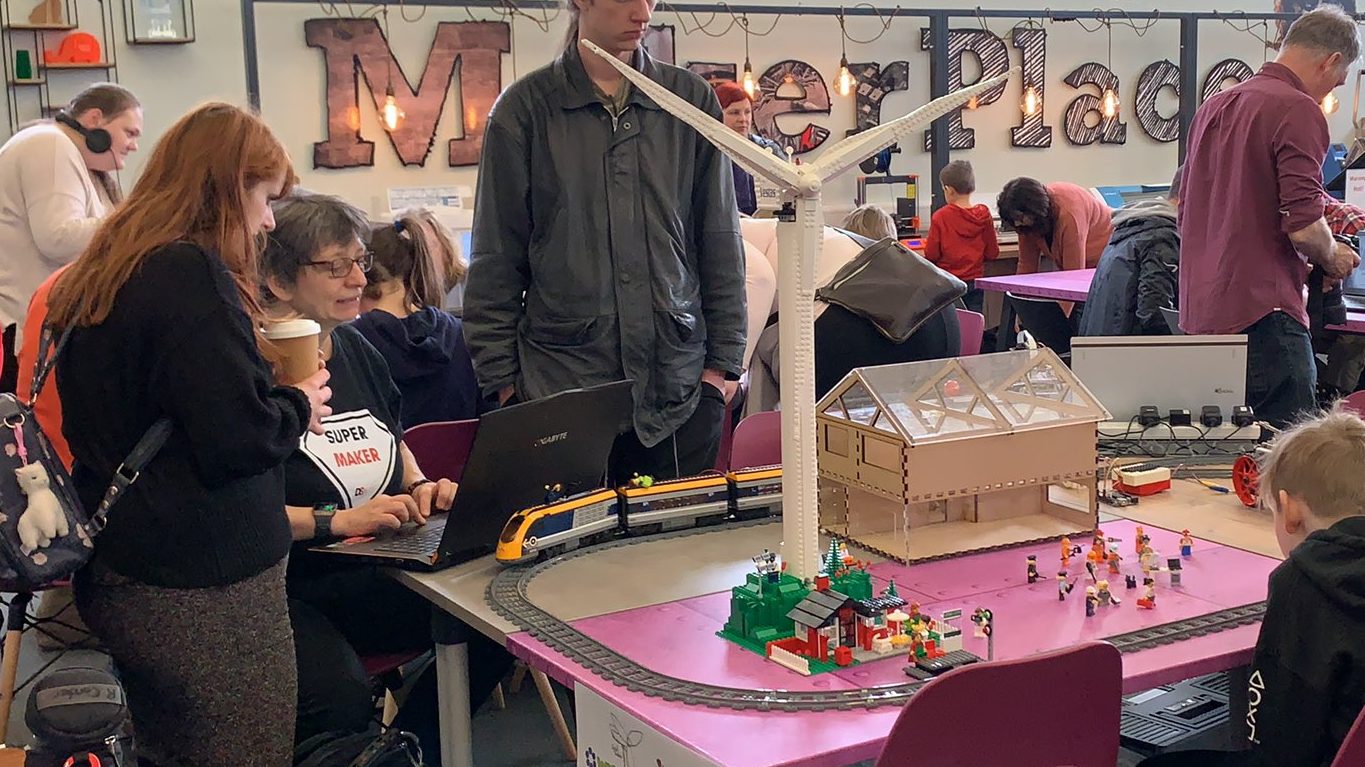
Jannetta writing some code for the IoT with a young helper adjusting our Lego Engineers

The event went well but underlined what we suspected:- KIDS LOVE LEGO. It proved to be a popular exhibit. And, while it might have been the draw of the remote control car (with its own garage), the Bluetooth controlled train or the eye-catching rotating wind turbine, all of the young people we spoke with left knowing just a little bit more than they did about renewable energy and role of women in engineering and computing.

So how do these technologies work in real life?

Part of the purpose of the exhibit was to provide educational information on the energy system. So we had been working on a number of learning resources that we thought might help engage the visitors to the exhibition. We had planned to have ‘make your own’ wind mill; colouring sheets; spot the energy competitions and possibly a 3D printing demo session.

It was all looking good but then as the date for the main event drew near, the impact of the pandemic was starting to reach home. The organisers took the difficult but inevitable decision to postpone the exhibition.

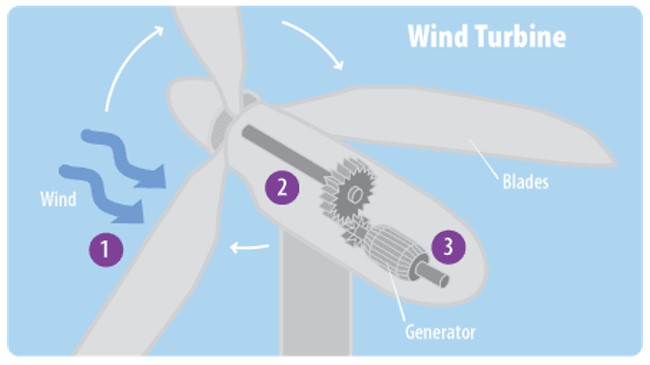
How does a wind turbine produce electricity? https://archive.epa.gov/climatechange/kids/solutions/technologies/wind.html
  1. As the wind blows over the blades of a wind turbine, it causes the blades to lift and rotate.
  2. The rotating blades turn a shaft that is connected to a generator.
  3. The generator creates electricity as it turns.

Some great STEM resources out there to explain energy

As part of our research we found some very useful STEM resources that we would highly recommend for anyone looking to understand more about their own energy system.

  1. BBC Bitesize – Humans and the Environment https://www.bbc.co.uk/bitesize/topics/zp22pv4
  2. NASA’s Climate Kids https://climatekids.nasa.gov/menu/energy/
  3. CALTECHs Energy STEM resources https://www.jpl.nasa.gov/edu/learn/tag/search/Energy

So what now

While cancelling the event was most definitely the right thing to do, all the groups from the WES competition were disappointed. Lockdown meant our team couldn’t even get onto campus to check our equipment and work further on the exhibit. Everything paused.

When the North East of England partially removed the lockdown in the summer, Jannetta collected all the components of the exhibit to have at home. So after the most recent national lockdown and encouraged by Dr Jo Douglas-Harris, the WES Tees and Tyne Cluster Chair, we looked for alternative ways to ‘tell the story’ of the project and share the vision. The new aim: let’s try to exhibit virtually. A new challenge for us both.

So for the last month of so, in our rare moments of spare time and in our evenings, we have put together some materials and collated the reflections and learning from the project in two blogs (this one and that one (https://blogs.ncl.ac.uk/cesi/2021/01/29/wes-100violets-part1/)). And we are going to trial exhibiting virtually via a livestream on CESI’s YouTube Channel.

https://www.youtube.com/channel/UCcKtJZLFUsCXYGuJ62evBkA

The EPSRC National Centre for Energy System Integration (CESI) YouTube Channel

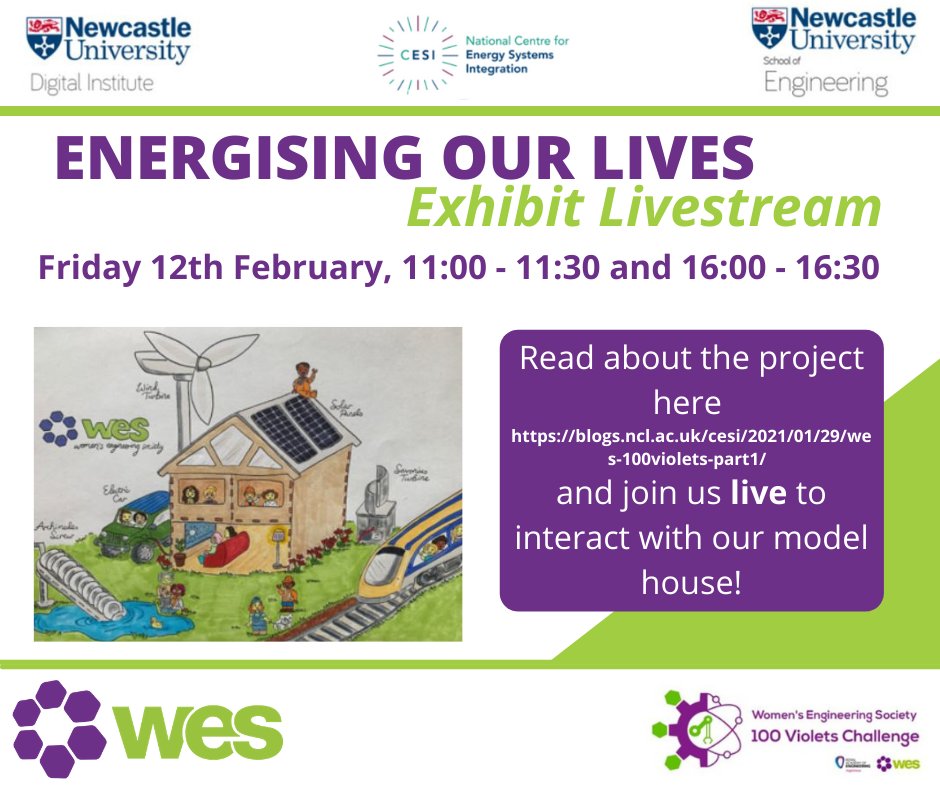
Event Details

Image

And we’ve got an accompanying YouTube video too.

https://www.youtube.com/watch?v=_slWTm_zEhI

We look forward to hearing what you think.

Energising our lives – a WES 100 Violets Challenge project – the 1st part of the story

Engineering is key to find answers to the challenges we face today! From the climate emergency to the medical and humanitarian response to the global pandemic, collaborating engineers are playing a significant role in developing solutions.

Newcastle University researchers, Dr. Jannetta Steyn and Laura Brown have worked together on a WES 100 Violets Public Engagement Challenge project, to illustrate the solutions and ideas engineers are applying to the global need for clean and affordable energy and integrating technology to improve the quality of our every life.

About WES

The Women’s Engineering Society (WES) is a charity and a professional network of women engineers, scientists and technologists offering inspiration, support and professional development. Working in partnership, it supports and inspires women to achieve as engineers, scientists and as leaders; they encourage the education of engineering; and support companies with gender diversity and inclusion.

About WES 100 Violets Challenge

The Women’s Engineering Society’s (WES) 100 Violets Challenge competition was part of their centenary celebrations in 2020. The aim was to design and build an engaging museum exhibit that celebrates and showcases engineering/research and shares it with the public. The challenge is supported by the Ingenious Grant program from the Royal Academy of Engineering.

The exhibit idea

The aim of the exhibit was to showcase electrical, software, computing, mechanical, building and energy engineering. The Public would be able to interact with the exhibit to provide an insight into how things work and what is involved in developing the technologies that make our way of life possible without impacting the planet.

Essentially the team would be building a model of a typical house but integrated with some of the established and emerging engineering and computer science innovations that are providing a route to sustainable living.

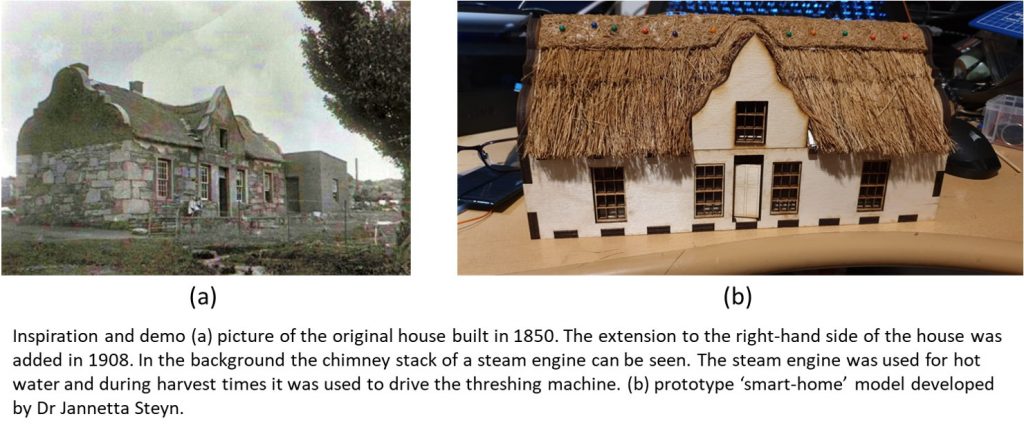
The building model was inspired by a family history project carried out by Dr. Steyn of a house that was built by her ancestors in South Africa in 1850 in the Cape Province.

  • The prototype was designed using Inkscape
  • A lasercutter was used to cut it from 3mm Birch plywood
  • The thatch roof used coconut fibre and the ridge was cut strips from a hanging flower basket lining

The final model was informed by the research being carried out at the EPSRC National Centre for Energy System Integration (CESI) which both project team members participate in. CESI is investigating the value in taking an energy systems integration approach to the future energy system and evaluating the security, economic and environmental costs of the future energy and transport scenarios being considered for the UK.

More Technical Details about the project can be found in a series of blogs developed by Jannetta at her personal blog site: – brainwaves.jannetta.com

About the Project Team: Dr Jannetta Steyn

Jannetta is a Research Software Engineer at the Digital Institute, Newcastle University. As an experienced researcher and software engineer she has a background in data analysis, provenance and middleware programming. Jannetta does a large amount of outreach work, primarily in STEM, running a range of coding clubs and electronics clubs.

Contact:- Jannetta.Steyn@newcastle.ac.uk

http://brainwaves.jannetta.com/

About the Project Team: Laura Brown

Laura is the Centre Manager, EPSRC National Centre for Energy Systems Integration and Energy Research Programme Manager, Newcastle University. Her research tackles the challenges of integration of state-of-the-art thinking and technology into legacy and future energy systems. Laura sits on the Tees and Tyne Regional Cluster Committee of the Women’s Engineering Society and is the group leader of the SDG7 subgroup of the WES Climate Emergency Group.

Contact:- laura.brown11@newcastle.ac.uk

Elements within the project

Training and Early Engagement

To help give us expertise the tricky art of public engagement and science communication, the WES 100 Violets Challenge Group organised two expert training sessions from a wonderful team of Science Communicator experts from Science Made Simple. The trainers gave us top tips on body language, communication tools and invalable guidance on the Health and Safety considerations of planning a public exhibit. We also got the chance to meet the other winners of the 100Violets Challenge and hear about their inventive ideas.

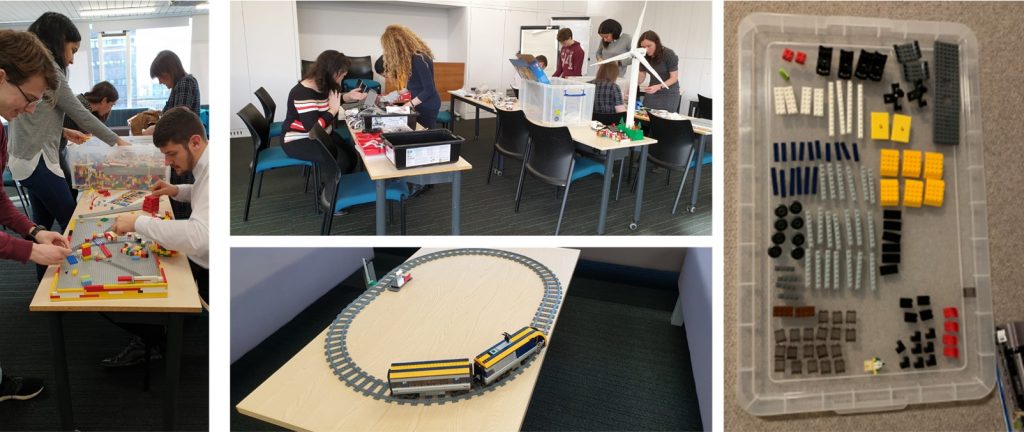
And to practice our new science communications skills, we organised an event with the students and staff of the School of Engineering at Newcastle University. As part of our exhibit were some elements of lego energy systems, we thought the students (and staff) would have fun helping us construct the model. And for extra measure, we borrowed some resources from our colleagues at Open Lab to allow some free lego building. The event was great fun and I’m pleased our research confirmed our hypothesis – engineers love playing with lego !!! What do you think of the results?

Community build with the Engineering students from Newcastle University

Gender Equality in Engineering

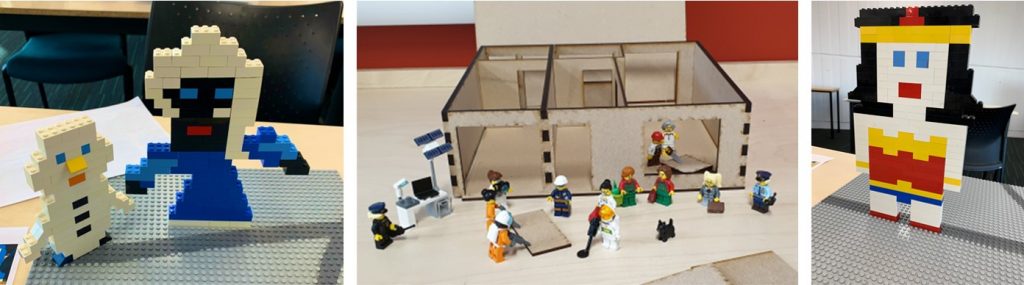
We aren’t sure who coined the phrase, “if you can’t see it, you can’t be it” as a rallying call to have positive role models from all sections of society in all walks of life but we felt even in this relatively light-hearted project there was some evidence of gender bias in the system. When we procured the rather fabulous lego wind turbine we were somewhat crestfallen when the two technicians were both males! That error was quickly fixed by some immediate head swaps. We then used this as a theme in the model that all the roles in the exhibit tableau would be engineers – a non-gendered noun.

The end of the beginning

By this time the model was starting to take shape. (More technical details can be found in a series of blogs developed by Jannetta blog site: – brainwaves.jannetta.com ).

  1. We had a date in the calendar for the big WES 100 Violets Exhibition
  2. We had procured all the parts of the model and constructed all the lego components
  3. 3D printing and Laser Cutting of the House was going well
  4. The IoT Smart Home was beginning to take shape
  5. The EV had been built and was (remotely) operational
  6. We had developed some engaging learning materials to accompany our exhibit
  7. Science Made Simple team had helped us perfect our Exhibition Pitch for our intended audience
  8. We had our first engagement event with the students (guinea pigs) completed and it had went well
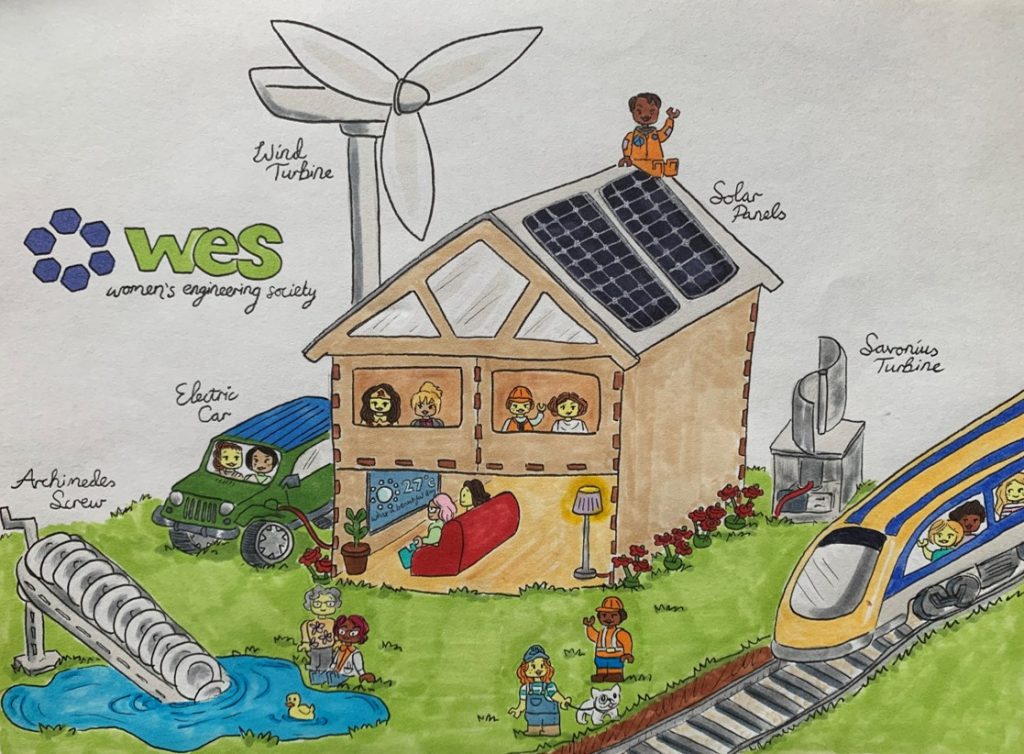
  9. Our fabulous colleague Faye Harland had provided an amazing schematic of our planned model (See below)
  10. We had another local exhibition planned …
  11. It was February 2020 … it was all in hand … what could possibly go wrong …

… we suspect you can guess but we will provide some more of the story next week in our next blog. To be continued …

The visualisation of our idea. Artist: Faye Harland, Newcastle University

A CESI researcher’s secondment journey to the Government – Dr Zoya Pourmirza

The year 2020 will be remembered as an extraordinary year with the news of COVID outbreak. In January 2020, I started my one-year secondment as an advisor providing technical consultation to the UK Government Office for Zero Emission Vehicles (OZEV)”.

About the Author

dsc01229

Dr Zoya Pourmirza, is a research associate at Newcastle University within the School of Electrical and Electronic Engineering. She was awarded her PhD in Information and Communication Technology (ICT) Architecture for Smart Grids from University of Manchester in 2015. Her research expertise includes Smart Grids ICT networks, cyber-security, communication energy efficiency, and data compression.

Zoya carries out a wide range of research for CESI in the area of cyber-security on energy and transport systems.

Contact:- Zoya.Pourmirza@newcastle.ac.uk

The UK Government’s Office for Zero Emission Vehicles (OZEV) is a cross-government team between the Department for Transport and the Department for Business, Energy and Industrial Strategy, supporting the transition to zero emission vehicles (ZEVs). As soon as I started, following a warm welcome from the team, I was impressed by devotion and dedication of the team. Within a few months into the role, while I was enjoying working with the team and gaining new experiences, the UK went into the lockdown. In the following months, we moved all our activities to online platforms which are known to all of us.

This secondment was planned to assist shaping a more secure EV eco-system in future. In 2019, Government consulted on cyber security requirements for smart chargepoints. There is an intention to follow with legislation mandating requirements for smart chargepoints, including cyber security, in 2021. My work was intended to help informing Government approach in 2021 legislation.

My tasks during this Secondment was to support different workstreams with OZEV and wider work in BEIS on smart energy cybersecurity. This included:

Project 1 – EVHS grant scheme

Electric Vehicle Homecharge Scheme (EVHS) is a grant provided by the OZEV, designed to offer an additional incentive to EV drivers. EV manufacturers who wish to apply for authorisation for chargepoints under EVHS should confirm they comply with EVHS technical specifications. In terms of cyber security specifications, OZEV requires chargepoints to be accessed by using the Open Charge Point Protocol (OCPP v1.6 or above). During my time at DfT I assessed how many EVHS grant applications were likely meeting or not complying with requirements on cyber security, and if these applications are considering a similar level of cyber security measures provided in the OCPP. I also recommended some specific changes to be made to the scheme requirements, which are being considered by Government.

Project 2BSI PAS review

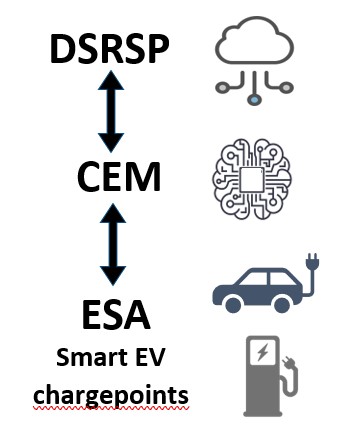
The British Standards Institution (BSI) has been sponsored by Government to develop two PAS standards. The PAS 1878 is for Energy Smart Appliances (ESA), including smart chargepoint cyber security requirements and PAS 1879 is for a Demand Side Response (DSR) framework. The DSR framework PAS is intending to develop the ‘environment’ within which ESAs can operate. Both PAS’s involved cyber security considerations. The cyber security approaches employed in these standards are encryption and Public Key Infrastructure (PKI). The end-to-end secure framework is intended to:

  • provide secure assets, these assets are such as Energy Smart Appliance (ESA) and Consumer Energy Manager (CEM)
  • verify the actors such as Demand Side Response Provider (DSRSP)
  • provide a secure communication between ESA and CEM, and between CEM and DSRSP

During my time at BEIS, I reviewed the draft PAS standards at different stages of their development and recommended a series of changes to improve the standard and better embed cyber security within them. These comments were welcomed by the standard leads, and it is expected to be reflected in the final version.

Project 3 Cyber risk assessments – I worked along the BEIS team and the PA consulting on cyber risk assessment for smart energy systems to identify the risks and shape appropriate mitigations techniques. This work is underway within the BEIS team and will be completed in 2021. In this study we realised that as the proliferation of smart energy devices including EV smart chargepoints and associated smart energy platforms increases, the cyber security risks will grow too. These risks will become material in 2025. For example, the ability for a large number of smart energy devices to be switched on or off at the same time, which will cause a large power swing on the electricity network, is one of the main risks identified by the team.

Project 4 – Reports and recommendations

I shaped a report for the Government discussing the cyber security challenges in smart energy system and EV chargepoints, the risks and mitigation techniques, and the future roadmap. The recommendation provided in this report could potentially inform the legislation this year.

Thoughts on the experience

All these tasks were carried out to pave the way for a more secure future of the EV ecosystem. My sincere thanks to both teams at the Newcastle University and the Government who provided this unique opportunity for me to get involved in Government’s policy development and legislation process and develop new skills. This was an extremely valuable experience working at the heart of civil service to provide consultation and apply my expertise to help meet the key government objectives for EV smart charging.

Approaching Equality, Diversity and Inclusion within research teams

As EPSRC publishes their findings on gender perspectives within their research funding portfolio, our Centre Director, Dr Sara Walker and Centre Manager, Laura Brown discuss the challenges women working to help rebalance the mismatch face.

About the authors: Dr Sara Walker

Dr Sara Walker is Director of the EPSRC National Centre for Energy Systems Integration, Director of the Newcastle University Centre for Energy and Reader of Energy in the University’s School of Engineering. Her research is on energy efficiency and renewable energy at building scale.

About the authors: Laura Brown

Laura is the Centre Manager, EPSRC National Centre for Energy Systems Integration and Energy Research Programme Manager, Newcastle University. Her research tackles the challenges of integration of state-of-the-art thinking and technology into legacy energy systems.

As an academic team, we have a responsibility to consider Equality, Diversity and Inclusion in the way we conduct our teaching, research and knowledge exchange. Doing the right thing is not always easy. We are in no way experts. But surely it is better to try, and accept that we will sometimes get it wrong?

Our research is funded by the EPSRC, for the National Centre for Energy Systems Integration and the Supergen Energy Networks Hub. So, we were interested to read the recently published EPSRC report Understanding our portfolio:  A gender perspective.

Within their report they state, “Underrepresentation of women in the engineering and physical sciences remains one of EPSRC’s largest equality, diversity and inclusion (ED&I) challenges and is a well-known issue in the engineering and physical sciences community.” We applaud the transparency that EPSRC has shown in issuing the report as we know, as scientists and engineers, one of the best ways of tackling problems is by considering the underlying data.

In our opinion, the findings of the report can be considered both worrying and illuminating. For example, higher value awards show significantly lower award rates to female Principal Investigators. Since 2007, applications of value over £10million have been received from 5 females, compared to 80 males. In 2018-19 (the latest year we have data for), just 15% of applications received were from female Principal Investigators.

Factors affecting application rates by female academics are likely to be numerous and complex, affecting individuals in different ways.

Some of these could be:

  • Women win fewer scientific prizes and so the public see fewer “success stories” of women, discouraging women to take up science subjects. (Callier, Conversation,  Jan 2019)
  • Women are evaluated by their students as less effective teachers than male counterparts, which may impact career progression (Basow, JEP, Sep 1987
  • Women are less likely to be selected at application stage for things like access to equipment. This was noted in a study of Hubble telescope time , for example. ( Johnson  & Kirk, HBR, Mar 2020)
  • Women get paid less: “The EPSRC’s analysis of the salaries which applicants request on grants is a very effective illustration of the gender pay gap. Using age as a proxy for career stage, we see men get paid more than women at similar career stages, and this effect increases with seniority level.” From @TIGERinSTEMM
  • The large grant applications are required to come from the Research PVC, of which we have very few women (Donald, Blog, Oct 2020)
  • Women undertake more unpaid work than male counterparts as parents, carers and in household duties, and this impacts the time available for, and consequent success in, delivery of those measures of “success” which are valued for promotion in the workplace. This impact of unpaid work has been particularly marked during COVID lockdown for women in academia ( Gewin, Nature, Jul 2020) and (Pinho-Gomes, BMJ GH Vol 5 Iss 7)

We underline could in the above section, because there is simply a lack of data. Reading “Invisible Women” by Caroline Criado Perez (Vintage, ISBN: 9781784706289) makes you realise that “lack of data in academia” can be replaced with “lack of data in society”.

Data is not available from EPSRC for other protected characteristics, and so our understanding of the academic experience is often limited to our own lived experience. In order to address EDI in our institutions, we often ask those in the protected characteristic groups to represent a heterogeneous mix of people and experience. As two white women we bring our white privilege to the table (a great resource on this is here: https://www.racialequitytools.org/resourcefiles/mcintosh.pdf). Even within white privilege there are intersections with our Northern and Scottish roots, and class, for example.

McIntosh (1989) lists several white privileges, and given recent discussions in the UK of decolonisation of the curriculum and the during the current Black History Month, this one gives pause:

“When I am told about our national heritage or about “civilization”, I am shown that people of my color made it what it is.”

McIntosh (1989) White Privilege: Unpacking the Invisible Knapsack

We are more than white women. We are white, heterosexual, married women who have children. So, as EDI champions, how can we reflect the experience of the full diversity of women? Women of colour, women without children, women who are disabled, women who are homosexual, or people who do not associate with binary expressions of gender? We may be very close to women with different lived experiences and have an appreciation of their experience through family and friends for example. And what role for men, how can they better understand the lived experiences of the full diversity of men? How can our research teams become better environments for all, regardless of difference?

We conclude it behoves each of us to read, observe and educate ourselves about the experiences of others. Be a good example. To take responsibility for our own awareness, to be reflective, and commit to being a better global citizen. To be kind. To be human.

Achieving net-zero in the UK through an integrated energy system

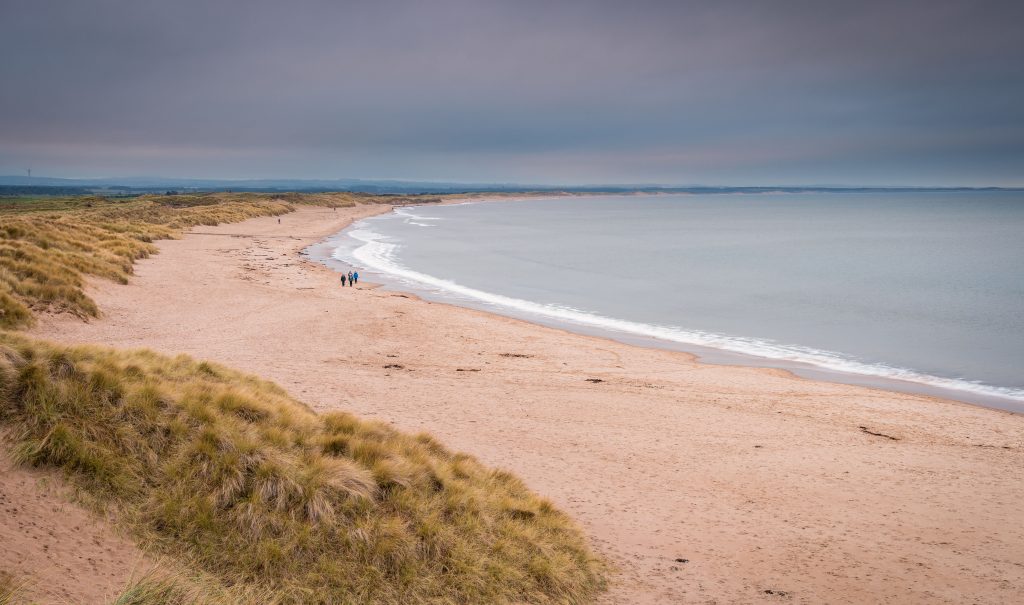
The Communities Secretary, Rt Hon Robert Jenrick MP, recently rejected permission for an open cast mine near Druridge Bay, stating that the proposal “is still not environmentally acceptable”. This announcement follows a lengthy decision process and extensive media coverage, including a Public Inquiry and an appeal to the High Court. In this blog CESI Director, Dr Sara Walker, comments on the case which was supported by evidence presented by CESI’s previous Director, Prof Phil Taylor on CESI’s whole systems approach to energy systems integration.

Druridge Bay, Northumberland

About the author: Dr Sara Walker

Dr Sara Walker is Director of the EPSRC National Centre for Energy Systems Integration, Director of the Newcastle University Centre for Energy and Reader of Energy in the University’s School of Engineering. Her research is on energy efficiency and renewable energy at building scale.

Contact details
email: sara.walker@ncl.ac.uk

In 2014, a proposal was put forward to remove 3 million tonnes of coal from an opencast mine at Highthorn, close to Druridge Bay, on the Northumberland coast. The proposed developer, HJ Banks & Co Ltd, argued coal fired power stations are essential for the security of the UK’s energy supply and in July 2016, planning permission for the mine was approved by Northumberland County Council.

In a landmark move, central Government called a Public Inquiry on the grounds of climate change – the first time any planning permission decision has been called to inquiry on this basis.

In March 2018, the Communities Secretary Sajid Javid stated he had concluded the project should not go ahead on the grounds that it would exacerbate climate change. This rejection was the first time any planning permission decision has been refused on this basis, setting a precedent for all future applications.  This was seen as a significant step in taking tackling climate change seriously, showing the UK to be leading in this regard.

Following the announcement of the planning rejection, Banks lodged an appeal in the High Court.  The High Court found in favour of Banks in October 2018, returning the case to the Communities Secretary to reconsider the arguments presented.

At the Planning Inquiry, the expert witness for Banks argued that if coal fired power stations are phased out, a significant number of new gas fired power stations would be required, providing 7GW of gas generation. They also claimed other cleaner sources of energy cannot be relied upon as a consistent source of energy. Wind power, for example, provides an intermittent source of energy as the wind does not always blow. Similarly, the sun does not always shine, so photovoltaic systems will not generate sufficient energy. For these reasons, opening the new mine would have been an important step in ensuring that the UK maintains a good supply of coal for its power stations. However, there is no single source of fuel that provides the energy to satisfy the whole of the UK’s energy requirements. Instead, it is essential to take a whole systems approach when considering the UK’s energy mix.

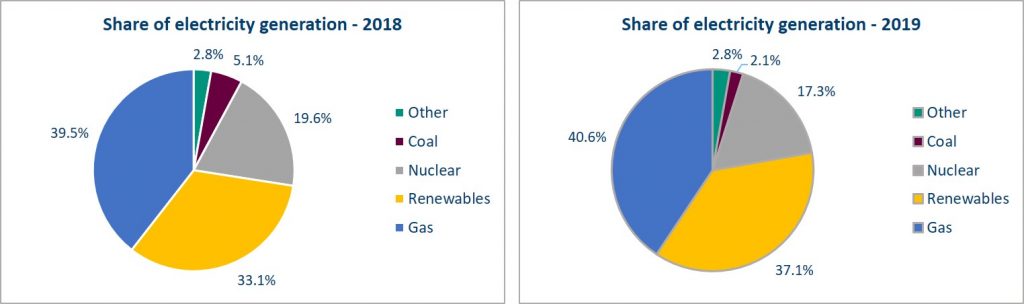
The Department for Business, Energy and Industrial Strategy (BEIS) collates data on the UK’s energy generation mix.  The latest figures were released in July 2020 [1] and compare data for 2019 against previous years.  The shares of electricity generation by fuel in 2018 and 2019 are illustrated in Figure 1. These show that gas generated electricity increased slightly to 40.6%.  Electricity from renewables (wind, hydro, solar, wave, tidal and bioenergy) achieved a record high of 37.1% (121TWh), which is the first time renewables have provided over a third of the total generation mix. During the same period, the share of electricity generated from coal reduced to 2.1% (6.9TWh).  This represents a record low, down 59% compared to 2018.  The figures show that coal is declining in importance and that we have many options to replace it.

Figure 1 The share of electricity generation by fuel in 2018 and 2019 [1]

An integrated energy system

In his expert witness testimony to the Public Inquiry, CESI’s former Director and current Associate Director, Professor Phil Taylor, emphasised the need to take a whole systems view, highlighting CESI’s research into an integrated energy system. The UK can phase out coal-fired power stations by increasing the utilisation of existing gas facilities plus a small increase in capacity in power from gas and combining this with power produced from renewables such as wind, biomass and PV. We can store energy when we have more than is needed, or when there is too much for network cables to carry, and then release it when is required. Britain also imports electricity via physical links known as interconnectors. The UK energy regulator, Ofgem, forecasts that planned interconnector projects will lead to a capacity of 7.3GW by 2021 (compared to total GB system generation capacity of 77.9GW in 2019). In addition, the electricity demand could be managed through Demand Side Response (DSR), where consumers are given incentives to reduce their energy demand by reducing usage or turning off non‐essential items when there is a peak in electricity demand.

CESI evidence therefore showed that, by balancing supply and demand on the electricity grid, we can phase out coal and reduce the need to build new power stations. An additional benefit of decarbonising our energy system more rapidly is that this offers the opportunity to also decarbonise our transport and heat sectors.

“We are delighted that evidence provided by the National Centre for Energy Systems Integration has supported this landmark decision to reject further extraction of coal on grounds of Climate Change. Our work has clearly demonstrated that a Whole Systems approach with Systems Integration can enable us to decarbonise our energy systems whilst maintaining reliability and security of supply”

Director of CESI, Dr Sara Walker

Net Zero

In September 2020, the Communities Secretary, Rt Hon Robert Jenrick MP, rejected the open cast mine, stating that  the “substantial extent of the landscape harm means that the proposal is still not environmentally acceptable, nor can it be made so by planning conditions or obligations”. 

This decision will help the UK to achieve its target to phase out coal by 1 October 2024, announced by Prime Minister Boris Johnson in February 2020. It will also the support the ambitious aims of cutting carbon emissions targets set by councils in the North East of England.  These include Northumberland County Council, which has set the target of being carbon neutral by 2030.  The implications of this decision for our future energy supply are significant and will affect us all.

——————————–

  1. Digest of United Kingdom Energy Statistics 2020, Department for Business Energy & Industrial Strategy https://assets.publishing.service.gov.uk/government/uploads/system/uploads/attachment_data/file/924591/DUKES_2020_MASTER.pdf [accessed 9/10/2020]

Optimal planning and operation of multi-vector energy networks: A systematic review [1]

Academics from the EPSRC National Centre for Energy Systems Integration (CESI) and the Supergen Energy Networks Hub Dr Hamid Hosseini, Dr Adib Allahham, Dr Sara Walker and Prof Phil Taylor recently published their journal paper in Elsevier’s prestigious journal Renewable & Sustainable Energy Reviews (impact factor 12.11).

About the author

Dr Hamid Hosseini joined Newcastle University in 2017 as a postdoctoral research associate to the EPSRC National Centre for Energy Systems Integration (CESI).  Since joining the team, Hamid has been actively involved in research looking at planning, optimisation and operational analysis of integrated multi-vector energy networks. He also collaborated with a multi-disciplinary team on the UKRI Research and Innovation Infrastructure (RII) roadmap project, advising UKRI on the current landscape and future roadmap of Energy RIIs. He has supported and collaborated with several CESI Flex Fund projects to investigate further various aspects of Energy Systems Integration (ESI). Moreover, he is working with the Executive Board of Northern Gas Networks to identify the potential energy systems challenges that could be investigated at the Customer Energy Village of the Integrated Transport Electricity Gas Research Laboratory (InTEGReL), through collaboration with a multi-disciplinary team of  energy experts in industry and academia.

Contact email: hamid.hosseini@ncl.ac.uk and profile details

The international aspiration to reach net zero carbon in energy systems by 2050 is growing. In the UK, the government has set a target of ‘Net Zero’ Greenhouse Gas (GHG) emissions by 2050 in order to reduce contribution to global warming [2]. This necessitates performing energy evaluation through a system-of-systems approach, in order to understand the intrinsic properties of the main layer/sections of the Integrated Energy Systems (IESs), from natural resources and distribution to the final energy user as well as the interactions and interdependencies within each layer/section [3].

This paper provides a systematic review of recent publications on simulation and analysis of integrated multi-vector energy networks (rather than energy hubs) and carries this out through the lens of the internationally accepted concept of the energy trilemma, i.e. Flexibility of Operation, Security of Supply and Affordability. The significant detail included in the paper and the link to the trilemma is required in order to identify gaps and directions for an appropriate future applied research for facilitating the path to a decarbonised economy.

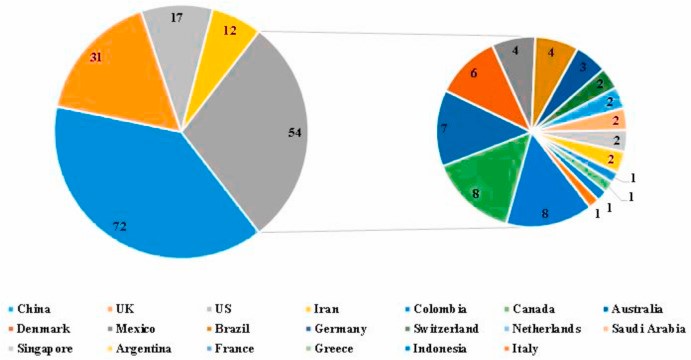
A systematic literature review of nearly 200 published papers was carried out using keywords to analyse Integrated Energy Networks (IENs). The papers have a wide, international authorship (Figure 1), showing that the topic of energy networks analysis is an important topic for governments around the world, as this supports meeting carbon reduction targets. 

Figure 1 The number of reviewed papers from different countries, based on the affiliation of the first author

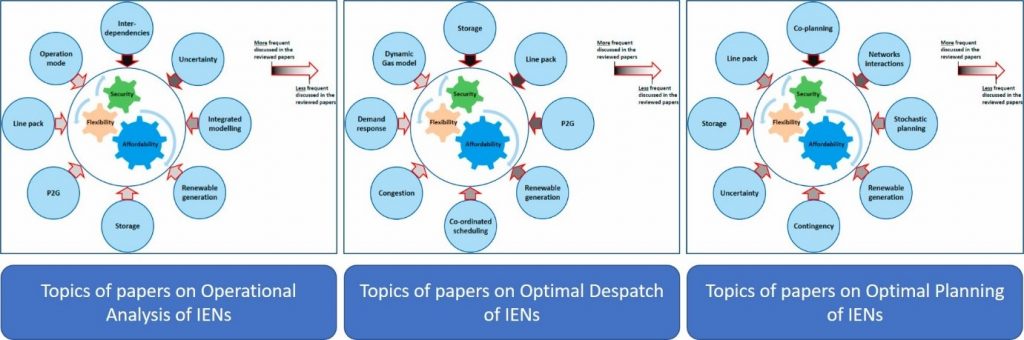
The reviewed papers were classified into three groups (i) Operational analysis (ii) Optimal dispatch and (iii) Optimal planning, focussing on energy networks including gas, electricity and district heating networks as well as their interactions and interdependencies.

Figure 2 The three subject groups of papers reviewed and their topics

A detailed evaluation of the energy trilemma was carried out for each of the three groups of papers.

The paper looks at key findings, provides insights for the energy research community towards pursuit of low carbon transition and makes recommendations for future research priorities including: (i) development and demonstration of cyber resilient smart energy management frameworks, (ii) ways to overcome organisational and regulatory barriers for future increased energy networks integration, (iii) uncertainty analysis of the future performance of IENs, (iv) potential economic value of energy systems integration and (v) deployment of smart multi-energy regions.

The full paper, will appear in the November 2020 issue of the Elsevier Journal, Renewable and Sustainable Energy Reviews, and is available to view online.

J.RSER

References:

[1] Hosseini, SHR, Allahham, A, Walker, SL, Taylor, P. (2020). Optimal planning and operation of multi-vector energy networks: A systematic review. Renewable and Sustainable Energy Reviews, 133. DOI: j.rseer.2020.110216

[2] Committee on Climate Change. Net Zero – the UK’s contribution to stopping global warming. 2019. accessed, https://www.theccc.org.uk/publication/ net-zero-the-uks-contribution-to-stopping-global-warming/. [Accessed 28 October 2019].

[3] Eusgel I, Nan C, Dietz S. System-of-systems approach for interdependent critical infrastructures. Reliab Eng Syst Saf 2011;96(6):679–86.