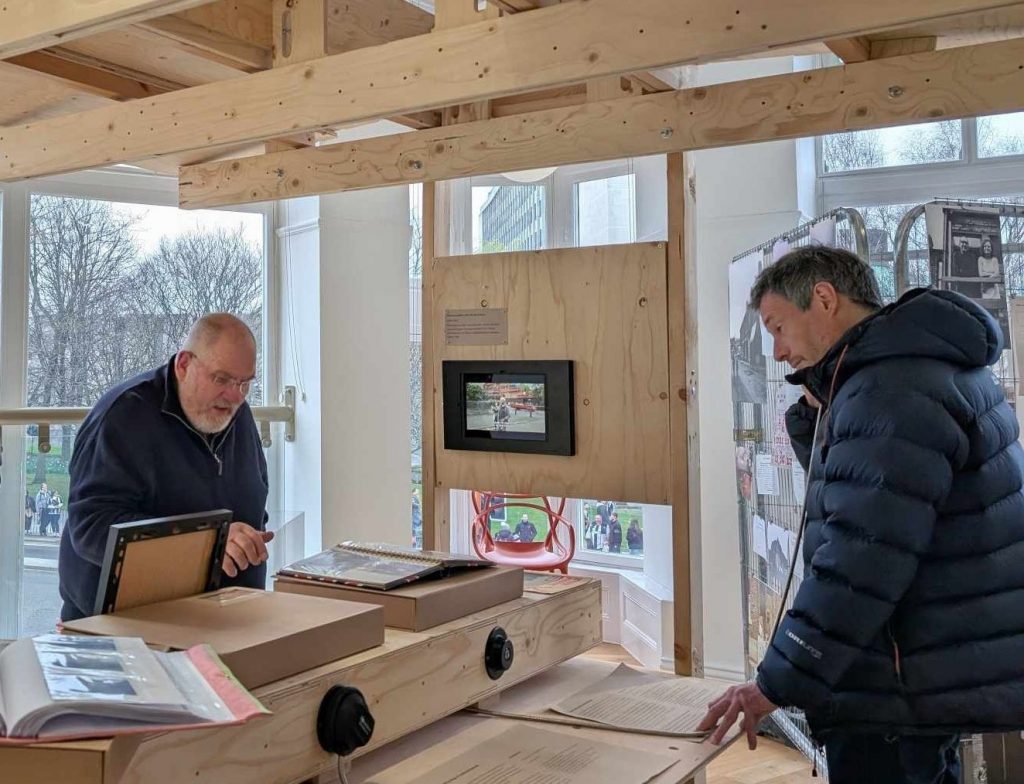
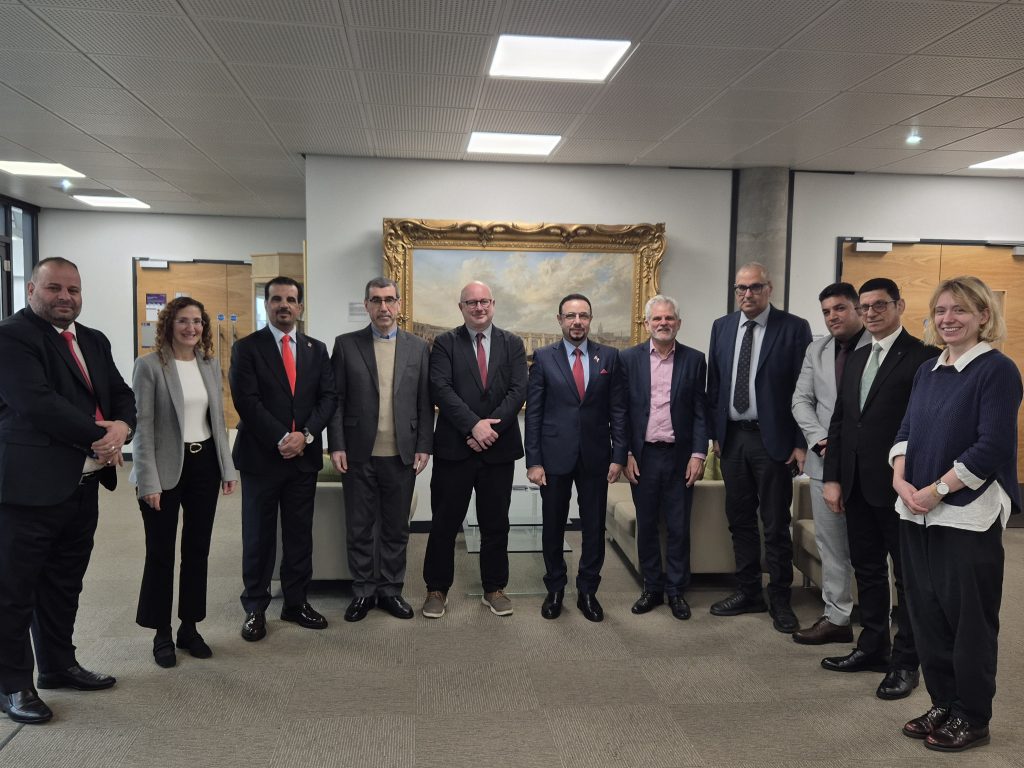
The communications team in the Faculty of Humanities and Social Sciences at Newcastle kindly produced the following blog post featuring the recent visit of a delegation of Iraqi scholars to the university. The delegation led by Professor Safaa Al-Issawi – President of Mustansiriyah University met the day before to participate in the first ever Iraq/UK Oral History Symposium. A symposium report will be covered more fully in an upcoming post.
During a recent visit, colleagues from both Newcastle University and Mustansiriyah University in Iraq came together to mark a milestone in their growing partnership.
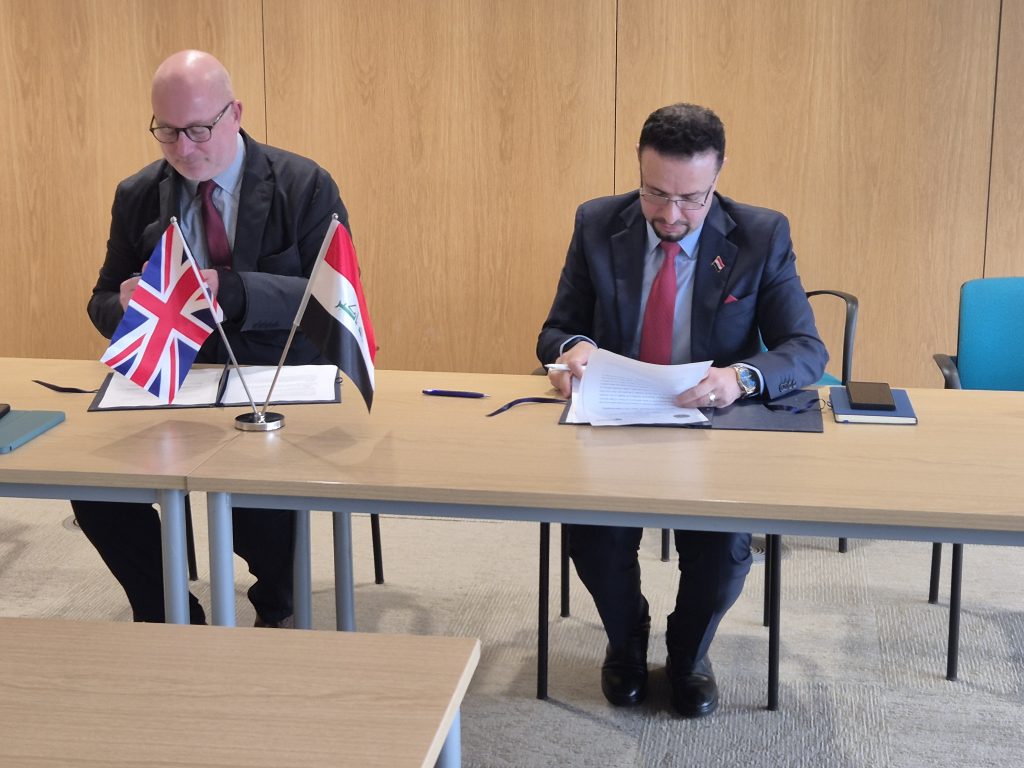
The visit, held at Newcastle University, marked the formal signing of an updated Memorandum of Understanding (MoU) and the celebration of a ground-breaking achievement—the launch of the first-ever oral history teaching guide for university teaching written in Arabic.
The guide was created by Dr Alaa Alameri, former Head of History at Mustansiriyah University. Over the summer, Dr Alaa spent eight weeks immersed in research and collaboration at Newcastle University’s Oral History Collective. His visit, supported by a Nahrein Network / BISI Scholarship, led to the creation of the Arabic-language guide – a practical and symbolic step toward embedding oral history into Iraqi higher education.
Dr Alaa worked closely with Graham Smith, Professor of Oral History, who acted as the publication’s academic reviewer. Their work is part of a broader initiative that began with the signing of an initial MoU in February 2024. That agreement marked one of Newcastle’s first formal institutional partnerships with an Iraqi university, building on decades of informal ties through students, alumni, and shared research.
Creating a shared vision for oral history teaching and education
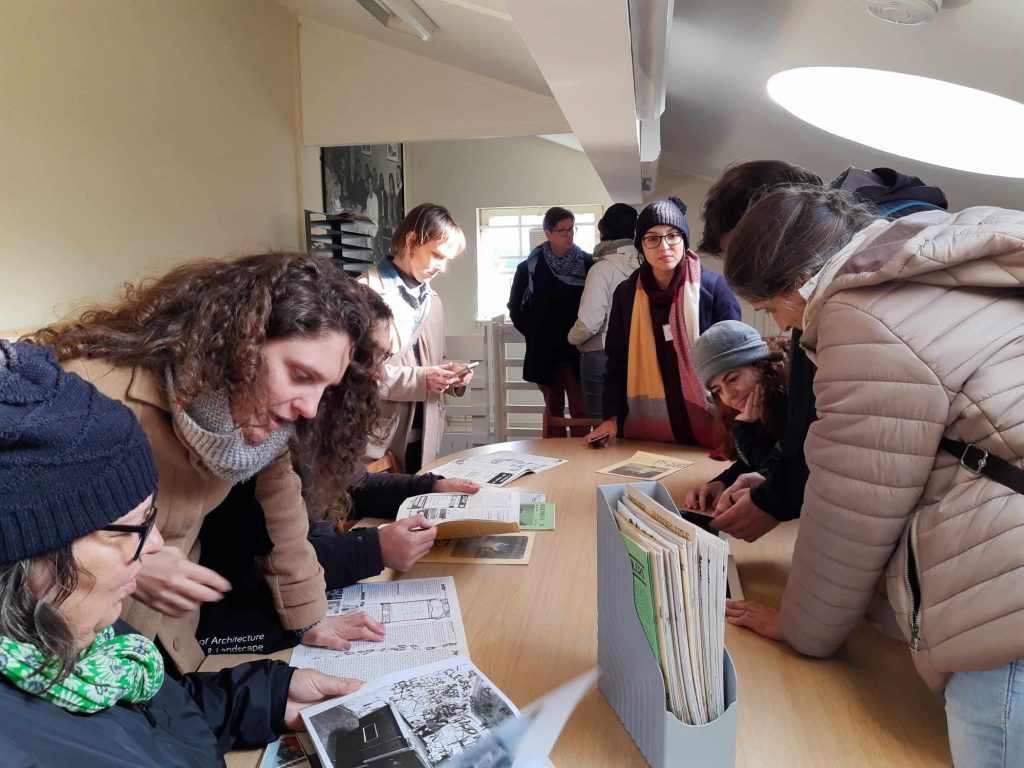
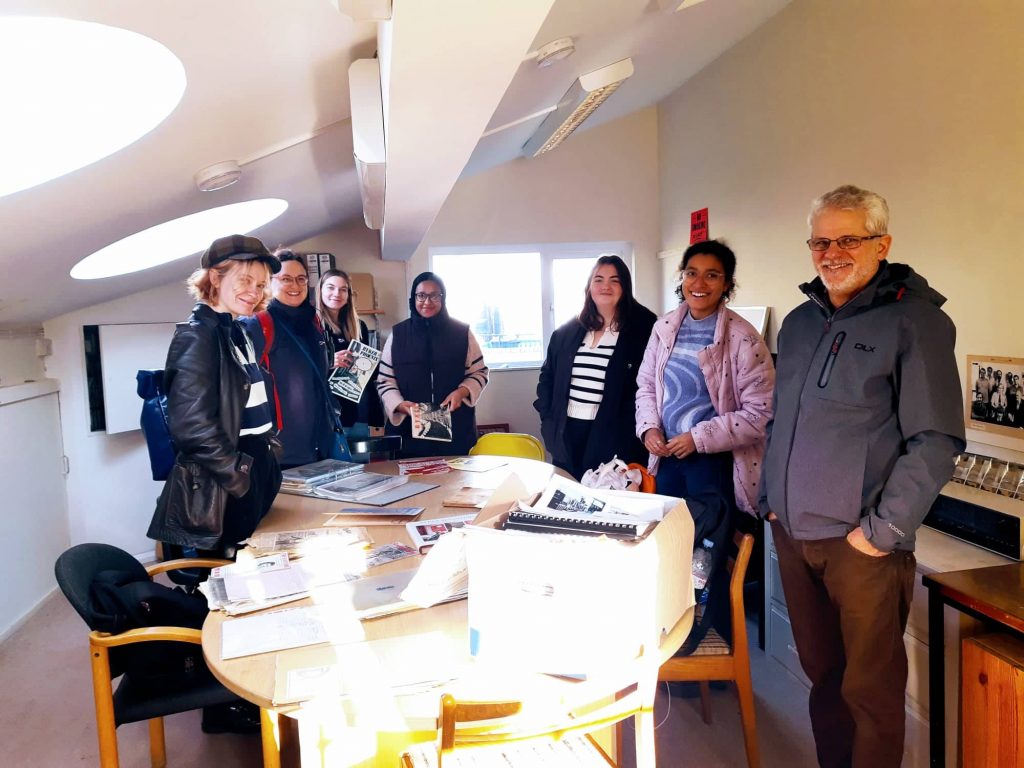
The shared vision is ambitious: to develop a new university module in oral history for Iraq and to integrate oral history teaching and resources across the country’s higher education system. The recent meeting provided an update on this work and hosted the first-ever Iraqi–UK oral history symposium—a space for scholars from both countries to exchange project reports, ideas, explore methodologies, and chart a collaborative future.
Professor Graham Smith commented:
It was an honour to welcome our colleagues from Mustansiriyah University. We were very pleased to showcase the Arabic oral history guide as a tangible output, as well as identifying new avenues for interdisciplinary and international collaboration.
Further to this, it was an enriching experience to come together and explore the unique opportunities and challenges of working with oral history in Iraqi contexts, and to have a space to facilitate dialogue on ethics, archiving, and pedagogy.
A global and academic partnership for the future
The event also signalled a broader renewal of UK–Iraq academic ties. In January 2025, Newcastle was among twelve UK universities included in a set of MoUs announced by the Iraqi Prime Minister and the Higher Committee for Education Development. These agreements are already bearing fruit, particularly in the fields of history, archaeology, and heritage, as well as more general capacity building.
Looking ahead, the partners hope to:
- Enable student and staff exchanges between Newcastle and Iraqi institutions
- Develop joint research and teaching bids, including PhD opportunities
- Expand the network to include more Iraqi universities
- Establish Newcastle as an international hub for oral history research, training, and capacity building.
The event also facilitated conversations with other departments at Newcastle University, including the Law School and the Medical School, securing early steps toward expanding the interdisciplinary and international collaboration.
Professor Smith added:
The visit was a huge success and represents more than an academic partnership; it signals a shared commitment to preserving voices, histories, and cultural memory—across borders, languages, and generations.