New grant success

Ageing and the Irish Diaspora in Britain: Oral Histories, Generational Change and Welfare Futures

Sarah Campbell, Jack Hepworth and Matthew Prina, have been awarded new AHRC funding to explore ageing and welfare amongst the Irish diaspora in Britain. Here, Sarah explains the thinking and motivations driving the project.
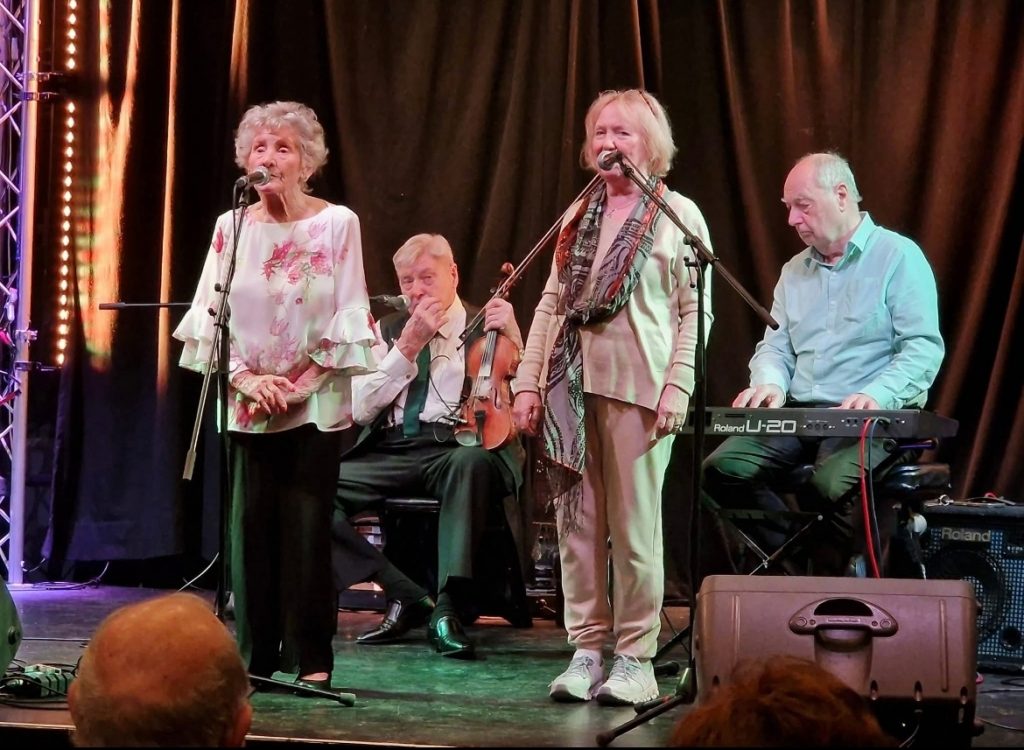
Photograph used with permission of the Tyneside Irish Cultural Society’s Raised on Songs and Stories project

What might oral history contribute to our understanding of health inequalities? And what happens when life history interviews are placed in conversation with epidemiological or public health evidence? These questions are at the centre of a new 12-month AHRC-funded Curiosity project exploring ageing, identity, health and wellbeing among the Irish diaspora in the North-East of England, awarded to Newcastle University colleagues. Led by Dr Sarah Campbell (History), with Dr Jack Hepworth (History) and Professor Matthew Prina (Professor of Ageing and Epidemiology at the Population Health Sciences Institute) as Co-Is, and in partnership with the Tyneside Irish Cultural Society (TICS) and its Raised on Songs and Stories (RoSS) initiative, the project will explore how experiences of migration, work, community and belonging have shaped health across the life course.
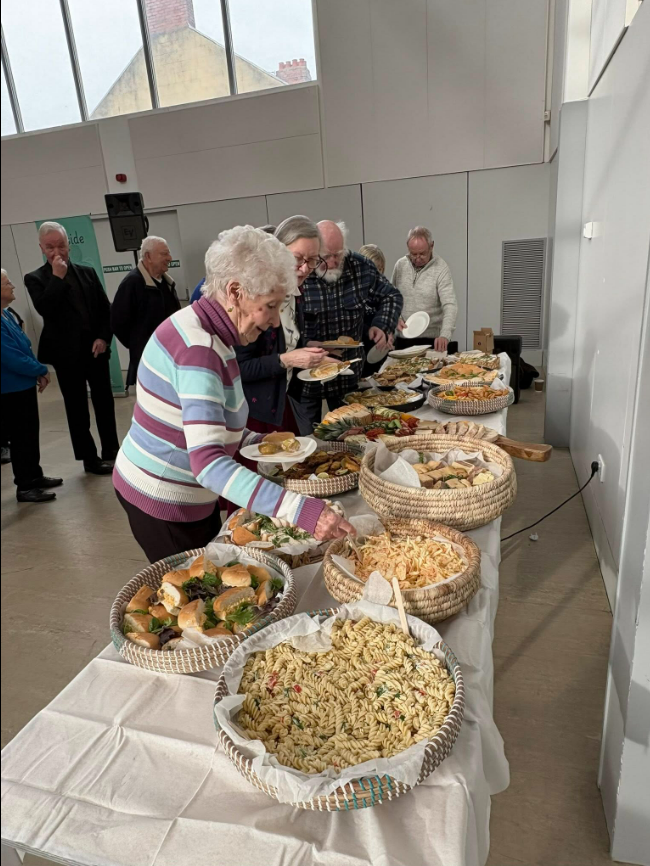
Photograph: Tyneside Irish Cultural Society’s Raised on Songs and Stories project

The Irish are now the oldest ethnic group in England and Wales, while Irish populations experience disproportionately high levels of chronic illness, disability, loneliness and premature mortality. These questions resonate particularly in the North-East where Irish migration to the region has been closely connected to mining, shipbuilding, steel, construction and other forms of demanding industrial labour. The subsequent ageing of that migrant population has been contextualised by deindustrialisation and the emergence of some of Britain’s most persistent regional health inequalities. Yet statistics can only tell us part of this story. Knowing that a population experiences poorer health outcomes does not, by itself, tell us how those inequalities have been lived and understood. Nor can it tell us how people connect present-day health to earlier experiences of migration and work; how encounters with healthcare institutions have been shaped by identity; or how ideas about health, care and ageing circulate between generations. The project will use oral history to explore some of these questions.

A dialogue between oral history and epidemiology

Alongside the interviews, the project will develop a pilot quantitative survey of the Irish diaspora in the North-East, examining issues including physical and mental health, loneliness and social isolation, ageism, access to care, housing and neighbourhood attachment. The survey will be co-produced with community partners and older Irish migrants, helping us identify categories and questions that make sense to the people whose experiences we are seeking to understand. The idea is that the two forms of evidence will interact throughout the project, rather than exist in parallel. Preliminary survey findings will help identify questions and patterns for deeper exploration through oral history. In turn, the oral histories will help us interpret, and potentially complicate, the patterns identified quantitatively. This creates interesting possibilities for both disciplines. Epidemiology can help oral historians situate individual accounts within wider patterns of health inequality and ask new questions about the relationship between biography and population-level trends. Oral history, meanwhile, can reveal some of the complexity concealed within epidemiological categories. A survey might identify social isolation, poor health or difficulties accessing services; a life history can explore what ‘isolation’ actually means to someone, how they understand the origins of poor health, or why particular institutions are trusted or distrusted.
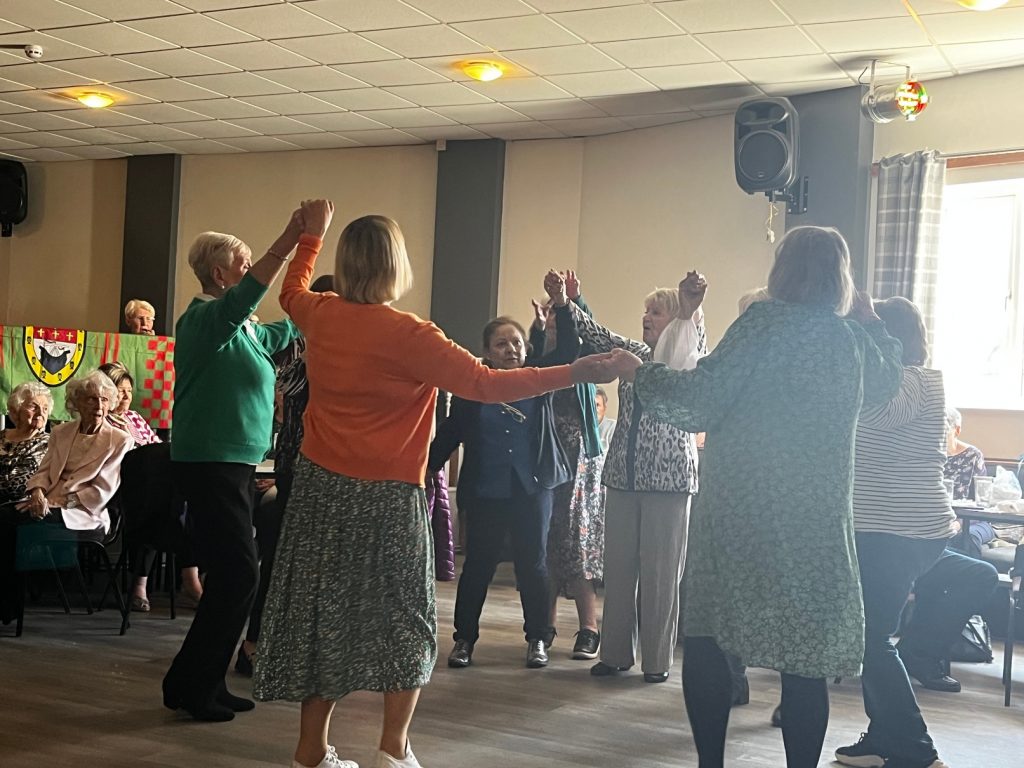
Photograph: Tyneside Irish Cultural Society’s Raised on Songs and Stories project

Co-production, community and the future

The Tyneside Irish Cultural Society and its community care outreach project, Raised on Songs and Stories, will partner to shape the research questions, survey, recruitment and dissemination. Working through trusted community relationships is particularly important when discussing potentially sensitive experiences of health, migration, discrimination and ageing. Workshops with academics, community organisations and policy and practice partners will help us refine the methodology of this pilot project, including roundtables with local authorities. The project will then invite NHS practitioners and voluntary-sector organisations to consider what the findings might mean for culturally competent and regionally informed care. Ultimately, we hope the project will provide the foundations for a larger national study of ageing and the Irish diaspora, allowing us to compare experiences across different parts of Britain. But it is also an opportunity to experiment methodologically: to ask what happens when oral historians and epidemiologists begin with a shared problem rather than parallel disciplinary approaches.
Introducing Dr Lena Ferriday: Research Associate on Accessing the Wellbeing Commons

In April 2026, we welcomed Dr Lena Ferriday, who joins the Collective as a Research Associate. She has joined us from King’s College London, where she has been Lecturer in the History of Science and the Environment for the past year following completion of her doctorate at the University of Bristol. Inspired by the research within the Centre for Environmental Humanities at Bristol during her undergraduate studies, she took an interest in environmental history with a focus on sensory experience. She is particularly interested in questions of how individuals have made claims to environmental knowledge in modern Britain, and the role tangible encounters between bodies and matter have played in this process.  

Her current monograph project examines how the rural environments of South-West England came to acquire meanings through embodied practice through the nineteenth and twentieth centuries. While her individual research has not been oral history-based — thus far — she was involved in several Bristol-based oral history projects, exploring individuals’ experiences of caving in the Mendips and of the gas industry in south Bristol. 

Lena has joined Newcastle as Research Associate on the Wellcome Trust-funded project ‘Accessing the Wellbeing Commons: Therapeutic Resource-ification of Natural and Historic Environments and Social Exclusion in the UK and Inner Asia’. The project will explore how the natural environment’s health benefits have been historically constructed and seeks to reveal the barriers communities face in accessing these spaces. It does so by approaching watery spaces as sites where social categories like class and ethnicity are configured in specific historical encounters and bound up with a capitalist production of value. 

Lena leads the UK work package and will be conducting oral history interviews on wild swimming in Devon, and social inequalities in the recent past, for the UK part of the project. She hopes to start her fieldwork in May, which will entail daily ethnographic encounters with communities who have a stake in Dartmoor’s lakes, rivers and reservoirs, whether as regular users, visitors, regulators, or activists. She will accompany this research by undertaking 10 oral history interviews, with those who have a sustained or long-term involvement in issues of access to these spaces. 

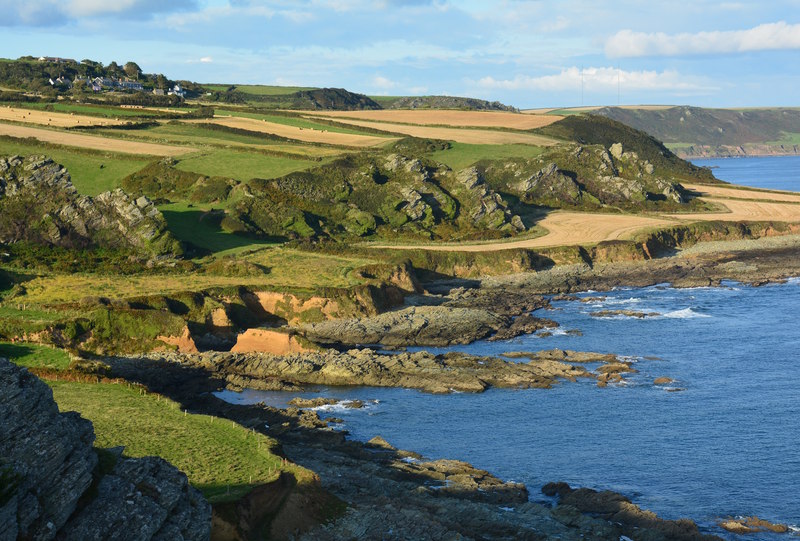
Raised beach at Prawle Point, Devon, by Edmund Shaw. Licensed under CC-BY-2.0. Available at geograph.org.uk.

Whilst the archive holds extensive materials on the management of water systems on Dartmoor, and the evolving histories of access to the National Park in the late twentieth century, there is much less that reveals individuals’ experiences of these spaces across the past century. Lena is keen to use oral history to bring this experiential dimension to the fore, uncovering how the embodied experiences of swimming might have changed in relation to the political dynamics that historians have more often attributed to these spaces. Doing so, she hopes, will offer insight into how the relationship between water and health was imagined and practiced in this period.  

Byker Community Archive

A funding boost of over £275,000 is enabling a Newcastle-based cultural project to celebrate the vibrant social and architectural history of the city’s Grade II* listed Byker Estate. Here, Silvie Fisch, Director of Northern Cultural Projects, and Associate Researcher in the Oral History Collective, explains how the funding will be used. 

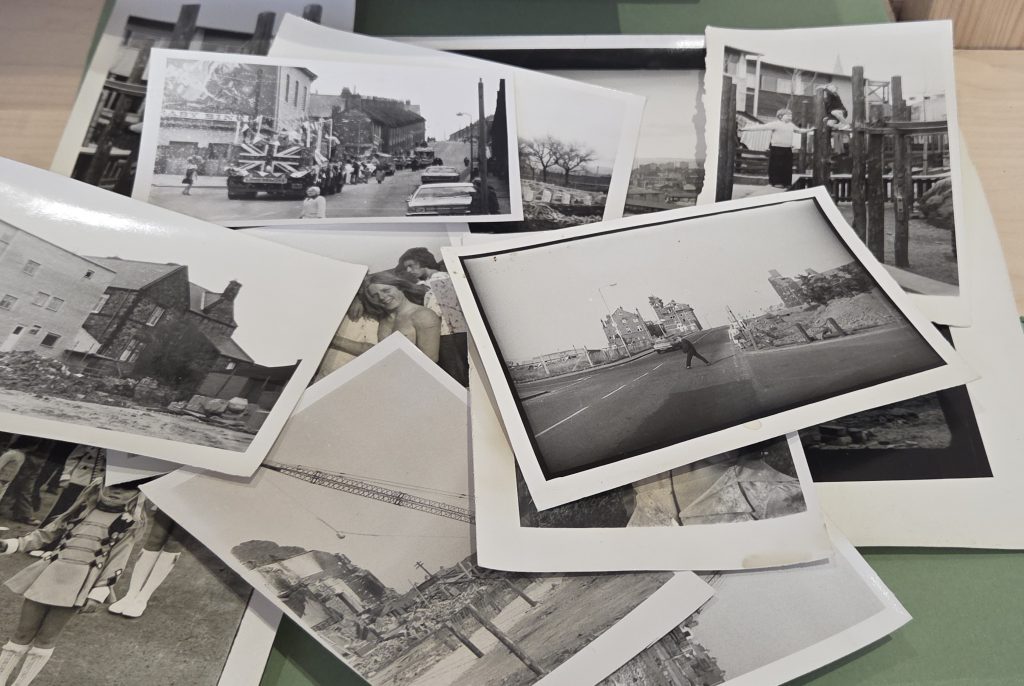
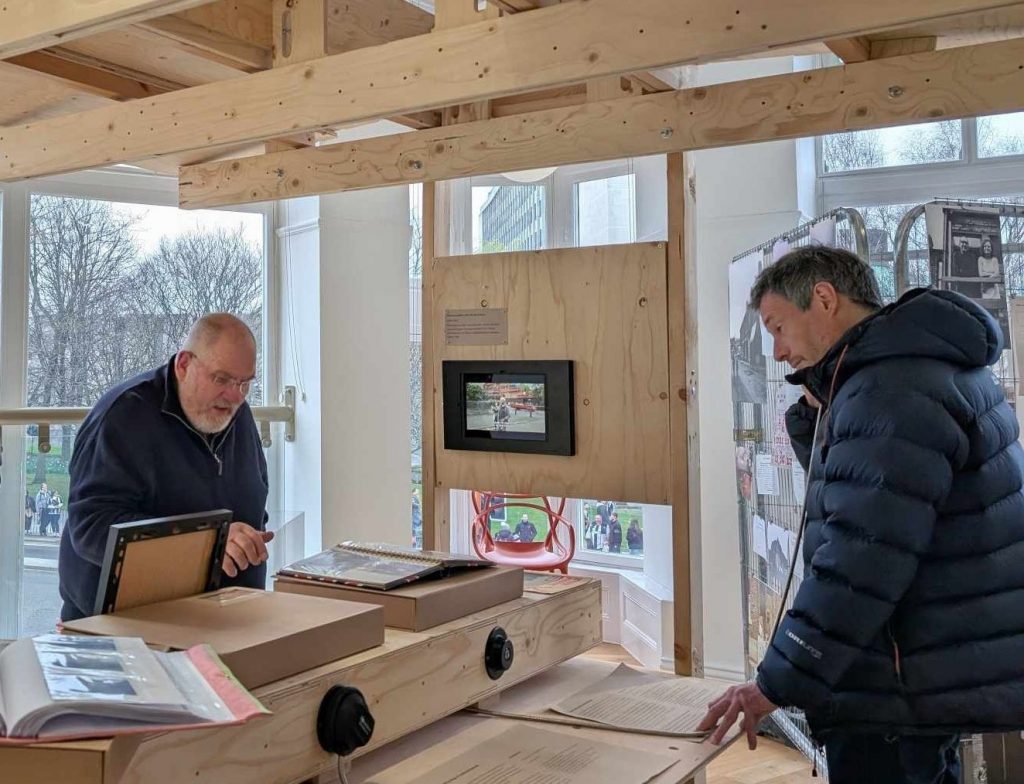
Archive photographs from the Byker collection. Photo S. Fisch, 2025
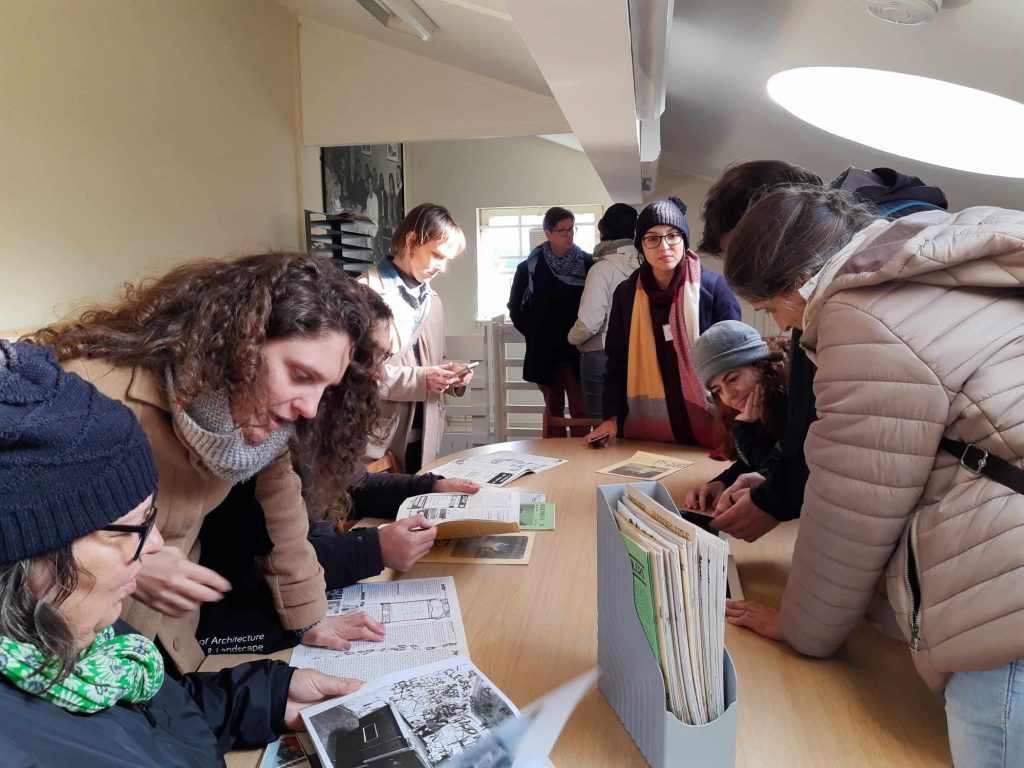
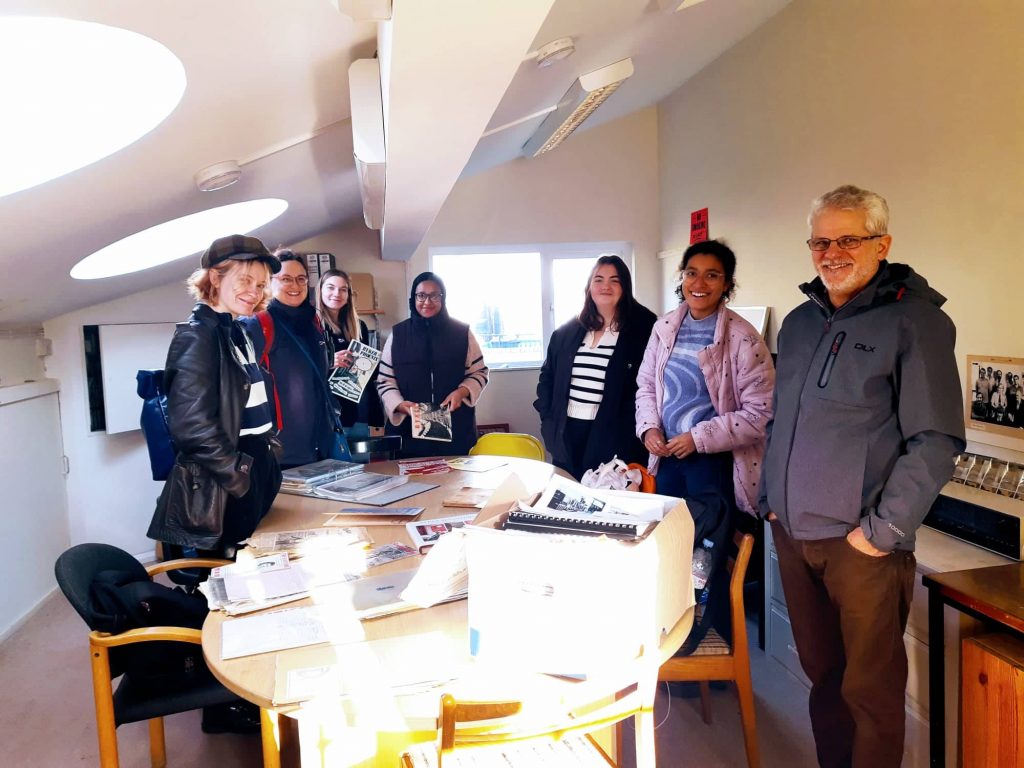
Visitors from Brazil in the hobby room that will house the archive, Photo S. Fisch, 2024

The Byker development has long been recognised as a key part of a significant collaborative movement in international architecture and is one of the most important social developments in British post-war history. The community archive will capture the evolution of the estate over the years, from before redevelopment and its construction between 1969 and 1983, through to the present. It will showcase the unique architectural and design features, as well as capture the stories of its communities, contributing new narratives and giving people agency over their histories. The three-year project will start off with the refurbishment and conversion of the ‘Photo Studio’ hobby room on Raby Way into the archive space, which will open to the public in spring 2026. The archive will be community-led, providing people who live on the estate with volunteering and employment opportunities. 

Northern Cultural Projects CIC has secured a £240,186 grant from the National Lottery Heritage Fund and £36,488 match funding from Karbon Homes, to see one of the hobby rooms on the Byker estate transformed into an archive. Our goal is a community living archive: one that captures not only the history of Byker’s buildings and landscapes, but also the lived experiences of its people, past and present. 

MA Public History programme visit to the hobby room, S Fisch, 2023.

This archive isn’t about romanticising the “old Byker.” Rather we aim to bridge the past and present. It’s about assembling a mosaic of memories, from the Victorian terraced houses to the Grade 2* listed Byker Wall. Some academics have claimed that, Byker has been over-researched. However, the memories of residents who have lived on the estate since its earliest days are still missing from the historical record. “Unsanitised” memories that contest official narratives remain unrecorded. Histories have still to be documented, including Byker’s long association with community arts activism as well as local campaigns, including action on environmental  issues, such as the successful resistance against the use of a waste incinerator in 2005.

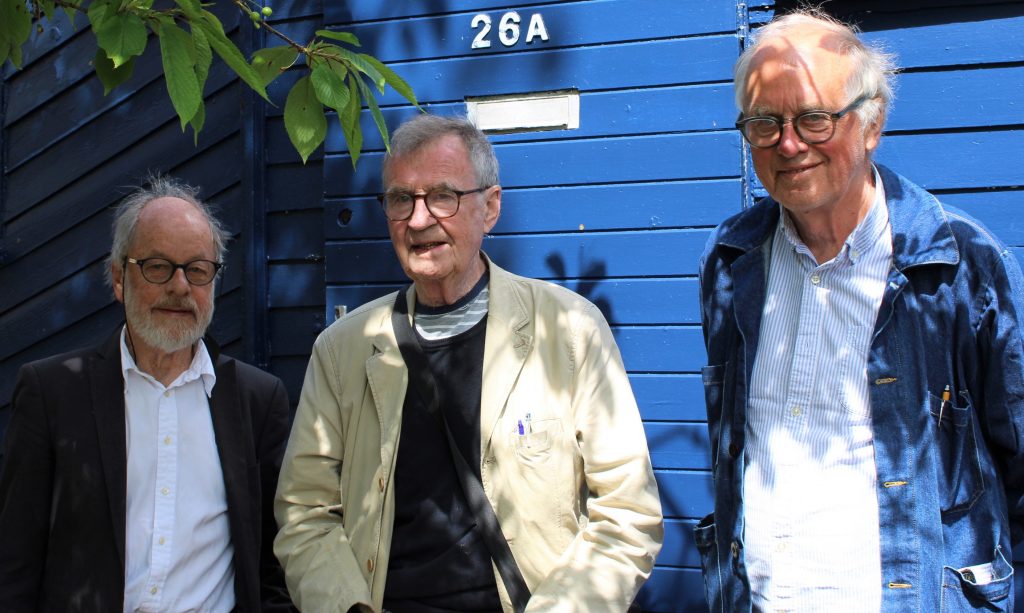
Swedish Byker Architects Arne Nilson, Bengt Ahlqvist and Per Hederus visit the Hobby Room in 2023. S. Fisch, 2023.

Out of 2,000 homes on Byker, 1,800 are owned by social housing landlord Karbon Homes, with the organisation responsible for the day-to-day management of the estate. As Victoria Keen, Place Lead at Karbon Homes, has said: “The Byker community taking control of their own formidable heritage through a living archive is an idea which we’re certain will generate social impact on many levels. We believe that the chance for this project to go ahead with such a level of local expertise is a true once in a lifetime opportunity. This project aligns with the delivery of our Thriving Byker Strategy, enhancing pride of place in our community.” 

Farrell Centre Installation, S. Fisch, 2025

The project has been long in the planning by Northern Cultural Projects CIC. Support from the Oral History Collective and Newcastle University proved invaluable in developing the bid. New and existing oral histories were combined for an Installation at the Farrell Centre, as a pilot for the archive, to tell the story of the estate from predevelopment to its early days from the perspective of local residents, architects and planners.  

Preserving Byker’s Vibrant Past with Oral History

The Byker Estate in Newcastle is internationally famed for its pioneering approach to urban regeneration through community participation and innovative architecture. Ralph Erskine significantly transformed the landscape of Byker and gained notoriety for his leading role, inspiring architects and historians alike. At the forefront of ensuring Byker’s human narrative remains as celebrated as its architectural accomplishments is the work of Silvie Fisch, an Associate Researcher at Newcastle University’s Oral History Collective and Director of Northern Cultural Projects.

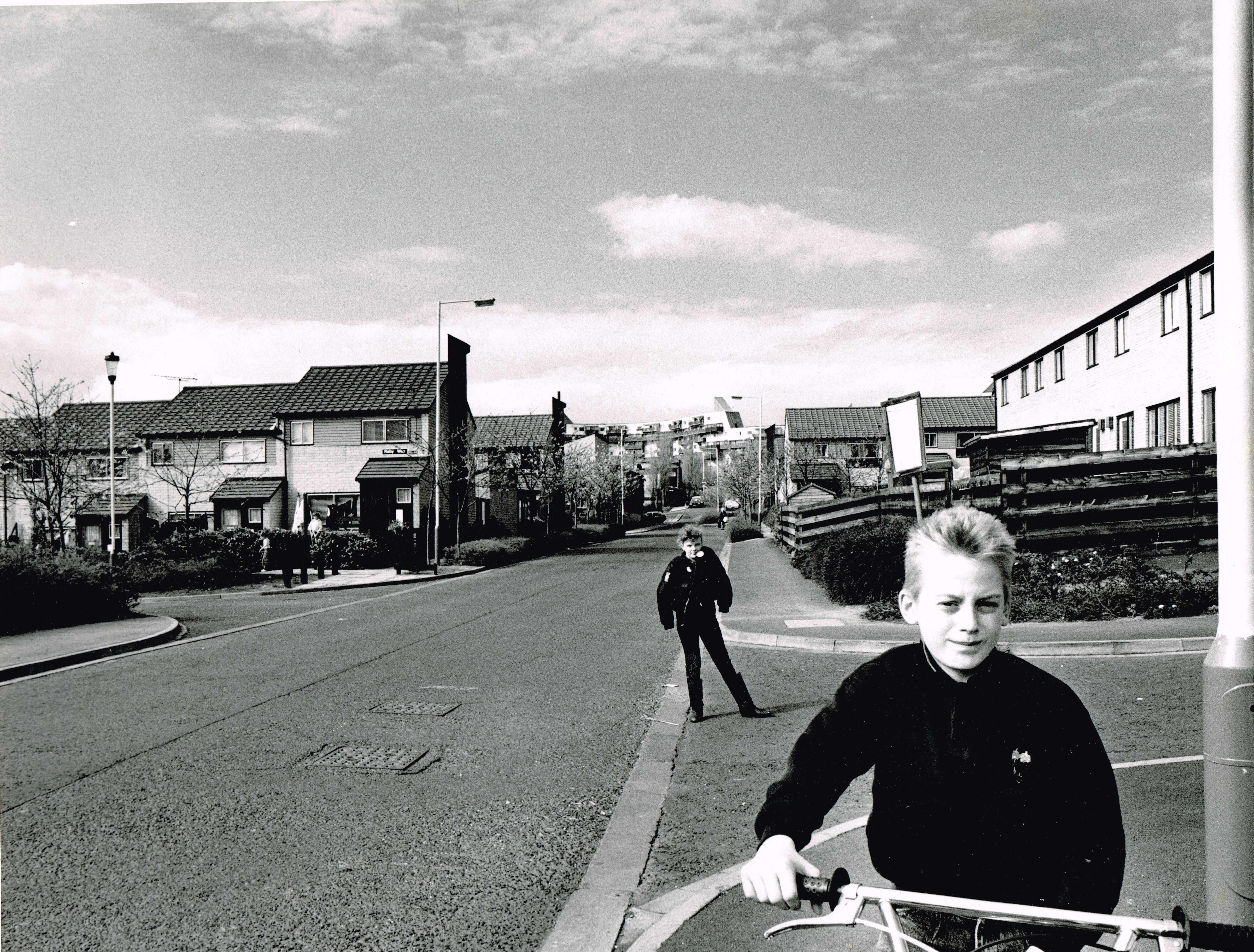
Photo: Tyne and Wear Building Preservation Trust, Raby Way Photograph

The Unsung Heroes of the Byker Study Group

While Ralph Erskine has been credited as the instigator of the Byker Estate’s ‘bottom-up’ and participatory approach to redevelopment, Silvie draws attention to influential grassroot efforts that preceded its success. The largely unrecognised efforts of the Byker Study Group of the 1960s were crucial, as they lobbied for the rights of residents to remain in Byker and shaped the socially inclusive redevelopment.

Silvie and Dr Sally Watson, ESRC Postdoctural Fellow in the School of Architecture, Planning and Landscape, have been invited by the Farrell Centre to co-produce the Fight for Byker and Other Stories (6 February – 1 June 2025) exhibition. This installation explores the lesser-known history of the Byker Estate, incorporating photographs, artefacts, and oral histories from contemporary witnesses. The focus is on the ‘pre-development’ period that laid the foundation for its success. Visitors are invited to contribute by bringing old photographs, negatives or slides that can be added to a memory wall.

The Fight for Byker and Other Stories is a free exhibition in The Sir Terry Farrell Building. More information can be found below:

Byker Through Creative Lenses

Silvie also examines how Byker has been represented across different media over the past 50 years. At Byker in Focus (6 February 2025), she will join photographer Sirkka-Liisa Konttinen, to deliver a talk on how artists, filmmakers, and architects have documented Byker’s distinctive urban culture.

Silvie poses critical questions about its representation: How do external portrayals compare to residents’ lived experiences? Can the “real” Byker ever be fully captured, or is it a dynamic narrative shaped by those who call it home?

Byker in Focus is a free talk in The Sir Terry Farrell Building. Booking and more information can be found below:

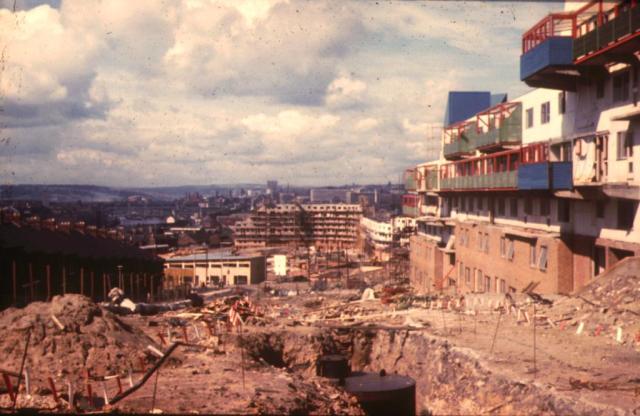
Photo: Tyne and Wear Building Preservation Trust, Shipley Rise and site clearance, 1970’s

Oral History and the Byker Estate

Silvie and Sally are working on plans for a “Byker Community Archive”, which will embrace past, present and future of the estate and create a lasting legacy for future generations.

The historical influences that led Ralph Erskine to envisage Byker, as well as its legacies have yet to be systematically documented, explored, and analysed. Numerous oral histories have been recorded over time but to this date can’t be centrally accessed. And as yet, several architects and other professionals involved in this pioneering scheme have not been interviewed, and many of the views of residents who have lived on the estate since its earliest days are still missing from the historical record.

Paying Our Way

Since 2018, the Newcastle University Oral History Collective (NUOHC) has coordinated two projects addressing key contemporary and historical social justice issues around poverty and food insecurity: Foodbank Histories and the Mutual Aid Oral History Project. In this post Silvie Fisch and Jack Hepworth extend shared authority into interpretation on more equitable terms with community researchers.

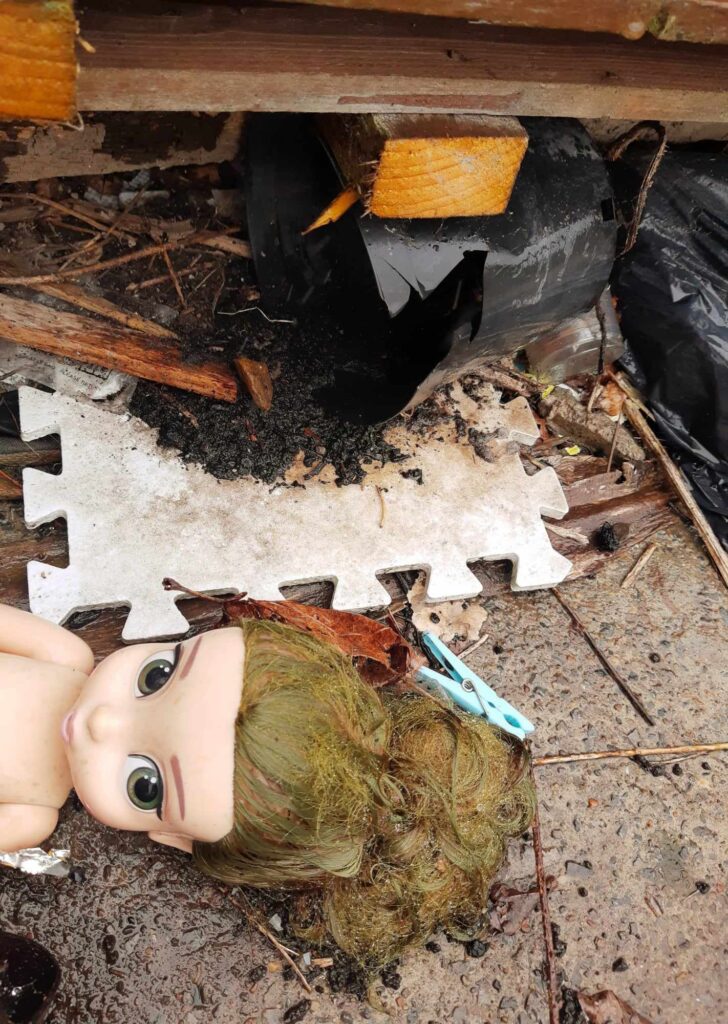
Picture of "rubbish" - a doll, a clothes peg and a jigsaw.
Photo: Silvie Fisch, What remains?

Oral history interviews recorded for these projects have stimulated engagement, outreach, and creative re-use activities. Most recently, Live Theatre’s youth group drew upon interview testimonies to create “Fed Up”, a production investigating how food poverty affects young people across the North East.

In May 2024 the Live Theatre team brought their production to an appreciative audience at Newcastle Cathedral. When the final curtain was drawn, we rattled our donation buckets in aid of the Newcastle Foodbank. That same evening, it came to our attention that one of our interviewees – a single mother of two young children, whose interview recording was used in the production – did not have enough money to top up her electricity meter.

Here we are, smug with pride about doing good, helping to improve the reputations of institutions and companies, and furthering our own careers. Even worse, often we help to reinforce the prevailing conditions, instead of trying to drive fundamental change.

Last year, The Social Change Agency invited OHUC member organisation Northern Cultural Projects – a Community Interest Company – to become part of the learning community, to produce a handbook designed to embed mutually beneficial payment for involvement policies.

This involvement, combined with our doubts concerning current research involvement practices, underpins our new project Paying Our Way: Research Participation and Fair Pay. The project has received vital support from Newcastle University’s Social Justice Fund and Engagement and Place Fund.

Paying Our Way aims to extend the benefits for community researchers and research participants with first-hand experience of the issues we seek to address. We are exploring how best to involve research participants in project design, delivery, and decision-making. The project further considers how to remunerate participants for their involvement, without compromising any welfare entitlement.

Mutual Aid service users in the east end of Newcastle will choose materials for a new HCA website to reinterpret and showcase the previous projects. Their curation will ensure these projects’ continual relevance and accessibility to people with experience of economic disadvantage. With the help of our community researchers, we have organised an engagement event for the local community, that has evaluated the website’s content for relevance and to stimulate discussions around our previous research findings. The event included peer-to-peer translation and interpretation by and for members of different ethnic communities.

For the project’s next phase, we want to produce recommendations for the fair remuneration of research participants with direct experience of economic and social disadvantage. Our aim here is not simply to involve marginalised individuals. Rather, we hope to find better ways to support our community researchers and research participants in sharing authority beyond the collection of oral histories, and to design mutually beneficial methods for collaborative social and historical justice research.

Remember 1926

Joe Redmayne, a Collective researcher associate, introduces our new “Remember 1926” project and its launch. The project is a collaboration between Newcastle University’s Oral History Collective (OHC) and Labour & Society Research Group (LSRG).

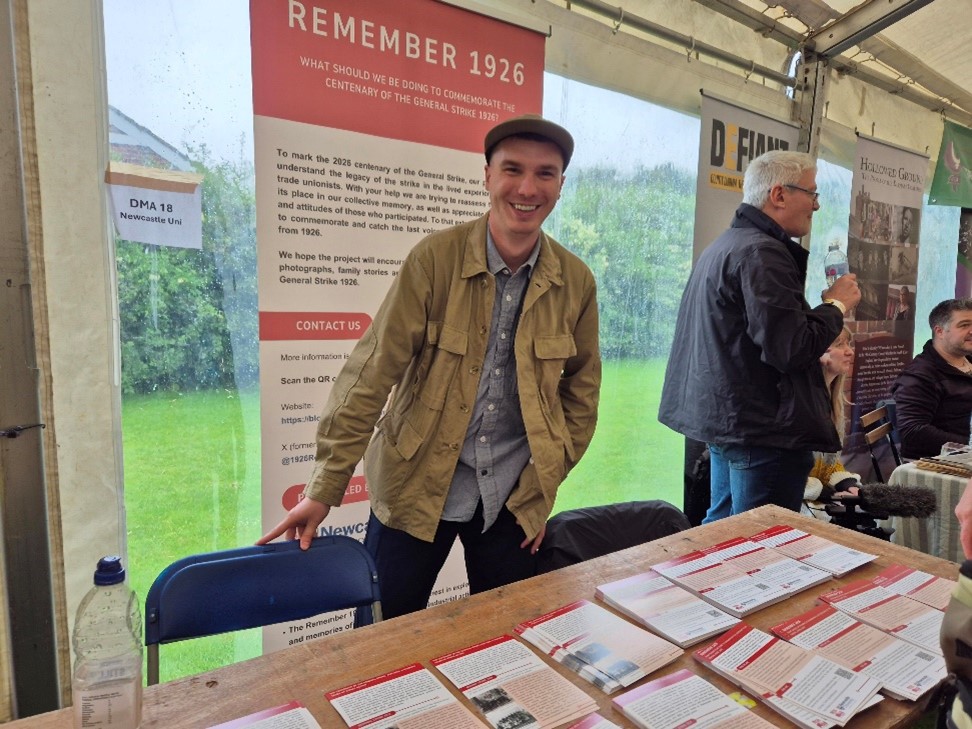
(Photograph of Dr Joe Redmayne at the Durham Miners’ Gala promoting the Remember 1926 project. OHC colleagues

Joe Redmayne at the Durham Miners’ Gala promoting the Remember 1926 project.

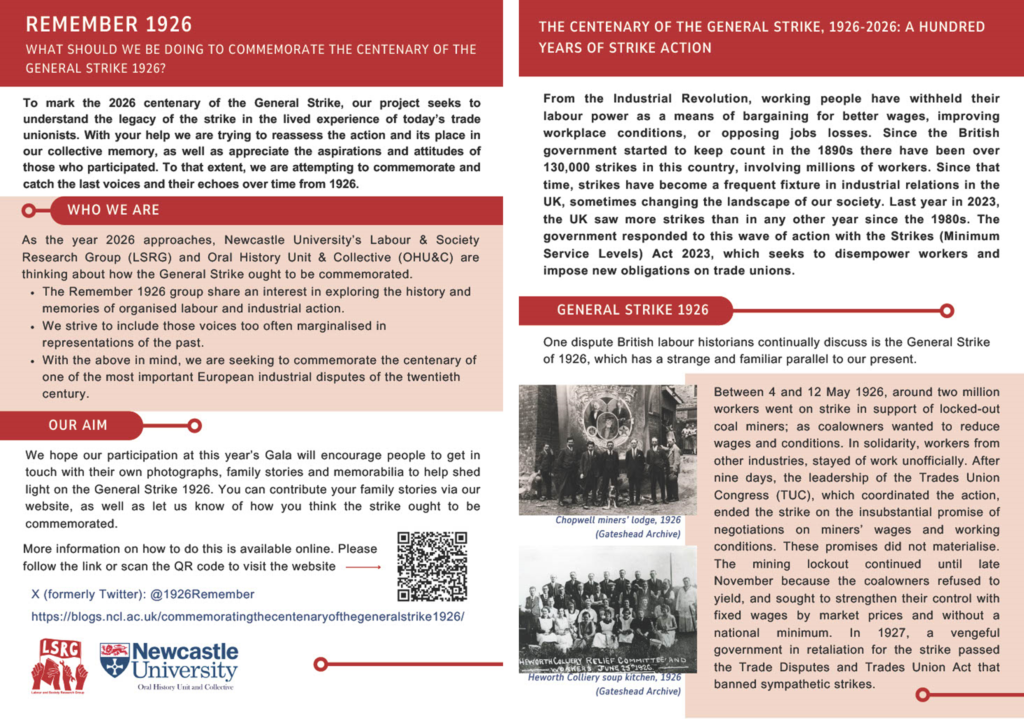
The project explores ways in which the centenary of the British General Strike of 1926 ought to be commemorated in two years’ time and seeks to understand the legacy of the strike in the lived experience of members of today’s trade unions and the wider labour movement.

The project launched at the 138th Durham Miners’ Gala on Saturday 13 July 2024, with a stall and leaflets to promote the project among attendees. We would encourage people to get in touch with their photographs, family stories, and memorabilia to help shed light on the General Strike.

Remember 1926 will revisit the General Strike, reassess the action and its place in our collective memory, as well as appreciate the aspirations of those who participated. To that extent, the group is attempting to commemorate and catch the last voices and their echoes over time from 1926.

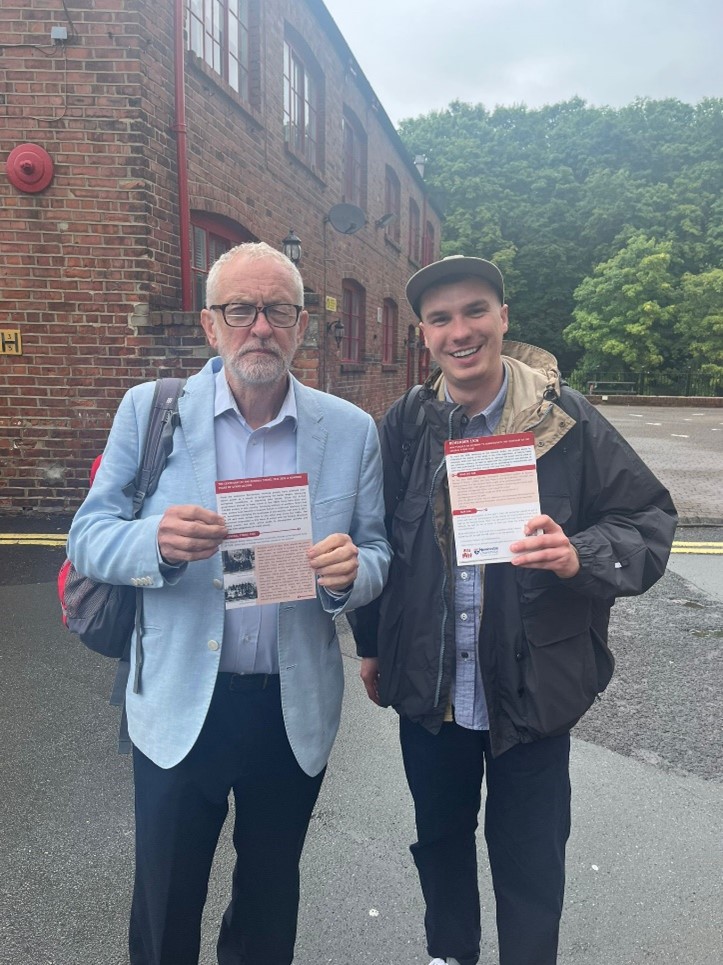
(Photograph of Joe with the former leader of the Labour Party and now Independent MP for Islington North, Jeremy Corbyn, holding the Remember 1926 leaflets.)

Joe with the former leader of the Labour Party and now Independent MP for Islington North, Jeremy Corbyn, holding the Remember 1926 leaflets (see below).

Get involved

In the future, Remember 1926 will foster dialogue and prompt collaboration between trade unionists, political activists, academic researchers, community partners, heritage groups, archives, and museums. If you would like to keep updated or get more involved with the project, please complete the following questionnaire via the link (Get involved).

You can visit our webpage and social media below:

https://blogs.ncl.ac.uk/commemoratingthecentenaryofthegeneralstrike1926

@1926Remember If you have any immediate questions about the project, please get in touch with Joe Redmayne via email at j.redmayne2@newcastle.ac.uk


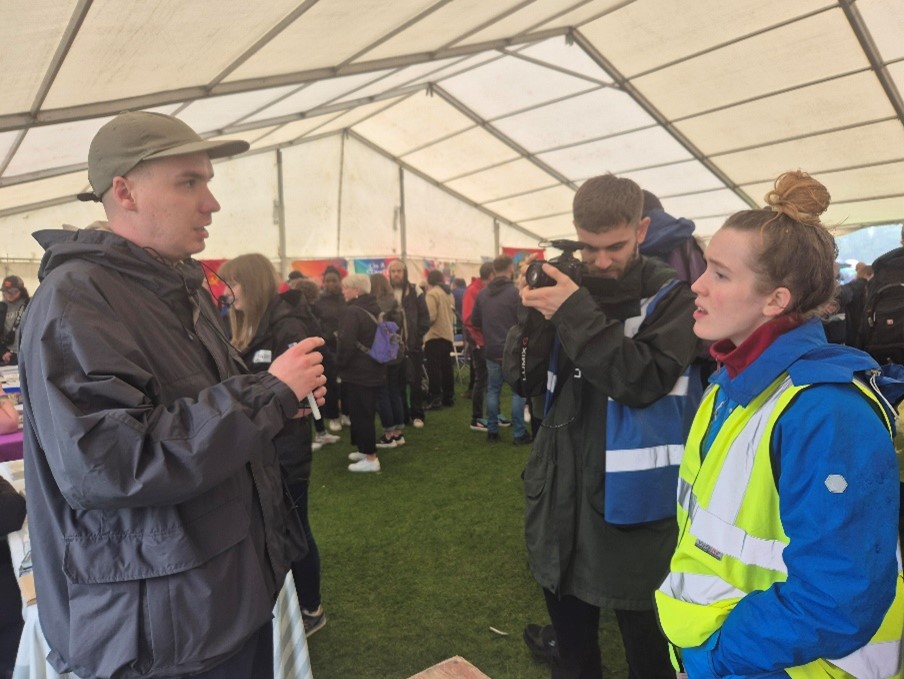
Royal Holloway MA Public History student, Rachel Lawrence, interviewing Joe about the Remember 1926 project and his thoughts about the Durham Miners’ Gala.

Royal Holloway MA Public History student, Rachel Lawrence, interviewing Joe about the Remember 1926 project and his thoughts about the Durham Miners’ Gala.

Share your family stories, photographs, and memorabilia

If you have a story of an ancestor who participated in the General Strike, please let us know, as we would love to hear your family stories. You can contribute your own family stories via the following link Remember 1926 Questionnaire to help us grasp the different experiences of those involved in the strike and comprehend how your story lives on today.

Please include your name and email address, so we may be able to contact you in the future. Some of the questions the project is interested in answering are listed below: ·

What are the legacies of the General Strike? ·

What difference to Britain did the strike make? · What caused it? Could it have been avoided?

Is it an event still discussed by different generations of workers today? · Are there any family/community histories passed down through generations that still live on in today’s collective memory? · Have these stories shaped the descendants view of the trade union movement? · Why do people still strike today? · How and why should the centenary of the strike be commemorated?

The interaction between Narrative and Archive: The Lockerbie Disaster, Pan Am 103, and Syracuse University

In October 2022, NOHUC Researcher Andy Clark undertook a research and engagement trip to Syracuse University, New York. Along with Colin Atkinson, this was part of their British Academy funded project that conducted oral history interviews with first responders to the Lockerbie Disaster, 1988. In this Lug post, Andy reflects on engaging with victim communities in the United States, and how the materials held in the Pan Am 103 archive aligned with the narratives collected in his research.

Continue reading

From a lively archive in Bangalore

In this Lug piece, PhD student Hannah James Louwerse offers some insights on her time researching in the Archives at the National Centre of Biological Sciences in Bangalore, and reflects on the workflows and processes which go into keeping an archive running smoothly.

Continue reading