Resource in focus: Electronic Enlightenment

How did social networking operate before the internet? Explore Electronic Enlightenment to find out!

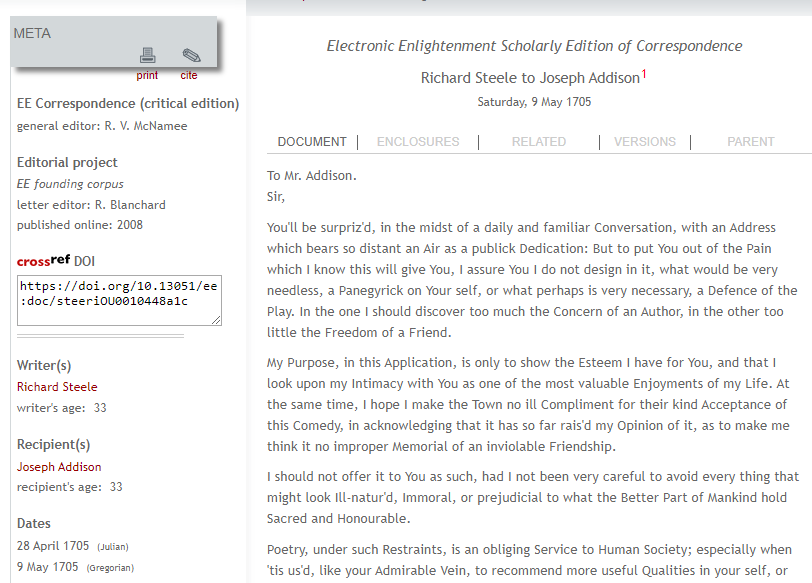
Electronic Enlightenment is a valuable resource for anybody studying or researching the long eighteenth century. It is an archive of digitised correspondence, comprising nearly 80,000 letters sent between 10,000 individuals, written from the 17th to mid 19th centuries. Its geographic scope covers Europe, the Americas and Asia, and it encompasses a cross-section of society, including philosophers, scholars, shopkeepers, servants and diplomats.

The letters are supplemented with contextual information, including annotations and biographical notes, plus teaching aids such as lesson plans and discussion ideas (choose about ee on the home page). Annual updates ensure the content keeps growing.

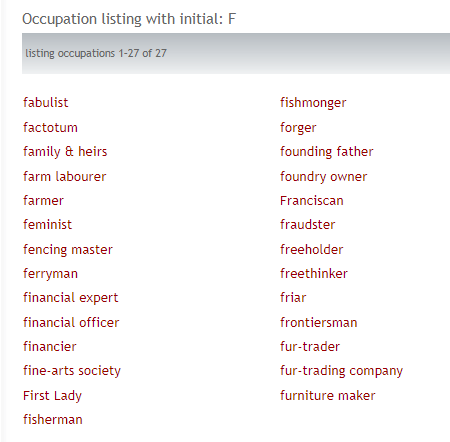
You can search or browse Electronic Enlightenment in various ways (e.g. by name, occupation, date or place).

Want to learn more? Choose take a guided tour from the home page to get an overview of content and how to search/browse.

Drama Online: what’s new?

Photo of a theatre
Image by David Mark from Pixabay

The Library has subscribed to Drama Online for several years.  This resource contains the text of over 2,200 international plays, from ancient to contemporary, together with contextual resources. It’s likely to be of interest to anyone studying literature, languages (ancient to modern), film studies and media.

We’ve recently upgraded our subscription to include the 2018/19 top-ups of the Nick Hern Books collection and the Core Collection (featuring plays published by Bloomsbury and Faber), giving us access to an additional 150 plays.

All the plays are individually catalogued and searchable via Library Search, or you can search/browse them all in various ways on the Drama Online site.

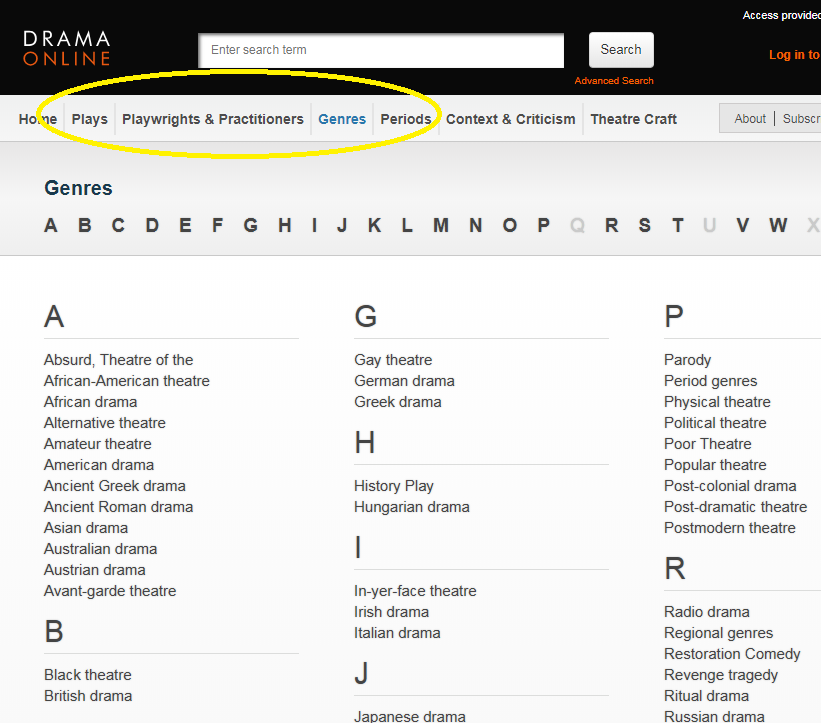
For example, using the options at the top of the screen, you can browse by title, author, genre and time period, or if you click Find Plays on the home page, you can add in other search filters, such as number of roles or scenes. Select Context and Criticism for access to a wide range of e-books about drama.

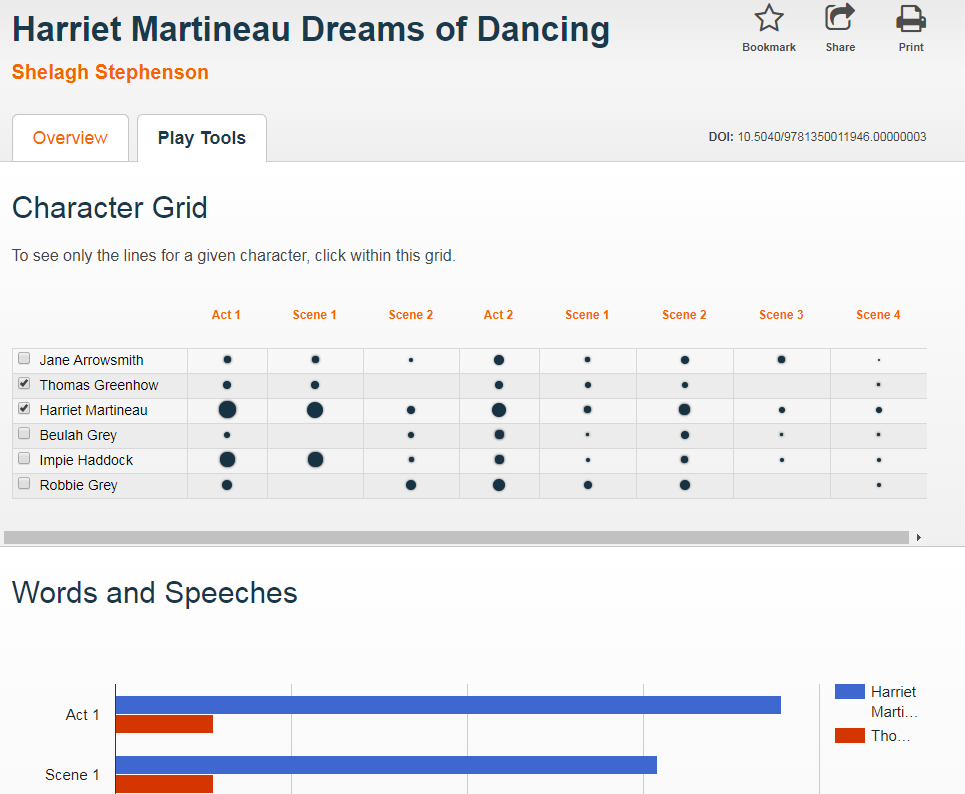
When viewing a play text, click Play Tools to analyse the speaking parts and appearances of different characters throughout the play.

Finally, follow @dramaonlinelib for news and features about this fantastic resource!

New resource: Irish Newspaper Archives

Following a successful trial, the Library now has access to the Irish Newspaper Archives: a fascinating resource for any aspect of Irish studies.

It provides access to the archives of national and local Irish newspapers from the 1700s to the present day. Major national titles such as the Irish Examiner, Irish Independent and Sunday Independent are included, together with a wide range of regional titles, such as the Meath Chronicle, Kerryman, Connacht Tribune and Ulster Herald.

The archive is updated daily with the latest editions of current titles, and it also includes significant newspapers which are no longer published, such as the Freeman’s Journal and The Nation.

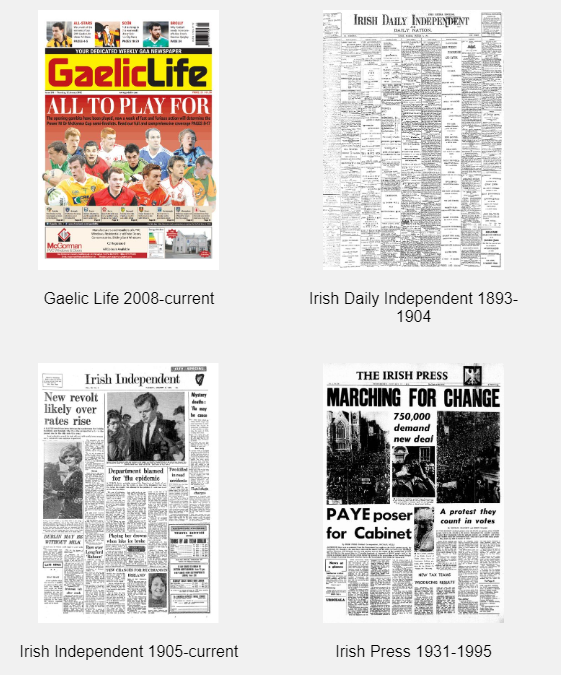
Title pages of Irish newspapers
A selection of title pages from the archive.

You can search and refine your results in various ways, or choose browse to look through individual newspapers by date. Various save and export options are available, and there are some short help videos on the archive’s home page to give you some tips (note, these don’t have sound). Follow Irish News on Twitter for interesting highlights from the archive.

Thank you to everyone who gave us feedback on the trial.

Historic newspaper archives upgrade

If you use any of our historic newspaper and periodical archives which are published by Gale, you’ll notice they have recently upgraded their platform.

There is no change to the content, but you should notice a more unified design on the search pages, together with improvements to the display of search results, plus new search tools, including ‘topic finder’ and ‘more like this’. You can also use ‘term frequency’ on all Gale databases to analyse the use of a particular term over time.

The following collections are affected:

British Library Newspapers; Burney Newspapers; Eighteenth Century Collections Online; Nineteenth Century UK Periodicals.

Together with these individual archives:

Picture Post; Punch; The Daily Mail; The Economist; The Financial Times; The Independent; The Listener; The Sunday Times; The Telegraph; The Times; The Times Literary Supplement.

Read more about the improvements.

Where can I find all these resources?

They are all individually catalogued on Library Search, or you can find quick links to them all (plus resources from other publishers) on our historic news guide. If you would like to search across several Gale resources at once, search Gale Primary Sources.

Where can I get more advice about searching historic newspapers online?

Watch our short video for lots of helpful tips.

Early English Books Online update

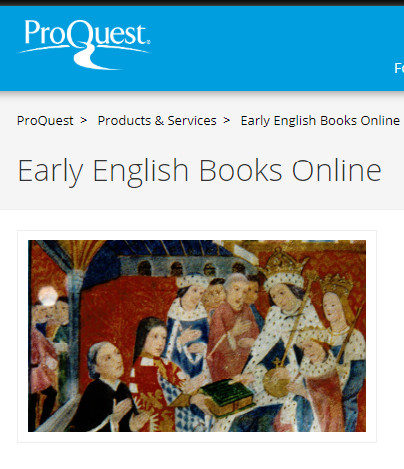
Early English Books Online (EEBO) has moved to an enhanced platform on Proquest.

The content remains the same, but you should note various improvements to the interface. Key changes include:

  • Additional search and filter options.
  • The new platform adapts fully to all devices, including phones and tablets.
  • Improved viewing of results, with larger thumbnails and images.
  • Text Creation Partnership transcriptions are now included.
  • Improved export and personalisation options.
  • You can now cross-search EEBO with other Proquest content, such as Early European Books.

You will still be able to access the old EEBO platform until the end of June 2020, but we would encourage you to familiarise yourselves with the new platform as soon as possible.

Find out more about the new platform, together with further enhancements planned for early 2020, on the Proquest EEBO site or for more detail, visit the EEBO lib guide.

Art of the Possible: academic skills resources

You’ll find links to the relevant Library resources below.

As time is limited, please feel free to explore as you wish!

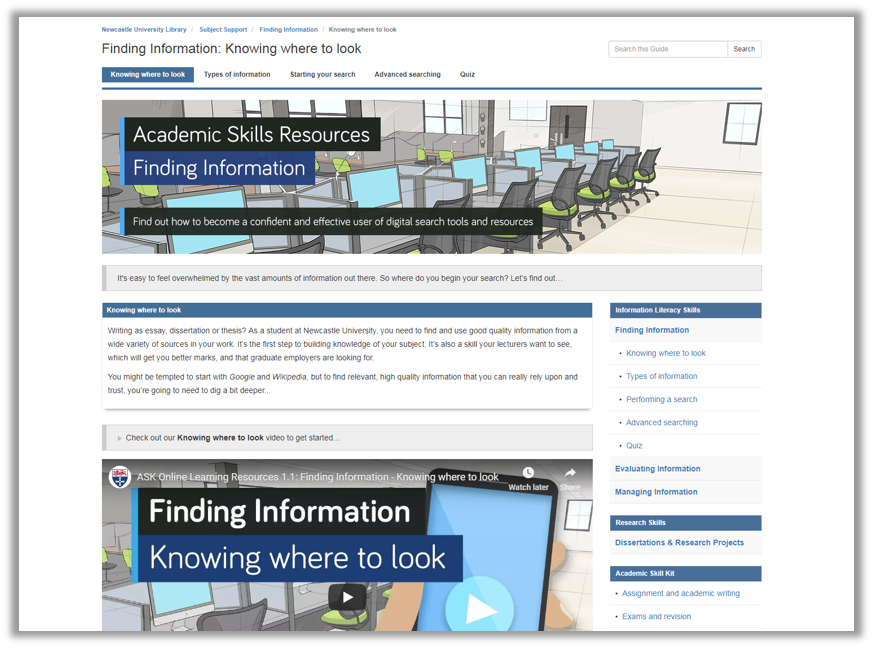
A. Academic skills resources

We’d recommend exploring the finding-evaluating-managing guides at the top of the screen, but feel free to try out the other guides on this page as well.

The Library’s online learning resources focus mainly on information skills: for a wider range of academic skills content and support, visit the Academic Skills Kit.

B. Research skills resources

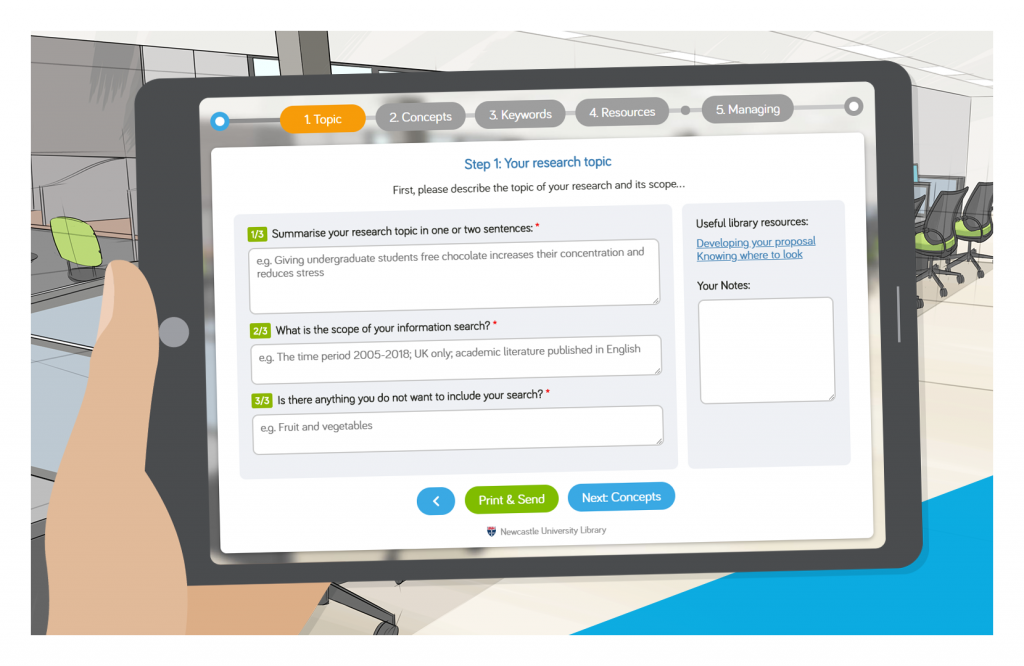
Aimed at UG/PGT students: please explore our dissertations/projects guide. Try the proposal planners and search planners: could you use them with your students?

Aimed at PGR students: please explore the new online format for our HSS8002 information and library skills module. We’ve created a dummy version of HSS8002 for today’s workshop. You should be able to access the dummy course directly via this link.

Browse the module content via the left hand menu, or, if you want to try out the information skills checker, choose I am studying this module for credit in Newcastle on the home page.

You can also read our LTDS case study about this project.

Westlaw platform upgrade

The legal database, Westlaw, has had an upgrade. The content remains the same, but you should notice significant improvements to the search and display options, and its overall look and feel.

How can I access it?

You can find links to the new Westlaw platforms on the Law subject guide and Library Search. There are separate links for Westlaw UK and Westlaw International.

What are the main features of the new platform?

You’ll find the main search headings (e.g. cases, legislation, journals, current awareness, books) are still there,  but arranged differently.

As before, you can still search or browse across all content types, or limit to a specific content type (e.g. cases or legislation). Specific search options (such as using connectors) are similar to the old system, but you should find everything more clearly set out.

You’ll also find a wider range of personalisation features, including favourites, and options to annotate and share content with others.

Other new features include a Legislation Compare tool, which makes it easier to track recent and future changes to legislation.

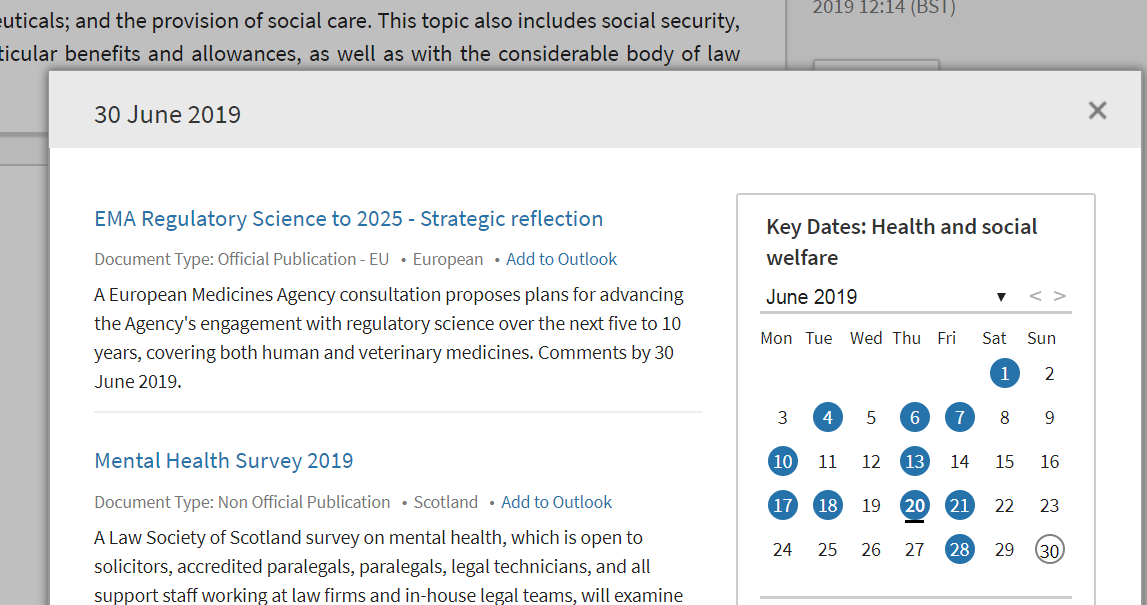
You can browse topics to find key documents (including cases and legislation), and track the latest and future developments via an interactive calendar.
Where can I find out more?

You can get more help via handy quick reference guides to the new platform, or videos. As a minimum, we’d recommend watching the short overview video  or the getting started guide, which take you through the key features, and give you useful tips. However, there are also helpful videos and guides on specific aspects, such as alerts, annotations, cases and legislation.

What do I need to do?

Please note, the old Westlaw platform will be switched off on 5th August 2019, so we would strongly encourage you to start using the new platform as soon as you can.

Personalisation features such as alerts and folders can’t be migrated to the new Westlaw platform. Therefore, if you have set up any of these on old Westlaw, you will need to set them up again on the new platform. You should find the new platform has much improved personalisation features.

Beyond the Library

Will you be working on a dissertation or project this summer or next year? Worried that the Library might not have access to the specialist books and other resources which you need? Wondering how you can find out about resources relating to your research topic which are held in other libraries?

Wonder no more! There are three main ways you can find and access books and other resources held elsewhere:

1. Search

You can search the catalogues of over 100 UK and Irish academic libraries, national libraries and other major research libraries via COPAC. For a more in-depth and up to date search, you can also search individual academic library catalogues online. Need to look further afield? Search library catalogues internationally via WorldCat.

2. Visit

We have more information about how you can visit other libraries, locally and nationally, here. The SCONUL Access Scheme enables students to use other academic libraries around the country, but you need to register online first (and be sure to check the access arrangements for any library you are planning to visit, as they may alter during the year).

3. Obtain

If we haven’t got the book you want, you can ask us to consider buying or borrowing it, via our Books on Time service. If you need a copy of a journal article to which we don’t have access, please apply via our inter library loan service.

Image by andreas160578 from Pixabay. 

Learning and Teaching Conference: Library activities

You’ll find links to the relevant Library resources below.

As time is limited, your handout gives you suggestions as to which sections you may find it useful to explore, and what sort of feedback we’d welcome, but please feel free to explore as you wish!

A. Academic skills resources

B. Research skills resources

Aimed at UGs/PGTs: please explore our dissertations/projects guide.

Aimed at PGRs: please explore the new online format for our HSS8002 information and library skills module. We’ve created a dummy version of HSS8002 for today’s workshop. You should be able to access the dummy course directly via this link. If not, log in to Blackboard, click Courses, and then type HSS8002 in the search box. Now click on the link to HSS8002conference.

You can also read our LTDS case study about this project.

C. Reading lists online

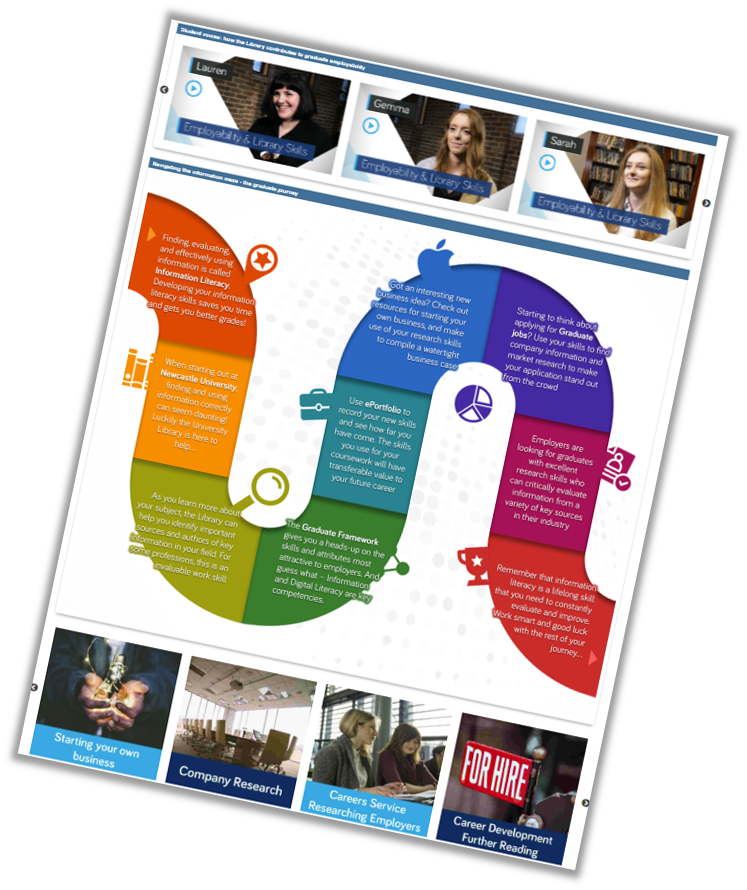
D. Employability guide


Literature Online upgrade

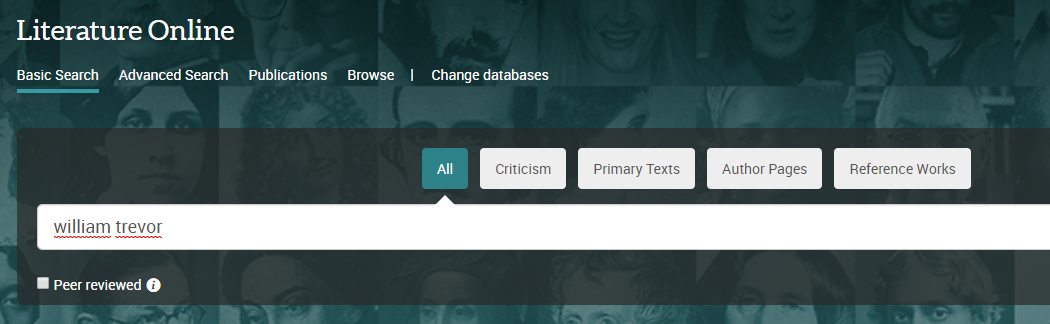
The literary research database, Literature Online (LION) has had an exciting new upgrade.

LION, which enables you to research international literature of all genres in books and journals, together with 350,000 works of poetry, prose and drama from the 8th century to the present, is now hosted on Proquest’s main platform. It also has good coverage of related areas such as linguistics, philosophy, classics and film studies.

The new site includes the following improvements:

  • new content will be available more quickly
  • clearer search options to help you focus your search
  • improved author pages
  • you can now cross-search LION along with other Proquest databases, such as Early English Books Online, The Guardian/Observer/New York Times newspaper archives, plus thousands of journal articles in other subject areas.

Not quite ready to switch? The old LION platform will still be available until August 2019, but we would encourage you to try the new LION sooner rather than later!