In the library we love these short guides from OUP who provide a variety of great concise books on lots of different topics.
We’ve recently updated this collection so it includes to most recent publications from OUP published in 2022 and 2023.
This series offers concise introductions to a diverse range of subjects—from artificial intelligence to folk music to medical ethics—in 35,000 words or less.
Each one of these big little books provides intelligent and serious introductions written by experts who combine facts, analysis, new ideas, and enthusiasm to make even the most challenging topics highly readable.
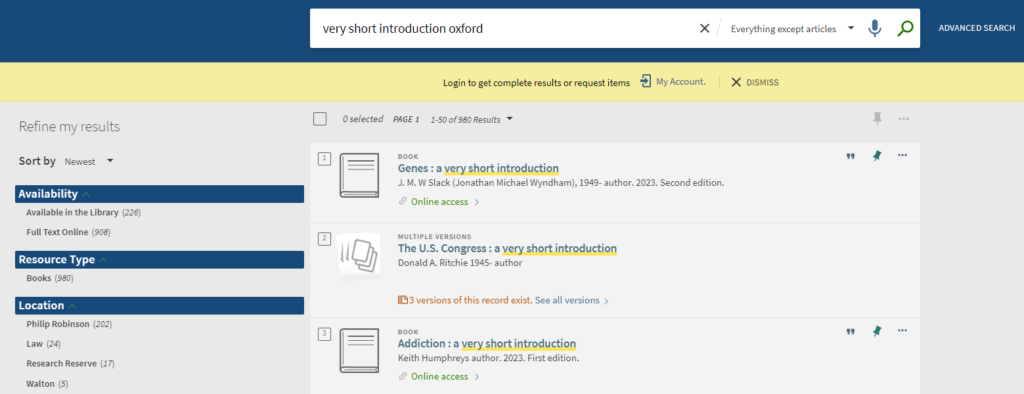
On our catalogue, Library Search you can search by keywords like in the screenshot below so “very short introduction” and browse through or add in Oxford to add in results for that publisher. Re-sort your results to “newest” if you’d like to browse through the latest ones added to our collection.
Or visit the OUP Very Short Introductions website directly and then filter using the subject categories. OUP have arranged the titles under headings such as Medicine and Health, Arts and Humanities, Law, Social Sciences
if you are accessing off campus then once you’re on the OUP site please click “sign in” (on the left hand menu and select Newcastle University from the list to enter your Campus ID and password.)
Oxford University Press also have a podcast you can subscribe to about titles and topics in this collection.
Did you know the Library offers access to over half a million ebooks across a variety of subjects? This includes titles featured on your reading lists, or that have been recommended by staff and students. Ebooks are very useful resources as they’re available 24/7 wherever you are; simply navigate to them through Library Search. If you’re off campus, you’ll need your University ID and password to log in.
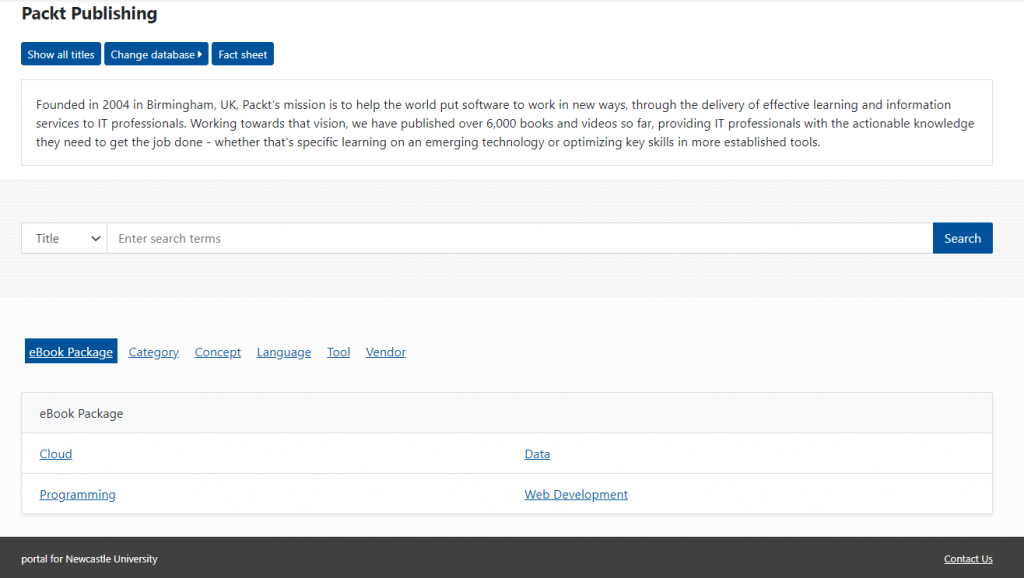
One of our newest collections is Packt Publishing ebooks. This package provides access to over 700 full-text ebooks on computing subjects. The 4 collections included are:
Data
Cloud
Programming
Web Development
You can find individual titles in Library Search by entering the title or your keywords, or access the collection here. If you’re browsing the publisher’s platform, choose Show All Titles or enter your search terms.
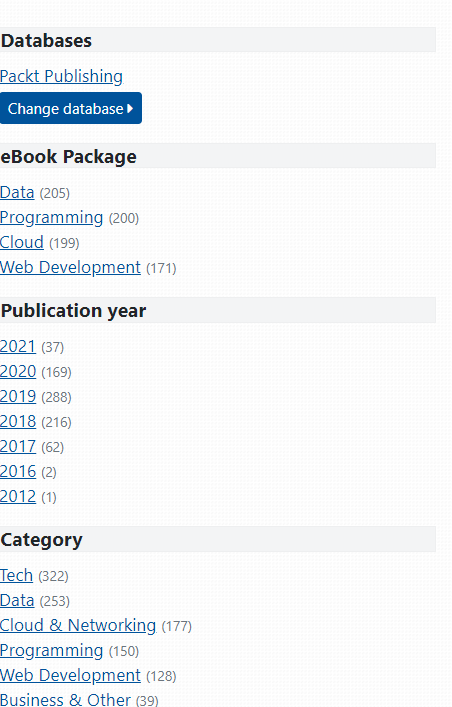
Once you have your results, you can use the filters on the left-hand side of the page to narrow your search.
When you’ve found a title, you can read it online, add it to your saved list, search within the text or download a PDF to read later.
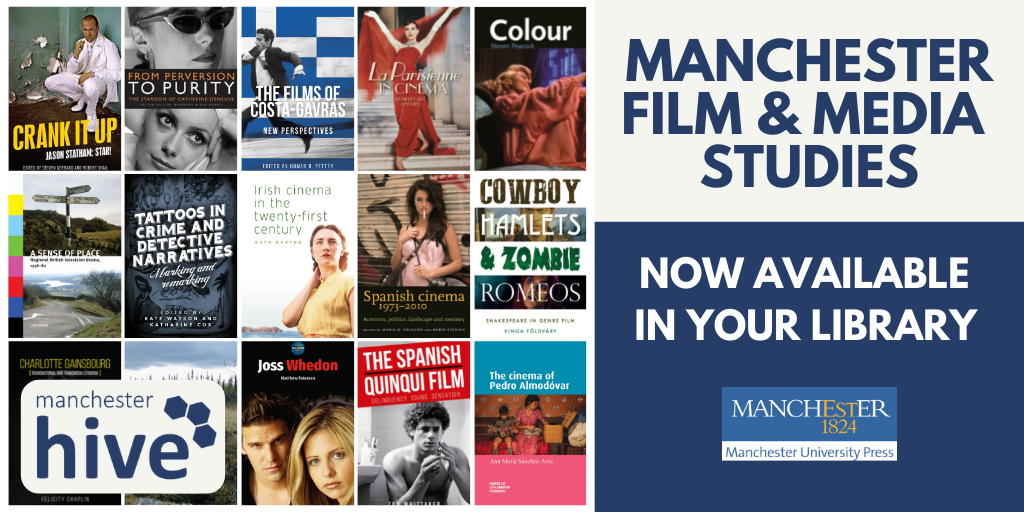
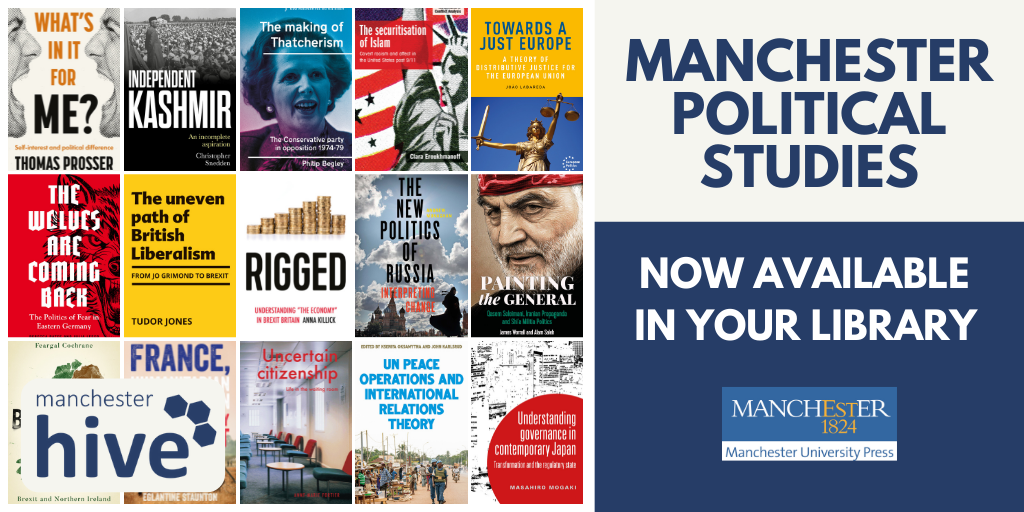
We have bought several new e-book collections from Bloomsbury and Manchester University Press, complementing and updating our existing collections from these two publishers.
From Bloomsbury, we have bought new collections in:
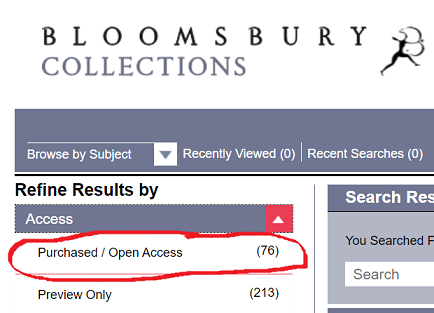
All the titles are individually catalogued on Library Search, or if you prefer, you can browse them from the publishers’ platforms via the links above. NB If you are browsing any of the Bloomsbury subject collections, under Access, tick Purchased/Open Access.
We’re pleased to announce that the Library has bought access to the new BAR Digital Collection, following a successful trial earlier this year.
This online collection, from one of the world’s largest academic archaeology publishers, gives full text access to over 3,100 titles published from 1974 to date. The collection includes both BAR’s British and international series, and covers archaeological research, excavation reports and other important series from around the world. Publications are mostly in English, as well as some in Italian, German, French and Spanish.
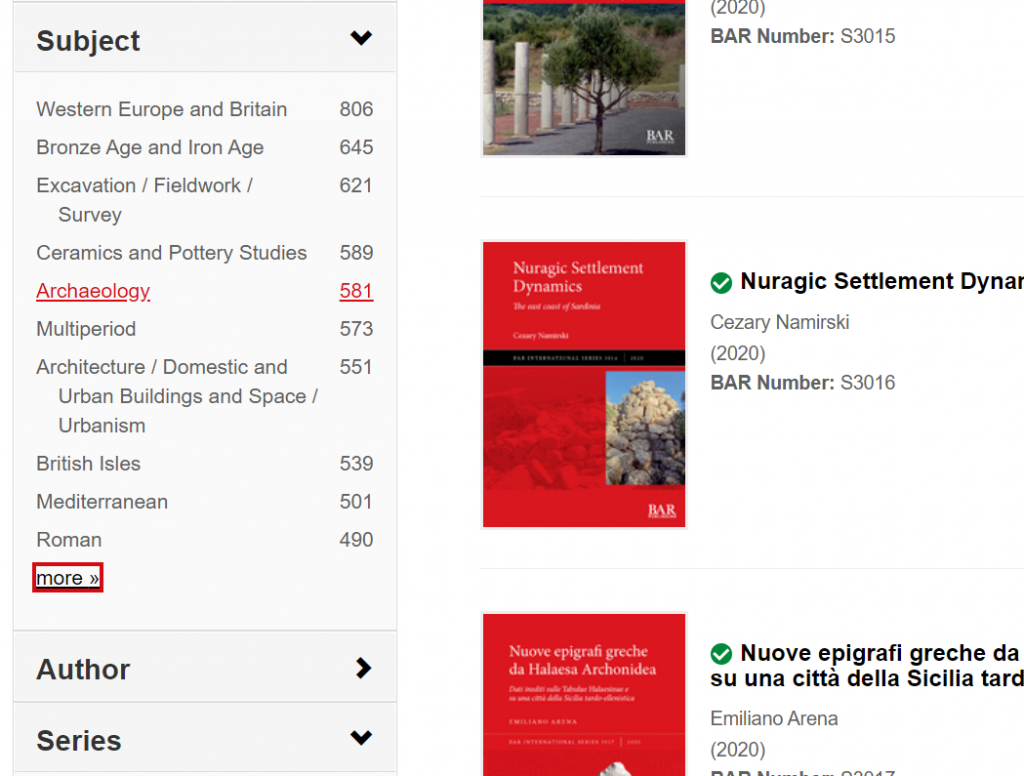
BAR browse options
You can browse or search the entire collection in various ways (e.g. by location, author, subject, time period or series). Each report is also individually catalogued on Library Search (here is an example).
Get the latest news and features about this collection on Twitter.
We’re pleased to announce that the Library has bought the new Oxford World’s Classics e-book collection, following a well-received trial earlier this year.
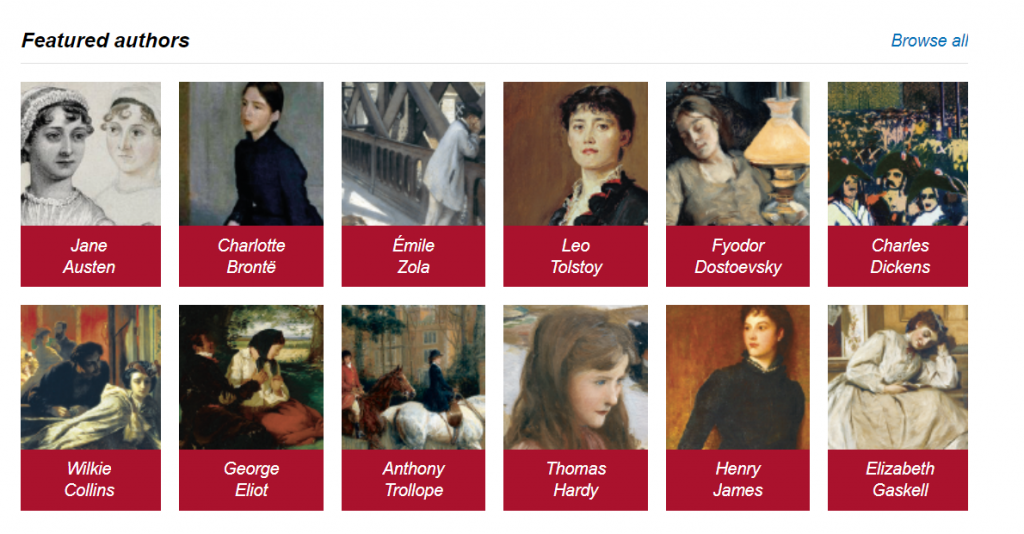
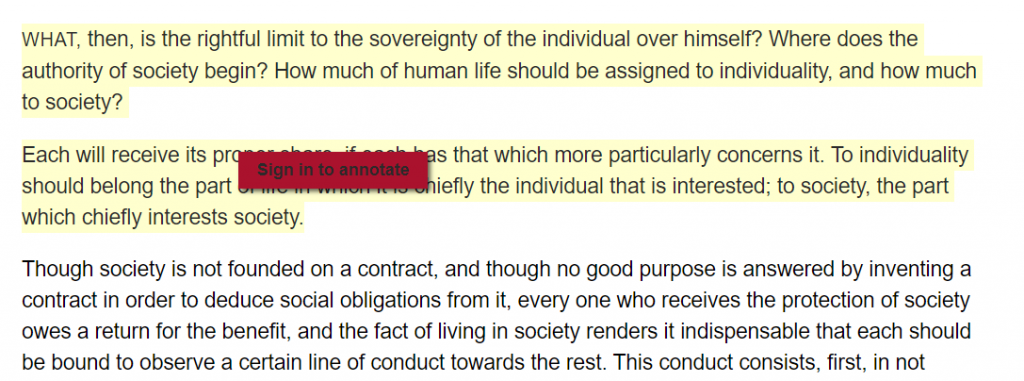
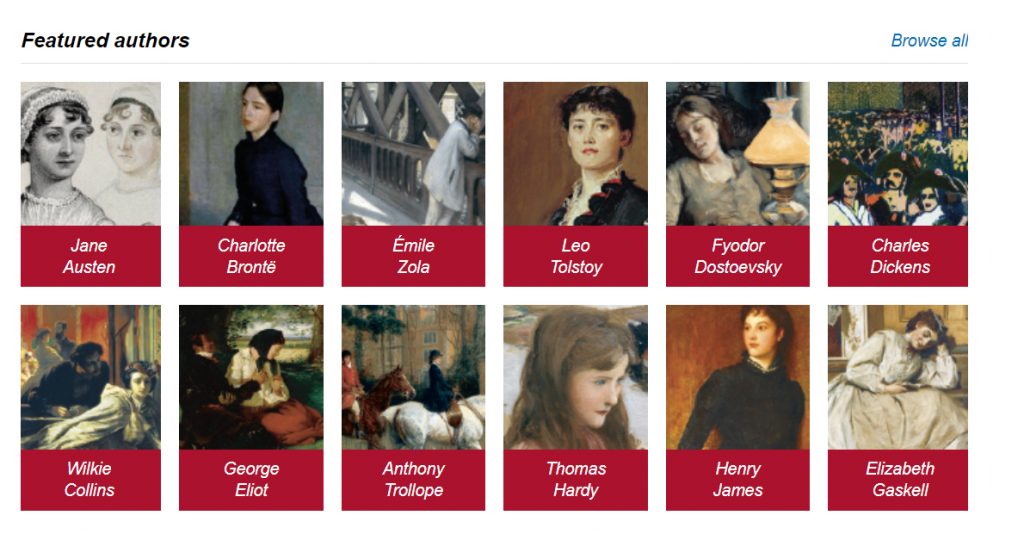
This provides access to 301 novels and other works from the 18th and 19th centuries from around the world, including novels by writers such as Jane Austen, Charles Dickens, Emile Zola and Fyodor Dostoevsky, as well as works such as Charles Darwin’s On The Origin of Species and John Stuart Mill’s On Liberty.
OWC authors
Each work is accompanied by extensive hyperlinked notes, introductions, bibliographies and commentaries. You can browse or search the entire collection in various ways (for example: by author, subject, keyword or time period). Every book in the collection is also individually catalogued on Library Search (here is an example).
When reading a book, you can highlight text and make and save annotations (you’ll need to create a Personal Profile first).
The Library has access to thousands of contemporary books online, but did you know we also have online access to almost every work published in the English language from the invention of printing in the fifteenth century to the start of the nineteenth century?
Read on to find out about five of our major historic book collections online, and how to get the best out of them.
EEBOgives access to the full text of almost every book published in the British Isles and British North America between 1470-1700. It contains over 146,000 titles, including literary works, royal and parliamentary documents, ballads, tracts, and sermons, giving a unique insight into the cultural and political life of that period. You can read works by major figures such as Shakespeare, Newton and Galileo, as well as many lesser-known works. EEBOdisplays digital facsimile images of every page of content, and full text transcription is available for many of the texts.
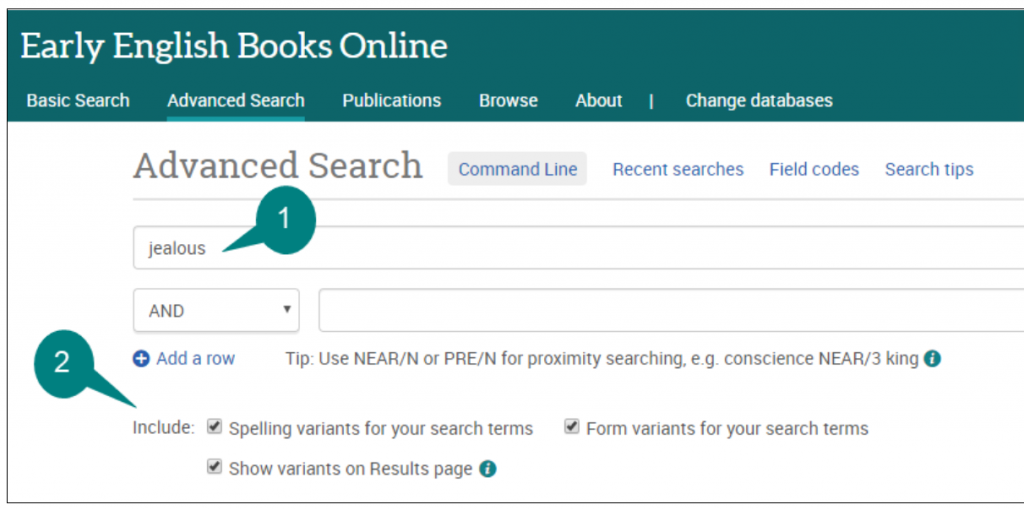
You can search, browse and export from EEBO in various ways, and all the individual works are individually catalogued on Library Search as well. If you are likely to be making frequent use of EEBO, we’d strongly recommend you spend some time exploring this EEBO guide, as it gives tips on key aspects such as searching for spelling variants.
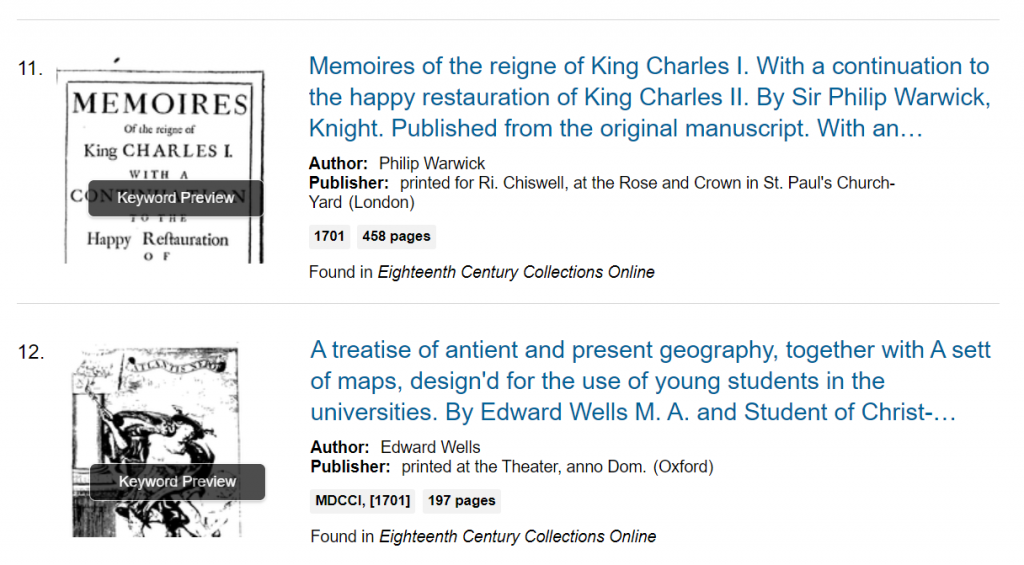
ECCOgives access to the full text of every book printed in the United Kingdom, and territories under British colonial rule, in the eighteenth century. It contains over 180,000 titles, including literary works, royal and government proclamations, schoolbooks and petitions.
As with ECCO, digital facsimile images of every page are provided, and optical character recognition enables full text searching. All items are individually catalogued on Library Search, but we’d recommend searching directly from the ECCO interface to benefit from advanced search options, and special features such as term frequency and topic finder. As ECCO is part of the Gale Primary Sources platform, you can cross-search it along with other Gale resources, such as historic newspapers.
The Early European Books collection complements EEBO, and aims to encompass European printed material from circa 1450-1700.
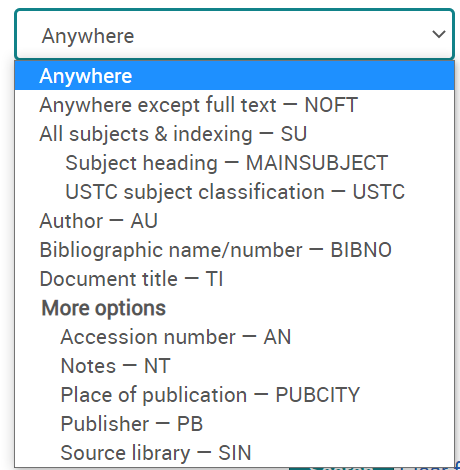
Content comes from major European libraries, and is being added to regularly (we currently have access to over 25,000 titles). Facsimile images scanned directly from the original printed sources are provided, and detailed catalogue records help you search (we recommend choosing Advanced Search to see the full range of options).
These books aren’t individually catalogued on Library Search, so you’ll need to search directly from the Early European Books interface.
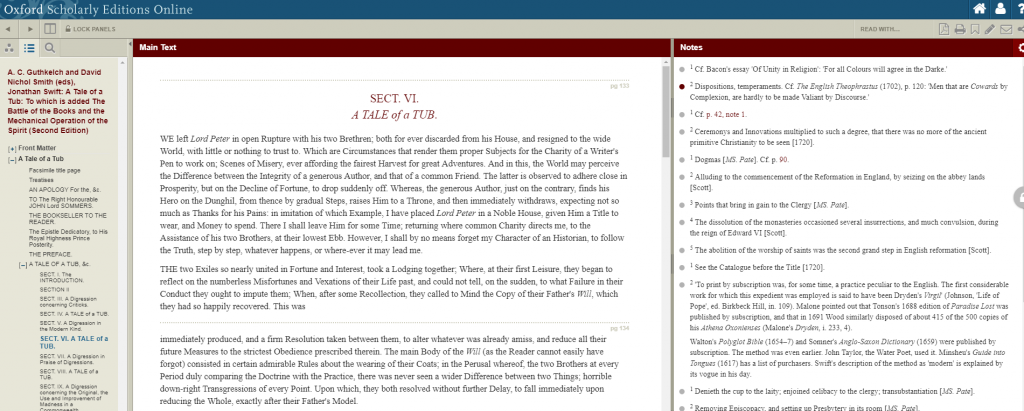
OSEO enables you to explore old works in new ways. It brings together authoritative editions of major works, so you can explore variations between editions, annotations and extensive notes side-by-side with the texts, or you can just read the texts on their own.
We have access to 272 Oxford editions, containing 344 works, including poetry, prose, drama, essays and correspondence, in the following categories: Romantics Prose; Romantics Poetry; 18th Century Drama; 18th Century Prose.
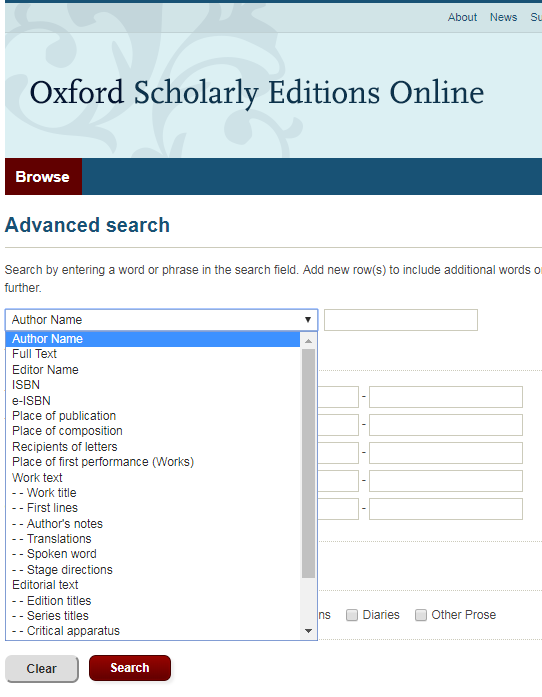
You can browse by work, edition or author, or search in highly specific ways (e.g. just search within notes or stage directions) to pinpoint exactly what you want.
The editions are individually catalogued on Library Search, but we’d recommend searching for works and editions via the OSEO interface itself. If you haven’t used OSEO before, we’d strongly recommend watching this introductory video, so you can understand its potential and how to get the best out of it.
5. Oxford World’s Classics
Stop press! We’ve just bought access to this new online collection of over 300 works from the 18th and 19th centuries. Read our separate blog post to find out all about it.