Spotlight on Knovel

Knovel provides a searchable database of handbooks, data sets and reference sources in engineering (chemical, civil, electrical, mechanical, materials and biotechnology), chemistry and biochemistry, earth and environmental sciences among other areas. You can search within a particular work, or across the entire Knovel collection. Searching can be done by keyword or by numeric data ranges.

Knovel has a data search feature that allows you to find materials that meet specific parameters including physical, mechanical and thermal properties. Tools within Knovel include interactive charts, graphs, spreadsheets, and equation plotters.

You have access to:

  • Technical reference resources from 150+ publishers including AIChE/CCPS, NACE and more.
  • 65M+ data points including material and chemical property data

Technical reference collections that we subscribe to here at Newcastle University include:

Adhesives; Coatings; Sealants & Inks
Aerospace & Radar Technology
AICHE/CCPS – Center for Chemical Process Safety
Biochemistry; Biology & Biotechnology
Ceramics & Ceramic Engineering
Chemistry & Chemical Engineering
Civil Engineering & Construction Materials
Electrical & Power Engineering
Electronics & Semiconductors
Environment & Environmental Engineering
Food Science
General Engineering & Project Administration
Marine Engineering & Naval Architecture
Mechanics & Mechanical Engineering
Metals & Metallurgy
Oil & Gas Engineering
Pharmaceuticals; Cosmetics & Toiletries
Plastics & Rubber
Process Design; Control & Automation
Safety & Industrial Hygiene
Sustainable Energy & Development
Textiles

Check out Knovel’s Support Centre that highlights news and FAQ’s. You can also get access to many video tutorials, including a very handy overview to help you get started with Knovel.
Screenshot of Knovel overview video tutorial

There is also a downloadable Quick Start Guide and a LibGuide, so you should always be able to find any help you may need.

If you are wondering how to find Knovel, you can either search for it in Library Search or you can find it in all of the Engineering, Sciences and Computing Subject Guides under both the ‘Books and eBook’ AND the ‘Journals and Database’ (eJournal Collections) tabs.

If you have any questions regarding Knovel, please contact your Liaison Librarian.

Get wrapped up in OSCOLA 4th referencing style

What is OSCOLA?

The Oxford University Standard for Citation of Legal Authorities (OSCOLA) is the standard referencing format used by law students and anyone writing in a legal field.  It allows for exact referencing of cases, journals and statutes meaning that sources can be found quickly and accurately.

HELP!!!!!

OSCOLA can be a bit daunting at first, especially if you are unused to referencing, but don’t worry, we have a lot of help available.   Here are some top tips for getting to grips with OSCOLA from scratch or if you just need a refresher:

  1. Start by going to our library guide, where you will find tips and resources to build up your knowledge.
  2. Make sure you look at the page that gives specific information about the OSCOLA referencing style.
  3. Set some time aside and work through the Citing the Law Tutorial from Cardiff University. This will show you how to cite cases, legislation and secondary sources, as well as how to identify authors and quote.
  4. For quick “how do I”? questions, check out the OSCOLA quick help guide or Cite the Law’s A-Z referencing examples.
  5. And if you are trying to use OSCOLA and EndNote, don’t forget we have a handy guide for you.

And lastly, if you are in doubt, remember we are always here to help! Contact us via library help.

Spotlight on World Scientific eBook Collections

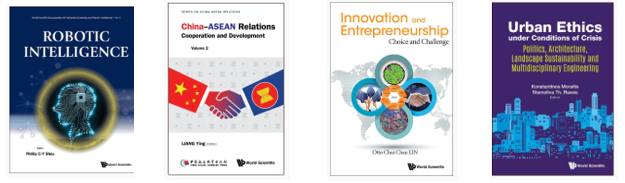
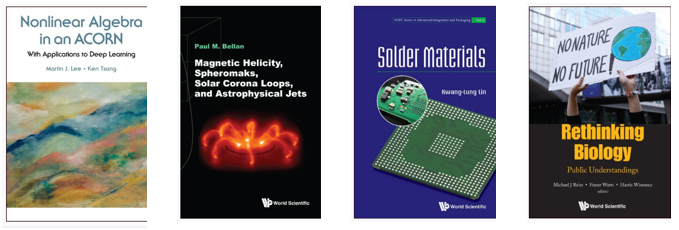
selection of book jackets

World Scientific Publishing (WSP) is an academic publisher of scientific, technical, and medical books and journals with headquarters in Singapore. WSP publishes about 500 books annually as well as more than 150 journals in various fields. World Scientific eBooks are electronic versions of World Scientific print titles. 

The titles span across a wide variety of subjects, including:

  • Asian studies
  • Business & Management
  • Chemistry
  • Computer Science
  • Economics & Finance
  • Engineering
  • Life sciences
  • Mathematics
  • Physics & Astronomy
  • Social Sciences

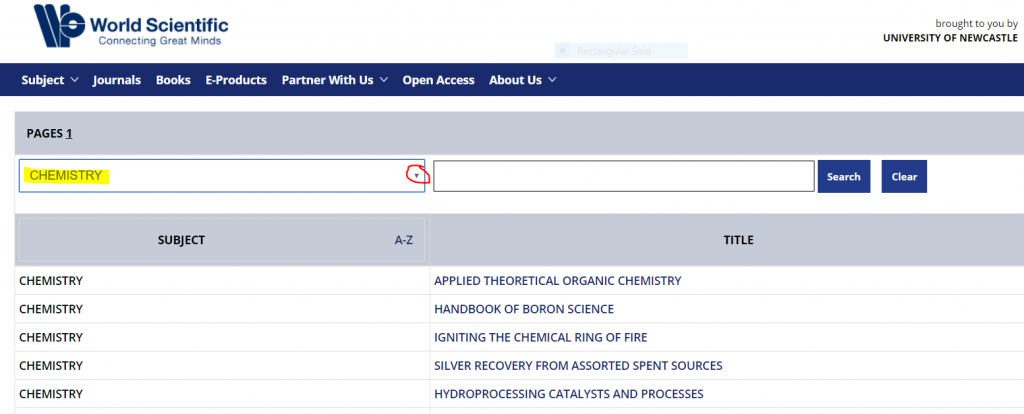
Once connected, you can search for titles within a specific subject:

Screen shot of subject search

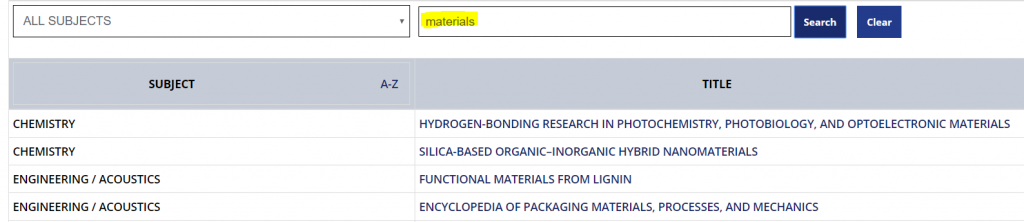
Or for titles on a specific topic :

If you’re searching for titles directly through the World Scientific platform, look out for the “Full Access” symbol to make sure we have access to the full text content:

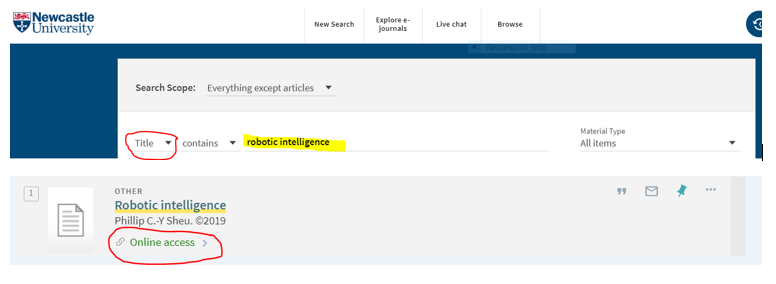
You can also search for individual titles on Library Search:

A user guide is available on the Library Subject Support guides and you can download from the link below:

selection of book jackets

Spotlight on IOP eBooks

Institute of Physics Ebook collections offer high-quality research across physics and related disciplines. They have been created to meet the needs of students, early-career researchers and established leaders in the fields.

An additional 255 IOP ebooks covering subjects such as astronomy, particle and nuclear physics, medical physics and biophysics, quantum science and more have just been added to the Library’s collection.

If you find a title that we don’t have full-text access to and you would like us to add it to the collection, just use our Books on Time form available on the Library website to request it.

STRICTLY REFERENCING: Getting to know OSCOLA 4th referencing style

What is OSCOLA?

The Oxford University Standard for Citation of Legal Authorities (OSCOLA) is the standard referencing format used by law students and anyone writing in a legal field.  It allows for exact referencing of cases, journals and statutes meaning that sources can be found quickly and accurately.

HELP!!!!!

OSCOLA can be a bit daunting at first, especially if you are unused to referencing, but don’t worry, we have a lot of help available.   Here are some top tips for getting to grips with OSCOLA from scratch or if you just need a refresher:

  1. Start by going to our library guide, where you will find tips and resources to build your knowledge up.
  2. Have a look at our OSCOLA and referencing slideshow to understand the importance of referencing and to get a brief overview of OSCOLA.
  3. Set some time aside and work through the Citing the Law Tutorial from Cardiff University. This will show you how to cite cases, legislation and secondary sources, as well as how to identify authors and quote.
  4. For quick “how do I”? questions, check out the OSCOLA quick help guide (physical copies also available in the Law Library) or Cite the Law’s A-Z referencing examples.
  5. And if you are trying to use OSCOLA and EndNote, don’t forget we have a handy guide for you. More on this next time!

And lastly, if you are in doubt, remember we are always here to help! Contact us via library help or ask in the Law Library.

Spotlight on OECD iLibrary

OECD iLibrary is the online library of the Organisation for Economic Cooperation and Development (OECD) it contains a vast collection of books, papers and statistics, some of which date back to the 1960s, it is the gateway to OECD’s analysis and data. OECD content covers over 100 countries.

Every year around 300 new titles are published, associated with the following themes:

  • Agriculture & Food,
  • Development,
  • Economics,
  • Education,
  • Employment,
  • Energy
  • Environment
  • Finance and Investment
  • Governance
  • Industry and Services
  • Nuclear Energy
  • Science and Technology
  • Social Issues / Migration / Health
  • Taxation
  • Trade
  • Transport
  • Urban, Rural and Regional Development

You can browse by theme, country, or choose the type of content you require (for example, books, papers, statistics). You can also carry out simple or advanced searches.

If you’re looking for Statistics and Indicators?

OECD iLibrary contains all of the publications and datasets released by International Energy Agency (IEA), Nuclear Energy Agency (NEA), OECD Development Centre, PISA (Programme for International Student Assessment), and International Transport Forum (ITF) since 1998 – present.

It presents all content so users can find and cite tables and databases as easily as articles or chapters in any available format: PDF, WEB, XLS, DATA, ePUB,READ.

For a quick introduction to OECD i Library, including how to search the database and how to use advanced features and find statistical information and indicators, take a look at the user guide.

You can  find details on other sources of statistics on our Statistics Guide.


Welcome from the SAgE Library Team

Explore the possibilities rocket image banner


Welcome from the SAgE Library Team

Need specific subject help?

The SAgE Library Team provide support for students and staff from the Faculty of Science, Agriculture and Engineering. Julia Robinson is the Liaison Librarian for the Schools of Natural & Environmental Sciences and Mathematics, Statistics & Physics. Lorna Smith is the Liaison Librarian for the Schools of Computing and Engineering. The rest of the team work for the whole SAgE Faculty: Catherine Dale is Assistant Liaison Librarian and Yvonne Davison, Susan Millican and Christina Taylor are Liaison Assistants.

So what can we help you with? We can:

  • Direct you to quality information
  • Help with study and research skills
  • Advise on how to evaluate information sources
  • Help you to navigate databases

… and much more!

We’re here to help you get the best from the Library’s services and resources so feel free to contact us at any time. Come and find us on level 4 of the Philip Robinson Library, email us at lib-sage@ncl.ac.uk, book a one-to-one appointment, or follow us on Twitter @ncllibsage.

For more information, check out the Subject Guides.

We look forward to meeting you!