Guest Post: A Review of Box of Broadcasts

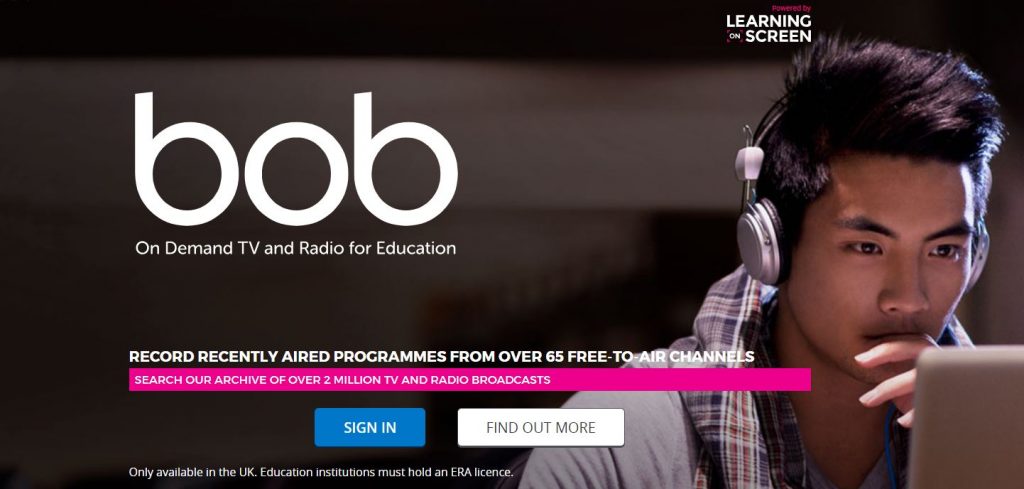
BoB Screen GrabLaura-Jayne Beattie, a final year Law School student, takes a look at Box of Broadcasts, and reviews a film she watched using it (a Law Library favourite!).


BoB (Box of Broadcasts), available to all Newcastle University students regardless of degree discipline, is an excellent resource. Best of all, it’s FREE for students studying at Newcastle (just what a student wants to hear)! You just have to select the university from the list of institutions, sign in with your university login details (username and password), and away you go! You’re free to explore the thousands of television programmes, radio broadcasts and films available on the website. It’s incredibly easy-to-use, and reminds me a lot of Netflix, but is less guilt-free as most of these programs and films are education-related in some way. The broadcasts may relate to your degree or another academic interest of yours (e.g. psychology-related films).

You can watch live TV, or search (by name) for a pre-recorded film, radio show or television programme. The system holds over 2 million broadcasts, which have been shown on television or aired on the radio at some point since the 1990s. If you don’t have a specific film or programme in mind which you would like to watch, why not try out the advanced search feature? Click on the ‘Search’ icon, then on ‘Search options’, change as many or as little options as you like, and then hit ‘search’! A list of broadcasts matching your search criteria will be shown. I’m sure there will be at least one that interests you!
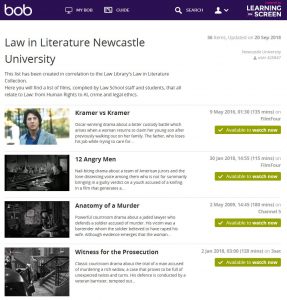
SCreen grab of BoBAfter a few minutes of exploring the website, I decided to choose a film from the ‘Law in Literature Newcastle University’ playlist. To find this, I clicked on the ‘Search’ icon (on the tab across the top) and selected ‘Public Playlists’. I then typed the playlist’s name into the search box. I was surprised at how many titles were available within this collection (all related to Law). I chose to watch ‘Legally Blonde’, a personal favourite of mine but one that I haven’t watched for years.

Here’s what I thought…

Legally Blonde’, a fun-filled film showcasing a story of love and success, shows Law in a new perspective and is a must-watch for any Law students (Yes, even you boys). It’s a feel-good film, and is motivational in terms of showing that anyone really can succeed if they put their mind to it! It’s particularly perfect for any law student who feels ‘out-of-place’ with the supposed societal ‘ideal’ of who should be studying law.

Defying all pre-conceptions derived from her appearance, Elle Woods gains a place at the prestigious Harvard Law school. While this was initially to follow her ex-boyfriend, who broke her heart just before he proceeded to study Law there, she soon develops a passion for Law and becomes top of the class. She helps to win a case while on work experience using her knowledge of fashion, and later delivers an inspirational speech at graduation saying words like “you must always have faith in yourself”. When making this speech, it’s clear from the smiles in the room that she has won the hearts of students and staff alike and made lifelong friends with her heart-warming personality. Graduating with a job in a high-ranking law firm, she puts her career ahead of everything and even rejects her ex-boyfriend who wanted her back towards the end of the film.

Legally Blonde’ relates to Law, as Elle overcomes sexual harassment while on work experience (Employment Law). Initially, Elle doesn’t report the man and decides to drop out of law school- possibly as she thought she wouldn’t be believed or that what happened wasn’t actually a crime (a common occurrence amongst victims in reality). Parts of Law lectures are filmed, and Elle overcomes stereotypes that are derived from her appearance (blonde female who evidently loves the colour pink) (Law, Gender and Sexuality). Despite not being a typical Harvard student, she still succeeds without letting these stereotypes stop her.
Resource in Focus: historic newspapers in Gale Primary Sources

We have access to a wide range of digitised British historic newspaper archives, which you can access through various different platforms (see the historic section of our Newspaper Resource Guide for more detail). If you want to search across many historic newspapers at once, we would recommend using Gale Primary Sources.

Gale Primary Sources searches across 15 different archives, including major titles such as The TimesThe Daily Mail, Financial Times and The Economist (all dating from their very first issue) together with historic collections of regional titles. You can select to search as many of the archives as you require.

Watch this short introductory video to help you get the best out of searching Gale Primary Sources. If you want information on how to access current, business, and international news, then visit the Newspapers Guide.

Books added to the Library by students in ECLS (Semester Two 2017/18)

We have a service called “Books on Time” for students. This allows you to tell us about the books you need for your studies. If we don’t have the books you need, simply complete the web form and we’ll see if we can buy them. For books we already have in stock, if they are out on loan please make a reservation/hold request using Library Search.

Further information about Books on Time

In Semester two, academic year 2017/2018 we bought the following items after requests from students in ECLS.

There were 42 requests from 24 students totaling £2498.33(4% of requests from undergraduates, 58% from Postgraduate taught and 38% from Postgraduate Research)

Title Now in stock
Handbook of Research on Foreign Language Education in the Digital Age 1xlong
Handbook of Research on Learning Outcomes and Opportunities in the Digital Age 1xlong
Understanding Narrative Inquiry The Crafting and Analysis of Stories as Research 1xlong
Agency at Work: An Agentic Perspective on Professional Learning and Development (Professional and Practice-based Learning) 1xlong, 1xebook
Team Teaching and Team Learning in the Language Classroom Collaboration for innovation in ELT 1xlong
Global Mental Health 1xlong, 1xebook
The Child at School: Interactions With Peers and Teachers 1xlong
An Introduction to Systematic Reviews 2xlong
Communities of Practice: Critical Perspectives 2xlong
Early Childhood Matters: Evidence from the Effective Pre-school and Primary Education Project 1xlong
Arabic in the City: Issues in Dialect Contact and Language Variation 1xebook
Mindful L2 Teacher Education: A Sociocultural Perspective on Cultivating Teacher’s 1xlong
The Research Interview: Reflective Practice and Reflexivity in Research Processes 1xlong
Best practice in professional supervision 1xebook
Survey Methods in Multicultural, Multinational and Multiregional Contexts 1xlong
Survey Methodology 1xlong
The Network Challenge: Strategy, Profit and Risk in an Interlinked World 1xlong
The Handbook of Communication Science 1xlong
Entrepreneurial Marketing (2nd Edition) Sustaining Growth in All Organisations 1xlong
The Sage Handbook of Process Organization Studies 1xlong
Supporting Communication for Adults with Acute and Chronic Aphasia (Augmentative and Alternative Communication Series) 1xlong
Reconceptualising Feedback In Higher Education: Developing Dialogue With Students 1xlong
From Testing to Productive Student Learning: Implementing Formative Assessment in Confucian-Heritage Settings 1xlong
Lesson Study : A Handbook of Teacher-led Instructional Change 1xlong
Transcribing Talk and Interaction 1xlong
Peer Learning in Higher Education: Learning From and With Each Other 1xlong
Differentiation and Diversity in the Primary School 1xlong
Religion, Identity and Politics in Northern Ireland: Boundaries of Belonging and Belief 1xlong
Through the labyrinth: the truth about how women become leaders 1xlong
Handbook on Peace Education 1xlong
Educating for Peace in a Time of Permanent War: Are Schools Part of the Solution or the Problem? 1xlong
Encyclopedia of Peace Education 1xlong
Peace Education: Exploring Ethical and Philosophical Foundations 1xlong
Colombia: Building Peace in a Time of War 1xlong
Young People and Political Participation: Teen Players 1xebook
Shaken & Stirred : The Feminism of James Bond 1xlong
Getting Published in Academic Journals : Navigating the Publication Process 1xlong
Introducing English for Academic Purposes 5xlong, 1xebook
Corpus Approaches to Discourse: A Critical Review 1xlong
The Language of Evaluation: Appraisal in English 1xlong
The Routledge Handbook of Language Awareness 1xlong
Toxic Childhood: How the Modern World is Damaging Our Children and What We Can Do About It 1xlong


Reading Lists

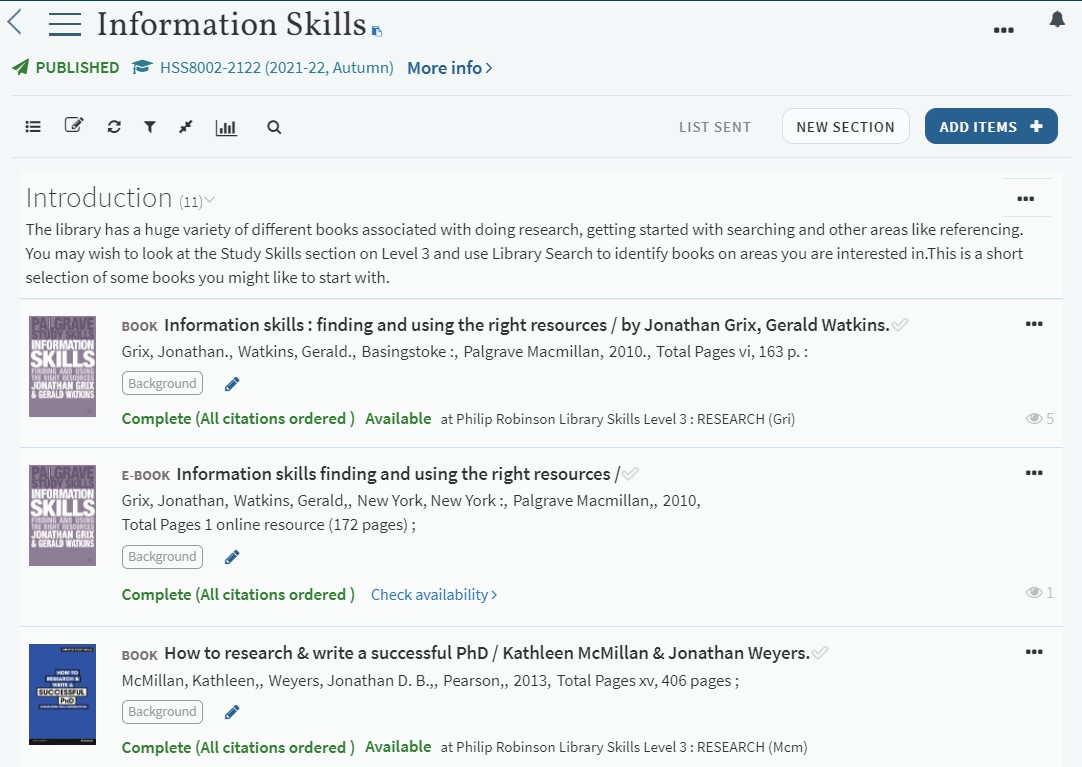
Have you discovered your Reading Lists yet?

Reading Lists are what you need to access and read to get understanding of the subject on the module(s) you are taking. It’s not just the Library saying this – these lists came from your lecturers!

The Reading Lists are a list of essential, recommended and background reading for your module. Each item has a quick link through to Library Search (to find where the book may be on the shelves) or there could be a direct link through to the eBook or online journal article. It’s an efficient way of accessing your reading and can save you loads of time.

Log into Canvas to access your Reading List

If you have any questions about your Reading Lists then ask your lecturer, or if there is a technical issue then email readinglists@ncl.ac.uk for assistance.

Education and Education Psychology: explore the best resources for your subject

Welcome to the University, we’ve got a whole range of resources to get you started. Library Search is a great place to start when you’re looking for information. In one simple search you will find books, Ebooks, journal articles and more.

However, there are times when you want to narrow down your search by limiting yourself to a subject specific database such as ERIC (EBSCO) covering education journal articles, research reports, curriculum and teaching guides, conference papers, and books. Perhaps you are looking for a particular type of information like the growth and development of children, so looking in Child Development & Adolescent Studies would help.

That’s where your library Subject Guide can help. We have put together your Subject Guide so that you are able to find the best resources and advice for your programme, all in one place.

We have grouped together the most relevant journal collections, databases, eBook collections and specialist resources we have, so that you don’t need to go hunting for the right database from the 300+ available at Newcastle University.

You will find links to support for your studies too. These quick links will take you to resources to help you develop your own academic skills, including tools to help you plan a search, quizzes to test your knowledge and advice on how to find, evaluate and reference the best information for your academic work.

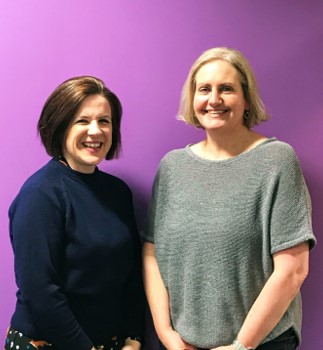
You can get help at anytime during your studies by contacting your Social Science Liaison Team; Karen and Louise who are based in the Philip Robinson Library.

mailto:libliaison@ncl.ac.uk

School of ECLS – new resources

We are delighted to announce some new journal titles and other resources available from the University Library.

Ones useful for ECLS staff and students are :

New journals

Children Youth and Environments

This title covers the latest news on children, youth and their environments. It is dedicated to improving the lives of young people and is aimed at students, researchers, policy makers and professionals. Access is from volume 13 onwards.

Topics in stroke rehabilitation

Published 8 times per year, this journal focuses on the study and dissemination of theoretical and practical information related to the subject of stroke rehabilitation. Reviews and reports common clinical practices, state-of-the-art concepts, and new developments in stroke patient care and research. Access from volume 3 onwards.

Seminars in speech and language

Published 5 times per year, this journal provides information on clinical advances in speech and language pathology, offering diagnostic procedures, screening and assessment techniques, treatment protocols, and short- and long-term management practices. Backfile access for years 1984-1999.

Language Learning

A quarterly journal which publishes research articles that systematically apply methods of inquiry theories from linguistics, psycho-linguistics, cognitive science, ethnography, socio-linguistics, sociology, semiotics, educational inquiry and cultural and historical studies to address fundamental issues in language learning. Access is from volume one.

New Resources

Bloomsbury eBooks

We’ve bought five new eBook collections from Bloomsbury, comprising over 150 titles across a wide range of subjects. The new collections are: Education 2018; Film and Media 2017; Linguistics 2018; Literary Studies 2018.

All the new titles are individually catalogued on Library Search, or you can access a full listing of collection contents on this page.

De Gruyter

We have access to De Gruyter’s enire ebook collection until June 2019, after which we will buy access to the most well used titles. This currently covers over 27,000 titles related to numerous subjects including education and social science. All titles are catalogued individually on Library Search.

Emerald eBook collection

We have bought a range of eBooks from Emerald these are all cataloged and available on Library Search.

Titles include:

The future of learning and teaching in next generation learning spaces

Accelerating changes in schools; leading rapid successful and complex change initiatives

Teaching excellence in higher education

Sunday Times Digital Archive

We’ve now added the archive for 2007-2017 to our newspapers collection.

New resources: Medical Sciences

We have been busy buying new journal titles and some backfiles for the Medical Sciences. These backfiles mean we now own the electronic content outright, in perpetuity, so have access to the full text of the journal articles.  Dive in and discover:


JOURNALS – NEW LANCET TITLES

Lancet Gastroenterology & Hepatology

Lancet Diabetes & Endocrinology

Lancet Psychiatry


JOURNALS – BACKFILES

Angiology v.1-49 (1950-1998)

Caries Research v.1-31 (1967-2008)

Diabetologia v.1-39 (1965-1996)

Journal of Dental Research v.1-77 (1919-1998)

Journal of Neurochemistry v.1-67 (1956-1996)

To save you logging in to each individual resource you can access them via the RAS (Remote Application Service).


PRINT BOOKS – NEW EDITIONS

During the summer we have also been checking the whole of the Walton Library print stock for new editions and ordering when we find them.  Use Library Search to find out what is available.


E-BOOKS

We have renewed our subscription to Springer Link books which covers eBooks in many different disciplines including Biomedicine, Dentistry, Life Sciences, Medicine & Public health, Psychology, Social Sciences.

Biomedical and Life Science 2018

The following eBook collections have been purchased outright:

  • Biomedical and Life Science 2018
  • Computer Science 2018
  • Earth and Environmental Science 2018
  • Engineering 2018
  • Medicine 2018
  • Social Sciences 2018


School of ECLS: New Springer and Palgrave eBooks


During this academic year we have made available a range of eBook collections from SpringerNature which includes titles from Palgrave.

This system has been using something called Evidence Based Acquisition to select the final purchase of ebooks based on the usage during the trial.

For the School of ECLS we now have available 57 ebooks from this supplier.

The top 5 based on usage are :

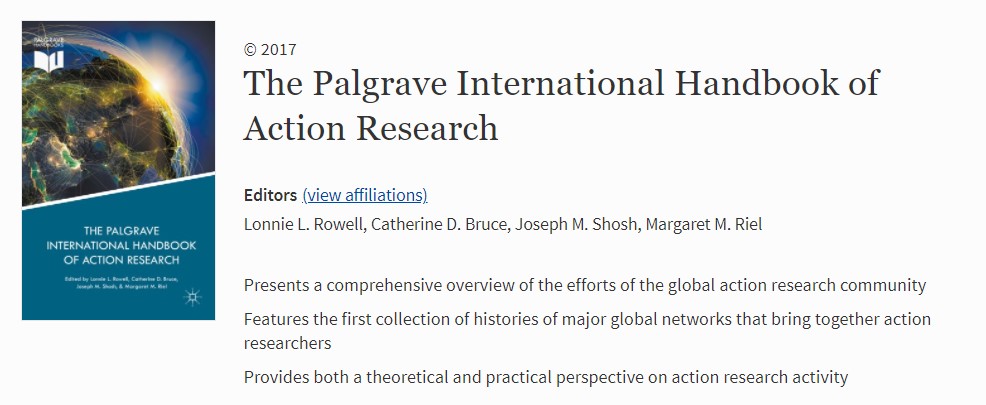
The Palgrave International Handbook of Action Research

Graduate Employability in Context

Life in Schools and Classrooms

Bilingual and Multilingual Education

The Palgrave Handbook of Critical Thinking in Higher Education

Please contact the Social Sciences Liaison Team if you wish to see a full list of titles; all are available on our catalogue, Library Search

How to be a Fake News Ninja

As a University student it is imperative that you arm yourself against the barrage of fake news that can be found in today’s media.  To produce academically sound assignments and research, you need to be able identify and evaluate information quickly and with authority.

Here are 10 tips on how you can be a Fake News Ninja:

  1. Be aware: just simply knowing that not all information is created equal is the first step.
  2. Check the source: Where did the information come from? This can be tricky, especially on social media.
  3. Read more: don’t just rely on the piece of information that’s in front of you… go an find another reliable source and see if the facts are the same.
  4. Check the author: Do a bit of Google stalking to see if the author is credible.
  5. Check the references: does the item have references? What sources have they used? Are they credible?
  6. Check the date: watch out for re-posts old news items.
  7.  Check your biases: You own beliefs and prejudices can have an affect on how you accept information.
  8. Is it a joke?: If it sounds too good to be true, it probably is!
  9. Ask a Librarian: Librarians are the original Fake News Ninjas.  Come and ask us about any reference that you aren’t too sure about and we can help you make an authoritative decision on  the information you use for your research.
  10. Knowledge is power: Read more about Fake News and how you can win the fight. Everything you need to know is in our Fake News Guide.

Read our other blogs on Fake News to be aware of the consequences of Fake News and the history and growth of Fake News.

References
IFLA (2018) How to spot fake news. Available at: https://www.ifla.org/publications/node/11174 (Accessed: 23 March 18)

The consequences of Fake News

A scan of some of our “Fake or Fact?” stories this week might raise a few smiles, but as we’ve seen increasingly over the past couple of years, Fake News can have far-reaching consequences.
Hands up, who’s had the awkwardness of friends or family members reposting dubious material on Facebook? If so, you’re not alone. Apparently, according to a MIT study published this year, based on three years’ worth of Twitter meta-analysis, fake news travels up to six times faster than genuine stories. False stories were up to 70% more likely to receive a retweet – often due the novelty or shock factor.

In the sphere of politics, this can have worrying consequences. The U.S. election in late 2016 coined the term for us and is a particularly rich source of Fake news and political spin. Business Insider lists some of the most influential fake news stories to surface during this time; from false claims that WikiLeaks had proof of Clinton arms deals with ISIS, to a fictional Papal endorsement of Trump, said to have received nearly a million hits on Facebook. Only this month, the Jakarta Post reported on concerns of Fake News polluting the build-up to the Indonesian Presidential Elections next year as Facebook groups flood the country’s web spaces with doctored videos; something that has previous lead to protests in the streets of the capital.

And even when we know we might be dealing with dubious information, Fake News can continue to wield influence. Newcastle University’s own Dr. Gavin Stewart, a meta-analysis expert explains “claims with no scientific proof cast doubt over those with overwhelming evidence, leaving us at the best confused and in the worst case making totally the wrong decision.”

A strong example can be found in the now discredited research of Andrew Wakefield. Back in 1998, Wakefield drew unsubstantiated links between the MMR vaccination and childhood autism. Despite the widespread exposure of the fraudulent claims and rebuttals from the medical community, vaccination rates of the MMR vaccine dropped, and last year saw a 400% increase of measles cases across Europe.

So what does this mean for you as a current student?
The National Literacy Trust has been conducting research into pupils’ critical skills, and worryingly, has found that 35% of teachers in the UK taught pupils citing fake news and satire as legitimate sources. A fifth of pupils between 8 and 15 believe that everything found online is trustworthy and true. The antidote to this is building on one of your core graduate attributes and competencies – critical thinking. Always check out stories you’ve found online before using them in your work. Who have they come from, how partisan is that group or author? Is the material satire? What does the author stand to gain? Employers in all industries are looking for graduate with sharp reasoning skills and sound judgement. As students producing work in the current “post-truth” climate, your job is a little tougher, but you can turn this to your advantage by proving you have the skills and the smarts to outwit the Fake News racketeers.

Read our other blogs on Fake News to learn about the history and growth of Fake News and how you can become a Fake News Ninja.

References
1. Vosoughi, Roy and Aral, (2018). “The spread of true and false news online.” Science, 359: 6380, pp. 1146-1151.
2. Roberts (2016) “This is what fake news actually looks like — we ranked 11 election stories that went viral on Facebook.” Business Insider UK. November 17th
http://uk.businessinsider.com/fake-presidential-election-news-viral-facebook-trump-clinton-2016-11/#5-hillary-clinton-sold-weapons-to-isis-and-it-was-confirmed-by-wikileaks-7)
3. Pearl (2018). “Indonesia battels fake news as elections looms” Jakarta Post. 15th March http://www.thejakartapost.com/news/2018/03/15/indonesia-battles-fake-news-as-elections-loom.html
4. Newcastle university (2018) “Filtering out Fake News” 7th March. http://www.ncl.ac.uk/press/articles/latest/2018/03/fakenews/
5. Houston, (2018) “Measles back with a vengeance due to fake health news” The Irish Times. Feb 23rd. https://www.irishtimes.com/opinion/measles-back-with-a-vengeance-due-to-fake-health-news-1.3401960
6. National Literacy Trust (2018). “Commission on Fake News and the Teaching of Critical Literacy Skills in Schools” https://literacytrust.org.uk/policy-and-campaigns/all-party-parliamentary-group-literacy/fakenews/