Resource in focus: Literary Print Culture

Love books? We hope so. Do you want to know more? Take a journey into the history of the book with Literary Print Culture.

Literary Print Culture: the Stationers’ Company Archive, 1554-2007 is a resource which will show you the primary source documents from the City of London archives. Covering the history of the book, publishing history, the history of copyright and the workings of the early London Livery Company, explore the variety of documents to uncover the story of the role the Stationers’ Company played in the history of the book trade.
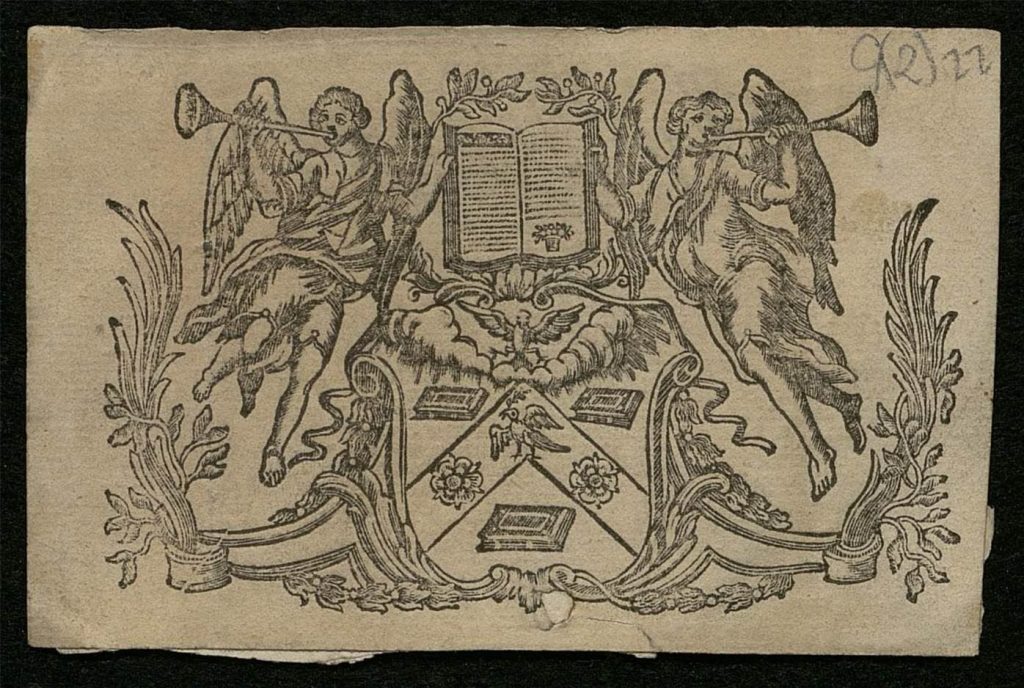
An image of the Arms of The Worshipful Company of Stationers and Newspaper Makers.
Arms of the company [1], c.1700-1900, © The Worshipful Company of Stationers and Newspaper Makers

This archive contains a huge range of primary sources, showcasing a diverse range of material from the archive of the Stationers’ Company archive including:

  • Constitutional Records
  • Court Records
  • Membership Records 
  • Financial Records
  • Trade Records
  • General Administrative Records
  • Charities and Property Records 

Before you begin, we’d recommend clicking Introduction, in which you can learn more about its scope and features.
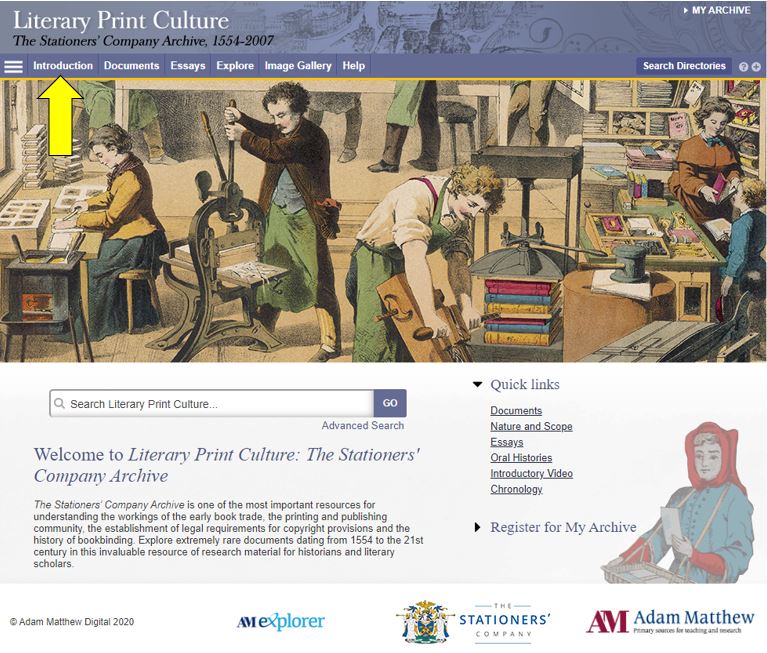
An image of the Literary Print Culture resource homepage.

The primary sources are supplemented by contextual essays and other commentary to give you ideas for interpreting and exploiting the archive.

You can browse or search the archive contents by clicking Documents (to browse) or one of the two Search buttons. You can filter your search in various ways, e.g. by document type, year or theme.

For some of the documents in the archive, you can now use handwritten text recognition to enable you to search the handwritten items effectively. Split-screen viewing enables you to view a document and its index simultaneously.

Have you used Literary Print Culture? Please feel free to post your comments and experiences by clicking Leave a comment below.
Resource in focus: Historic Digimap

Who doesn’t like maps?

Historic Digimap is an online map and data delivery service, available to all staff and students of Newcastle University. It delivers access to historical Ordnance Survey maps of Great Britain dating from 1846-1996 across various scales, including 1:25,000 and 1:10,650.

If you are a first time user of Digimap then you will need to complete a brief registration form and agree to the license agreements for each collection, but that takes seconds and then you’re ready to go!

Viewing historic maps (3:36 min)

If you want to ‘roam’ through the ages in an area, then you can use the timeline tool to see how the landscape has developed through the years, or view two maps side-by-side to compare and contrast your findings. Imagine looking at the Newcastle University Campus and seeing what used to be on the site before buildings such as the Henry Daysh Building, Stephenson Building and Philip Robinson Library graced us with their facilities!

Once you have your area of interest, the Roam service will allow you to view, annotate and print the map in PDF format. Data Download will allow you to download OS data for use in GIS/CAD (if you wish!).

The full scope of what Historic Digimap (and the other collections available to you including Ordnance Survey, Geology, Marine, Environment, Aerial, Lidar and Improvement Service) are covered in EDINA’s comprehensive Help service:

(Improvement Services is an organisation dedicated to the improvement of local government services in Scotland. This data collection comprises of 37 local authority datasets, such as planning applications, green belts and school catchment areas. A wealth of information, who’d have thought.)

Go on, give it a try! But please do read EDINA’s Digimap FAQs on what you are permitted to do with the data you use, to ensure you comply with the educational use licence.

Music is forever…

Rock's Backpages logo.

Overdosed on Christmas carols? Or want to know more about the voices behind that ‘Fairytale of New York’ song you’ve heard so much during the last few weeks!? You need Rock’s Backpages.

Rock’s Backpages is an online library of music journalism: 40,000 classic articles and 600 audio interviews pop’s finest writers, spanning over 60 years across all pop genres.

You can read articles on Slade, Bjork, Van Halen, Fleetwood Mac, Ed Sheeran, Stormzy, our own Maximo Park, Queen, Lamb of God, 50 Cent or 5 Seconds of Summer. Perhaps you are researching jazz, country or folk? There’s something here for you.

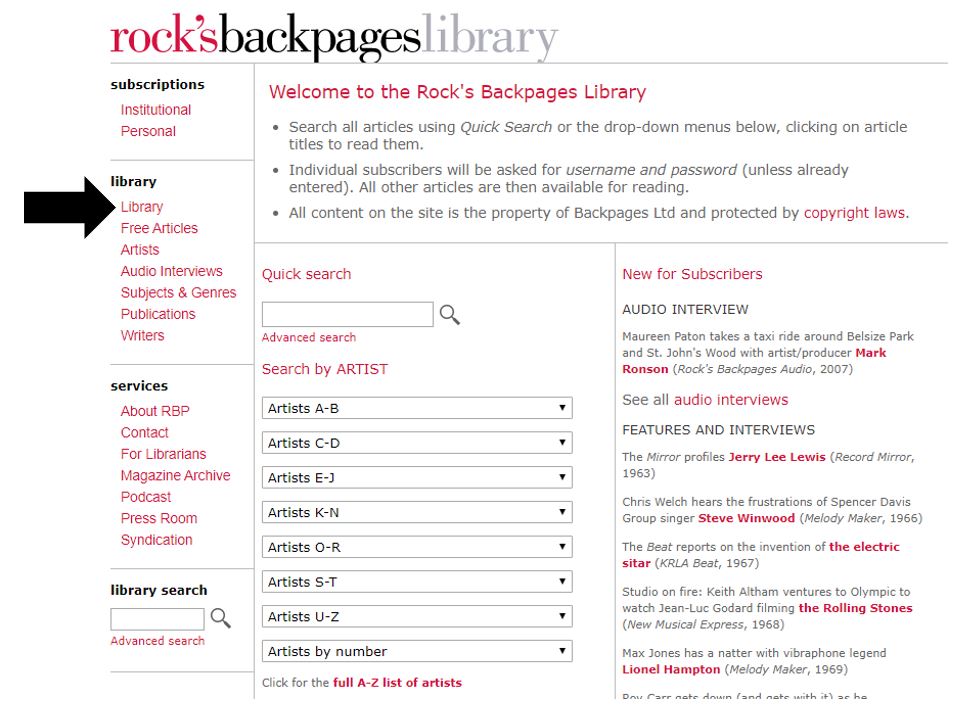
Access the Library to easily browse by artist, genre or publication:

An image of the Rock's Backpages Library search screen.

Follow @rocksbackpages on Twitter for news of recently released articles or features on artists and their music, listen to the weekly podcast which highlights the latest additions or sign up to receive their newsletter.

An image of a guitar pick.

Hello from your bibliothēkē

An image of the Venus de Milo

Welcome to all new and returning Classics students from the University Library!

We have a new look library website for you, alongside our Subject Guides with lots of resources for you to explore.

Our Subject Guides give you access to:

  • subject databases and other specialist information sources for your discipline, such as digitised archives and multimedia resources.
  • links to great new learning resources to help you refine your academic skills.
  • our latest blogposts: regularly updated news, tips and features from your Library’s Liaison Team.

You may want to seek out images from the Bridgeman Education database which provides access to over two million images, including paintings, posters, artefacts and photographs, from galleries and collections worldwide. All images are copyright-cleared for educational use, and cover a wide range of themes.

Perhaps you want to browse the Classical Studies eBooks section from Oxford Scholarship Online, or search our Special Collections and explore their Classics resources using their new search function.

If you’re tired from exploring the Campus then kick back and watch a programme dedicated to The History of Empire, the blossoming of art and philosophy in the Ancient World, or listen to Melvyn Bragg discuss the Greek Myths on Box of Broadcasts.

Whatever subject you are reading, explore the possibilities through Library Search, our Library Guides or ask a question via Library Help and we look forward to seeing you in and around the Library soon.

All change for Westlaw UK

Are you a returning Newcastle Law School student? Welcome back!

There have been some changes while you’ve been away (have you seen the Philip Robinson Library? No? Go take a look…!) but importantly for you, Westlaw UK has had a makeover.

Legal research is an essential element of your studies at Newcastle Law School so don’t be put off by the change.

[Source: https://youtu.be/au4byJp_-dc]

You can still browse for cases, legislation, journals (using the Legal Journals Index) and current awareness.

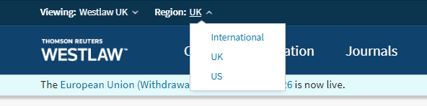
Selecting United States and International sources will launch a new browser window – just change your default Region from UK to US or International.

A screenshot of changing Region in Westlaw UK

See the Get Started guide for an overview.

Read Lucy’s post for more information on the changes: https://blogs.ncl.ac.uk/subject-support/2019/06/20/westlaw-platform-upgrade/.

If you have any questions about the interface, or want a refresher on how to use Westlaw, contact your Student Representative – Darby Okafor. He’ll be announcing details of his Eldon Cluster drop-in sessions for this semester soon via Facebook (@TRFLLNewcastleUniversity) but drop him a line if you need assistance before then: D.Okafor@ncl.ac.uk.

Everyday life and Mass Observation

Vintage documents

Mass Observation. Wow, sounds intriguing, doesn’t it? It should!

This resource offers revolutionary access to one of the most important archives for the study of Social History in the modern era. You can log in using your Newcastle University Campus ID and password to explore original manuscript and typescript papers created and collected by the Mass Observation organisation, as well as printed publications, diaries, photographs and interactive features dating from 1937 to 1972.

If you’re interested in learning more about the topics currently influencing our lives, it would do no harm to research the social history topics available within Mass Observation such as anti-Semitism, the economy, austerity, education, women at work, religion, mining, news, the Government, smoking, drinking, sexual behaviour, propaganda, unemployment and writing (to name just a few!).

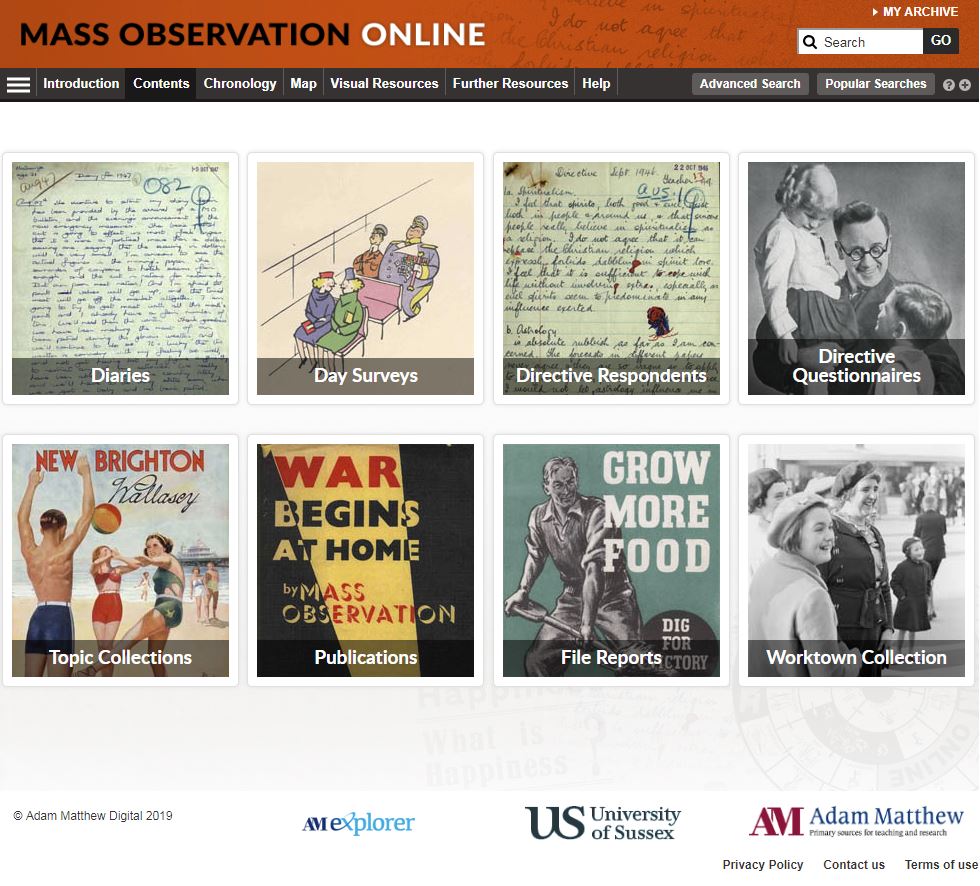
Mass Observation home page

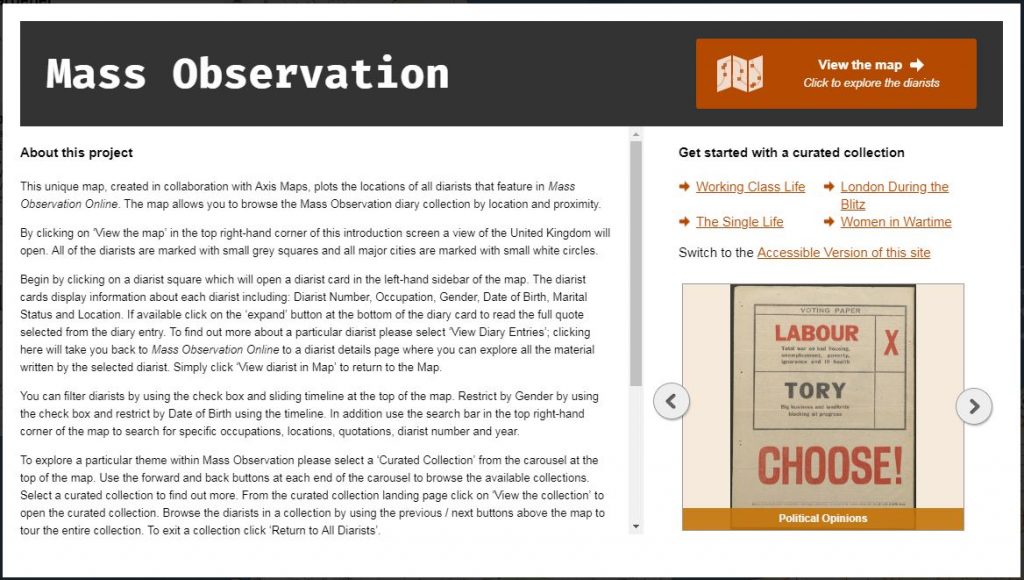
Mass Observation Diarist maps

If you want to know more about Mass Observation and to see some samples from the collection, then you could take a look at the Mass Observation Twitter feed, or there is a recorded webinar available for you to watch via YouTube in order to get the best out of the resource.

Shades of Grey [Literature]

Grey literature. Black Literature.

Did you even know they existed? Possibly not.

Depending upon your source, “black literature” can be defined as books and peer-reviewed published journals. This is the familiar material you will source and use through your University Library and its catalogue.

Grey literature is something else entirely. Grey literature is research or material that is not produced by commercial publishers. It may be wholly unpublished or published in a non-commercial form. Think along the lines of industry-related materials, academic publications, government publications and think tank papers.

GreyNet, the Grey Literature Network Service has more detailed information on this vital research resource.

Grey Literature can be unique and an important source of information. There is a range of grey literature you may need to consult to ensure your research is complete. Examples of these materials include:

  • Working papers
  • Conference proceedings
  • Theses and dissertations
  • Government and official publications, including Green and White Papers, Select Committee papers, legislation
  • Policy statements
  • Research reports
  • Newsletters
  • Fact sheets
  • Blogs
  • Transcripts
  • Pre-prints and post-prints of articles
  • Technical reports
  • Professional guidelines
  • Patents
  • Standards
  • Market research
  • Data, e.g. Census, economic data, statistics

Most databases, available via your Subject Guide, will allow you to limit your search by document type, including grey literature, which does improve accessibility to this type of material.

Other resources include:

  • Bielefeld Academic Search Engine

    Operated by Bielefeld University Library this search engine indexes open access academic literature. The Advanced Search option allows you to search for specific types of grey literature.
  • Box of Broadcasts

    Box of Broadcasts provides access to over two million programmes from over 65 TV and radio channels, including most of the UK’s freeview network, all BBC TV and radio content from 2007, and several foreign language channels. You can view archived programmes, record new ones, create clips and playlists and see transcripts. (This resource is not available outside the UK.)
  • Digital Education Resource Archive (DERA)

    The Institute of Education Digital Education (University of London) Resource Archive (DERA) is a digital archive of all documents published electronically by government and related bodies in the area of education.
  • Open Grey

    The System for Information on Grey Literature in Europe provides open access to over 700,000 bibliographical references.
  • Teachers TV from Education in Video

    Provides access to all 3,530 globally-acclaimed instructional videos produced in 2008 by the United Kingdom’s Department of Education to train and develop teachers’ skills through demonstrations and commentary by teachers, administrators, and other educational experts.
  • Newcastle University Theses and Dissertations Guide

    Newcastle University theses are available in the eTheses Repository. Other UK theses may be available via EThOS. There is not one single source for locating non-UK theses. The Guide will give you some starting points.
  • UK Legislation

    UK Legislation is freely available online but be aware there may be delays of up to 2 weeks before any updates appear. Use your subscribed databases available via the Law Subject Guide.

The list can go on…

Once you have located your grey literature, do question it using the CRAAP testcurrency, relevance, authority, accuracy, purpose. Consider what is publicly available versus a subscribed (or paid for) resource. It may be biased and you should include that assessment in your work.

And finally, don’t forget, not everything is available online!

Love reading? Browse through BrowZine…

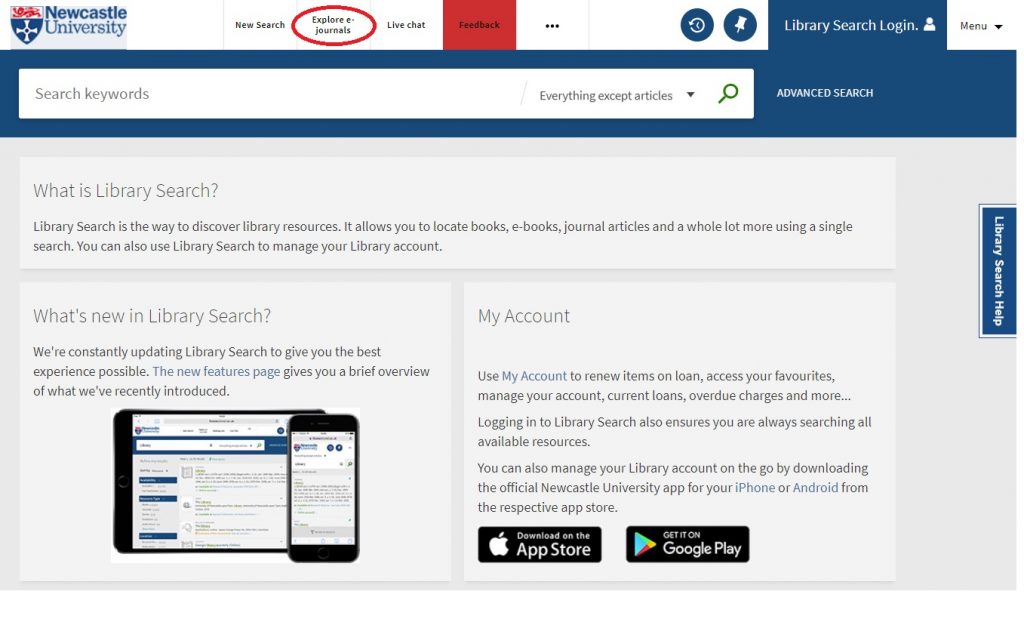
Not sure which journal article you’re looking for? Do it the ‘old school’ way and browse through your favourite journals using BrowZine without having to trek to the library or newsagents to flick through the magazines.

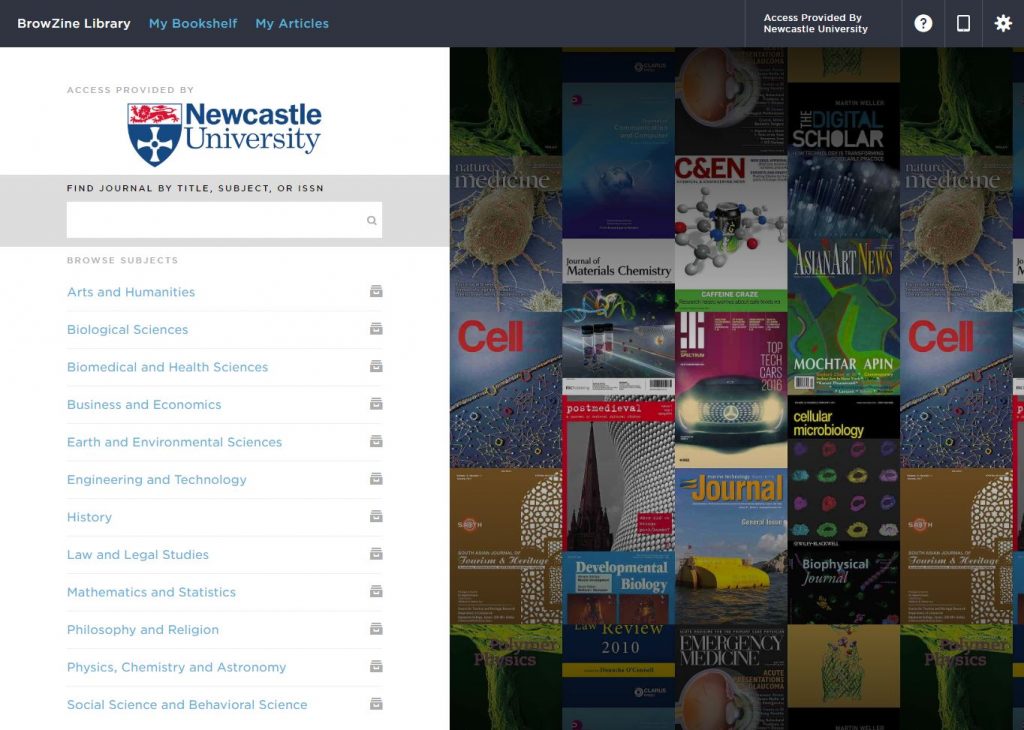
BrowZine is a publisher-neutral reading and discovery platform for eJournals. You can browse complete issues, set up a personal bookshelf of your favourite titles and receive notifications when new issues are released.

Library Search and browsing eJournals via BrowZine

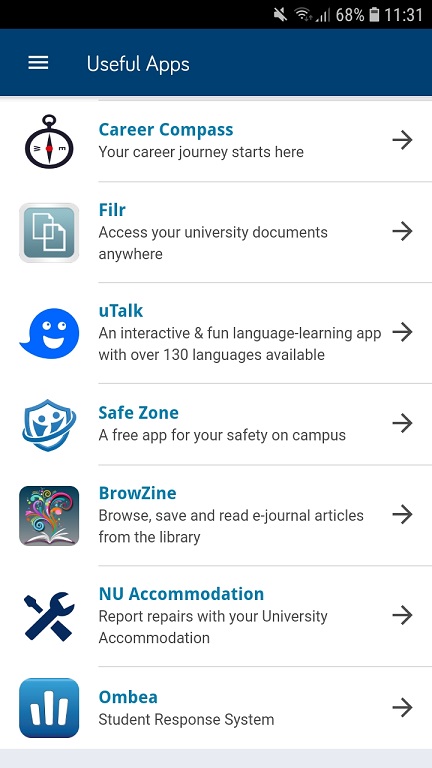
You can do this on your PC via Library Search or perhaps you prefer using your smartphone? Access BrowZine via the University App or download the BrowZine App from the Apple Store or Play Store.

Access BrowZine via the Newcastle University App

Set up your personal account using your University email address and BrowZine will always recognise you as a member of Newcastle University and give you access to the full-text articles it contains.

BrowZine Subject Areas

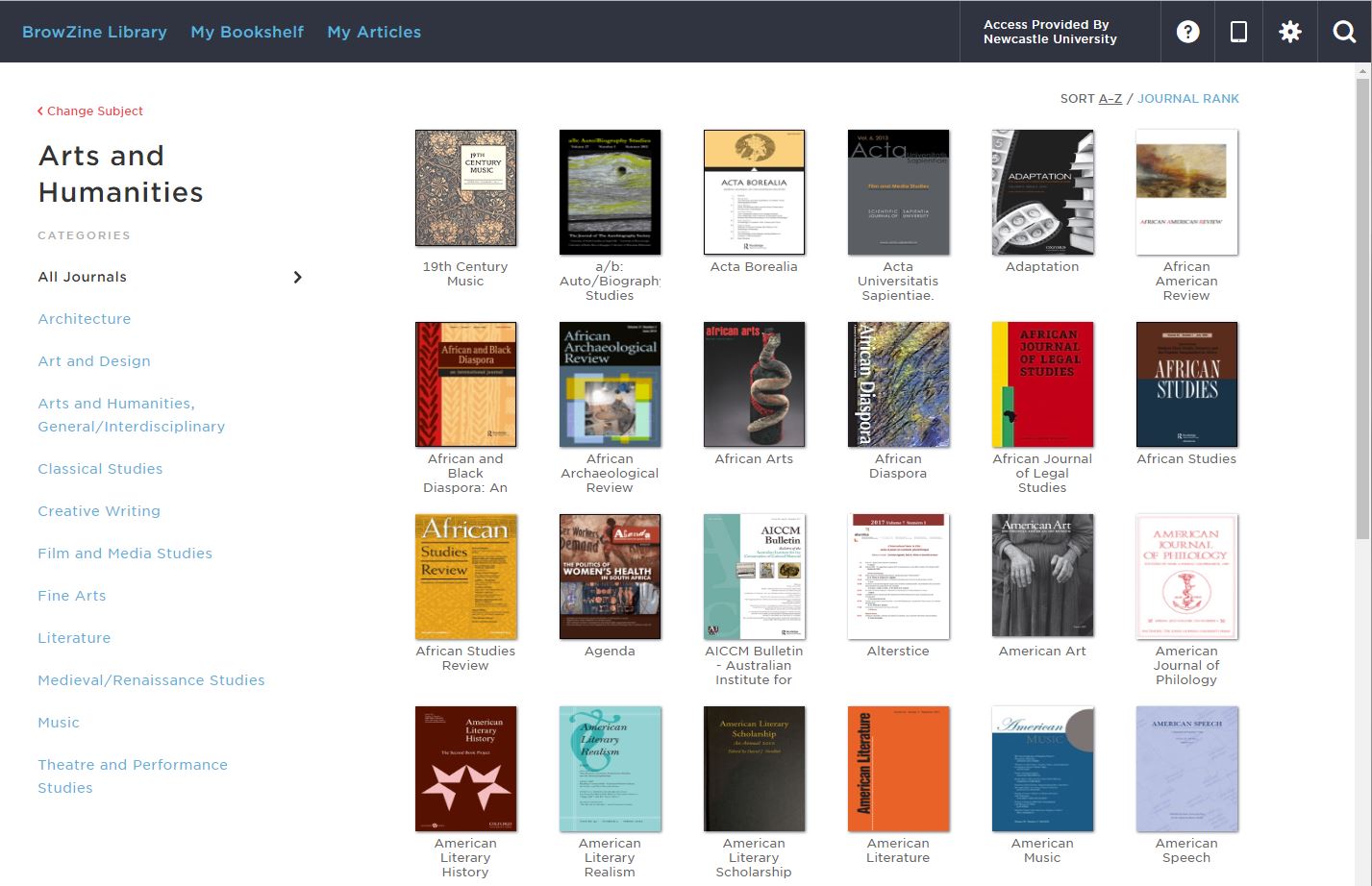
BrowZine Arts and Humanities

Get browsing!

EndNote

What is EndNote?

The official blurb on EndNote is that it is “…the industry standard software tool for publishing and managing bibliographies, citations and references.”

Have you drifted off yet? Don’t – read on!

EndNote takes a little getting used to and we recommend you familiarise yourself with it at the start of your research process. But as Library Staff, we wouldn’t spend a significant amount of time demonstrating and training our academic staff and students on what EndNote is, and how to use it, if we didn’t think it was valuable. It will save you a huge amount of time in terms of writing up your assignments.

Essentially, you can use EndNote to create and organise a personal library of resources relevant to your research. You can import references from Library Search, and a huge range of databases such as Scopus, Web of Science, IEEE Xplore and Business Source Complete. You can ask EndNote to locate the full-text PDFs of the resources you are going to use in your research, and you can annotate them as you wish too. Did you know you can instruct Google Scholar to import references into EndNote? No? Try it. Finally, if you already have materials stored in your home folder (H:\) then you can attach them to a manually-created reference within EndNote, bringing all your research together in one place.

In addition to organising your references (and this is the clever bit) you can then get EndNote to ‘talk’ to your word processing software, e.g. Microsoft Word, and insert the citations into your work for you in your chosen referencing style, e.g. Harvard at Newcastle, Vancouver, APA or MLA. If you don’t want to do that, then EndNote will also allow you to create an independent bibliography of your references, saving you an awful lot of typing.

Using EndNote

Intrigued? You should be. Take a look at our EndNote Guide. It contains all the introductory information you need, step-by-step workbooks to train yourself on the use of EndNote (the Desktop and Online versions), videos, useful FAQs, and contacts for help, should you need it.

Finally, Newcastle University provides support for EndNote but it is not compulsory to use. You may prefer Mendeley, Zotero, RefWorks or another piece of bibliographic management software. That’s fine, whatever makes your referencing lives easier. Go on, give them a try.

Reading Lists

Have you discovered your Reading Lists yet?

Reading Lists are what you need to access and read to get understanding of the subject on the module(s) you are taking. It’s not just the Library saying this – these lists came from your lecturers!

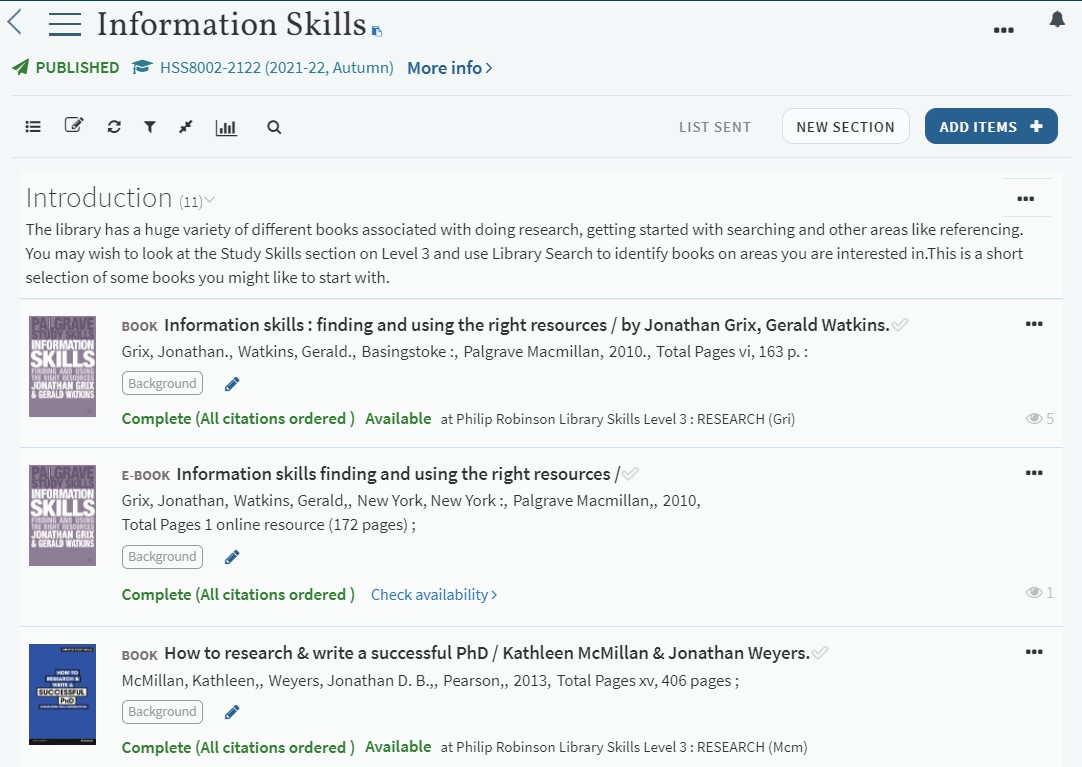
The Reading Lists are a list of essential, recommended and background reading for your module. Each item has a quick link through to Library Search (to find where the book may be on the shelves) or there could be a direct link through to the eBook or online journal article. It’s an efficient way of accessing your reading and can save you loads of time.

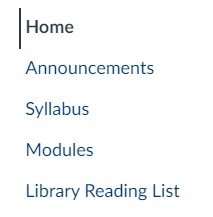
Log into Canvas to access your Reading List

If you have any questions about your Reading Lists then ask your lecturer, or if there is a technical issue then email readinglists@ncl.ac.uk for assistance.