Resource in focus: Literary Print Culture

Love books? We hope so. Do you want to know more? Take a journey into the history of the book with Literary Print Culture.

Literary Print Culture: the Stationers’ Company Archive, 1554-2007 is a resource which will show you the primary source documents from the City of London archives. Covering the history of the book, publishing history, the history of copyright and the workings of the early London Livery Company, explore the variety of documents to uncover the story of the role the Stationers’ Company played in the history of the book trade.
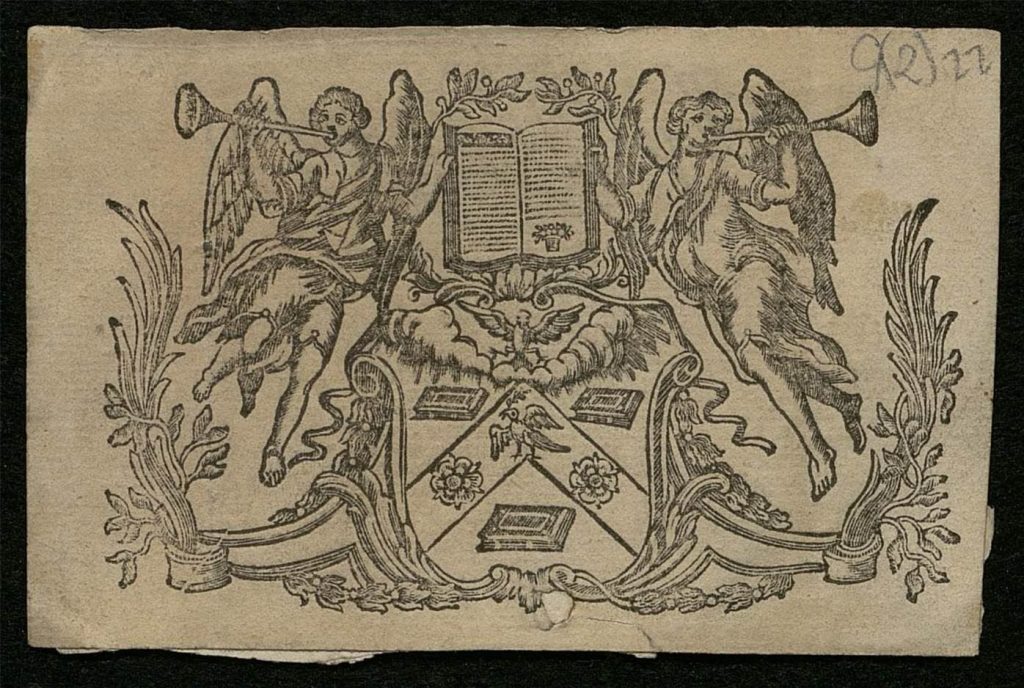
An image of the Arms of The Worshipful Company of Stationers and Newspaper Makers.
Arms of the company [1], c.1700-1900, © The Worshipful Company of Stationers and Newspaper Makers

This archive contains a huge range of primary sources, showcasing a diverse range of material from the archive of the Stationers’ Company archive including:

  • Constitutional Records
  • Court Records
  • Membership Records 
  • Financial Records
  • Trade Records
  • General Administrative Records
  • Charities and Property Records 

Before you begin, we’d recommend clicking Introduction, in which you can learn more about its scope and features.
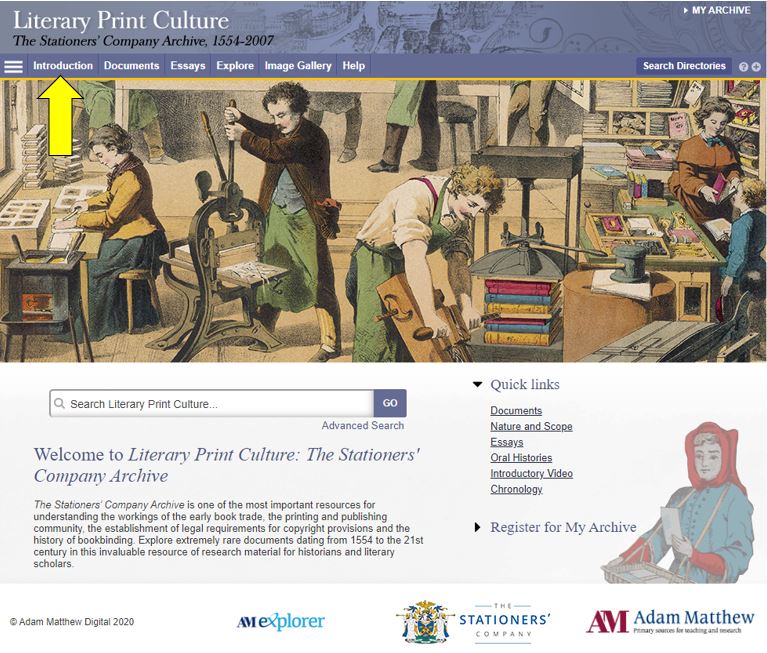
An image of the Literary Print Culture resource homepage.

The primary sources are supplemented by contextual essays and other commentary to give you ideas for interpreting and exploiting the archive.

You can browse or search the archive contents by clicking Documents (to browse) or one of the two Search buttons. You can filter your search in various ways, e.g. by document type, year or theme.

For some of the documents in the archive, you can now use handwritten text recognition to enable you to search the handwritten items effectively. Split-screen viewing enables you to view a document and its index simultaneously.

Have you used Literary Print Culture? Please feel free to post your comments and experiences by clicking Leave a comment below.
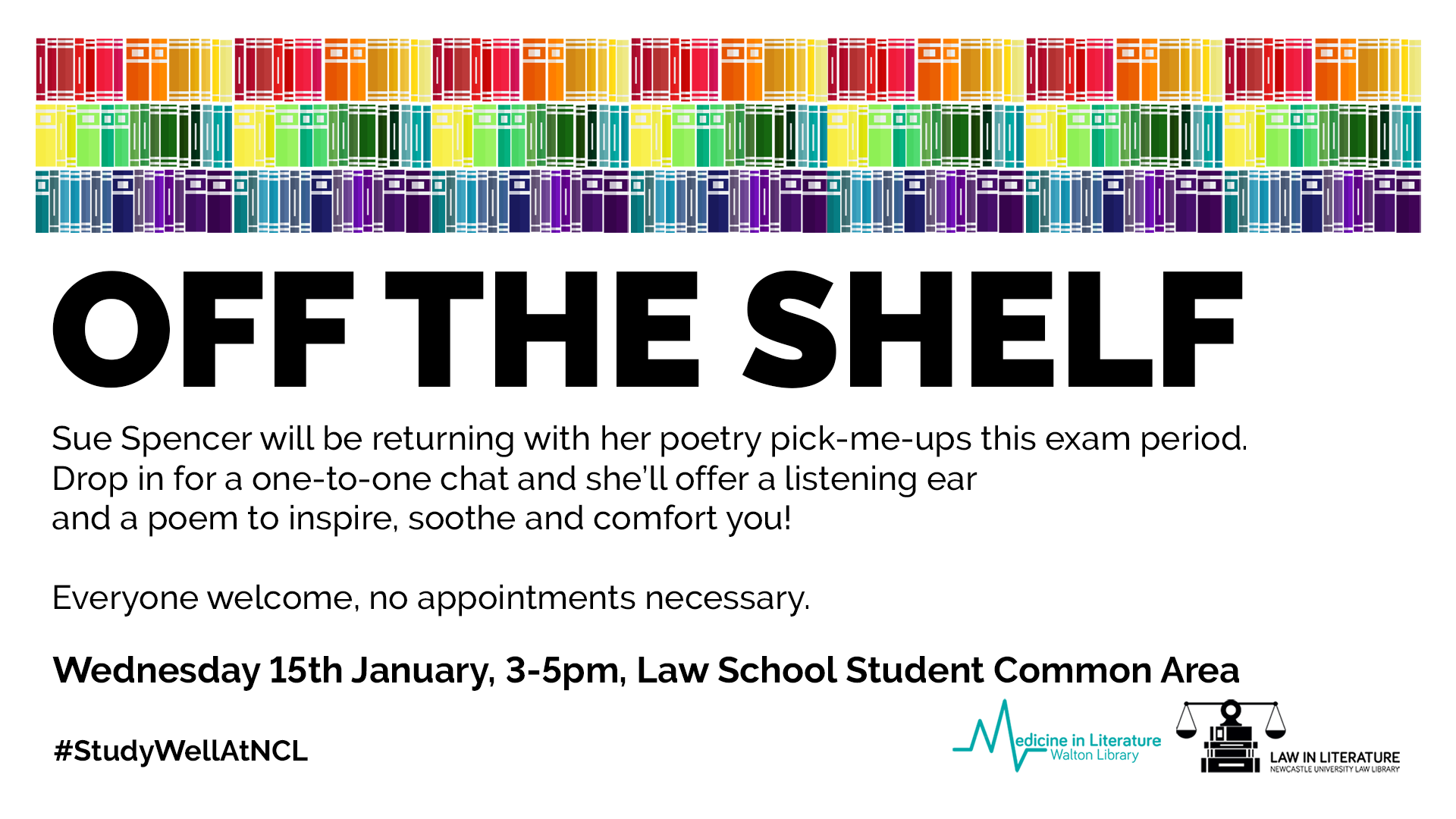
GUEST POST – OFF THE SHELF

Off the Shelf poster

Hi! I’m Caitlin, a final year law student and law library aide – and by now I’m used to the stress of exams and deadlines.

I tried the ‘poetry-pick me up’ after going into the common room for a revision break.

I stumbled across Sue (@kind_curious) in the Law School Student Common Room, where she asked, ‘do you want a poem?’. Not really knowing what to expect, I had to overcome a bit of social awkwardness! I was surprised by Sue’s passion and love of poetry, which was clear in the way she spoke about how she’d used poetry in the NHS before and it was what she enjoyed most.

I was asked questions about my current stress levels and how I was feeling with exams, and how I dealt with stress. I told her that when I get stressed I talk even more than usual, which for anyone who knows me sounds like I’m going at a million miles an hour, and she suggested something that would relax me.

I laughed as I saw no signs of chocolate or Netflix – my usual go to relaxation strategies.

Instead she said I needed something like a lavender bubble bath – again I saw no sign of a bubble bath in the Law School and I’d yet to find one in the Dungeon.

She picked out two poems that would make me feel like the relaxing in lavender: she suggested ‘Sonnet’ by Elizabeth Bishop and Shennagh Pugh’s ‘What if This Road’.

What if this road reminded me of Robert Frost’s ‘A Road Not Taken’, and was great for me as a an indecisive person. It was matched perfectly to the questions that Sue had asked me, as I read it as a  ‘roll with it’ approach to life, which is definitely needed to cope with exams and deadline stress.

The second poem, Bishop’s ‘Sonnet’, had great visualisation techniques, almost like a meditative poem – which was spot on to turn off the stress and slow everything down!

The experience was a great switch off from deadline stress, and a great use of the 10 minutes which I’d usually scroll through twitter or Instagram. It was something different, and really quite unique and relaxing, which I would definitely recommend to help have a break from any exam and deadline stress!

Resource in focus: Historic Digimap

Who doesn’t like maps?

Historic Digimap is an online map and data delivery service, available to all staff and students of Newcastle University. It delivers access to historical Ordnance Survey maps of Great Britain dating from 1846-1996 across various scales, including 1:25,000 and 1:10,650.

If you are a first time user of Digimap then you will need to complete a brief registration form and agree to the license agreements for each collection, but that takes seconds and then you’re ready to go!

Viewing historic maps (3:36 min)

If you want to ‘roam’ through the ages in an area, then you can use the timeline tool to see how the landscape has developed through the years, or view two maps side-by-side to compare and contrast your findings. Imagine looking at the Newcastle University Campus and seeing what used to be on the site before buildings such as the Henry Daysh Building, Stephenson Building and Philip Robinson Library graced us with their facilities!

Once you have your area of interest, the Roam service will allow you to view, annotate and print the map in PDF format. Data Download will allow you to download OS data for use in GIS/CAD (if you wish!).

The full scope of what Historic Digimap (and the other collections available to you including Ordnance Survey, Geology, Marine, Environment, Aerial, Lidar and Improvement Service) are covered in EDINA’s comprehensive Help service:

(Improvement Services is an organisation dedicated to the improvement of local government services in Scotland. This data collection comprises of 37 local authority datasets, such as planning applications, green belts and school catchment areas. A wealth of information, who’d have thought.)

Go on, give it a try! But please do read EDINA’s Digimap FAQs on what you are permitted to do with the data you use, to ensure you comply with the educational use licence.

Music is forever…

Rock's Backpages logo.

Overdosed on Christmas carols? Or want to know more about the voices behind that ‘Fairytale of New York’ song you’ve heard so much during the last few weeks!? You need Rock’s Backpages.

Rock’s Backpages is an online library of music journalism: 40,000 classic articles and 600 audio interviews pop’s finest writers, spanning over 60 years across all pop genres.

You can read articles on Slade, Bjork, Van Halen, Fleetwood Mac, Ed Sheeran, Stormzy, our own Maximo Park, Queen, Lamb of God, 50 Cent or 5 Seconds of Summer. Perhaps you are researching jazz, country or folk? There’s something here for you.

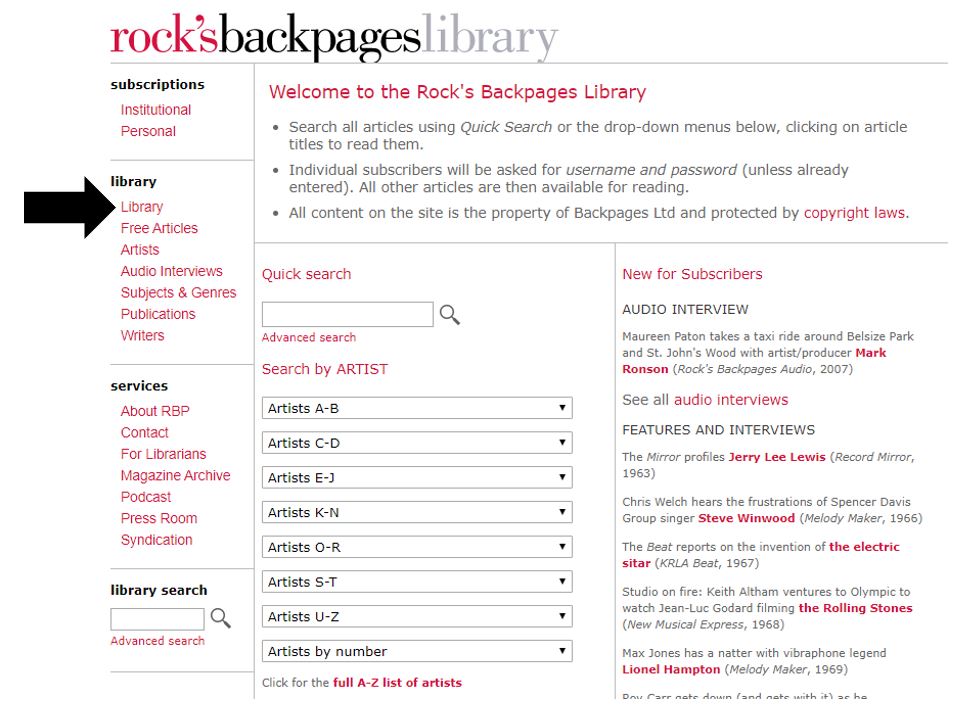
Access the Library to easily browse by artist, genre or publication:

An image of the Rock's Backpages Library search screen.

Follow @rocksbackpages on Twitter for news of recently released articles or features on artists and their music, listen to the weekly podcast which highlights the latest additions or sign up to receive their newsletter.

An image of a guitar pick.

Waltzing with EndNote

What is EndNote?

The official blurb on EndNote is that it is “…the industry standard software tool for publishing and managing bibliographies, citations and references.”

Have you drifted off yet? Don’t – read on!

EndNote takes a little getting used to and we recommend you familiarise yourself with it at the start of your research process. But as Library Staff, we wouldn’t spend a significant amount of time demonstrating and training our academic staff and students on what EndNote is, and how to use it, if we didn’t think it was valuable. It will save you a huge amount of time in terms of writing up your assignments.

Essentially, you can use EndNote to create and organise a personal library of resources relevant to your research. You can import references from Library Search, and a huge range of databases such as ScopusWeb of ScienceIEEE Xplore and Business Source Complete. You can ask EndNote to locate the full-text PDFs of the resources you are going to use in your research, and you can annotate them as you wish too. Did you know you can instruct Google Scholar to import references into EndNote? No? Try it. Finally, if you already have materials stored in your home folder (H:\) then you can attach them to a manually-created reference within EndNote, bringing all your research together in one place.

In addition to organising your references (and this is the clever bit) you can then get EndNote to ‘talk’ to your word processing software, e.g. Microsoft
Word
, and insert the citations into your work for you in your chosen referencing style, e.g. Cite Them Right Harvard, Vancouver, APA or MLA. If you don’t want to do that, then EndNote will also allow you to create an independent bibliography of your references, saving you an awful lot of typing.

Using EndNote

Intrigued? You should be. Take a look at our EndNote Guide. It contains all the introductory information you need, step-by-step workbooks to train yourself on the use of EndNote (the Desktop and Online versions), videos, useful FAQs, and contacts for help, should you need it.

Finally, Newcastle University provides support for EndNote but it is not compulsory to use. You may prefer MendeleyZoteroRefWorks or another piece of bibliographic management software. That’s fine, whatever makes your referencing lives easier. Go on, give them a try.

Strictly Referencing: When is a website not a website?

A common mistake made in referencing is grouping all sources found online under the category and reference type of a website. Your aim should be to reference the information you have in front of you rather than where it was sourced. Simply grouping items found online as a website would be the equivalent of referencing a book by the publisher details rather than the author and title.

For example, a government publication found online would be referenced like this in Chicago:

United Kingdom. Department for Education. Cloud computing: how schools can move services to the cloud. London: The Stationary Office, 2016. Accessed: November 4, 2019. https://www.gov.uk/government/publications/cloud-computing-how-schools-can-move-services-to-the-cloud. 

An electronic journal article might appear like this in APA:

Gillum, J. (2012). Dyscalculia: Issues for practice in education psychology.  Educational Psychology in Practice, 28(3), 287-297. doi:10.1080/02667363.2012.684344

While a video posted on the Tate website would look something like this in Harvard.

TateShots (2016) Grayson Perry: think like an artist. Available at: https://www.tate.org.uk/whats-on/tate-modern/talk/what-makes-artist-grayson-perry-conversation-sarah-thornton (Accessed: 11 November 2019). 

Identifying the type of information you are using as well as the source, are essential skills of evaluation and developing a critical approach to information. In many cases you will be unconsciously using your judgment to assess the value of information for your purpose. So when you are using any source of information, ask yourself what it is you are looking at, what details are recorded about it and whether it measures up as a quality piece of information. You can find more information on evaluating information on the Academic Skills Kit.

Hip-hop your way around the Harvard style

Harvard at Newcastle is the most frequently used referencing style and if your school does not have a preferred style, it is the one that we would recommend. This is because there is the most comprehensive guidance available for Harvard and it is a style that can manage referencing all types of information. Whether you are referencing a book, news article, Instagram or market research, the Harvard at Newcastle style has got you covered.

There are many variations of Harvard but the one used at Newcastle can be found in Cite Them Right. Harvard uses an in-text citation (Millican, 2018, p.12) inserted in the text, coupled with a reference list at the end of the document, which provides the key. Cite Them Right  is available as a published book to borrow from the library and Cite Them Right Online provides the same comprehensive guidance in a searchable interface that can be accessed anywhere online. It includes guidance about how to reference just about every type of information you can think of, including the more tricky online sources such as social media.

You will find the Harvard at Newcastle style in EndNote on campus PCs and through the RAS, and are able to download the style from our EndNote guide if you are using it locally on your own device. We’ve also included some useful tips and advice about getting to grips with Harvard on the Academic Skills Kit.

It’s all a matter of style

There are lots of different referencing styles, but which one is right for you?

Once you start creating citations and references, you need to consider referencing styles. There are hundreds of them out there and each has a slightly different set of rules about how citations and reference lists should appear in your text.

Most Newcastle University students use the Cite them Right Harvard style, but there is also Vancouver, IEEE, OSCOLA, Chicago, and many more. Your lecturers will expect you to use one specific style and all of your citations and references should conform to that style accurately and consistently; same punctuation, same capitalisation, same everything. 

We have lots of help about using some of the popular referencing styles Academic Skills Kit. The Cite Them Right website is also a valuable online resource that will show you how to hit all of the right steps on your way to mastering an individual referencing style.

Referencing – why is it snow important?

Photo by Aaron Burden on Unsplash

When walking in the snow we need the right footwear, and to keep warm, a scarf, hat, and gloves are also of great help. By doing so, we are adapting to the environment and using the right tools at the right time for the job at hand.

The same is true when adapting to academic writing where referencing is a key tool.

When you are writing a piece of work and you use someone else’s thoughts, words or ideas, you must reference them. But why do we talk about referencing so much at University, and why is it so important? Why should you bother spending time on ensuring that your references are consistent, accurate and correct?

It all comes down to why we reference in the first place:

  • To make your contribution clear by showing which words and ideas are yours, and which have come from your reading.
  • To acknowledge the work of others and to demonstrate how you have built on the knowledge that you’ve gained from your reading.
  • To ensure that the reader can follow up on your references for themselves.
  • To avoid being wrongly accused of plagiarism.

Watch our short video to find out a little more about why we should bother with referencing.

Find out more on the Academic Skills Kit.

190th Anniversary of the Natural History Society of Northumbria

Pink and purple wildflowers in a fieldToday celebrates the 190th anniversary of the founding of the Natural History Society of Northumbria, (NHSN) a local voluntary organisation that encourages and supports research in Natural History via lectures, field outings, education courses and publication of scientific papers.  The Society also established the brilliant Great North Museum: Hancock, which continues to house its fascinating Library and Archive collections, both important resources for the study of natural history in the North East of England.

NHSN Library

The Library, also established in 1829, holds a wealth of material on natural history, with coverage including flora and fauna, ornithology, geology, ecology, the history of natural history and biodiversity.  Here you’ll find the latest field guides for birds, plants, mammals and insects from around the world alongside regional, national and international journals and books about ecology, zoology, botany, ornithology, entomology, geology and conservation. The Library is open to everyone, but membership is required for borrowing books.

NHSN Archive

Meanwhile the Archive holds thousands of artworks, photographs, letters, diaries, and notebooks covering all aspects of natural history, zoology, botany and geology.  It also includes internationally important material, notably the original watercolours, pencil drawings and proof engravings by Thomas Bewick, the Northumbria-born naturalist and wood engraver.  Archive material is available to view by appointment only.

For a taste of what the collections have to offer, you can visit the Society’s newest exhibition: ‘The Beauty of Plant Science’, on display in the NHSN Library.  Curated by postgraduates at Newcastle University, the exhibition presents colourful botanical illustrations alongside myths and poems to show how Science and Art coexist:

You can also find a sister exhibition, ‘The Beauty of Insects: Seeing Art in the Entomological World’ on Level 2 of the Philip Robinson Library: