We have been very busy over the summer adding to our growing collection of e-resources to support your studies and research. Discover individual titles in Library Search and browse some of the new collections now available to you below.
We have also invested in continued access to our Evidence-Based Acquisition (EBA) collections from multiple publishers, so you can browse and access hundreds of ebook titles and we can see which are the most popular titles for our students and researchers.
A new dataset is now available within Digimap called the Pilot Collection. This provides temporary access to data that EDINA are trying out and want feedback from users. This means the data will be replaced with other data sets over time as new sets become available.
Digimap Pilot is free for staff and students at current subscribing higher and further education institutions and research councils. All you will need to do is to accept the end user licence agreement which is available when you log into Digimap with your Campus ID and password. As these datasets will change regularly then you’ll need to re-accept each new licence agreement as sets are replaced.
Digimap Pilot comprises two applications, one for creating maps online, the other for downloading data which enables further analysis and investigation in other packages:
Use Roam to view, annotate and print maps online.
Use Data Download to download data and load it into a GIS or CAD package for further manipulation
As of April 2020, Pilot currently offers access to the following data.
UKMap a modern, highly detailed, feature-rich mapping database of Greater London. Its unique, innovative design offers users a flexible choice of integrated map features within a single geographic information source. It comprises addresses, retail names, detailed shopping centre data, building heights, a wide range of points of interest, aerial photography, together with Digital Terrain and Surface Models.
This one dataset has different components for Greater London. This includes UKMapLondon which provides aerial imagery with a resolution of 10cm, UKMap Upper Floors which shows more granular information e.g. which shops are on different floors of shopping centres, UKMap Tree Canopy which indicates tree canopies.
UKBuildings a unique database created and regularly updated to help you understand the age, structure, characteristics and use, of commercial, public and residential buildings across the UK.
UKLand a maintained, national land information database providing a detailed consistent breakdown of the use of land across the UK. There are 30 different land classes available e.g. woodland, water features, transport and commerical.
An EDINA Satellite data collection initially consisting of:
Sentinel 2 derived cloud free optical mosaic for Great Britain, 2019.
Sentinel 2 derived Near Infrared mosaic for Great Britain, 2019.
These 2 sections are currently available until the 31/07/2020.
Within the Pilot Data Download section you’ll also find some useful product information such as where the data comes from, it’s availability and sizing and Copyright information.
If you’re using mapping data already you might want to use this in conjunction with GIS if you’re manipulating or working with the data. Or doing a comparison to other maps you might have found freely available e.g. Google Maps.
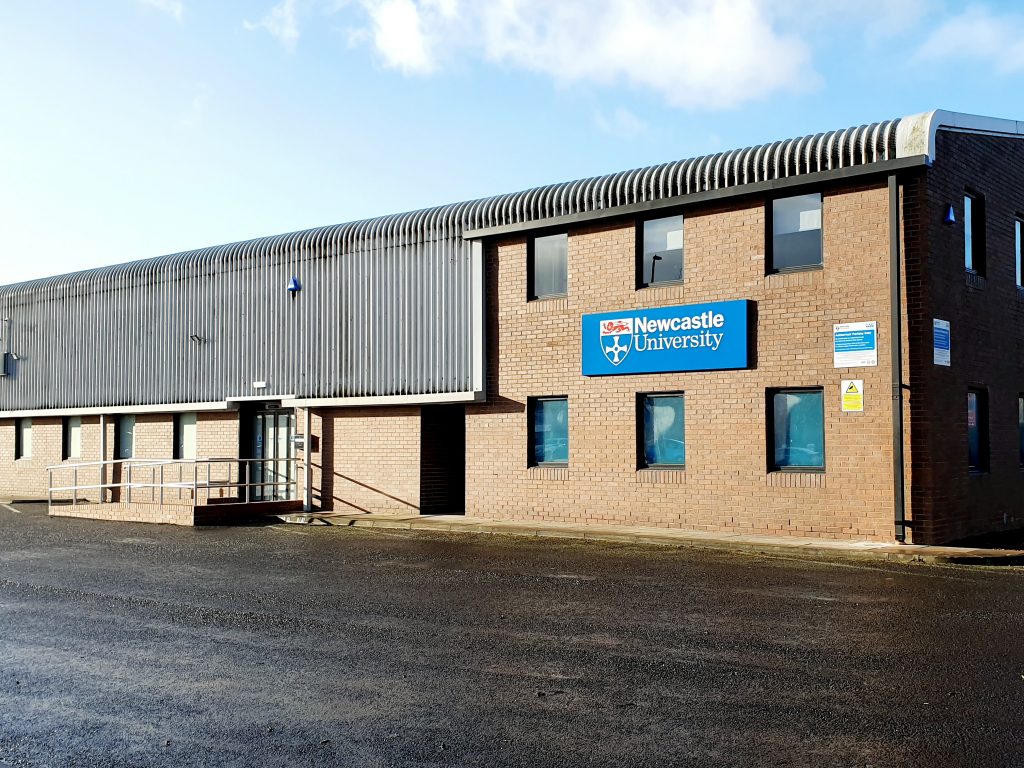
The exterior of the Research Reserve facility in the Team Valley.
The eagle-eyed amongst you may have noticed a curious thing on Library Search. Where normally you would expect to see the name of one of the libraries next to an item’s shelfmark, occasionally you’ll see “Research Reserve”.
If you’ve ever wondered just what exactly the Research Reserve is, this is the blog for you, discover here exactly what the Research Reserve can offer you and your studies.
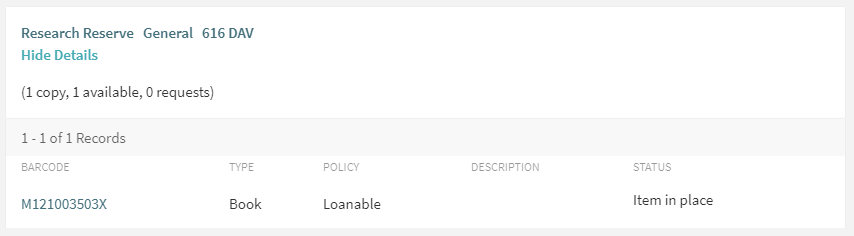
Before an item’s shelfmark is its location. This book is held off-site at the Research Reserve facility in the Team Valley.
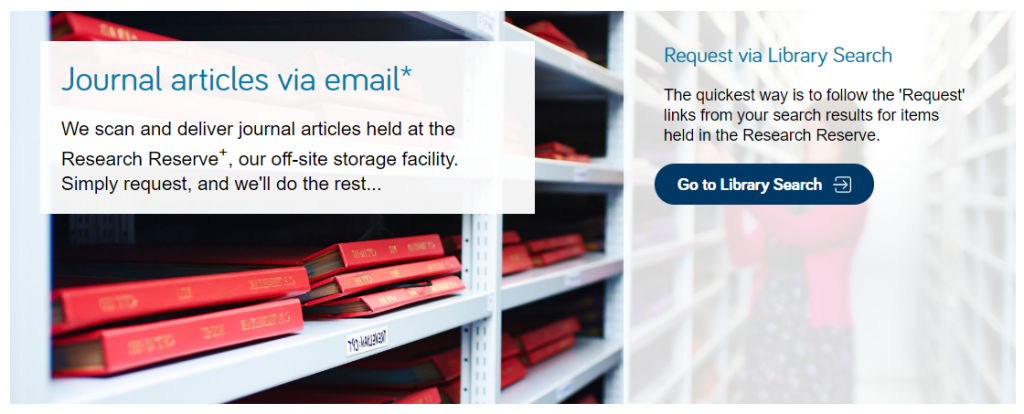
The Research Reserve is the Library’s stores, located throughout campus and including a state-of-the-art storage facility in the Team Valley. These facilities allow the Library to keep less-used material for much longer than other academic libraries. These combined storage facilities provide over 29 kilometres of storage space, which is used to house old editions of journals and books which are consulted infrequently.
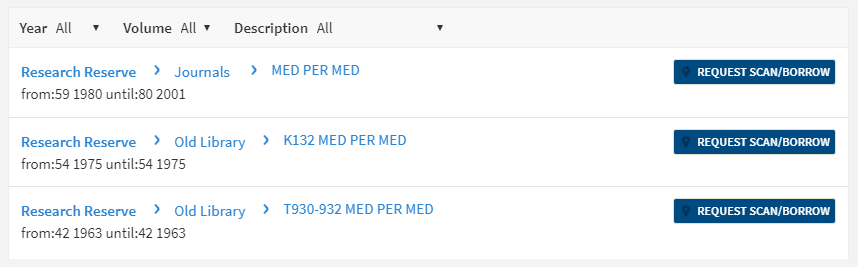
If you’d like to request items from the Research Reserve facilities, click the “Request Scan/Borrow” button once you’ve located the item on Library Search.
You can loan a variety of materials from the Research Reserve,
including: books, theses and journal volumes. These can be requested from Library
Search. Simply log
in using your campus ID, find the item you are looking for and then click
the blue “Request Scan/Borrow”
button. You’ll get a choice of pickup locations (either the Walton or Philip
Robinson libraries).
There are request forms to complete if you’d like to borrow
a thesis
or an entire volume
of a journal.
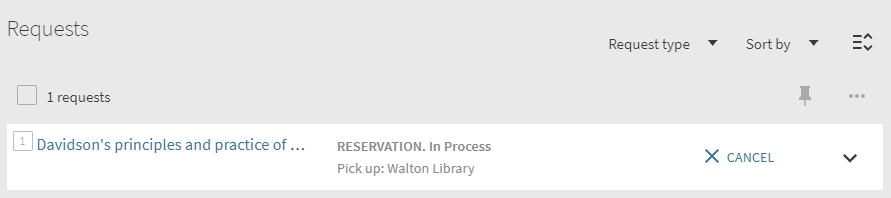
Requests can be viewed by going to “My Account” in Library Search and clicking on “My Requests” from the drop down menu. If you’d like to cancel your request, simply click the blue cancel hyperlink (as seen below). You’ll receive an email confirming your cancellation shortly afterwards.
You can cancel requests for Research Reserve items by clicking the blue ‘Cancel’ hyperlink, as shown above.
There is a collection service that runs between the Research
Reserve and the various libraries (weekdays only, not on bank holidays) and
your request will be generally be fulfilled within 24 hours. Anything requested
on a Friday or over the weekend will be delivered on the following Monday
afternoon.
Once your item has arrived at your chosen library, you’ll receive an email letting you know it’s available to loan. The item will be kept on the reservations shelves for five days before being returned to the Team Valley, or passed on to the next person in the reservation queue. Items from the Research Reserve are issued in the same way as standard long loan items, either using the self-issue machines or at the service desk. Once you’ve finished with the item, simply return it as normal.
The Desktop Delivery Service (DDS) allows you request a
scanned article from a journal held in one of the Library’s stores. Articles
can be requested via Library Search (same as a book) or by filling out the relevant request form. Please try and include
as much detail as possible on your request form. This helps Library staff
locate your article and fulfil your request quicker.
You are only able to request one scanned article per journal
issue. The scanned article will be delivered to your University email address,
where it can be downloaded and printed off. Requests are generally fulfilled
within 24 hours, although this may take longer over the weekends or on bank
holidays. You have 30 days to download your article before it is ‘archived’ and
no longer available.
We do not scan items that are available electronically or
can be borrowed.
If you have any other queries about the Desktop Delivery Service, read the FAQs.
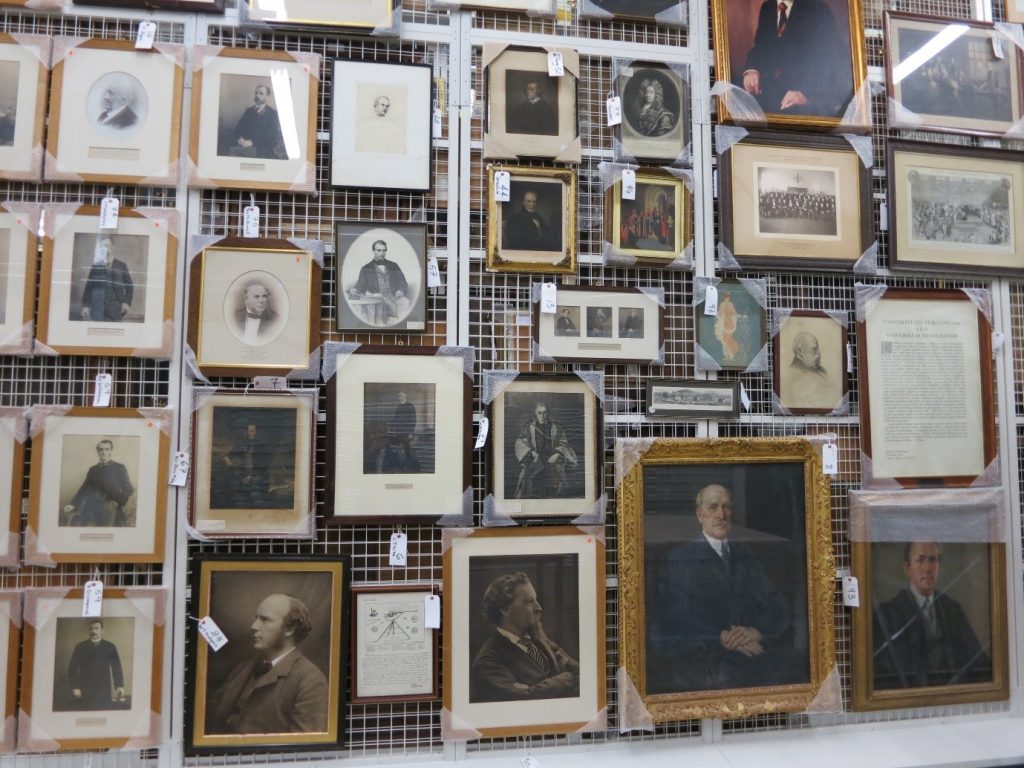
Just some of the amazing treasures held at the Research Reserve facility in the Team Valley.
You can also visit the off-campus Research Reserve facility in the Team Valley. Daily access is available by appointment only with the Research Reserve team, weekdays between 10AM and 4PM. Access outside of these hours can be organised given sufficient notice. There is a large car park available at the facility and buses stop nearby.
Full contact information, directions and opening hours for the Team Valley facility are available via the Library website.
Exams are a tricky time. Often you will be juggling different exams themselves, on top of other deadlines. However, we want you to know that you aren’t alone at this crazy time of year. We are here to help you through.
But how exactly can we help? Sadly, we can’t take go into the exam with you, or magically freeze time to give you more hours in the day, but do make the most of the following:
Library Help – the place to go when have a question via chat, email, text, twitter, Facebook. Or alternatively search our Frequently Asked Question (FAQ) database.
Librarians – yes you heard right. Book a one-to-one appointment to get the best out of the University Library resources. Also remember our staff in every library are friendly and approachable. There is no such thing as a silly question, so ask away!
Study Space– The University Library has a range of different study rooms and spaces to suit your needs.
24/7 – The Philip Robinson Library is open 24/7 during the exam period. We want you to sleep and get enough rest, but if you do need to study through the night, we are here.
Subject guides – we have a range of subject guides put together by expert librarians which draw together all the main resources for your studies.
Be well@NCL collection – we don’t just have books for study. This new collection includes tried and tested books that support your wellbeing.
A strong research project such as an essay, dissertation or thesis will always be supported by good quality information from a wide range of sources. There are a huge variety of resources available to you and being able to make appropriate choices when selecting materials to include in your project and explain why you have chosen them, is an important academic skill that demonstrates a good awareness of your subject and an ability to think critically about ideas and research.
Of course, not all information resources will be relevant to your particular research. You will have to think about the type of information you need then identify the type of resource that will provide that kind information.
For example:
Books will offer an in-depth overview of popular ideas, theories, and opinions in your subject area and are likely to be broader in scope than a journal article or conference paper.
While a conference paper will often discuss ‘work-in-progress’, and therefore can be an ideal way of finding out about up to date research and ideas.
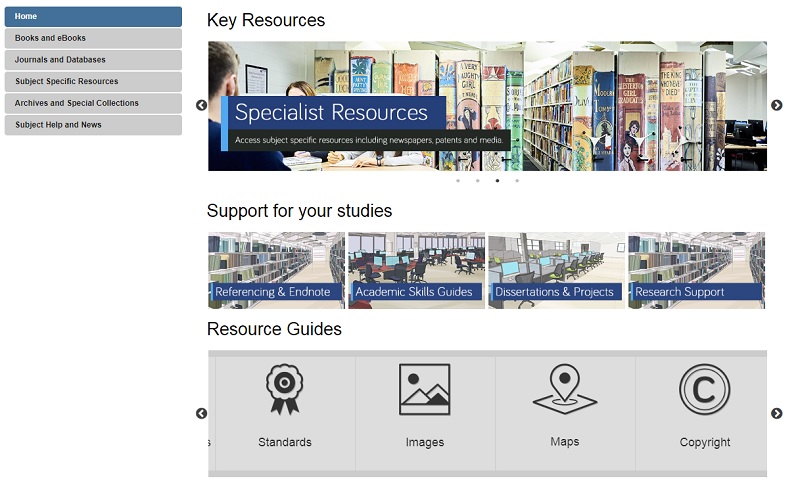
For more information on different resource types, including standards, patents, maps, newspapers and more, take a look at our range of Resource guides.
Your Subject Guide can also help you identify useful sources of information for your research as it contains a carefully curated list of resources that are tailored to your subject area. Here you’ll find useful lists of online reference books, eBook collections and recommended databases for finding relevant journal articles and conference papers. Also, under the Subject Specific Resources tab, you’ll discover a further host of specialised materials relevant to your subject such as audiovisual media, data-sets or professional organisation’s websites.
Depending on your research topic, you might also want to explore the Special Collections tab to see materials held in our Library archives that are relevant to your subject area specifically.
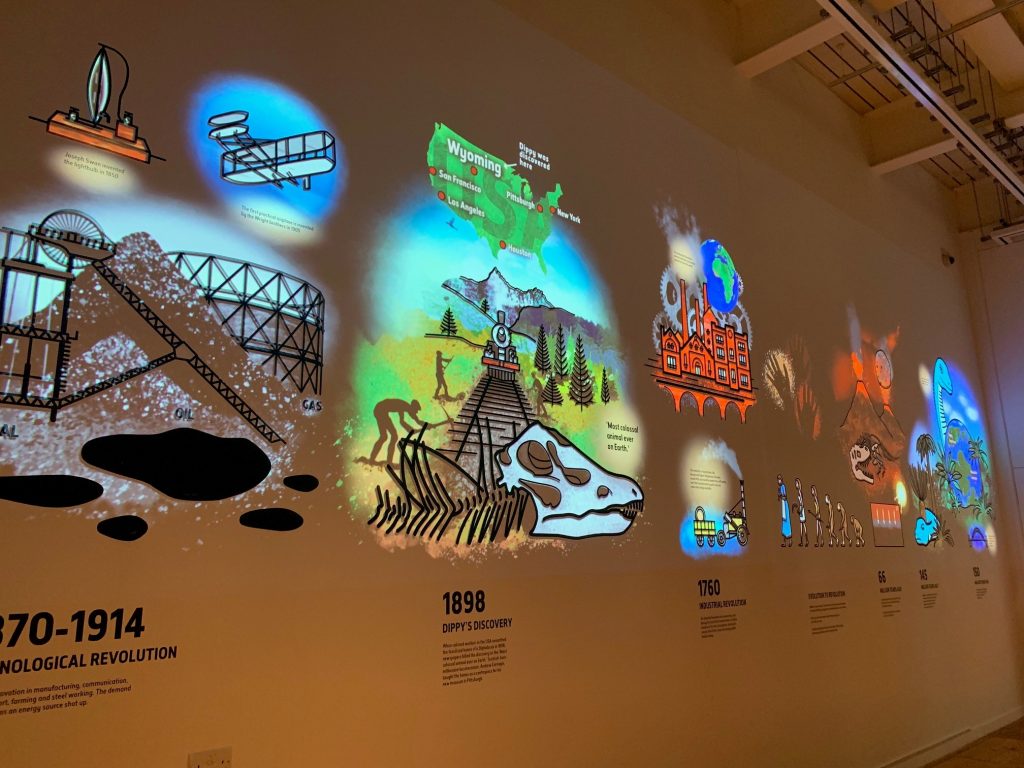
First put on display over 100 years ago, Dippy is a cast of a Diplodocus dinosaur and measures a massive 21.3 metres long – he was an incredible sight to see!
Dippy, who belongs to the Natural History museum, is currently touring the country and will be in Newcastle for this special exhibition until Sunday 6 October 2019. You can find out more about Dippy and book tickets here.
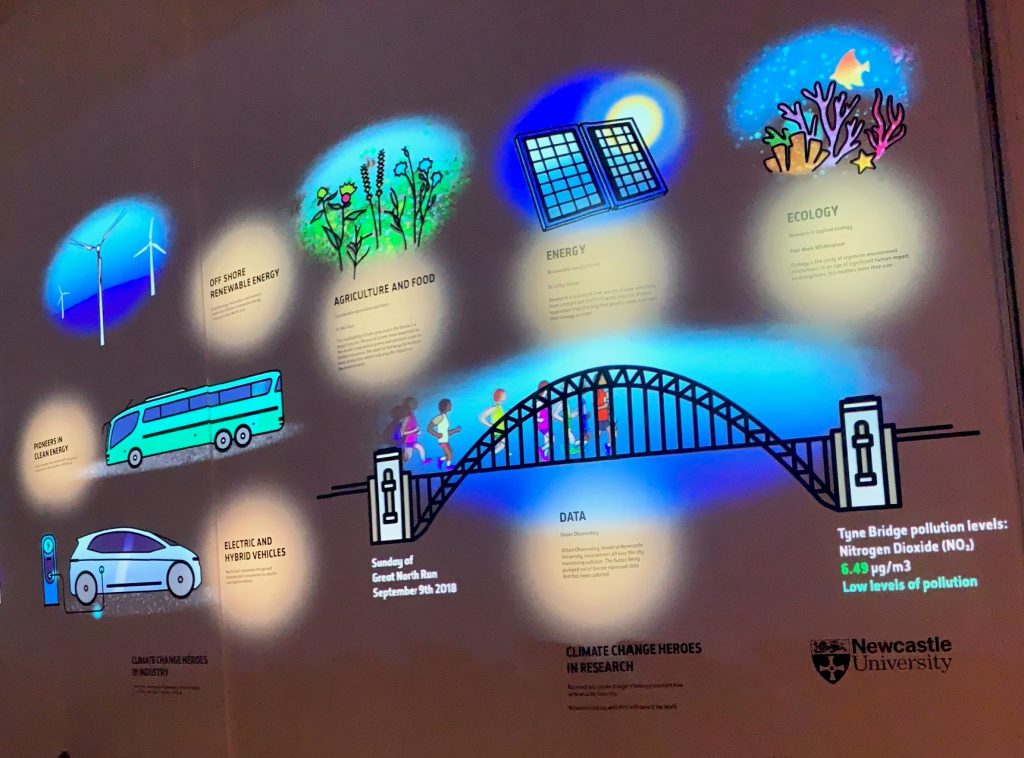
Alongside the brilliant Dippy, the exhibition at the Great North Museum also features a spectacular visual timeline that emphasises the significance of climate change. Beginning in the time of the dinosaurs and highlighting the climate change brought about by the meteor that killed the species, it continues up through the industrial revolution to the climate emergency of today.
The display spotlights academics and teams from Newcastle University who are researching important climate change related issues. You can find out more about the work of these researchers below:
Newcastle University’s Urban Observatory collects real-time urban data from across the Tyne and Wear area. With over 50 data types available, including air quality, traffic, sewage and noise levels, it provides the largest set of publicly available real time urban data in the UK.
Searching should be easy, right? We do it all the time in our day to day lives and with Google so ingrained into our existence, we don’t give it much thought. We type some words into the search engine and most of the time we find what we are looking for. Nothing to it!
However, while this approach certainly works for checking out cinema times or booking flights, it lets us down where research is concerned. We have high expectations that information will be quick and easy to come by and that it will be neatly organised in one place, rather than having to search in multiple locations, using different techniques. We imagine that the time consuming part of our research will be the analysing, synthesizing and the writing of it and we often don’t even think about the searching side of things.
The reality though is quite different. Without investing in our searching techniques and the development of a search plan, we can often find ourselves overwhelmed by information and not being able to see the wood from the trees. Our stress levels rise and our frustrations explode. Surely finding information shouldn’t be this hard!
The good news is, is that there is help to be had. Our job as Liaison Librarians is to equip you with the skills you need to create that all-important search plan and to encourage you to pause and stop before you dive straight into finding information for your research. We have a fantastic range of online tools for you to do this, not least an interactive search plannerthat you can keep adding to throughout your search and which you can even email to yourself, your supervisor, or us as a Liaison team for feedback. The Academic Skills Kit has lots of advice on how to start a search, including how to break your concept down into manageable chunks and how to identify keywords and synonyms.
You can also check out this short video to get you started…….
Keep your eyes peeled for our next blog installment of how to find particular resources. See you then!
Will you be working on a dissertation or project this summer or next year? Worried that the Library might not have access to the specialist books and other resources which you need? Wondering how you can find out about resources relating to your research topic which are held in other libraries?
Wonder no more! There are three main ways you can find and access books and other resources held elsewhere:
1. Search
You can search the catalogues of over 100 UK and Irish academic libraries, national libraries and other major research libraries via COPAC. For a more in-depth and up to date search, you can also search individual academic library catalogues online. Need to look further afield? Search library catalogues internationally via WorldCat.
2. Visit
We have more information about how you can visit other libraries, locally and nationally, here. The SCONUL Access Scheme enables students to use other academic libraries around the country, but you need to register online first (and be sure to check the access arrangements for any library you are planning to visit, as they may alter during the year).
3. Obtain
If we haven’t got the book you want, you can ask us to consider buying or borrowing it, via our Books on Time service. If you need a copy of a journal article to which we don’t have access, please apply via our inter library loan service.
Librarians have been warning people about ‘Fake News’ for many, many, many, many years – how to find and select reliable, authoritative, quality resources is at the heart of any good library teaching session. In a way we librarians have to thank Mr Trump for making Fake News a popular term; he has made everyone aware that there are fake stories out there and that there has been for centuries (see our historical time-line of Fake News).
2019 is NU Library’s third year of promoting awareness of Fake News, and by looking at the large number of visits to our Fake News Guide over these three years (4,672 visits in total), and again thanks to Mr Trump, it’s not something that’s going away anytime soon. So we Librarians will continue our quest of highlighting all information that is fake for the greater good.
Until I went to Librarian’s Fake News conference last year, I hadn’t heard of the terms ‘Filter Bubble’ and ‘Echo Chambers’ in relation to Fake News. However, once explained hopefully it will make you more aware of what information/news stories you read via the likes of Google, Facebook and Twitter, and how they could potentially be fake. So here is the low-down on what these terms mean and how you can avoid falling into their traps; we’ve also offered the alternative view that they’re a load of old nonsense so you can decide for yourselves…
What is a ‘Filter Bubble’?
A Filter Bubble is when you are in a virtual bubble on social media – you only encounter information and opinions that agree with or reinforce your own beliefs. Your ‘personalised’ online experience is the result of algorithms that work away in the background and dictate what you see/read online. Google, Facebook, Pinterest, Netflix, YouTube and many more all do this.
These Filter Bubbles in turn create Echo Chambers…
What are ‘Echo Chambers’?
When information within a closed system online is only giving you (‘echoing’) back your opinion and beliefs and establishing confirmation bias (only accepting information that confirm your own opinion and beliefs).
What are the dangers?
As much as I enjoy Facebook fuelling my love of funny dog videos by suggesting similar videos and articles, being aware of why and how Facebook is doing this helps when it comes to more serious topics such as the news, social issues and politics.
Regarding Fake News, confirmation bias is particularly worrying as you will start believing fake news stories that confirms your opinions and beliefs. I know I have done this, which is really scary to realise.
Watch this short TedTalks video from Eli Pariser on the dangers of Filter Bubbles:
You could argue that this type of ‘personalisation’ is editing the web – only showing you one half of the story. So what can you do to pop the bubble?
What can you do to stop the bubbles and echoes?
There are a few simple things you can do to stop this and open yourselves up to a wider web:
Read news sites, websites and blogs that offer a wide range of perspectives, such as the BBC.
Use Incognito browsing, delete search histories and try and resist the temptation of logging into your accounts every time you go online.
Deleting or blocking browser cookies – these cookies hold the algorithms that determine what we see.
Turn off your curated feed in Facebook.
Click ‘Like’ on everything! – This will tell the AI that you are into everything – all politics, all news etc.
Don’t clink on links, especially politics and social issues – will stop fuelling the algorithms.
Tell everyone else to turn off their curated feed!
Is it all a myth?
Below are a few articles that claim Filter Bubbles and Echo Chambers are myths and that it’s not the technology at fault, but rather the user. I’ll let you decide:
Or maybe you like being in your own little bubble? The safety and comfort in knowing what information you are going to be presented with – nothing that offends or upsets your online world. I know I will carry on being fed humorous dog videos.
There are some interesting thoughts and opinions on the Social Network Bubble – the pros and cons – on this Radio 4 programme:
Farnam Street (2017) How filter bubbles distort reality: everything you need to know. Available at: https://fs.blog/2017/07/filter-bubbles/. (Accessed: 27 March 2019).

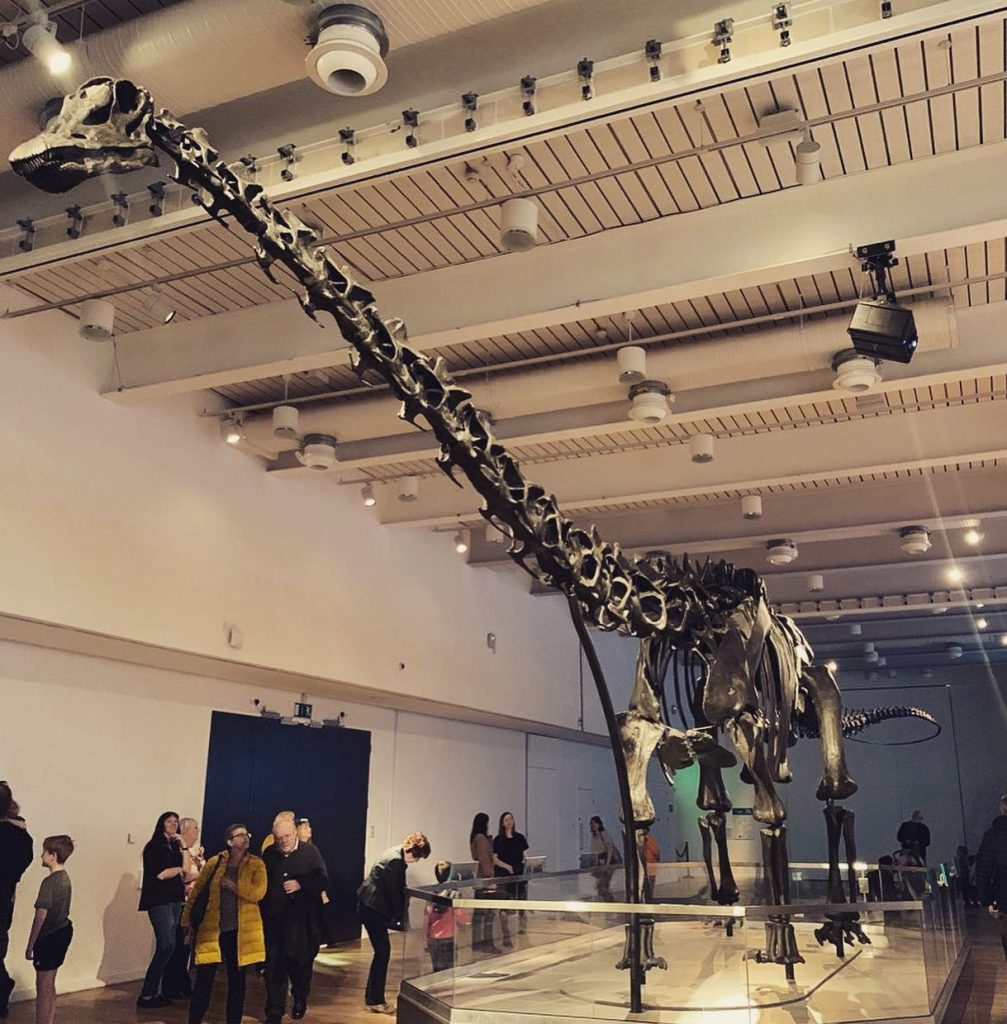 The Liaison team visited the wonderful Dippy the Dinosaur at the