Love reading? Browse through BrowZine…

Not sure which journal article you’re looking for? Do it the ‘old school’ way and browse through your favourite journals using BrowZine without having to trek to the library or newsagents to flick through the magazines.

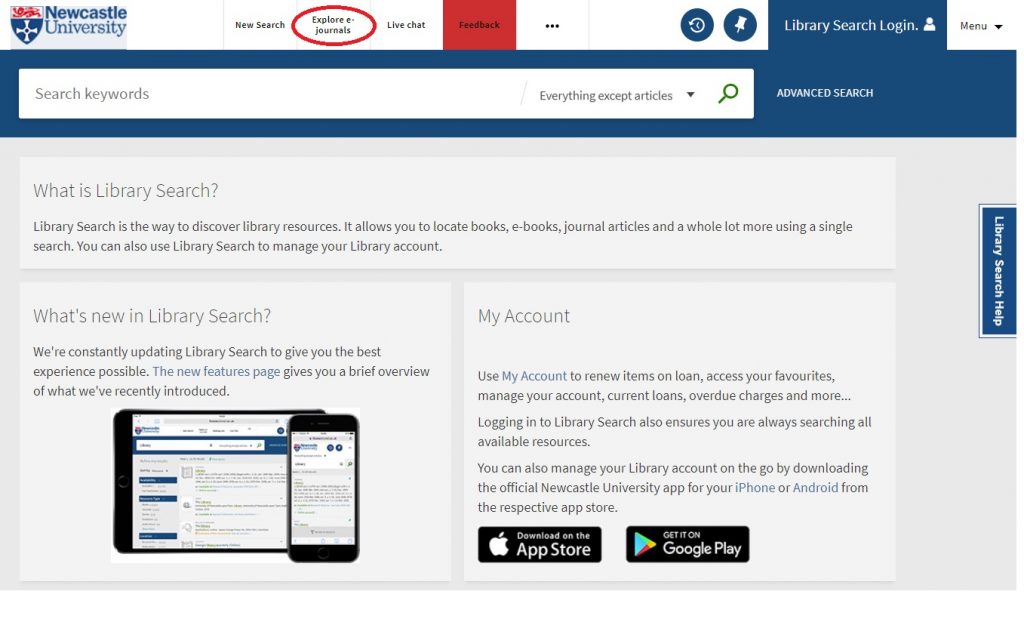
BrowZine is a publisher-neutral reading and discovery platform for eJournals. You can browse complete issues, set up a personal bookshelf of your favourite titles and receive notifications when new issues are released.

Library Search and browsing eJournals via BrowZine

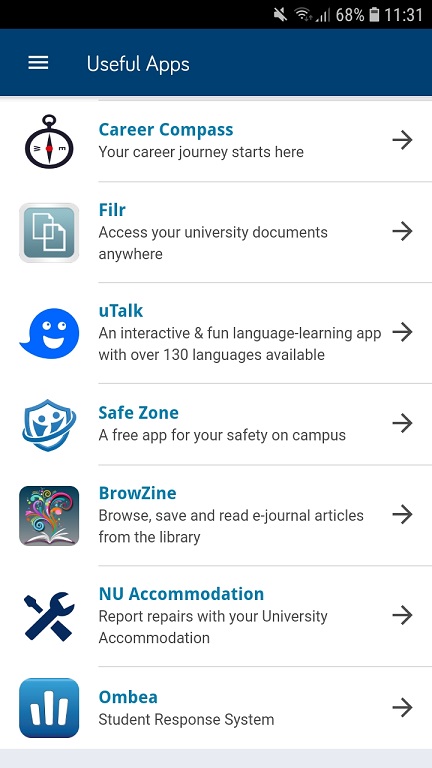
You can do this on your PC via Library Search or perhaps you prefer using your smartphone? Access BrowZine via the University App or download the BrowZine App from the Apple Store or Play Store.

Access BrowZine via the Newcastle University App

Set up your personal account using your University email address and BrowZine will always recognise you as a member of Newcastle University and give you access to the full-text articles it contains.

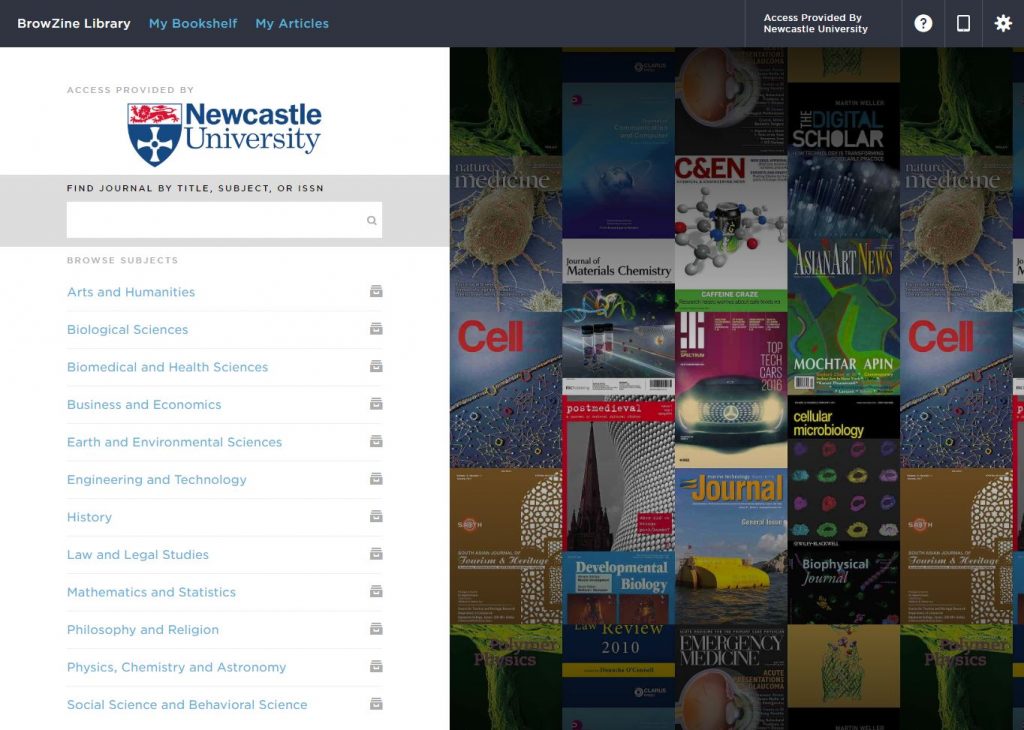
BrowZine Subject Areas

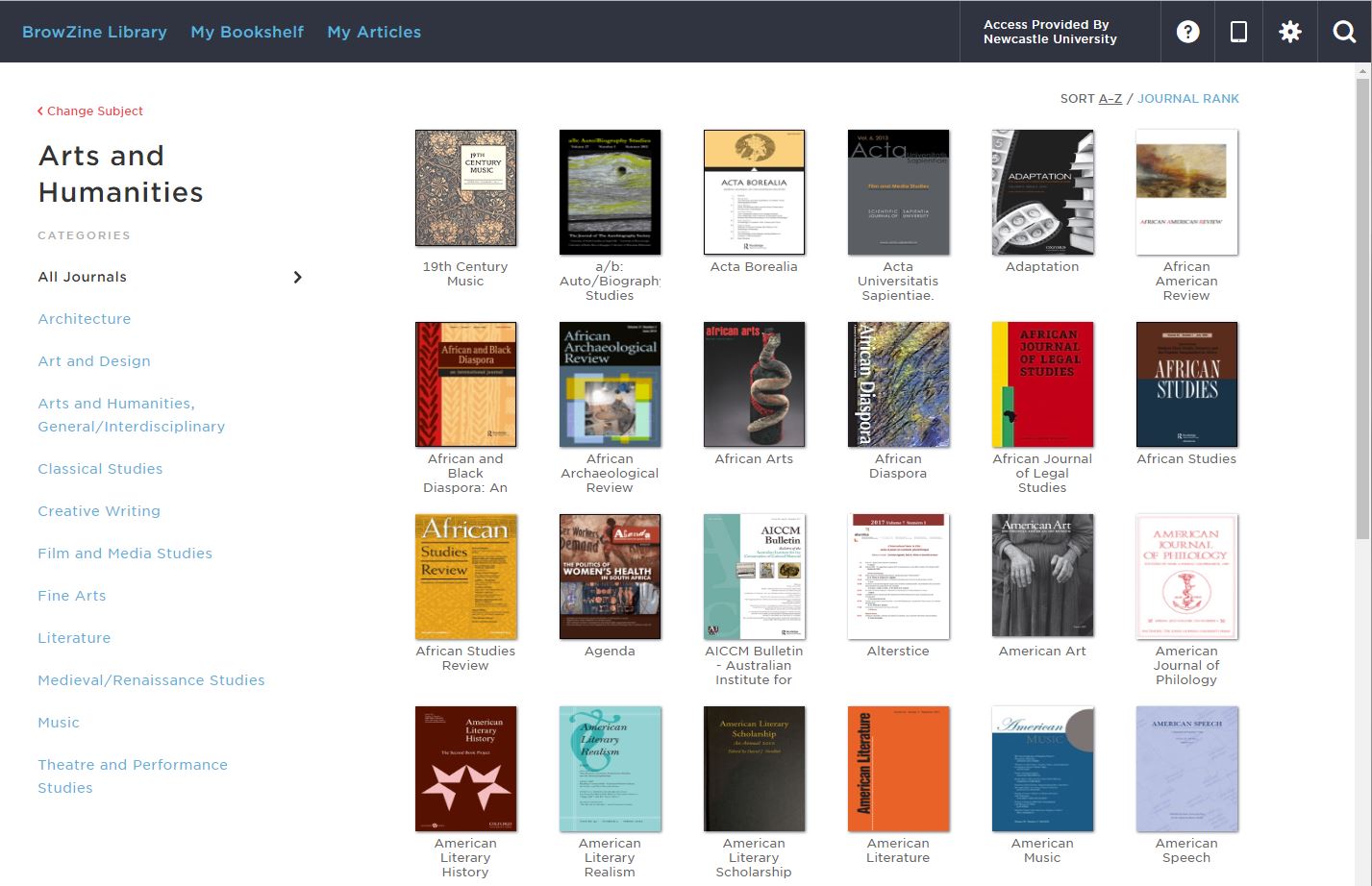
BrowZine Arts and Humanities

Get browsing!

Where could maps take you?

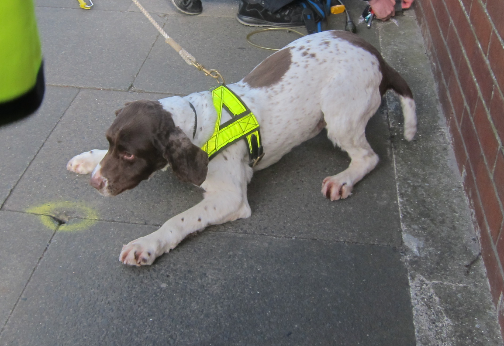
Sniffer dog in high vis detecting a gas leak

So when does an Animal Science student need to use EDINA Digimap and GIS software?  The answer is not all do, but you never know where your dissertation project may take you, and what software may help your research or your presentation or visualisation of results.

Grace’s dissertation took her to Sunderland to road test the country’s first gas sniffer dog.  Collaborating with an Earth Science student to help her use the mapping products and with training from the geosciences team in using GNSS (Global Navigation Satellite System) accurate to 2cm, she plotted the gas leaks and successful finds by her faithful four legged co-worker.  The team demonstrated that a dog’s nose is as good conventional gas detection equipment, and could be very helpful with difficult to trace gas leaks.

Sniffer dog in high vis finds gas leak
Sniffer dog, image used with permission from Dr Catherine Douglas, School of Natural and Environmental Sciences.
Digimap illustrating gas leaks detected
Map created by student using EDINA Digimap https://digimap.edina.ac.uk/ and used with permission by Dr Catherine Douglas, School of Natural and Environmental Sciences.

With many thanks to Dr Catherine Douglas, School of Natural and Environmental Sciences, for providing this content.

See what is available to you on the Maps Guide and take up opportunities to collaborate or share good practice with other disciplines. You never know where it might lead!

Please note: EDINA Digimap requires registration before use.

Are you using the best information to make your point?

With the huge volume of information available and the speed with which you can find something on just about any topic with a simple search, it can be difficult to be sure that you are using the best quality information for your task. Your tutors will often give advice such as recommending that you use academic or peer-reviewed journal articles, and it can be tempting to stick to ‘safe’ types of information such as books.

But depending on your assignment topic, you will need to explore a breadth of different information types, including many that will be online. So how do you know which ones to you?

You will need to consider many issues, including authority, accuracy, objectivity, currency and coverage within an information source. This will help you make decisions about the quality of the information, its reliability and what role it could play within your thinking.

You will evaluate information all the time without thinking about it. It doesn’t need to be a conscious or difficult task. Our Six Questions video will help give you some ideas for the types of questions to keep in mind to make your own judgement.

You may also sometimes decide to include a piece of information, even though it may not be from a credible source or its impartiality is questionable, because it illustrates the point you are trying to make. Being aware of your reservations about a reference allows you to be more confident in your judgment.

Study Well@NCL – What we’re doing in the Walton Library.

As you may have already seen Study Well@NCL advocates a responsible approach to studying and encourages positive behaviours in study spaces because we know it can be stressful especially at certain times of the year.

Extended Opening Hours

Here in the Walton Library from 7th-25th January 2019 we’ll be extending our opening hours opening from 8:30 until midnight, seven days a week. You can check our extended opening times on the library website.

Noise Alert Service

We’ll also be monitoring our Noise Alert phone very closely during this time. Wherever you are in the Walton, you can text us at 07891 484764 and we’ll investigate the source of the noise issue as soon as possible.

Housekeeping

During busy periods staff will be checking to see:

  • where seats are available.
  • that bins are emptied.
  • that bathrooms are clean.
  • that walkways are kept clear.

How you can help

  • Choose a study space suited to your preferred choice of study, we have silent, quiet and collaborative spaces to chose from.
  • Do be mindful of the food and drink policy within your chosen study area.
  • We might not always know straightaway if there’s a shortage of towels in the bathroom or if a bin in a group study room needs emptying. Just give us a quick heads up if you notice something that needs our attention and we’ll be right on it.

Looking after yourself

We encourage all Library users to take regular study breaks. Taking the time to get a drink of water or some fresh air can make all the difference to your study session.[1] However, to be fair to all Library users, we’re asking that breaks away from your study space are no more than 30 minutes.

Colour your Campus

On a much lighter note, we’ll be providing pens, pencils and special medical-themed colouring sheets for you to relax and unwind with. Studies have shown that colouring can reduce anxiety and depressive symptoms in adults.[2] So while you’re taking a study break, why not pause and Colour Your Campus? Even better, hand your completed sheet in to a member of Library staff with your name or Twitter handle on the back and we’ll enter it into a draw to win some fabulous Library prizes.

We hope that Study Well@NCL provides you with a peaceful and productive study environment and allows you to achieve maximum studying satisfaction. We welcome feedback on how we can change or improve Study Well@NCL. You can Tell Us What You Think’ online or get a form in the Walton Library.

Finally, if you’re feeling overwhelmed, please contact the University Student Wellbeing Team or NUSU Student Welfare. They’re there to help.

We wish you every success with your exams – Study well.

References

[1] Flett, J., Lie, C., Riordan, B., Thompson, L., Conner, T. and Hayne, H. (2017). Sharpen Your Pencils: Preliminary Evidence that Adult Coloring Reduces Depressive Symptoms and Anxiety. Creativity Research Journal, 29(4), pp.409-416.

[2] Selig, M. (2019). How Do Work Breaks Help Your Brain? 5 Surprising Answers. [online] Psychology Today. Available at: https://www.psychologytoday.com/gb/blog/changepower/201704/how-do-work-breaks-help-your-brain-5-surprising-answers [Accessed 2 Jan. 2019].
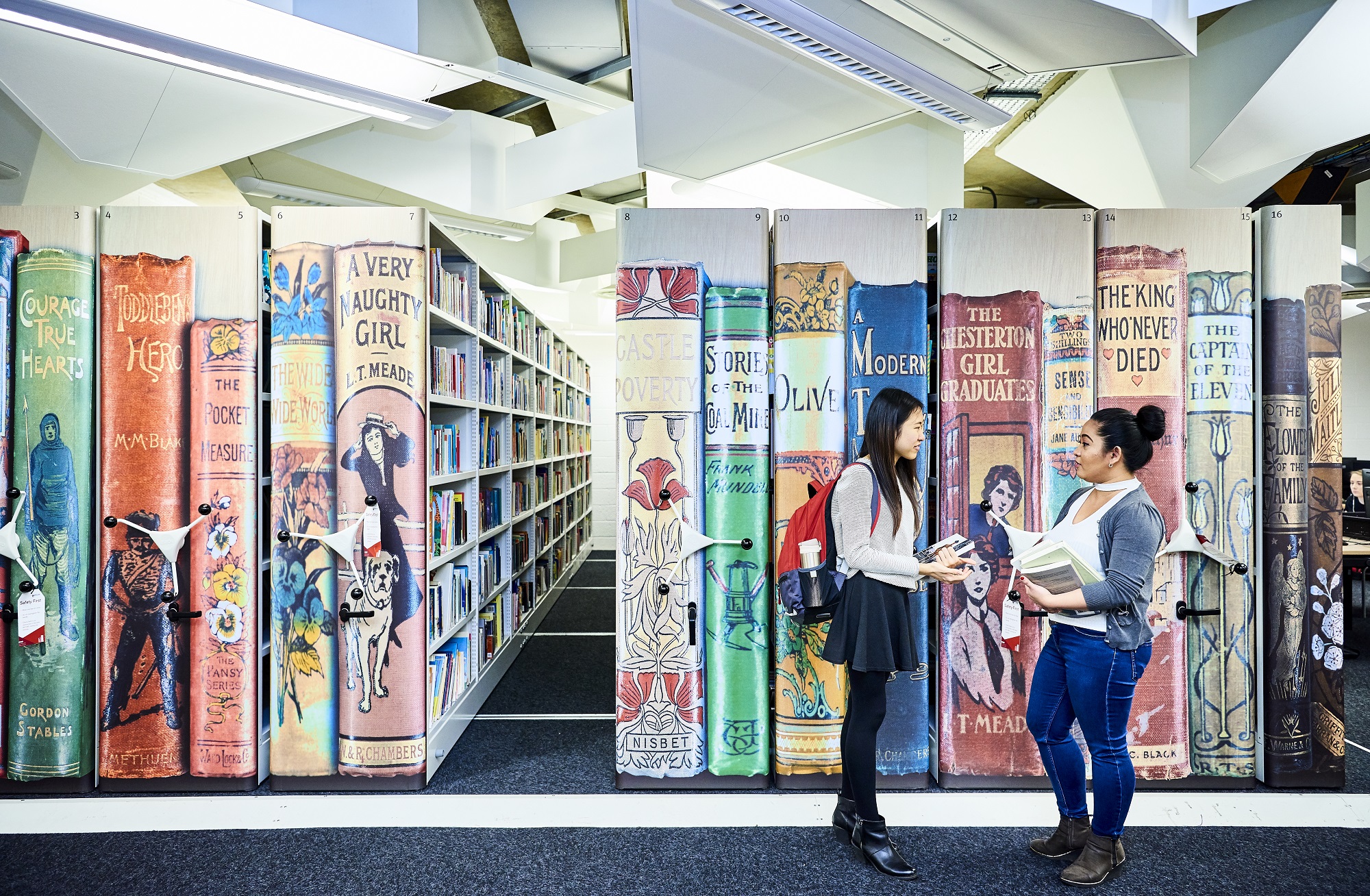


Want something different to read this Christmas? Why not take a look at our Medicine in Literature Collection.

Medical Humanities or Narrative Medicine is a popular academic discipline that explores the crossroads between medicine and the arts.

Our Medicine in Literature collection captures the complexities of what it means to be human through a wide range of literary genres.

These resources range from fiction, non-fiction including medical history, ethics and memoir, graphic novels, poetry and prose or medicine as metaphor, to films. Representations of illness, dis-ease, healing and health are interwoven themes that give voice to a diversity of perspectives and personal experiences of the human condition.

If you’re interested in exploring your subject field from a different viewpoint or simply want to broaden your reading this Christmas, dive right in! The physical stock is located in the Quiet Study area of the Walton Library or you can browse the collection from our Library Guide.

Please email any resource recommendations to lib-medlit@ncl.ac.uk.

See the Top 10 Medicine in Literature books borrowed from the collection this year.


EndNote

What is EndNote?

The official blurb on EndNote is that it is “…the industry standard software tool for publishing and managing bibliographies, citations and references.”

Have you drifted off yet? Don’t – read on!

EndNote takes a little getting used to and we recommend you familiarise yourself with it at the start of your research process. But as Library Staff, we wouldn’t spend a significant amount of time demonstrating and training our academic staff and students on what EndNote is, and how to use it, if we didn’t think it was valuable. It will save you a huge amount of time in terms of writing up your assignments.

Essentially, you can use EndNote to create and organise a personal library of resources relevant to your research. You can import references from Library Search, and a huge range of databases such as Scopus, Web of Science, IEEE Xplore and Business Source Complete. You can ask EndNote to locate the full-text PDFs of the resources you are going to use in your research, and you can annotate them as you wish too. Did you know you can instruct Google Scholar to import references into EndNote? No? Try it. Finally, if you already have materials stored in your home folder (H:\) then you can attach them to a manually-created reference within EndNote, bringing all your research together in one place.

In addition to organising your references (and this is the clever bit) you can then get EndNote to ‘talk’ to your word processing software, e.g. Microsoft Word, and insert the citations into your work for you in your chosen referencing style, e.g. Harvard at Newcastle, Vancouver, APA or MLA. If you don’t want to do that, then EndNote will also allow you to create an independent bibliography of your references, saving you an awful lot of typing.

Using EndNote

Intrigued? You should be. Take a look at our EndNote Guide. It contains all the introductory information you need, step-by-step workbooks to train yourself on the use of EndNote (the Desktop and Online versions), videos, useful FAQs, and contacts for help, should you need it.

Finally, Newcastle University provides support for EndNote but it is not compulsory to use. You may prefer Mendeley, Zotero, RefWorks or another piece of bibliographic management software. That’s fine, whatever makes your referencing lives easier. Go on, give them a try.

When is a website not a website?

A common mistake made in referencing is grouping all sources found online under the category and reference type of a website. Your aim should be to reference the information you have in front of you rather than where it was sourced. Simply grouping items found online as a website would be the equivalent of referencing a book by the publisher details rather than the author and title.

For example, a government publication found online would be referenced like this in Chicago.

United Kingdom. Department for Education. Cloud computing: how schools can move services to the cloud. London: The Stationary Office, 2016. Accessed: February 01, 2018. https://www.gov.uk/government/publications/cloud-computing-how-schools-can-move-services-to-the-cloud. 

An electronic journal article might appear like this in APA.

Gillum, J. (2012). Dyscalculia: Issues for practice in education psychology.  Educational Psychology in Practice, 28(3), 287-297. doi:10.1080/02667363.2012.684344

While a video posted on the Tate website would look something like this in Harvard.

TateShots (2016) Grayson Perry: think like an artist. Available at: http://www.tate.org.uk/context-comment/video/grayson-perry-think-artist-tateshots (Accessed: 27 November 2018). 

Identifying the type of information you are using as well as the source, are essential skills of evaluation and developing a critical approach to information. In many cases, you will be unconsciously using your judgment to assess the value of information for your purpose. So when you are using any source of information, ask yourself what it is you are looking at, what details are recorded about it, and whether it measures up as a quality piece of information.

To google or not to google?…That is the question

Can you remember life before Google? It is such a huge part of our lives that even those of us who can remember a time before it (hmmm, yes I am that old!) can’t imagine life without it now. It is a great place to find the latest cinema listings or who won last night’s football match, but what about finding information for your latest assignment or research?

There is a time and a place to use Google, but you need to be aware of its limitations. Google, after all, is a business. It earns the majority of its money from advertising, and it will not reveal how it ranks its search results (every wonder how Wikipedia always appears at the top of every search you do?). A search that we do today and repeat tomorrow for a piece of research could give us hugely different results, with no explanation of why. We are also often bombarded with millions of search results and the reality of our searching habits mean that we rarely look beyond the first or second page.  Admittedly, advanced search features on Google and the use of Google Scholar can really help us to become a smarter and effective Google users, but is it enough for our own research? Are we finding everything that is out there?

We need to think about our information needs before we work out where it will be best for us to search. Imagine, for a moment, that we are want to buy a particular local cheese, which we love. Would we go to a general shop or would we go to a specialist deli? We are probably going to need to go to a deli. It is just the same when searching for information. Google may be great for some background information or a starting point of a project, but it may simply not give us the high quality, niche information that we need to give us top marks for an assignment. So what are the other options?

Aimee Cook, a Liaison Librarian here at Newcastle University, explains more.

So next time you think about googling something for an assignment, stop and check out Library Search and your subject guide first for the books, eBooks and specialist databases that are available to you. If you are going to use Google, make use of the advanced search features and get to grips with Google Scholar. Happy searching!

Photo by Emily Morter on Unsplash

Doing your Literature Review

Struggling with your Literature Review?  Can’t see the wood for the trees?

We have lots of resources that can help you find the references you need:

  • Watch this video for an overview on literature reviews.
  • York University’s video on Creating a Search Strategy will introduce to the process of breaking down your research question.
  • Don’t forget as you go along you need to be managing your references so you can easily come back to them when you start writing.
  • EndNote  is a piece of software that will help you do this.
  • Remember you must give credit where it is due.  Don’t forget to Reference correctly!

New resources: Medical Sciences

We have been busy buying new journal titles and some backfiles for the Medical Sciences. These backfiles mean we now own the electronic content outright, in perpetuity, so have access to the full text of the journal articles.  Dive in and discover:


JOURNALS – NEW LANCET TITLES

Lancet Gastroenterology & Hepatology

Lancet Diabetes & Endocrinology

Lancet Psychiatry


JOURNALS – BACKFILES

Angiology v.1-49 (1950-1998)

Caries Research v.1-31 (1967-2008)

Diabetologia v.1-39 (1965-1996)

Journal of Dental Research v.1-77 (1919-1998)

Journal of Neurochemistry v.1-67 (1956-1996)

To save you logging in to each individual resource you can access them via the RAS (Remote Application Service).


PRINT BOOKS – NEW EDITIONS

During the summer we have also been checking the whole of the Walton Library print stock for new editions and ordering when we find them.  Use Library Search to find out what is available.


E-BOOKS

We have renewed our subscription to Springer Link books which covers eBooks in many different disciplines including Biomedicine, Dentistry, Life Sciences, Medicine & Public health, Psychology, Social Sciences.

Biomedical and Life Science 2018

The following eBook collections have been purchased outright:

  • Biomedical and Life Science 2018
  • Computer Science 2018
  • Earth and Environmental Science 2018
  • Engineering 2018
  • Medicine 2018
  • Social Sciences 2018