Future proofing your employability

“What would you guess is the most common job?” Michael Lai, Outreach Lead at KGI, asked an audience of students at his Columbia Heights TEDTalk back in 2016. His audience members offer a few suggestions. “Engineer?” “Fast food workers?”  After several failed attempts, Michael puts them out of their misery,

“3.5 billion truck drivers in the United’s States” he tells them. “Experts predict that in the next 12-15 years, most of the cars on America’s highways will be self-driving… so what’s going to happen to the most common job?”

The future of the job market – and it’s inherent uncertainty – has been receiving a lot of attention in the international press in recent years, with Universities UK analysis predicting “65% of children entering primary schools today will work in jobs and functions that don’t currently exist.”  In previous generations, new graduates could expect to work with the same company for several years, steadily climbing the corporate ladder in a predictable, but reassuring linear way. In the 21st century however, the face of the job market is changing, and once you graduate, you may find yourself looking at a “portfolio career” over traditional career progression – something Facebook COO Sheryl Sandberg described as more akin to a career “jungle gym” than a career ladder.

But what does all this talk of truck-driving and emergent markets mean for you, the UK Graduate? Well, if the gig economy becomes the norm in the next 10 years, one of the key challenges for new graduates will be the perpetual need to upskill yourself, and market your own skill base to different employers. This puts the spotlight on what have traditionally been referred to as “soft” transferable skills that are required across many different roles and sectors – skills such as resilience, team-working and critical thinking. Here at the Library, we’d argue that information and digital literacy falls under this bracket (well of course we would, we’re librarians!). The ability to find and use information and make considered use of digital tools is an important capability in any graduate job. Don’t just take our word for it – we spoke to several students returning from placement who told us their information skills had helped them get ahead.

The good news though is that your degree programme offers you the chance to work on and demonstrate all of these skills. Employers will know that you may not have extensive work experience as a new graduate, but make sure you cherry-pick prime examples from your University work, part –time jobs and any voluntary experience to exemplify the skills employers are looking for (and remember, the Careers service can help you with interview preparation.) Make the most of the workshops and sessions open to during your time at University so you are in a great position to articulate these important skills. For more information on how the Library can help, check out our Employability Guide

References

  1. TEDx Talks (2016) Four Key Skills to Lead the Future. Available at: https://www.youtube.com/watch?v=djHTcES2ATg
  2. Universities UK (2018) Solving future skills challenges. 6th August 2018. Available at: https://www.universitiesuk.ac.uk/policy-and-analysis/reports/Documents/2018/solving-future-skills-challenges.pdf
  3. Sandberg, S as quoted by Lebowitz, S and Campbell, D (2019) “Goldman Sachs CEO David Solomon shares his number one piece of advice for millennials who want to get ahead in their careers.” Business insider, Jan 13th 2019. Available at:  https://www.businessinsider.com/career-advice-millennials-goldman-sachs-ceo-david-solomon-2019-1?r=US&IR=T

Shades of Grey [Literature]

Grey literature. Black Literature.

Did you even know they existed? Possibly not.

Depending upon your source, “black literature” can be defined as books and peer-reviewed published journals. This is the familiar material you will source and use through your University Library and its catalogue.

Grey literature is something else entirely. Grey literature is research or material that is not produced by commercial publishers. It may be wholly unpublished or published in a non-commercial form. Think along the lines of industry-related materials, academic publications, government publications and think tank papers.

GreyNet, the Grey Literature Network Service has more detailed information on this vital research resource.

Grey Literature can be unique and an important source of information. There is a range of grey literature you may need to consult to ensure your research is complete. Examples of these materials include:

  • Working papers
  • Conference proceedings
  • Theses and dissertations
  • Government and official publications, including Green and White Papers, Select Committee papers, legislation
  • Policy statements
  • Research reports
  • Newsletters
  • Fact sheets
  • Blogs
  • Transcripts
  • Pre-prints and post-prints of articles
  • Technical reports
  • Professional guidelines
  • Patents
  • Standards
  • Market research
  • Data, e.g. Census, economic data, statistics

Most databases, available via your Subject Guide, will allow you to limit your search by document type, including grey literature, which does improve accessibility to this type of material.

Other resources include:

  • Bielefeld Academic Search Engine

    Operated by Bielefeld University Library this search engine indexes open access academic literature. The Advanced Search option allows you to search for specific types of grey literature.
  • Box of Broadcasts

    Box of Broadcasts provides access to over two million programmes from over 65 TV and radio channels, including most of the UK’s freeview network, all BBC TV and radio content from 2007, and several foreign language channels. You can view archived programmes, record new ones, create clips and playlists and see transcripts. (This resource is not available outside the UK.)
  • Digital Education Resource Archive (DERA)

    The Institute of Education Digital Education (University of London) Resource Archive (DERA) is a digital archive of all documents published electronically by government and related bodies in the area of education.
  • Open Grey

    The System for Information on Grey Literature in Europe provides open access to over 700,000 bibliographical references.
  • Teachers TV from Education in Video

    Provides access to all 3,530 globally-acclaimed instructional videos produced in 2008 by the United Kingdom’s Department of Education to train and develop teachers’ skills through demonstrations and commentary by teachers, administrators, and other educational experts.
  • Newcastle University Theses and Dissertations Guide

    Newcastle University theses are available in the eTheses Repository. Other UK theses may be available via EThOS. There is not one single source for locating non-UK theses. The Guide will give you some starting points.
  • UK Legislation

    UK Legislation is freely available online but be aware there may be delays of up to 2 weeks before any updates appear. Use your subscribed databases available via the Law Subject Guide.

The list can go on…

Once you have located your grey literature, do question it using the CRAAP testcurrency, relevance, authority, accuracy, purpose. Consider what is publicly available versus a subscribed (or paid for) resource. It may be biased and you should include that assessment in your work.

And finally, don’t forget, not everything is available online!

Love reading? Browse through BrowZine…

Not sure which journal article you’re looking for? Do it the ‘old school’ way and browse through your favourite journals using BrowZine without having to trek to the library or newsagents to flick through the magazines.

BrowZine is a publisher-neutral reading and discovery platform for eJournals. You can browse complete issues, set up a personal bookshelf of your favourite titles and receive notifications when new issues are released.

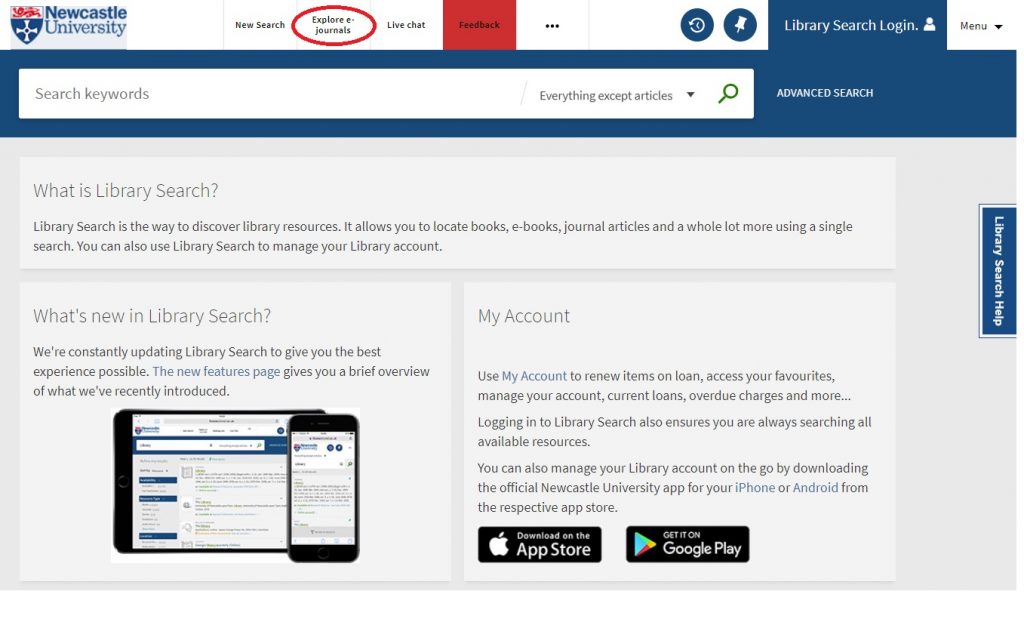
Library Search and browsing eJournals via BrowZine

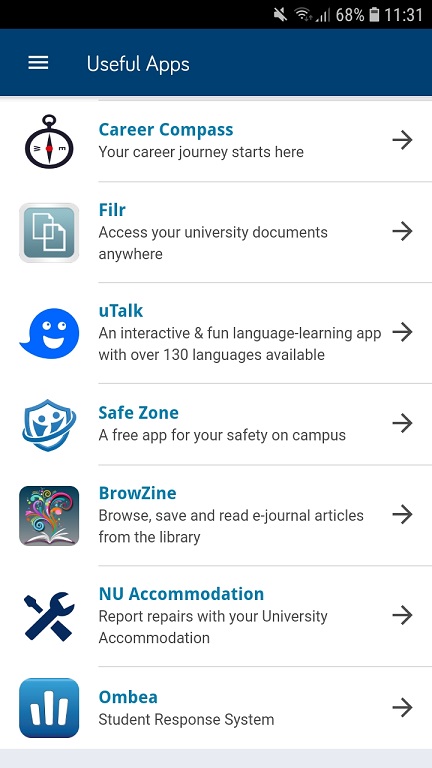
You can do this on your PC via Library Search or perhaps you prefer using your smartphone? Access BrowZine via the University App or download the BrowZine App from the Apple Store or Play Store.

Access BrowZine via the Newcastle University App

Set up your personal account using your University email address and BrowZine will always recognise you as a member of Newcastle University and give you access to the full-text articles it contains.

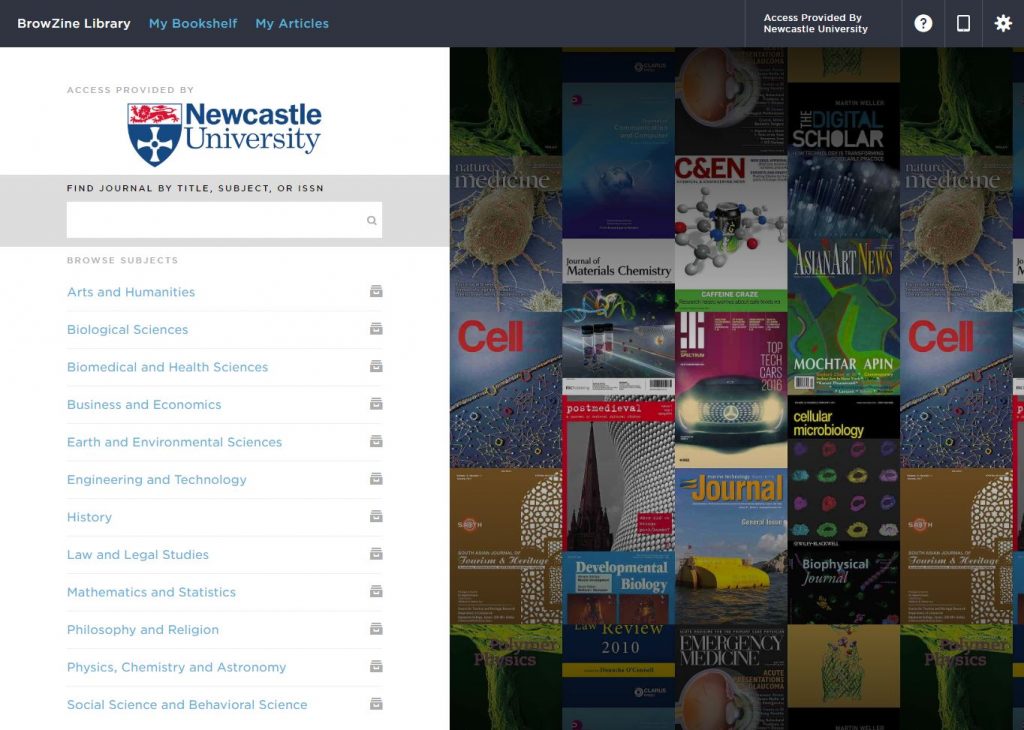
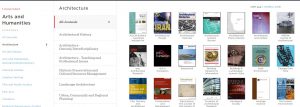
BrowZine Subject Areas

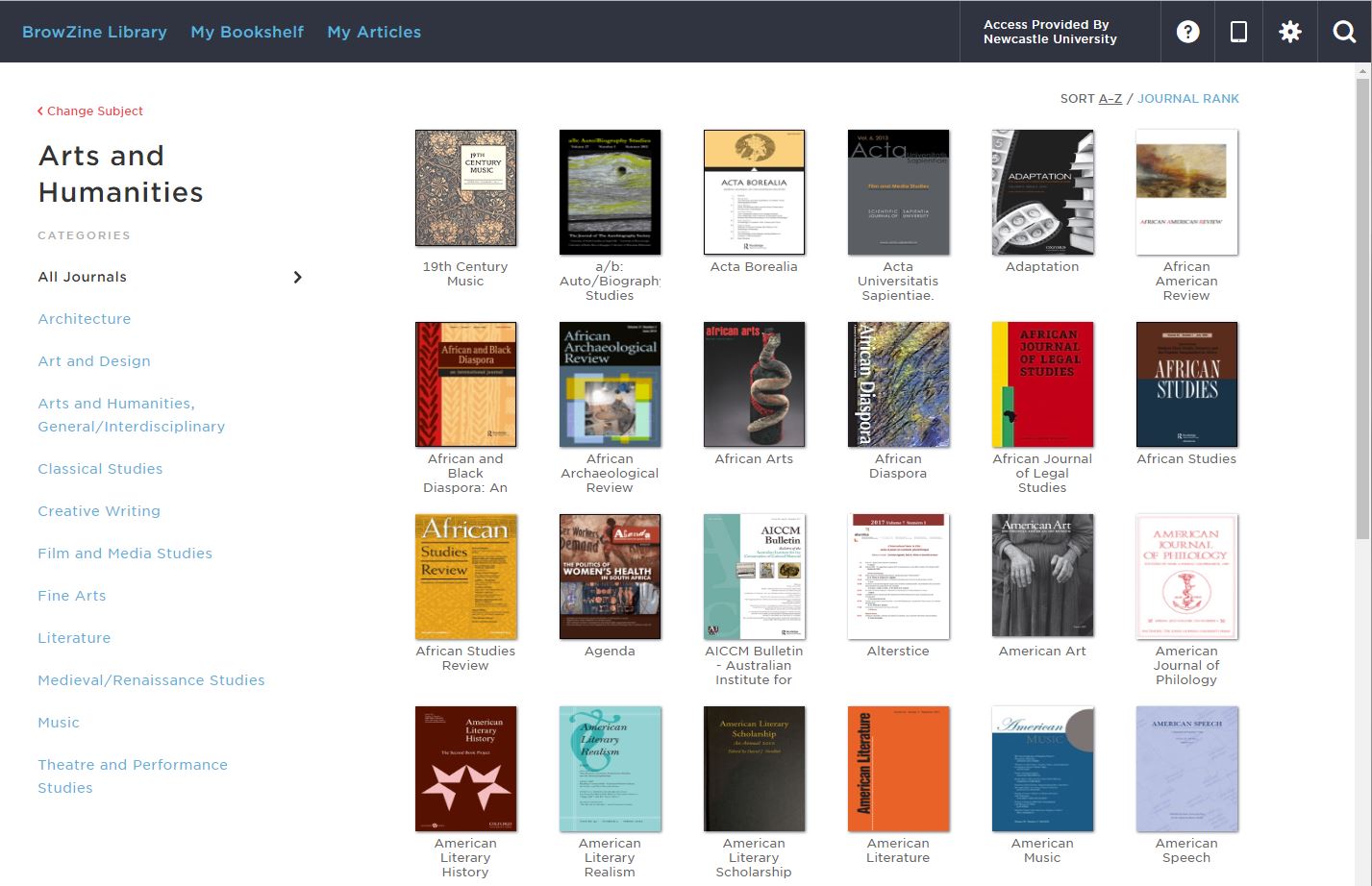
BrowZine Arts and Humanities

Get browsing!

Finding Architecture and Planning journals

How do you access your journals and magazines?  There are a number of options.

  1. If you know the title you can do a keyword search in Library Search.
  2. Your subject guide is a ‘one stop shop’ for all resources and includes a tab to link to core journals,  journal collections and magazines such as those in Art and Architecture Archive and the Avery Index.  You can also view the list of print journals and magazines that we have in the Library.
  3. If you like to browse individual Architecture or Planning journals, then take a look at Browzine.

Books added to the Library by students in SAPL (Semester One 2018/19)

We have a service called “Books on Time” for students. This allows you to tell us about the books you need for your studies. If we don’t have the books you need, simply complete the web form and we’ll see if we can buy them. For books we already have in stock, if they are out on loan please make a reservation/hold request using Library Search.

Further information about Books on Time

In Semester one, academic year 2018/2019 we bought the following items after requests from students in SAPL.

There were 83 requests from 49 students totaling £4776.41 (22% of requests from undergraduates, 31% from Postgraduate taught and 47% from Postgraduate Research)


Title Now in stock
A City is Not a Tree 1xlong
A Greedy Man in a Hungry World 1xlong
A History of Great Yarmouth 1xlong
A Vision of a Living World: The Nature of Order, Book 3 1xlong
Architect in Practice 16xlong, 1xebook
Architecture and Capitalism : 1845 to the Present 1xlong, 1xebook
Architecture as a Craft : Architecture, Drawing, Model and Position 1xlong
Architecture as Experience: Radical Change in Spatial Practice 2xlong
Bananas Reconstructed: Architecture and Sacred Space 1xebook
Building Performance Analysis 1xlong
Century of Fishing: Fishing from Great Yarmouth and Lowestoft, 1899-1999 1xlong
China Development and Governance 1xebook
Cinemetrics : Architectural Drawing Today 1xlong
Cobe – Our Urban Living Room 1xlong
Colour Strategies in Architecture 1xlong
Computing the Environment: Digital Design Tools for Simulation and Visualisation of Sustainable Architecture 1xlong
Critical Companion to Tennessee Williams 1xlong
Culture and customs of Saudi Arabia 1xlong
Cycle Space, Architecture and Urban Design in the Age of the Bicycle 1xlong
Dreamscapes of Modernity: Sociotechnical Imaginaries and the Fabrication of Power 1xlong
Eat, Memory: Great Writers at the Table: A Collection of Essays from the New York Times 1xlong
Experimental Preservation 1xlong
Exploring the Use and Impact of Travel Guidebooks 1xlong
Fiction as Method 1xlong
Fish and Chips: A History 1xlong
Future Matters: Action, Knowledge, Ethics 1xlong
Governing Shale Gas: Development, Citizen Participation and Decision Making in the US, Canada, Australia and Europe 1xlong
Handbook on green infrastructure planning design and implementation 1xlong
Holloway Prison : An Inside Story 1xlong
Horse People: Thoroughbred Culture in Lexington and Newmarket 1xebook
Housing Design for an Increasing Older Population 1xebook
Imagined Futures in Science, Technology and Society 1xlong
In the nature of landscape 1xlong
Indispensable Eyesores: An Anthropology of Undesired Buildings 1xebook
Infrastructures in Practice 1xebook
Interrogating Ellie 1xlong
Introducing the Sociology of Food and Eating 1xlong
Invitation to the Life Course: Towards New Understandings of Later Life 1xlong
Lives in Time and Place: The Problems and Promises of Developmental Science. 1xlong
London’s Turning: Thames Gateway-Prospects and Legacy 1xlong
Making and Growing: Anthropological Studies of Organisms and Artefacts 1xlong
Manhattan Transcripts 1xlong
Marcel Breuer: a Memoir 1xlong
Maritime Norfolk: Part Two 1xlong
New Monte Rosa Hut SAC Self-Sufficient Building in High Alps 2xlong
Nonlinear Time Series Analysis 1xlong
North Norfolk Coast 1xlong
Original Rockers 1xlong
Otto Wagner: Die Wiener Stadtbahn 1xlong
Palaces for the People: How to Build a More Equal and United Society 1xlong
Placemaking with children and Youth Participatory Practices for Planning Sustainable Communities 1xlong
Planetary Gentrification 1xlong
Prosthesis 1xlong
Reconceptualising Agency and Childhood: New perspectives in Childhood Studies 1xebook
Relational Architectural Ecologies 2xlong
Rethinking Vienna 1900 3xlong, 1xebook
Revisiting Divisions of Labour 1xlong
Roads Were Not Built for Cars: How Cyclists Were the First to Push for Good Roads & Became the Pioneers of Motoring 1xlong
Robot Ethics 2.0: From Autonomous Cars to Artificial Intelligence 1xlong
Small Towns, Austere Times: The Dialects of Deracinated Localism 1xlong
Space and the Memories of Violence: Landscapes of Erasure, Disappearance and Exception 1xlong
The Architecture of Psychoanalysis: Space of Transition 1xlong
The Architectures of Childhood: Children, Modern Architecture and Reconstruction in Post-war England 1xebook
The Culture of AI: Everyday Life and the Digital Revolution 1xlong
The Design of Childhood: How the Material World Shapes Independent Kids 1xlong
The Ethics of Invention 1xlong
The Evocative Object World 1xlong, 1xebook
The Flak Towers in Berlin, Hamburg and Vienna 1940 – 1950 1xlong
The Great Museum 1xlong
The Luminous Ground: The Nature of Order, Book 4 1xlong
The New Black Middle Class in South Africa 1xlong
The Phenomenon of Life 1xlong
The Process of Creating Life: The Nature of Order, Book 2 1xlong
The Setting of the Pearl: Vienna under Hitler 1xlong
The Structure of Light : Richard Kelly and the Illumination of Modern Architecture 1xlong
The Urban Design Reader 1xlong, 1xstc, 1xebook
The Works: Anatomy of a City 1xlong
Toward an Urban Ecology 1xlong
Urban Disaster Resilience: New Dimensions from International Practice in the Built Environment 1xebook
What Are Community Studies? 1xlong
What is the future? 1xlong
XML : Parliament 1xlong
Young people, Class and Place 1xlong


Where could maps take you?

Sniffer dog in high vis detecting a gas leak

So when does an Animal Science student need to use EDINA Digimap and GIS software?  The answer is not all do, but you never know where your dissertation project may take you, and what software may help your research or your presentation or visualisation of results.

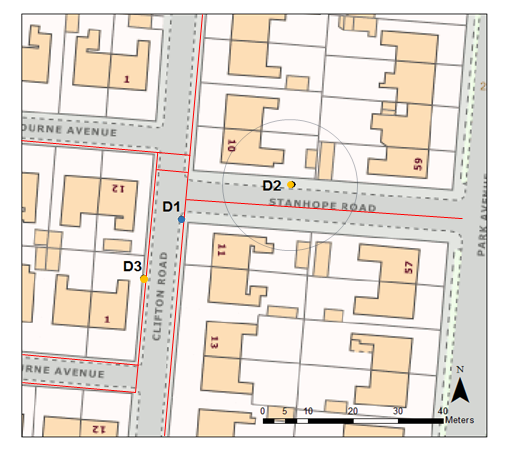
Grace’s dissertation took her to Sunderland to road test the country’s first gas sniffer dog.  Collaborating with an Earth Science student to help her use the mapping products and with training from the geosciences team in using GNSS (Global Navigation Satellite System) accurate to 2cm, she plotted the gas leaks and successful finds by her faithful four legged co-worker.  The team demonstrated that a dog’s nose is as good conventional gas detection equipment, and could be very helpful with difficult to trace gas leaks.

Sniffer dog in high vis finds gas leak
Sniffer dog, image used with permission from Dr Catherine Douglas, School of Natural and Environmental Sciences.
Digimap illustrating gas leaks detected
Map created by student using EDINA Digimap https://digimap.edina.ac.uk/ and used with permission by Dr Catherine Douglas, School of Natural and Environmental Sciences.

With many thanks to Dr Catherine Douglas, School of Natural and Environmental Sciences, for providing this content.

See what is available to you on the Maps Guide and take up opportunities to collaborate or share good practice with other disciplines. You never know where it might lead!

Please note: EDINA Digimap requires registration before use.

Government Publications: Questions in the House!

GOVERNMENT PUBLICATIONS

Surely all MPs are giving us the correct facts?

Take a look at our links to resources for Legislation, Statistics and Official Publications to make sure!

Government publications provide primary information in a variety of subjects. Statistics, White Papers, Parliamentary Bills and a whole range of Official Legislation.

These are a good reliable source of accurate statistics, and can give support to your argument in essay topics across all subjects.

Many government publications are now available online; our Library Guide highlights the useful websites.

Interested in Student Loans or the legal details of part time Employment Contracts?

Details of all UK legal processes can be found at the government website Gov.uk which provides lots of useful information about government services, with an A-Z of departments, agencies and local councils.

Meaningful Vote mean anything to you?

Keep up with the debate and Prime Ministers Questions at this website.

Follow the government shenanigans as it happens!

Democracy Live is the BBC’s new website which offers live and on demand video coverage of the UK’s national political institutions and the European Parliament.

Who stole 40 llbs of butter from Mr Wadsworths wagon in 1778?

You can find out here in The Proceedings of Old Bailey which contains accounts of over 100,000 criminal trial held at London’s criminal court.

So, for more information about finding your way around all aspects of Government Publications please take a look at our helpful video.

Are you using the best information to make your point?

With the huge volume of information available and the speed with which you can find something on just about any topic with a simple search, it can be difficult to be sure that you are using the best quality information for your task. Your tutors will often give advice such as recommending that you use academic or peer-reviewed journal articles, and it can be tempting to stick to ‘safe’ types of information such as books.

But depending on your assignment topic, you will need to explore a breadth of different information types, including many that will be online. So how do you know which ones to you?

You will need to consider many issues, including authority, accuracy, objectivity, currency and coverage within an information source. This will help you make decisions about the quality of the information, its reliability and what role it could play within your thinking.

You will evaluate information all the time without thinking about it. It doesn’t need to be a conscious or difficult task. Our Six Questions video will help give you some ideas for the types of questions to keep in mind to make your own judgement.

You may also sometimes decide to include a piece of information, even though it may not be from a credible source or its impartiality is questionable, because it illustrates the point you are trying to make. Being aware of your reservations about a reference allows you to be more confident in your judgment.

New resource: Westlaw All Books

We’re pleased to announce that following a successful recent trial, we have now bought access to Westlaw All Books.

This upgrade gives us access to an extra 250 law reference works online, covering over 50 areas of law, including 71 loose-leaf titles. No more worrying about whether the book is on the shelf or not: the information is always at your fingertips!

The new titles are likely to be of interest to students in business, accounting and finance, planning, and engineering, as well as law.

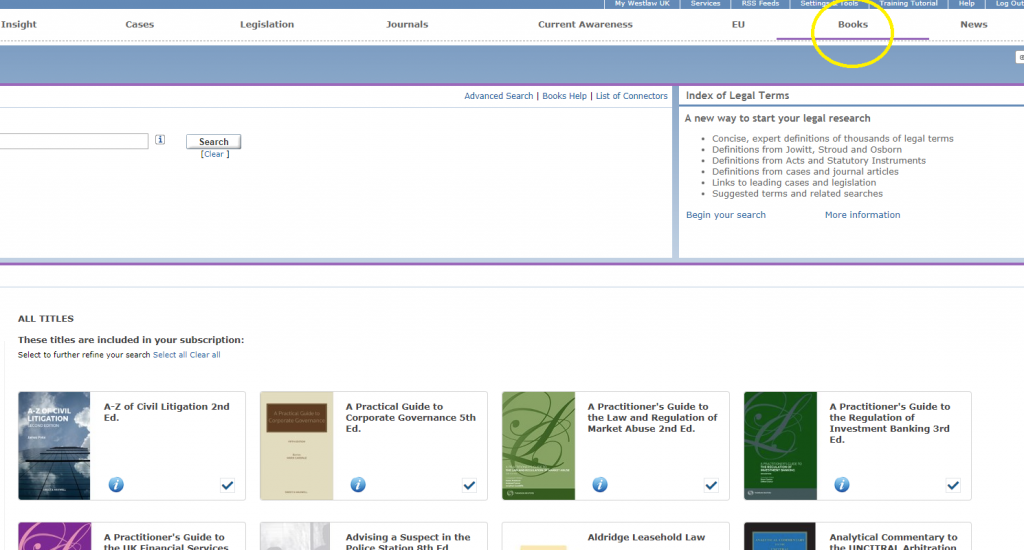
The new titles are individually catalogued on Library Search, or you can access them all by logging into Westlaw, and clicking on Books on the menu across the top of the page.


Thanks to everyone who used the trial and gave us feedback.

EndNote

What is EndNote?

The official blurb on EndNote is that it is “…the industry standard software tool for publishing and managing bibliographies, citations and references.”

Have you drifted off yet? Don’t – read on!

EndNote takes a little getting used to and we recommend you familiarise yourself with it at the start of your research process. But as Library Staff, we wouldn’t spend a significant amount of time demonstrating and training our academic staff and students on what EndNote is, and how to use it, if we didn’t think it was valuable. It will save you a huge amount of time in terms of writing up your assignments.

Essentially, you can use EndNote to create and organise a personal library of resources relevant to your research. You can import references from Library Search, and a huge range of databases such as Scopus, Web of Science, IEEE Xplore and Business Source Complete. You can ask EndNote to locate the full-text PDFs of the resources you are going to use in your research, and you can annotate them as you wish too. Did you know you can instruct Google Scholar to import references into EndNote? No? Try it. Finally, if you already have materials stored in your home folder (H:\) then you can attach them to a manually-created reference within EndNote, bringing all your research together in one place.

In addition to organising your references (and this is the clever bit) you can then get EndNote to ‘talk’ to your word processing software, e.g. Microsoft Word, and insert the citations into your work for you in your chosen referencing style, e.g. Harvard at Newcastle, Vancouver, APA or MLA. If you don’t want to do that, then EndNote will also allow you to create an independent bibliography of your references, saving you an awful lot of typing.

Using EndNote

Intrigued? You should be. Take a look at our EndNote Guide. It contains all the introductory information you need, step-by-step workbooks to train yourself on the use of EndNote (the Desktop and Online versions), videos, useful FAQs, and contacts for help, should you need it.

Finally, Newcastle University provides support for EndNote but it is not compulsory to use. You may prefer Mendeley, Zotero, RefWorks or another piece of bibliographic management software. That’s fine, whatever makes your referencing lives easier. Go on, give them a try.