
Warm up your referencing techniques


Referencing is the acknowledgement of the sources that you use in your work. You must reference all sources that you use in your assignments, projects or dissertations, and includes quotes, ideas, facts, images, videos, audio, websites, statistics, diagrams and data.

Over the next two weeks we will be producing a series of blogs focusing on how to reference successfully in your work. We will cover…

  • explain why referencing is important
  • advice on how to produce consistent and reliable referencing
  • help on how to manage your information to make your life easier and assignments less stressful
  • point you in the direction of where to find advice and help

So come in from the cold and warm up with some referencing help and keep your eyes peeled for our upcoming blogs.
Finding help with IEEE referencing

For those of you reading this that don’t know, the IEEE referencing style is a numeric citation system used in engineering, electronics, computer science and information technology publications. And for those of you reading that already know this, you will be pleased to hear that the IEEE referencing style has now been added to Cite them right   (If you have trouble accessing Cite them right off campus, just search for it on Library Search).

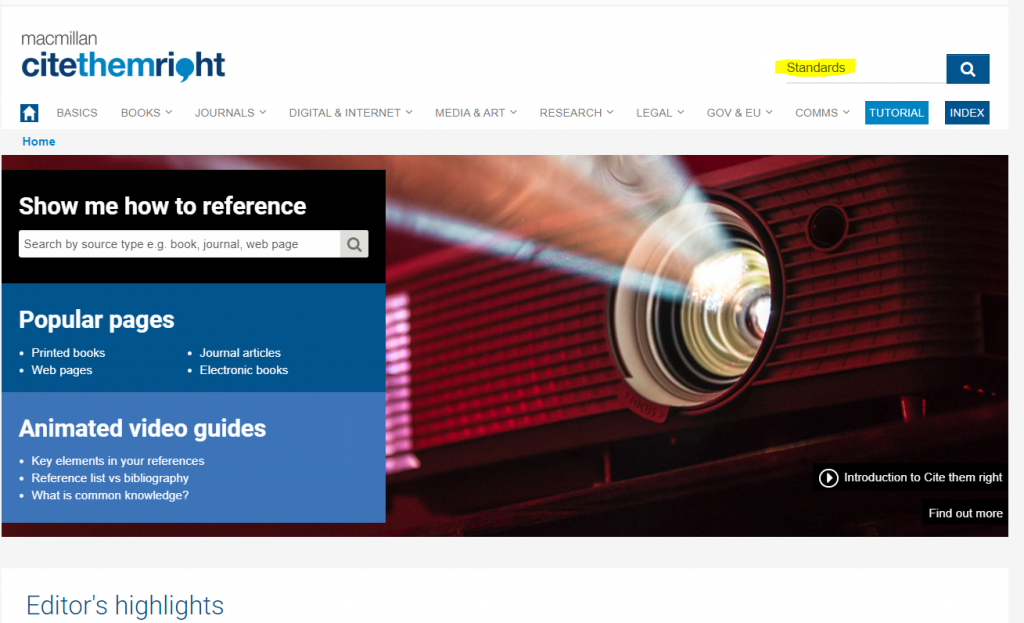
So what does this mean and how does it help? Well, let’s say that you have referred to a set of specific technical standards in your most recent academic work but aren’t quite sure how to reference them accordingly. Open Cite them right and type standards into the search bar at the top right of the home page and hit the Enter key:

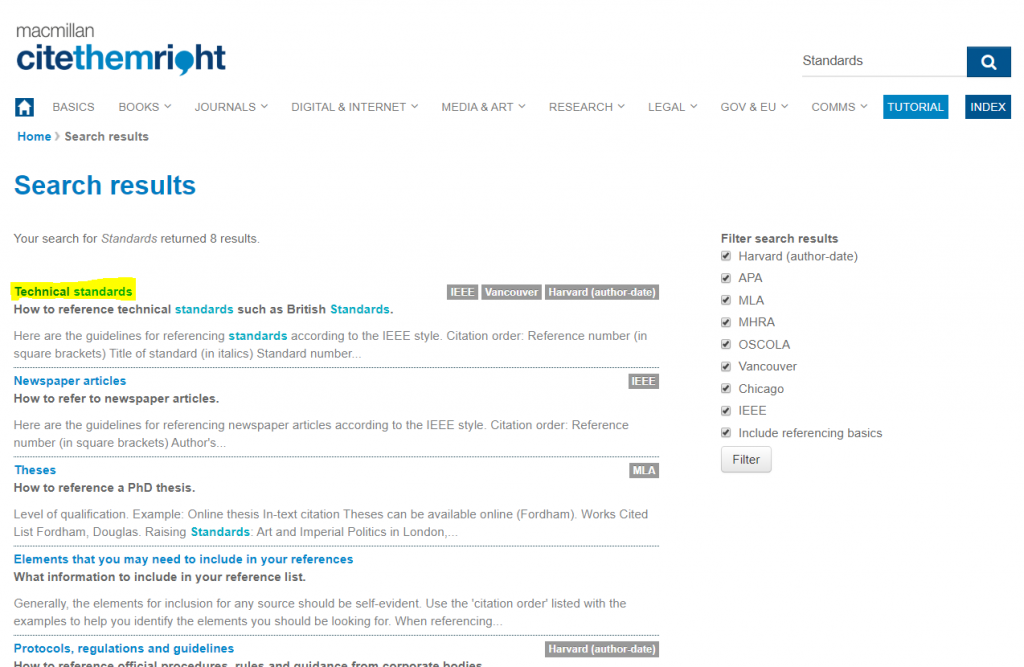
The search results will return a link detailing how to reference technical standards:

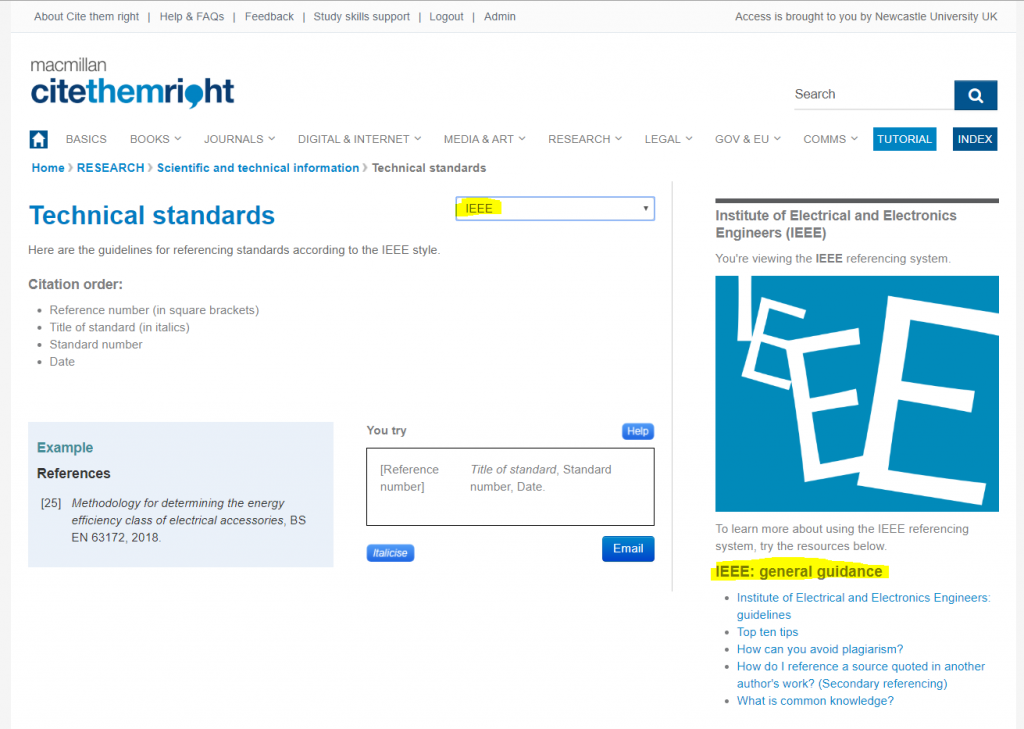
All that’s left to do now is to click on the link, select IEEE from the drop down reference style menu and follow the excellent guidance. There’s further help on IEEE referencing on the far right hand side:

As well as referencing technical standards, journal articles and books in the IEEE style, Cite them right will also show you how to reference more unusual items, such as Twitter posts and YouTube videos, enabling you to correctly include all of your research sources with ease.