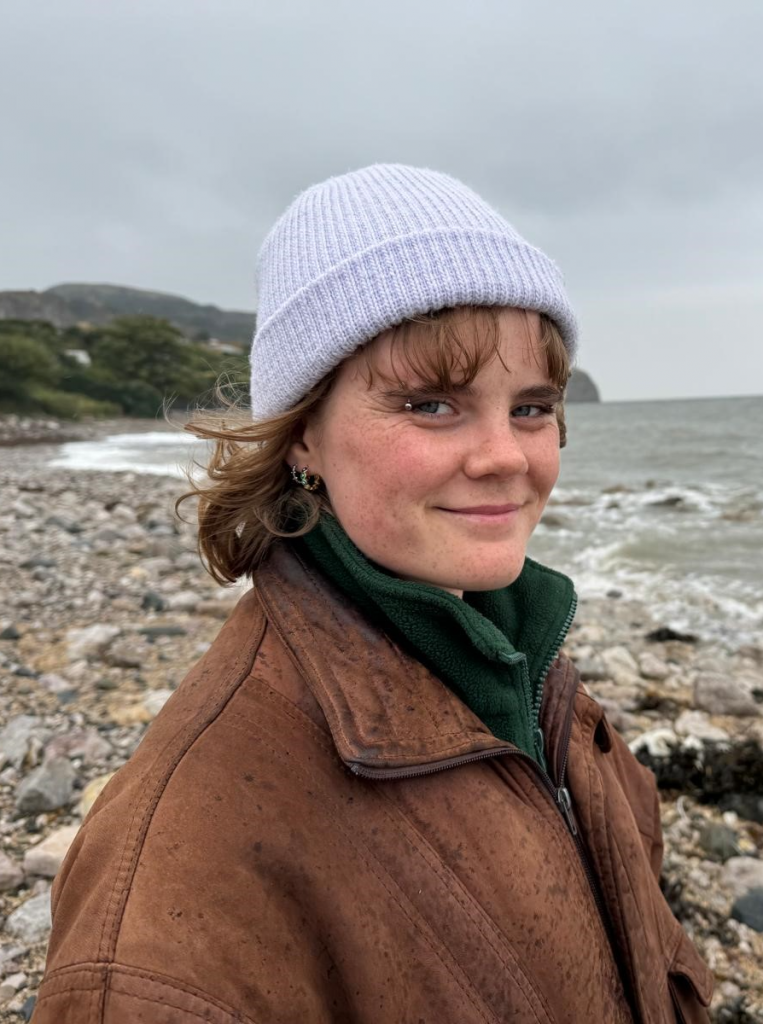
Introducing the Collective’s Communications Intern 2025-’26: Lily Tidman

Lily is the 2025-‘26 Oral History Collective Communications Intern – she manages the Collective social media, as well as contributing to The Lug and website. 
Originally from Cumbria, Lily completed her BA in History & Politics at Oxford University, followed by an MA in Health Humanities at University College London. Her undergraduate dissertation was an oral history of networks of health, transport, and local identity in 1960s and ‘70s Cumbria. Her MA thesis explored portrayals of green space as a health resource in high-tourism areas of the UK during the Covid-19 pandemic, particularly in the Lake District. This work explored portrayals of Cumbria, Cornwall, and North Wales as national resources for wellbeing despite having disproportionate experiences of Covid-19 related movement restrictions, and holiday-related case patterns. It interrogated local press as a site where policing and contestation of local identity, and questions of who has the right to use these landscapes, played out. 

After a couple of years working in museums and galleries in London, Lily moved back up North to begin her PhD at Newcastle in 2024. Lily’s PhD project is an oral history of volunteering in healthcare in the ‘far North’ of England, 1979-1997. Coined by Dave Russell in 2005, the term ‘far North’ refers to the (now ceremonial) counties of Cumbria, Northumberland, and County Durham, which he grouped together on the basis of shared ‘felt distance’ from political and cultural power in Westminster. The project explores everyday experiences of the NHS in small community and cottage hospitals in a region with long travel times to specialist services. Through oral history interviews, the meanings and experiences of volunteering, alongside rural healthcare needs and regional identity, are explored. The project sites these topics within broader historical processes of the past 50 years, including deindustrialisation and the marketisation of public services. It hopes to contribute to understandings of the North-south divide and current British electoral trends as well as adding to the growing social histories of the NHS. 

The project focuses on hospital Leagues of Friends and hospital radio stations, but Lily is interested in interviewing people who volunteered in any healthcare task during this time. If you, or someone you know, might be interested in taking part, get in touch at L.tidman2@newcastle.ac.uk

Outside the PhD, Lily is Senior Editor for the Newcastle School of History, Classics, and Archaeology postgraduate journal Pons Aelius, and host a weekly alternative music show on Newcastle Student Radio. In her free time, she likes wild swimming, skating, and playing the flute.  

Russell, Dave. Looking North: Northern England and the National Imagination. Manchester University Press, 2004.  
Dr Sally Watson joins the Oral History Collective as Research and Innovation Associate on the Green Corridors North East research project in History, Classics, and Archaeology

Sally completed an undergraduate degree in Architectural Design at Edinburgh University and an MSc in Town Planning at Newcastle University. She has extensive experience of working in the cultural sector in collections, programming and research and is currently a trustee at the Historic Towns Trust. Here, she describes her new project involvement with the Oral History Collective.

Green Corridors North East

The Green Corridors North East project, funded by the Arts and Humanities Research Council, is based on three green corridors in Gateshead, Durham City and South Teesside. The project brings together Newcastle, Teesside, Northumbria, and Durham Universities, the National Trust, local authorities and community organisations to explore how arts and humanities–led research can support more sustainable, inclusive, and community-centred approaches to place, nature and stewardship.  

In addition to leading on the nature and natural heritage theme across all three corridors, my primary focus will be on Gateshead’s Tyne Derwent Way. Here I will be collaborating with researchers alongside staff at the National Trust, Gateshead Council, Tyne and Wear Building Preservation Trust, and community-based groups.  

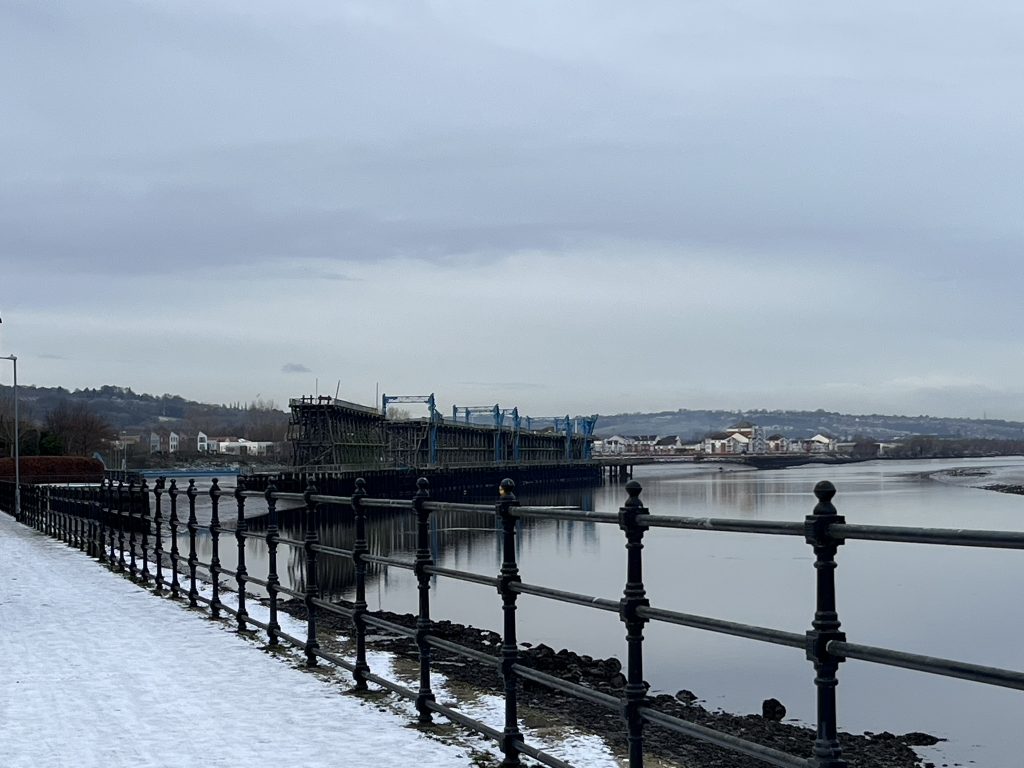
A view of Dunston Staiths in the snow from the Tyne Derwent Way.
The Tyne Derwent Way in the snow overlooking Dunston Staiths, by Dr Sally Watson.

Byker Community Archive & Histories of Redevelopment

Alongside this, I will be working with Silvie Fisch, Director of Northern Cultural Projects and Oral History Collective Associate Researcher, who has been awarded funding from the Heritage Lottery Fund and Karbon Homes to develop a community archive in BykerHannah James Louwerse and I share the role of archivist and will be helping Silvie to set up the archive in the coming months.  

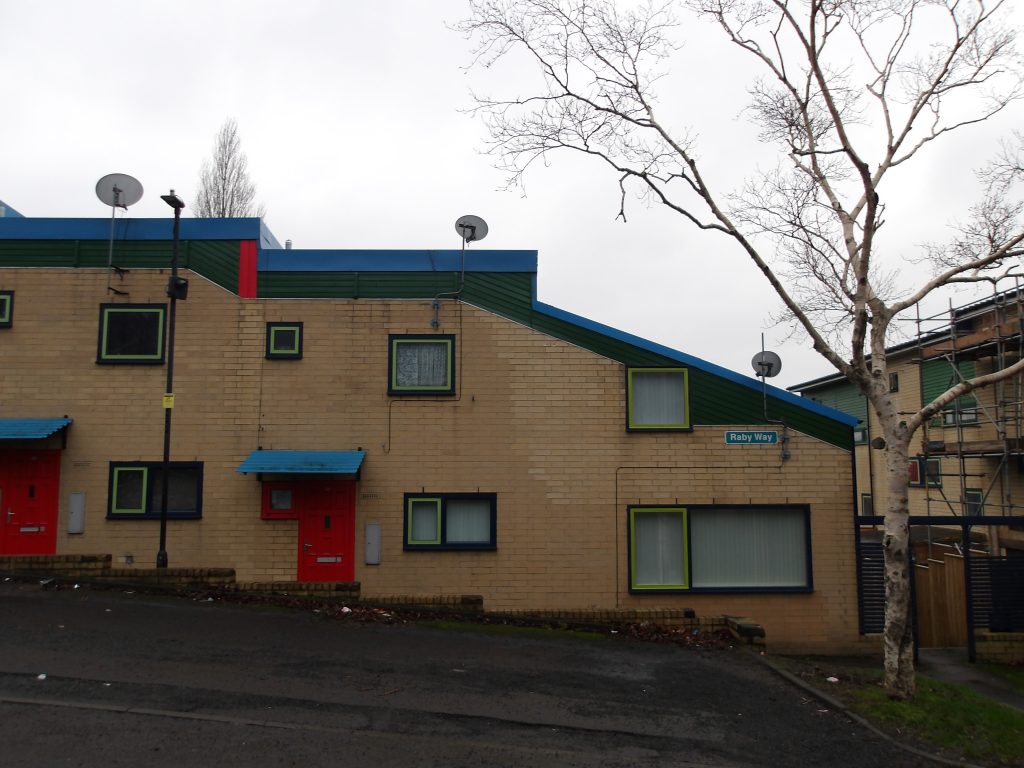
A row of terraced houses on the Byker estate, near the Community Archive site.
The Byker estate near the Community Archive site, by Lily Tidman

My involvement in the Byker Community Archive began when I met Silvie whilst undertaking my doctoral research at Newcastle University. My PhD and subsequent Postdoctoral Fellowship, both funded by the Economic and Social Research Council, examined the history of post-war housing, landscape design and children’s outdoor play in Newcastle upon Tyne. Alongside archival research, I undertook oral history interviews with professionals who had worked on the redevelopment of the Byker neighbourhood 1969-1983, including architects, landscape architects and planners, and people who had grown up in Byker during and after the redevelopment. 

I am interested in oral history as a method for understanding children’s lives in the past and changing ideas about children and childhood over time. In particular, I am interested in how such ideas have shaped and continue to shape children and young people’s geographies of play and mobility. In my previous research, I examined the design, governance and policing of housing, streets, parks, playgrounds and other urban spaces and used go-along interviews to explore childhood experiences of these places. I am looking forward to collaborating with communities, including children and young people, on projects along the Tyne Derwent Way.