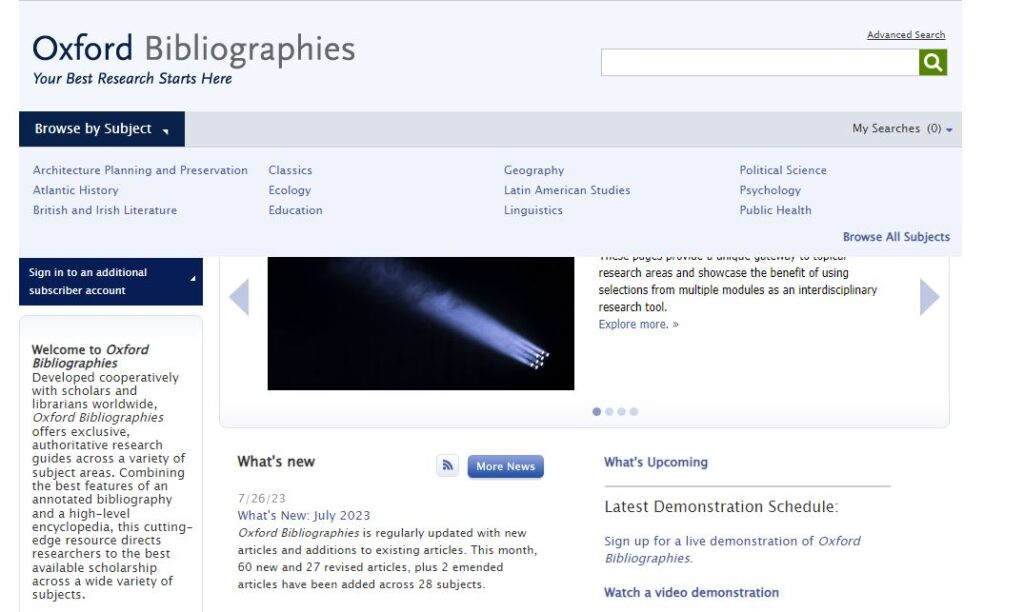
After trialling on several occasions we have recently been able to purchase the Oxford Bibliographies Online collection which gives staff and students access to a comprehensive collection of articles published and reviewed by academics covering a wide range of subject areas. Users can personalise their experience by saving citations and articles to their own profile.
Oxford Bibliographies Online
Subject areas covered (click on subject to link to resource via Library Search)
After a recent trial to the archive from Royal Geographical Society (RGS) we are delighted we’ve have managed to add this permanently to our collections.
The Archive of the RGS covers the history of geography exploration, colonisation and decolonisation, anthropology, international relations, climate science, gender studies, cartography and environmental history throughout the British Empire from 1482 to 2010.
As you’d expect the resources vary from manuscripts, correspondance, reports, proceedings, maps, charts, photographs, atlases to name just a few. Many of these primary source materials have never been digitised before and are available through Wiley for the first time.
These are available as digital images which can be analysed and downloaded.
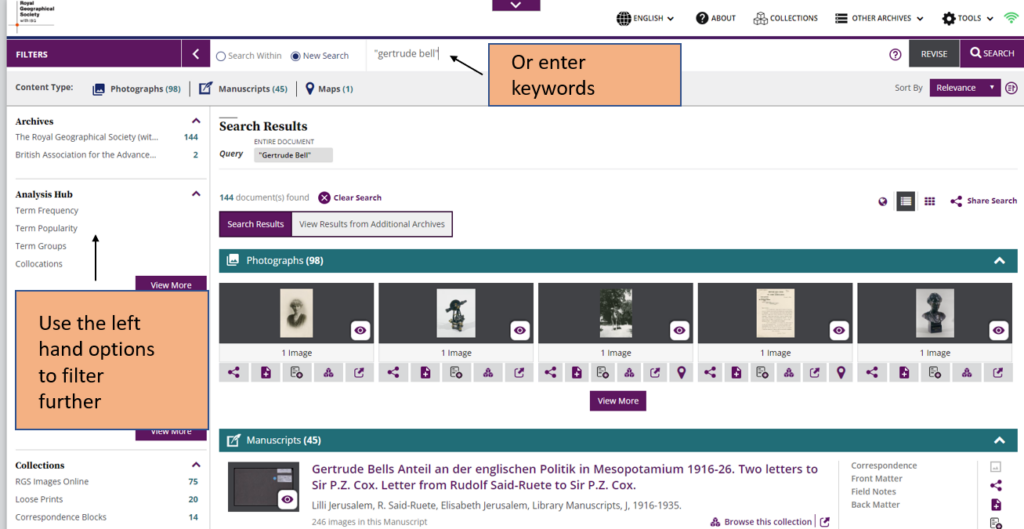
The archive contains specific collections including the Everest Collection; the David Livingstone Collection; the Sir Ernest Shackleton Collection; the Stanley Collection; the Younghusband Collection; the Speke Collection; and the Gertrude Bell Collection.
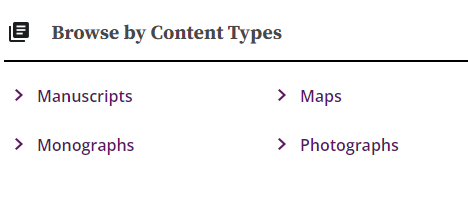
There are different ways you can search and browse the collections including choosing your content type first e.g. photographs
Then you can use some of the search functionality to locate what you’re interested in.
Other ways to search
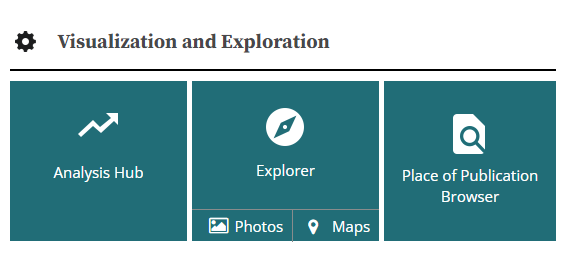
On the homepage you’ll see these links :
The analysis hub lets you search for a keyword or term and see a timeline of when it was most used, which collections look important and related keywords.
The explorer let’s you look for photos and maps across all of the sub collections.
The place of publication browser let’s you use an interactive map of the world to navigate to the area you’re interested and highlights all relevant materials.
In terms of use, permissions and Copyright I’d recommend checking our their webpages for these.
We think this resource will be useful for both teaching and research purposes for those interested in all aspects of geography. We hope you love checking out the digital tools and functionality on the Wiley site.
We will be trialling all of the Adam Matthew Collections from Tuesday 28th March.
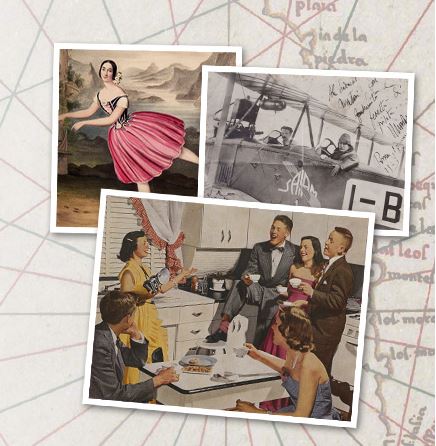
Through AM Explorer, you can now search millions of pages of primary sources spanning the 15th – 21st centuries, including a wealth of new content added every year.
Award-winning digital resources spanning the social sciences and humanities, developed in collaboration with leading libraries and archives
Discover millions of pages of unique primary source content which empower students and researchers to develop critical thinking
Powerful digital collections that transform teaching and research on important themes such as: Borders and Migrations, Gender and Sexuality, Global History, and War and Conflict
Single point of access through AM Explorer with built-in federated search functionality across all collections
Range of additional features to enhance student engagement including Handwritten Text Recognition, Data Visualisation, Video and Oral Histories
To see which subject areas are covered take a look at the guide below.
To access the collection both on and off campus follow the linkhere via our catalogue, Library Search and authenticate using your Newcastle University ID and password
Please note that PDFs downloads are not available during trials as per AM trial conditions
The trial ends on 23rd May 2023 To help us evaluate it, please email us your feedback, or leave a reply on this blog.
Women’s Magazine Archive, Collection I, II and III
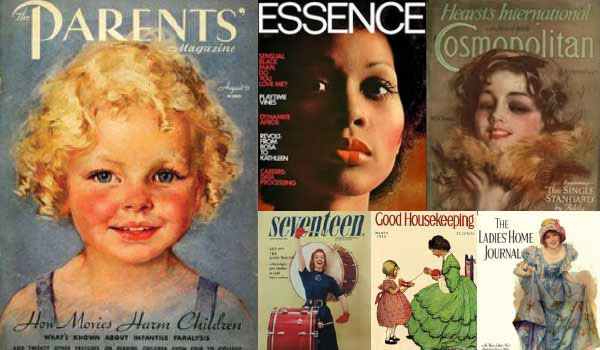
We will be trialling all three Women’s Magazine Archives from Monday 27th February. This collection includes classic 19th and 20th century titles such as Good Housekeeping, Ladies Home Journal and Parents. For those more mature students and colleagues you can enjoy a trip down memory lane to look at Cosmopolitan, Flare, Seventeen and Essence magazines. The collections cover a range of 29 to 123 years and will be useful for those researching a range of topics such as social history, gender studies, media history and more.
Each magazine in the collection is scanned cover to cover in high resolution to give a good level of detail for each page.
To access the collection follow the link here If you are off campus follow the link and you may be asked to authenticate using your Newcastle University computer ID and password.
The trial ends on 29th March 2023 To help us evaluate it, please email us your feedback, or leave a reply on this blog.
My name is Lia, and I am a 3rd year undergraduate law student. The modules I am doing this year are Employment, Careers, Company, Mediation, Evidence and Commercial. I am originally from Peterborough but love Newcastle so much that I want to stay here after I’ve finished studying! My career aspirations are hopefully to become a commercial solicitor in Newcastle.
What do I know now that I wish I knew when I first started?
My 1st year was very different to the norm as I was the Covid year, which made my 2nd year even harder having to learn to adapt to in-person teaching. My advice would be to work 9-5 during the week and give yourself as much time off in the evenings so that you can go out, hang out with your friends, and do extracurricular societies and sports clubs.
1st year and 2nd year are all about making mistakes and learning from them, so never be too hard on yourself. It is more important to always get feedback from coursework and exams, knowing that whatever questions you have other students, the librarians and lecturers will all be able to help.
Seminars are also everyone’s saviours as they literally ask you to prepare the exam questions. I think you should prepare these to your best ability and try do some follow up work on the seminar after you have had everyone’s input.
Client Interviewing
In my 2nd year I entered the client interviewing competition with my friend, Daisy. This was highly rewarding as we learnt how to conduct ourselves when meeting clients and eventually won the competition overall.
The best part of our prize was that we got free work experience at Ward Hadaway, a regional law firm in Newcastle. I completed seats in Real Estate and Commercial litigation whilst I was there.
Image from Newcastle Uni Law Society Instagram @nulawsociety
Now, in my 3rd year, I am one of the client interviewing officers this year for the law society. This year Daisy and I are hoping to make the competition better than ever and help participants develop their skills by offering more training sessions than previous years and more competitions. I really advise any 1st or 2nd years to do this as an extra-curricular as it doesn’t take up too much time, looks great on your CV and is judged by Ward Hadaway solicitors who offer money and work experience as a prize!
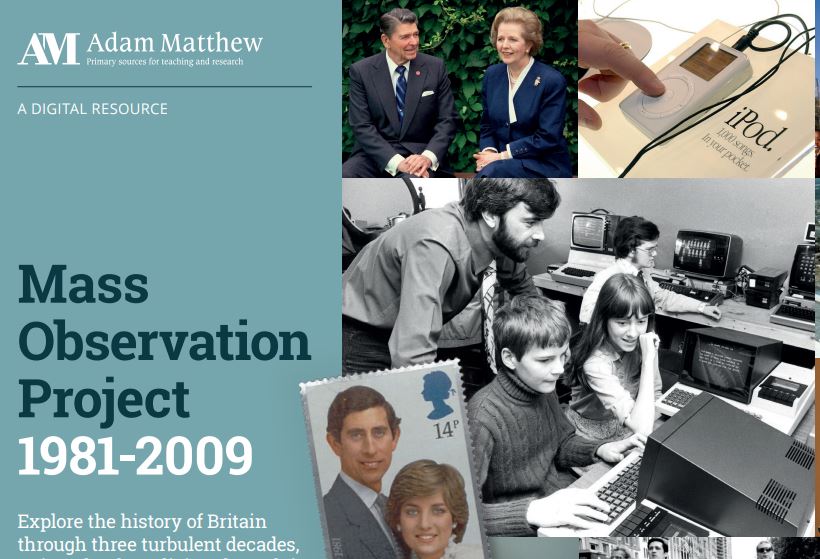
We’re pleased to announce that we have now added the latest 2000s module to the very popular Mass Observation Online resource. We already had access to the 1980s and 1990s modules.
About Mass Observation
Mass Observation is a pioneering project which documents the social history of Britain by recruiting volunteers (‘observers’) to write about their lives, experiences and opinions. Still growing, it is one of the most important sources available for qualitative social data in the UK. This latest instalment is a great resource for anyone researching aspects of the early 21st century. It complements our existing access to the original Mass Observation project archive, which covers 1937-1967.
2000s collection
This module has a strong emphasis on technological advancements and the changing means of communication that came with the new Millennium. Highlights include the Millennium Diaries, the events of September 11th and environmental concerns, as well as detailing the everyday lives, thoughts, and opinions of respondents.
Searching and browsing
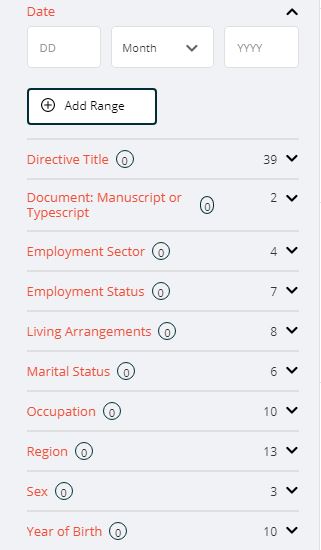
Filtering options
You can browse or search Mass Observation in various ways.
Browse by directive: browse the different directives (surveys), which are arranged chronologically and by topic.
Browse all documents: browse all the individual documents, and then further filter your search as required.
You can also use the Advanced search box at the top of the screen to search for specific topics.
Help
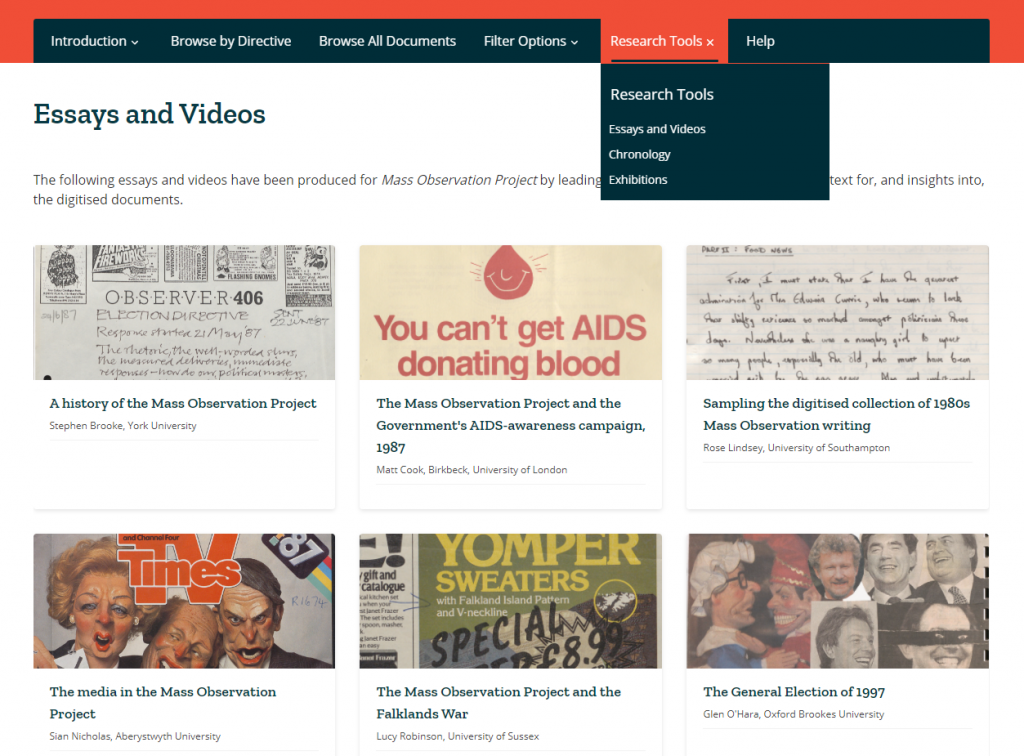
Research tools
We’d recommend you start by reading through the Introduction (top menu) which explains more about the project and the different document types. If you’re looking for ideas about how to make use of it, take a look at the Research Tools, which includes essays, videos, exhibitions and chronological timelines.
Note that as over half the materials in these collections (mainly the pre-2000s modules) are handwritten, the database enables Handwritten Text Recognition (HTR) to help you search. We would recommend you read about how HTR works, to help you get the best out of the database, in the Introduction section.
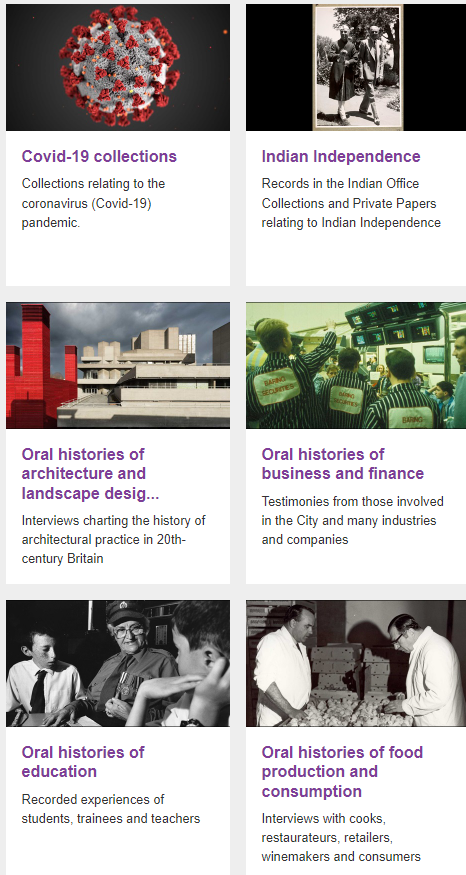
Where can I find pictures relating to transport which I can use in my project? How do I find out what was broadcast on British television and radio on a particular day in the 1970s? Where are the best places to find examples of digital art? I need audio clips of scary sounds for my presentation – where to start? Are there any interesting oral histories in my subject area? How do I reference a podcast? I’ve found an ideal picture online, but I don’t know where it’s from – what can I do? Is there an authoritative list of famous music plagiarism cases anywhere, including audio clips?
We’ve updated and expanded our old images guide, and included new databases and resources for finding films and television programmes, plus audio content such as radio programmes, sound clips, podcasts and oral histories.
We’ve also updated the original still images section, which helps you find images of all genres and subjects, such as anatomy, archaeology, architecture…. and all other letters of the alphabet!
Need more help?
Keyword searching isn’t always the best way to search for audiovisual content, so if you want to find an image which looks like another one, search by colour, or find exactly what you want on Box of Broadcasts, visit our guide.
Finally, if you’re unsure whether you’re permitted to use an audiovisual resource in your assignment, and/or how to cite it, we can help with that too. Our guide contains plenty of helpful advice on using and citing audiovisual materials, and we’ve tried to include links to collections and databases which are licensed for educational use where possible (but please do check the terms and conditions in each case).
If you’re working on a dissertation, thesis or project right now, or will be doing so next academic year, what can you do if the Library doesn’t have access to all the specialist books and other information resources you need? How can you find out about resources relating to your research topic which are held elsewhere? Can you visit other libraries and archives if you’re away from Newcastle over the vacation?
Read on to find out how you can expand your search beyond our library….
1. Search
You can search across the catalogues of over 170 UK and Irish academic and national libraries, together with other specialist and research libraries, via Library Hub Discover (formerly COPAC). The range of libraries included in Library Hub Discover is expanding all the time, and includes all UK universities, as well as the libraries of such diverse organisations as Durham Cathedral, the Institution of Civil Engineers, the Victoria and Albert Museum, and the Royal Horticultural Society.
In response to Covid restrictions, Library Hub Discover has also made it easier for you to find Open Access resources via its catalogue: it has recently incorporated the HathiTrust Digital Library, as well as the Directories of Open Access Books and Journals to its searchable database.
For a more in-depth and up-to-date search, you can also search individual academic library catalogues online. Need to look further afield? Search library catalogues internationally via WorldCat.
If we haven’t got the book you want, you can ask us to consider buying or borrowing it via our Recommend a book service.
If you need a copy of a journal article to which we don’t have access, you can apply for it via our inter library loan service, which is currently free.
You can search UK doctoral theses via the national EThOS service. This has records for over 500,000 theses, dating back to the year 1800, of which over half are freely available online (do note you have to register with EThOS before being able to download: it’s a separate login process to your usual University login).
3. Visit
Special Collections Virtual Reading Room
The SCONUL Access Scheme enables students to visit most other academic libraries around the country, and in some cases, borrow from them. This service has recently resumed since its suspension during the Covid pandemic, but please note that not all academic libraries are currently participating in the scheme, so do check carefully before you visit, and read the latest information on the SCONUL Access site.
You will need to register with SCONUL Access before you can visit another Library, so do allow time for your registration to be processed.
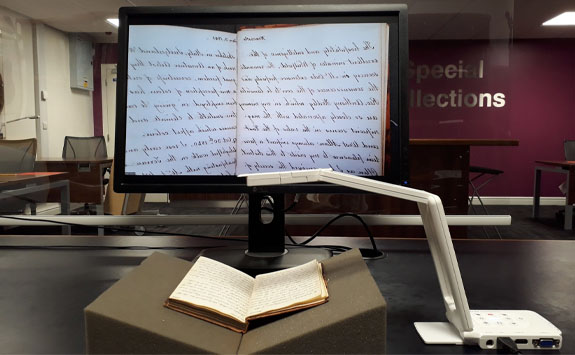
If you want to consult archives or special collections elsewhere, you’ll need to check with the organisation in question beforehand (you’ll usually need to request to consult items in advance of your visit). If you can’t visit in person, archives services may still be able to answer queries, provide access to selected digitised items, or even operate a Virtual Reading Room, so it may well be worth enquiring.
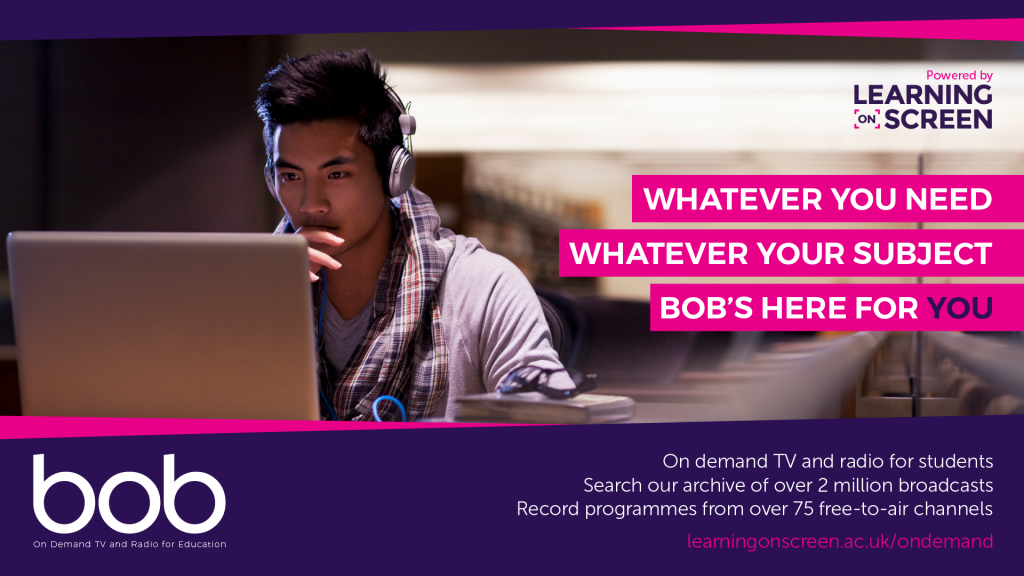
Have you met BoB? Box of Broadcasts is a fantastic resource for all subject areas: an archive of over two million radio and television broadcasts from over 75 free-to-air channels, including all BBC channels, ITV and Channel 4, plus some international channels. New programmes are added to BoB as they are broadcast each day.
We know it’s a very popular resource, but are you getting the best out of it? Here are some quick tips for newbies and experienced users alike!
Smarter searching
BoB is a huge database, so searching by keyword may retrieve a lot of irrelevant results, especially as the default search looks for your keyword in all programme transcripts (i.e. every word spoken in a programme). Click on the Search options link just under the search bar to see various ways of making your search more precise, including searching in the programme titles only, or limiting by date. This help video gives more detail:
Playlists and clips
You can create your own playlists: really helpful if you’re researching for an assignment, or preparing to teach a module. You can also search public playlists curated by other BoB users around the UK: just select Public playlists underneath the search bar, or explore this showcase of playlists for more inspiration.
We’ve got a wide range of specialist information resources for English literature students. We know it can be rather overwhelming knowing where to start, so this blog post gives you a whistle stop tour of what you can find.
Library Search and your reading lists are great starting points for finding books, journals and other resources for your modules, but we’ve highlighted below some more specialised resources which you’ll want to explore.
Interdisciplinary academic research databases
Interdisciplinary bibliographic databases, such as Scopus or JSTOR are a great starting point after Library Search, as they enable you to discover secondary literature, irrespective of the subject area, and have really helpful features to help you focus your search. This can be useful if your topic covers more than one subject area, or if you’re trying to scope your topic broadly. Content includes journal articles, conference papers, book chapters and reviews.
Specialist English literature research databases
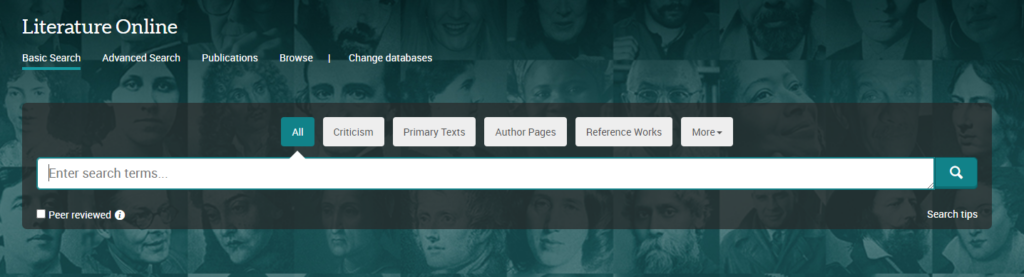
Literature Online (LION) is an indispensable database for researching English literature. It comprises three main sections:
literary criticism: search articles from over 400 journals, together with the Annual Bibliography of English Language and Literature
primary texts: 350,000 works of poetry, prose and drama from the 8th century to the present
reference: encylopedias, topic overviews and author biographies
LION search screen
You can search all of these information types at once with the All button selected, or focus on a particular section by choosing the appropriate button.
If you haven’t used LION before, or would like a refresher, a good way to get an insight into the content, and different ways to search, is to try out the sample searches in this LION guide (Links to an external site.).
Film and Television Literature Index
If you’re researching a film or television studies topic, including literary adapations, then you may find Film and Television Literature Indexto be useful. It includes articles from academic journals and film magazines, and coverage is focused on film and television theory, writing, production and reviews.
Digitised archives
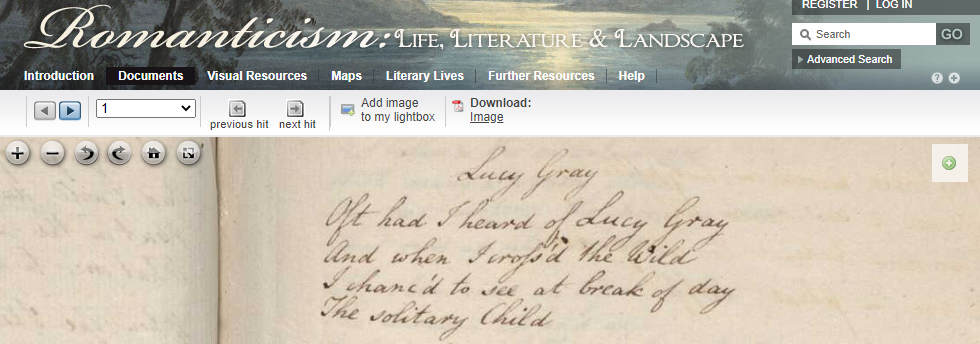
Romanticism: Life, Literature, Landscape
There is a vast range of digitised literary archives available, and it would be impossible to list every one, but we have picked out some major resources on the English Literature subject guide, in the General literary resources > archives section. These include:
Click on the links above for blog posts giving more information about these fascinating archives.
We also have a fascinating range of historic and contemporary literary archives in our own Special Collections section: please browse the web site by subject to find out more and read here for how to consult items and get further advice.
Literary texts: historic book collections online
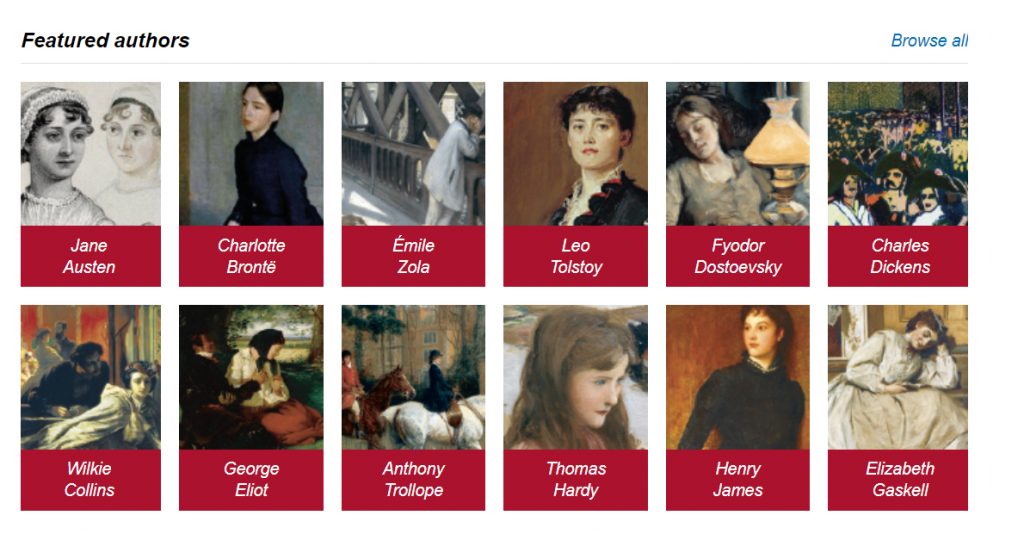
Oxford World’s Classics
As well as the many individual literary print and e-books in our collections, we also have access to several major online collections of literary texts from different historical periods, which feature in-depth contextual information, facsimile images of the original texts, and sophisticated search and analytical features.
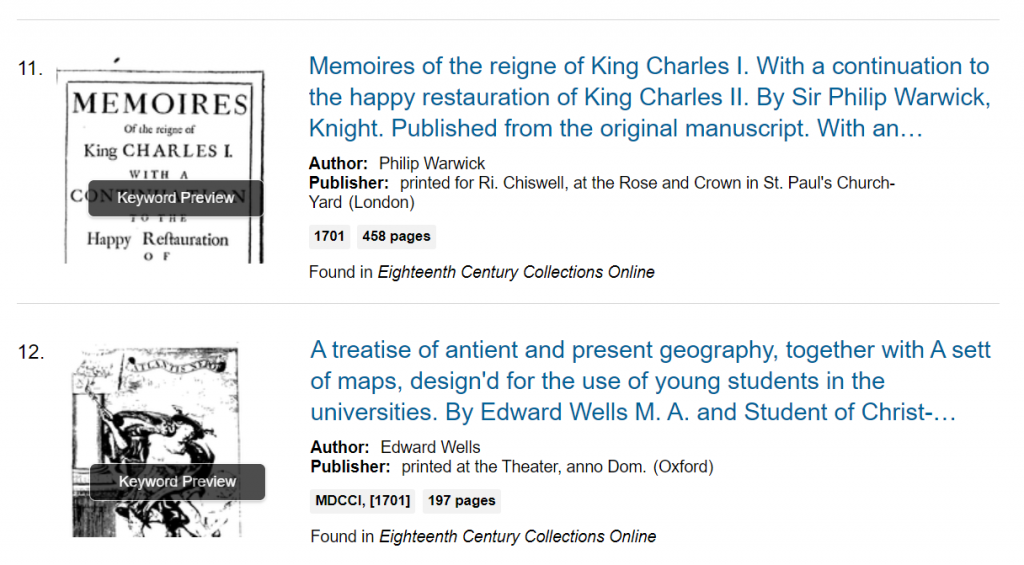
From Early English Books Online (EEBO) and Eighteenth Century Collections Online (ECCO), we have access to almost every book published in English from the fifteenth to nineteenth century, complemented by other specialist collections, such as Oxford Scholarly Editions Online.
ECCO screenshot
Our blog post gives an overview of five of the major collections. You can find all the individual books from these collections on Library Search, but we recommend searching and browsing the databases themselves (for example, EEBO) to get the best searching and viewing experience.
Audiovisual resources: Box of Broadcasts and Drama Online
Box of Broadcasts (BoB) contains over two million programmes from over 75 television and radio channels. Coverage mostly dates from 2007 to the present day. It’s a great resource for finding literary adaptations on television, film and radio, together with documentaries about writers, and arts review broadcasts. Find out how to get the best out of BoB via our BoB blog post.
Drama Online screenshot
The Library has purchased various collections from the Drama Online database, which comprises the text of over 3,000 plays, from ancient Greek drama to contemporary works, together with contextual works relating to drama theory and practice. We have also recently bought several video collections, featuring films of major theatrical productions from the National Theatre, Globe and Royal Shakespeare Company.
Read more about this exciting platform and the very latest content on our blog post.
English Literature Subject Guide
This posting is just a taster of all the great resources available for your subject area. To access them and find out more, visit your Subject Guide and explore the databases and other subject specific resources which we’ve curated for English literature.