
Strictly Referencing: When is a website not a website?

A common mistake made in referencing is grouping all sources found online under the category and reference type of a website. Your aim should be to reference the information you have in front of you rather than where it was sourced. Simply grouping items found online as a website would be the equivalent of referencing a book by the publisher details rather than the author and title.

For example, a government publication found online would be referenced like this in Chicago:

United Kingdom. Department for Education. Cloud computing: how schools can move services to the cloud. London: The Stationary Office, 2016. Accessed: November 4, 2019. https://www.gov.uk/government/publications/cloud-computing-how-schools-can-move-services-to-the-cloud. 

An electronic journal article might appear like this in APA:

Gillum, J. (2012). Dyscalculia: Issues for practice in education psychology.  Educational Psychology in Practice, 28(3), 287-297. doi:10.1080/02667363.2012.684344

While a video posted on the Tate website would look something like this in Harvard.

TateShots (2016) Grayson Perry: think like an artist. Available at: https://www.tate.org.uk/whats-on/tate-modern/talk/what-makes-artist-grayson-perry-conversation-sarah-thornton (Accessed: 11 November 2019). 

Identifying the type of information you are using as well as the source, are essential skills of evaluation and developing a critical approach to information. In many cases you will be unconsciously using your judgment to assess the value of information for your purpose. So when you are using any source of information, ask yourself what it is you are looking at, what details are recorded about it and whether it measures up as a quality piece of information. You can find more information on evaluating information on the Academic Skills Kit.


It’s all a matter of style

There are lots of different referencing styles, but which one is right for you?

Once you start creating citations and references, you need to consider referencing styles. There are hundreds of them out there and each has a slightly different set of rules about how citations and reference lists should appear in your text.

Most Newcastle University students use the Cite them Right Harvard style, but there is also Vancouver, IEEE, OSCOLA, Chicago, and many more. Your lecturers will expect you to use one specific style and all of your citations and references should conform to that style accurately and consistently; same punctuation, same capitalisation, same everything. 

We have lots of help about using some of the popular referencing styles Academic Skills Kit. The Cite Them Right website is also a valuable online resource that will show you how to hit all of the right steps on your way to mastering an individual referencing style.

190th Anniversary of the Natural History Society of Northumbria

Pink and purple wildflowers in a fieldToday celebrates the 190th anniversary of the founding of the Natural History Society of Northumbria, (NHSN) a local voluntary organisation that encourages and supports research in Natural History via lectures, field outings, education courses and publication of scientific papers.  The Society also established the brilliant Great North Museum: Hancock, which continues to house its fascinating Library and Archive collections, both important resources for the study of natural history in the North East of England.

NHSN Library

The Library, also established in 1829, holds a wealth of material on natural history, with coverage including flora and fauna, ornithology, geology, ecology, the history of natural history and biodiversity.  Here you’ll find the latest field guides for birds, plants, mammals and insects from around the world alongside regional, national and international journals and books about ecology, zoology, botany, ornithology, entomology, geology and conservation. The Library is open to everyone, but membership is required for borrowing books.

NHSN Archive

Meanwhile the Archive holds thousands of artworks, photographs, letters, diaries, and notebooks covering all aspects of natural history, zoology, botany and geology.  It also includes internationally important material, notably the original watercolours, pencil drawings and proof engravings by Thomas Bewick, the Northumbria-born naturalist and wood engraver.  Archive material is available to view by appointment only.

For a taste of what the collections have to offer, you can visit the Society’s newest exhibition: ‘The Beauty of Plant Science’, on display in the NHSN Library.  Curated by postgraduates at Newcastle University, the exhibition presents colourful botanical illustrations alongside myths and poems to show how Science and Art coexist:

You can also find a sister exhibition, ‘The Beauty of Insects: Seeing Art in the Entomological World’ on Level 2 of the Philip Robinson Library:

Everyday life and Mass Observation

Vintage documents

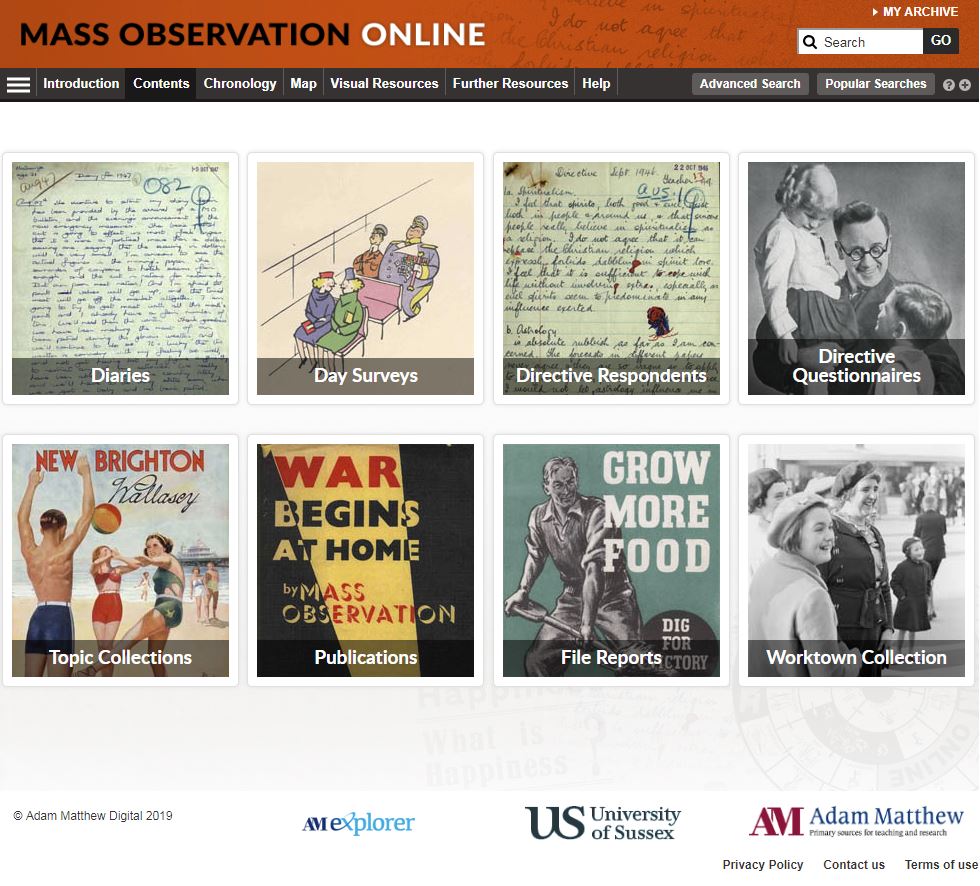
Mass Observation. Wow, sounds intriguing, doesn’t it? It should!

This resource offers revolutionary access to one of the most important archives for the study of Social History in the modern era. You can log in using your Newcastle University Campus ID and password to explore original manuscript and typescript papers created and collected by the Mass Observation organisation, as well as printed publications, diaries, photographs and interactive features dating from 1937 to 1972.

If you’re interested in learning more about the topics currently influencing our lives, it would do no harm to research the social history topics available within Mass Observation such as anti-Semitism, the economy, austerity, education, women at work, religion, mining, news, the Government, smoking, drinking, sexual behaviour, propaganda, unemployment and writing (to name just a few!).

Mass Observation home page

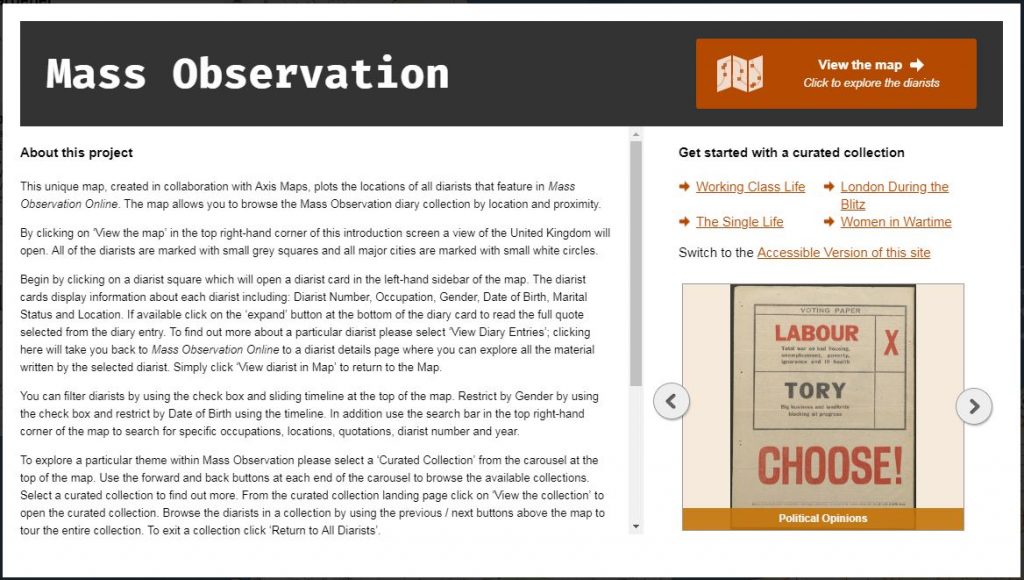
Mass Observation Diarist maps

If you want to know more about Mass Observation and to see some samples from the collection, then you could take a look at the Mass Observation Twitter feed, or there is a recorded webinar available for you to watch via YouTube in order to get the best out of the resource.

Resource in Focus Megatrends on Passport

Passport is a global market research database that gives us statistics, analysis and reports on global markets, economies and consumers. As well as being able to search for statistics and analysis using keywords, browse by country, industry and economy, Passport highlights what they call Megatrends which are the major issues influencing consumer behaviour in today’s market.

Megatrends for the UK right now include population changes, healthy and ethical living, and middle class retreat. You can access the full reports from the Passport homepage while they give useful summaries on their YouTube channel.

To access the Newcastle University subscription to Passport and our other market research resources, visit our Market Research resource guide.

Future proofing your employability

“What would you guess is the most common job?” Michael Lai, Outreach Lead at KGI, asked an audience of students at his Columbia Heights TEDTalk back in 2016. His audience members offer a few suggestions. “Engineer?” “Fast food workers?”  After several failed attempts, Michael puts them out of their misery,

“3.5 billion truck drivers in the United’s States” he tells them. “Experts predict that in the next 12-15 years, most of the cars on America’s highways will be self-driving… so what’s going to happen to the most common job?”

The future of the job market – and it’s inherent uncertainty – has been receiving a lot of attention in the international press in recent years, with Universities UK analysis predicting “65% of children entering primary schools today will work in jobs and functions that don’t currently exist.”  In previous generations, new graduates could expect to work with the same company for several years, steadily climbing the corporate ladder in a predictable, but reassuring linear way. In the 21st century however, the face of the job market is changing, and once you graduate, you may find yourself looking at a “portfolio career” over traditional career progression – something Facebook COO Sheryl Sandberg described as more akin to a career “jungle gym” than a career ladder.

But what does all this talk of truck-driving and emergent markets mean for you, the UK Graduate? Well, if the gig economy becomes the norm in the next 10 years, one of the key challenges for new graduates will be the perpetual need to upskill yourself, and market your own skill base to different employers. This puts the spotlight on what have traditionally been referred to as “soft” transferable skills that are required across many different roles and sectors – skills such as resilience, team-working and critical thinking. Here at the Library, we’d argue that information and digital literacy falls under this bracket (well of course we would, we’re librarians!). The ability to find and use information and make considered use of digital tools is an important capability in any graduate job. Don’t just take our word for it – we spoke to several students returning from placement who told us their information skills had helped them get ahead.

The good news though is that your degree programme offers you the chance to work on and demonstrate all of these skills. Employers will know that you may not have extensive work experience as a new graduate, but make sure you cherry-pick prime examples from your University work, part –time jobs and any voluntary experience to exemplify the skills employers are looking for (and remember, the Careers service can help you with interview preparation.) Make the most of the workshops and sessions open to during your time at University so you are in a great position to articulate these important skills. For more information on how the Library can help, check out our Employability Guide

References

  1. TEDx Talks (2016) Four Key Skills to Lead the Future. Available at: https://www.youtube.com/watch?v=djHTcES2ATg
  2. Universities UK (2018) Solving future skills challenges. 6th August 2018. Available at: https://www.universitiesuk.ac.uk/policy-and-analysis/reports/Documents/2018/solving-future-skills-challenges.pdf
  3. Sandberg, S as quoted by Lebowitz, S and Campbell, D (2019) “Goldman Sachs CEO David Solomon shares his number one piece of advice for millennials who want to get ahead in their careers.” Business insider, Jan 13th 2019. Available at:  https://www.businessinsider.com/career-advice-millennials-goldman-sachs-ceo-david-solomon-2019-1?r=US&IR=T

Resource in Focus: Statista

This is an extensive statistics platform covering over 1.5 million data sets (and adding an additional 500 each day) with revenue forecasts up to 5 years into the future and historical data going back 10 years on over 170 industries.

Data is collected from over 22,500 sources covering over 80,000 different topics.

The platform can broken down into different elements including:

Statistics : where you can choose your industry e.g. Consumer goods, Retail & Trade.

Reports : This section is very comprehensive and you can select :

  • Dossiers which are a quick quantitative overview of a topic. These are in house reports which contain the most recent and relevant statistics concerning a single subject. You can export these in PowerPoint or PDF format.
  • Outlook Reports which are trend forecasts
  • Surveys which are market insights from an expert and consumer perspective
  • Toplists which are company ranking for sales and analysis
  • Market studies
  • Industry Reports which are perfect for highlighting key figures for a particular industry sector. These are updated annually and contain textual information as well as numerical data such as turnover and revenue.
  • Global Business Cities Reports which are ranking and key statistics on particular cities.
  • Brand reports contain insights into the brand itself
  • Country reports
  • Further studies which are more in-depth reports

Outlooks; these provide information on specific areas and help you identify the potential in those areas. This can include forecasts, detailed market insights and key performance indicators.

Statista online help video

This short video from Statista gives a nice overview of the different search functionalities:

Access via https://www.statista.com/ or via the record on Library Search.  (If you are accessing on campus, the platform will authenticate using IP address. If you are accessing off campus you will be taken through EzProxy so access should be seamless if you’ve logged in previously using your Campus username and password).

New resource in focus: Literary Print Culture

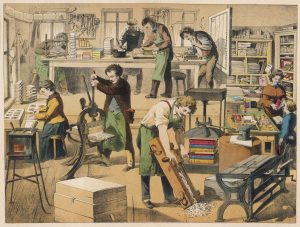
A bookbinder’s workshop, with the finished products in a domestic scene over on the right. Date: 1875

Continuing our series of blog posts exploring our brand new resources in more depth…

We have recently bought access to Literary Print Culture: the Stationers’ Company Archive. This is one of the most important resources for understanding the workings of the early book trade, the printing and publishing community, the establishment of legal requirements for copyright provisions, and the history of bookbinding. Explore extremely rare documents dating from the 16th to 21st century in this invaluable resource of research material.

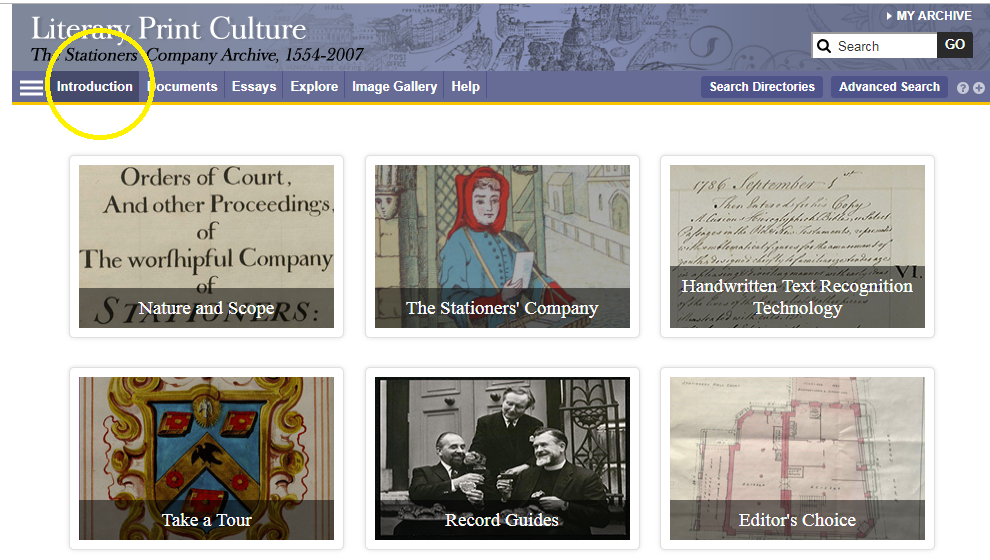
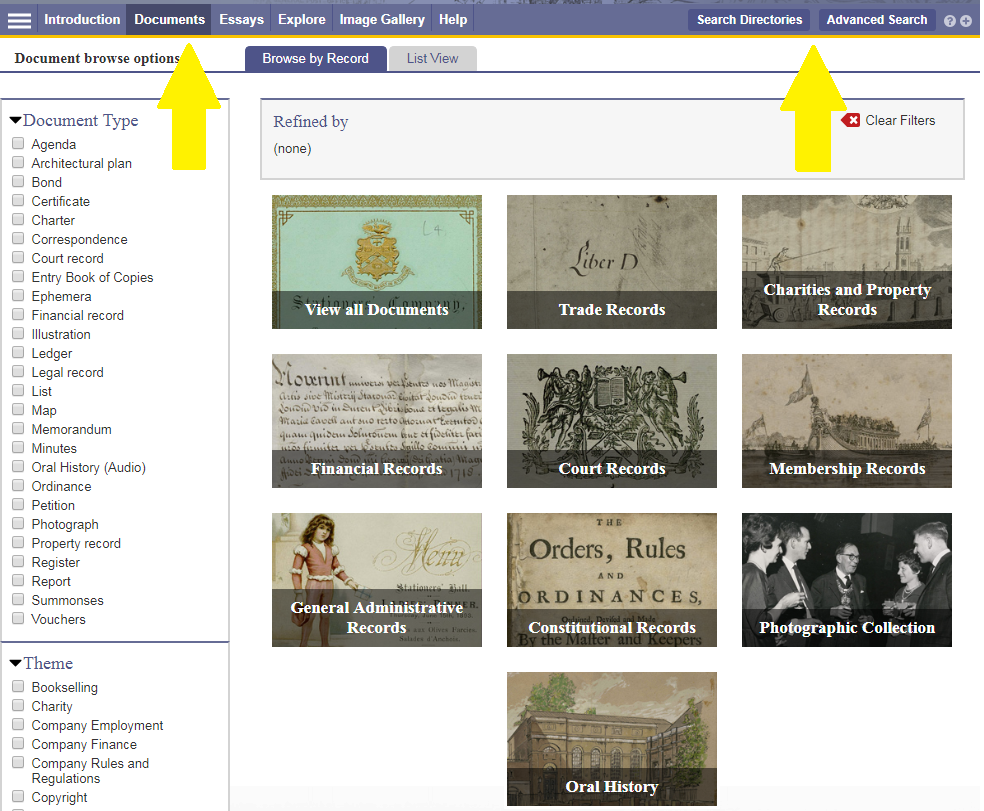
This archive contains a huge range of primary sources. Before you dive in, we’d recommend clicking Introduction, in which you can learn more about its scope and features.

The primary sources include many different record types, relating to finance, membership, court, trade and charity. More recent sources include photographs and oral histories. These sources are supplemented by contextual essays and other commentary to give you ideas for interpreting and exploiting the archive.

You can browse or search the archive contents by clicking Documents (to browse) or one of the two search buttons. You can filter your search in various ways, e.g. by document type, year or theme.

For some of the documents in the archive, you can now use handwritten text recognition to enable you to search the handwritten items effectively. Split screen viewing enables you to view a document and its index simultaneously.

Have you used Literary Print Culture? Please feel free to post your comments and experiences by clicking Leave a comment below.

Drama Online: what’s new?

The Library has subscribed to Drama Online for a few years.  This resource contains the text of over 2,000 international plays, from ancient to contemporary, together with contextual resources. It’s likely to be of interest to anyone studying literature, languages (ancient to modern), film studies and media.

We’ve recently upgraded our subscription to include the Nick Hern Books collection (over 400 plays) together with the 2017/18 core update (117 plays).

All the plays are individually catalogued and searchable via Library Search, or you can search/browse them all in various ways on the Drama Online site.
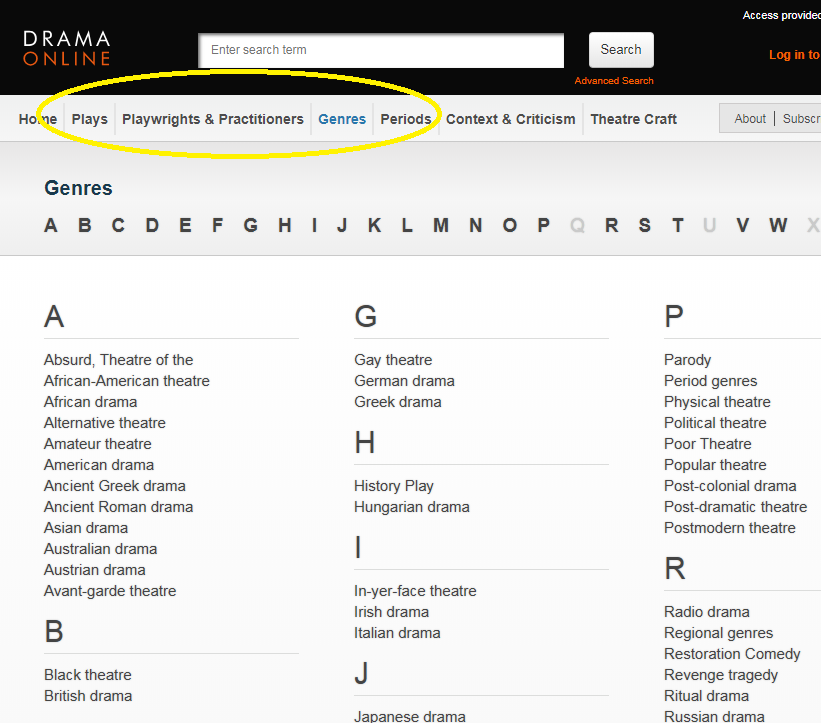
For example, using the options at the top of the screen, you can browse by title, author, genre and time period, or if you click Find Plays on the home page, you can add in other search filters, such as number of roles or scenes. Select Context and Criticism for access to a wide range of e-books about drama.

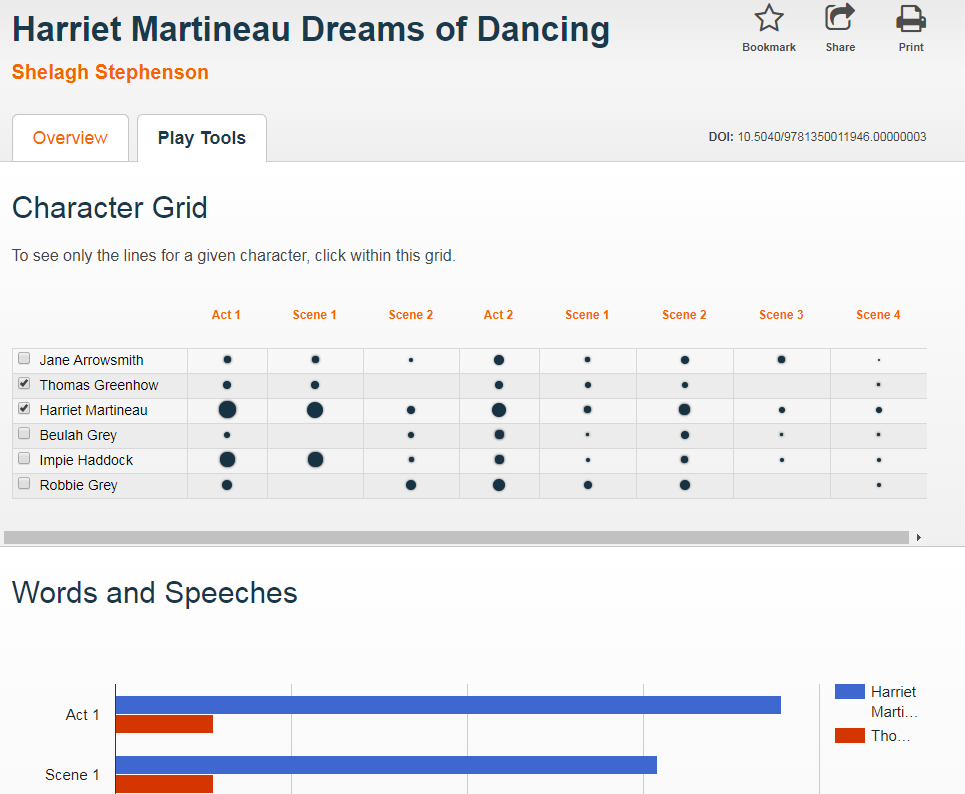
When viewing a play text, click Play Tools to analyse the speaking parts and appearances of different characters throughout the play.

Finally, follow @dramaonlinelib for news and features about this fantastic resource!