The Library is running a short trial to the database Psychoanalytic Electronic Publishing (PEP).
PEP contains more than 139,000 articles covering over a million pages, full text of numerous journals and classic monographs, as well as full-text searchable videos, in the field of psychoanalysis. PEP has been designed to provide a powerful rapid search of the entire psychoanalytic literature in English, French, German, Greek, Italian, Romanian, Spanish and Turkish.
PEP provide a range of videos to help you access and make effective use of the database:
Quick Intro: This 8 minute introduction to the new PEP-Web platform covers the basics you need to explore the vast PEP-Web archive, including journals, books and videos, as well as how to efficiently find what you’re searching for.
Searching and Browsing: This 10 minute video will give you a detailed tutorial on searching and browsing on the new PEP-Web platform. This includes how to explore content, find something you already know, and browse like a physical library.
Browsing videos: This short video will show you how you can explore the video collection on PEP-Web.
Refining your Results: This 3 minute video will show you how to refine your search results. You can refine by decade, author, citation count, language, article type and more, making exploring content and finding what you want more efficient and effective.
Advanced Features: This 2 minute video takes you through some of the more advanced ways you can use PEP-Web, including keyboard shortcuts and advanced search methods. The tips covered in this video are documented here on the PEP Support website, so you can read through and refer to them at your own pace.
Our trial access is valid until 30th November 2024. As the purpose of a trial is provide short term institutional access to establish whether the resource is of interest for future sustained access, unfortunately we are not able to extend or repeat trials. Please bear in mind that any links to material within the trial will no longer work after the trial ends.
We’re keen to hear any feedback on the resource, either by posting your thoughts on this blog post below, or by getting in touch with your Liaison Librarian at libliaison@newcastle.ac.uk.
Following a successful trial of the resources in 2022-23, we have added two additional modules to our SAGE Research Methods collection. Through the Library you now have access to a host of guidance, worked examples, teaching resources and practice materials from SAGE Research Methods, SAGE Research Methods Video, SAGE Research Methods Datasets and SAGE Research Methods Data Visualisation.
Datasets
SAGE Research Methods Datasets is a collection of hundreds of teaching datasets and instructional guides that give you the chance to learn data analysis through hands-on practice.
This new resource is a bank of topical, practice datasets, indexed by method and data type. For academic staff, the datasets have been optimised for use in your teaching and can be used for in person teaching or within Canvas materials. This will save you the time of sourcing and cleaning data for use by you and your students.
The decisions researchers make when analysing data can be a mystery to students embarking on research for the first time. Through practicing analysis using real data from SAGE Research Methods Datasets, you can see how analytic decisions are made, helping you become confident researchers.
Quantitative datasets are taken from surveys and experiments and come with instructions to analyze the data in SPSS or R.
Qualitative datasets are taken from academic research projects, providing bite-size examples from interviews, focus groups, documentary sources, and more, plus advice on how to approach analysis.
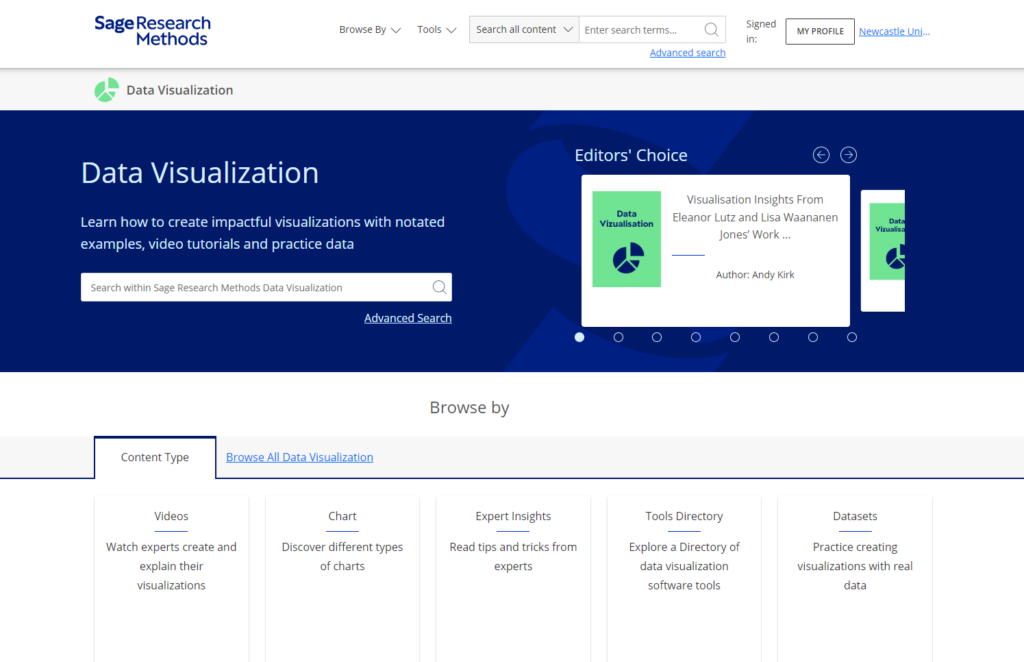
SAGE Research Methods Data Visualisation will help all researchers, from beginners to more advanced practitioners develop the fundamentals of data and design necessary to create impactful visualisations. Through a series of practical video tutorials, text guides and practice datasets, the resources will help you identify the chart types that best fit your specific data story.
Researchers increasingly grapple with complex or big data and need to present their data in an understandable, easy to interpret, and informative way to disseminate their research successfully. Mastering the skills and techniques of data visualisation is, therefore, key for any researcher. This new resource will help you and your students to communicate data with impact so that audiences can grasp difficult concepts or identify new patterns and relationships easily.
You are able to search and browse by data and chart type to find how to guides and explainer videos, explore a directory of data visualisation software and access datasets to help you practice communicating data.
The Scopus Search Results page has been redesigned, the following new and exciting features include: –
Search functionality on search result page itself
User-friendly filters/facets and customized different views on how the results are displayed
A new an intuitive page layout
Why not try the new version for yourself! Just perform a Scopus search then click on the ‘try the new version’link at the banner at the top of the page. If you want to know more just click on ‘take a tour’. You can easily return to old version by clicking on the link ‘return to old version’.
If you want to know what else Scopus have done in 2022, have a look on their website.
We are hosting a Scopus webinar on December 8, which is a great opportunity to come and find out more about getting the most from the database.
The Topics pages on ScienceDirect have been compiled into a new homepage, and offers a way to:-
Search all Topics pages
Search and browse within specific subject areas
Register to receive recommended articles based on your search activity.
The extracts provided on ScienceDirect Topics are written by experts and are drawn from foundational and reference materials. The source materials used include major reference works such as encyclopaedias, journal review articles, monographs, book series and handbooks.
For a list of ScienceDirect topics, have a look on their website.
My name is Lia, and I am a 3rd year undergraduate law student. The modules I am doing this year are Employment, Careers, Company, Mediation, Evidence and Commercial. I am originally from Peterborough but love Newcastle so much that I want to stay here after I’ve finished studying! My career aspirations are hopefully to become a commercial solicitor in Newcastle.
What do I know now that I wish I knew when I first started?
My 1st year was very different to the norm as I was the Covid year, which made my 2nd year even harder having to learn to adapt to in-person teaching. My advice would be to work 9-5 during the week and give yourself as much time off in the evenings so that you can go out, hang out with your friends, and do extracurricular societies and sports clubs.
1st year and 2nd year are all about making mistakes and learning from them, so never be too hard on yourself. It is more important to always get feedback from coursework and exams, knowing that whatever questions you have other students, the librarians and lecturers will all be able to help.
Seminars are also everyone’s saviours as they literally ask you to prepare the exam questions. I think you should prepare these to your best ability and try do some follow up work on the seminar after you have had everyone’s input.
Client Interviewing
In my 2nd year I entered the client interviewing competition with my friend, Daisy. This was highly rewarding as we learnt how to conduct ourselves when meeting clients and eventually won the competition overall.
The best part of our prize was that we got free work experience at Ward Hadaway, a regional law firm in Newcastle. I completed seats in Real Estate and Commercial litigation whilst I was there.
Image from Newcastle Uni Law Society Instagram @nulawsociety
Now, in my 3rd year, I am one of the client interviewing officers this year for the law society. This year Daisy and I are hoping to make the competition better than ever and help participants develop their skills by offering more training sessions than previous years and more competitions. I really advise any 1st or 2nd years to do this as an extra-curricular as it doesn’t take up too much time, looks great on your CV and is judged by Ward Hadaway solicitors who offer money and work experience as a prize!
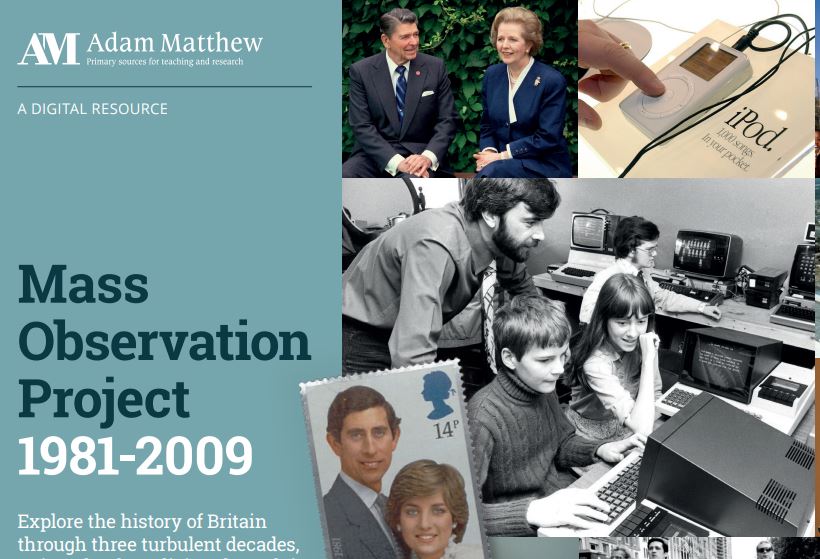
We’re pleased to announce that we have now added the latest 2000s module to the very popular Mass Observation Online resource. We already had access to the 1980s and 1990s modules.
About Mass Observation
Mass Observation is a pioneering project which documents the social history of Britain by recruiting volunteers (‘observers’) to write about their lives, experiences and opinions. Still growing, it is one of the most important sources available for qualitative social data in the UK. This latest instalment is a great resource for anyone researching aspects of the early 21st century. It complements our existing access to the original Mass Observation project archive, which covers 1937-1967.
2000s collection
This module has a strong emphasis on technological advancements and the changing means of communication that came with the new Millennium. Highlights include the Millennium Diaries, the events of September 11th and environmental concerns, as well as detailing the everyday lives, thoughts, and opinions of respondents.
Searching and browsing
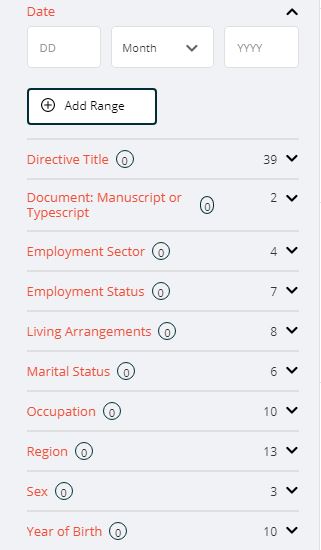
Filtering options
You can browse or search Mass Observation in various ways.
Browse by directive: browse the different directives (surveys), which are arranged chronologically and by topic.
Browse all documents: browse all the individual documents, and then further filter your search as required.
You can also use the Advanced search box at the top of the screen to search for specific topics.
Help
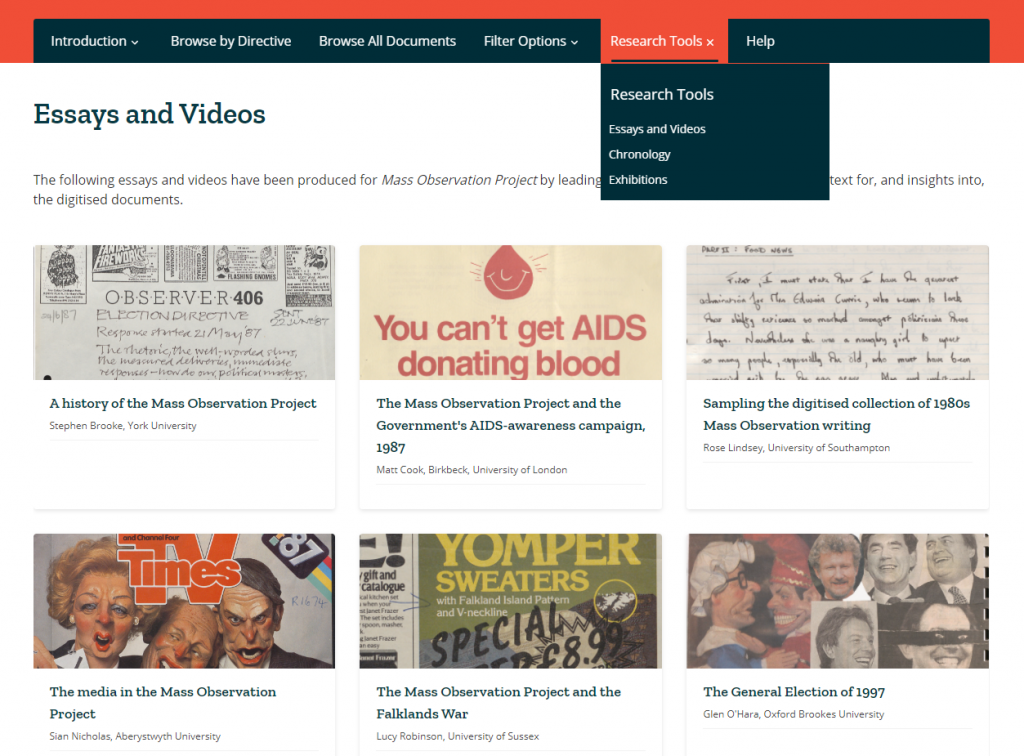
Research tools
We’d recommend you start by reading through the Introduction (top menu) which explains more about the project and the different document types. If you’re looking for ideas about how to make use of it, take a look at the Research Tools, which includes essays, videos, exhibitions and chronological timelines.
Note that as over half the materials in these collections (mainly the pre-2000s modules) are handwritten, the database enables Handwritten Text Recognition (HTR) to help you search. We would recommend you read about how HTR works, to help you get the best out of the database, in the Introduction section.
If you’re working on a dissertation, thesis or project right now, or will be doing so next academic year, what can you do if the Library doesn’t have access to all the specialist books and other information resources you need? How can you find out about resources relating to your research topic which are held elsewhere? Can you visit other libraries and archives if you’re away from Newcastle over the vacation?
Read on to find out how you can expand your search beyond our library….
1. Search
You can search across the catalogues of over 170 UK and Irish academic and national libraries, together with other specialist and research libraries, via Library Hub Discover (formerly COPAC). The range of libraries included in Library Hub Discover is expanding all the time, and includes all UK universities, as well as the libraries of such diverse organisations as Durham Cathedral, the Institution of Civil Engineers, the Victoria and Albert Museum, and the Royal Horticultural Society.
In response to Covid restrictions, Library Hub Discover has also made it easier for you to find Open Access resources via its catalogue: it has recently incorporated the HathiTrust Digital Library, as well as the Directories of Open Access Books and Journals to its searchable database.
For a more in-depth and up-to-date search, you can also search individual academic library catalogues online. Need to look further afield? Search library catalogues internationally via WorldCat.
If we haven’t got the book you want, you can ask us to consider buying or borrowing it via our Recommend a book service.
If you need a copy of a journal article to which we don’t have access, you can apply for it via our inter library loan service, which is currently free.
You can search UK doctoral theses via the national EThOS service. This has records for over 500,000 theses, dating back to the year 1800, of which over half are freely available online (do note you have to register with EThOS before being able to download: it’s a separate login process to your usual University login).
3. Visit
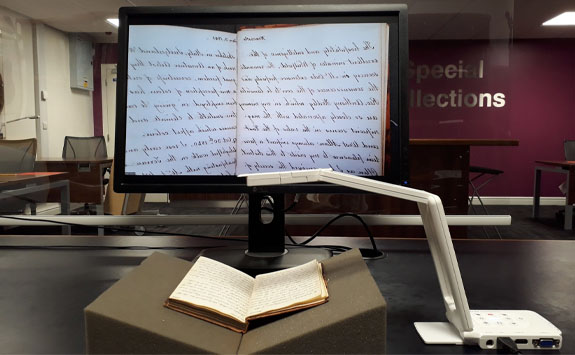
Special Collections Virtual Reading Room
The SCONUL Access Scheme enables students to visit most other academic libraries around the country, and in some cases, borrow from them. This service has recently resumed since its suspension during the Covid pandemic, but please note that not all academic libraries are currently participating in the scheme, so do check carefully before you visit, and read the latest information on the SCONUL Access site.
You will need to register with SCONUL Access before you can visit another Library, so do allow time for your registration to be processed.
If you want to consult archives or special collections elsewhere, you’ll need to check with the organisation in question beforehand (you’ll usually need to request to consult items in advance of your visit). If you can’t visit in person, archives services may still be able to answer queries, provide access to selected digitised items, or even operate a Virtual Reading Room, so it may well be worth enquiring.
Where can I find pictures relating to transport which I can use in my project? How do I find out what was broadcast on British television and radio on a particular day in the 1970s? Where are the best places to find examples of digital art? I need audio clips of scary sounds for my presentation – where to start? Are there any interesting oral histories in my subject area? How do I reference a podcast? I’ve found an ideal picture online, but I don’t know where it’s from – what can I do? Is there an authoritative list of famous music plagiarism cases anywhere, including audio clips?
We’ve updated and expanded our old images guide, and included new databases and resources for finding films and television programmes, plus audio content such as radio programmes, sound clips, podcasts and oral histories.
We’ve also updated the original still images section, which helps you find images of all genres and subjects, such as anatomy, archaeology, architecture…. and all other letters of the alphabet!
Need more help?
Keyword searching isn’t always the best way to search for audiovisual content, so if you want to find an image which looks like another one, search by colour, or find exactly what you want on Box of Broadcasts, visit our guide.
Finally, if you’re unsure whether you’re permitted to use an audiovisual resource in your assignment, and/or how to cite it, we can help with that too. Our guide contains plenty of helpful advice on using and citing audiovisual materials, and we’ve tried to include links to collections and databases which are licensed for educational use where possible (but please do check the terms and conditions in each case).
Have you met BoB? Box of Broadcasts is a fantastic resource for all subject areas: an archive of over two million radio and television broadcasts from over 75 free-to-air channels, including all BBC channels, ITV and Channel 4, plus some international channels. New programmes are added to BoB as they are broadcast each day.
We know it’s a very popular resource, but are you getting the best out of it? Here are some quick tips for newbies and experienced users alike!
Smarter searching
BoB is a huge database, so searching by keyword may retrieve a lot of irrelevant results, especially as the default search looks for your keyword in all programme transcripts (i.e. every word spoken in a programme). Click on the Search options link just under the search bar to see various ways of making your search more precise, including searching in the programme titles only, or limiting by date. This help video gives more detail:
Playlists and clips
You can create your own playlists: really helpful if you’re researching for an assignment, or preparing to teach a module. You can also search public playlists curated by other BoB users around the UK: just select Public playlists underneath the search bar, or explore this showcase of playlists for more inspiration.
The Library has lots of great collections and resources, so when it comes to finding wider reading for your topic, or beginning research for your assignment or dissertation it might all seem a bit overwhelming. Library Search is a great place to start looking for information but there are many other resources you might want to try. To help you we’ve put together this list of some of the most useful online databases and collections for Philosophical studies.
Let’s dive in!
Scopus
Scopus is a large, interdisciplinary database of peer-reviewed literature, providing an index of articles, book chapters, conference papers and trade publications.
One of the main advantages of using Scopus is that it provides a lot of useful information about the articles it indexes. This includes full reference lists for articles and cited reference searching, so you can navigate forward and backward through the literature to uncover all the information relevant to your research. You can also set up citation alerts, so you can be informed of new, relevant material automatically.
https://youtu.be/qCu-obYMFsE
Video from Scopus on how to expand your search results.
Scopus includes other smart tools that can help you track and visualise the research in your area, including author and affiliation searching, visual analysis of search results, a journal analyser, and author identifier tools. You’ll find tutorials and advice on using these features in the Scopus support centre and on their YouTube Channel.
JSTOR
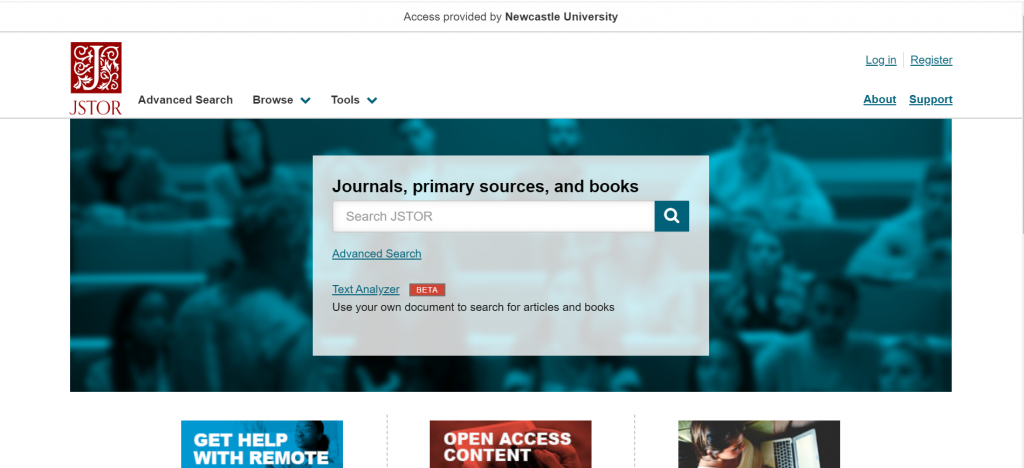
JSTOR provides access to full-text materials including scholarly journals, books and book chapters in the arts, humanities, and social sciences. It has basic and advanced search options that allow you to search by topic keyword, author, subject area, title or publisher.
Take a look at our Get more out of JSTOR blog post to find tips for advanced searching on this database.
Arts and Humanities Citation Index
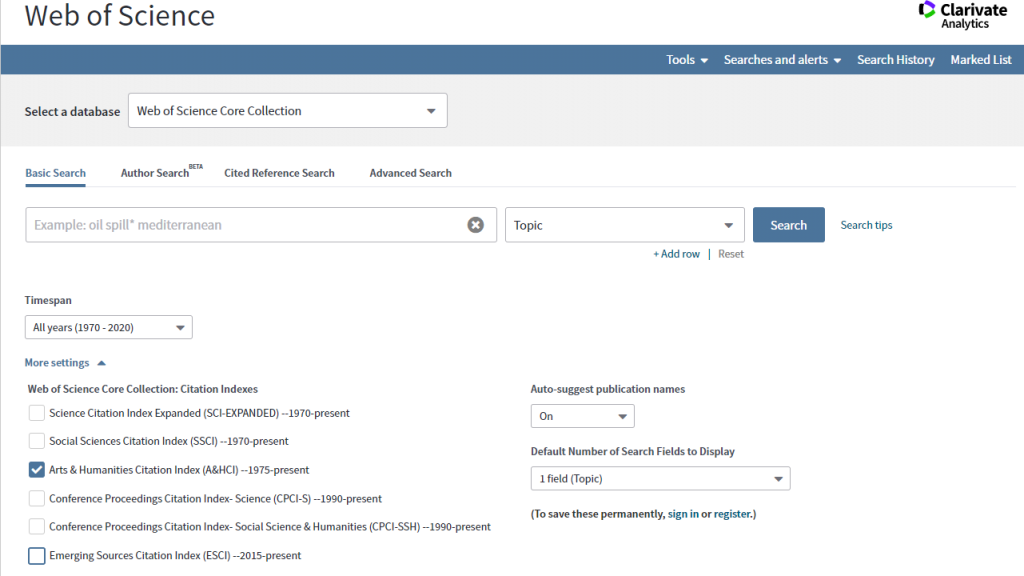
Part of the Web of Science Core Collection, the Arts and Humanities Citation Index contains indexes for over 1,800 journals across 28 arts & humanities disciplines, dating from 1975 to present. Once you’ve accessed the Web of Science homepage, select more settings and tick the Arts and Humanities Citation Index, to limit your search to this database.
Like Scopus, the Arts and Humanities Citation Index provides a lot of useful information about the articles it indexes, including abstracts, keyword descriptions, full reference lists and cited reference searching within the web of science collection. There are smart tools for analysing your results and options to set up search alerts to be notified of any new relevant material.
The Stanford Encyclopedia of Philosophy is a major reference work, compiled and kept up to date by experts in the field. You can browse contents alphabetically, or use the search box to look for keywords, philosophers or philosophical movements. Each record includes an introductory abstract, entry contents, a bibliography, a list of related entries, and links to other useful online resources.
Reference works can be particularly useful at the beginning of your search when you’re looking for an overview of your topic area, or if you’re looking for a key fact to add to an argument, they can also be useful if you want to develop your knowledge of subject vocabulary.
PhilPapers
PhilPapers is a comprehensive index and bibliography of online scholarly material for philosophy, maintained by a community of philosophers. The database includes books, journals and open access archives, while the linked PhilArchive repository provides links to open access publications.
You can use basic or advanced search tools to look for material by keyword, find specific journals or explore user profiles of members of the community. Item records provide helpful details such as an abstract, keyword and relevant categories as well as a list of references, citing articles and related reading. You’ll also find a range of download options for the item.
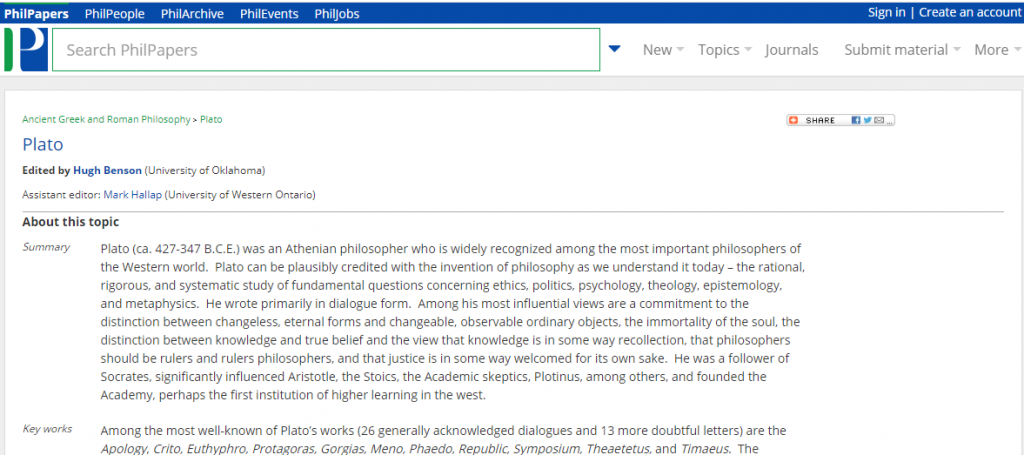
Additionally, PhilPapers provides a reference collection of over 5000 philosophical categories organised hierarchically by topic, which you can browse from the homepage or via the Topic tab in the menu. These are maintained by experts in the field and include a summary of the topic, a list of key and introductory works and a links to related categories.
Look out for the option to take a quick guided tour on the main homepage, this introduces you to the main features and tools of the database.
Box of Broadcasts (BoB)
Box of Broadcasts allows you to access TV and radio broadcasts from over 65 channels, including most of the UK’s Freeview network, all BBC TV and radio content from 2007, and several foreign language channels. It’s a great resource for finding documentaries or critical opinions.
You can view archived programmes, create clips and playlists, and see transcripts to help with citation and translation. You can also search other user’s public playlists to see curated lists around topics similar to your own. There are lots of helpful tutorial videos on the BoB website.
Unfortunately, Box of Broadcasts is not available outside the UK.
Philosophy Subject Guide
This list was just a taster of all the great resources available for your subject area, to access these and to find out more visit your Subject Guide and explore the journals, databases and subject specific resources we’ve curated for Philosophy students.
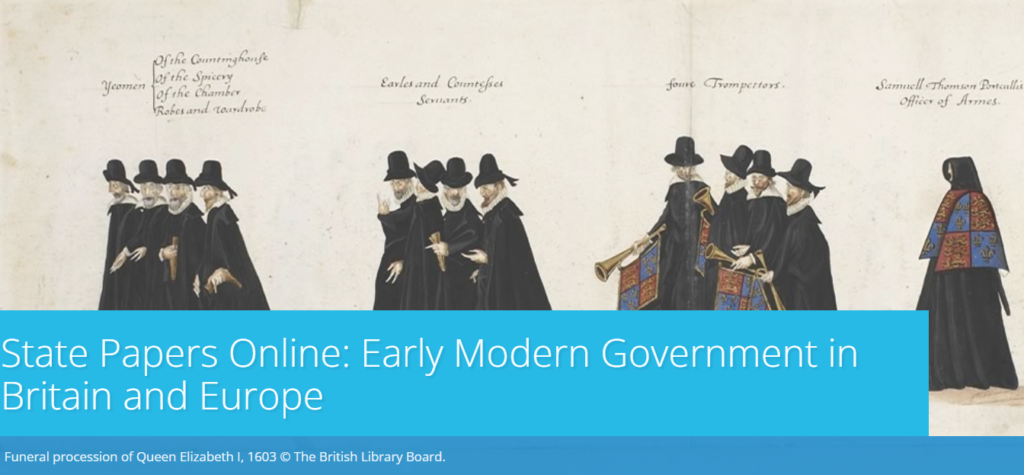
The Library has access to the digitised State Papers Online from 1509 to the end of the State Papers series in 1782, providing a fascinating research resource for early modern Britain and Europe.
What are the State Papers?
They are predominantly official papers of the Secretaries of State from the period, and include correspondence, reports, memoranda and civil service drafts, covering a wide range of domestic and international matters, and emanating from the highest levels of power. The collections include letters from popes, diplomats, and rulers of other countries, as well as records such as military and naval registers, and thus provide a fascinating record of the Tudor, Stuart and early Georgian periods in England and beyond.
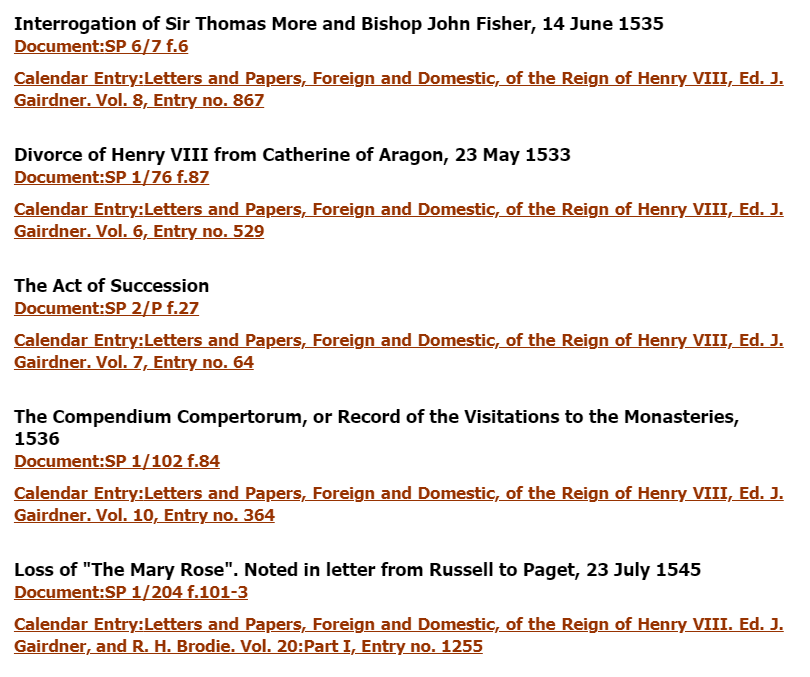
A selection of entries
It is an major resource for researching themes such as the monarchy, law and order, religious conflict, wars and treaties, international trade and the emergence of party politics.
What’s in this collection?
The digitised collections comprise the papers themselves, digitised from the original manuscripts, as well as the ‘calendars’, which catalogue and briefly describe or summarise the manuscripts, and which have been transcribed into text. The manuscripts themselves are mostly not searchable (except for a few series which have been transcribed). The calendars are searchable, and each calendar entry links to its manuscript, making the research process significantly easier than pre-digitisation.
How to search
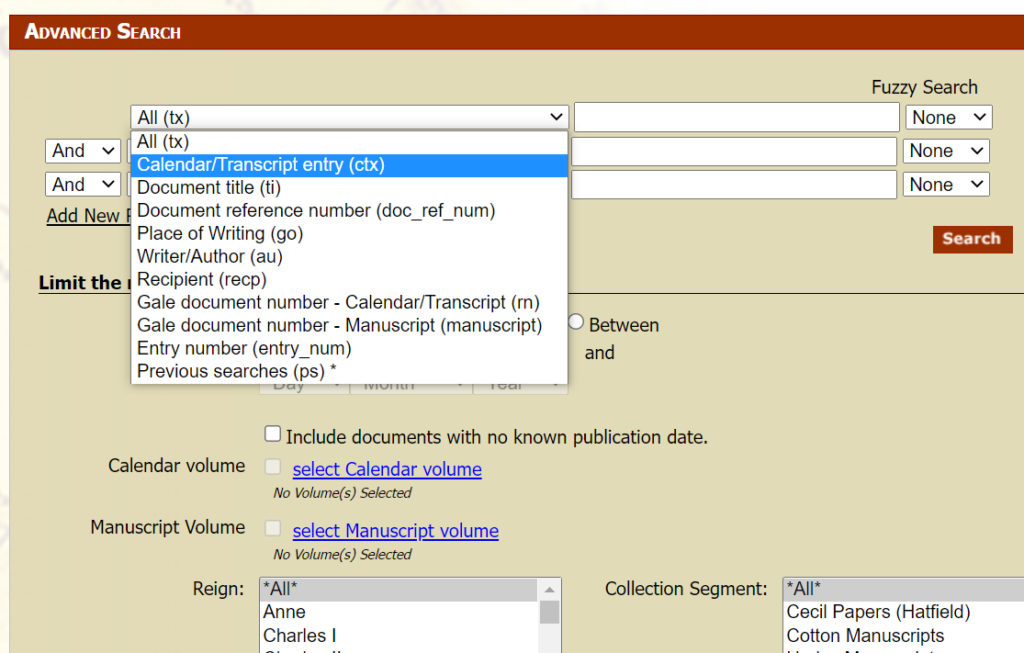
You can search or browse the State Papers in various ways. We’d recommend selecting Advanced Search to access all the options for focusing your search. Note useful options such as fuzzy search, which enables you to search for spelling variants, plus the option to limit your search to records with a manuscript, and/or a transcript of the manuscript.
Advanced search screen
The Browse function may be useful if you wish to work through a particular series of State Papers: you can either browse the calendars or manuscripts.
There are various options for saving, downloading and exporting results.
Help and guidance
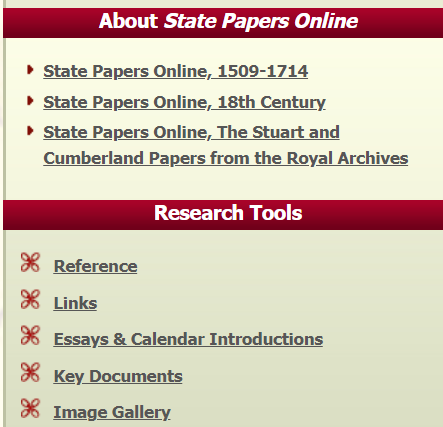
Help options
If you are using the State Papersfor the first time, we’d recommend reading the relevant About State Papers Online section to get an overview of what each collection contains.
You will also find very helpful contextual information in the Research Tools section.
Reference includes glossaries, explanations of dates, weights and measures etc;
Links gives links to useful guidance such as paleography courses.
Essays gives more detailed insights into each collection, written by experts.
Key documents picks out important highlights from the collections.
You can also click Help in the top right of the screen for in-depth help with searching and exporting.