Higher Education Academy: Communities of Practice

Are you looking to share knowledge and ideas with higher education professionals nationally and globally?

The Higher Education Academy (HEA)  Communities of Practice offer an exciting opportunity for members to take part in discussions, webinars, blogs, thought platforms and more .  Communities  focus on a number of keys areas including employability,  and assessment and feedback.

Interested? Read on to find out more. Continue reading “Higher Education Academy: Communities of Practice”

Have your say – Virtual Learning Environment staff focus groups

A number of key themes have emerged from the free text comments provided in the VLE Review staff survey which will be explored in a series of staff focus groups in January 2018.

These will help us to determine what you want to be able to do on a course /module and the functionality that you require in the VLE to meet these aims.

All staff are welcome. An additional Professional Services staff focus group will also be held.

The dates and themes are: Continue reading “Have your say – Virtual Learning Environment staff focus groups”

Learning and Teaching Conference 2018: Dr Camille Kandiko Howson

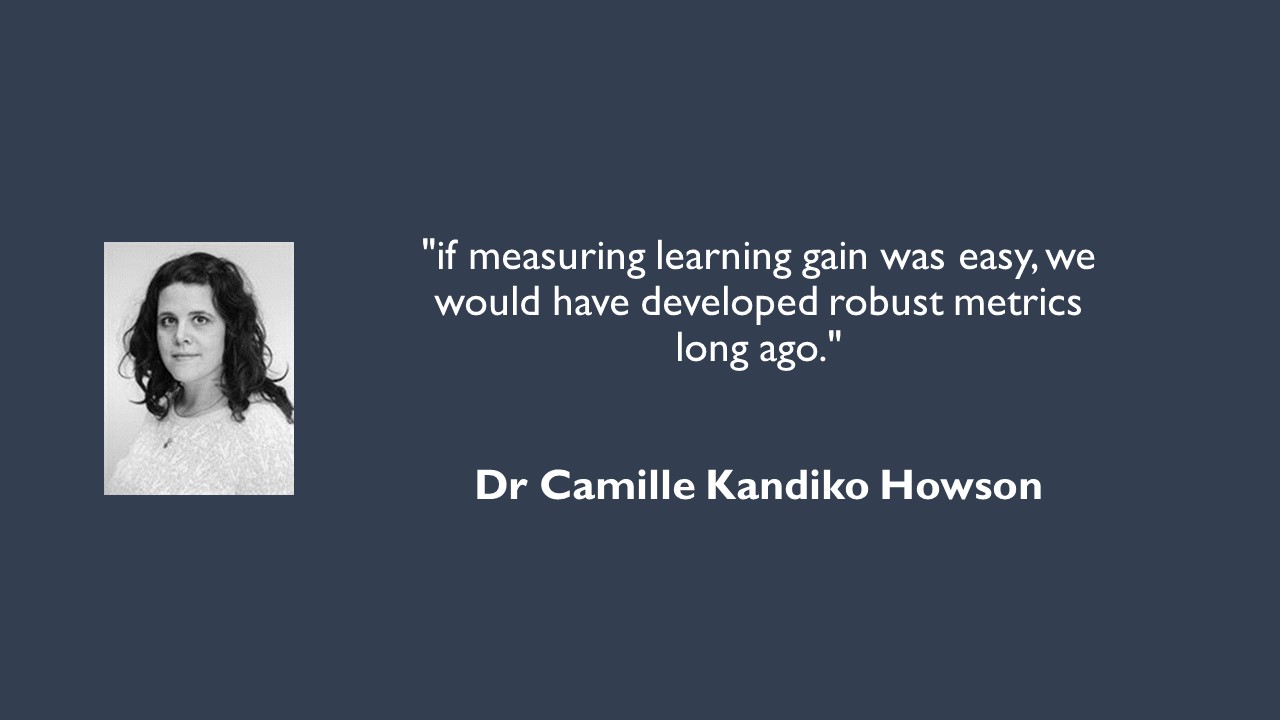
Picture and quote from Dr Camille Kandiko Howson

The arrival of the Teaching Excellence Framework with a core criteria of ‘Student Outcomes and Learning Gain’ has fuelled the ongoing debate about what learning gain actually means, and how it can be measured.

Given the prominence of the topic we are delighted that Dr Camille Kandiko Howson will be presenting a Keynote at our Learning Teaching Conference on Wed 21 March 2018. Continue reading “Learning and Teaching Conference 2018: Dr Camille Kandiko Howson”

Registration Open: Learning and Teaching Conference 2018 Education for Life: celebrating partnership, encouraging innovation

Image for Learning and Teaching Conference 2018 of Tyne Bridge.

Learning and Teaching Conference 2018 – Education for Life: celebrating partnership, encouraging innovation

Wednesday 21 March 2018

We are pleased to announce that registrations are now open. Book your place here

The event will include a diverse mix of sessions including Workshops, Presentations, Lightning Talks and Poster presentations. Further information about the conference can be found on our website. Continue reading “Registration Open: Learning and Teaching Conference 2018 Education for Life: celebrating partnership, encouraging innovation”

Guest Blog: School of Dental Sciences Blackboard update

Picture of Christopher OConnor
by Christopher O’Connor, School of Dental Sciences

Last year we decided to open the great big can of worms that was our School’s Undergraduate Blackboard site.

Dental Sciences was one of the first schools to adopt Blackboard some 15 years ago and was perhaps a lesson in how not to structure it. We just had one very large community with all the learning material from our 5-year non-modular course crammed inside. Continue reading “Guest Blog: School of Dental Sciences Blackboard update”

NUTELA 3Ps: Quizzing

NUTELA logo

From quizzing in the classroom to embedding quizzes in your recap recordings, our latest Pizza, Pop and Practice event covered them all (with a bit of a Christmas theme).

Our experts for this session were Marc Bennett (NUIT), Rebecca Gill (LTDS), Chris Graham (Mathematics, Statistics and Physics) and Carol Summerside (LTDS). They all provided a great overview of the different tools and the session ended with Laura Delgaty’s International Christmas Quiz with prizes for everyone.

Find out about each of the quizzing tools below: Continue reading “NUTELA 3Ps: Quizzing”

Undergraduate research: present at BCUR, get Newcastle to pay for it, CV points

If you are an undergraduate or a recent graduate with a piece of independent research that you’re proud of—or you’re a lecturer with students like that—please read on! Newcastle University is looking for people to represent us at the British Conference of Undergraduate Research 2018.

Continue reading “Undergraduate research: present at BCUR, get Newcastle to pay for it, CV points”

Education for life: Celebrating partnership, encouraging innovation. Annual Learning and Teaching Conference 2018. Call for submissions extended

Image for Learning and Teaching Conference 2018 of Tyne Bridge.

The Learning and Teaching Conference 2018 theme has been announced: Education for Life: celebrating partnership, encouraging innovation.

This one-day event will take place Wednesday 21 March 2018, 9am-5.30pm.  Read more about the conference theme, find full details of the event and register on the conference webpage.

Call for submissions: extended deadline Friday 19 January 2018

Proposals are welcomed from academic staff, students and Professional Services staff, for individual or collaborative submissions. Further information about the conference theme Education for Life: celebrating partnership, encouraging innovation is available on the conference webpage.

Session formats

All sessions will have a member of LTDS staff allocated to help in advance of the event, who will also be in the session on the day.

Workshops (45 or 60 minutes)

A hands on session to solve a problem, practice something new, showcase a method. Learning by doing. Choose a flat teaching space arranged cabaret style, or a PC cluster.

Presentations (15 minutes)

These sessions will be chaired by a member of academic staff, and wherever possible grouped into themed sessions to enable a short panel discussion and Q&A at the end.

Lightning talks (3 minutes)

A speedy way to introduce a new idea, share an approach, or ask a question. Grouped in themed sessions wherever possible. A chance to meet people doing similar things to you. Several lightning talks will be followed by a Q&A session. You can choose whether or not to use audio visual aids, or you could submit a 3 minute video!

Posters

Posters will be on display all day in the Boiler House. Poster presenters should be available by their poster to answer questions during the lunch break. Delegates will vote on their favourite and a prize will be awarded.

Submit your idea

Complete the call for submissions form to submit your ideas by Friday 19 January 2018.

All submissions will be reviewed by the Learning and Teaching Conference Programme Committee, and session allocations will be confirmed by Wednesday 31 January 2018. We will wherever possible try to accommodate your preferred session, however you may be allocated a different session format, at the discretion of the committee.

Contact

If you have a query email LTDS@ncl.ac.uk

Share the poster

If you have somewhere to put it up you can print out this poster, or use this version to send out to colleagues.

Turnitin UK Academic Integrity Summit 2017

I recently attended the Turnitin UK Academic Integrity Summit 2017 held in Newcastle Upon Tyne.  This was a very timely conference following the release of the QAA report into contract cheating.  I was concerned that this would be a day-long sales pitch from Turnitin but was pleasantly surprised to find the opposite. There were many presentations from institutions around the world, but very little ‘grandstanding’ from Turnitin.

Stephen Gow, Academic Integrity Coordinator, University of York

The first session I attended was a look at the approach from the University of York towards academic integrity. They discussed the importance of the language used at the University, moving away from terms such as “plagiarism” towards “academic integrity”. All their students have a mandatory academic integrity online tutorial they must complete in Semester 1 of Stage 1. They are working closely with the student union on their “integrity week” and are also working more closely with staff, including on their Postgraduate Certificate in Academic Practice (PGCAP).

Turnitin Data Workflows

The second session was a discussion session with the Turnitin staff exploring the types of data and statistics institutions would like to get out of Turnitin. This included reports on feedback return time, statistics around number of students receiving extensions, archiving, learning analytics, and reporting on the various functions used. We hope Turnitin will use this in the further developments of the software.

Bill Loller, Turnitin

The third session was facilitated by Bill Loller, Chief Product Officer at Jobvite, who is working on a technical solution to expose contract cheating for Turnitin. They are using expertise from the field of forensic linguistics to develop a product. Forensic linguistics may be used in a court case to determine whether a person did, or did not, write a document. They are currently testing their modelling and developing a report that will provide a confidence score.

Bill continued this theme into a larger session with the group, showing some of the contract cheating/essay mills websites prevalent online. He admitted that Turnitin may have helped with this problem – “crack down on plagiarism and students will look elsewhere”. These websites offer 10,000 words for approximately £300.

Simon Bullock, QAA

Simon Bullock from the QAA was next to discuss his recent publication “Contracting to Cheat in Higher Education – How to Address Contract Cheating, the Use of Third-Party Services and Essay Mills.”  He discussed the risks to the public if students were obtaining their degrees through cheating but that despite attempts it is not yet illegal to offer essay mill services online. The QAA is exploring as many non-legislative methods as possible.

Irene Glendinning, Coventry University

Irene Glendinning of Coventry University presented her research work analysing the impact of policies for plagiarism in Higher Education across Europe. She highlighted the UK and Ireland as being some way ahead of many other countries in Europe. They have developed an academic integrity maturity model, a tool to compare the results of the impact analysis across 27 EU member states.

Cath Ellis, New South Wales

The presentation that had the most impact on me was from Cath Ellis from the University of New South Wales. Cath reported that there was too much anecdotal information forming decisions, and not enough hard data.

To find out how many students are using contract cheating services, Cath asked them anonymously. Out of the 14,096 students surveyed around 6% (n=814) admitted to cheating in some form during their programme. The vast majority of this cheating comes in the form of assistance from other or former students. It is not commercially driven. The cheating group’s attitudes show they are less likely to think it’s wrong, although there was no discernible difference between English and non-English speaking students. Non-English speaking students are as likely to think cheating is wrong as English speaking students. Other findings of the study showed that when there are perceptions that there are a lot of opportunities to cheat, cheating goes up. And when there is dissatisfaction with the teaching environment, cheating goes up.

Cath discussed the need for students to have “ethical fitness” – we should not try to remove every opportunity to cheat as students need to be ethical.

She then discussed the various types of contract cheating and review some of the typical websites.

Assessment design is widely advocated as a possible solution to contract cheating, but Cath argued that this is a myth. We should not change our assessment design because of a small percentage of cheaters. Reduced assessment time (shorter deadlines) will actually drive students towards essay mills.

Cath noted that we are not having the correct conversations with students and advised us to discuss contract cheating with them. Part of the study looked at the perceptions of how prevalent contract cheating is, compared to how damaging it is. The study showed that students in the cheating group thought that a lot of students were doing it and it was not that serious. Staff members thought it was not very common but it was very serious. Students in the non-cheating group followed the same path as the students in the cheating group. They also thought that lots of students were doing it while it was not very serious.

Professor Phil Newton – Swansea University

The last presentation was given by Professor Phil Newton from Swansea University. He presented various research projects that explored academic integrity.

I found the event extremely useful and I have reflected since on the way Newcastle University approaches academic integrity. The presentation from Cath Ellis convinced me that we should not be changing any approaches to assessment to attempt to counter the small number of cheating students, but we should be minimising their opportunities to cheat. We also need to be having more conversations with staff and students about the promotion of academic integrity, and the impact contract cheating could have on their career.