Writing an essay: step-by-step guidance from the Academic Skills Development Team

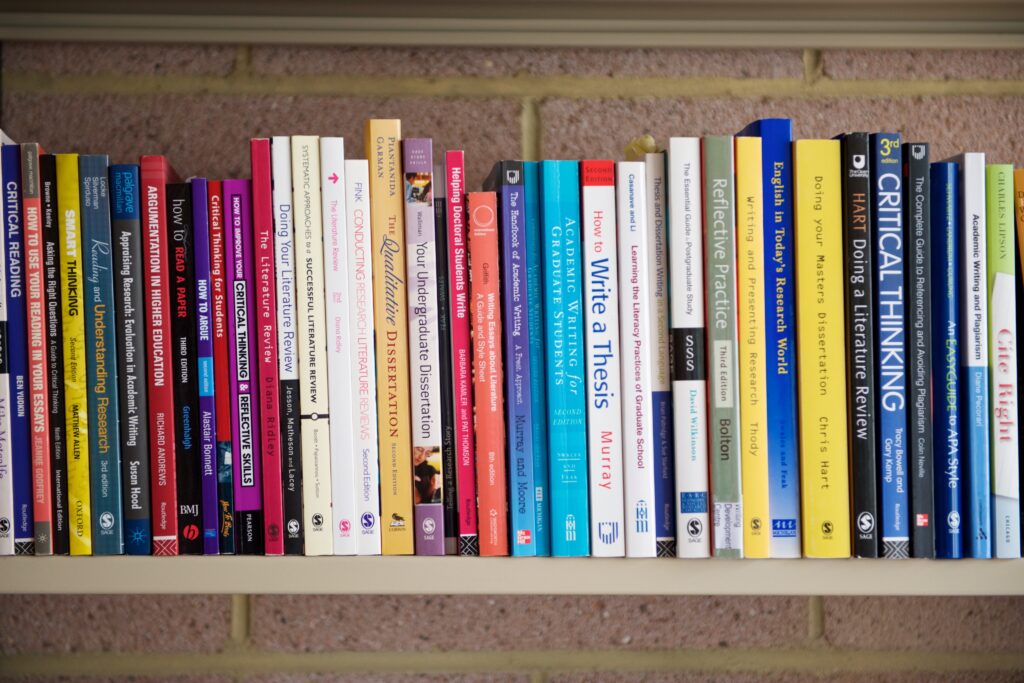
A selection of books on academic skills.

Not sure about how to start writing an essay?

One of the most frequently asked questions in the academic skills drop-ins in the Walton Library is about how to write an essay.

If you are feeling a bit overwhelmed with how to begin a piece of assessed written work, it is worthwhile thinking about writing as a process as opposed to a final product. Thinking about it in this way means that you break the task down into smaller manageable chunks, but you can also review, reflect, and edit your work as you go along which helps you to meet the marking criteria.

It is important to remember that although we call it a process, you are likely to move back and forward between stages reviewing, evaluating, revising, and editing as you go along.

A student in the Law Library.

The first stage in the process is planning, this includes looking over the marking scheme as well as the questions, this will give you a clear idea of what the marker is looking for, you can then begin generating ideas, this will lead you to begin the research process.  It is worth reading broadly at first to get an overall picture of your topic, here you’ll use the materials you’ve been taught in lectures, look at your reading list as well as other resources you’ve been directed to. At this stage (and throughout your work) it is a good idea to have the assignment question to hand so that you can refer to it, this will help you keep focussed on the task you’ve been set. You’ll then be in a position to decide how you want to respond to the assignment question, this will then help you source more detailed texts. Deciding on your position at the planning stage will help make your writing focussed and coherent. Once you’ve decided on your position, you can begin to map out a rough plan.

It is important to have a plan because this gives you a clear overview of what you’ll write about, it will guide you as you work through the assignment and will help you ensure that you’ve included everything and addressed the task fully. The plan doesn’t need to be detailed, even a list of headings and subheadings can be helpful to guide you. Regardless of how you plan your work out, this process will enable you to organise your argument and the evidence you’ll use to support this, you can also establish connections between points. It will also help you read with a clear purpose, as you’ll be looking for material to support your point, as opposed to summarising relevant texts and adding them to your work.

Image courtesy of Glenn Carstens-Peters

After the planning stage you’ll move onto the composition of the assignment. Here you’ll use the rough plan as a guide, and you’ll begin formatting ideas and incorporating references to support your points.  You’ll think about how to structure and the composition of each paragraph and add the appropriate references. Remember it is important to integrate sources when you are writing, not simply summarise one text per idea.

Then you’ll go over what you’ve written and review it, you should evaluate what you’ve written thinking about the evidence you’ve found and your argument throughout the essay, and as you look through your work you are likely to revise and edit what you’ve got. This process will continue until you have completed your assignment.

Reviewing, evaluating, revising, and editing your work is likely to occur in several cycles. Eventually you’ll have a completed draft. At this stage it is worth ensuring that you read the whole piece of work to ensure flow throughout, you can also check for any language, structural, referencing, style or grammar issues. If possible, take a break from writing so that when you do your final checks you are looking at your work with fresh eyes and therefore will be more likely to spot any potential errors.

Our video illustrates this process and can help get you started on tackling a piece of work you’ve been given. Don’t forget that we’ll be able to answer your questions about essay writing and much more when we visit the Walton Library for our drop-ins, the next one is scheduled for Wednesday 16th from 11:00-13:00.
We’ll add more dates after the Easter break, however, in the meantime if you’ve got any academic skills queries, we’ve now got a Live Chat widget on all the Academic Skills Kit pages, it’s live from 12:00-16:00 Monday to Friday.

We always love to hear from students, if you’ve got any feedback or questions about our support or resources please get in touch! AcademicSkills@newcastle.ac.uk
How to make an action plan for your studies and achieve your goals

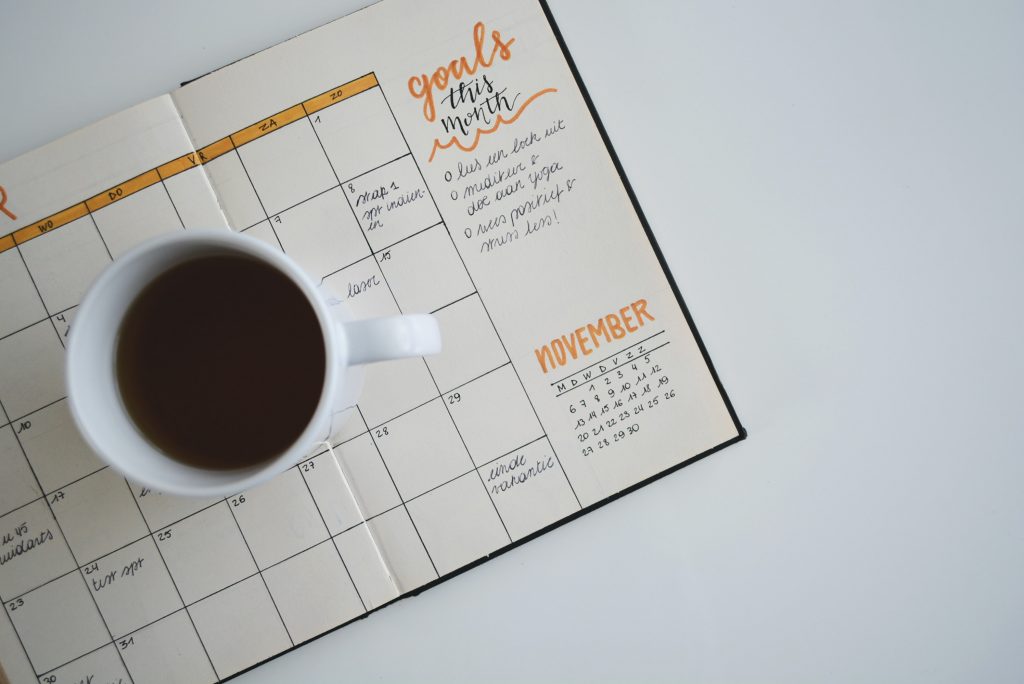
Everyone has goals, be that for lifestyle, health, work or study. These goals give you focus, generate new habits and keep you moving forward in life. However, life is tough, particularly at the moment, so the thought of setting goals can sometimes feel overwhelming. This post will take you through how creating an action plan will help you clarify your goal journey; exploring what your goal is and why you’re setting it, what it will take to achieve, and how you will motivate yourself to reach your destination.

The examples we will focus on will be for study goals, however you can apply this method of goal setting to any aspect of your life.

1. Start with reflection

Before embarking on your shiny new goals, take some time to reflect on your previous goals. Which goals have you successfully achieved? Why were they a success? Is there anything you would do differently this time? Is there a common theme in the goals that you didn’t achieve, such as a lack of purpose?

Ask yourself ‘why’ you are setting this new goal, doing so will help you stay focused and give you meaning and purpose for this potentially challenging journey that you are embarking on.

2. Make them SMART

Your goals need to be SMART:

  • Specific – a specific and focused goal to allow for effective planning
  • Measurable – how will you measure the success of your goal? 
  • Achievable  – a goal that you will realistically accomplish within a time frame
  • Relevant  – a goal that is important and benefits you
  • Time bound – a goal that has a realistic deadline

What is your goal and how can you make it SMART?

EXAMPLE: Your goal is to hand in your dissertation early this summer. This goal, as it is, may feel daunting and unachievable, so how can we make it SMART?

  • Specific – You want to hand in your dissertation two weeks early because you are going on holiday.
  • Measurable – You will set measurable targets daily/weekly, such as X amount of words written by X.
  • Achievable – You have 10 weeks to complete your goal, so you feel it is very attainable if you plan your time carefully (if you only had 2 weeks, you might want to reconsider your goal).
  • Relevant – This goal is very relevant as you need to do well in your dissertation so you can pass your degree, but you also need to complete it early so you can go on your booked holiday.
  • Time bound – You have a clear ideal deadline of two weeks before hand-in.

Use our Goal Setting Template to get you started on your SMART goal:

3. Put your goal into action

An action plan is a flexible checklist or document for the steps or tasks that you need to complete in order to successfully achieve the goal(s) you have set yourself.

This could be written in a notebook, diary or using the Action Plan Template we have created that you can print off and use. It’s important that you get out your pen and actually write your goals down on paper. Research has shown that this will engage the left-hand, logical, side of the brain – basically telling your brain that you mean business!

Use our Action Plan Template to put your SMART goal(s) into action:

4. Plan for obstacles

There are always going to be challenges and events that may disrupt your goal, but instead of letting that obstacle derail you, plan for it.

Look at your study goal and identify what the obstacle(s) will be.

EXAMPLE: You want to submit your dissertation in early, but there’s a big family birthday coming up and a Uni field trip planned. So, get your action plan out and make sure these events are accounted for and plan your studies around them.

5. Check it off

There is nothing more satisfying in life (well apart from popping bubble wrap) than crossing or checking items off a to-do list – it’s that sense of accomplishment, feeling like you are finally getting there, which in turn reduces stress. So remember to break down your goal into small attainable actions and checklists, and for big projects, such as a dissertation or research project, you might have multiple checklists on the go. Just think of the satisfaction you will feel when it’s all done!

6. Reward yourself

This a very personal aspect of goal setting, but an important one.

To boost your motivation we recommend that you choose a reward for all your successful hard work, but select something that’s in relation to the size of the goal – maybe a piece of cake for getting a First Class degree is a bit out of proportion! Add this reward to your action plan and remind yourself of your incentive on a regular basis. It will keep you motivated when you feel like giving up.

EXAMPLE: If you hand-in your dissertation early you will treat yourself to a night out with your friends before you go on holiday.

7. A bit more reflection

You made this goal for a reason – it’s something that you really, REALLY want to achieve, so if your plan isn’t working, change it! Take some time to reflect on what’s working or not working in your action plan, be that daily, weekly, or monthly. Consider – How are you progressing? What changes can you make to bring you closer to your goals? It hard to keep on track when you feel like you aren’t getting anywhere, so are there any quick wins to give you a sense of accomplishment?

EXAMPLE: It’s late at night, you’re tired and struggling to write your dissertation conclusion. Your self-given deadline is in a days time and you are starting to doubt that your goal is achievable – maybe you need to postpone the holiday?

What you need to do is pivot your method – this isn’t working, so what can you change to still achieve your goal? Maybe leave the conclusion for the morning when you feel more awake, but spend the next hour focusing on your reference list so you can tick that off your action plan instead.

Final thoughts

Your SMART goals can be about anything and should be quite simple to plan. There’s lots of help online on using SMART goals, but working your way through the acronym for your particular goal is an excellent start. Don’t forget to use our Goal Setting Template and our Action Plan Template to help keep your goals manageable and reduce that feeling of overwhelm with your studies.

P.S. I had to set myself a SMART goal for writing this blog post and my reward was a very tasty lunch ❤

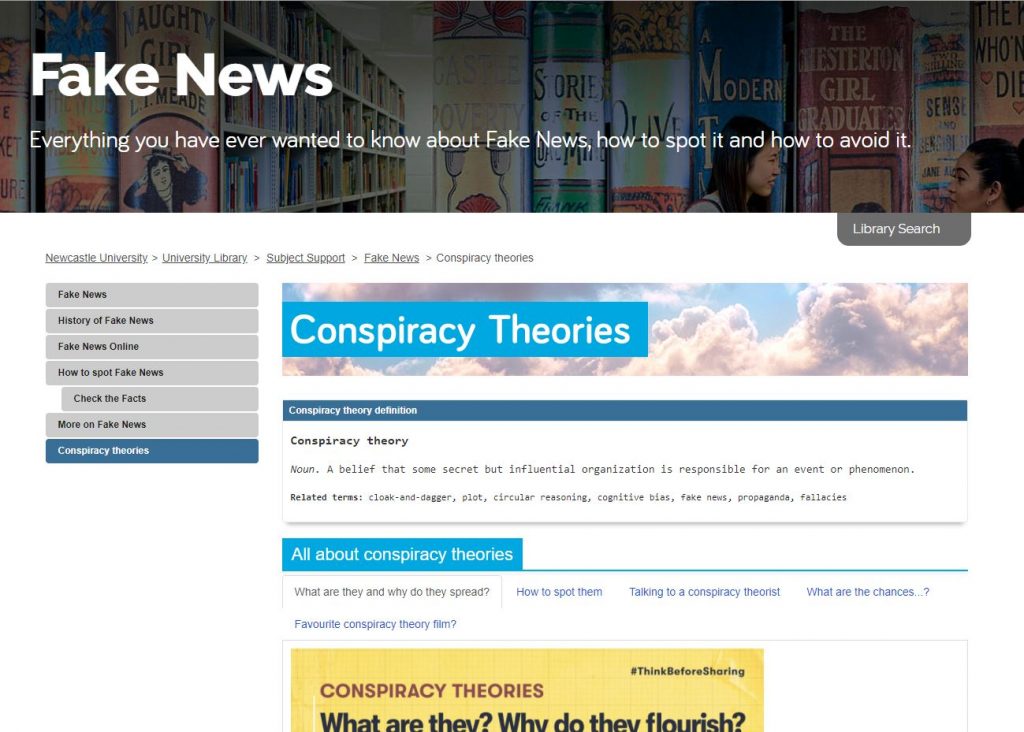
Fake News: the dangers of conspiracy theories

I actually enjoy a good conspiracy theory, and they often make for great film or TV tropes. Do you remember the end clip of Indiana Jones and the Raiders of the Lost Ark where the American government are storing the Ark of the Covenant in a huge warehouse? Do you think this is true? Might governments be hiding top secret things from us in massive, unknown warehouses? I like to jest that I believe this is real.

However, it wasn’t until recently that I realised how dangerous really believing in conspiracy theories can be. Watching the storming of Capital Hill in Washington DC back in January this year, opened my eyes to how conspiracy theories could take hold and potentially endanger lives.

Like fake news, conspiracy theories have been around for a very, very, very long time. Here’s some that you might recognise:

Most recently, you may have spotted some of the dangerous conspiracy theories rising up around the Covid-19 pandemic.

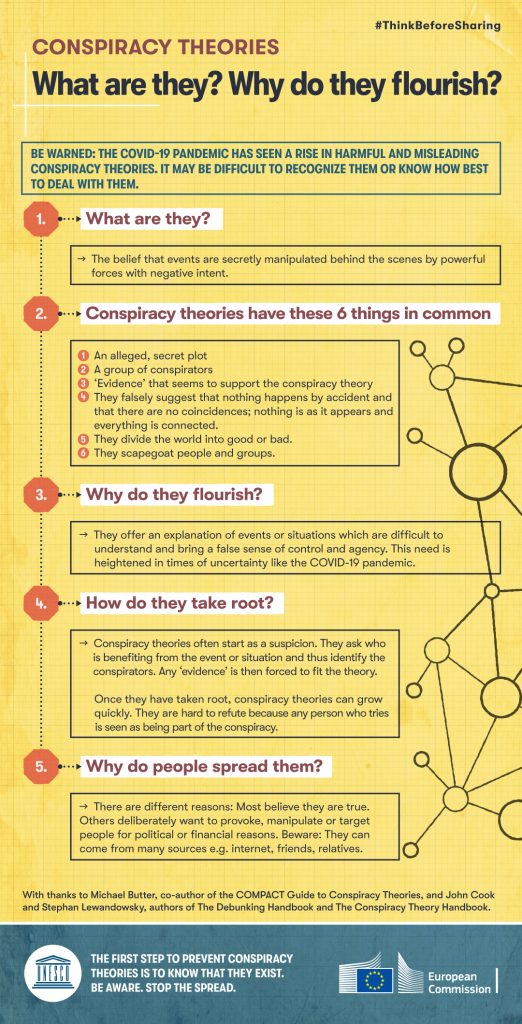
Do you believe in conspiracy theories? Do you know anyone that really believes in them? Have you ever found it hard to talk to them about what they believe? In light of the conspiracy theories surrounding Covid-19, The European Commission have created 10 useful infographics to help people be aware of conspiracy theories, how they spread, the dangers of them, how to talk to people who do believe in them, and (like fake news), how you should think twice before sharing them online:

I found it particularly interesting to learn that it is basic human nature to question reality in periods of uncertainty/change/major incidents (such as the pandemic, 9/11, shootings of presidents etc.), hence this is often when conspiracy theories take off.

You’ll find these infographics on our Fake New Guide , along with other new content including links to some excellent videos and articles. Be sure to take our poll to share your favourite conspiracy theory movie too!

As a University student, it’s important for you to be aware of conspiracy theories; to know of the dangers they pose, to check your own beliefs and to be careful of what you share online. Use these resources to learn more and always remember, the truth is out there…

Get wrapped up in OSCOLA 4th referencing style

What is OSCOLA?

The Oxford University Standard for Citation of Legal Authorities (OSCOLA) is the standard referencing format used by law students and anyone writing in a legal field.  It allows for exact referencing of cases, journals and statutes meaning that sources can be found quickly and accurately.

HELP!!!!!

OSCOLA can be a bit daunting at first, especially if you are unused to referencing, but don’t worry, we have a lot of help available.   Here are some top tips for getting to grips with OSCOLA from scratch or if you just need a refresher:

  1. Start by going to our library guide, where you will find tips and resources to build up your knowledge.
  2. Make sure you look at the page that gives specific information about the OSCOLA referencing style.
  3. Set some time aside and work through the Citing the Law Tutorial from Cardiff University. This will show you how to cite cases, legislation and secondary sources, as well as how to identify authors and quote.
  4. For quick “how do I”? questions, check out the OSCOLA quick help guide or Cite the Law’s A-Z referencing examples.
  5. And if you are trying to use OSCOLA and EndNote, don’t forget we have a handy guide for you.

And lastly, if you are in doubt, remember we are always here to help! Contact us via library help.

Spruce up your referencing: When is a website not a website?

Photo by Dominik Dombrowski on Unsplash

We have all heard it said that languages spoken in northern arctic regions have considerably more words for snow than those spoken in southern climates. When dealing with something in detail every day it is often helpful to categorise and clarify its nuances.

A common mistake made in academic referencing is grouping all sources found online under the overarching category of a website. However, your aim should be to reference the information you have in front of you rather than where it was sourced. Grouping all items found online as a website would be the equivalent to referencing a book only by the publisher details, rather than the author and title. Or, by referring to both a snowball and a snowflake as simply snow.

For example, a government publication found online would be referenced like this in Chicago:

United Kingdom. Department for Education. Cloud computing: how schools can move services to the cloud. London: The Stationary Office, 2016. Accessed: November 4, 2019. https://www.gov.uk/government/publications/cloud-computing-how-schools-can-move-services-to-the-cloud. 

An electronic journal article might appear like this in APA:

Gillum, J. (2012). Dyscalculia: Issues for practice in education psychology.  Educational Psychology in Practice, 28(3), 287-297. doi:10.1080/02667363.2012.684344

While a video posted on the Tate website would look something like this in Harvard:

TateShots (2016) Grayson Perry: think like an artist. Available at: https://www.tate.org.uk/whats-on/tate-modern/talk/what-makes-artist-grayson-perry-conversation-sarah-thornton (Accessed: 11 November 2019). 

Identifying the type of information you are using, as well as the source, is an essential evaluation skill which helps in developing a greater critical approach to information. In many cases you will be unconsciously using your judgment to assess the value of information for your purpose. So when you are using any source of information, ask yourself what it is you are looking at, what details are recorded about it, and whether it measures up as a quality piece of information. You’ll find more guidance about evaluating information on our Evaluating Information guide.

Managing your References: EndNote and OSCOLA

“Should I use EndNote as a way to manage my references?” is often a question we get asked. We wish that there was a simple answer to that question, but there isn’t! It all depends on how many references you have, how you like to work and if you are willing to make time to learn how to use EndNote properly. You see, while EndNote is tool that can make your academic life easier (for example, it can help you build a collection of references, insert references into your work and create bibliographies), it will only save you time, if you invest time NOW.

So if you’re using the OSCOLA referencing style and weighing up whether to use EndNote or not, then you might want to consider the following:

  • You need to have a good grasp of the OSCOLA fundamentals before you even start with EndNote. If you need a refresher on OSCOLA, then check out the OSCOLA referencing guide first before even looking at EndNote.
  • EndNote will not do EVERYTHING for you. You will still need to manually input and amend your references to ensure your footnotes and bibliography comply with OSCOLA.
  • Have you got the time to invest in EndNote before using it? We strongly recommend that you make a start using EndNote from the beginning, rather than in the middle or at the end, of your research.
  • How do you want to use EndNote? Some people decide to use it simply as a storage place for their references and PDFs and leave it at that. Others use it both as a storage place, as well as a tool to help them cite.

Still not sure? Watch the video below to see how to use OSCOLA style and the Cite While You Write feature in Word. Then take a look at the OSCOLA and EndNote guide and see if it’s something you’d like to start using.

Warm up your referencing techniques


Referencing is the acknowledgement of the sources that you use in your work. You must reference all sources that you use in your assignments, projects or dissertations, and includes quotes, ideas, facts, images, videos, audio, websites, statistics, diagrams and data.

Over the next two weeks we will be producing a series of blogs focusing on how to reference successfully in your work. We will cover…

  • explain why referencing is important
  • advice on how to produce consistent and reliable referencing
  • help on how to manage your information to make your life easier and assignments less stressful
  • point you in the direction of where to find advice and help

So come in from the cold and warm up with some referencing help and keep your eyes peeled for our upcoming blogs.

Managing Information: Referencing

Referencing is an important part of academic writing – you’ll usually find it included in the marking criteria for your assignments and projects, with marks being awarded for correctly formatted citations and reference lists.

Why is referencing important?

  • It acknowledges the ideas and contributions of others that you have drawn upon in your work, ensuring that you avoid plagiarism
  • It highlights the range of reading you’ve done for your assignment and makes your own contribution clear, showing how you’ve taken ideas from others and built upon them
  • It enables the person reading your work to follow up on your references so they can learn more about the ideas you’ve discussed in your work or check any facts and figures.

How does referencing work?

Are there any tools that can help?

Yes!  There are lots of referencing tools that can help you manage and format your citations and references correctly.  Here are some examples:

A very useful online tool that lists all the information you need to include in a reference and provides examples of how a reference will look as an in-text citation and in a reference list.  See our ‘Level Up Your Referencing: Cite Them Right’ blog for more information.

  • Citation Buttons
Citation button consisting of a speech mark "

Keep an eye out for this symbol on Library Search and Google Scholar.  Clicking the button will provide the option for you to copy a reference in a particular style and paste it directly into your reference list.  You might need to tidy it up a little bit but it will save you time over writing them manually.

Reference building tools help you to create a bibliography using the correct referencing style.  You can input information manually or use import functions to pull information through from other webpages or documents.  As with the citation button above, reference building tools can save you time but you may still need to check the references are accurate.

  • Reference Management Software: e.g. EndNote

If you’re writing a detailed essay, dissertation or thesis, you may like to use a reference management tool such as EndNote, Mendeley or Zotero to help keep all of your references organised.  This software allows you to manually add references or import them from Library Search, Google Scholar or Subject Databases; sort references into groups; attach pdf documents or add notes.  You can then use the reference management software while you write to add in-text citations and format your reference list.

The University has a subscription for EndNote which is available in all University clusters and can be downloaded to your own personal device. You’ll find information about how to get started with EndNote on our EndNote Guide.

Remember: whatever tool you use, it’s always a good idea to get to know the conventions of the referencing style your school or lecturer would like you to use so that you can spot mistakes or missing information.

You can find out more about referencing and plagiarism by following this tutorial from Cite Them Right (You’ll need to log in to the institutional log in with your University username and password.)

Waltzing with EndNote

What is EndNote?

The official blurb on EndNote is that it is “…the industry standard software tool for publishing and managing bibliographies, citations and references.”

Have you drifted off yet? Don’t – read on!

EndNote takes a little getting used to and we recommend you familiarise yourself with it at the start of your research process. But as Library Staff, we wouldn’t spend a significant amount of time demonstrating and training our academic staff and students on what EndNote is, and how to use it, if we didn’t think it was valuable. It will save you a huge amount of time in terms of writing up your assignments.

Essentially, you can use EndNote to create and organise a personal library of resources relevant to your research. You can import references from Library Search, and a huge range of databases such as ScopusWeb of ScienceIEEE Xplore and Business Source Complete. You can ask EndNote to locate the full-text PDFs of the resources you are going to use in your research, and you can annotate them as you wish too. Did you know you can instruct Google Scholar to import references into EndNote? No? Try it. Finally, if you already have materials stored in your home folder (H:\) then you can attach them to a manually-created reference within EndNote, bringing all your research together in one place.

In addition to organising your references (and this is the clever bit) you can then get EndNote to ‘talk’ to your word processing software, e.g. Microsoft
Word
, and insert the citations into your work for you in your chosen referencing style, e.g. Cite Them Right Harvard, Vancouver, APA or MLA. If you don’t want to do that, then EndNote will also allow you to create an independent bibliography of your references, saving you an awful lot of typing.

Using EndNote

Intrigued? You should be. Take a look at our EndNote Guide. It contains all the introductory information you need, step-by-step workbooks to train yourself on the use of EndNote (the Desktop and Online versions), videos, useful FAQs, and contacts for help, should you need it.

Finally, Newcastle University provides support for EndNote but it is not compulsory to use. You may prefer MendeleyZoteroRefWorks or another piece of bibliographic management software. That’s fine, whatever makes your referencing lives easier. Go on, give them a try.

Strictly Referencing: When is a website not a website?

A common mistake made in referencing is grouping all sources found online under the category and reference type of a website. Your aim should be to reference the information you have in front of you rather than where it was sourced. Simply grouping items found online as a website would be the equivalent of referencing a book by the publisher details rather than the author and title.

For example, a government publication found online would be referenced like this in Chicago:

United Kingdom. Department for Education. Cloud computing: how schools can move services to the cloud. London: The Stationary Office, 2016. Accessed: November 4, 2019. https://www.gov.uk/government/publications/cloud-computing-how-schools-can-move-services-to-the-cloud. 

An electronic journal article might appear like this in APA:

Gillum, J. (2012). Dyscalculia: Issues for practice in education psychology.  Educational Psychology in Practice, 28(3), 287-297. doi:10.1080/02667363.2012.684344

While a video posted on the Tate website would look something like this in Harvard.

TateShots (2016) Grayson Perry: think like an artist. Available at: https://www.tate.org.uk/whats-on/tate-modern/talk/what-makes-artist-grayson-perry-conversation-sarah-thornton (Accessed: 11 November 2019). 

Identifying the type of information you are using as well as the source, are essential skills of evaluation and developing a critical approach to information. In many cases you will be unconsciously using your judgment to assess the value of information for your purpose. So when you are using any source of information, ask yourself what it is you are looking at, what details are recorded about it and whether it measures up as a quality piece of information. You can find more information on evaluating information on the Academic Skills Kit.