Walton Library – MCQs and Clinical Skills Equipment

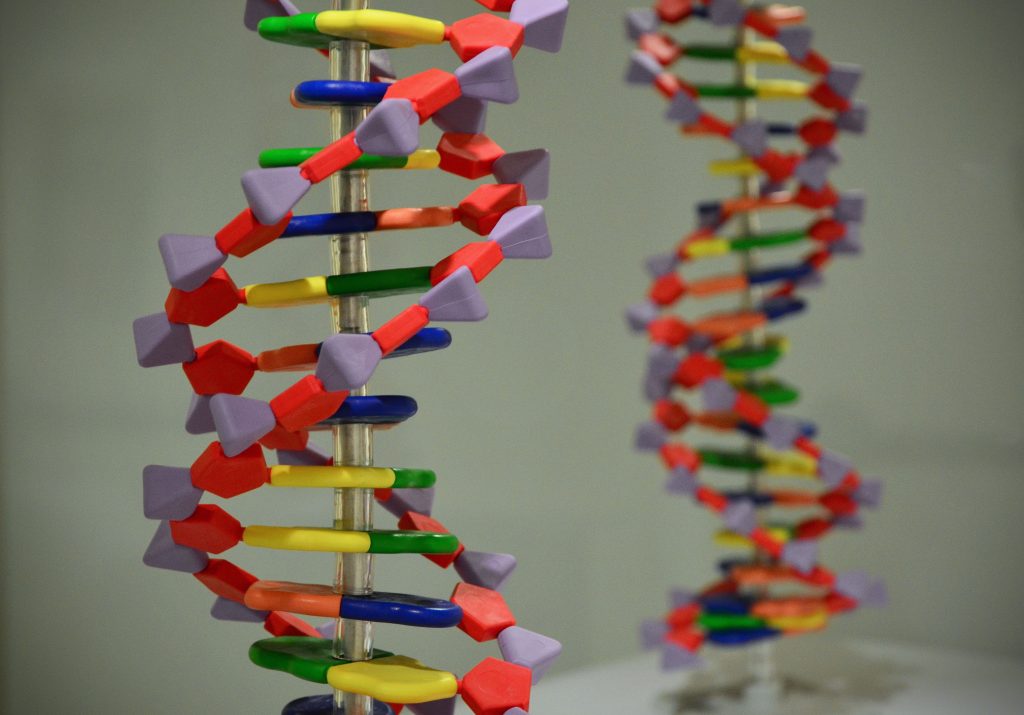
These DNA models are part of the Walton’s clinical skills equipment collection. Ask at the desk to loan one today.

While exams may seem a long way away, it’s important to be prepared for them. You can minimise stress and maximise efficiency with a good revision timetable and organised notes.

You can also find helpful material to aid your revision at the Walton Library. Your subject support guide is full of information and resources, tailored to suit your programme of studies. There are boxes of flash cards covering a number of subjects available to borrow from our long loan collection – ask at the service desk if you are interested in loaning a set. You may also find it helpful to broaden your revision from notes and textbooks to include clinical skills equipment and books from our MCQ (Multiple Choice Question) section. This could be the difference between a good and a great exam result! You’ll find more information about both of these collections in this blog post, as well as where to find them and how to loan them.

Multiple Choice Question (MCQ) books
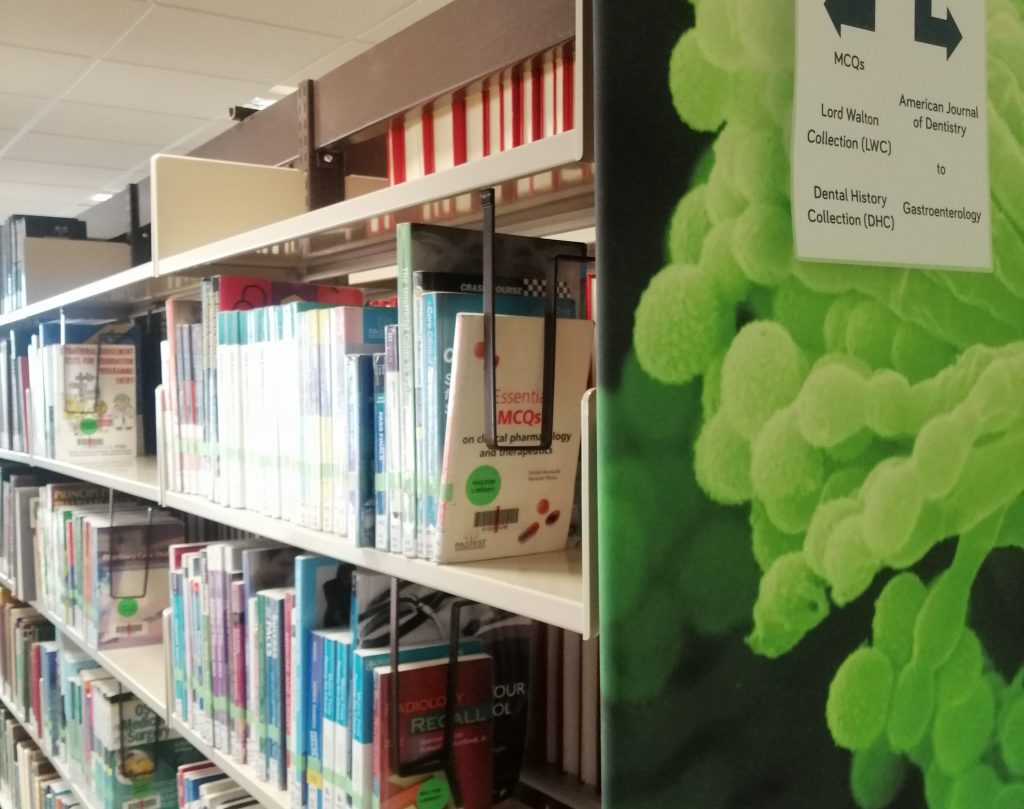
Books in the MCQ collection are located in the quiet study area. You can identify them by the green stickers on the book spines.

There are a variety of topics covered in our Multiple Choice Question (MCQ) section. Within the collection, you’ll find books to on a number of subjects from anaesthesia to surgery. There are also books to aid revision for specific exams – including OSCEs, PACES and MRCS.

If you’d like to browse the MCQ collection, go to Library Search. You’ll need to click the ‘Advanced Search’ link and then change the “Any field” drop down menu to say ‘Collection’. In the text space, enter “MCQs” and you can view the entire collection. You can narrow down your search by adding a subject, author or title if you’re interested in a specific topic.
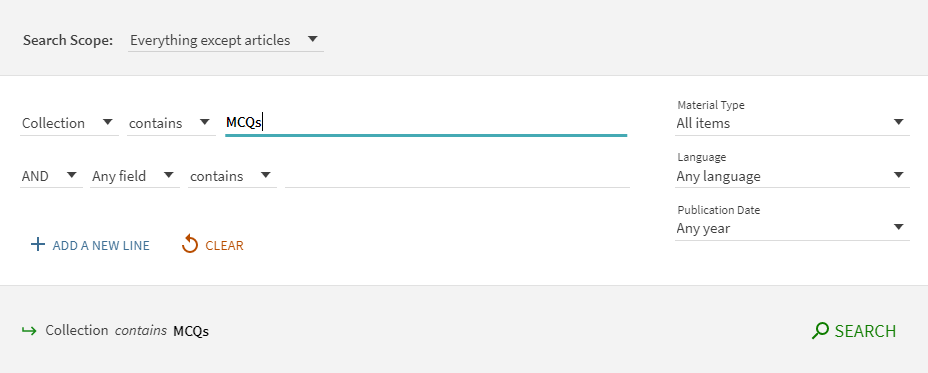
You can search the entire MCQ collection by changing the search filters to “Collection” and adding MCQs in the text bar.

You can find the MCQ collection in the quiet study area of the Walton Library. They’re easily identifiable by the green stickers on the book’s spine.

The books are long loan – meaning you can have them for up to 20 weeks, providing they’re not requested by another Library user. If the MCQ book is already on loan, follow these instructions to place a request.

If there is a book you think would help your exam revision, use our Books on Time service and recommend it. Find out more about this service here.

Clinical skills equipment

At the Walton Library, there is a wide selection of clinical skills equipment available to loan. There are medical tools, like tendon hammers, sphygmomanometers and otoscopes. Anatomical models, such as skulls and teeth. Plus eye charts, DNA models and even a spine! (A model one, that is.)
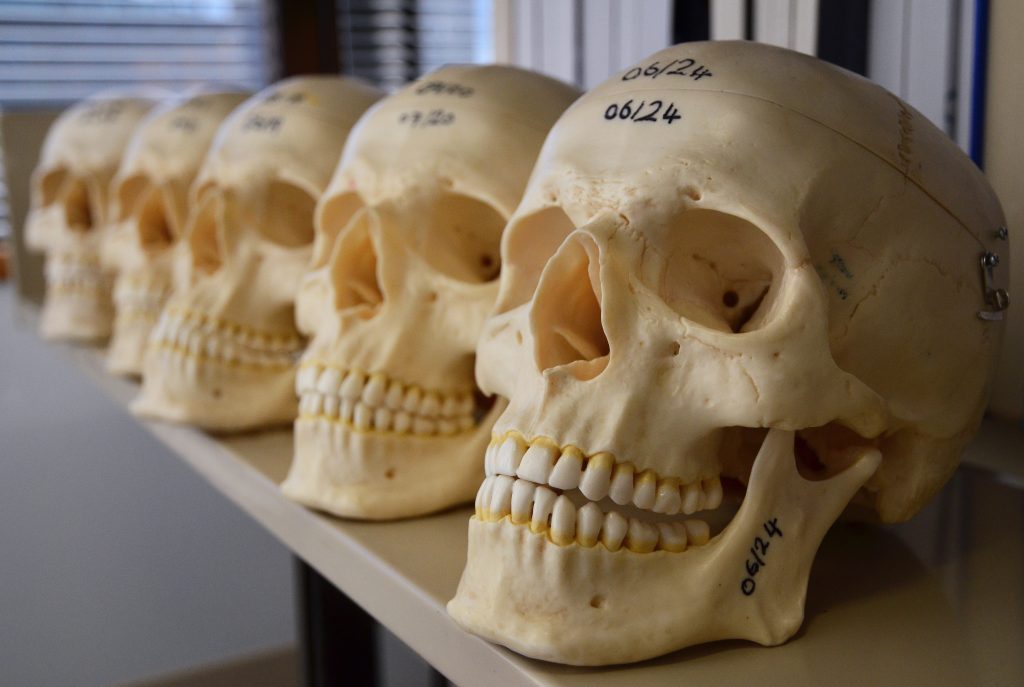
You can borrow a skull from the service desk or the STC room at the Walton Library!

The main bulk of clinical skills equipment is located behind the service desk at the Walton Library. Ask a member of staff and they’ll retrieve it for you. You can have up to three clinical skills items on loan at any time. Unfortunately, you can’t place requests on the items if they’re all out on loan.

There are also a small number of skulls available to loan from the Student Texts Collection (STC) room. You can loan them using the self-issue machine in the STC.

You may have also noticed a collection of anatomical models on a table in the collaborative study area. These models are free to use within the Library for as long as you like – but they can’t be taken out of the Library.

Clinical skills equipment items are available as a next day loan. This means that if you borrow a skull at 9AM on a Monday morning, it needs to be returned before the Walton Library closes on Tuesday. Items in the clinical skills equipment collection are non-renewable.   

Beyond the Walton, there is exam and revision assistance available from the wider Library services and the University. You may find it useful to check out the Academic Skills Kit (ASK) to learn more about different revision strategies and exam techniques. You can also use ASK to find out about available counselling and chaplaincy services to help combat exam stress. Follow this link to ASK!

Resource in Focus: Building Types Online

After positive feedback from a trial in 2018 we are delighted to announce we now have access to this database.

This platform is based on Birkhäuser’s architecture books, a selection of Birkhäuser manuals and additional analysis Annual updates which add new building types and more contemporary international case studies.

This resources features :

  • Over 6000 high quality architectural drawings/ building plans. These are mostly vector-based, drawn to scale and available for download.
  • 2500 photos of building types
  • 1200 case studies
  • Over 900 international projects
  • 160 thematic articles providing background information on specific aspects of individual building types e.g. lighting, acoustics, urban considerations, access types or planning processes.
  • Types of buildings include: housing, schools, libraries, office buildings, sacred buildings, hospitals, museums, industrial complexes, infrastructure, transport and other building types.

This makes it an excellent choice for both teaching, research and understanding the practice of architectural design.

Search options include :

  • Full Text
  • Architect
  • Building Types
  • Decade
  • Height
  • Country
  • Author
  • Urban Context

You can also browse by grant systematic access to all content according to Building Type, Urban Context and Morphological Type.

This is an important resource for anyone studying building typology or writing architectural design assignments. In nutshell a fantastic online resource covering building types in the last 30 years. 

The Search Help document from the resources explains the database’s functions in detail. An overview of the terminology used in the building analysis and the Search and Browse options is available as well.

To access the database, click on the link via Library Search.

Identify resources for your research project

A strong research project such as an essay, dissertation or thesis will always be supported by good quality information from a wide range of sources.  There are a huge variety of resources available to you and being able to make appropriate choices when selecting materials to include in your project and explain why you have chosen them, is an important academic skill that demonstrates a good awareness of your subject and an ability to think critically about ideas and research.

Of course, not all information resources will be relevant to your particular research.  You will have to think about the type of information you need then identify the type of resource that will provide that kind information.

For example:

Books will offer an in-depth overview of popular ideas, theories, and opinions in your subject area and are likely to be broader in scope than a journal article or conference paper.

While a conference paper will often discuss ‘work-in-progress’, and therefore can be an ideal way of finding out about up to date research and ideas.

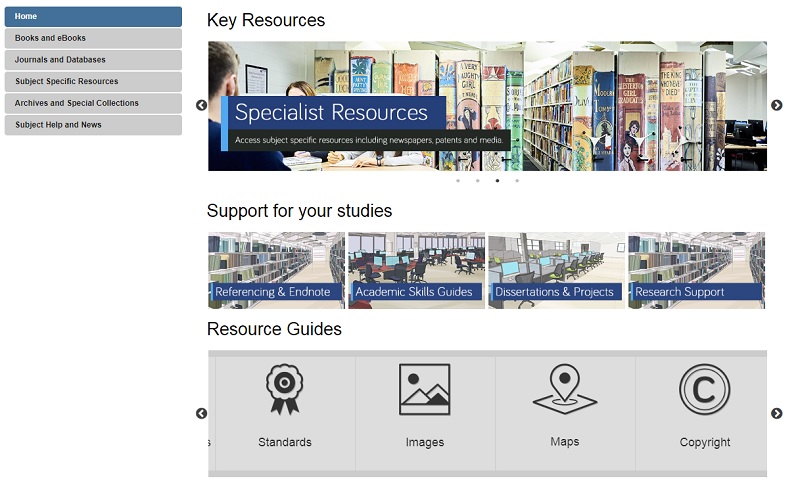
For more information on different resource types, including standards, patents, maps, newspapers and more, take a look at our range of Resource guides.

Your Subject Guide can also help you identify useful sources of information for your research as it contains a carefully curated list of resources that are tailored to your subject area.  Here you’ll  find useful lists of online reference books, eBook collections and recommended databases for finding relevant journal articles and conference papers.  Also, under the Subject Specific Resources tab, you’ll discover a further host of specialised materials relevant to your subject such as audiovisual media, data-sets or professional organisation’s websites.

Screen capture of a Library Subject Guide, showing various tabs and resource links.

Depending on your research topic, you might also want to explore the Special Collections tab to see materials held in our Library archives that are relevant to your subject area specifically.

For more advice on finding and evaluating resources for your research take a look at our Finding Information and Evaluating Information Guides.

Beyond the Library

Will you be working on a dissertation or project this summer or next year? Worried that the Library might not have access to the specialist books and other resources which you need? Wondering how you can find out about resources relating to your research topic which are held in other libraries?

Wonder no more! There are three main ways you can find and access books and other resources held elsewhere:

1. Search

You can search the catalogues of over 100 UK and Irish academic libraries, national libraries and other major research libraries via COPAC. For a more in-depth and up to date search, you can also search individual academic library catalogues online. Need to look further afield? Search library catalogues internationally via WorldCat.

2. Visit

We have more information about how you can visit other libraries, locally and nationally, here. The SCONUL Access Scheme enables students to use other academic libraries around the country, but you need to register online first (and be sure to check the access arrangements for any library you are planning to visit, as they may alter during the year).

3. Obtain

If we haven’t got the book you want, you can ask us to consider buying or borrowing it, via our Books on Time service. If you need a copy of a journal article to which we don’t have access, please apply via our inter library loan service.

Image by andreas160578 from Pixabay. 

Shades of Grey [Literature]

Grey literature. Black Literature.

Did you even know they existed? Possibly not.

Depending upon your source, “black literature” can be defined as books and peer-reviewed published journals. This is the familiar material you will source and use through your University Library and its catalogue.

Grey literature is something else entirely. Grey literature is research or material that is not produced by commercial publishers. It may be wholly unpublished or published in a non-commercial form. Think along the lines of industry-related materials, academic publications, government publications and think tank papers.

GreyNet, the Grey Literature Network Service has more detailed information on this vital research resource.

Grey Literature can be unique and an important source of information. There is a range of grey literature you may need to consult to ensure your research is complete. Examples of these materials include:

  • Working papers
  • Conference proceedings
  • Theses and dissertations
  • Government and official publications, including Green and White Papers, Select Committee papers, legislation
  • Policy statements
  • Research reports
  • Newsletters
  • Fact sheets
  • Blogs
  • Transcripts
  • Pre-prints and post-prints of articles
  • Technical reports
  • Professional guidelines
  • Patents
  • Standards
  • Market research
  • Data, e.g. Census, economic data, statistics

Most databases, available via your Subject Guide, will allow you to limit your search by document type, including grey literature, which does improve accessibility to this type of material.

Other resources include:

  • Bielefeld Academic Search Engine

    Operated by Bielefeld University Library this search engine indexes open access academic literature. The Advanced Search option allows you to search for specific types of grey literature.
  • Box of Broadcasts

    Box of Broadcasts provides access to over two million programmes from over 65 TV and radio channels, including most of the UK’s freeview network, all BBC TV and radio content from 2007, and several foreign language channels. You can view archived programmes, record new ones, create clips and playlists and see transcripts. (This resource is not available outside the UK.)
  • Digital Education Resource Archive (DERA)

    The Institute of Education Digital Education (University of London) Resource Archive (DERA) is a digital archive of all documents published electronically by government and related bodies in the area of education.
  • Open Grey

    The System for Information on Grey Literature in Europe provides open access to over 700,000 bibliographical references.
  • Teachers TV from Education in Video

    Provides access to all 3,530 globally-acclaimed instructional videos produced in 2008 by the United Kingdom’s Department of Education to train and develop teachers’ skills through demonstrations and commentary by teachers, administrators, and other educational experts.
  • Newcastle University Theses and Dissertations Guide

    Newcastle University theses are available in the eTheses Repository. Other UK theses may be available via EThOS. There is not one single source for locating non-UK theses. The Guide will give you some starting points.
  • UK Legislation

    UK Legislation is freely available online but be aware there may be delays of up to 2 weeks before any updates appear. Use your subscribed databases available via the Law Subject Guide.

The list can go on…

Once you have located your grey literature, do question it using the CRAAP testcurrency, relevance, authority, accuracy, purpose. Consider what is publicly available versus a subscribed (or paid for) resource. It may be biased and you should include that assessment in your work.

And finally, don’t forget, not everything is available online!

Love reading? Browse through BrowZine…

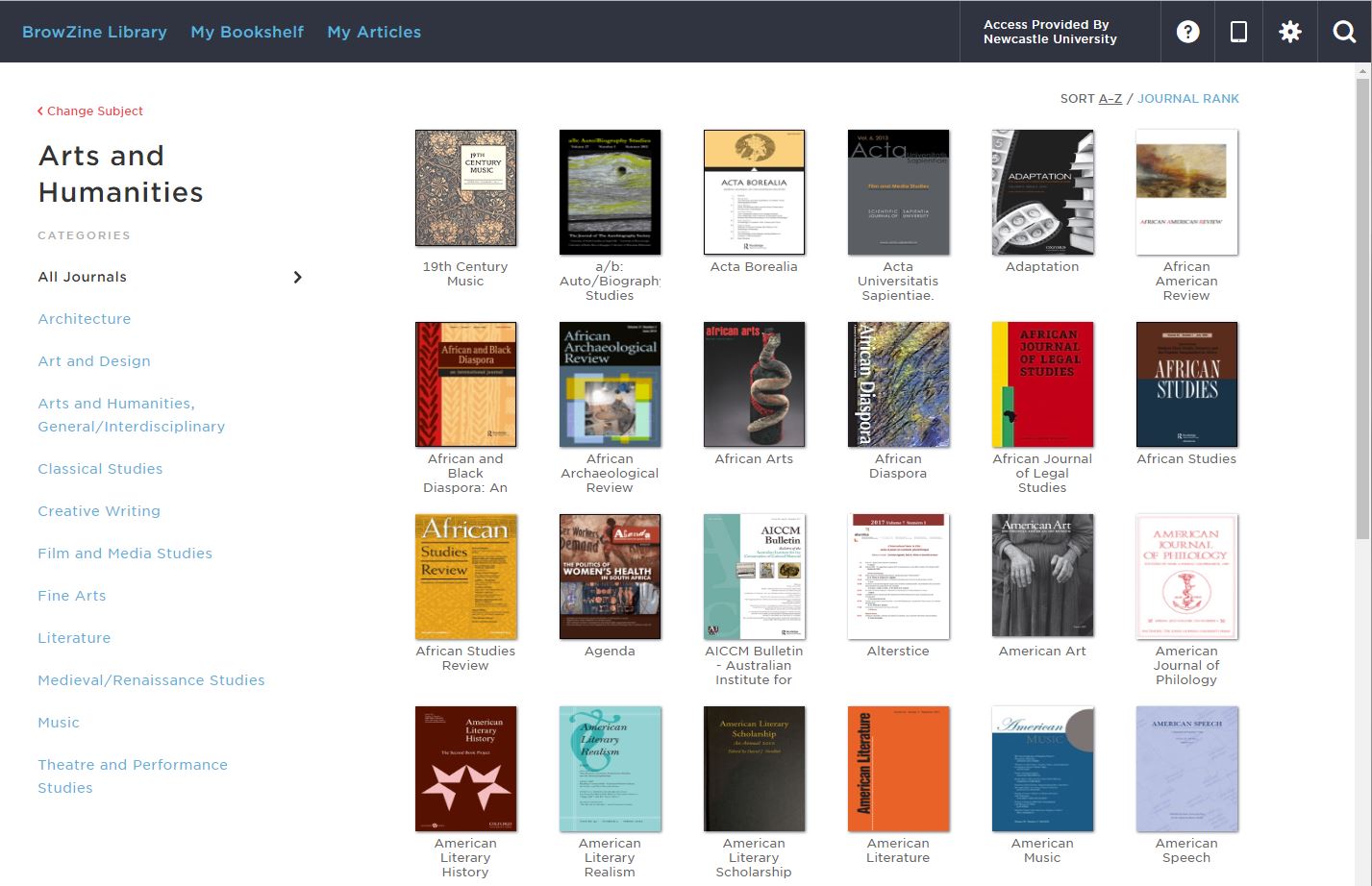
Not sure which journal article you’re looking for? Do it the ‘old school’ way and browse through your favourite journals using BrowZine without having to trek to the library or newsagents to flick through the magazines.

BrowZine is a publisher-neutral reading and discovery platform for eJournals. You can browse complete issues, set up a personal bookshelf of your favourite titles and receive notifications when new issues are released.

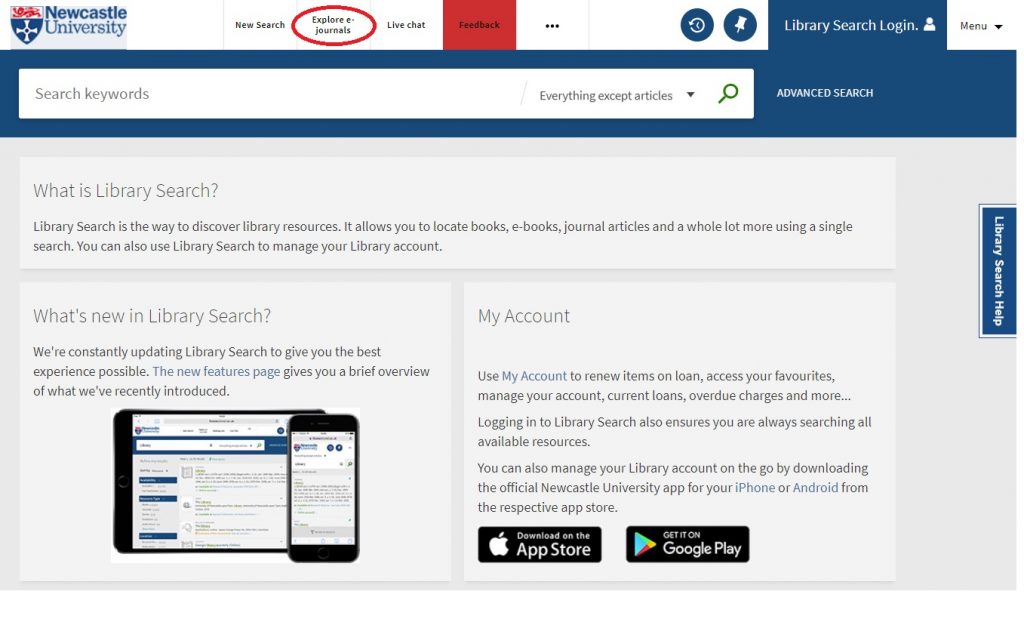
Library Search and browsing eJournals via BrowZine

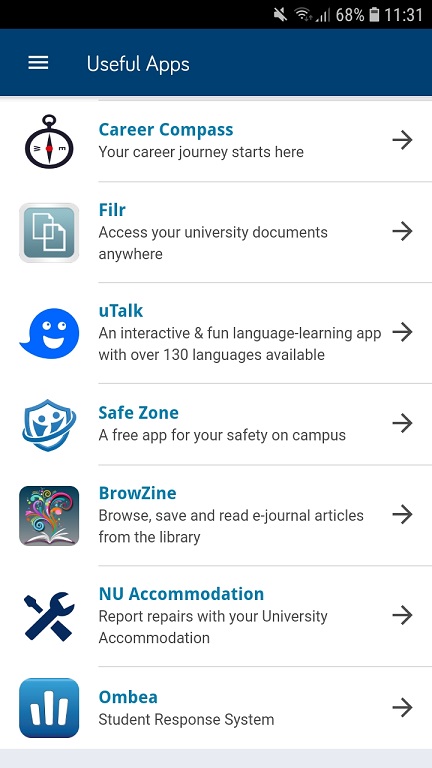
You can do this on your PC via Library Search or perhaps you prefer using your smartphone? Access BrowZine via the University App or download the BrowZine App from the Apple Store or Play Store.

Access BrowZine via the Newcastle University App

Set up your personal account using your University email address and BrowZine will always recognise you as a member of Newcastle University and give you access to the full-text articles it contains.

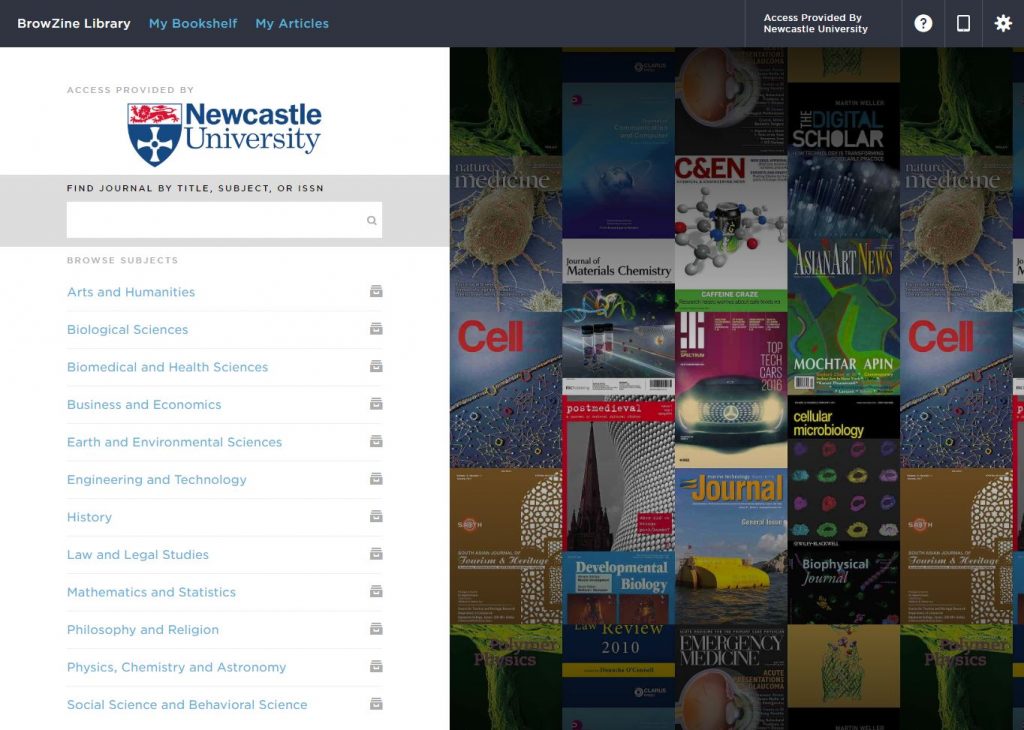
BrowZine Subject Areas

BrowZine Arts and Humanities

Get browsing!

Finding Architecture and Planning journals

How do you access your journals and magazines?  There are a number of options.

  1. If you know the title you can do a keyword search in Library Search.
  2. Your subject guide is a ‘one stop shop’ for all resources and includes a tab to link to core journals,  journal collections and magazines such as those in Art and Architecture Archive and the Avery Index.  You can also view the list of print journals and magazines that we have in the Library.
  3. If you like to browse individual Architecture or Planning journals, then take a look at Browzine.

Books added to the Library by students in SAPL (Semester One 2018/19)

We have a service called “Books on Time” for students. This allows you to tell us about the books you need for your studies. If we don’t have the books you need, simply complete the web form and we’ll see if we can buy them. For books we already have in stock, if they are out on loan please make a reservation/hold request using Library Search.

Further information about Books on Time

In Semester one, academic year 2018/2019 we bought the following items after requests from students in SAPL.

There were 83 requests from 49 students totaling £4776.41 (22% of requests from undergraduates, 31% from Postgraduate taught and 47% from Postgraduate Research)


Title Now in stock
A City is Not a Tree 1xlong
A Greedy Man in a Hungry World 1xlong
A History of Great Yarmouth 1xlong
A Vision of a Living World: The Nature of Order, Book 3 1xlong
Architect in Practice 16xlong, 1xebook
Architecture and Capitalism : 1845 to the Present 1xlong, 1xebook
Architecture as a Craft : Architecture, Drawing, Model and Position 1xlong
Architecture as Experience: Radical Change in Spatial Practice 2xlong
Bananas Reconstructed: Architecture and Sacred Space 1xebook
Building Performance Analysis 1xlong
Century of Fishing: Fishing from Great Yarmouth and Lowestoft, 1899-1999 1xlong
China Development and Governance 1xebook
Cinemetrics : Architectural Drawing Today 1xlong
Cobe – Our Urban Living Room 1xlong
Colour Strategies in Architecture 1xlong
Computing the Environment: Digital Design Tools for Simulation and Visualisation of Sustainable Architecture 1xlong
Critical Companion to Tennessee Williams 1xlong
Culture and customs of Saudi Arabia 1xlong
Cycle Space, Architecture and Urban Design in the Age of the Bicycle 1xlong
Dreamscapes of Modernity: Sociotechnical Imaginaries and the Fabrication of Power 1xlong
Eat, Memory: Great Writers at the Table: A Collection of Essays from the New York Times 1xlong
Experimental Preservation 1xlong
Exploring the Use and Impact of Travel Guidebooks 1xlong
Fiction as Method 1xlong
Fish and Chips: A History 1xlong
Future Matters: Action, Knowledge, Ethics 1xlong
Governing Shale Gas: Development, Citizen Participation and Decision Making in the US, Canada, Australia and Europe 1xlong
Handbook on green infrastructure planning design and implementation 1xlong
Holloway Prison : An Inside Story 1xlong
Horse People: Thoroughbred Culture in Lexington and Newmarket 1xebook
Housing Design for an Increasing Older Population 1xebook
Imagined Futures in Science, Technology and Society 1xlong
In the nature of landscape 1xlong
Indispensable Eyesores: An Anthropology of Undesired Buildings 1xebook
Infrastructures in Practice 1xebook
Interrogating Ellie 1xlong
Introducing the Sociology of Food and Eating 1xlong
Invitation to the Life Course: Towards New Understandings of Later Life 1xlong
Lives in Time and Place: The Problems and Promises of Developmental Science. 1xlong
London’s Turning: Thames Gateway-Prospects and Legacy 1xlong
Making and Growing: Anthropological Studies of Organisms and Artefacts 1xlong
Manhattan Transcripts 1xlong
Marcel Breuer: a Memoir 1xlong
Maritime Norfolk: Part Two 1xlong
New Monte Rosa Hut SAC Self-Sufficient Building in High Alps 2xlong
Nonlinear Time Series Analysis 1xlong
North Norfolk Coast 1xlong
Original Rockers 1xlong
Otto Wagner: Die Wiener Stadtbahn 1xlong
Palaces for the People: How to Build a More Equal and United Society 1xlong
Placemaking with children and Youth Participatory Practices for Planning Sustainable Communities 1xlong
Planetary Gentrification 1xlong
Prosthesis 1xlong
Reconceptualising Agency and Childhood: New perspectives in Childhood Studies 1xebook
Relational Architectural Ecologies 2xlong
Rethinking Vienna 1900 3xlong, 1xebook
Revisiting Divisions of Labour 1xlong
Roads Were Not Built for Cars: How Cyclists Were the First to Push for Good Roads & Became the Pioneers of Motoring 1xlong
Robot Ethics 2.0: From Autonomous Cars to Artificial Intelligence 1xlong
Small Towns, Austere Times: The Dialects of Deracinated Localism 1xlong
Space and the Memories of Violence: Landscapes of Erasure, Disappearance and Exception 1xlong
The Architecture of Psychoanalysis: Space of Transition 1xlong
The Architectures of Childhood: Children, Modern Architecture and Reconstruction in Post-war England 1xebook
The Culture of AI: Everyday Life and the Digital Revolution 1xlong
The Design of Childhood: How the Material World Shapes Independent Kids 1xlong
The Ethics of Invention 1xlong
The Evocative Object World 1xlong, 1xebook
The Flak Towers in Berlin, Hamburg and Vienna 1940 – 1950 1xlong
The Great Museum 1xlong
The Luminous Ground: The Nature of Order, Book 4 1xlong
The New Black Middle Class in South Africa 1xlong
The Phenomenon of Life 1xlong
The Process of Creating Life: The Nature of Order, Book 2 1xlong
The Setting of the Pearl: Vienna under Hitler 1xlong
The Structure of Light : Richard Kelly and the Illumination of Modern Architecture 1xlong
The Urban Design Reader 1xlong, 1xstc, 1xebook
The Works: Anatomy of a City 1xlong
Toward an Urban Ecology 1xlong
Urban Disaster Resilience: New Dimensions from International Practice in the Built Environment 1xebook
What Are Community Studies? 1xlong
What is the future? 1xlong
XML : Parliament 1xlong
Young people, Class and Place 1xlong


Books added to the Library by students in ECLS (Semester One 2018/19)

We have a service called “Books on Time” for students. This allows you to tell us about the books you need for your studies. If we don’t have the books you need, simply complete the web form and we’ll see if we can buy them. For books we already have in stock, if they are out on loan please make a reservation/hold request using Library Search.

Further information about Books on Time

In Semester one, academic year 2018/2019 we bought the following items after requests from students in ECLS.

There were 28 requests from 23 students totaling £2144.91 (4% of requests from undergraduates, 43% from Postgraduate taught and 53% from Postgraduate Research)


Title Now in stock
A Handbook for the Study of Mental Health: Social Contexts, Theories and Systems 1xlong
Acquisitions of Complex Arithmetic Skills 1xebook
Conducting Educational Design Research 1xlong
Cultures in Organizations: Three Perspectives 2xlong
Early Years Foundations: Critical Issues 1xlong
English as a Foreign Language in Saudi Arabia: New Insights into Teaching and Learning English 1xebook
English as a Foreign Language in Saudi Arabia: New Insights into Teaching and Learning English 1xlong
Everyday Arias: An Operatic Ethnography 1xebook
Handbook of Moral and Character Education 1xlong
Introducing Multimodality 2xlong
Life after Privatization 1xlong
Listening to Young Children: A Guide to Understanding and Using the Mosaic Approach 1xlong
Listening to Young Children: The Reader 1xlong
Mathematics Learning in Early Childhood 1xlong
Mindfulness-based treatment approaches 1xlong
Research and Social Change : A Relational Constructivist Approach 1xlong
Scouse: A Social and Cultural History 1xlong
Self-Efficacy Beliefs of Adolescents 1xlong
Stancetaking in Discourse 1xebook
Student Plagiarism in Higher Education: Reflections on Teaching Practice 1xlong
Student Voice Handbook: Bridging the Academic/Practitioner Divide 1xlong
Student Voice: The Instrument of Change 1xlong
Student-Centred Leadership 1xebook
The architecture of productive learning networks 1xlong
The Cambridge Handbook of Linguistic Multi-Competence 1xlong
The Methodologies of Positivism and Marxism 1xlong
University Partnerships with the corporate sector: Faculty experiences with for-profit matriculation pathway programs 1xlong
Visible Learning: Feedback 1xlong


Where could maps take you?

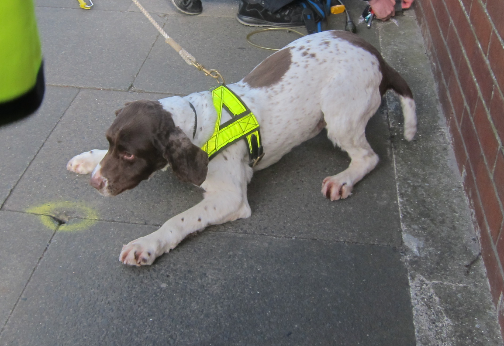
Sniffer dog in high vis detecting a gas leak

So when does an Animal Science student need to use EDINA Digimap and GIS software?  The answer is not all do, but you never know where your dissertation project may take you, and what software may help your research or your presentation or visualisation of results.

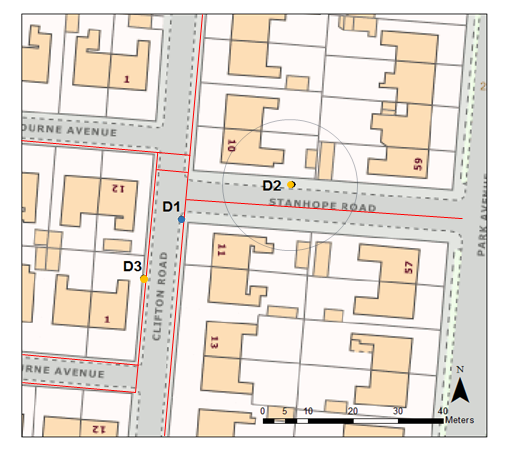
Grace’s dissertation took her to Sunderland to road test the country’s first gas sniffer dog.  Collaborating with an Earth Science student to help her use the mapping products and with training from the geosciences team in using GNSS (Global Navigation Satellite System) accurate to 2cm, she plotted the gas leaks and successful finds by her faithful four legged co-worker.  The team demonstrated that a dog’s nose is as good conventional gas detection equipment, and could be very helpful with difficult to trace gas leaks.

Sniffer dog in high vis finds gas leak
Sniffer dog, image used with permission from Dr Catherine Douglas, School of Natural and Environmental Sciences.
Digimap illustrating gas leaks detected
Map created by student using EDINA Digimap https://digimap.edina.ac.uk/ and used with permission by Dr Catherine Douglas, School of Natural and Environmental Sciences.

With many thanks to Dr Catherine Douglas, School of Natural and Environmental Sciences, for providing this content.

See what is available to you on the Maps Guide and take up opportunities to collaborate or share good practice with other disciplines. You never know where it might lead!

Please note: EDINA Digimap requires registration before use.