Are you using the best information to make your point?

With the huge volume of information available and the speed with which you can find something on just about any topic with a simple search, it can be difficult to be sure that you are using the best quality information for your task. Your tutors will often give advice such as recommending that you use academic or peer-reviewed journal articles, and it can be tempting to stick to ‘safe’ types of information such as books.

But depending on your assignment topic, you will need to explore a breadth of different information types, including many that will be online. So how do you know which ones to you?

You will need to consider many issues, including authority, accuracy, objectivity, currency and coverage within an information source. This will help you make decisions about the quality of the information, its reliability and what role it could play within your thinking.

You will evaluate information all the time without thinking about it. It doesn’t need to be a conscious or difficult task. Our Six Questions video will help give you some ideas for the types of questions to keep in mind to make your own judgement.

You may also sometimes decide to include a piece of information, even though it may not be from a credible source or its impartiality is questionable, because it illustrates the point you are trying to make. Being aware of your reservations about a reference allows you to be more confident in your judgment.

Resource in Focus: Statista

This is an extensive statistics platform covering over 1.5 million data sets (and adding an additional 500 each day) with revenue forecasts up to 5 years into the future and historical data going back 10 years on over 170 industries.

Data is collected from over 22,500 sources covering over 80,000 different topics.

The platform can broken down into different elements including:

Statistics : where you can choose your industry e.g. Consumer goods, Retail & Trade.

Reports : This section is very comprehensive and you can select :

  • Dossiers which are a quick quantitative overview of a topic. These are in house reports which contain the most recent and relevant statistics concerning a single subject. You can export these in PowerPoint or PDF format.
  • Outlook Reports which are trend forecasts
  • Surveys which are market insights from an expert and consumer perspective
  • Toplists which are company ranking for sales and analysis
  • Market studies
  • Industry Reports which are perfect for highlighting key figures for a particular industry sector. These are updated annually and contain textual information as well as numerical data such as turnover and revenue.
  • Global Business Cities Reports which are ranking and key statistics on particular cities.
  • Brand reports contain insights into the brand itself
  • Country reports
  • Further studies which are more in-depth reports

Outlooks; these provide information on specific areas and help you identify the potential in those areas. This can include forecasts, detailed market insights and key performance indicators.

Statista online help video

This short video from Statista gives a nice overview of the different search functionalities:

Access via https://www.statista.com/ or via the record on Library Search.  (If you are accessing on campus, the platform will authenticate using IP address. If you are accessing off campus you will be taken through EzProxy so access should be seamless if you’ve logged in previously using your Campus username and password).

Spotlight on….. a-n: The Artist Information Company

a-n: The Artist Information Company provides alternative insights into the visual arts, with fast-paced news, comment, debate.  Here are the first (and there are so many more) 5 things you’ll love about this resource:

  • See the calendar of exhibitions, conferences and other arts related events for the coming year

  • Keep up to date with news of what’s going on in the art world        
  • Read interesting discussions with arts practitioners, curators and others involved in making and showing art #How was it for you..

  • Find out what pieces galleries around the world are acquiring

  • Join in and receive e-alerts, find out what bursaries and job opportunities are available, meet other a-n members, follow a-n on social media and generally get involved!  
  • Available to you via Library Search… go-on, you know you want to a-n!

Study Well@NCL – What we’re doing in the Walton Library.

As you may have already seen Study Well@NCL advocates a responsible approach to studying and encourages positive behaviours in study spaces because we know it can be stressful especially at certain times of the year.

Extended Opening Hours

Here in the Walton Library from 7th-25th January 2019 we’ll be extending our opening hours opening from 8:30 until midnight, seven days a week. You can check our extended opening times on the library website.

Noise Alert Service

We’ll also be monitoring our Noise Alert phone very closely during this time. Wherever you are in the Walton, you can text us at 07891 484764 and we’ll investigate the source of the noise issue as soon as possible.

Housekeeping

During busy periods staff will be checking to see:

  • where seats are available.
  • that bins are emptied.
  • that bathrooms are clean.
  • that walkways are kept clear.

How you can help

  • Choose a study space suited to your preferred choice of study, we have silent, quiet and collaborative spaces to chose from.
  • Do be mindful of the food and drink policy within your chosen study area.
  • We might not always know straightaway if there’s a shortage of towels in the bathroom or if a bin in a group study room needs emptying. Just give us a quick heads up if you notice something that needs our attention and we’ll be right on it.

Looking after yourself

We encourage all Library users to take regular study breaks. Taking the time to get a drink of water or some fresh air can make all the difference to your study session.[1] However, to be fair to all Library users, we’re asking that breaks away from your study space are no more than 30 minutes.

Colour your Campus

On a much lighter note, we’ll be providing pens, pencils and special medical-themed colouring sheets for you to relax and unwind with. Studies have shown that colouring can reduce anxiety and depressive symptoms in adults.[2] So while you’re taking a study break, why not pause and Colour Your Campus? Even better, hand your completed sheet in to a member of Library staff with your name or Twitter handle on the back and we’ll enter it into a draw to win some fabulous Library prizes.

We hope that Study Well@NCL provides you with a peaceful and productive study environment and allows you to achieve maximum studying satisfaction. We welcome feedback on how we can change or improve Study Well@NCL. You can Tell Us What You Think’ online or get a form in the Walton Library.

Finally, if you’re feeling overwhelmed, please contact the University Student Wellbeing Team or NUSU Student Welfare. They’re there to help.

We wish you every success with your exams – Study well.

References

[1] Flett, J., Lie, C., Riordan, B., Thompson, L., Conner, T. and Hayne, H. (2017). Sharpen Your Pencils: Preliminary Evidence that Adult Coloring Reduces Depressive Symptoms and Anxiety. Creativity Research Journal, 29(4), pp.409-416.

[2] Selig, M. (2019). How Do Work Breaks Help Your Brain? 5 Surprising Answers. [online] Psychology Today. Available at: https://www.psychologytoday.com/gb/blog/changepower/201704/how-do-work-breaks-help-your-brain-5-surprising-answers [Accessed 2 Jan. 2019].



New resource in focus: Oxford Scholarly Editions Online (Romantics Poetry)

We have recently added a new module, Romantics Poetry, to our Oxford Scholarly Editions Online (OSEO) collection.
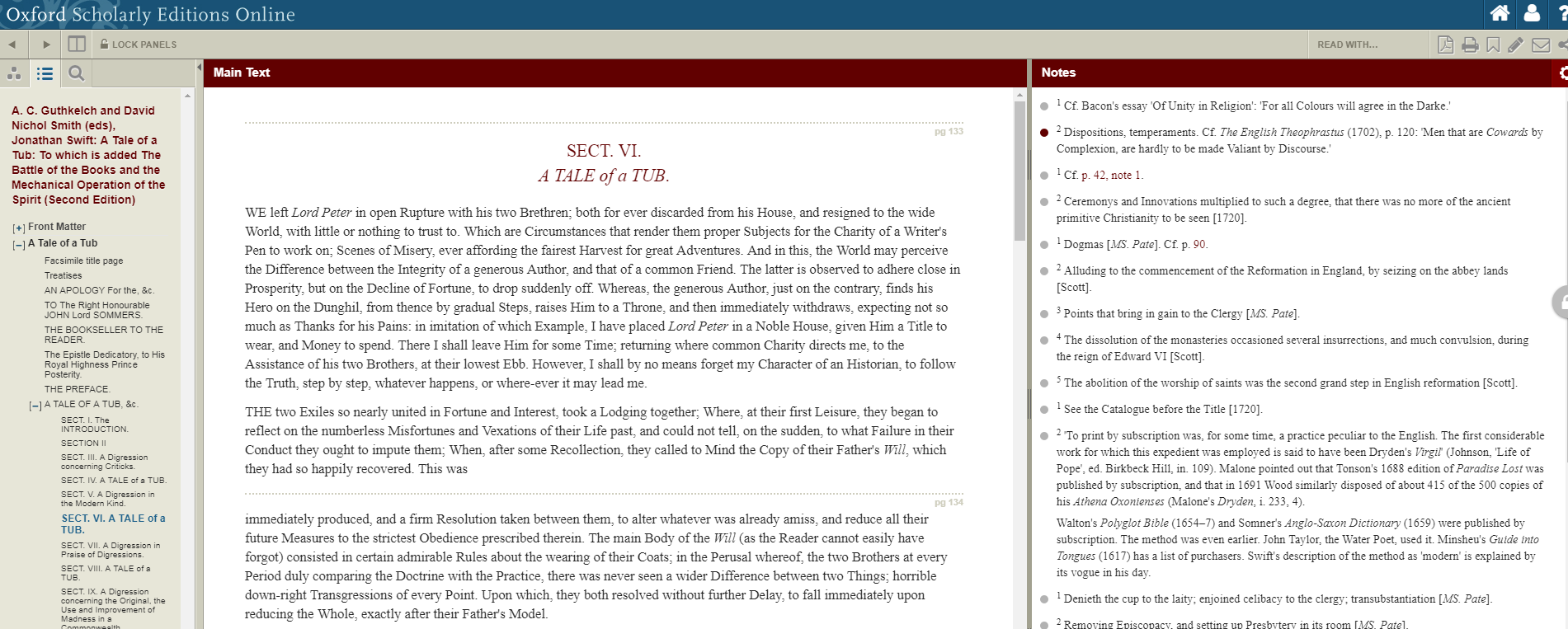
OSEO enables you to explore old works in new ways. It brings together authoritative editions of major works, so you can explore variations between editions, annotations and extensive notes side by side with the texts, or you can just read the texts on their own.

The new module means we now have access to 272 Oxford editions, containing 344 works, including poetry, prose, drama, essays and correspondence, in the following categories: Romantics Prose; Romantics Poetry; 18th Century Drama; 18th Century Prose.

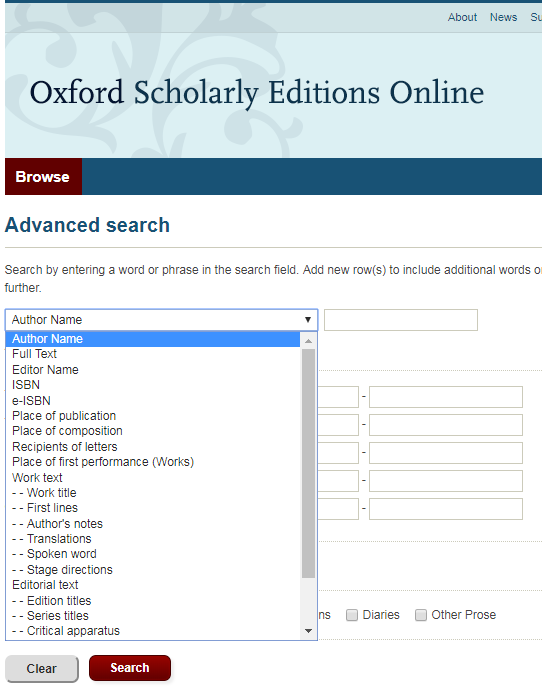
You can browse by work, edition or author, or search in highly specific ways (e.g. just search within notes or stage directions) to pinpoint exactly what you want. The editions are individually catalogued on Library Search, but we’d recommend searching for works and editions via the OSEO interface itself.

Various export and personalisation options are available.

If you haven’t used OSEO before, we’d strongly recommend watching this introductory video, so you can understand the potential of this resource and how to use it.

Have you used Oxford Scholarly Editions Online? Please feel free to post your comments and experiences by clicking Leave a comment below.

New resource in focus: Race Relations in America

Continuing our series of blogposts exploring our brand new humanities e-resources in more depth…

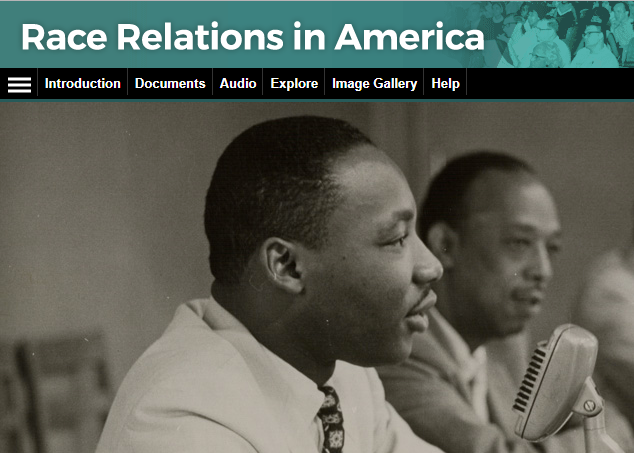
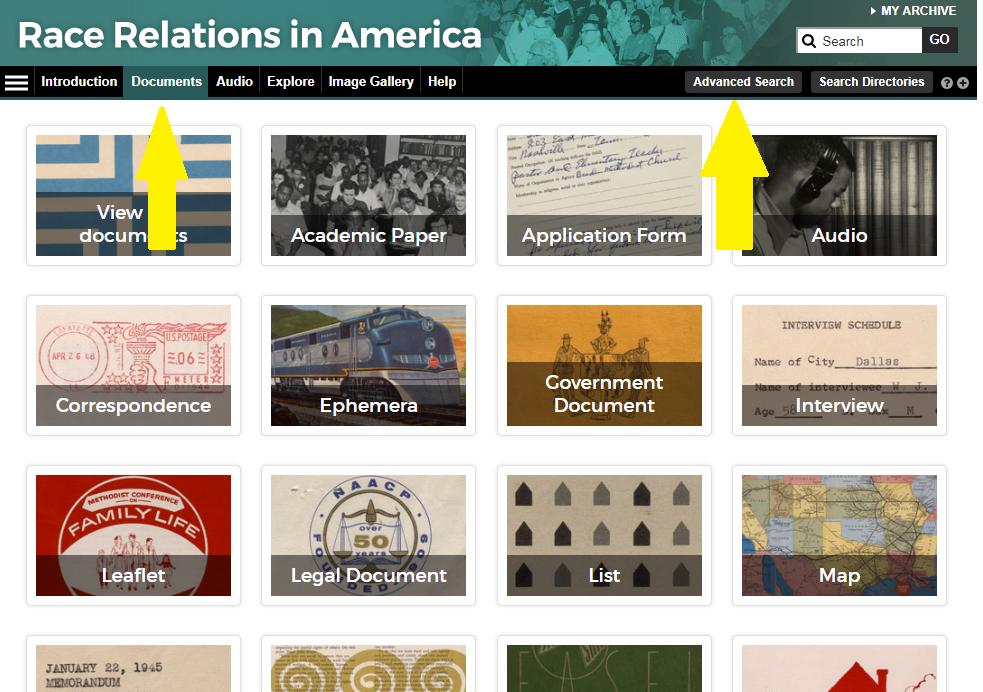
We have recently bought access to Race Relations in America. This is a collection of primary source material covering Civil Rights in the USA from 1943-1970.

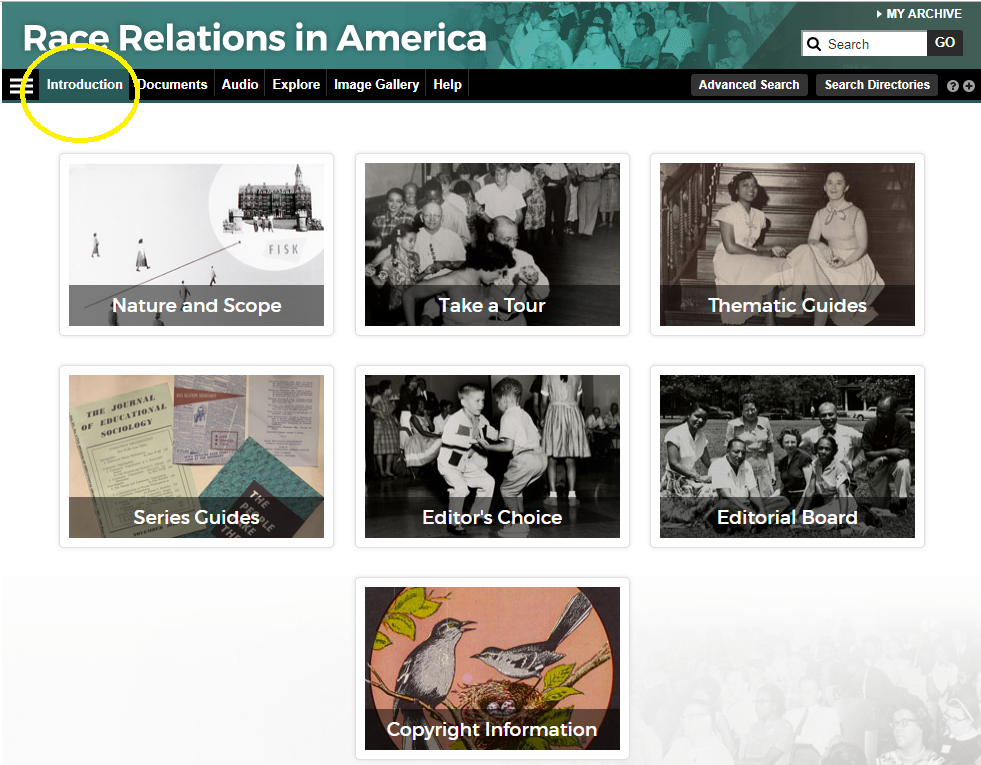
This archive contains a huge range of primary sources. Before you dive in, we’d recommend clicking Introduction, in which you can learn more about its scope and features.

The sources come from the records of the Race Relations Department of the United Church Board for Homeland Ministries in New Orleans, and comprise many different types of material, including pamphlets, audio recordings, survey data, photographs and speeches. These sources are supplemented by secondary materials such as contextual essays, maps and thematic guides to give you ideas for interpreting and exploiting the archive.

You can browse or search the archive contents by clicking Documents (to browse) or one of the two search options. You can filter your search in various ways, e.g. by document type, year or theme. If you just want to view images or listen to audio, click the relevant buttons on the top menu.

Have you used Race Relations in America? Please feel free to post your comments and experiences by clicking Leave a comment below.

New resource in focus: African American Communities

Continuing our series of blogposts exploring our brand new humanities e-resources in more depth…

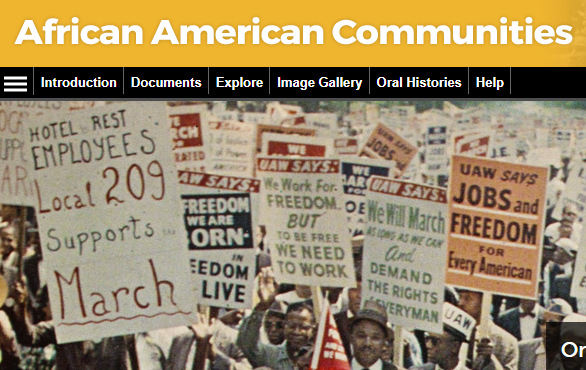
We have recently bought access to African American Communities. Focusing predominantly on Atlanta, Chicago, St. Louis, New York, and North Carolina, this collection presents multiple aspects of the African American community in the 19th and 20th centuries, through pamphlets, newspapers and periodicals, photographs, correspondence, official records and oral histories.

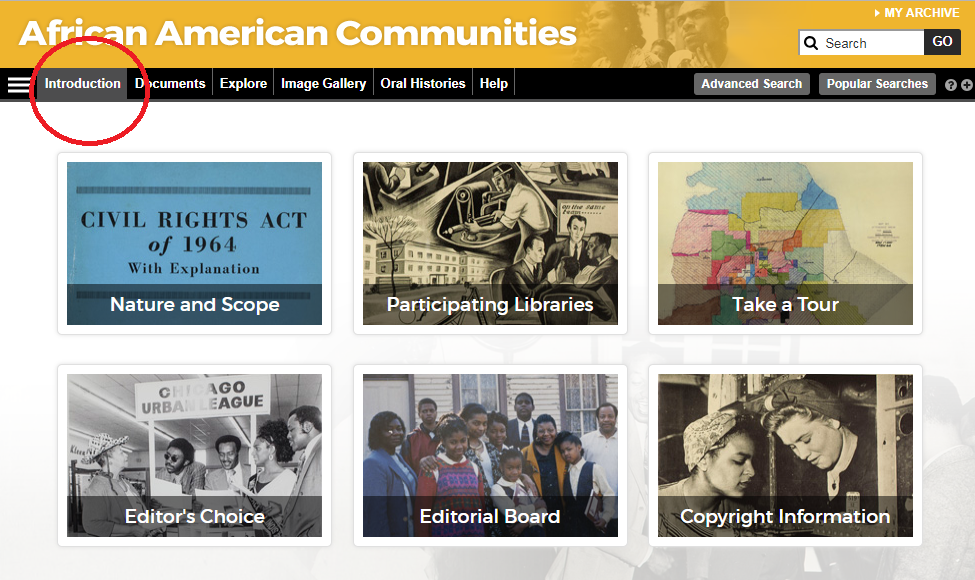
This archive contains a huge range of primary sources. Before you dive in, we’d recommend clicking Introduction, in which you can learn more about its scope and features.

The primary sources include many different record types, including pamphlets, images (including 360 degree view), official records and oral histories. These sources are supplemented by contextual essays to give you ideas for interpreting and exploiting the archive.

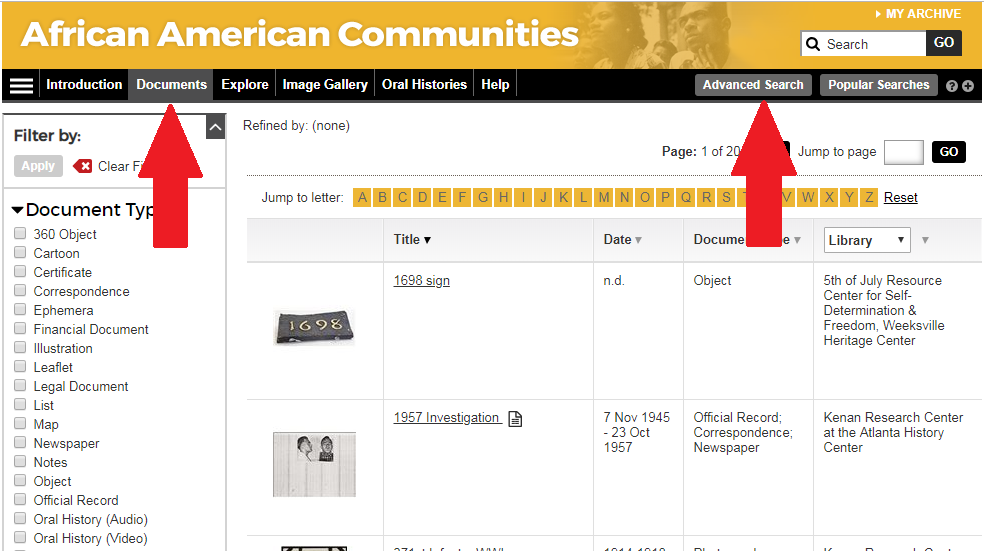
You can browse or search the archive contents by clicking Documents (to browse) or one of the two search options. You can filter your search in various ways, e.g. by document type, year or theme. If you just want to view images, click Image Gallery.

Have you used African American Communities? Please feel free to post your comments and experiences by clicking Leave a comment below.

Want something different to read this Christmas? Why not take a look at our Medicine in Literature Collection.

Medical Humanities or Narrative Medicine is a popular academic discipline that explores the crossroads between medicine and the arts.

Our Medicine in Literature collection captures the complexities of what it means to be human through a wide range of literary genres.

These resources range from fiction, non-fiction including medical history, ethics and memoir, graphic novels, poetry and prose or medicine as metaphor, to films. Representations of illness, dis-ease, healing and health are interwoven themes that give voice to a diversity of perspectives and personal experiences of the human condition.

If you’re interested in exploring your subject field from a different viewpoint or simply want to broaden your reading this Christmas, dive right in! The physical stock is located in the Quiet Study area of the Walton Library or you can browse the collection from our Library Guide.

Please email any resource recommendations to lib-medlit@ncl.ac.uk.

See the Top 10 Medicine in Literature books borrowed from the collection this year.


Guest post: Creative Writing Society ‘Write-ins’

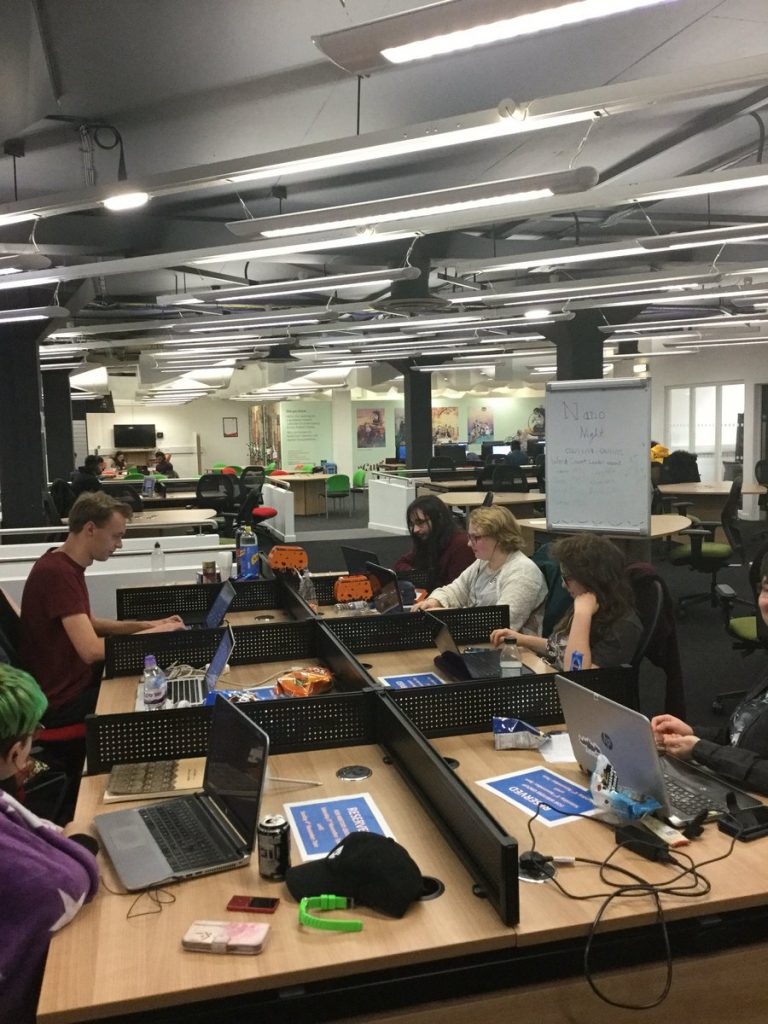
Sitting down to write for twelve hours might seem like an impossible task, but Newcastle University’s Creative Writing society didn’t back down. On November 3rd and 24th, the Philip Robinson Library was host to our two annual ‘Write-ins’.

The Write-ins are organised to coincide with National Novel Writing Month (or ‘NaNoWriMo’) in which participants are challenged to write 50,000 words in a single month. The challenge is just as daunting as it might sound — to achieve that goal, you would have to write 1,667 words a day on average!

On the nights themselves, we were at the library from 7.00 a.m. until 7.00 p.m. Copious amounts of drinks and snacks were needed to support ourselves through the nights and make sure we had the energy to keep going. Library staff had been kind enough to decorate Your Space with posters and banners. We even had our own whiteboard that we used to keep track of everyone’s word counts.
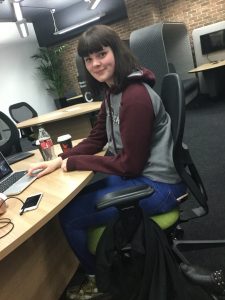
By the end of the second night, one of our writers even managed to break the 50,000 word total! In total, we spent twenty four hours together, not just working on our own projects, but also sharing ideas and having a good time. The great company (and even greater snacks) made our task seem a little bit less difficult.

Throughout the night, we also took over the Library’s arts liaison team’s Twitter account (@ncllibarts) to share our exploits. You can find all the tweets from the night here (https://twitter.com/i/moments/1065265041694486529) with most of them getting progressively stranger as we grew more and more tired.

We’d just like to say a massive thank you to everyone involved in making this event happen, from members of committee to the library staff. The society can’t wait for our next annual Write-ins, even if we always need a lot of sleep the next day to catch up on the zzz’s!

Lucy Elliott, Newcastle University Creative Writing Society’s President