When Britain Stood Still: The General Strike at 100 & Interview with Dr Joe Redmayne

100 years ago last month, over 2 million workers across Britain went on strike. Their aim: a show of support for coal miners fighting against proposed worsening of their wages and working conditions. Through industrial action and class solidarity on a scale few alive in Britain today can conceive of, essential services including the railways, shops, and the docks were brought to a halt for over a week. Local committees coordinating Strike action were established in towns across Britain, organising everything from picketing and publicity to sports events and soup kitchens. 
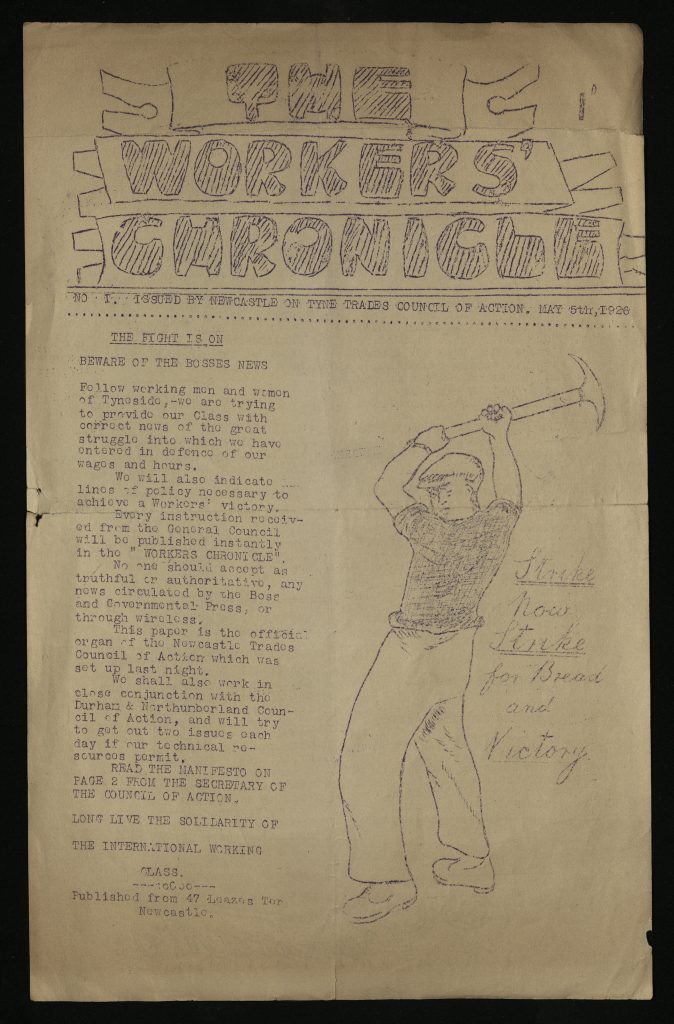
A hand-made front page of the Workers' Chronicle, 5 May 1926, produced by the Newcastle on Tyne Trades Council of Action. It includes a typewritten article entitled "The Fight is On" and a drawing of a worker raising a pickaxe.
Front page of The Workers’ Chronicle, 5 May 1926, produced by the Newcastle on Tyne Trades Council of Action. Newcastle University Special Collections.

Remember 1926, a collaboration between the Collective and Newcastle’s Labour & Society History Group, launched in 2024 to explore new perspectives and preserve the last remaining direct memories of the Strike. At the 2025 Durham Miners’ Gala, the Remember 1926 team collected oral histories of the General Strike through family and community stories shared in person. Throughout the process, the Remember 1926 team sought to work alongside local people, ensuring they have had a say in how the Strike is represented. This reflects the Collective’s ethos of sustained and meaningful collaboration with community partners. 
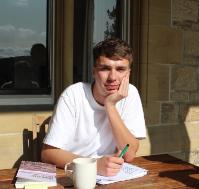
A photo of Joe Redmayne, a young man with brown hair in a white s-shirt. He is wearing a white t-shirt and writing in a notebook, looking into the camera.

Communications Intern Lily posed some questions to Collective Researcher Dr Joe Redmayne, who has been working with the Collective for over five years and helped bring When Britain Stood Still to life. 

What are the main differences between doing oral histories of events in living memory and postmemory interviews? 

Oral histories capture firsthand lived experiences of events within living memory. In contrast, postmemory interviews — like the ones conducted for the 1926 project — engage with the ‘generations after’ and the particular ‘generational transmissions’ of the firsthand account. The transmission of stories is a complex process, involving both a direct handing down of memories, as well as an exchange between generations in which younger generation may set out to change the meaning and narrative of events. 

Our overall purpose with Remember 1926 was not to retell the already well-told history of the General Strike but rather to attend to its history of reception and commemoration and, in its retelling, the history of the meaning of the strike to different social groups and generations. 

The project moved away from the methodological focus and interviewing style of usual oral history projects. Instead, the project aligned itself with methods of postmemory interviews relying inherited recall. We explored how the General Strike could be mediated through family stories, photographs, family artefacts, as well as re-using ancestral interviews alongside new interviews with descendants. This provided scope to explore intergenerational transmissions and how historical events affected the narrators’ own identity and present-day meanings of 1926. 

Why is it important that we keep the memory of 1926 alive, particularly through oral histories? 

The outputs and interviews that the Remember 1926 team produced for the centenary commemoration are testament to the importance of labour history, oral history and history ‘from below’ approaches that centre the experiences and memories of workers and working-class communities. 

Many modern issues – such as the gender pay gap, climate change, equality, health & safety, immigration policies, union rights, and deindustrialisation – have deep historical roots. Studying how past labour movements navigated previous disputes and remembered them helps us comprehend their afterlives, legacies and informs how we can tackle modern day political and international crises.  

By focusing on the General Strike of 1926, both labour and oral history act as vital practices of public memory. Exploring the memories of 1926 can empower communities and trade unions, as well as give working-class people a voice, a sense of belonging, and historical legacy. This is evidenced in the numerous centenary events and exhibits that have been organised across the UK by archives, museums, heritage groups, and trade unions: GeneralStrike100. 

The interviews we gathered as part of the project reveal the changing interpretations of what the General Strike has meant through the generations. Narratives are rejected or transformed within their own social contexts. The interviews shed light on areas of consensus or possible tensions in the event of 1926 and its meanings. 

What’s your favourite piece on display in the exhibition? 

My favourite item in the exhibit is the testimony by John Brown, a Tyneside seafarer and rigger. He recalls the conditions during and after the General Strike. His ‘tramp’ in 1927 became a tour of England, undertaken when he lost his dock-work job after the General Strike at the age of nineteen. From home in South Shields he looked for work in Newcastle, York, Reading, Guilford, Winchester, Southampton, Dover, Canterbury, Reading, Bath, Gloucester, Chester, Manchester, Penrith, Carlisle, Dumfries, Newcastle, Leeds, London and then back to South Shields, casual dock-work and more unemployment. Tramping was a proactive alternative to the boredom of worklessness and queues at the local labour exchange. 

What have you enjoyed most about the oral history aspect of the Remember 1926 project? 

I have enjoyed meeting people from across the North East and further afield to discuss the project, especially during our participation in the Durham Miners’ Gala when looking for participants (2024 and 2025). During the Gala, many people made comparisons with how the miners were treated in the 1984-’85 strike; the soup kitchens and today’s food banks; as well as discussion about the right to protest, with connections being made to the recent industrial action that had taken place in 2023. 

After nine days, the nationwide General Strike was ended. Although the Trades Union Council ultimately did not succeed in getting its demands met, the Strike was still hugely significant for its display of class solidarity. Sympathetic strikes would be banned a year later. 

For events like the General Strike, which are fading out of living memory, oral history reuse is becoming more important than ever. This is a key concern for the Collective under our Methodology & Practice theme. Dr Hannah James Louwerse’s recently-completed PhD project in collaboration with the National Trust focused on oral history reuse and maintenance. Ryan Fallon’s ongoing PhD project reuses oral histories of childhood patient experience at the Stannington Sanatorium, near Morpeth. 

When Britain Stood Still: The General Strike at 100 is on at the Philip Robinson Library in Newcastle until 18th October 2026.  

You can read more about the General Strike in the North East here. 
Preserving Byker’s Vibrant Past with Oral History

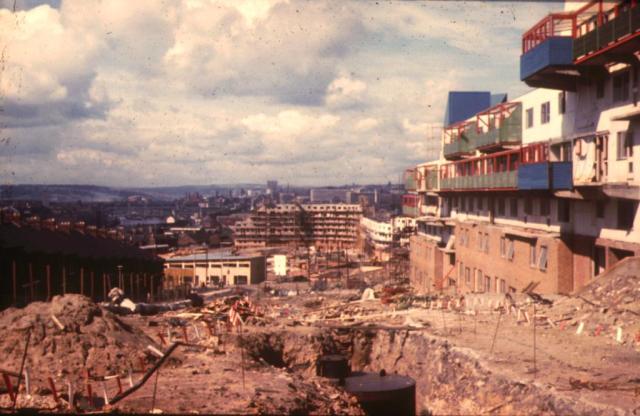
The Byker Estate in Newcastle is internationally famed for its pioneering approach to urban regeneration through community participation and innovative architecture. Ralph Erskine significantly transformed the landscape of Byker and gained notoriety for his leading role, inspiring architects and historians alike. At the forefront of ensuring Byker’s human narrative remains as celebrated as its architectural accomplishments is the work of Silvie Fisch, an Associate Researcher at Newcastle University’s Oral History Collective and Director of Northern Cultural Projects.

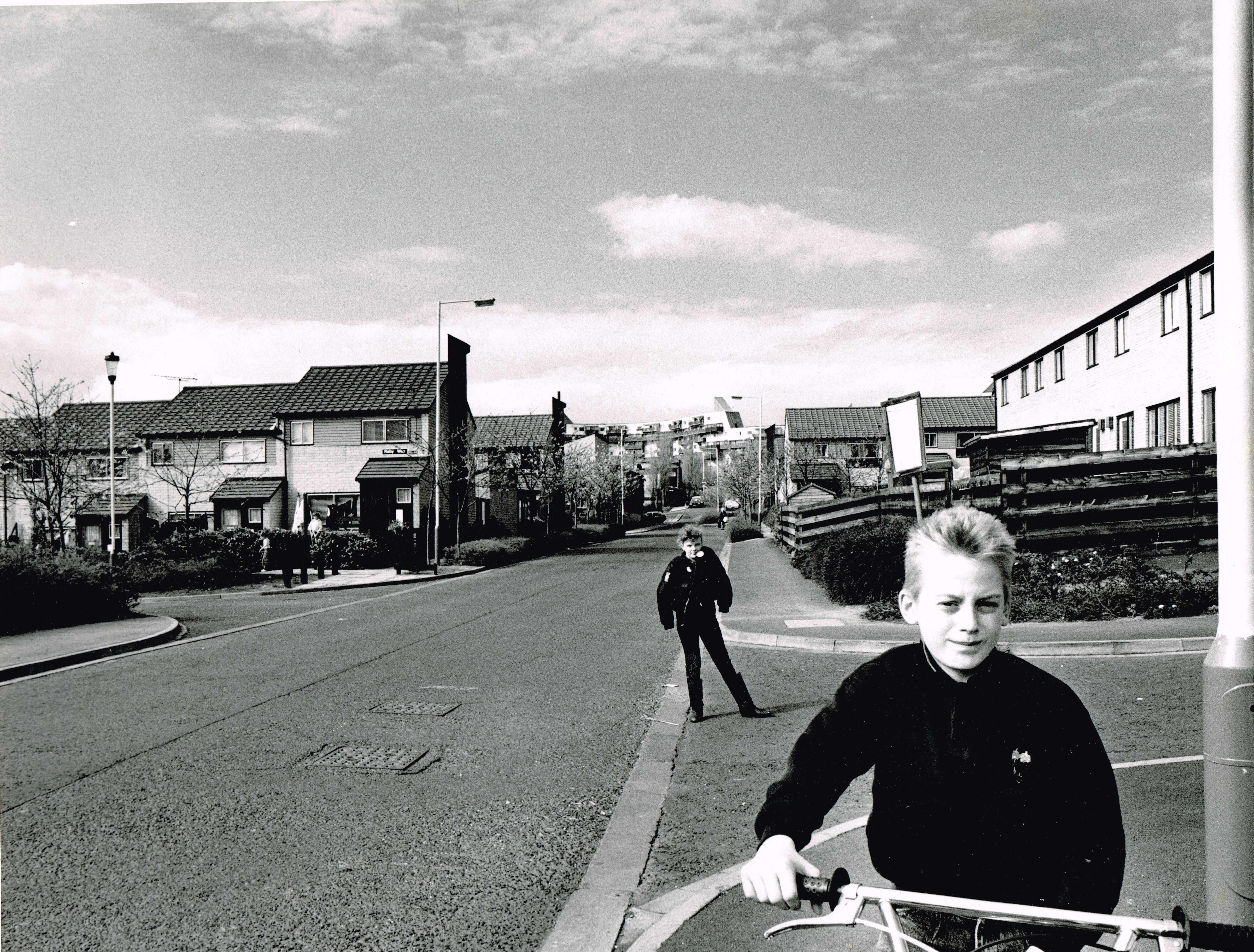
Photo: Tyne and Wear Building Preservation Trust, Raby Way Photograph

The Unsung Heroes of the Byker Study Group

While Ralph Erskine has been credited as the instigator of the Byker Estate’s ‘bottom-up’ and participatory approach to redevelopment, Silvie draws attention to influential grassroot efforts that preceded its success. The largely unrecognised efforts of the Byker Study Group of the 1960s were crucial, as they lobbied for the rights of residents to remain in Byker and shaped the socially inclusive redevelopment.

Silvie and Dr Sally Watson, ESRC Postdoctural Fellow in the School of Architecture, Planning and Landscape, have been invited by the Farrell Centre to co-produce the Fight for Byker and Other Stories (6 February – 1 June 2025) exhibition. This installation explores the lesser-known history of the Byker Estate, incorporating photographs, artefacts, and oral histories from contemporary witnesses. The focus is on the ‘pre-development’ period that laid the foundation for its success. Visitors are invited to contribute by bringing old photographs, negatives or slides that can be added to a memory wall.

The Fight for Byker and Other Stories is a free exhibition in The Sir Terry Farrell Building. More information can be found below:

Byker Through Creative Lenses

Silvie also examines how Byker has been represented across different media over the past 50 years. At Byker in Focus (6 February 2025), she will join photographer Sirkka-Liisa Konttinen, to deliver a talk on how artists, filmmakers, and architects have documented Byker’s distinctive urban culture.

Silvie poses critical questions about its representation: How do external portrayals compare to residents’ lived experiences? Can the “real” Byker ever be fully captured, or is it a dynamic narrative shaped by those who call it home?

Byker in Focus is a free talk in The Sir Terry Farrell Building. Booking and more information can be found below:

Photo: Tyne and Wear Building Preservation Trust, Shipley Rise and site clearance, 1970’s

Oral History and the Byker Estate

Silvie and Sally are working on plans for a “Byker Community Archive”, which will embrace past, present and future of the estate and create a lasting legacy for future generations.

The historical influences that led Ralph Erskine to envisage Byker, as well as its legacies have yet to be systematically documented, explored, and analysed. Numerous oral histories have been recorded over time but to this date can’t be centrally accessed. And as yet, several architects and other professionals involved in this pioneering scheme have not been interviewed, and many of the views of residents who have lived on the estate since its earliest days are still missing from the historical record.

The Srebrenica Memorial Center

Last summer, Ed Garnett the new Communications Intern for the Collective spent a month at the Srebrenica Memorial Center Potocari. Here Ed, who is in Stage 3 of his History degree at Newcastle, writes about the Center’s oral history work and its significance to remembering genocide.

The Center

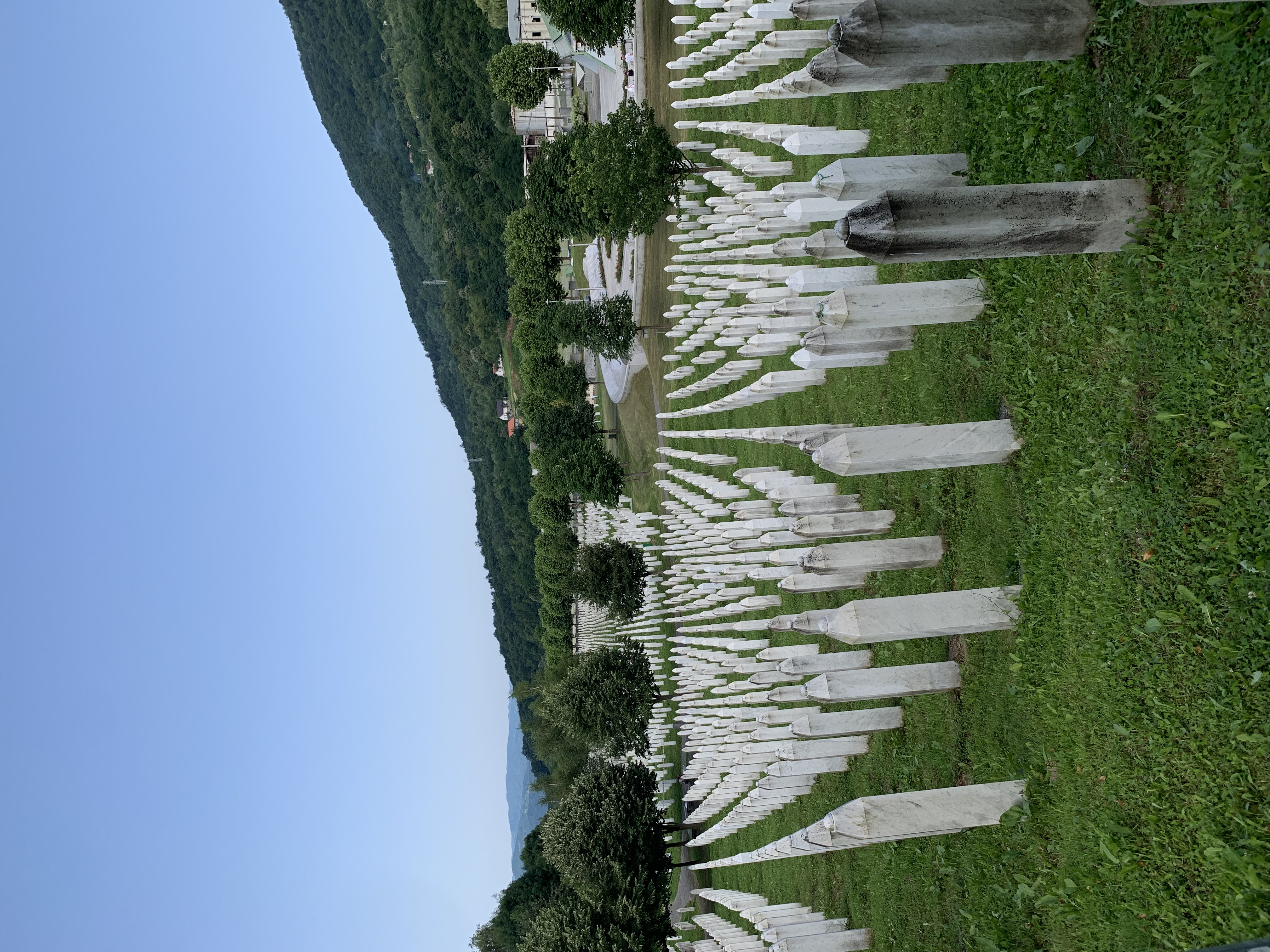
The Center was opened in 2000 to commemorate the genocide perpetrated in 1995 – the worst atrocity Europe has seen since the Second World War. Located where it happened, in the east Bosnian enclave of Srebrenica, the Memorial Center has a large exhibition space and a sprawling cemetery with over 8,000 grave sites. It serves as a place of remembrance, prayer, and education, ensuring the memory of genocide is neither forgotten nor denied.

Photo: Edward Garnett, Srebrenica Memorial Cemetery

Oral History

At the heart of the work of the Memorial Center is its oral history team, spearheaded by genocide survivor and author Hasan Hasanović. This team has worked to create an extensive archive of testimonies, preserving the stories of genocide for future generations.

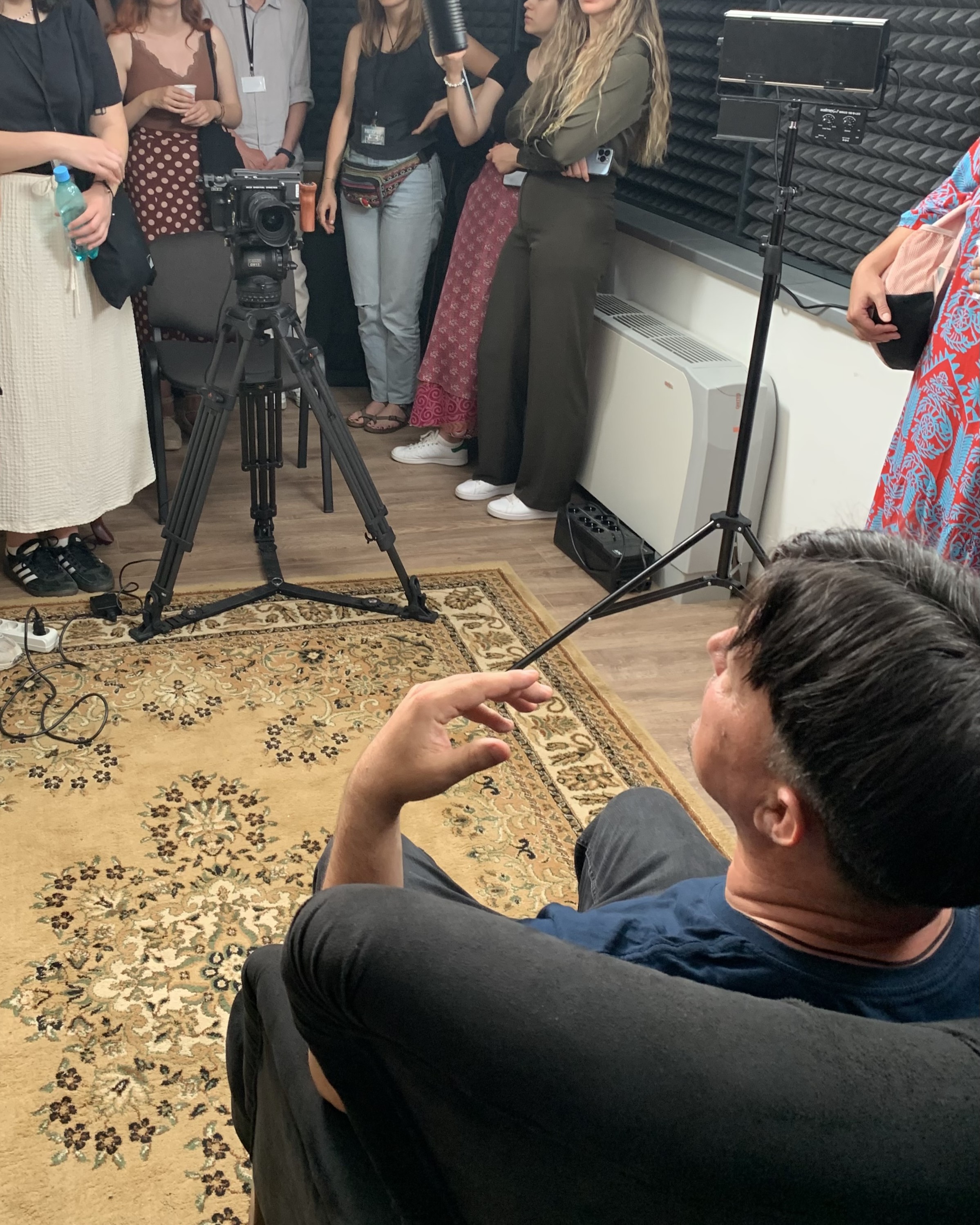
Survivors are invited into the Memorial Center’s studio, where their testimonies are recorded using professional camera equipment and microphones. For those in remote areas, the team travels to ensure there is no story left unheard.

The Memorial Center is steadfast in its commitment to keeping those with a first-hand experience of genocide at the forefront of understanding. Their aim is to humanise the historical narrative and provide a depth to court rulings and statistics, which are often the focus in genocide research.

Each account in the archive is recorded, stored, transcribed, and translated, making it accessible for researchers internationally. While it is not yet publicly accessible, plans are underway to make it available in the coming years, creating a useful resource for understanding the genocide.

Photo: Edward Garnett, The Oral History Studio

Oral History Exhibitions

A collection of interviews forms a permanent exhibition inside of the Memorial Center: the poignant Lives Behind the Fields of Death project. This exhibition combines oral testimonies with artefacts donated by survivors and families. These items, including photographs and other personal belongings, are displayed alongside interactive screens where visitors can hear the stories behind them. Sometimes, the objects are the only surviving mementos of loved ones lost in the genocide, yet relatives and former friends willingly donate to aid the mission of the Memorial Center.

The combination of oral accounts and physical objects creates a visceral connection to the past. It underscores that the victims of genocide are not just numbers, but rather that they existed, they had their own lives, they had their own names, and they had their own belongings.

Tackling Current Issues

Bosnia remains a deeply divided nation, lacking a shared narrative of the war and the mechanisms for transitional justice. And while genocide denial and historical revisionism is happening at a local and state-level in Bosnia, the work of NGOs like the Srebrenica Memorial Center is critical.

The Center actively tackles distortions and silences through public engagement, aiming to ensure that accountability and truth remains at the forefront of public discourse. One of their key initiatives by staff are the annual Genocide Denial Reports. These reports use evidence-based monitoring to reveal the frequency and methods of genocide denial, while providing recommendations to address and counteract these harmful narratives.

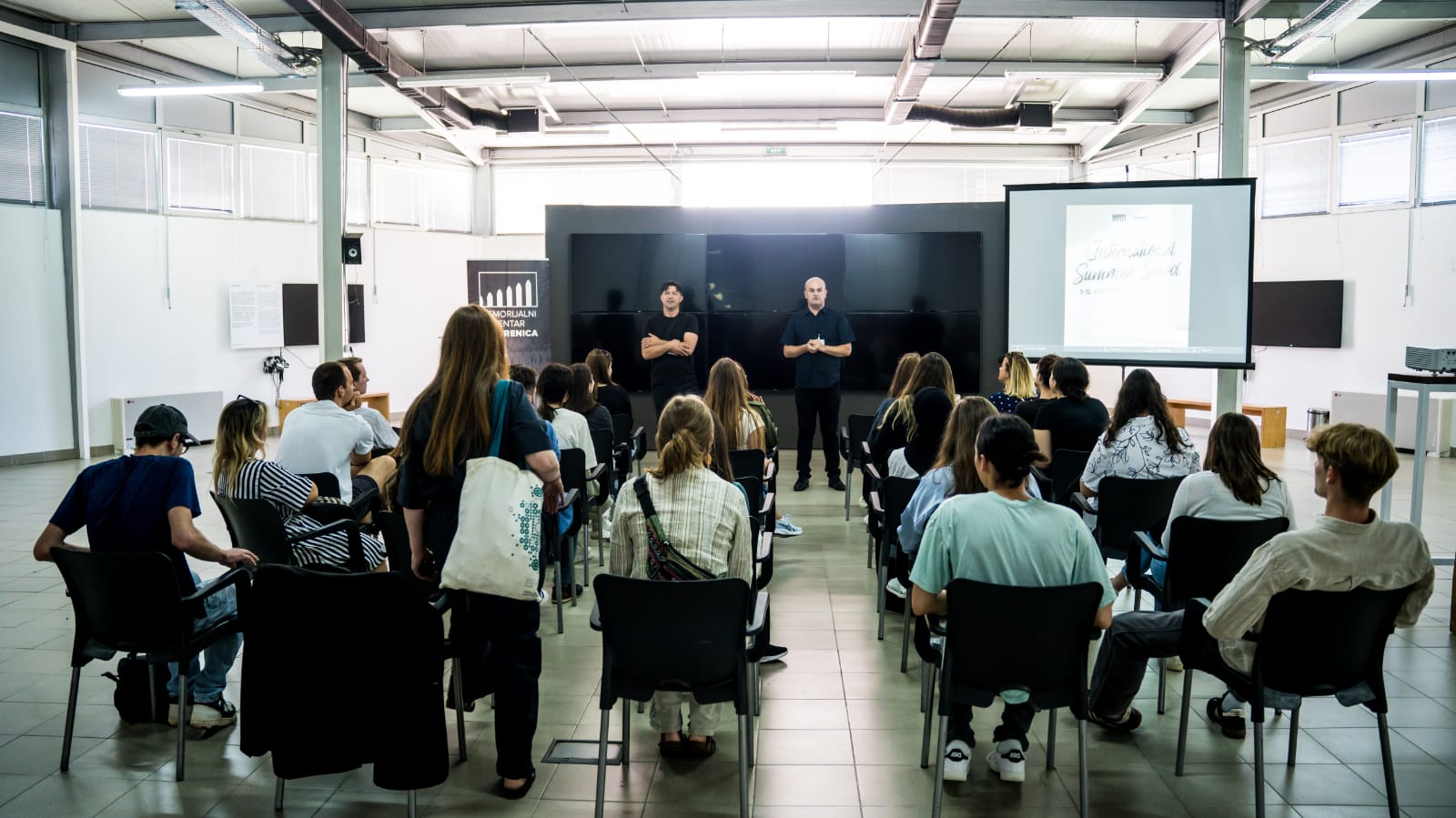
Additionally, the Memorial Center seeks to influence future researchers in the field of transitional justice, social sciences, and human rights. This past summer, in 2024, I was part of a cohort of students from across the globe who congregated in the small village of Srebrenica for a week of informative lectures and field trips.

We left the programme enriched, gaining both knowledge applicable to our research and a network of like-minded peers. It reaffirmed the commitment of the Memorial Center to fostering international dialogue and awareness as well as addressing genocide denial.

The work of the Memorial Center is critically important – not only in preserving the memory of genocide but also in shaping the future of Bosnia and progressing transitional justice. I encourage everyone to explore their work, listen to testimonies from the Lives Behind the Fields of Death project, and read a section of the eye-opening Denial Reports. These initiatives provide an important foundation for establishing truth and combatting forces of denial.

Photo: Srebrenica Memorial Center, ‘First International Summer School’

Relevant Links

Srebrenica Memorial Center Website: https://srebrenicamemorial.org/en

Lives Behind the Fields of Death: https://zivotiizapoljasmrti.srebrenicamemorial.org/en

Brief Overview of West Balkan Genocide Denial: https://srebrenicamemorial.org/en/page/denial/29

The latest Genocide Denial Report (2023): https://srebrenicamemorial.org/bs/istrazivanja/srebrenica-genocide-denial-report-2023/18

Remember 1926

Joe Redmayne, a Collective researcher associate, introduces our new “Remember 1926” project and its launch. The project is a collaboration between Newcastle University’s Oral History Collective (OHC) and Labour & Society Research Group (LSRG).

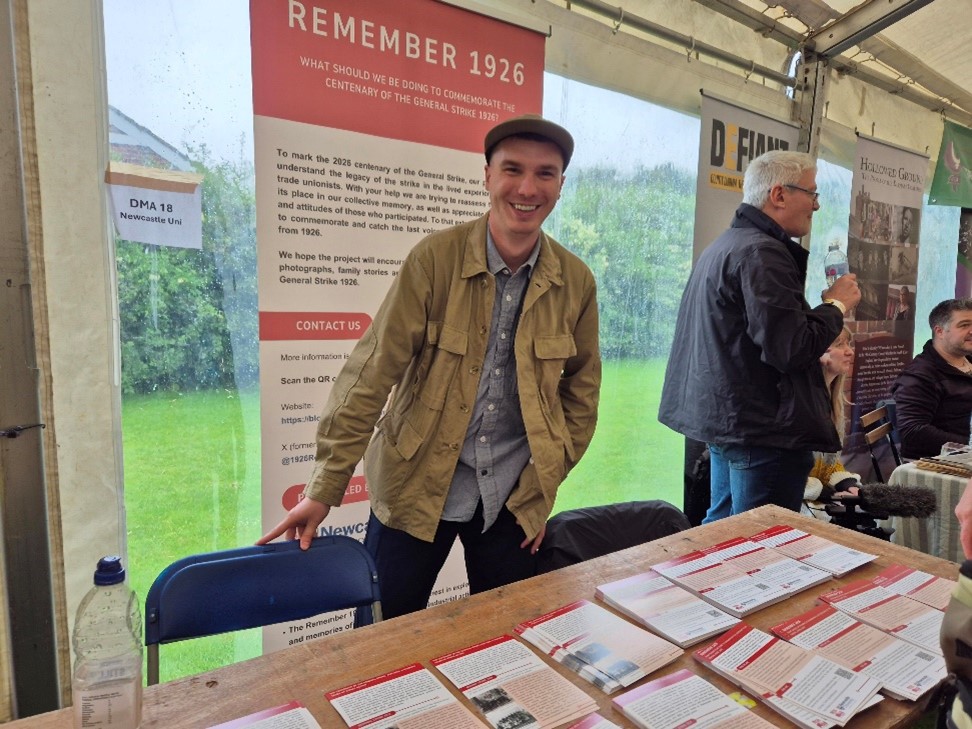
(Photograph of Dr Joe Redmayne at the Durham Miners’ Gala promoting the Remember 1926 project. OHC colleagues

Joe Redmayne at the Durham Miners’ Gala promoting the Remember 1926 project.

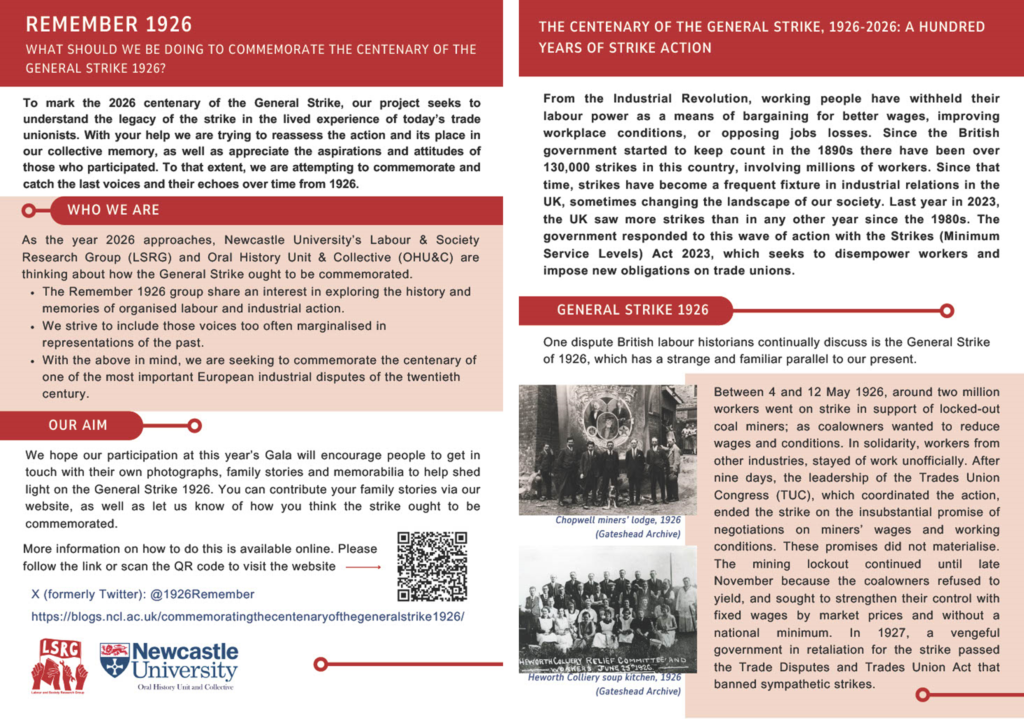
The project explores ways in which the centenary of the British General Strike of 1926 ought to be commemorated in two years’ time and seeks to understand the legacy of the strike in the lived experience of members of today’s trade unions and the wider labour movement.

The project launched at the 138th Durham Miners’ Gala on Saturday 13 July 2024, with a stall and leaflets to promote the project among attendees. We would encourage people to get in touch with their photographs, family stories, and memorabilia to help shed light on the General Strike.

Remember 1926 will revisit the General Strike, reassess the action and its place in our collective memory, as well as appreciate the aspirations of those who participated. To that extent, the group is attempting to commemorate and catch the last voices and their echoes over time from 1926.

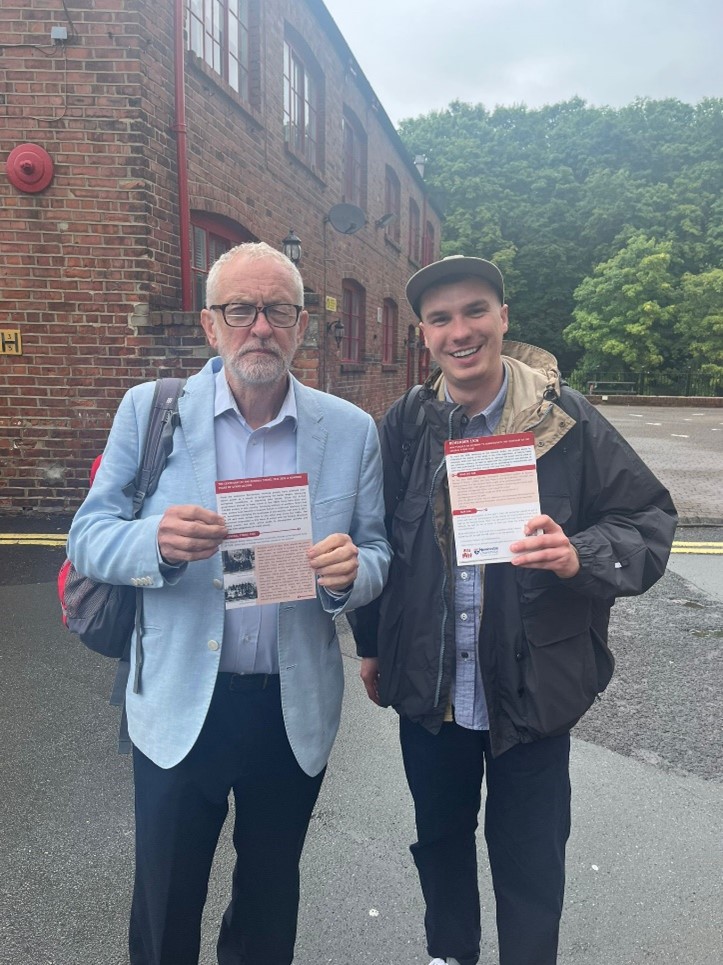
(Photograph of Joe with the former leader of the Labour Party and now Independent MP for Islington North, Jeremy Corbyn, holding the Remember 1926 leaflets.)

Joe with the former leader of the Labour Party and now Independent MP for Islington North, Jeremy Corbyn, holding the Remember 1926 leaflets (see below).

Get involved

In the future, Remember 1926 will foster dialogue and prompt collaboration between trade unionists, political activists, academic researchers, community partners, heritage groups, archives, and museums. If you would like to keep updated or get more involved with the project, please complete the following questionnaire via the link (Get involved).

You can visit our webpage and social media below:

https://blogs.ncl.ac.uk/commemoratingthecentenaryofthegeneralstrike1926

@1926Remember If you have any immediate questions about the project, please get in touch with Joe Redmayne via email at j.redmayne2@newcastle.ac.uk


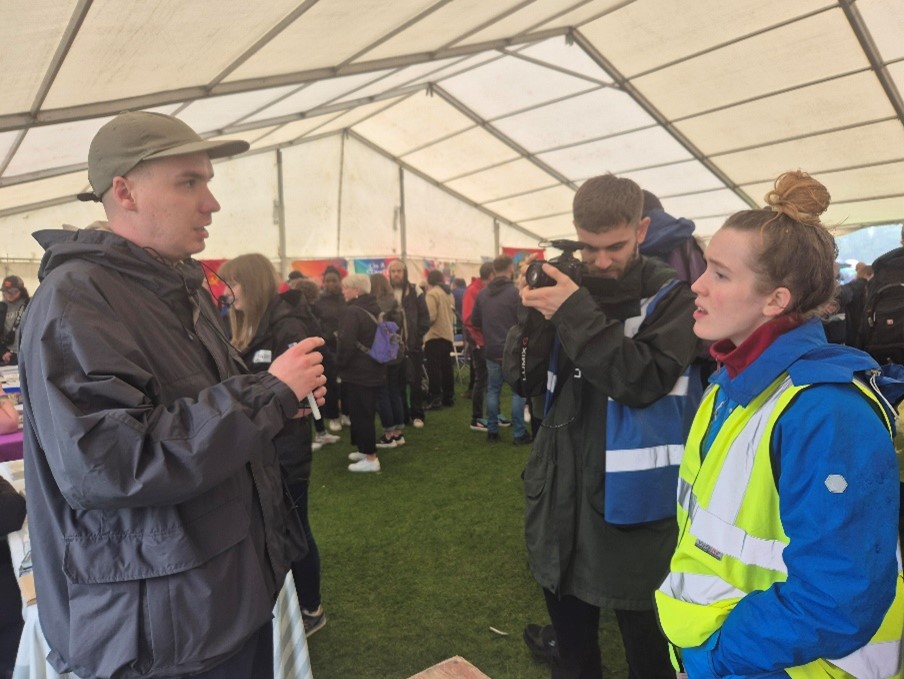
Royal Holloway MA Public History student, Rachel Lawrence, interviewing Joe about the Remember 1926 project and his thoughts about the Durham Miners’ Gala.

Royal Holloway MA Public History student, Rachel Lawrence, interviewing Joe about the Remember 1926 project and his thoughts about the Durham Miners’ Gala.

Share your family stories, photographs, and memorabilia

If you have a story of an ancestor who participated in the General Strike, please let us know, as we would love to hear your family stories. You can contribute your own family stories via the following link Remember 1926 Questionnaire to help us grasp the different experiences of those involved in the strike and comprehend how your story lives on today.

Please include your name and email address, so we may be able to contact you in the future. Some of the questions the project is interested in answering are listed below: ·

What are the legacies of the General Strike? ·

What difference to Britain did the strike make? · What caused it? Could it have been avoided?

Is it an event still discussed by different generations of workers today? · Are there any family/community histories passed down through generations that still live on in today’s collective memory? · Have these stories shaped the descendants view of the trade union movement? · Why do people still strike today? · How and why should the centenary of the strike be commemorated?

Oral History and Memory Module (HIS2219) at Newcastle University

In this blog post, the Lug intern Charlotte Stobart outlines the form and structure of the second year Oral History and Memory module offered at Newcastle University, in conjunction with current module leader Dr Sarah Campbell.

Continue reading

The interaction between Narrative and Archive: The Lockerbie Disaster, Pan Am 103, and Syracuse University

In October 2022, NOHUC Researcher Andy Clark undertook a research and engagement trip to Syracuse University, New York. Along with Colin Atkinson, this was part of their British Academy funded project that conducted oral history interviews with first responders to the Lockerbie Disaster, 1988. In this Lug post, Andy reflects on engaging with victim communities in the United States, and how the materials held in the Pan Am 103 archive aligned with the narratives collected in his research.

Continue reading

The Voices Of Stannington Sanatorium: Musings on Oral History and Creative Writing

In this Lug post, Dr Liz O’Donnell reflects on interviews that she conducted being reused and repurposed for a radio drama, considering the attachments that we as oral historians have to the data we collect.

Continue reading

Authenticity and authority? Changing memories of Holocaust resistance

How Oral History helped to disrupt the appropriation of the ‘White Rose’ resistance

This year’s [2022] Brundibár Arts Festival was opened by Silvie Fisch of the Oral History Collective. The annual festival is dedicated to the music and arts of the Holocaust. This year’s festival theme is inspirational women and Silvie spoke about the changing public history of Sophie Scholl. Here is an edited version of Silvie’s talk.

Continue reading