Resource in Focus: RIBA eBook collection

We have 89 eBook titles available through a partnership between RIBA and Taylor & Francis. We like them as they are available on a unlimited DRM free model.

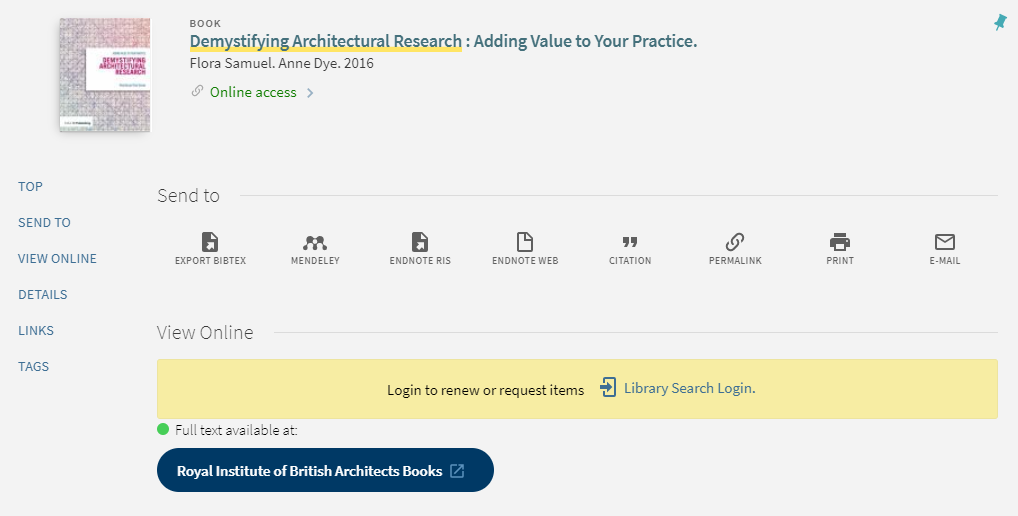
All titles are available through our catalogue, Library Search.

Follow the links to the platform which supply that title e.g. the large blue button to the “Royal Institute of British Architects Books”

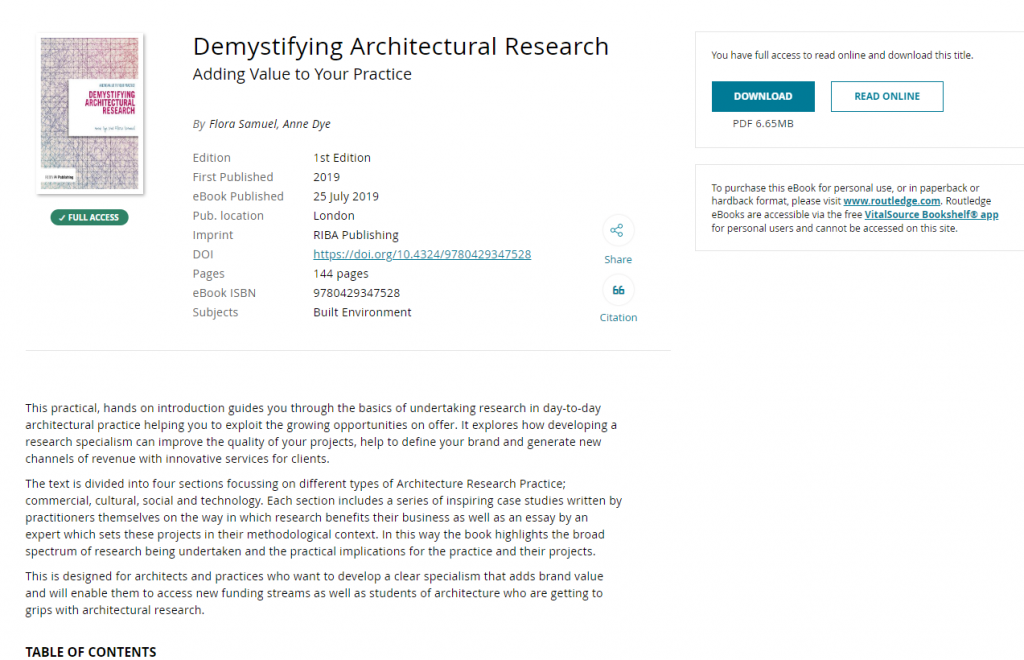
Once you are transferred to the Taylor and Francis platform you will see options to navigate to specific chapters or content, download read online. Once you’re inside the eBook then you can keyword search, make the text size larger/smaller or jump into chapters.

The full list of titles includes :

101 Rules of Thumb for Low Energy Architecture
101 Rules of Thumb for Sustainable Buildings and Cities
20/20 Visions
A Gendered Profession
Age-friendly Housing
An Architect’s Guide to Public Procurement
An Introduction to Architectural Conservation
An Introduction to Passive House
Architect’s Guide to NEC4
Assembling a Collaborative Project Team
Automatic for the City
Avoiding and Resolving Disputes
Being an Effective Construction Client
Better Buildings
BIM Demystified
Biomimicry in Architecture
Briefing
Building Condition Surveys
Building in Arcadia
Building Revolutions
CDM 2015
Chinese Urban Transformation
Climax City
Commercial Client’s Guide to Engaging an Architect
Competition Grid
Conservation
Construction
Contemporary Vernacular Design
Contract Administration
Creating Winning Bids
Demystifying Architectural Research
Design
Design for Biodiversity
Design for Climate Change
Design Management
Designed to Perform
Desire Lines
Domestic Client’s Guide to Engaging an Architect
Extensions of Time
Financial Management
Future Campus
Future Office
Future Schools
Good Office Design
Guide to JCT Design and Build Contract 2016
Guide to JCT Intermediate Building Contract 2016
Guide to JCT Minor Works Building Contract 2016
Guide to JCT Standard Building Contract 2016
Guide to RIBA Domestic and Concise Building Contracts 2018
Guide to RIBA Professional Services Contracts 2018
Guide to the RIBA Domestic and Concise Building Contracts 2014
Guide to Using the RIBA Plan of Work 2013
Happy by Design
Health and Safety
How Buildings Work
HR for Creative Companies
Information Exchanges
Lead Designer’s Handbook
Light in Architecture
Loft Conversion Handbook
Mediated Space
Mobilising Housing Histories
New Design for Old Buildings
Planning, Politics and City-Making
Principal Designer’s Handbook
Re-readings: 2
Rescue and Reuse
Residential Retrofit
Retrofit for Purpose
Retropioneers: Architecture Redefined
Revisiting Postmodernism
Revolution
Small Practice and the Sole Practitioner
Social Housing
Starting a Practice
Sustainability
Sustainable Building Conservation
Targeting Zero
The Art of Building a Garden City
The BIM Management Handbook
The Design Companion for Planning and Placemaking
The Re-Use Atlas
This is Temporary
Town Planning
Urban Lighting for People
Wellbeing in Interiors
What Colour is your Building?
Wheelchair Housing Design Guide
ZEDlife

Books added to the Library by students in SAPL (Semester One 2019/20)

We have a service called “Books on Time” for students. This allows you to tell us about the books you need for your studies. If we don’t have the books you need, simply complete the web form and we’ll see if we can buy them. For books we already have in stock, if they are out on loan please make a reservation/hold request using Library Search.

Further information about Books on Time

In Semester One, academic year 2019/2020 we bought the following items after requests from students in SAPL.

There were 132 requests from 55 students totalling £4859.98 (33% from Undergraduate, 23% from Postgraduate taught and 25% from Postgraduate Research)

Title Now in stock
R 128 by Werner Sobek: Bauen im 21. Jahrhundert, architecture in the 21st century 1xlong
A History of Future Cities 1xlong
A History of Metallography 1xlong
Al Manakh 2: Export Gulf (vol 23) 1xlong
Al Manakh: Dubai Guide, Gulf Survey (vol 12) 1xlong
An Architectural Model 1xlong
An Atlas of Geographical Wonders 1xlong
Angels and wild things : the archetypal poetics of Maurice Sendak 1xlong
Architectural Model Building 1xlong
Architectural Tiles: Conservation and Restoration 1xlong
Architecture Interruptus 2xlong
Architetti-pittori e pittori-architetti 1xlong
Arts of Living on a Damaged Planet 1xlong
Autogeddon 1xlong
Automatic for the City Designing for People in the Age of the Driverless Car 1xlong, 1xebook
Between Dystopia and Utopia 1xlong
Biomimetics for Architecture: Learning from Nature 1xlong
Breaking Ground: Architecture by Women 1xlong
Caldecott & Co. notes on books & pictures 1xlong
Calton Hill: And the plans for Edinburgh’s Third New Town 1xlong
Carlo Scarpa: the complete works 2xlong
Cartographies of the absolute 1xlong
Cities, Words and Images 1xlong
Constant: New Babylon 1xlong
Cosmos of Light: the sacred architecture of Le Corbusier 1xlong
Country 1xlong
Creating Nationality in Central Europe, 1880-1950 1xebook
Cultural Identity and Urban Change in Southeast Asia: Interpretative Essays 1xlong
Democracy in Modern Iran: Islam, Culture, and Political Change 1xlong
Design Process in Architecture: From Concept to Completion 1xlong
Designing research for publication 1xlong
Drawing support: murals in the North of Ireland 1xlong
Drone: Object Lessons 1xlong
Dubai, the City as Corporation 29/11/2019
Dubai: Behind an Urban Spectacle 1xlong, 1xebook
Edinburgh 1xlong
Edinburgh: Mapping the City 1xlong
Experimental Architecture: Designing the Unknown 2xlong
Facing Gaia 3xlong
Fitzgerald: Geography of a Revolution (Geographies of Justice and Social Transformation) 1xlong
Fossil Capital: The Rise of Steam-Power and the Roots of Global Warming 1xlong
From Meetinghouse to Megachurch: A Material and Cultural History 1xlong
From What Is to What If: Unleashing the Power of Imagination to Create the Future We Want 1xlong
Greening modernism: preservation, sustainability, and the modern movement 1xlong
Gross ideas: tales of tomorrow’s architecture 1xlong
Hanoi: City of the Rising Dragon 1xlong
Health and Comfort in House Building 1xlong
Hearing Beethoven: A Story of Musical Loss and Discovery 1xlong
Hello World: How to be Human in the Age of the Machine – Signed Special Edition 1xlong
Hipster Christianity: When Church and Cool Collide 1xlong
How to Fix Your Academic Writing Trouble A practical guide 1xlong
Hungry City: how good shapes our lives 2xlong
Hungry Planet 1xlong
Hybrid Urbanism: On the Identity Discourse and the Built Environment 1xlong
Illegal Architect 1xlong
Imagined Futures Fictional Expectations and Capitalist Dynamics 1xlong
Industrial heritage re-tooled: the TICCIH guide 1xlong
Inside Picture Books 1xlong
interact or die 1xlong
Kumbh Mela: Mapping the Ephemeral Mega City 1xlong
Lace not Lace: Contemporary Fiber Art from Lacemaking Techniques 1xlong
Landscape, Race and Memory: Material Ecologies of Citizenship 1xlong
Leeds: Shaping the City 1xlong
Lifeblood: Oil, Freedom, and the Forces of Capital 1xlong
Living with Buildings: And Walking with Ghosts 1xlong
Lo-TEK, Design by Radical Indigenism 1xlong
Lucy Skaer 1xlong
Marginality and exclusion in Egypt 1xlong
Material Imagination in Architecture 1xebook
Me, Me, Me: The Search for Community in Post-war England 1xlong
Meat Market: Female flesh under Capitalism 1xlong
Migrant City (Routledge Advances in Ethnography) 1xlong
Model Making: Conceive, Create and Convince 1xlong
Moravia Manifesto 1xlong
New Frontiers of Architecture: Dubai Between Vision and Reality 1xlong
Non-places 14xlong
Notes on the Ventilation and Warming of Houses, Churches, Schools, and Other Buildings 1xlong
O&O Baukunst: View of the interior 1xlong
Performing Remains: Art and War in Times of Theatrical Re-enactment: On Performing Remains 1xlong
Pleasure: the architecture and design of Rockwell group 1xlong
Plunder of the commons 1xlong
Preserving the world’s great cities 1xlong
Productive Postmodernism: Consuming Histories and Cultural Studies 1xebook
Reading Architecture: Literary Imagination and Architectural Experience 1xlong
Replications: Archaeology, Art History, Psychoanalysis 1xlong
Resilience and Ageing Creativity, Culture and Community 1xlong
Retail Apocalypse: The Death of Malls, Retailers & Jobs 1xlong
Retail Therapy: Why the Retail Industry is Broken – and What Can be Done to Fix It 1xlong
Rossville Flats: The Rise and Fall 1xlong
sand To Silicon: Achieving Rapid Growth Lessons from Dubai 1xlong
Soft City: Building Density for Everyday Life 1xlong
Sport, leisure and culture in the postmodern city 1xlong
Temporary Cities: Resisting Transience in Arabia (Planning, History and Environment Series) 1xlong
The architectural tourist: architectural impressions of Europe 1xlong
The Architectural Tourist: Part 2 (RIAS) 1xlong
The Architecture School Survival Guide 1xlong
The Art of Maurice Sendak 1xlong
The Biophilia Hypothesis 1xebook
The Building Regulations: Explained and Illustrated 1xlong
The Case for Subtle Ar(t)chitecture 1xlong
The Chief Secretary: Augustine Birrell in Ireland 1xlong
The Fungi / 3rd edition 1xebook
The Future of Fashion: Understanding Sustainability in the Fashion Industry 1xlong
The Memory Palace: A Book of Lost Interiors 1xlong
The Mental and the Material 1xlong
The Narrator’s Voice: Dilemma of Children’s Fiction 1xlong
The New Town of Edinburgh: An Architectural Celebration 1xlong
The Picturesque 1xlong
The politics of design in French colonial urbanism 1xlong
The Right to the Smart City 1xlong, 1xebook
The Routledge Companion to Picture-books 1xlong
The Rule of the Land: Walking Ireland’s Border Book 1xlong
The secret block for a secret person in Ireland 1xlong
The Smart City in a Digital World 1xebook
The Tenement Handbook: A Practical Guide 1xlong
The Town Below the Ground: Edinburgh’s Legendary City 1xlong
The Urban Moment: Cosmopolitan Essays on the Late 20th Century City 1xlong
Timespace and International Migration 1xlong
Tokyo 1xlong
Traducción y traductología introducción a la traductología 1xlong
Trash Culture: Objects and Obsolescence in Cultural Perspective 1xlong
UAE and the Gulf: Architecture and Urbanism Now 1xlong
Vancouverism 1xlong
Vexed Texts: How Children’s Picture Books Promote Illiteracy 1xlong
Wardrobe Crisis: How We Went from Sunday Best to Fast Fashion 1xlong
Ways of the Illustrator 1xlong
Whale and the Reactor 1xlong
Why are we the Good Guys? 1xlong
Why Fashion Matters 1xlong
Why look at plants? 1xlong
Why We Can’t Afford the Rich 1xlong
Would you kill the fat man? The trolley problem and what your answer 1xebook

The Research Reserve and Desktop Delivery Service (DDS)

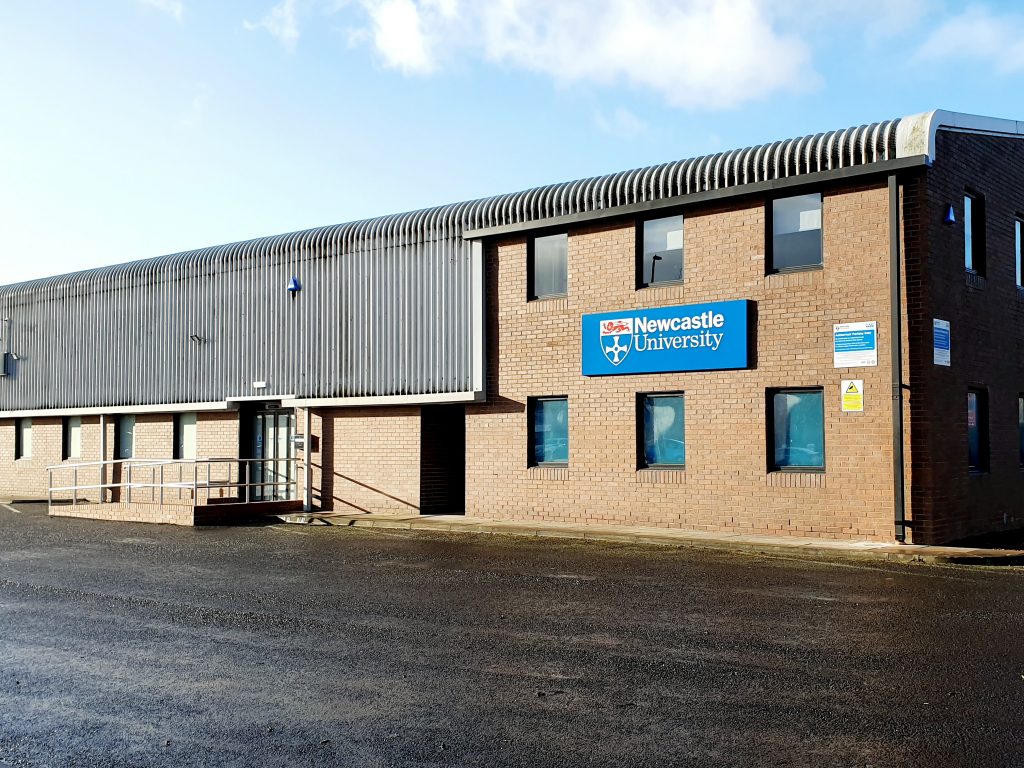
The exterior of the Research Reserve facility in the Team Valley.

The eagle-eyed amongst you may have noticed a curious thing on Library Search. Where normally you would expect to see the name of one of the libraries next to an item’s shelfmark, occasionally you’ll see “Research Reserve”.

If you’ve ever wondered just what exactly the Research Reserve is, this is the blog for you, discover here exactly what the Research Reserve can offer you and your studies.

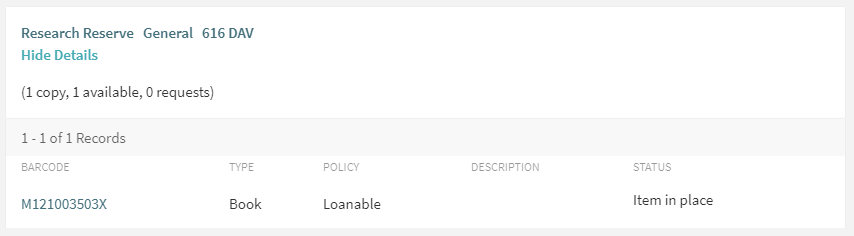
Before an item’s shelfmark is its location. This book is held off-site at the Research Reserve facility in the Team Valley.

The Research Reserve is the Library’s stores, located throughout campus and including a state-of-the-art storage facility in the Team Valley. These facilities allow the Library to keep less-used material for much longer than other academic libraries. These combined storage facilities provide over 29 kilometres of storage space, which is used to house old editions of journals and books which are consulted infrequently.

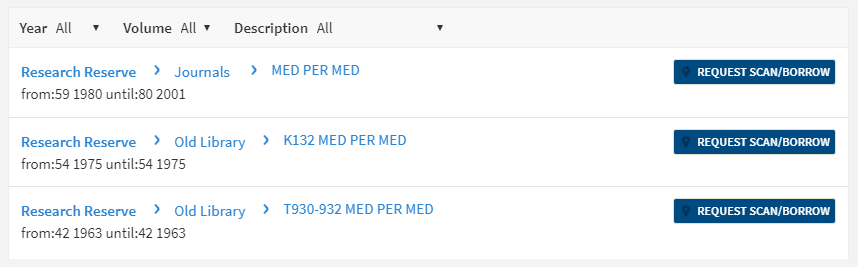
If you’d like to request items from the Research Reserve facilities, click the “Request Scan/Borrow” button once you’ve located the item on Library Search.

You can loan a variety of materials from the Research Reserve, including: books, theses and journal volumes. These can be requested from Library Search. Simply log in using your campus ID, find the item you are looking for and then click the blue “Request Scan/Borrow” button. You’ll get a choice of pickup locations (either the Walton or Philip Robinson libraries).

There are request forms to complete if you’d like to borrow a thesis or an entire volume of a journal.

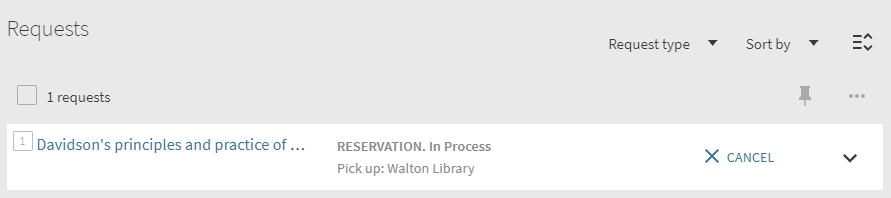
Requests can be viewed by going to “My Account” in Library Search and clicking on “My Requests” from the drop down menu. If you’d like to cancel your request, simply click the blue cancel hyperlink (as seen below). You’ll receive an email confirming your cancellation shortly afterwards.

You can cancel requests for Research Reserve items by clicking the blue ‘Cancel’ hyperlink, as shown above.

There is a collection service that runs between the Research Reserve and the various libraries (weekdays only, not on bank holidays) and your request will be generally be fulfilled within 24 hours. Anything requested on a Friday or over the weekend will be delivered on the following Monday afternoon.

Once your item has arrived at your chosen library, you’ll receive an email letting you know it’s available to loan. The item will be kept on the reservations shelves for five days before being returned to the Team Valley, or passed on to the next person in the reservation queue. Items from the Research Reserve are issued in the same way as standard long loan items, either using the self-issue machines or at the service desk. Once you’ve finished with the item, simply return it as normal.

The Desktop Delivery Service (DDS)

The Desktop Delivery Service can also be reached at: http://dds.ncl.ac.uk

The Desktop Delivery Service (DDS) allows you request a scanned article from a journal held in one of the Library’s stores. Articles can be requested via Library Search (same as a book) or by filling out the relevant request form. Please try and include as much detail as possible on your request form. This helps Library staff locate your article and fulfil your request quicker.

You are only able to request one scanned article per journal issue. The scanned article will be delivered to your University email address, where it can be downloaded and printed off. Requests are generally fulfilled within 24 hours, although this may take longer over the weekends or on bank holidays. You have 30 days to download your article before it is ‘archived’ and no longer available.  

We do not scan items that are available electronically or can be borrowed.

If you have any other queries about the Desktop Delivery Service, read the FAQs.

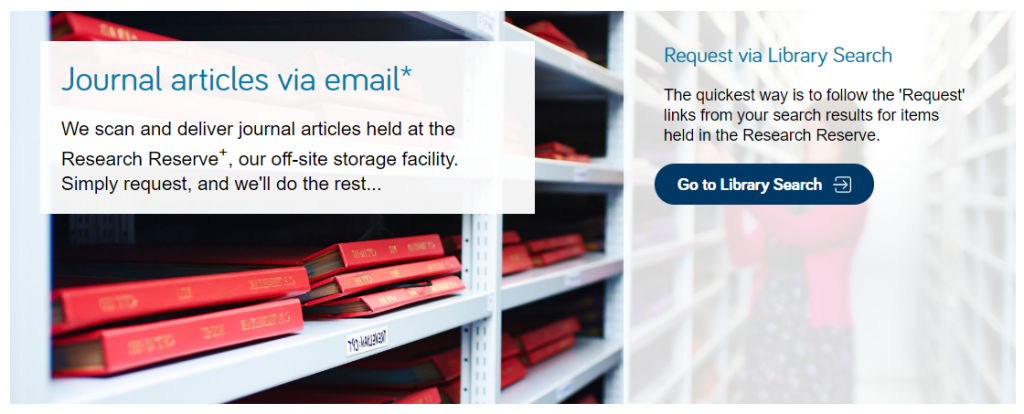
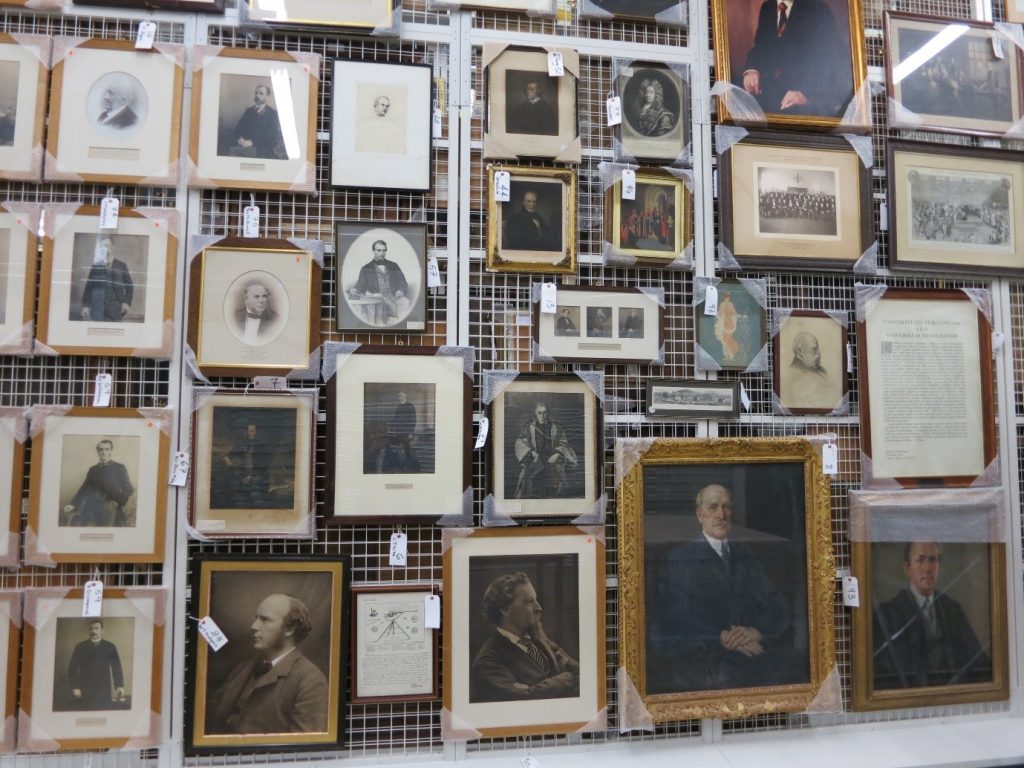
Just some of the amazing treasures held at the Research Reserve facility in the Team Valley.

You can also visit the off-campus Research Reserve facility in the Team Valley. Daily access is available by appointment only with the Research Reserve team, weekdays between 10AM and 4PM. Access outside of these hours can be organised given sufficient notice. There is a large car park available at the facility and buses stop nearby.

Full contact information, directions and opening hours for the Team Valley facility are available via the Library website.

Resource in focus: Historic Digimap

Who doesn’t like maps?

Historic Digimap is an online map and data delivery service, available to all staff and students of Newcastle University. It delivers access to historical Ordnance Survey maps of Great Britain dating from 1846-1996 across various scales, including 1:25,000 and 1:10,650.

If you are a first time user of Digimap then you will need to complete a brief registration form and agree to the license agreements for each collection, but that takes seconds and then you’re ready to go!

Viewing historic maps (3:36 min)

If you want to ‘roam’ through the ages in an area, then you can use the timeline tool to see how the landscape has developed through the years, or view two maps side-by-side to compare and contrast your findings. Imagine looking at the Newcastle University Campus and seeing what used to be on the site before buildings such as the Henry Daysh Building, Stephenson Building and Philip Robinson Library graced us with their facilities!

Once you have your area of interest, the Roam service will allow you to view, annotate and print the map in PDF format. Data Download will allow you to download OS data for use in GIS/CAD (if you wish!).

The full scope of what Historic Digimap (and the other collections available to you including Ordnance Survey, Geology, Marine, Environment, Aerial, Lidar and Improvement Service) are covered in EDINA’s comprehensive Help service:

(Improvement Services is an organisation dedicated to the improvement of local government services in Scotland. This data collection comprises of 37 local authority datasets, such as planning applications, green belts and school catchment areas. A wealth of information, who’d have thought.)

Go on, give it a try! But please do read EDINA’s Digimap FAQs on what you are permitted to do with the data you use, to ensure you comply with the educational use licence.

Resource in Focus: Times Literary Supplement Archive

Screenshot of TLS banner

We have access to the Times Literary Supplement (TLS) archive from 1902-2014.

The archive brings you the full content of this world-renowned weekly literary and arts publication, dating back to its first issue. For over a century, the TLS has published reviews, features, debates and original works from across the arts world, not to mention its legendary letters page!

Many of the world’s most notable writers and thinkers have contributed to the TLS over the decades, including T.S. Eliot, W.H. Auden, Seamus Heaney, Noam Chomsky, Virginia Woolf, Bertolt Brecht and Umberto Eco. Until 1974, contributions published in the TLS were often anonymous, but the digital archive now reveals the identity of all contributors.

To find out more about the TLS, click Research Tools to read a selection of essays about different periods of its history.

Menu screenshot

You can browse the TLS by date to find a specific issue, or search in various ways (choose Advanced Search to see all options, including searching by contributor, book title, or document type.)

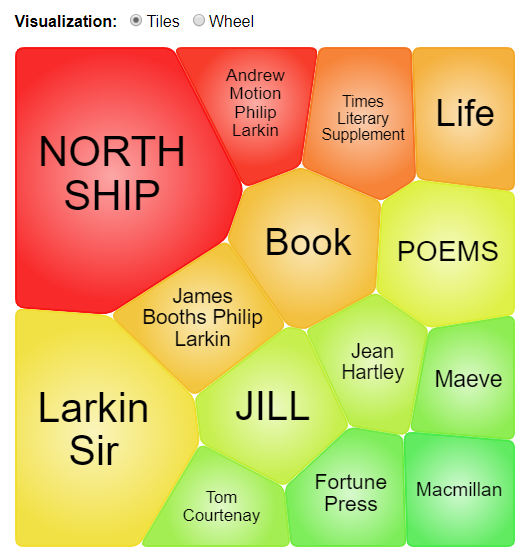
Additional search features on the home page include Term Frequency, to trace how often a word, phrase or person has featured in the TLS over the years, and Topic Finder, to explore and visualise connections between topics.

Screenshot of topic finder
Topic finder

As the TLS archive is published by the company Gale, you can cross-search it with any of the other Gale archives to which we have access, via Gale Primary Sources.

Exams: we are here to help

Woman throwing books up in the air

Exams are a tricky time. Often you will be juggling different exams themselves, on top of other deadlines. However, we want you to know that you aren’t alone at this crazy time of year. We are here to help you through.

But how exactly can we help? Sadly, we can’t take go into the exam with you, or magically freeze time to give you more hours in the day, but do make the most of the following:

  1. Library Help – the place to go when have a question via chat, email, text, twitter, Facebook. Or alternatively search our Frequently Asked Question (FAQ) database.
  2. Librarians – yes you heard right. Book a one-to-one appointment to get the best out of the University Library resources. Also remember our staff in every library are friendly and approachable. There is no such thing as a silly question, so ask away!
  3. Study Space – The University Library has a range of different study rooms and spaces to suit your needs.
  4. 24/7 – The Philip Robinson Library is open 24/7 during the exam period. We want you to sleep and get enough rest, but if you do need to study through the night, we are here.
  5. Subject guides – we have a range of subject guides put together by expert librarians which draw together all the main resources for your studies.
  6. Be well@NCL collection – we don’t just have books for study. This new collection includes tried and tested books that support your wellbeing.
  7. Additional support – don’t suffer and please don’t be shy. You can seek additional support from your NUSU, Student Wellbeing Service, Nightline and the University chaplaincy.

So remember……pace yourself, access the help you need and believe that you can do this!

Historic newspaper archives upgrade

If you use any of our historic newspaper and periodical archives which are published by Gale, you’ll notice they have recently upgraded their platform.

There is no change to the content, but you should notice a more unified design on the search pages, together with improvements to the display of search results, plus new search tools, including ‘topic finder’ and ‘more like this’. You can also use ‘term frequency’ on all Gale databases to analyse the use of a particular term over time.

The following collections are affected:

British Library Newspapers; Burney Newspapers; Eighteenth Century Collections Online; Nineteenth Century UK Periodicals.

Together with these individual archives:

Picture Post; Punch; The Daily Mail; The Economist; The Financial Times; The Independent; The Listener; The Sunday Times; The Telegraph; The Times; The Times Literary Supplement.

Read more about the improvements.

Where can I find all these resources?

They are all individually catalogued on Library Search, or you can find quick links to them all (plus resources from other publishers) on our historic news guide. If you would like to search across several Gale resources at once, search Gale Primary Sources.

Where can I get more advice about searching historic newspapers online?

Watch our short video for lots of helpful tips.

Hip-hop your way around the Harvard style

Harvard at Newcastle is the most frequently used referencing style and if your school does not have a preferred style, it is the one that we would recommend. This is because there is the most comprehensive guidance available for Harvard and it is a style that can manage referencing all types of information. Whether you are referencing a book, news article, Instagram or market research, the Harvard at Newcastle style has got you covered.

There are many variations of Harvard but the one used at Newcastle can be found in Cite Them Right. Harvard uses an in-text citation (Millican, 2018, p.12) inserted in the text, coupled with a reference list at the end of the document, which provides the key. Cite Them Right  is available as a published book to borrow from the library and Cite Them Right Online provides the same comprehensive guidance in a searchable interface that can be accessed anywhere online. It includes guidance about how to reference just about every type of information you can think of, including the more tricky online sources such as social media.

You will find the Harvard at Newcastle style in EndNote on campus PCs and through the RAS, and are able to download the style from our EndNote guide if you are using it locally on your own device. We’ve also included some useful tips and advice about getting to grips with Harvard on the Academic Skills Kit.

Resource in Focus: Building Types Online

After positive feedback from a trial in 2018 we are delighted to announce we now have access to this database.

This platform is based on Birkhäuser’s architecture books, a selection of Birkhäuser manuals and additional analysis Annual updates which add new building types and more contemporary international case studies.

This resources features :

  • Over 6000 high quality architectural drawings/ building plans. These are mostly vector-based, drawn to scale and available for download.
  • 2500 photos of building types
  • 1200 case studies
  • Over 900 international projects
  • 160 thematic articles providing background information on specific aspects of individual building types e.g. lighting, acoustics, urban considerations, access types or planning processes.
  • Types of buildings include: housing, schools, libraries, office buildings, sacred buildings, hospitals, museums, industrial complexes, infrastructure, transport and other building types.

This makes it an excellent choice for both teaching, research and understanding the practice of architectural design.

Search options include :

  • Full Text
  • Architect
  • Building Types
  • Decade
  • Height
  • Country
  • Author
  • Urban Context

You can also browse by grant systematic access to all content according to Building Type, Urban Context and Morphological Type.

This is an important resource for anyone studying building typology or writing architectural design assignments. In nutshell a fantastic online resource covering building types in the last 30 years. 

The Search Help document from the resources explains the database’s functions in detail. An overview of the terminology used in the building analysis and the Search and Browse options is available as well.

To access the database, click on the link via Library Search.

Identify resources for your research project

A strong research project such as an essay, dissertation or thesis will always be supported by good quality information from a wide range of sources.  There are a huge variety of resources available to you and being able to make appropriate choices when selecting materials to include in your project and explain why you have chosen them, is an important academic skill that demonstrates a good awareness of your subject and an ability to think critically about ideas and research.

Of course, not all information resources will be relevant to your particular research.  You will have to think about the type of information you need then identify the type of resource that will provide that kind information.

For example:

Books will offer an in-depth overview of popular ideas, theories, and opinions in your subject area and are likely to be broader in scope than a journal article or conference paper.

While a conference paper will often discuss ‘work-in-progress’, and therefore can be an ideal way of finding out about up to date research and ideas.

For more information on different resource types, including standards, patents, maps, newspapers and more, take a look at our range of Resource guides.

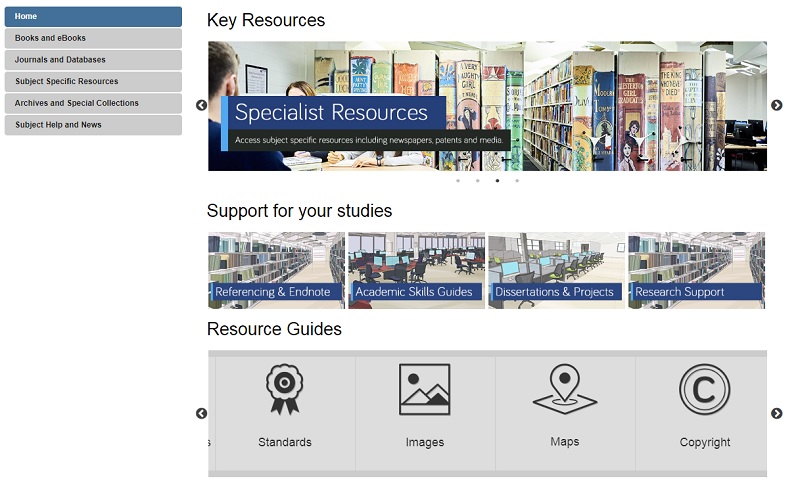
Your Subject Guide can also help you identify useful sources of information for your research as it contains a carefully curated list of resources that are tailored to your subject area.  Here you’ll  find useful lists of online reference books, eBook collections and recommended databases for finding relevant journal articles and conference papers.  Also, under the Subject Specific Resources tab, you’ll discover a further host of specialised materials relevant to your subject such as audiovisual media, data-sets or professional organisation’s websites.

Screen capture of a Library Subject Guide, showing various tabs and resource links.

Depending on your research topic, you might also want to explore the Special Collections tab to see materials held in our Library archives that are relevant to your subject area specifically.

For more advice on finding and evaluating resources for your research take a look at our Finding Information and Evaluating Information Guides.