Newcastle University holds inaugural open research conference

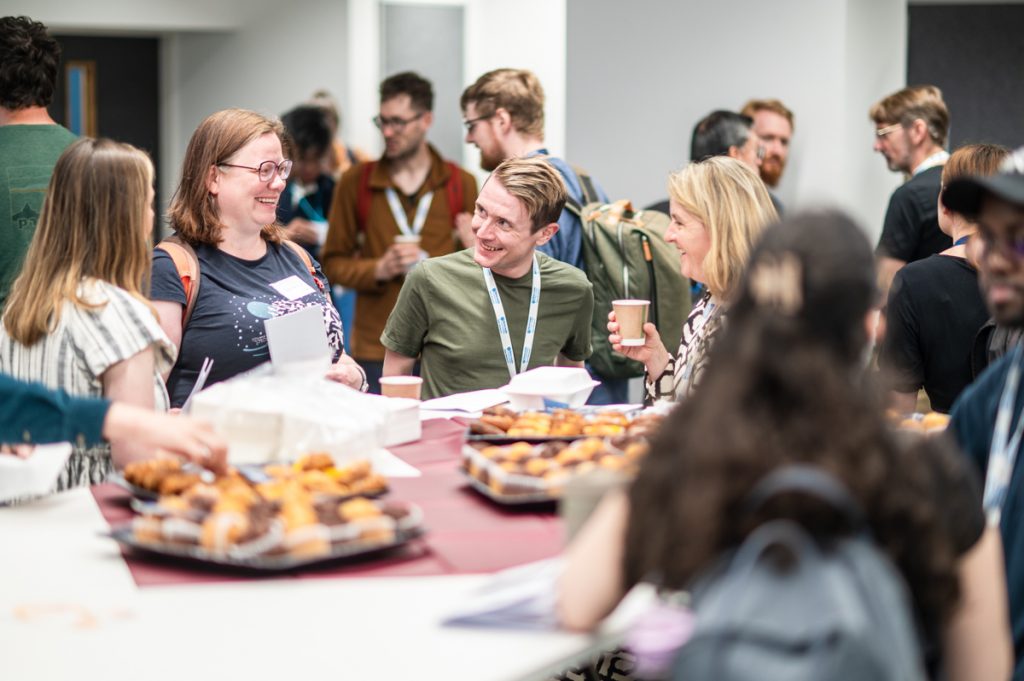
On Friday 13th June 2025 Newcastle University held its first ever open research conference, bringing together staff and postgraduate students to share successes and challenges in their open research journeys so far and learn what benefits working openly can bring. Attendees came from SAgE, HaSS, FMS and Professional Services indicating a growing multidisciplinary interest in open research practices. A welcoming address was given by Natasha Mauthner, Associate Dean for Good Research Practice and UKRN institutional lead.

The conference was aimed specifically at early career researchers (ECRs) and PGR students who were either practising open research or were keen to learn more about how to go about conducting open research, with the opportunity to share best practice and build upon open research techniques through a series of invited talks and hands-on workshops. Workshops were delivered by open research champions and the library open research team. Topics covered on the day included open, FAIR and sensitive data, trust in research methods and results, transparency and reproducibility, and research tools and software for openness. The day concluded with a hands-on exploration of open research through games and a productive and thought-provoking ‘open forum’ discussion of what open research means for non-quantitative disciplines including challenges, opportunities to expand how openness and transparency is considered over all disciplines within the university, and open research training needs.

Feedback on the day was positive, there was a buzz of discussion and attendees were able to make new connections, learn about new tools and discuss any shared challenges in making their research more open. The conference also acted as an opportunity to promote the work of the UK Reproducibility Network (UKRN) at Newcastle University and the monthly ReproducibiliTea journal club.

Details of the talks from invited speakers and workshops with resources can be found on the conference programme page and below, with links to the slides.

Short Talks

  • Open-Source Software Tools for Research – Ben Wooding, School of Computing, SAgE (download slides)
  • Demystifying Clinical Audit vs Research – Edmund Ong, Newcastle University Medicine Malaysia, FMS (download slides)
  • Applying FAIR Principles to Research Software – Frances Turner, Carol Booth, Research Software Engineering Team (download slides)
  • Open Access DNA-Encoded Library Screening : Accelerating Therapeutic Discovery Through Collaboration – Cameron Taylor, Mike Waring, Dan Gugan, School of Natural and Environmental Sciences, SAgE  (download slides)
  • Introduction to Open Hardware Principles – James Grimshaw, BioImaging Unit, FMS (download slides)
  • Open, FAIR, and Sensitive Data in the context of Electric Vehicle Charging – Shouai Wang, Sanchari Deb, Electrical and Electronic Engineering, SAgE (download slides)
  • Multi100: Estimating the Analytical Robustness of the Social Sciences + Lessons About Open Research – Harry Clelland, Eotvos Lorand University and Northumbria University (download slides)
  • Using Social Media Big Data and ChatGPT for Identifying Counter-urbanisation Hot Spots in China: A Case for Open and Ethical Research – Jian Chen, Centre for Rural Economy, SAgE
  • A Brief History of Research Software Engineering – Mark Turner, Research Software Engineering (download slides)
  • Generating trustworthy evidence: A painful story – Gavin Stewart, School of Natural and Environmental Sciences, SAgE (download slides)

Workshops

  • Workshop 1: A Very Short Introduction to Version Control with Git – Janetta Steyn, Research Software Engineering Team (Intro to Git & GitHub)
  • Workshop 2: Sharing sources and processes: a milestone for trust and research longevity – Bogdan Metes, Library Research Services (access slides)
  • Workshop 3: Making Your Literature Review Easier and More Transparent: Reference Managers and other Tools – Nayara Albrecht, Federal University for Latin American Integration, previously School of Geography, Politics and Sociology (download slides)
  • Workshop 4: DOI Generation and other tools for open publishing – Glyn Nelson, Bioimaging Facility, Faculty of Medical Sciences (download slides)

This guest post was written by Nicola Howe and Clement Lee, local network leads for UKRN Newcastle.
Latest UKRI funded open access book published

Sustainable Food Consumption in China: Changing Foodscapes, Values, and Practices by Alex Hughes, Shuru Zhong, Mike Crang, Guojun Zeng, Fernando Fastoso, Hector Gonzalez Jimenez and Bob Doherty, has been published open access by Routledge, as part of their Critical Food Studies series.

Sustainable Food Consumption in China investigates the current and potential roles of food consumption to address sustainability challenges in China.

Focusing on the megacity of Guangzhou, it looks at sustainability and food from the perspectives of government, commercial, and third sector actors, and through the lived experiences of consumers. It charts the rapidly transforming landscapes of retail across urban China and the ways they are shaping and are shaped by everyday food consumption practices. Using a multi-method research approach of quantitative and ethnographic data, it provides readers with a rich and comprehensive understanding of the relationships and tensions between contemporary practices of food consumption and pressing sustainability challenges. It unpacks the complex foodscape in contemporary Chinese cities, from traditional wet markets to online deliveries, from supermarkets to farmers markets and alternative food providers, to understand the values and practices promoting and hindering sustainability in food consumption.

The book is intended for academics from advanced undergraduate level through to Masters, postgraduates and scholars across key social science disciplines including Geography, Sociology, Anthropology, and Business, and internationally given the global interest in the focus on China.


This is the third book published at Newcastle as a result of the UKRI open access policy for long-form publications, with open access costs covered by UKRI funding. You can read the other books:

The UKRI open access policy aims to ensure that findings from research funded by the public through UKRI can be freely accessed, used and built upon. The policy was updated at the beginning of 2024 from previously focusing on peer-reviewed research articles to now include long-form outputs, namely book chapters, monographs and edited collections.

Full details of the UKRI open access policy and how we in Library Research Services can support you to publish open access can be found on our UKRI Policy for long-form publications page.

If you have any questions or concerns about the policy, and how this might affect any current or future publications, please contact openaccess@ncl.ac.uk.

Book Giveaway!

Routledge Critical Food Studies book series will soon publish “Sustainable Food Consumption in China: Changing Foodscapes, Values, and Practices” by Alex Hughes, Shuru Zhong, Mike Crang, Guojun Zeng, Fernando Fastoso, Hector Gonzalez Jimenez and Bob Doherty.

Simply, share or like one of the following posts by 12 June 2025 for a chance to win a print copy!

The book, expected on 18 June 2025, will be published open access as a result of the UKRI open access policy for long-form publications, with open access costs covered by UKRI funding.

Full details of the UKRI open access policy and how we in Library Research Services can support you to publish open access can be found on our UKRI Policy for long-form publications page.

If you have any questions or concerns about the policy, and how this might affect any current or future publications, please contact openaccess@ncl.ac.uk.

Jisc Next Generation Open Access Strategy

Jisc has embarked on a series of negotiations with the five largest academic publishers: Elsevier, Springer Nature, Taylor & Francis, Wiley and Sage. The existing Transformative Agreements (TAs) with these publishers all come to end on 31st December 2025. Jisc will negotiate with all five at the same time and with the same set of requirements that were developed after extensive consultation with the HE Sector. Jisc anticipates “that this approach will allow the sector to return greater value from the £112 million currently spent on these agreements, reducing costs and ensuring fairer, more sustainable terms.”

In addition, Jisc aims to “align expenditure with the sector’s broader strategic goals, supporting research, teaching and student outcomes. This will help shift away from unsustainable models based upon per article charges including Article Processing Charges (APCs), paving the way for more equitable, open access publishing practices.”

Negotiation aims

  • Reduce costs to alleviate financial pressure on institutions
  • Move away from volume-driven models to focus on fair, sustainable approaches that increase participation in research and close the access and participation gap between the NHS, government, industry, and institutions
  • Help the sector support the Government’s priorities and achieve greater economic and societal benefits, support teaching, learning and drive research collaborations

Timeline

  • January 2025: Publishers informed of approach
  • March – June 2025: Negotiations in progress
  • July – August 2025: Consultations
  • September – October 2025: Consult and agree sector walkaway strategies
  • November – December 2025: Launch and orders placed or proceed with walkaway strategies

The overriding aim for the negotiations is to achieve a total reduction in spend compared to 2025 across the Big 5 publishers of between 5% and 15%. To give an idea of the potential savings involved for Newcastle University, our current spend with the Big 5 publishers is c£2.5M. A 5% saving would represent £128k, 10% £257k, and 15% £385k. At a time when we can expect no additional resources to invest in collection building to support new or expanding programmes, any funds released for reinvestment through securing better deals would be welcome.

The Library is already analysing the value for money of the existing deals, and assessing the potential impact of “walking away” from any of the agreements, which includes taking into account the internal administrative costs of managing selective access to individual journals.

The Library will provide updates on the progress of the negotiations to the University via the Library Research Services web pages, and deliver briefing sessions where appropriate. If you would like more information please contact openaccess@ncl.ac.uk.

John Williams

What’s happening in Library Research Services: June, July and August 2025

As we move towards the summer months, members of the Library Research Services (LRS) team continue to be on hand to support you with any Open Research, Research Data and Open Access training and queries. Get in touch at lrs@ncl.ac.uk.

There are also a number of interesting events happening:

Check out the library calendar for further courses and dates in 2025.

Philosophical issues in open qualitative research

Monday 9th June, 2025 14:00 – 15:00 (BST). Online.

In this interactive workshop Natasha Mauthner, Professor of Social Science Philosophy and Method at Newcastle University, will critically examine philosophical issues in open qualitative research.

The open research movement—encompassing its practices, policies, concepts, infrastructure, governance, guidance, protocols, and rationale—is rooted in an implicit positivist understanding of research. In contrast, qualitative research is grounded in a rich diversity of philosophical traditions, including positivism, interpretivism, social constructionism, phenomenology, hermeneutics, symbolic interactionism, postmodernism, poststructuralism, and deconstruction.

This workshop invites participants to explore the tensions between the normative, one-size-fits-all model of open research—often shaped by positivist assumptions—and the ontological and epistemological diversity of qualitative inquiry. How can qualitative researchers from various philosophical traditions meaningfully engage with open research practices? Conversely, how might the open research movement evolve to better reflect and support the complexity and pluralism of qualitative research?

Hosted jointly by Newcastle University and the University of Reading Qualitative Open Research group.

New book published under the UKRI open access policy

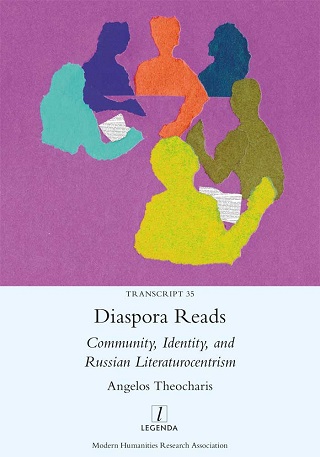
Cover image of monograph entitled Diaspora Reads: Community, Identity, and Russian Literaturocentrism

Diaspora Reads: Community, Identity, and Russian Literaturocentrism, written by Dr Angelos Theocharis from the Newcastle University School of Arts & Cultures, has been published open access (OA), by Modern Humanities Research Association/Legenda https://www.mhra.org.uk/publications/Diaspora-Reads

Diaspora Reads explores the role of literature and reading practices in the community life of Russian-speaking migrants in Britain. Russophone culture abounds with myths about the special mission of literature and the writer in society. The broader cultural myth of Russian literaturocentrism encompasses the sacralisation of highbrow literature, the idolisation of authors as heroes and martyrs, and the idealisation of avid readership. In the diaspora, literaturocentrism takes on a new form, retaining elements of the Russian and Soviet tradition while primarily responding to the needs of migrant readers.

Following the discussions, games, and celebrations of a community book club in London, Diaspora Reads demonstrates how collective reading enables migrants to shape shared cultural identities, forge communities, build a long-distance relationship with their homelands, and become members of a global network of readers.

Angelos Theocharis is a Leverhulme Early Career Fellow at the Department of Media, Culture, Heritage at Newcastle University. Diaspora Reads is his first monograph.


This is the second book published at Newcastle as a result of the UKRI open access policy for long-form publications, with open access costs covered by UKRI funding. You can read more about the first edited book Pushing the Paradigm of Global Water Security, published in October 2024.

The UKRI open access policy aims to ensure that findings from research funded by the public through UKRI can be freely accessed, used and built upon. The policy was updated at the beginning of 2024 from previously focusing on peer-reviewed research articles to now include long-form outputs, namely book chapters, monographs and edited collections.

Full details of the UKRI open access policy and how we in Library Research Services can support you to publish open access can be found on our UKRI Policy for long-form publications page.

If you have any questions or concerns about the policy, and how this might affect any current or future publications, please contact openaccess@ncl.ac.uk.

What’s happening in Library Research Services: March and April 2025

This March, you can come and chat with members of the Library Research Services (LRS) team at our in-person event (12.00-14.00) on the 28th in the Henry Daysh Building, HDB.1.04, as part of the Universities for North East England Open Research Week.

Other events coming up:

Check out the library calendar for further courses and dates in 2025.

Universities for North East England Open Research Week – 24 to 28 March 2025

The Universities of Durham, Newcastle, Northumbria, Sunderland and Teesside are pleased to invite you to attend their Open Research Week.

We have organised a series of events, featuring a range of speakers, discussing Open Research practices in our institutions and beyond. The events aim to explore and share good practice, discuss barriers and strategies to enable Open Research.

Who should attend? Anyone with an interest in knowing more about Open Research, including researchers, academics, technicians, research staff support and students.

Registration details and more information about each event are available at the links below (all times are in GMT). The majority of events are hosted online via Teams, and registration is open to all.

Monday 24th March

  • 14:00 – 15:30 – Open Data?! Benefits and strategies for sharing research data
    (Prof Eamonn Bell, Durham University; Dr Alan Bowman, Teesside University; Dr Martin P Eccles, Newcastle University; Prof Sarah Lonbay, University of Sunderland; Dr Sebastian Potthoff, Northumbria University; Dr Louise Rayne, Newcastle University)

Tuesday 25th March

Wednesday 26th March

Thursday 27th March

Friday 28th March

Each institution will advertise an in-person drop-in session open to its own staff and research students. Please check individual institutions for details.

  • 11:00 – 13:00 – Open Research Drop-in (Research Commons Collaboration Space 1)
    (at Northumbria University)
  • 12:00 – 14:00 – Open Research Drop-in
    (at Teesside University)

Friday 4th April

Link to all events

If you have any questions please contact Library Research Services lrs@ncl.ac.uk

What’s happening in Library Research Services: February 2025

The Library Research Services (LRS) team are here to help in 2025.

Coming up in the next month:

Check out the library calendar for further courses and dates in 2025.