Podcast Episode – Wendy Rickard

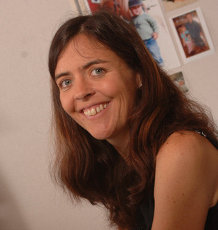
The first episode in Series 2 of the Newcastle Oral History Podcast features a conversation between Graham Smith and Wendy Rickard. Wendy is a renowned oral historian who has worked on a number of ‘taboo’ and difficult subjects, including sex working and the ongoing relationships between interviewer and interviewees. She has experience of working with medical researchers on the impact and experience of HIV/AIDS and pandemics such as Ebola and SARS. Throughout the episode, Graham and Wendy discuss the ethics of researching pandemic illness, the ‘new normal’ in the age of Covid-19, and the pros and cons of using videoconferencing tools in oral history interviews.
Continue reading

In-person interviewing in the era of Covid-19

With Government guidelines changing, indoor gatherings and meetings are now possible, meaning that oral historians are once again able to conduct face-to-face interviews. However, the interview situation in August 2020 is vastly different from any time before. What impact does this have on the interview as an event, and what steps should oral historians take to ensure the safety and wellbeing of everyone invovled? In this Lug post, Andy Clark discusses his approach and experience to conducting in-person interviewing in the ‘Covid-19 era’.

Continue reading

‘I never knew which school I was going to be in’: Disrupted education in World War Two

Over ten years ago, Liz O’Donnell recorded the memories of more than 40 people in the North East who, as children during the 2nd World War, had experienced the huge dislocation caused by mass evacuation. Current discussions about the damaging impact of disrupted education caused by the pandemic led her to dig out her research notes, to look at the evacuees’ recollections of their own disturbed schooling, especially their feelings about its long-term effects. All the examples here are of evacuation to villages in Northumberland, mostly from the industrial areas of Tyneside. Summaries and recordings of all the interviews are available at Northumberland Archives, Woodhorn.

Continue reading

From reflective to prospective practice: an oral history of the Lockerbie disaster, 1988

Last year, Dr Andy Clark was awarded a British Academy / Leverhulme Trust Small Grant to conduct a scoping project on the Lockerbie disaster, 1988. Working with Dr Colin Atkinson, Lecturer in Criminology at UWS, they will conduct interviews with a number of witnesses involved in the aftermath of the disaster. In this Lug post, Andy reflects on how to prepare for such a project. There is an extensive literature on reflections of oral historians once projects have been completed, but in this piece, Andy discusses his thoughts and approaches before beginning the interview process. Continue reading

Foodbank Histories: Placement Reflection by Jack Hepworth

Foodbank Histories is a collaborative project between Newcastle West End Foodbank, Northern Cultural Projects, and Newcastle University Oral History Unit & Collective. The project began in 2018, recording approximately 30 short oral history interviews with foodbank clients, volunteers, and supporters. Over the past five weeks, PhD candidate Jack Hepworth has completed a short-term placement on Foodbank Histories, funded by the Newcastle University Social Justice Fund. Here he reflects on his experience. 

Continue reading

A historiography of erasure: a case study of Japanese experiences in Canada

In advance of his paper for our oral history seminar series on Wednesday February 27th, Dr Darren Aoki outlines the rationale behind his research into Japanese experiences in Canada at the end of the Second World War. He argues that the participants in his oral history interviews actively reject notions of victimhood in the construction of their identities. Please click here to see the full abstract for Darren’s paper.

Continue reading

Deindustrialisation, Heritage and Memory Network: First Workshop

Research Associate, Andy Clark, has recently been organising and coordinating a new network looking at deindustrialisation, heritage and memory. On Friday 28th September, the network held its first workshop at the Scottish Oral History Centre in Glasgow. In this Lug post, Andy reports on the papers, themes and discussions that emerged throughout the day.

Continue reading