Dr Sally Watson joins the Oral History Collective as Research and Innovation Associate on the Green Corridors North East research project in History, Classics, and Archaeology

Sally completed an undergraduate degree in Architectural Design at Edinburgh University and an MSc in Town Planning at Newcastle University. She has extensive experience of working in the cultural sector in collections, programming and research and is currently a trustee at the Historic Towns Trust. Here, she describes her new project involvement with the Oral History Collective.

Green Corridors North East

The Green Corridors North East project, funded by the Arts and Humanities Research Council, is based on three green corridors in Gateshead, Durham City and South Teesside. The project brings together Newcastle, Teesside, Northumbria, and Durham Universities, the National Trust, local authorities and community organisations to explore how arts and humanities–led research can support more sustainable, inclusive, and community-centred approaches to place, nature and stewardship.  

In addition to leading on the nature and natural heritage theme across all three corridors, my primary focus will be on Gateshead’s Tyne Derwent Way. Here I will be collaborating with researchers alongside staff at the National Trust, Gateshead Council, Tyne and Wear Building Preservation Trust, and community-based groups.  

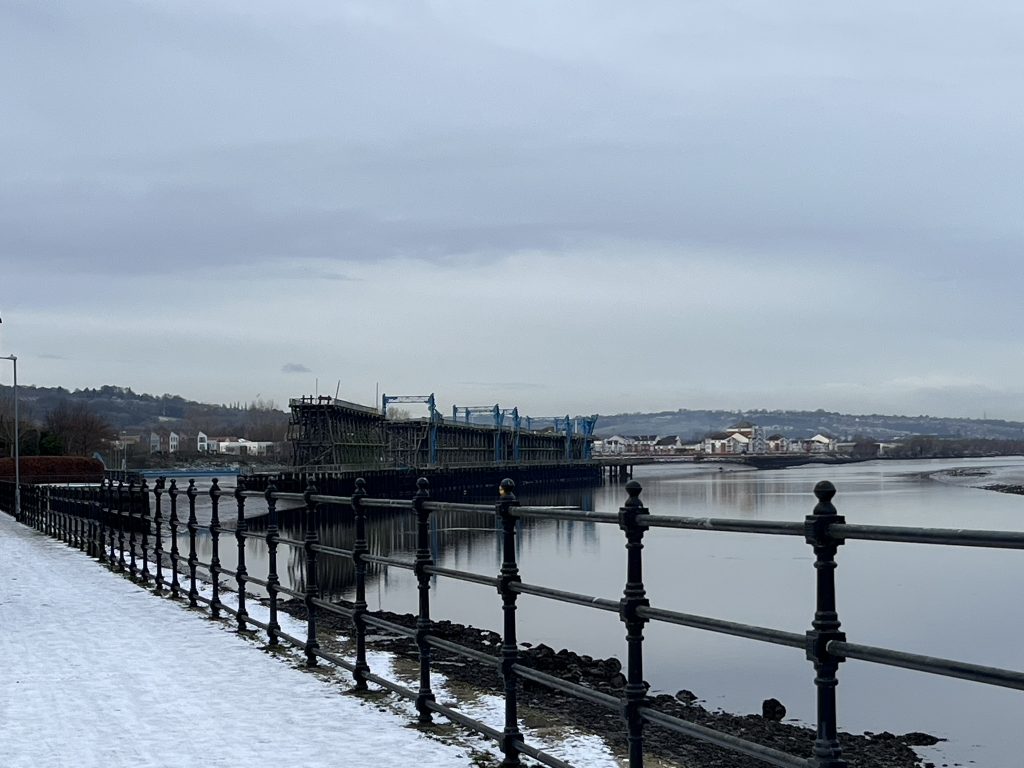
A view of Dunston Staiths in the snow from the Tyne Derwent Way.
The Tyne Derwent Way in the snow overlooking Dunston Staiths, by Dr Sally Watson.

Byker Community Archive & Histories of Redevelopment

Alongside this, I will be working with Silvie Fisch, Director of Northern Cultural Projects and Oral History Collective Associate Researcher, who has been awarded funding from the Heritage Lottery Fund and Karbon Homes to develop a community archive in BykerHannah James Louwerse and I share the role of archivist and will be helping Silvie to set up the archive in the coming months.  

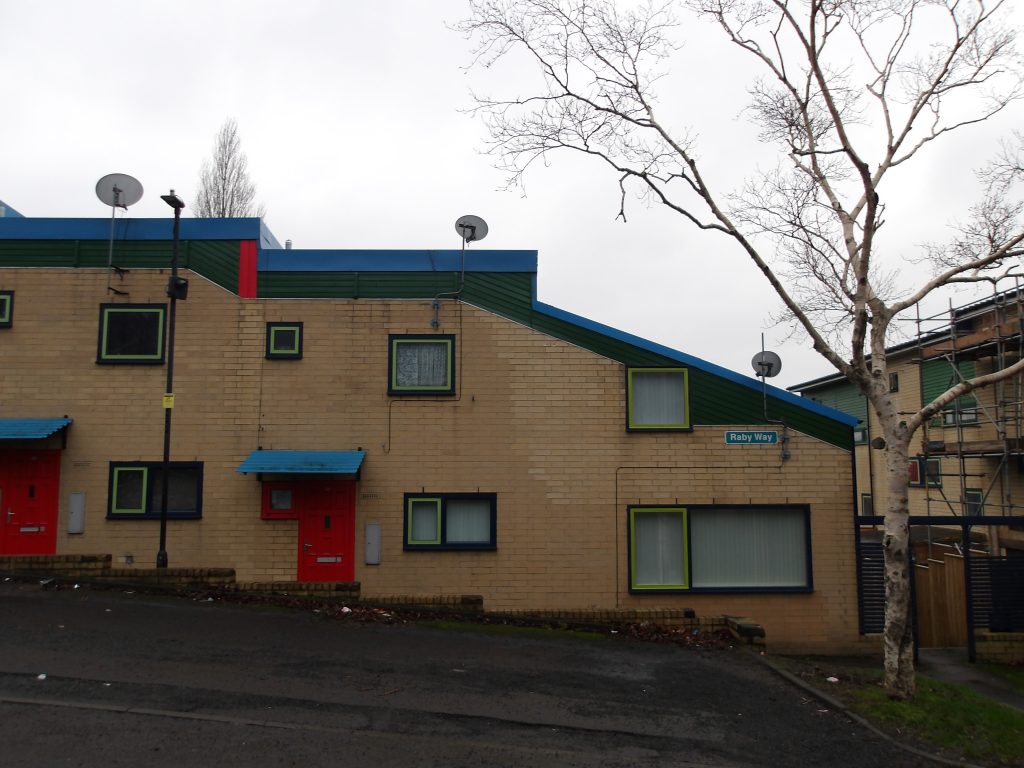
A row of terraced houses on the Byker estate, near the Community Archive site.
The Byker estate near the Community Archive site, by Lily Tidman

My involvement in the Byker Community Archive began when I met Silvie whilst undertaking my doctoral research at Newcastle University. My PhD and subsequent Postdoctoral Fellowship, both funded by the Economic and Social Research Council, examined the history of post-war housing, landscape design and children’s outdoor play in Newcastle upon Tyne. Alongside archival research, I undertook oral history interviews with professionals who had worked on the redevelopment of the Byker neighbourhood 1969-1983, including architects, landscape architects and planners, and people who had grown up in Byker during and after the redevelopment. 

I am interested in oral history as a method for understanding children’s lives in the past and changing ideas about children and childhood over time. In particular, I am interested in how such ideas have shaped and continue to shape children and young people’s geographies of play and mobility. In my previous research, I examined the design, governance and policing of housing, streets, parks, playgrounds and other urban spaces and used go-along interviews to explore childhood experiences of these places. I am looking forward to collaborating with communities, including children and young people, on projects along the Tyne Derwent Way. 

Remember 1926

Joe Redmayne, a Collective researcher associate, introduces our new “Remember 1926” project and its launch. The project is a collaboration between Newcastle University’s Oral History Collective (OHC) and Labour & Society Research Group (LSRG).

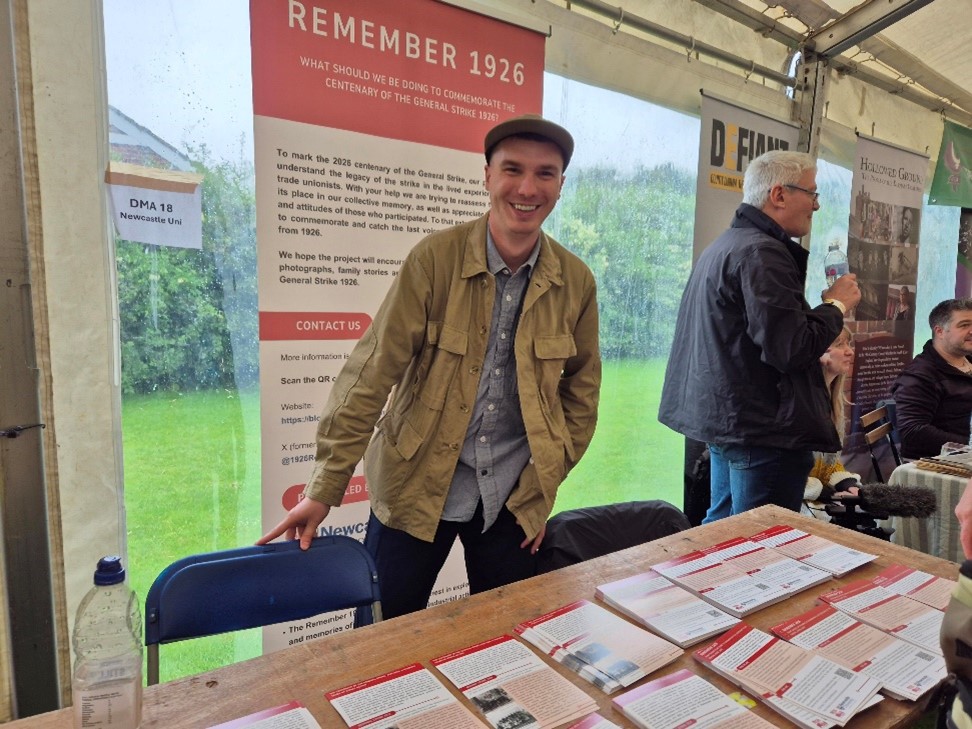
(Photograph of Dr Joe Redmayne at the Durham Miners’ Gala promoting the Remember 1926 project. OHC colleagues

Joe Redmayne at the Durham Miners’ Gala promoting the Remember 1926 project.

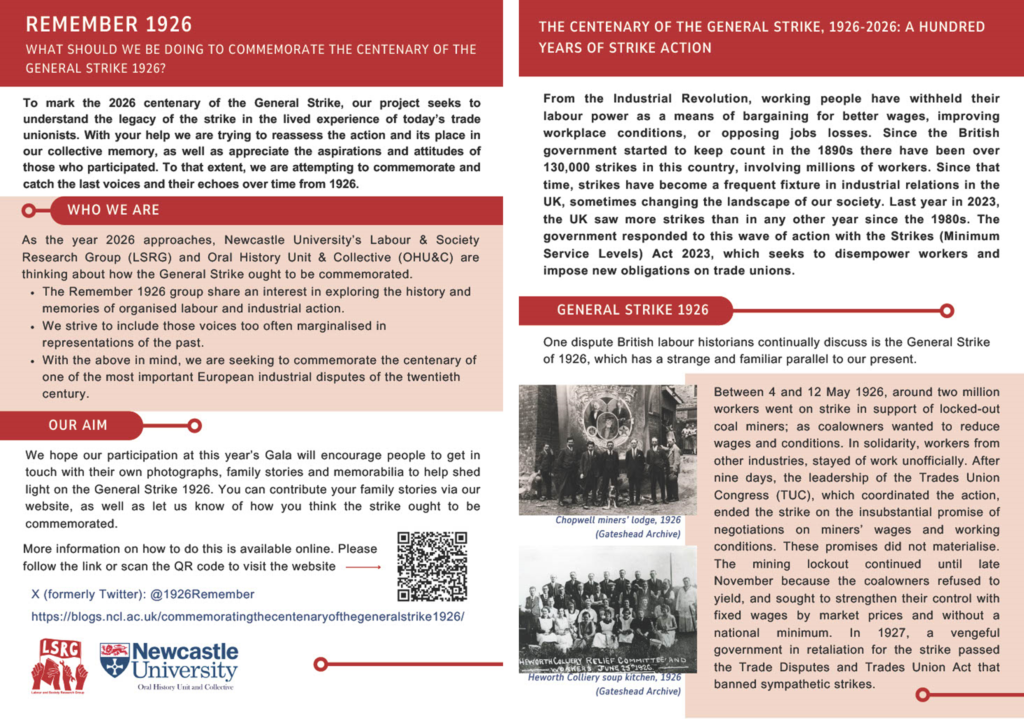
The project explores ways in which the centenary of the British General Strike of 1926 ought to be commemorated in two years’ time and seeks to understand the legacy of the strike in the lived experience of members of today’s trade unions and the wider labour movement.

The project launched at the 138th Durham Miners’ Gala on Saturday 13 July 2024, with a stall and leaflets to promote the project among attendees. We would encourage people to get in touch with their photographs, family stories, and memorabilia to help shed light on the General Strike.

Remember 1926 will revisit the General Strike, reassess the action and its place in our collective memory, as well as appreciate the aspirations of those who participated. To that extent, the group is attempting to commemorate and catch the last voices and their echoes over time from 1926.

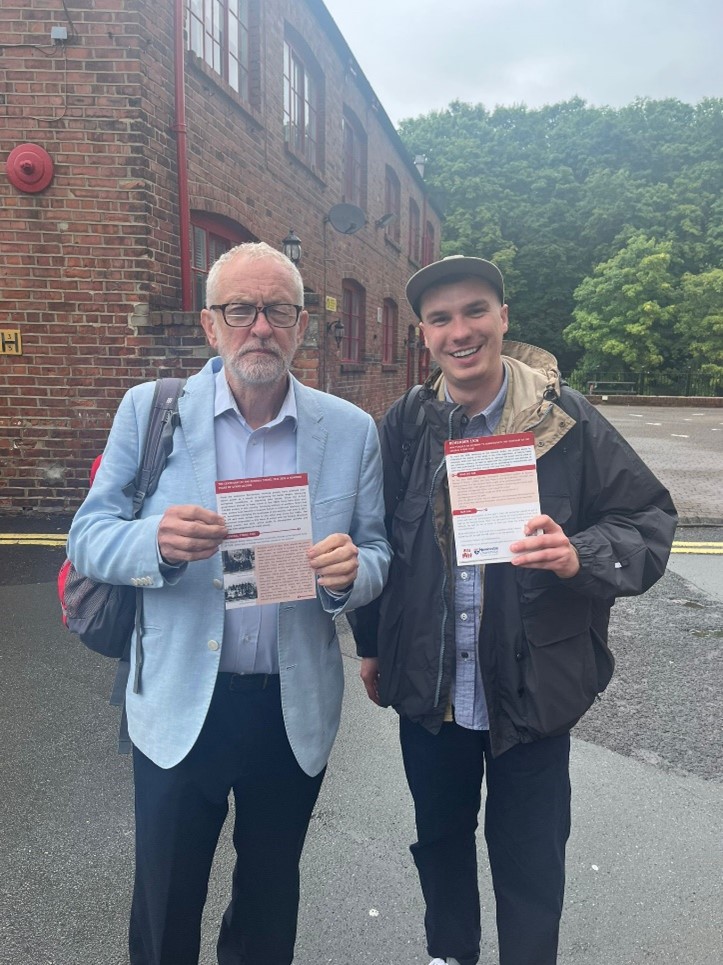
(Photograph of Joe with the former leader of the Labour Party and now Independent MP for Islington North, Jeremy Corbyn, holding the Remember 1926 leaflets.)

Joe with the former leader of the Labour Party and now Independent MP for Islington North, Jeremy Corbyn, holding the Remember 1926 leaflets (see below).

Get involved

In the future, Remember 1926 will foster dialogue and prompt collaboration between trade unionists, political activists, academic researchers, community partners, heritage groups, archives, and museums. If you would like to keep updated or get more involved with the project, please complete the following questionnaire via the link (Get involved).

You can visit our webpage and social media below:

https://blogs.ncl.ac.uk/commemoratingthecentenaryofthegeneralstrike1926

@1926Remember If you have any immediate questions about the project, please get in touch with Joe Redmayne via email at j.redmayne2@newcastle.ac.uk


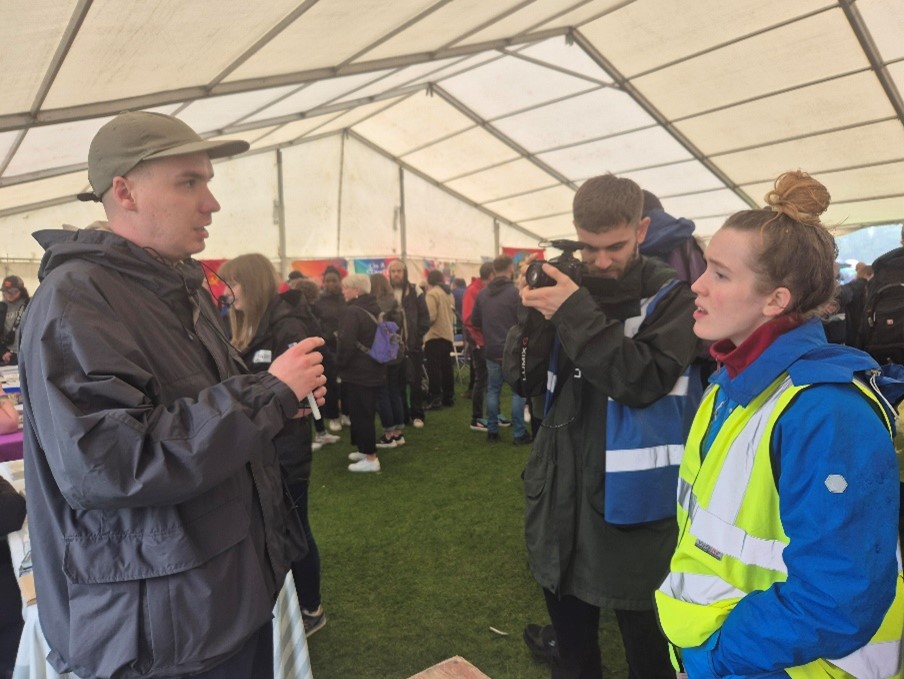
Royal Holloway MA Public History student, Rachel Lawrence, interviewing Joe about the Remember 1926 project and his thoughts about the Durham Miners’ Gala.

Royal Holloway MA Public History student, Rachel Lawrence, interviewing Joe about the Remember 1926 project and his thoughts about the Durham Miners’ Gala.

Share your family stories, photographs, and memorabilia

If you have a story of an ancestor who participated in the General Strike, please let us know, as we would love to hear your family stories. You can contribute your own family stories via the following link Remember 1926 Questionnaire to help us grasp the different experiences of those involved in the strike and comprehend how your story lives on today.

Please include your name and email address, so we may be able to contact you in the future. Some of the questions the project is interested in answering are listed below: ·

What are the legacies of the General Strike? ·

What difference to Britain did the strike make? · What caused it? Could it have been avoided?

Is it an event still discussed by different generations of workers today? · Are there any family/community histories passed down through generations that still live on in today’s collective memory? · Have these stories shaped the descendants view of the trade union movement? · Why do people still strike today? · How and why should the centenary of the strike be commemorated?

Funded PhD opportunity: Oral History’s Design: A creative collaboration.

Sustaining visitor (re)use of oral histories on heritage sites: The National Trust’s Seaton Delaval Hall AS A case study.

Oral history’s popularity as an active collecting method and archiving tool have outstripped the level of reuse of oral histories in historical interpretation. And while oral history’s limited reuse of archived oral histories has attracted some interest, this is based mainly on proposed digital technical fixes. Significantly, there is relatively less research on the dissemination of oral histories and their reception by audiences. Oral history as an emerging discipline has yet to adequately integrate users and audiences into the processes of analysis and reuse.

Continue reading

Sue Bradley appointed as Research Associate in Oral History @ Newcastle

Sue Bradley joined Oral History @ Newcastle as our third Research Associate in February this year. Sue is an experienced oral historian and was instrumental in developing a network of like-minded researchers at the university before the Oral History Unit came along. Her first project has been to work with Special Collections at the Philip Robinson Library to develop shared processes for the collection and archiving of oral histories. Having worked in the Centre for Rural Economy for the past ten years, Sue brings a non-urban focus to the unit’s work.
Continue reading

In His Own Voice: Dr Julian Tudor Hart (9 March 1927- 1 July 2018)

In this blog post Graham Smith remembers the pioneering general practitioner Dr Julian Tudor Hart who died on the 1st of July. Graham interviewed him in June 1999.

Click HERE for a .mp3 audio extract from the interview and for a .pdf transcript of that extract: Tudor Hart in His Own Voice pt 1 extract 1

Continue reading

Alison Atkinson-Phillips appointed as Research Associate to Oral History @ Newcastle

Photo of Alison Atkinson-PhillipsAlison Atkinson-Phillips has joined Oral History @ Newcastle as our second Research Associate. Alison has come to oral history via public history, cultural studies, community development and a non-academic career in communications. Alison’s Twitter profile (@dralia_p) describes her as a ‘writer, researcher, renovator and procrastinator’. But with the renovations left behind in Bassendean (Western Australia) she is hoping she will have time for her other three favourite things.*

Continue reading